
Advertising disclosure: This page includes affiliate links that may earn us a commission at no additional cost to you.
A sandbag listing can look like a simple choice of weight. In practice, you are choosing an outer shell, a way of containing the filling and a set of places to hold it. Get those decisions wrong and the bag that seemed versatile becomes awkward for the exercises you actually wanted.
The Fringe Sport Sandbag Trainer System uses an elongated bag with external handles. Its listing separates the trainer-only option from combinations with filler bags. This guide examines that buying decision: what to confirm before ordering, how the filling changes the object, and why a useful first load may be much lower than the largest option. This is a specification-based guide, not an MMP durability test.
Separate the outer trainer from the load inside it
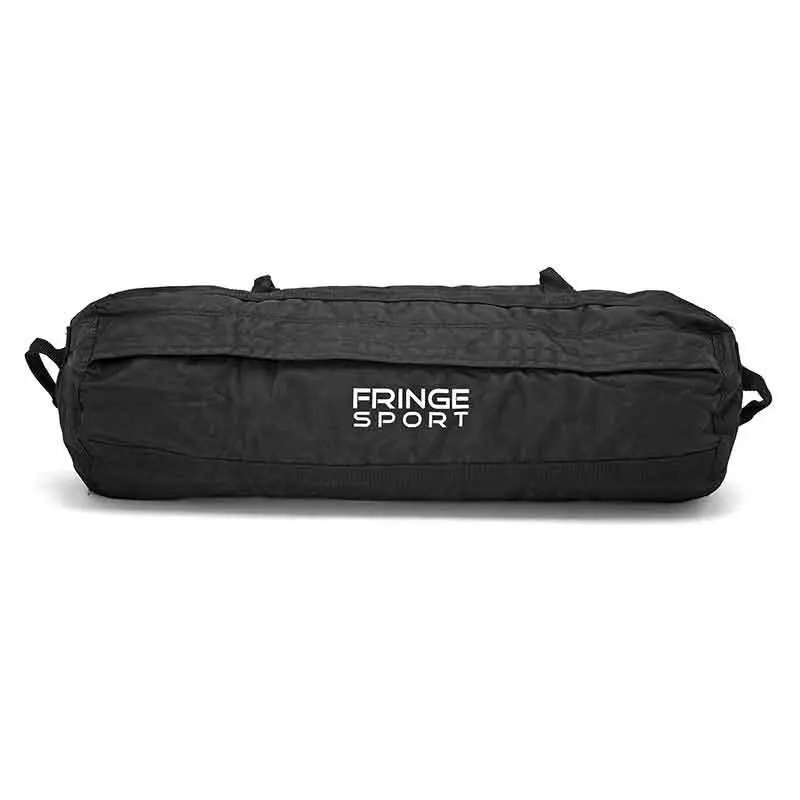
The outside is the part you hold, shoulder and carry. Fringe Sport describes Cordura fabric, reinforced stitching and a YKK zipper protected by a hook-and-loop closure. Those construction details identify the design; they do not establish how long a particular bag will survive your training.
The order option matters just as much. A trainer-only purchase and a trainer-plus-fillers purchase are different baskets. Confirm which components are included, whether the filler bags arrive empty, and what filling you must obtain locally. A weight in an option name should not be treated as proof that a loaded implement will arrive ready for your first set.
Read the selected variant rather than relying on the first gallery picture. Product galleries can show several combinations together. If you need two different training weights, determine whether you will change the contents of one shell or keep separate bags ready. The first approach saves equipment; the second can save interruptions. Neither is automatically the right choice.
Also separate a handled trainer from a cylindrical strongman bag. They share a filling material but ask different questions of your hands and arms. Our guide to strongman sandbag capacities and closures explains that alternative shape. Compare the actual object, rather than assuming all bags with the same weight label behave alike.
Use filler changes to solve a real training problem
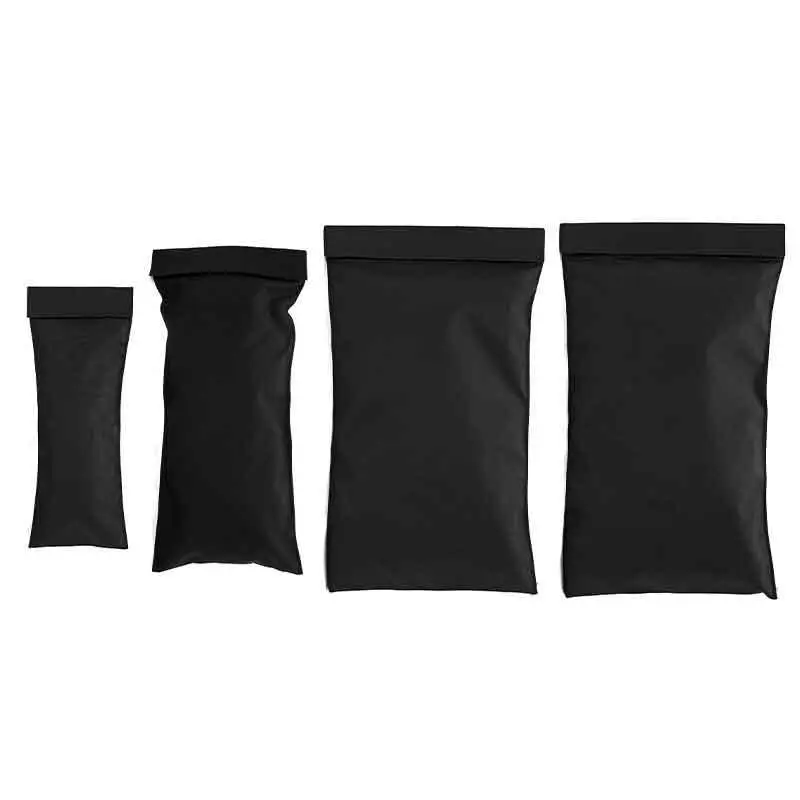
Smaller internal bags can make a load change more manageable than emptying the entire trainer. That convenience depends on the sizes you own and how they fit together. Before buying a bundle, sketch the two or three loads you expect to use. Check whether the supplied pieces can make those combinations without forcing the outer closure.
Weigh the assembled bag after filling it. Record the result, including the shell, instead of using an option label as though it were a calibrated dumbbell. When you change the contents, measure again. This gives a carry or squat session a repeatable reference and prevents a loading change from masquerading as a sudden change in fitness.
Mass and fullness are separate considerations. A partly filled shell may bend or let its contents move differently from a more tightly packed one. Do not keep adding material merely to make the outside look neat. Follow the instructions for the exact shell and fillers, including their closure requirements. Loading advice from another brand is not a capacity specification for this model.
Think through where you will do the filling and store unused material. Use a suitable container and protect the immediate work area. A portable empty shell can still become inconvenient once loaded, especially if your training room and storage area are on different floors. The buying decision should include that journey, not just the space the folded bag occupies.
Choose between handles, a front hold and a shoulder position
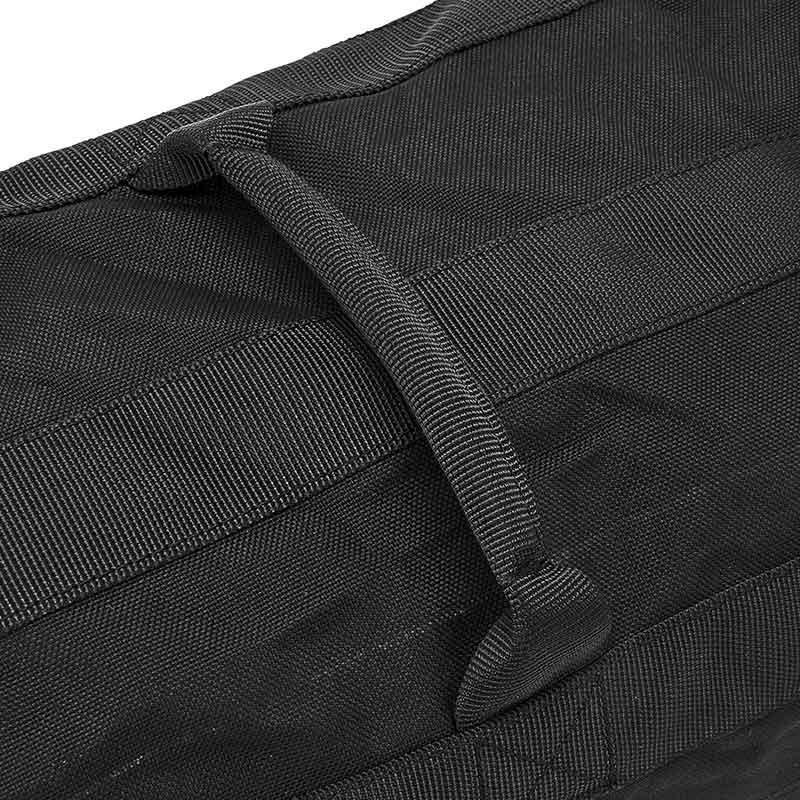
Handles give you defined places to grasp the trainer. That can be useful for a controlled pickup or row, but it does not reproduce the task of squeezing an unhandled bag against your torso. Decide whether a secure handhold or an awkward-object challenge is the feature you want.
Inspect the handle placement against the exercise. For a two-handed pickup, can you use a balanced grip without twisting the bag? For a row, can you keep the load close enough to control? For a carry, can you establish the hold before moving? These are practical questions to answer with a light trial, rather than assumptions based on the number of straps.
A front hold also occupies space against the chest and abdomen. Choose a position that lets you breathe and move deliberately. If the bag slips repeatedly or forces you to improvise every few steps, shorten the effort, lower the load or choose a different hold. Constantly rescuing the implement makes it difficult to judge the movement itself.
Do not use a zipper flap as an improvised handle. Use the intended grips or an appropriate hold around the bag. Before switching to a shoulder position, first establish that you can lift and return the bag in control. Moving it higher is a new task, even if the scale weight stays the same.
Pick the exercises before choosing the heaviest bundle
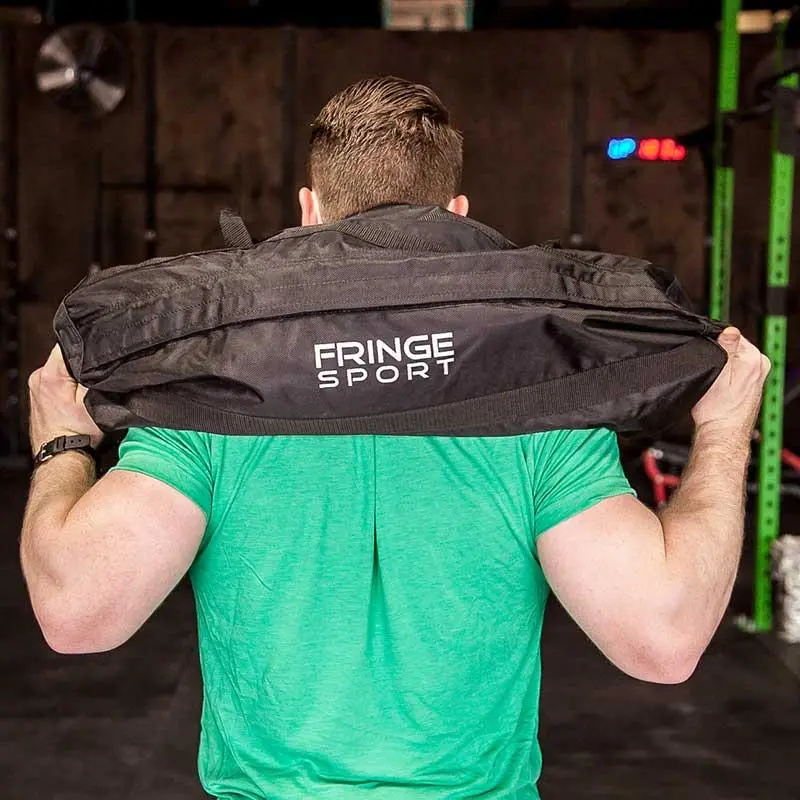
Write down the session you want the bag to support. A sandbag deadlift, a front-loaded squat and a short carry can each be useful, but they need not use the same load. The amount you can pick up once may be unsuitable for repeated squats or for holding against your torso while walking.
Begin with the least complicated version you can control. For a pickup, rehearse getting into position, lifting the bag close to you and returning it deliberately. For a squat, establish the front hold before starting the set. For a carry, clear the route and decide where the bag will finish. Treat the return to the floor as part of every repetition.
Keep early sessions easy enough to repeat the same movement and hold. Add a small amount of work only when the previous version is consistent. That could mean one more controlled repetition or a slightly longer carry; it does not require adding weight and reducing rest simultaneously. Our sandbag training and load-progression guide develops that distinction between strength practice and conditioning.
A handled trainer is an option alongside dumbbells, kettlebells and barbells. If the priority is precisely tracking a conventional squat, deadlift or bench press, those familiar implements may make comparison easier. The sandbag earns its place when its holding positions and handling suit the job. It does not need to replace your established lifts to be useful.

Funny Gym Shirts & Workout Gear
Funny gym shirts, tanks, hoodies and workout gear for lifters who like training hard.


Negative Leg Day Review Not Recommended 1 Star T-Shirt
Keep things casual with a little “Negative Leg Day Review” attitude.

Leg Day Is Calling You Squats & Deadlifts Meme Vest Tank Top
Your gym-day look, with a playful “Leg Day Is Calling You” twist.

Praise The Deadlift Holy Lifting Meme Decal Water Sticker
Put “Praise The Deadlift” gym humor on your laptop, bottle, or gym gear.

Legday – Squats & Deadlifts , Meme Top Bros & T-Shirt
Bring “Legday” humor to your next gym day.

Nice Try Gravity | Astronaut Space Lifting Pullover Hoodie
Make your off-duty look more fun with “Nice Try Gravity”.

Squat Here | Edgy Muscle Shirt | Gym Humor Meme Workout Tank Top
Show some personality between sets with “Squat Here”.

Skeleton Deadlift Deadlift Lovers & Meme Hoodie
Keep it laid-back with a little “Skeleton Deadlift” attitude.

Deadlift And Chill – & Top T-Shirt
Heavy lifts, good laughs, and a little “Deadlift and Chill” energy.

Check closures and intended use before the first session

After filling, inspect the inner bags and outer closure separately. Keep loose material out of the closing surfaces, check for leakage and confirm that the loaded bag closes without a struggle. If the closure only stays shut when you force it, stop and resolve the loading or fit problem before lifting.
Exercise lists are not a substitute for handling instructions. In particular, do not assume every training sandbag is designed for repeated slams, dragging or abrasive outdoor use. Different products have different limits. Ask about the exact model and use a suitable training surface. A strong-looking fabric is not permission to treat the bag however you like.
Check the stitching, handles and closure again as part of ordinary setup. A developing tear, damaged grip or persistent leak needs attention before the next set. Put the bag down in a controlled way and keep the landing area clear of feet and other equipment. A soft exterior still surrounds a substantial load.
Buy the system around the first useful session and the next sensible progression. Confirm the shell, fillers, loading instructions, intended use and a workable storage plan. The best bundle is the one whose components solve those needs; choosing the biggest number on the page leaves too many of them unanswered.






One Comment