Advertising disclosure: This page includes affiliate links that may earn us a commission at no additional cost to you.
Should you stop a repetition halfway through to build more muscle? That question sounds simple until you specify which half you are talking about. A large resistance-training trial published in 2025 offers a useful reality check for lifters comparing lengthened partials with full repetitions.
The interesting result is not that one technique demolished the other. Both produced small improvements, while the formal test of equivalence remained inconclusive. Here is what the experiment can tell us, where its findings stop, and how to test the idea in your own training without changing the definition of a good repetition every week.
What a lengthened partial actually is
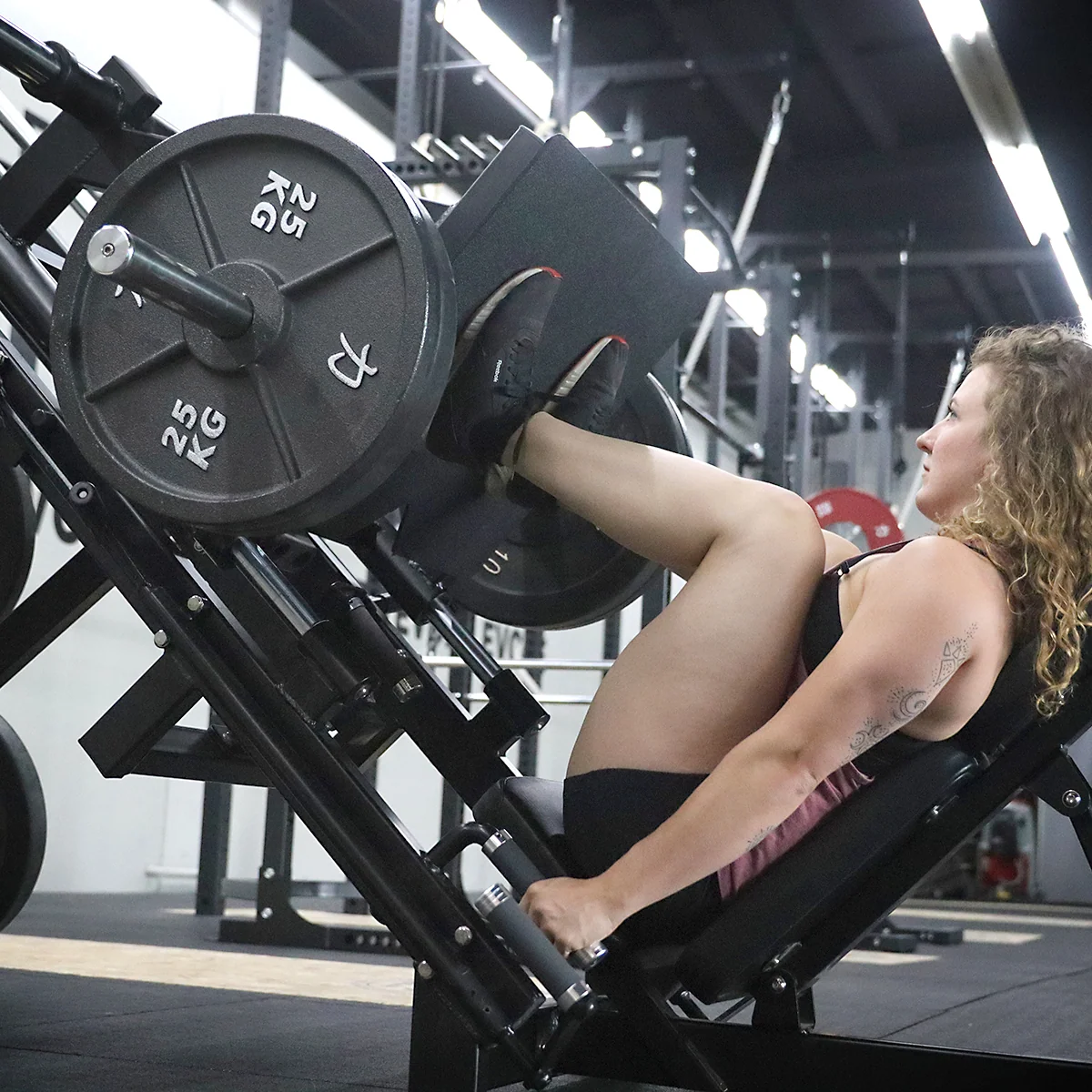
Not all partial repetitions are interchangeable. A shortened-position partial on a leg press, for example, keeps the sled moving near the top where the knees are relatively straight. A lengthened-position partial keeps the movement near the bottom where the knees are bent and the quadriceps are generally longer. Both are partials, but they expose the muscles to different portions of the exercise.
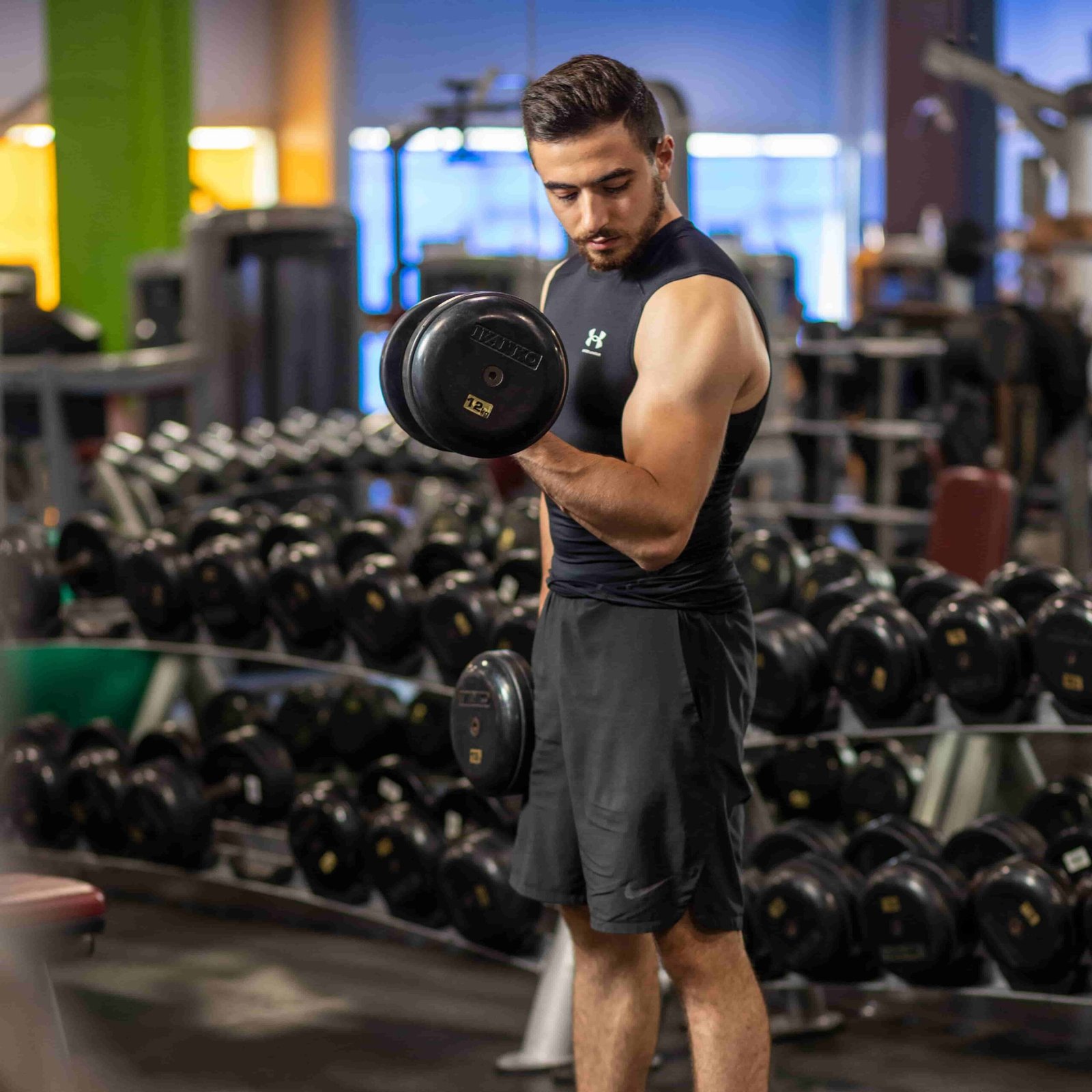
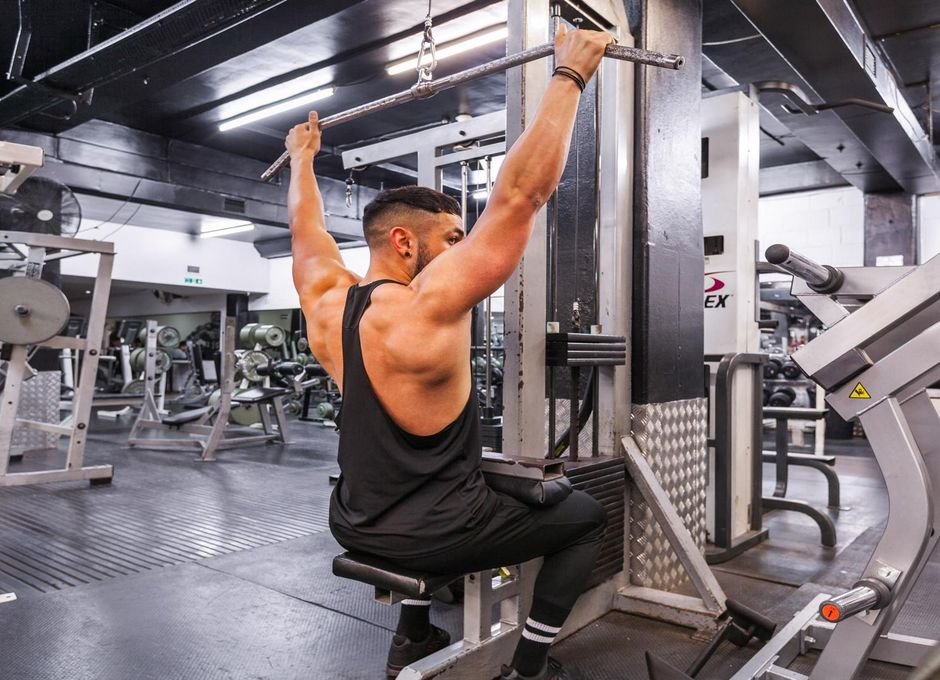
On a curl, the elbow flexors are generally longer when the elbow is closer to extension. On a pulldown, the overhead position generally lengthens the latissimus dorsi relative to the bottom position. Exactly how much a particular muscle lengthens also depends on shoulder position, the joint angles involved, and which muscle is doing the work.
Full repetitions already travel through the lengthened portion when the exercise permits it. The argument for lengthened partials is that restricting the repetition to that region could keep more of the work there, rather than passing through the shorter position each time. That does not mean a passive stretch is equivalent to resistance training. The exercise must actually load the relevant muscle in that part of the movement.
Resistance curves complicate the picture. A heavy dumbbell does not necessarily create its greatest joint torque where the muscle is longest. Cable direction, lever arms and machine geometry all change how demanding a position is. A useful stretch under load is different from simply reaching as far as possible.
The 297-person trial: what was measured
A 2025 randomized trial compared lengthened partial and full-range resistance training across 15 training sites. The groups comprised 163 and 134 participants respectively, and the intervention lasted 12 weeks. The investigators looked at experienced exercisers rather than relying solely on a novice population, making the comparison particularly interesting to people who have already spent time in the gym.
Muscle-size outcomes concerned estimated upper-arm and thigh cross-sectional area. These estimates used circumference and skinfold measurements rather than direct imaging of every muscle. Strength outcomes included the chest press, leg press and pulldown, estimated from repetition performance rather than necessarily testing a maximal single repetition.
These distinctions matter. A measurement of the whole upper arm cannot tell us precisely how an individual part of the biceps or triceps responded. A repetition-based strength estimate is also influenced by the exercise and test conditions. The trial is valuable because of its comparatively large sample, but the measurements are not a detailed map of all muscular adaptations.
The trial was designed to ask whether the difference between approaches was small enough to count as equivalent, rather than simply asking whether one group beat the other. A conventional comparison that fails to detect a difference does not by itself demonstrate that the two treatments have the same effect.
Why similar changes are not proof of identical results
Both approaches produced small changes in muscle-size and strength measures over the intervention. The estimated between-group differences were small, but the formal equivalence tests did not clear the study’s prespecified adjusted statistical threshold. That is an important qualification: the results suggest practical similarity in this context without establishing statistical equivalence under the original decision rule.
Earlier research comparing full movements against partial repetitions often favored full ranges, especially for lower-body muscle development. But pooling short repetitions at different joint positions can obscure the question of whether the muscle was loaded near its longer length. The location of the partial matters as much as the fact that the movement was shortened.
A separate eight-week upper-body experiment in 30 trained people assigned different ranges to each arm and reported similar outcomes for the two conditions. A later knee-extensor experiment also examined long-length partials against full and shortened ranges at different relative loads. These experiments are useful supporting evidence, but differences in exercise selection, loading and measurement mean they should not be treated as interchangeable replications.
The defensible conclusion is narrower than the popular claim that partials beat full repetitions: lengthened partials appear to be a viable option for some resistance exercises, and full repetitions remain a reasonable default. Neither method guarantees superior growth for every muscle, person or training program.
Leg press users may also find our analysis of leg press depth and quadriceps growth useful because it examines a different question: how far to descend when comparing two substantial ranges of motion rather than replacing all full repetitions with partials.
How to apply the idea on presses and pulldowns
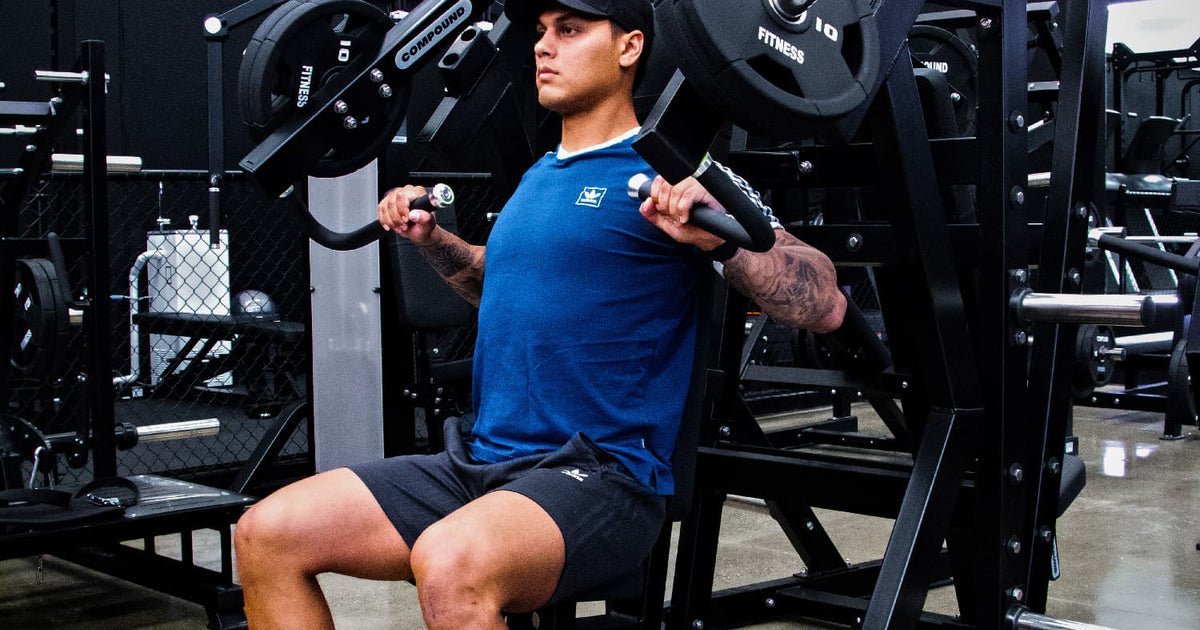
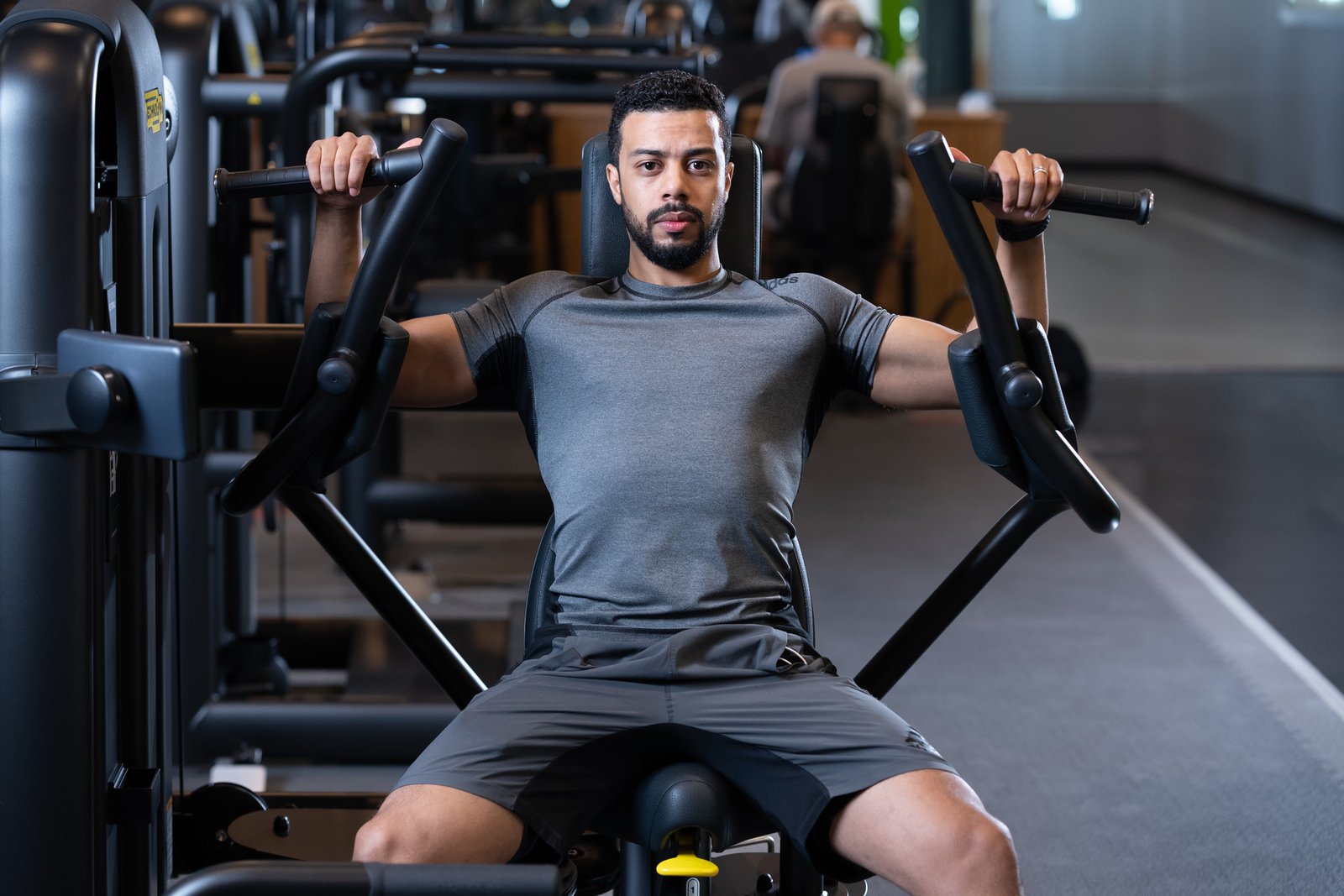
Think first about an exercise you can perform consistently. A seated chest press, for instance, gives you an opportunity to choose a comfortable starting position and a repeatable endpoint. If you experiment with lengthened partials, use a manageable load and move within the lower portion of your existing controlled range. Do not force your elbows back farther than your shoulders comfortably allow.
On a pulldown, the overhead portion is the obvious place to investigate. A useful partial still involves active control: let the arms travel upward without the stack crashing down, then pull through a defined distance. Avoid turning a shortened pull into a torso swing. The fact that you can move more weight through a smaller distance is not evidence of greater muscle growth.
For leg presses, the lower portion deserves particular care. Set the seat and safety stops before loading the machine. Choose a bottom position where the pelvis stays supported, the feet remain planted and the knees move comfortably. Use a range you can repeat without bouncing or letting the sled carry you deeper than intended.
Dedicated leg-press and chest-press machines, adjustable cable stations and pulldown attachments can all provide options for repeatable movement. Their relevance is the ability to control setup, load and endpoints; there is no requirement to buy new equipment to try a change in range.
If your goal is strength through an entire movement, maintain practice through that movement. Partial repetitions may improve performance in the trained region without transferring equally to every position. A lifter whose sport requires a specific depth or lockout should keep that requirement in the training plan.

Equipment Worth Exploring
Explore equipment, accessories and gear from our carefully selected range.

Leg Press/Hack Squat BPR-790
Convertible 45-degree leg press and hack squat machine with a broad footplate and band pegs.

Compact Leg Press CLP-700
Compact reverse-style leg press with a moving seat carriage and an adjustable footplate.

Standing Chest Press SCP-760
Standing chest-press machine with adjustable handle positions for chest and close-grip pressing.

Lever Arm Multi Press LMP-650
Multi-press with independent lever arms and an integrated adjustable bench for upper-body training.

Trinity Lat Machine LSW-850
Weight-stack pulldown tower offering three cable directions and adjustable seated support.

VForce Lat Tower
Wall-mounted cable tower with pivot arms and adjustable 1:1 or 2:1 pulley ratios.


VForce Wall Trainer
Space-saving wall-mounted functional trainer with pivoting cable arms and variable resistance ratios.

VForce Lat Seat
Rack-mounted seat attachment for supported lat pulldowns and seated cable exercises.
Make range of motion a tracked training variable
The cleanest way to experiment is to change one variable at a time. Keep most of your current program intact and choose one familiar movement for a block of lengthened-partial training. For example, you might replace one of your usual chest-press sets with a lower-range set while retaining the others as full repetitions. This is a practical example, not the protocol of the 15-site trial.
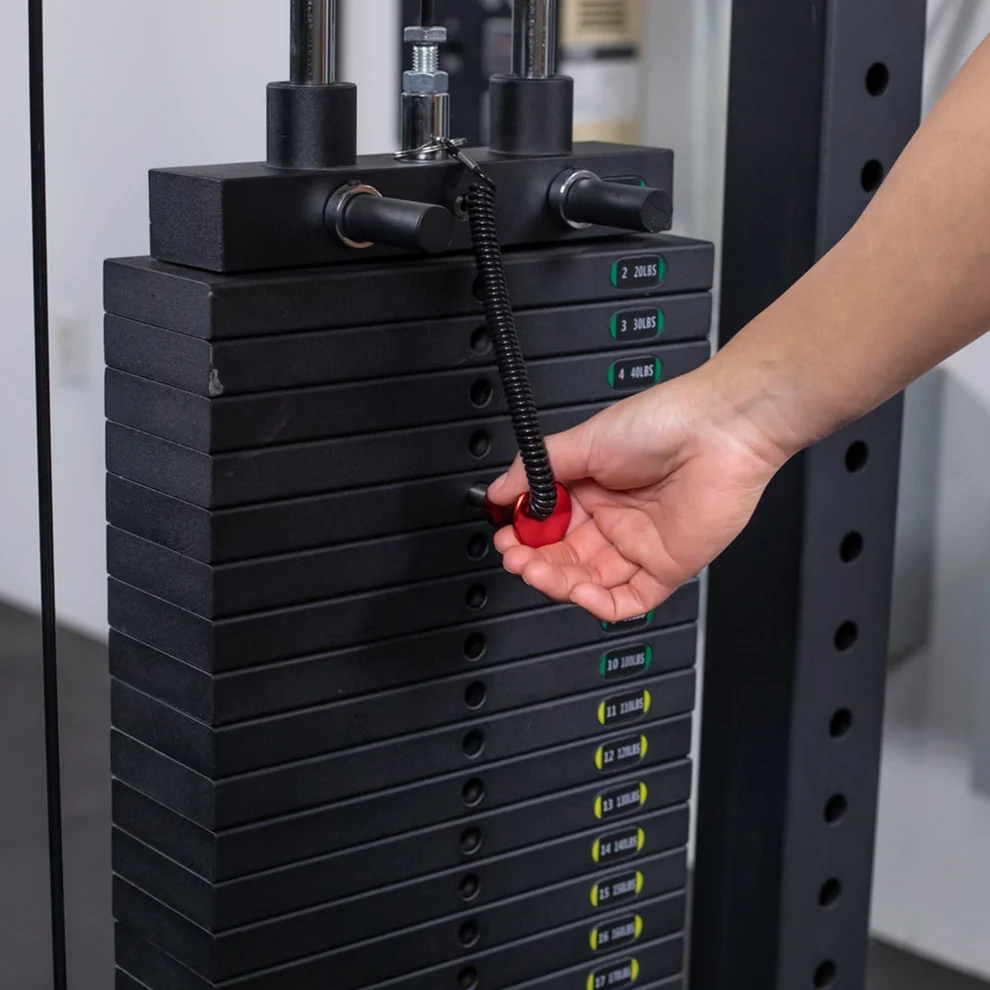
Record the machine, seat setting, starting position, approximate endpoint, load, repetitions and perceived repetitions in reserve. Use the same technique on subsequent sessions. If the weight rises but the range gradually shrinks, the log is no longer comparing like with like. Video from a consistent angle can help you judge whether the endpoints have drifted.
When first trying a different range, keep some repetitions in reserve. An unfamiliar loaded position can feel more demanding than expected. Increase the load or repetitions gradually rather than chasing a large immediate increase, and stop if the movement provokes sharp or persistent joint pain.
After several weeks, assess whether you can perform the defined repetitions with more load or better control, and whether the approach fits the rest of your program. Do not use an immediate pump or soreness as proof of additional muscle growth. Those experiences can change even when longer-term outcomes do not.
The most useful lesson from the trial is that you have more than one credible way to load a muscle. Choose the variation that is comfortable, challenging and measurable for your goals. Full-range training remains an excellent baseline; lengthened partials are an optional variation, not a mandatory upgrade.