
Advertising disclosure: This page includes affiliate links that may earn us a commission at no additional cost to you.
There is a frustrating gap between being strong enough to repeat a set and being strong enough to add the next pair of plates. It is especially noticeable on presses, curls and other lifts where the working weight is relatively low. Fractional plates let you make the gap smaller. They do not make your muscles grow automatically, but they give you another way to progress when the normal jump is unnecessarily large.
Before buying a set, work out the smallest useful increment, the equipment you need to fit it to, and how you will decide when to add it. A tiny plate is only useful if it changes a training decision.
Count both sides before you change the load
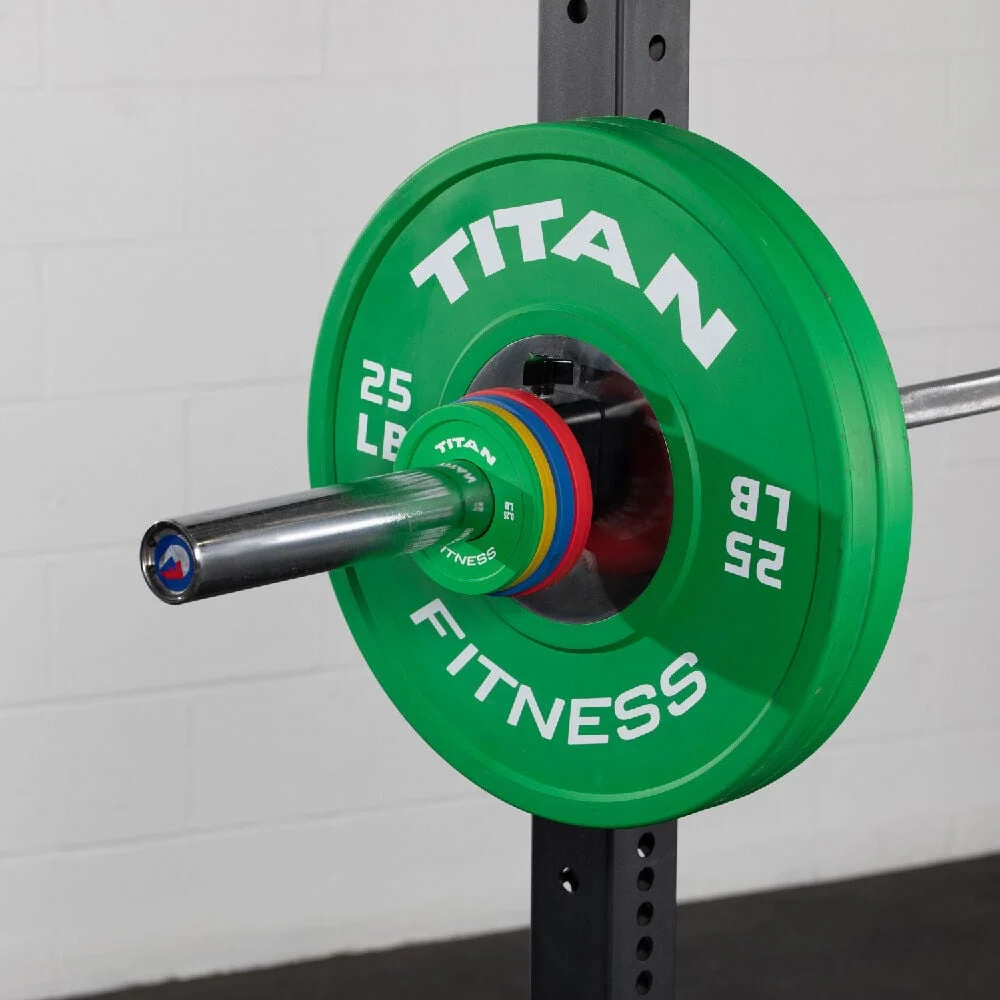
Barbell increments are usually discussed as total weight, whereas small plates are commonly sold by their individual mass. A pair of 0.25 kg plates adds 0.5 kg to the bar. A pair of 0.5 kg plates adds 1 kg. If your current bench press is 60 kg and you put a 0.5 kg plate on each end, your next working weight is 61 kg, not 60.5 kg.
That distinction matters when you plan a sequence. With pairs of 0.25 kg, 0.5 kg and 1 kg plates, you can make balanced additions of 0.5, 1, 1.5, 2, 2.5, 3 and 3.5 kg by combining different pairs. You can also take some of them off when you move up to the next larger plate. You do not need to keep accumulating small plates on the sleeve forever.
For pounds, a pair of quarter-pound plates adds half a pound; a pair of one-pound plates adds two pounds. Keep your training log in the units actually printed on your equipment. Mixing approximate kilogram and pound conversions makes your recorded progression less useful. Include the actual bar weight, and use the same collars if their weight matters for precise comparisons.
For ordinary symmetrical barbell training, load both ends evenly. A single microplate may seem insignificant, but deliberately uneven loading is a different exercise, not the default way to make a smaller increase. Buy matched pairs rather than assuming a listing for one plate represents a complete barbell increment.
Choose your increment using the lift, not just the plate

The practical advantage becomes clear when the change is expressed as a percentage of your current working weight. Adding 2.5 kg to a 25 kg overhead press is a 10% increase. Adding the same amount to a 125 kg squat is only 2%. A 0.5 kg increase on that press is 2%; on the squat it is 0.4%. The two lifts do not need identical progression steps just because they use the same bar.
This is particularly helpful for exercises that already have limited room to add repetitions without changing the intended stimulus. If you are working in a narrow strength-oriented repetition range, a small increase might let you continue that plan rather than immediately falling several repetitions. For a wider hypertrophy range, building repetitions at the existing load can be equally practical before increasing weight. Neither method is intrinsically superior in every session.
Suppose you perform three sets of six to eight on an overhead press with 30 kg. Once you can complete eight clean repetitions on all three sets, a jump to 32.5 kg might put you below six on the last set. A jump to 30.5 or 31 kg gives you a smaller experiment. If you can keep your technique, range and intended effort comparable, the new load is useful information. If you still cannot hit your lower repetition boundary, keep the old load or reduce fatigue and reassess.
Do not turn these examples into mandatory percentages. An advanced lifter may need smaller steps; a beginner on a lift with plenty of room to improve may need no fractional plates at all.
Fractional plates, change plates and fit
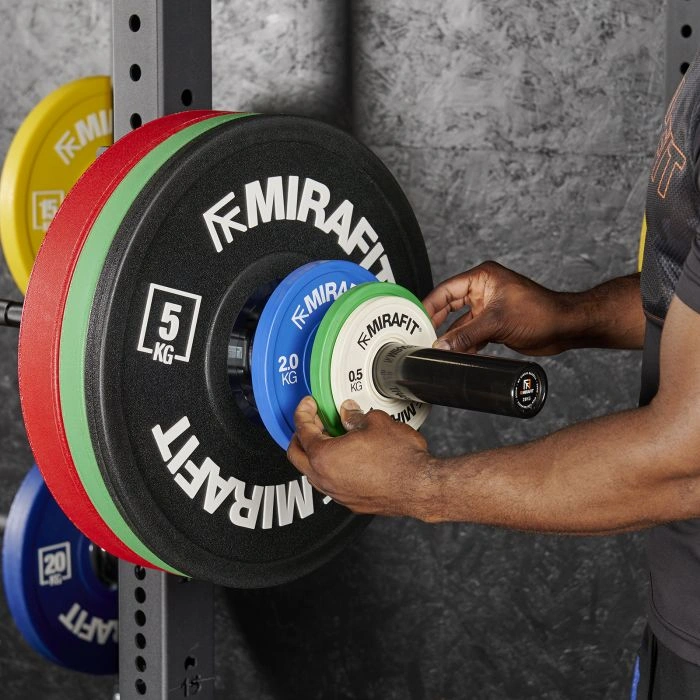
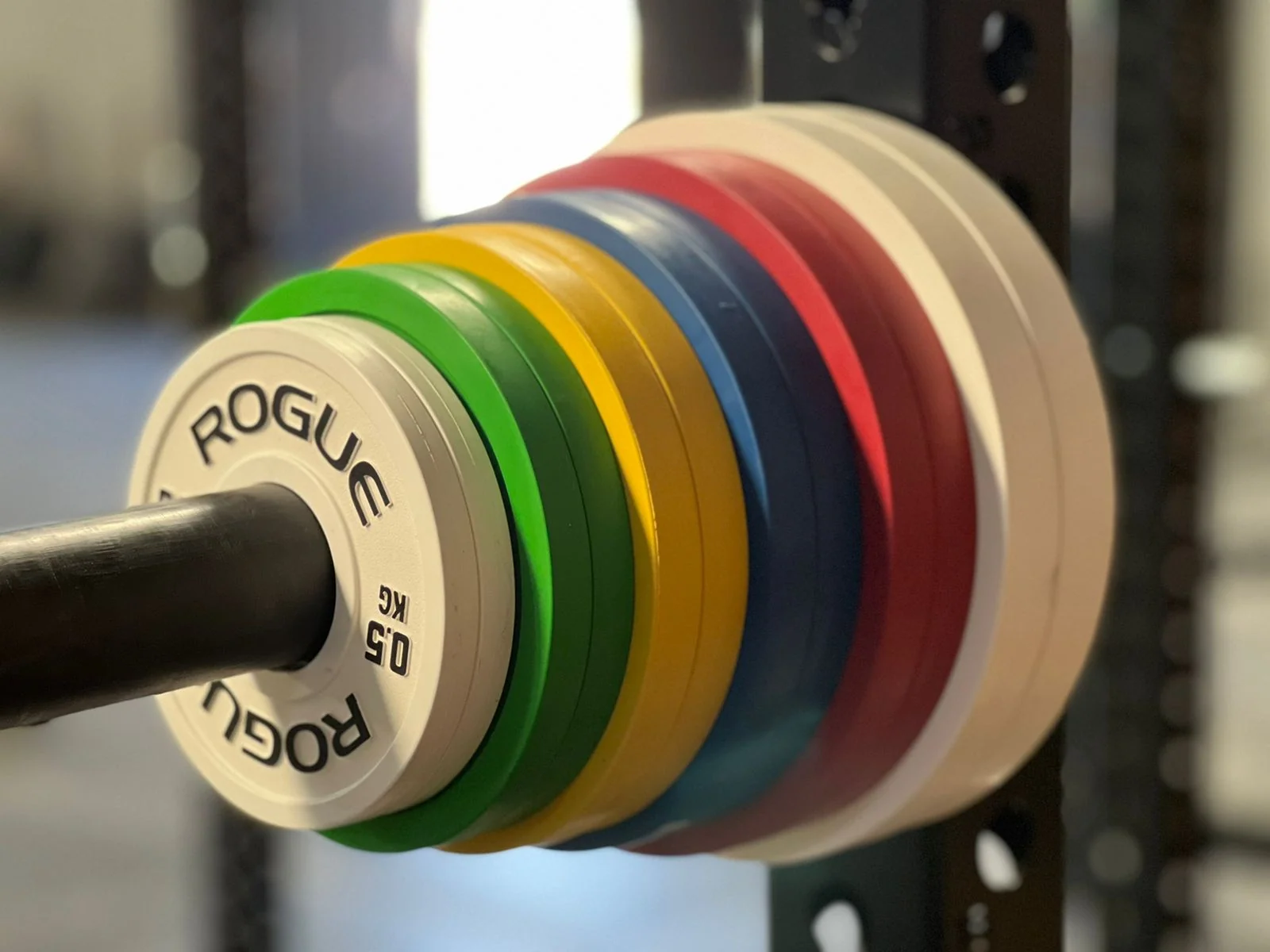
The names are not universal technical standards. Fractional plates often refer to very small increments below the usual minimum change plate. Change plates generally bridge the gaps between larger barbell plates, but the categories overlap. Some sets contain individual plates of a quarter, half, three quarters and one pound. Kilogram sets may use similar numerical labels without representing the same physical masses. Other fractional kilogram ranges include 0.125 kg and 0.25 kg plates, while change plates commonly extend up to 5 kg.
Choose the actual values, not the category name. If your gym already has 1.25 kg plates, a pair of 0.25 kg and a pair of 0.5 kg plates may cover much of the gap. If you need finer increments or combinations, a larger set can help. Avoid buying several sets that duplicate the increments you already own.
Check the hole diameter against the bar sleeve. An Olympic-style sleeve is nominally about 50 mm in diameter, not the same as a standard one-inch bar. A manufacturer might specify a bore of 50.4 mm for a particular fractional plate; that does not establish compatibility with every sleeve, especially specialty bars. Also check plate thickness, sleeve space and the way your collars engage. Even tiny weights consume usable sleeve length, and a collar needs enough sleeve contact to secure the stack.
Some add-on plates are designed to grip the sleeve or attach to a specific piece of equipment. Follow the actual product instructions. Do not treat friction-fit designs, magnets and conventional loose plates as interchangeable. For a barbell, keep the plates secured with appropriate collars; for a machine or adjustable implement, check the manufacturer’s approval before attaching anything to it.

Equipment Worth Exploring
Explore equipment, accessories and gear from our carefully selected range.


Competition Plates
Competition-style bumper plates for Olympic lifts and loaded strength training.

Grip Plates
Rubber-coated weight plates with handholds for loading barbells and machines.
Speed Collar
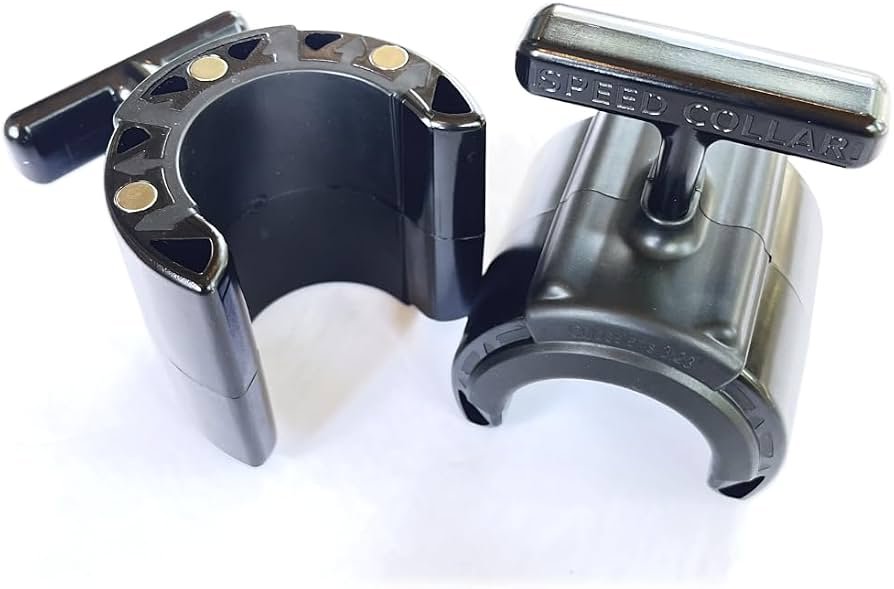
Quick-release collars designed to secure weight plates on standard two-inch Olympic bars.
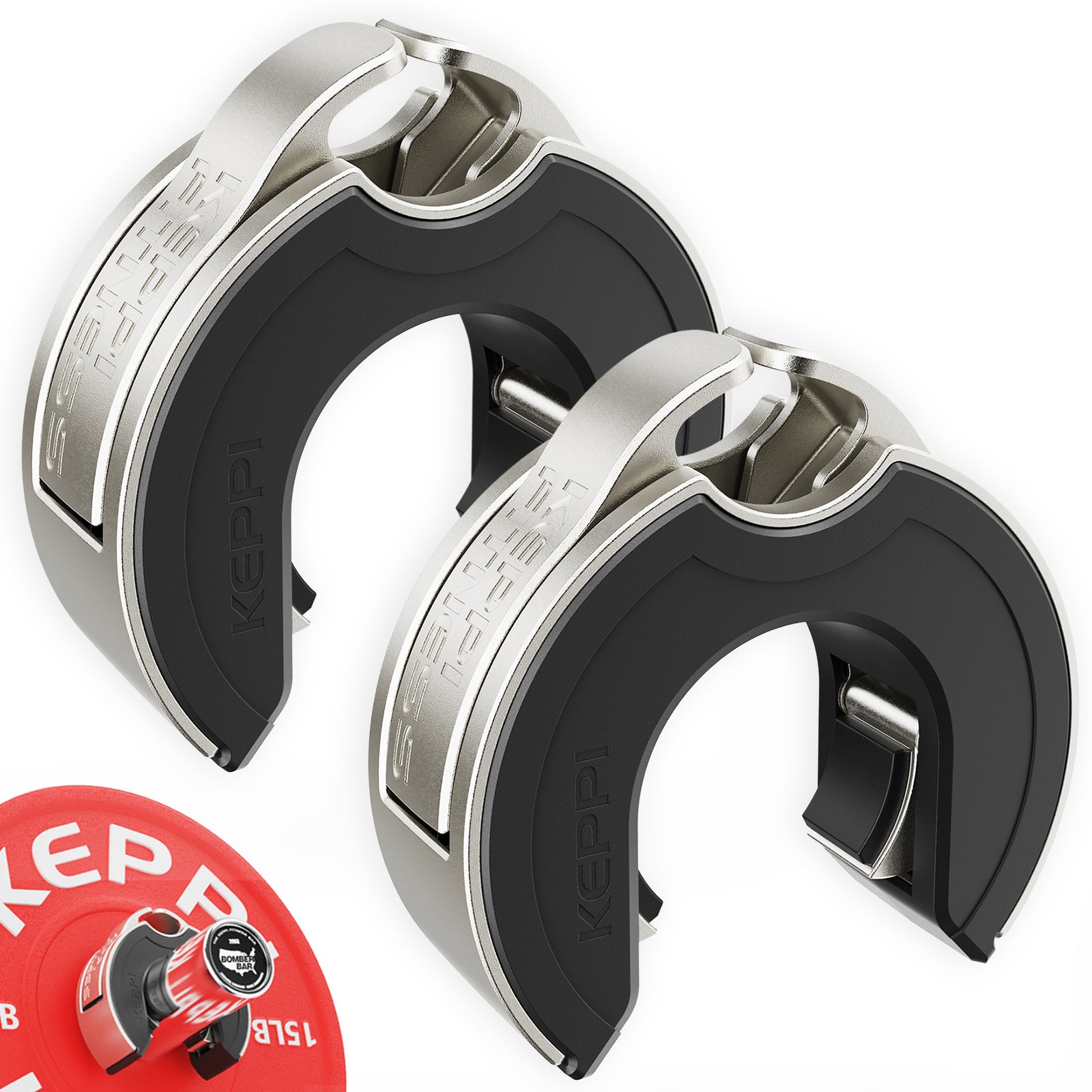
Keppi Open Collars
C-shaped magnetic Olympic barbell collars with a quick-lock mechanism and grippy lining.
Dumbbells require a different calculation
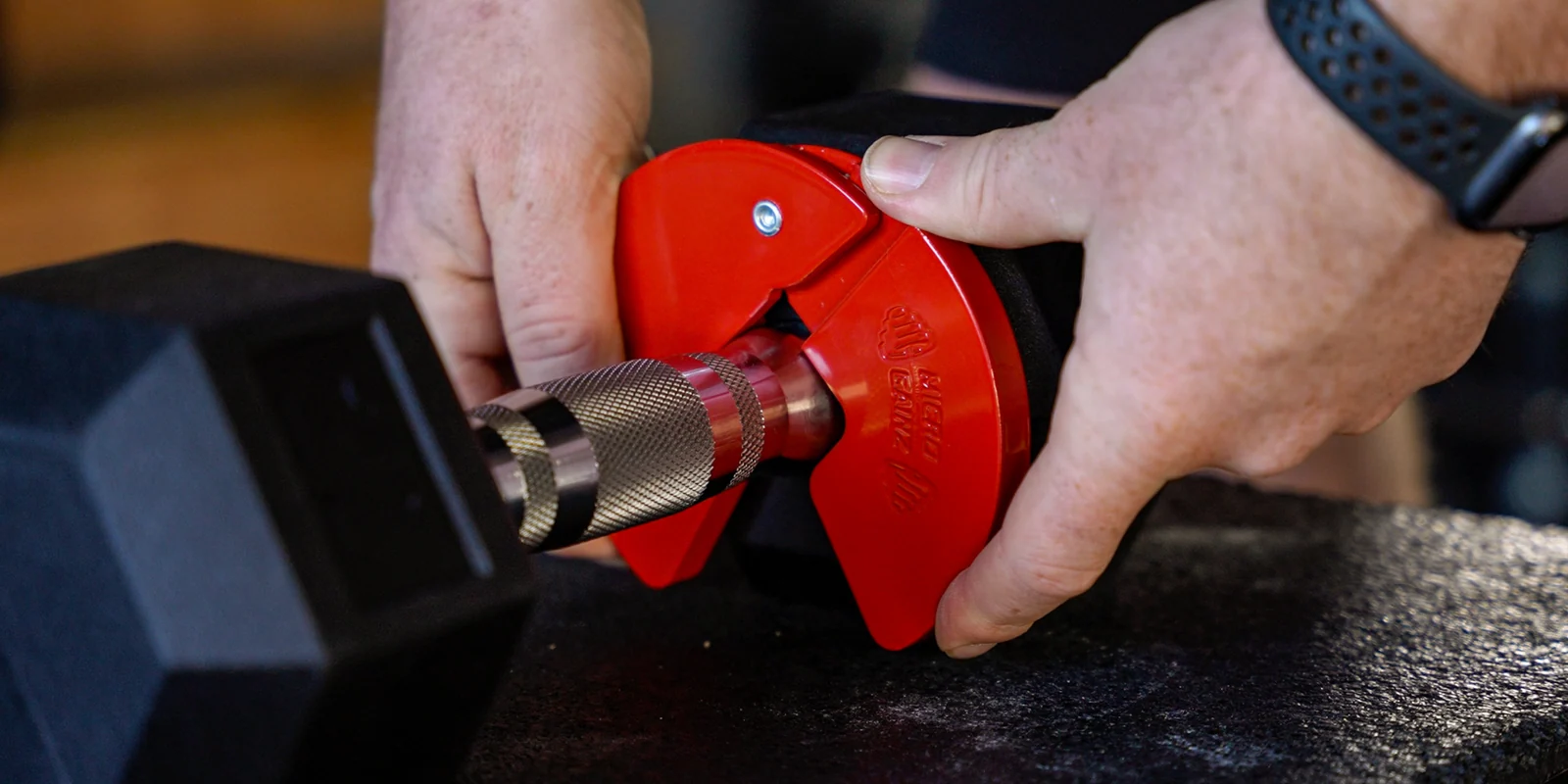
A dumbbell rack can have bigger jumps than a barbell, especially when each dumbbell increases by 2 or 2.5 kg. Going from two 10 kg dumbbells to two 12.5 kg dumbbells means adding 5 kg in total and 25% to each hand. That can be a substantial jump on a shoulder exercise, even if it is unremarkable on a heavy row.
Dedicated dumbbell microloading products may clamp around an appropriate handle, attach magnetically to compatible metal surfaces or fit into a particular adjustable dumbbell system. A spring-clamp product sold in one-pound pieces illustrates the idea: one piece on each dumbbell adds one pound per hand and two pounds to the combined load. It is not a universal adapter. Handle diameter, shape, available space, retention mechanism and clearance during movement all matter.
Before using an attachment overhead or over your face, confirm that the manufacturer permits that application and that the attachment is secure. Check that your grip remains unobstructed, and test the setup under control at a low height first. An attachment that shifts during the set is not a useful way to make progress. Do not improvise with loose plates balanced on dumbbell heads.
Adjustable dumbbells may already have small enough increments. Compare the actual next step on the model you own rather than assuming every adjustable system needs an add-on. For cable machines, never hang improvised loads from the stack or use a loading pin unless the machine and accessory are designed and approved for that arrangement.
A progression rule you can actually repeat
Microloading works best when it is part of a repeatable decision rather than a ritual performed at the beginning of every workout. Pick a repetition range, a set count and a target effort. For example, use three sets of six to eight, finishing with approximately one to three repetitions in reserve where appropriate. Keep your exercise selection, setup and rest intervals consistent enough to compare sessions.
At 60 kg, a bench session of eight, seven and six is already within the range. It does not require a weight increase yet. You might aim for eight, eight and seven next, then eight across all sets. When you reach the top of the range with your planned effort and good technique, try the smallest useful increase. If your next session at 61 kg gives seven, six and six, you are still within the plan. Record that result rather than judging the workout against an arbitrary personal record.
Traditional resistance-training guidance often describes increases of roughly 2–10% after a lifter can exceed the target repetitions. That is broad programming guidance, not a requirement to use the same percentage on every lift. Smaller increases can be a reasonable practical option when the next available conventional load is too large. There is no guarantee that a half-kilogram increase will generate a detectable change in performance or muscle growth on its own.
When progress slows, check recovery, technique, rest periods and accumulated workload before buying more weights. A missed target on one day may reflect ordinary variability. Several consistently declining sessions may justify a programming adjustment. Fractional plates are a tool for selecting loads, not a substitute for those decisions. The useful purchase is the one that lets you train with an appropriate challenge, repeat the setup and measure improvement over time.







One Comment