Advertising disclosure: This page includes affiliate product links that may earn us a commission, as well as products from our own store.
Dumbbell Shrugs: Train Your Traps Without Turning Every Rep Into a Heave
The dumbbell shrug is a small movement with an easy way to become a different exercise. Add too much weight and a deliberate shoulder lift can turn into bent elbows, bouncing knees and a head that reaches forward. The dumbbells still move, but the repetition you intended to train becomes harder to recognise.
A useful shrug starts with a repeatable setup and ends with a controlled return. You do not need to chase the largest dumbbells in the room or make circles with your shoulders. This guide explains how to organise the movement, distinguish grip fatigue from trap fatigue and progress without losing the reference points that make your training log meaningful.
1. Set up the weights, stance and space before the first repetition
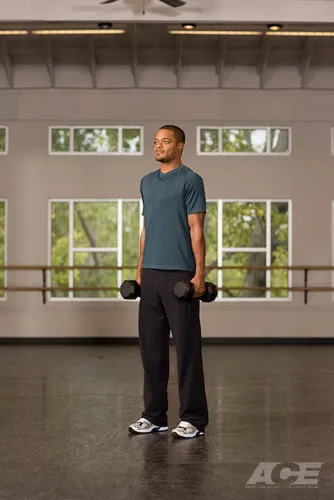
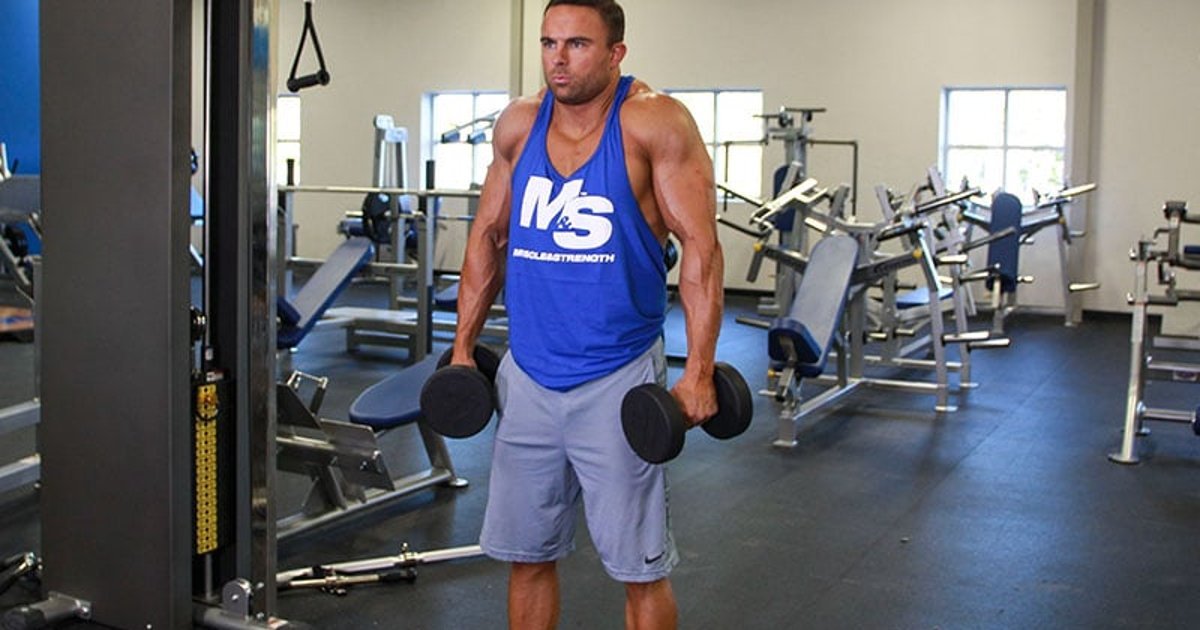
Hold a dumbbell in each hand beside your thighs, with your palms facing your body and your thumbs wrapped around the handles. Stand tall with your head aligned over your torso. A comfortable stance, including a small split stance if needed, should let you stay balanced without continually adjusting your feet.
Think about how you will collect and return the weights as well as how you will shrug them. Make sure the surrounding floor is clear. If you cannot pick the dumbbells up and put them down under control, the setup is not ready for that load, even if you could complete several shoulder lifts once someone handed them to you.
Allow enough room for the dumbbell heads to pass your thighs. Large adjustable dumbbells can occupy more space than compact fixed weights at a similar load. Start with a manageable pair and check the whole path rather than discovering halfway through a hard set that the ends catch your clothing or knock together.
Brace your torso enough to avoid swaying, without turning the entire set into a prolonged breath-holding contest. Keep the wrists close to straight. The setup should feel organised, not rigidly exaggerated: you are preparing to elevate your shoulders, not to perform a backbend or pin the shoulder blades together as hard as possible.
Before the working set, perform a few light repetitions. Note whether your shoulders move freely and whether you can lower the weights without a sudden drop. That rehearsal establishes the movement you will try to preserve as the load becomes challenging.
2. Lift the shoulders while keeping the arms quiet
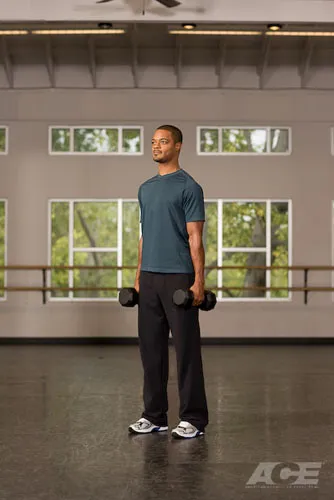
Raise your shoulders toward your ears while letting the arms remain long. The dumbbells are resistance hanging from your hands; you do not need to curl them or pull the elbows upward. Keep your torso steady enough that the shoulder movement remains easy to see.
Use a comfortable upward range rather than forcing your head downward to meet your shoulders. A shrug does not become a better repetition because your chin moves toward your chest. Keep your gaze and neck position reasonably consistent from the first repetition to the last.
A brief pause near the top can make it easier to notice whether you actually completed the shoulder lift or merely bounced the weights. It is a control tool, not a special requirement for muscle growth. If adding a pause makes your current weight unmanageable, reduce the load rather than removing all control.
Lower the shoulders deliberately into your starting position. Avoid suddenly relaxing and allowing the dumbbells to yank you downward. The return is part of the repetition, and it gives you another opportunity to assess whether both sides are moving in a similar, comfortable way.
There is no need to add a deliberate shoulder circle. Moving the weights through a larger-looking route is not the same as adding useful shoulder elevation. For this version, keep the action clear: shoulders rise, shoulders return, while your elbows, knees and torso contribute as little extra movement as practical.
3. Recognise the compensations that change the exercise
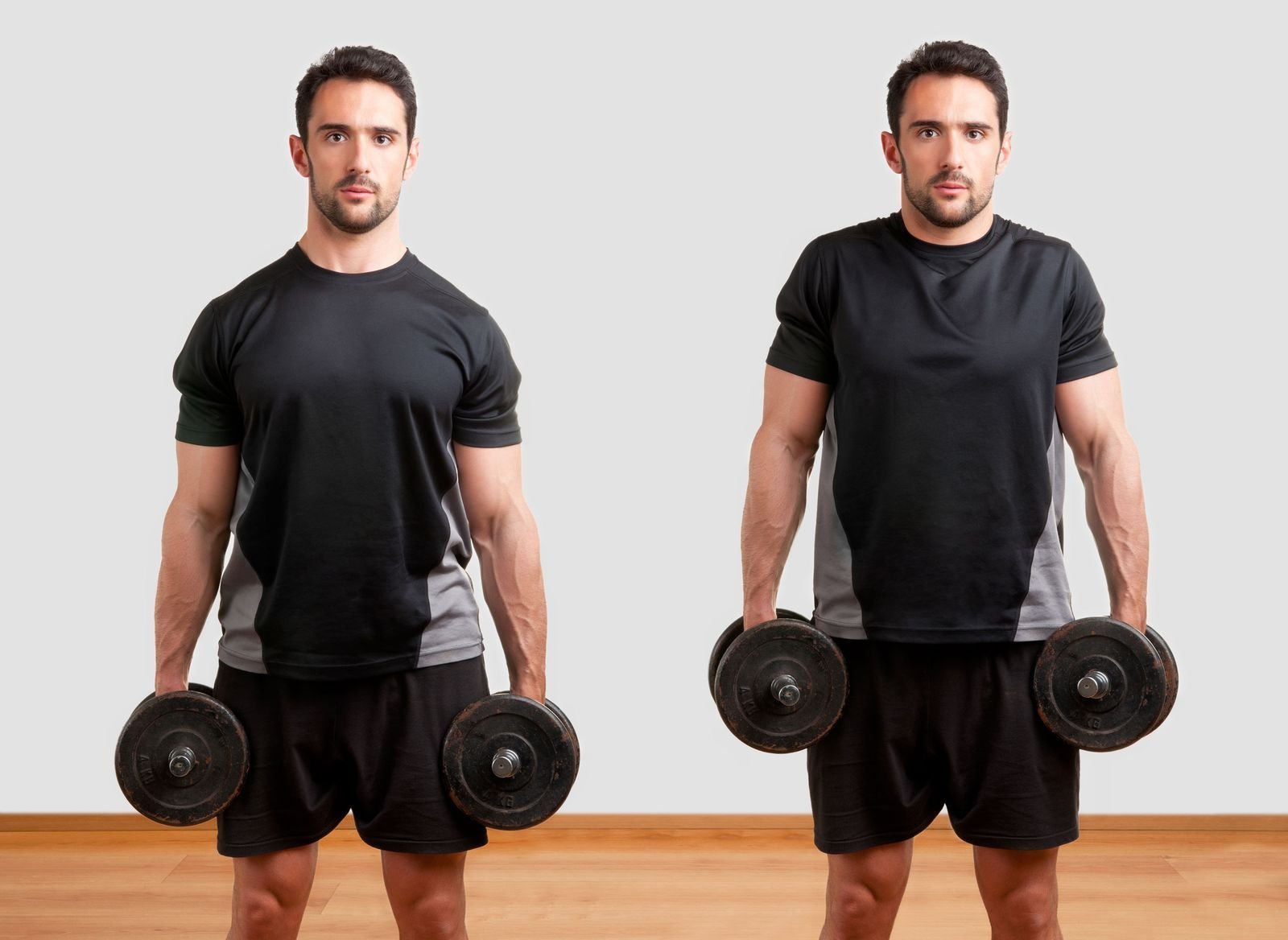
Bending the elbows is one obvious sign that the set has changed. Watch whether the hands rise because the shoulders elevate or because the elbows flex. If you repeatedly turn the movement into a small curl, take a lighter pair and re-establish the long-arm position.
A second sign is a rhythmic knee dip followed by a bounce. Powerful shrug variations exist in weightlifting, but they have a different purpose and technique. Do not accidentally convert a controlled accessory set into an improvised explosive pull simply because the load is difficult.
Head movement can be less obvious. A lifter may begin looking forward and gradually project the chin as fatigue builds. Use a mirror or a side-view recording to compare the start and finish of the set. Review the footage afterward rather than twisting your neck to watch a phone while holding the weights.
Also distinguish a small movement from an incomplete one. Shrugs naturally involve less visible travel than rows or presses. You do not need to manufacture a dramatic arc, but the shoulders should still move through the range you selected. Heavier weights accompanied by almost no shoulder movement are not automatically an improvement.
Choose your technique limit before you start. For example, end the set when you can no longer raise and lower the shoulders without elbow bending or knee assistance. That gives your repetition count a clear meaning. A shorter honest set is more informative than a longer number assembled from several different movement patterns.
4. Decide whether your hands or your traps are ending the set
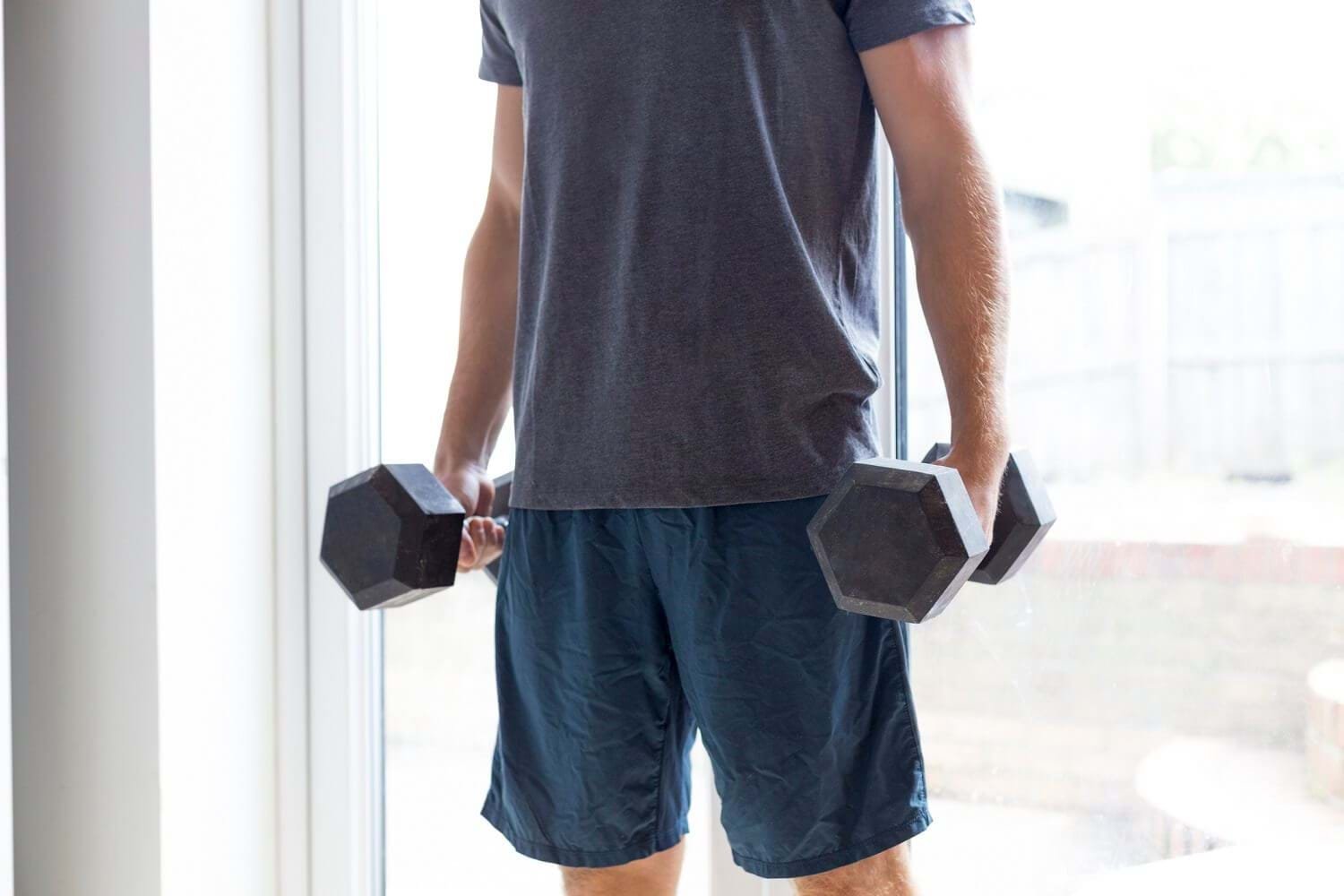
Holding dumbbells challenges your grip as well as loading the shoulder movement. If the handles slip before the shrug becomes difficult, your hands may be setting the limit. That is not a character flaw or proof that the exercise is ineffective; it is information about what the current setup trains.
If improving grip is part of your goal, keeping some sets unassisted can be appropriate. If the purpose is to challenge the traps and the hands consistently fail first, lifting straps may help. Learn their setup with a light load and confirm that you can still return and release the dumbbells safely.
Straps are assistance for holding the weight, not permission to double the load immediately. Keep the same shoulder path and technique limit when introducing them. Otherwise, a higher number may reflect both a new holding method and a less controlled repetition, making the comparison difficult to interpret.
Handle diameter, surface texture and accumulated pulling work also influence grip fatigue. A pair of thick handles after a demanding deadlift session is a different test from familiar dumbbells when your hands are fresh. Note those conditions before assuming that a lower repetition count means your traps lost strength.
For a useful comparison, record whether straps were used, which dumbbells you held and where the exercise appeared in the session. Keep those factors reasonably stable for several workouts. You can then change one variable deliberately instead of making every session a new experiment without a baseline.

Bodybuilding Shirts & Workout Gear
Bodybuilding shirts, tanks and gym gear for lifters chasing muscle, size, symmetry and the pump.

Nice Traps Big Back Tee
Heavy lifts, good laughs, and a little “Nice Traps Big Back” energy.

Dumbbell Heartbeat Crewneck Pullover Sweater Workout Fa T-Shirt
Add a playful “Dumbbell Heartbeat” touch to your casual rotation.

Hells Dumbbells Hells Bells Parody AC/DC Heavy Metal Ro Hoodie
Stay casual and show some metalhead attitude with “Hells Dumbbells”.

Shirt Pull Day – Back & Biceps Meme Top T-Shirt
Heavy lifts, good laughs, and a little “Pull Day Graphic” energy.


Dumbbell Meme Shirt – Essential & Gymbros Seeking T-Shirt
Make gym days more fun with “Dumbbell Gym Meme” style.

Vitruvian Man With Dumbbells Shirt: Leonardo Da T-Shirt
Bring “Vitruvian Man With Dumbbells” humor to your next gym day.

Shirt – Liftionaire Golden Dumbbell Gymbros & Gains T-Shirt
Make gym days more fun with “Liftionaire Golden Dumbbell” style.


Heart And Brains Dumbbell Meme : The Ultimate T-Shirt
Make gym days more fun with “Heart and Brains Dumbbell Gym Meme” style.
5. Progress the shrug within the rest of your pulling work
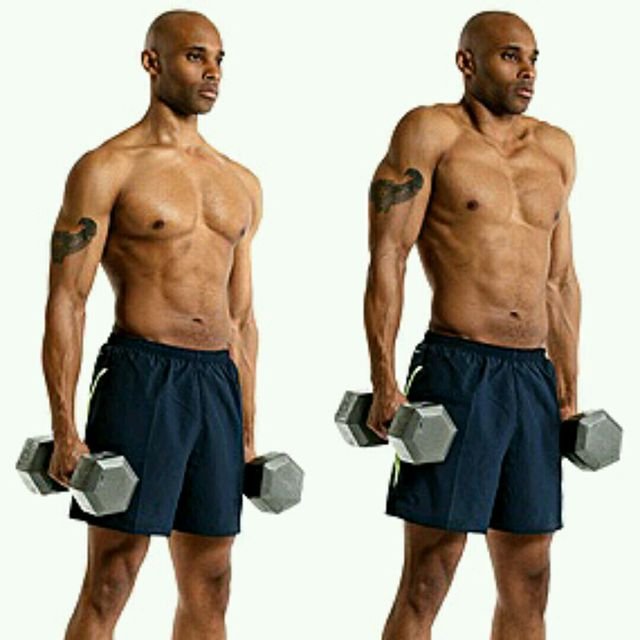
Shrugs can complement rows and pulldowns, but they do not replace every function of the upper back. A shoulder lift differs from pulling the elbows behind the torso or drawing the arms down from overhead. Give the exercise a specific role rather than expecting one accessory movement to cover your entire back session.
As an adjustable starting example, try two controlled sets of ten to fifteen repetitions after your main pulling work, leaving a small margin before technique breaks down. This is a practical template, not a proven optimal dose. Your existing workload, priorities and recovery should determine whether you need more or less.
When you repeatedly reach the upper end of your chosen range with the same control, try a modest increase. If the next dumbbell jump removes most of the shoulder movement, return to the previous pair and build consistent repetitions there. Progress can include better execution and repeatability before it includes a heavier label.
A log entry might read: twelve and eleven repetitions, no straps, controlled pause, after rows. Next time, compare against those conditions. If you move shrugs to the beginning of the session, treat that as a changed setup rather than claiming the extra repetitions demonstrate an overnight adaptation.
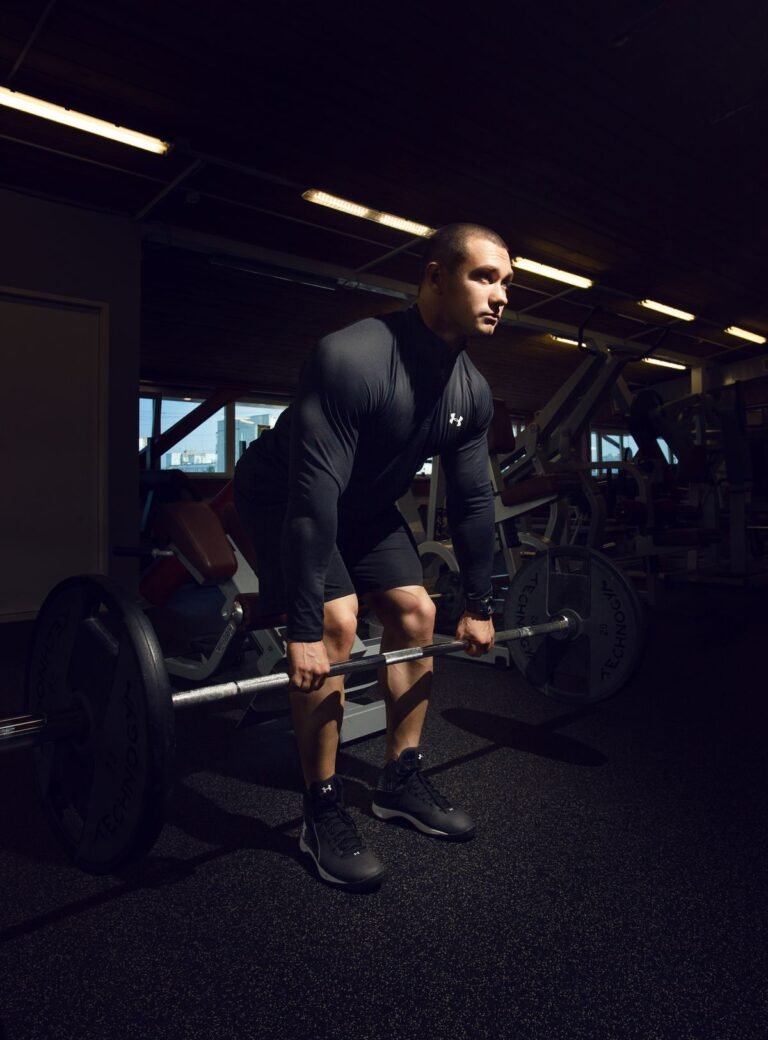
Equipment alternatives change the comparison too. A straight bar places the load in front, while a trap bar offers handles beside the body. For plate-loaded options, check the bar, plates and collars are suitable and secure. Neither version guarantees better results; choose the one you can set up and perform comfortably.
Keep the final decision simple: can you organise the weights, repeat a comfortable shoulder lift and recover well enough for the next session? If so, you have a useful accessory movement. If the exercise repeatedly causes pain or remains awkward despite reducing the load, stop forcing it and choose a more suitable option.

Equipment Worth Exploring
Explore equipment, accessories and gear from our carefully selected range.


Rubber Hex Dumbbells
Rubber-coated hex dumbbell pairs with a stable shape for home and commercial strength training.

Leather Lifting Straps
Padded leather straps support grip during heavy rows, deadlifts and pulling exercises.

Leather Wrist Grips
Padded leather lifting grips help support the hands and wrists on heavy pulling exercises.


Open Hex Bar
Open-frame trap bar with multiple handles for deadlifts, carries, and lower-body training.