Advertising disclosure: This page includes affiliate product links that may earn us a commission, as well as products from our own store.
A sandbag can make a surprisingly modest amount of weight feel demanding. The challenge is not simply that the contents can shift. A thick bag is harder to keep close to your body than a barbell, it changes how you hold your arms, and it often asks you to move while you are already tired. That makes it an interesting addition to a strength programme rather than a replacement for everything you do in the weight room.
The trick is choosing what you want from it. A heavy pickup is a strength exercise; a series of short carries can be a conditioning session; a set of controlled front-loaded squats is a leg exercise. Treating all three as the same workout makes it difficult to measure improvement. Here is how to separate the jobs, select a sensible starting load and combine them without sacrificing the quality of your main lifts.
Choose the bag for the job, not the biggest number
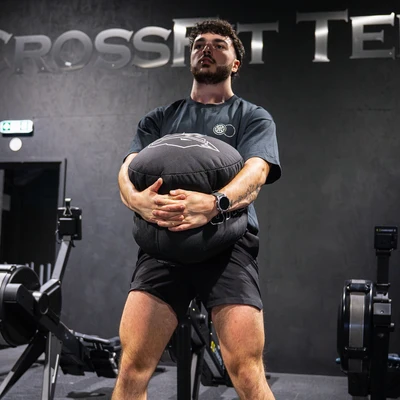
There are two common styles of training sandbag. A long bag with handles is convenient when you want to perform rows, squats, presses and transitions. You can change where you grip it without having to completely rearrange the load. A round strongman bag is better suited to hugging, loading onto a platform and lifting to a shoulder. It is deliberately awkward to grasp, and its width may matter as much as its mass. Two bags labelled 40 kilograms need not feel interchangeable.
Before buying or filling a bag, look at how the internal weight is secured. A loosely filled bag may fold or sag, whereas a more densely packed one often behaves more like a solid object. Neither is automatically better. For someone learning the pickup, a reasonably predictable shape makes practice easier to repeat. If you plan to use it indoors, choose a suitable floor, inspect the stitching and closures, and check the manufacturer’s guidance on whether the bag is designed to be dropped. A damaged filler pouch is a poor way to end a training session.
There is no universal percentage of bodyweight that determines the right starting load. Limb length, hand size, experience and the type of bag change the task. Start with a weight you can pick up deliberately, squat for several controlled repetitions, and hold against the chest for roughly 20 seconds while breathing. The first session should establish a baseline rather than find a maximum. If you cannot safely get the bag to the intended position, it is too heavy for that exercise today, regardless of how easily you deadlift the equivalent weight.
You can also use a pair of kettlebells or dumbbells held at the shoulders for a front-loaded squat or carry. They will not reproduce the exact grip or shape of a sandbag, but they are useful substitutes if the purpose is to load the legs and trunk. This distinction is important: buy equipment for the movement you need, not because a particular implement is supposed to be uniquely functional.
Learn the pickup before you chase fatigue
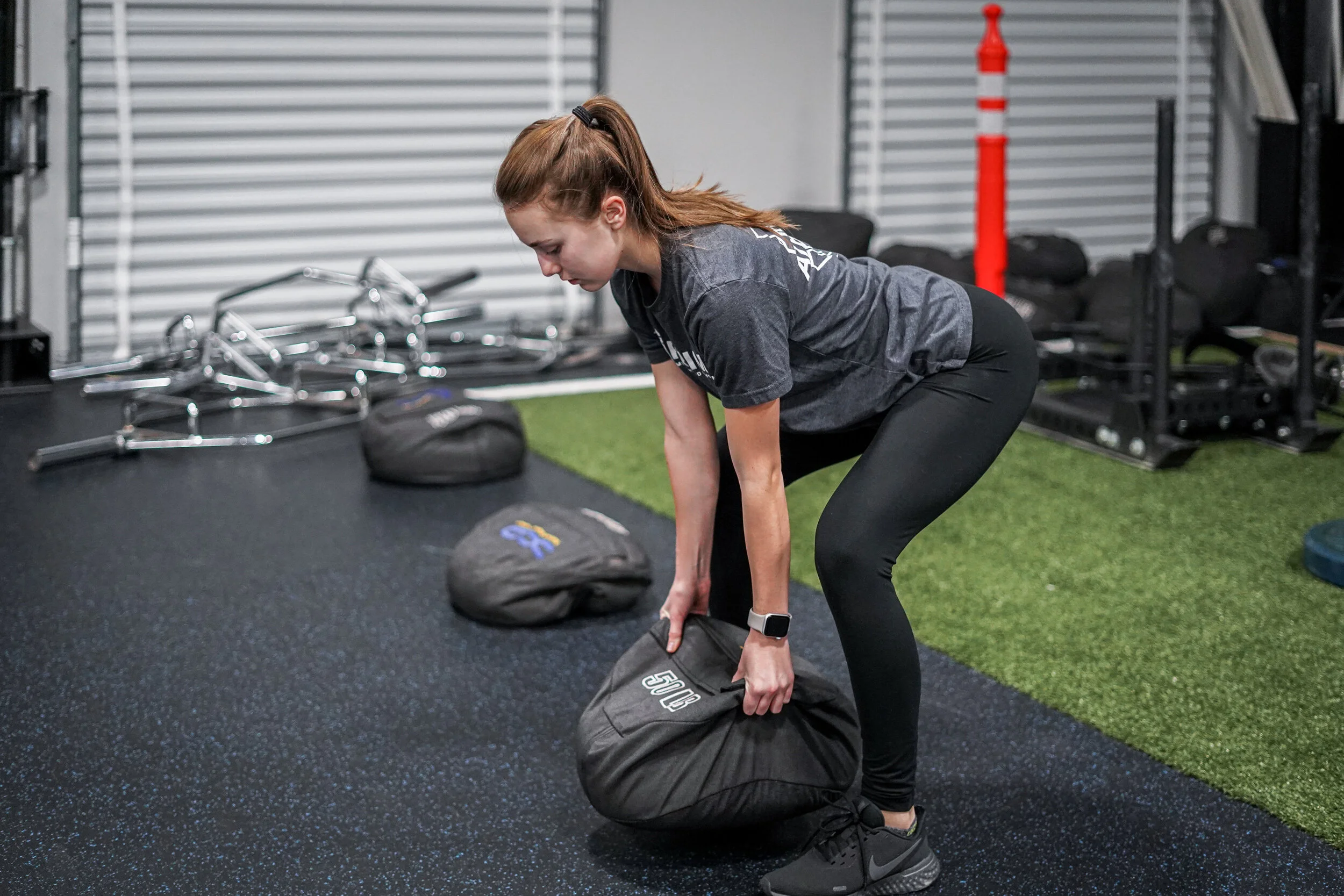
Getting the bag off the floor is a skill in itself. Stand close enough to the load that you can reach it without stretching far forward. Bend the hips and knees as needed, establish a secure grip, and tighten your trunk before standing. With a large round bag, bringing it to the lap first can create an opportunity to adjust the grip before the next part of the lift. This is not the same as trying to pull a heavy object straight from the floor to your shoulder in one violent motion.
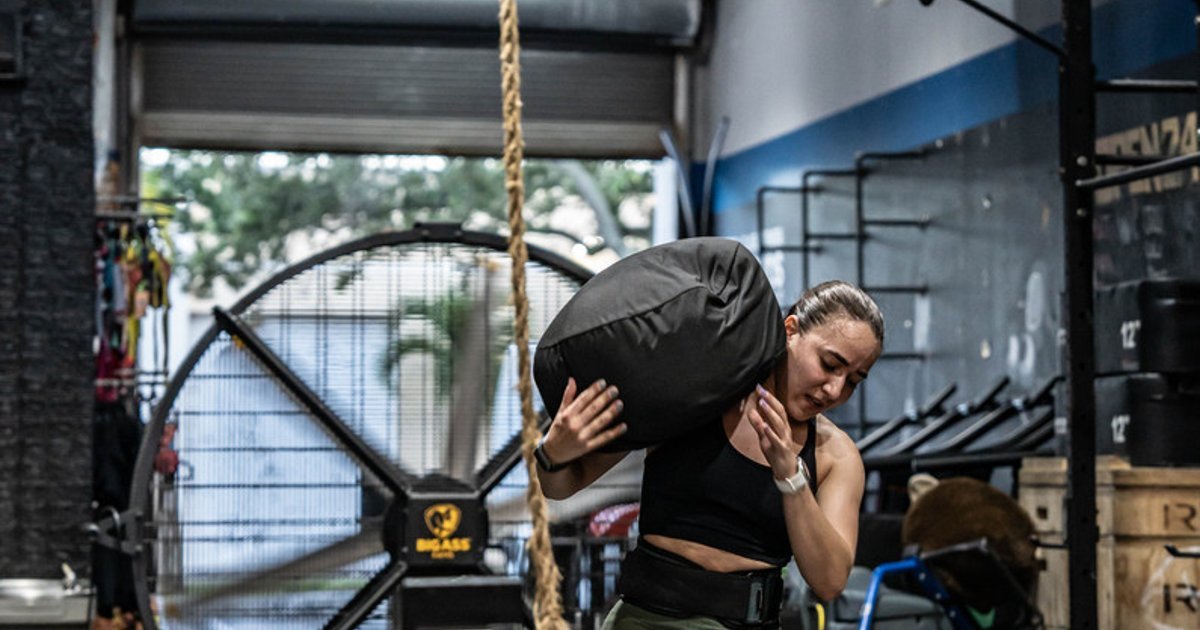
For a bear-hug pickup, the goal is to finish with the load supported firmly against the torso, not balanced at the ends of your arms. If the bag slips, reset it on the floor or a stable platform. Avoid repeatedly trying to salvage a bad grip under fatigue. For a shoulder pickup, practice the movement with a much lighter bag first and alternate sides. Let the hips and legs help move the load, keep it close, and guide it into a position you can control. A shoulder load should not be resting painfully against the neck.
Start with individual repetitions rather than a timed complex. Pick up the bag, hold it for a few seconds, and return it under control. Rest, then repeat. Film from the side if possible: check whether your starting position changes, whether the bag swings away, and whether you need to twist abruptly to finish. The aim is not to make every person’s spine angle identical; it is to avoid unexpected changes that you cannot control as the weight rises.
Research examining strongman exercises has shown how different forms of loaded lifting and walking place different demands on the trunk and supporting musculature. That does not establish that a bag is safer than a barbell or that every awkward lift transfers to sport. Much of the published work concerns other implements and experienced competitors. For a general lifter, the sensible conclusion is to practice the specific movement gradually and respect its demands instead of assuming that a strong conventional deadlift guarantees readiness.

Equipment Worth Exploring
Explore equipment, accessories and gear from our carefully selected range.


Cast Iron Kettlebells
Textured cast-iron kettlebells for swings, squats, carries, and full-body training.


Rubber Hex Dumbbells
Rubber-coated hex dumbbell pairs with a stable shape for home and commercial strength training.


Pro Sled System
Heavy-duty push-pull training sled for loaded conditioning, speed, and strength work.


Use squats and carries for different reasons
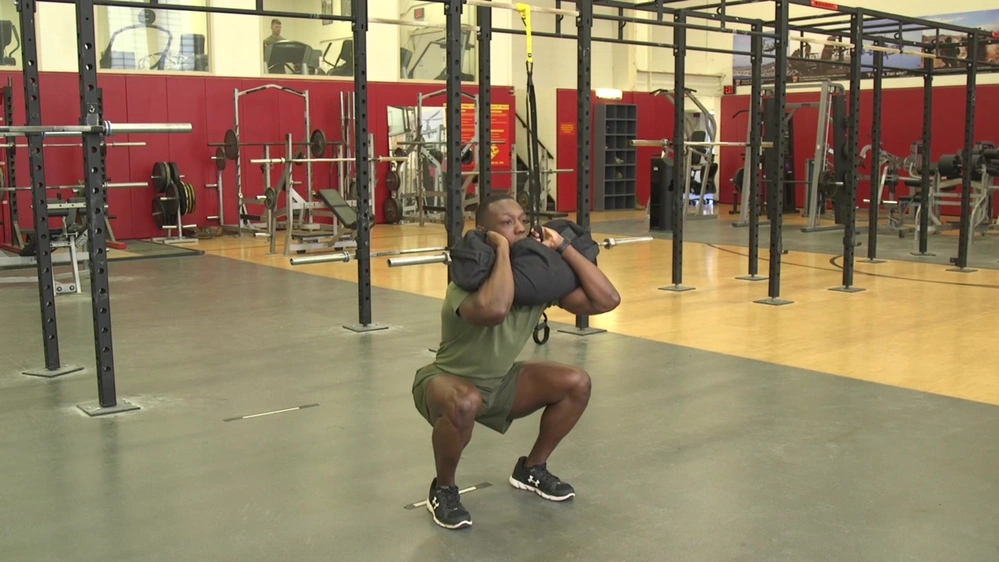
A front-loaded squat and a carry may both make the midsection work hard, but the limiting factor can be quite different. In a squat, the legs must repeatedly produce force through a range of motion. In a bear-hug carry, the hips and legs move the body forward while the upper back, arms and trunk work continuously to keep the bag in position. Your ability to breathe comfortably while supporting the load often determines how long you can continue.
For squats, choose a stance that allows your knees and hips to bend naturally. Keep your whole foot supported, hold the bag close and descend to a depth you can control. Stand fully before beginning another repetition. If you are using a round bag, a shallower but steady squat with a light load is a better initial choice than forcing depth while the bag slides down. For extra leg volume, a barbell squat or a stable machine may still be more convenient, especially if your arms fatigue before your thighs.
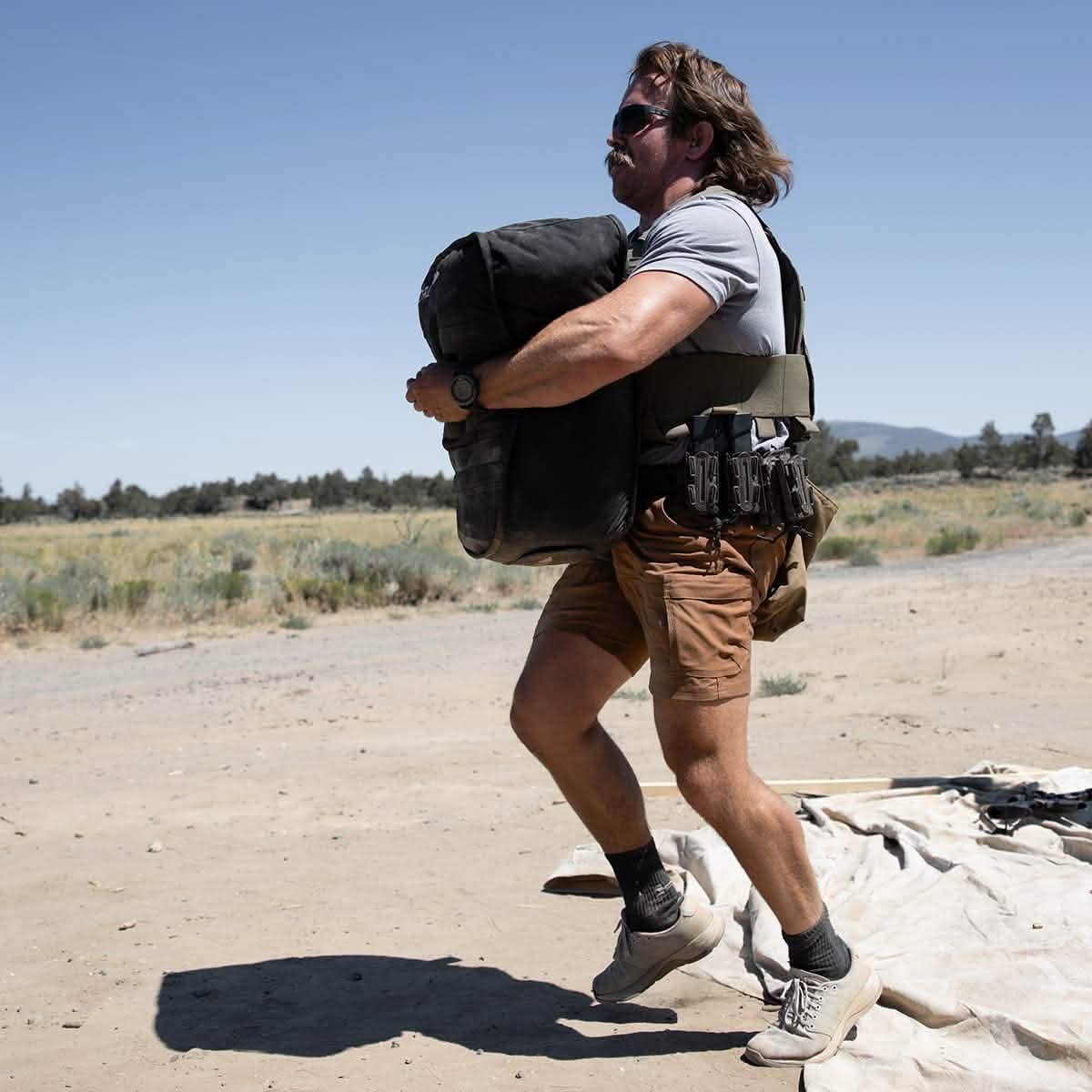
For carries, mark a straight, unobstructed route and start with short trips. Walk at a deliberate pace, keep the bag stable and avoid rushing the turns. If you cannot find a clear route, hold the bag in place for a set time or march slowly on the spot. Do not try to match a distance from an outdoor workout by taking dozens of tight turns around furniture or equipment. Turning under a load is its own skill.
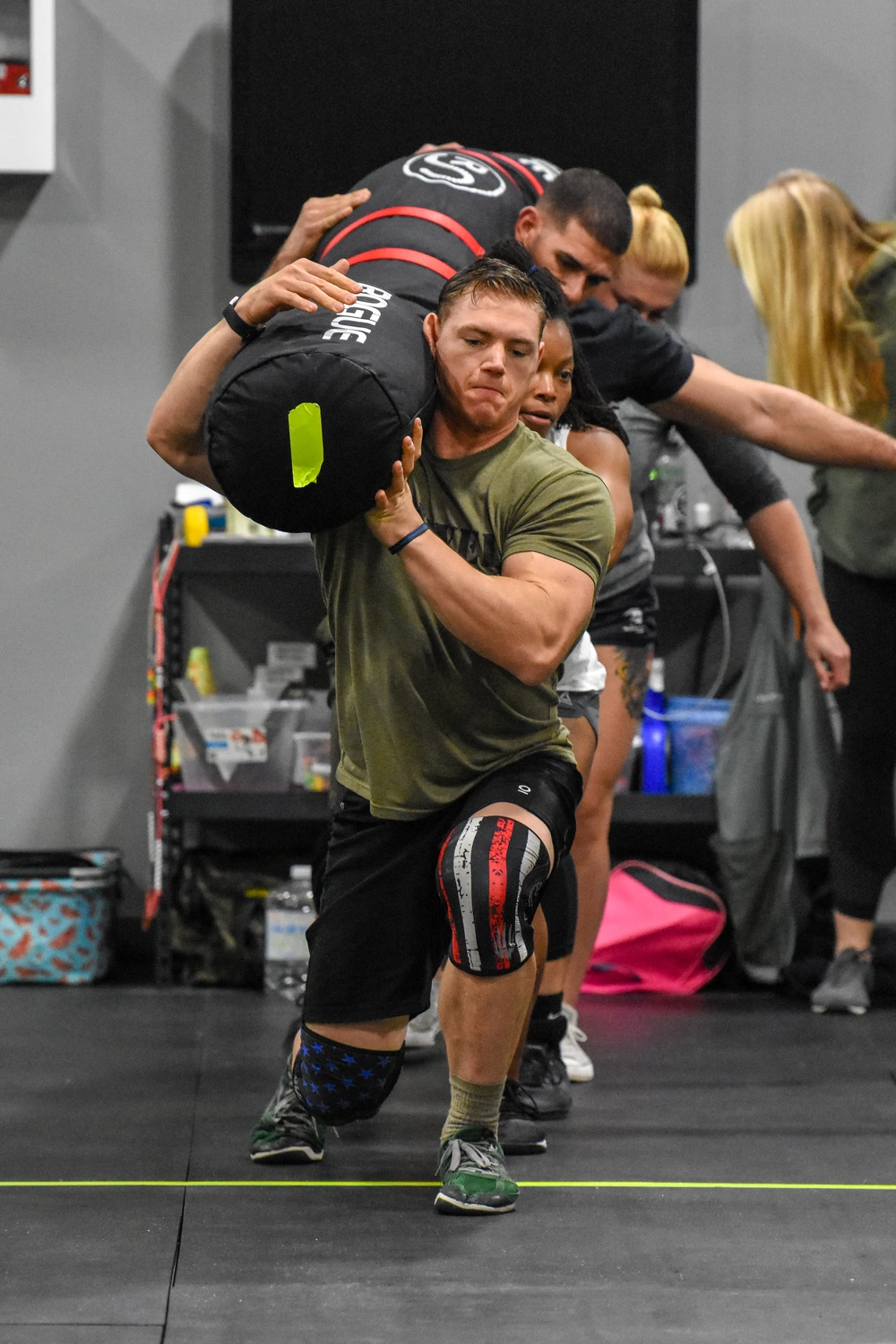
Shoulder carries introduce a different challenge because the weight is not distributed evenly. Use a lighter weight than you would for a comfortable bilateral carry, match the distance on each side and stop if you begin leaning uncontrollably. Reverse lunges are another useful progression once a basic squat is steady. A front hold is often the simpler starting position; loading a single shoulder during a lunge adds another coordination demand. You can make progress without adding that extra variable until you actually need it.
Build two sessions that complement your lifting
Instead of making every sandbag session a race, use one short strength-oriented exposure and one conditioning exposure. The following example is an editorial training plan for an already active adult, not a competition prescription. Begin with easy unloaded squats, light hinges and a few low-effort pickups. Leave sufficient time between the harder sessions and any demanding lower-body work.
Session A: controlled strength practice
- Bag pickup to bear hug: four sets of three individual repetitions, resetting between reps.
- Front-loaded squat: three sets of six to eight, leaving about two or three repetitions in reserve.
- Bear-hug carry: three trips of 15 to 25 metres, with enough rest to repeat the distance without struggling to maintain posture.
Rest around two minutes between the strength sets, or longer if necessary. If you train with a barbell, use this session after lighter main lifts or as a separate accessory day. Do not add it immediately before a heavy squat or deadlift session simply because it looks like a short workout on paper.
Session B: repeatable conditioning
- Walk 15 metres with a light bag against the chest.
- Set it down and perform five controlled bodyweight reverse lunges per side.
- Complete 30 seconds of easy-to-moderate work on a bike or rower, or brisk walking if no machine is available.
- Rest 60 to 90 seconds and repeat for four rounds.
Allow the bag to be set down between tasks. A continuous complex is an option later, not a requirement for a productive workout. Choose an effort you can repeat across all four rounds. If your last round takes twice as long as the first, or you cannot safely pick the bag up again, reduce the load, shorten the route or lengthen the rest. Mixed conditioning workouts often pair carrying with cyclical work; you do not need to use competitive loads to experience that combination.

Functional Fitness Shirts & Workout Gear
Functional-fitness shirts, tanks and workout gear for athletes who train strength, conditioning and everything in between.

Hybrid Athlete – HYROX Training Crewneck for Strength & T-Shirt
Show some gym-day personality with “Hybrid Athlete”.

HYROX High Rocks Sweater Functional Fans Meme T-Shirt
Add a playful “HYROX High Rocks” touch to your casual rotation.


Kettlebell Heart X-Ray – Valentine's Workout Meme Decal Sticker
Stick a little “Kettlebell Heart X-Ray” humor on your favorite gear.

Cheeseburger Kettlebell – Burger Swings Meme Hooded Pul Hoodie
Bring “Cheeseburger Kettlebell” gym humor to lazy days and post-workout plans.

Strawberry Kettlebell – Viral Kettlebell Meme Hooded Pu Hoodie
Make your off-duty look more fun with “Strawberry Kettlebell”.

Hells Kettlebells Hells Bells Parody AC/DC Heavy Metal T-Shirt
Add a playful “Hells Kettlebells” touch to your casual rotation.

Gotta Lift 'Em All Shirt – Pokemon Kettlebell Meme & T-Shirt
Show some gaming attitude with a playful “Gotta Lift 'Em All” tee.

Pancake Kettlebell – Breakfast Gains Meme Decal for Wat Sticker
Give your everyday gear a playful “Pancake Kettlebell” twist.

Live Love Lift Hooded Pullover Workout Gymbro Apparel Hoodie
Keep it laid-back with a little “Live Love Lift” attitude.
Progress the work without turning every round into a test
Progression works best when the measurement stays consistent. Record the bag type and actual filled weight, the carry distance or duration, the number of completed repetitions and the rest intervals. For a strength session, record whether the pickup was smooth and whether the squat depth stayed consistent. For conditioning, track each round’s completion time and how hard it felt, not just the total time. A quicker round that involves shortening the carry or using uncontrolled pickups is not comparable with last week’s round.
Over four weeks, keep the exercises stable. In week one, learn the movements and select manageable loads. In week two, add one carry trip to Session A if recovery is good; keep the other work unchanged. In week three, extend the carry in Session B by five metres per round, without increasing the bag weight. In week four, decide whether the next training block should emphasize strength or work capacity. For strength, increase the load by the smallest practical increment and return to the shorter distance. For conditioning, keep the load and aim for repeatable round times with a modest reduction in rest. If the previous week was difficult, repeat it instead.
There is no need to take carries to complete grip failure. A sudden drop is especially undesirable near your feet or other gym users. End a set when you can no longer keep the bag under control or breathe reasonably for the intended effort. Stop if you develop sharp pain, dizziness or unusual breathlessness, and seek appropriate medical guidance if symptoms persist or you have a condition that affects your ability to lift or exercise safely.
Finally, do not confuse being exhausted with becoming stronger. If your primary goal is a larger squat or deadlift, protect those sessions and let the bag fill a supporting role. If your priority is strongman-style conditioning, give carries their own place in the week and measure them like any other exercise. The payoff is not the novelty of lifting an awkward object. It is the ability to repeat a demanding movement with better control, more capacity and a clear record of improvement.