Advertising disclosure: This page includes affiliate links that may earn us a commission at no additional cost to you.
A landmine row handle and a cable row handle can look similar while solving different problems. One has to fit around a loaded barbell sleeve. The other needs a suitable connection and enough clearance from the pulley. A compact gym benefits when one attachment genuinely handles both jobs.
The Rogue LM-1P is built around that idea. Its appeal is practical: fewer handles to store and a familiar parallel grip across several pulling exercises. Whether that makes it useful for you depends on the equipment you already own, the grip you want and the space available through a full repetition. This is a specification-based fit guide, rather than an MMP hands-on review.
Two jobs need two different fit checks
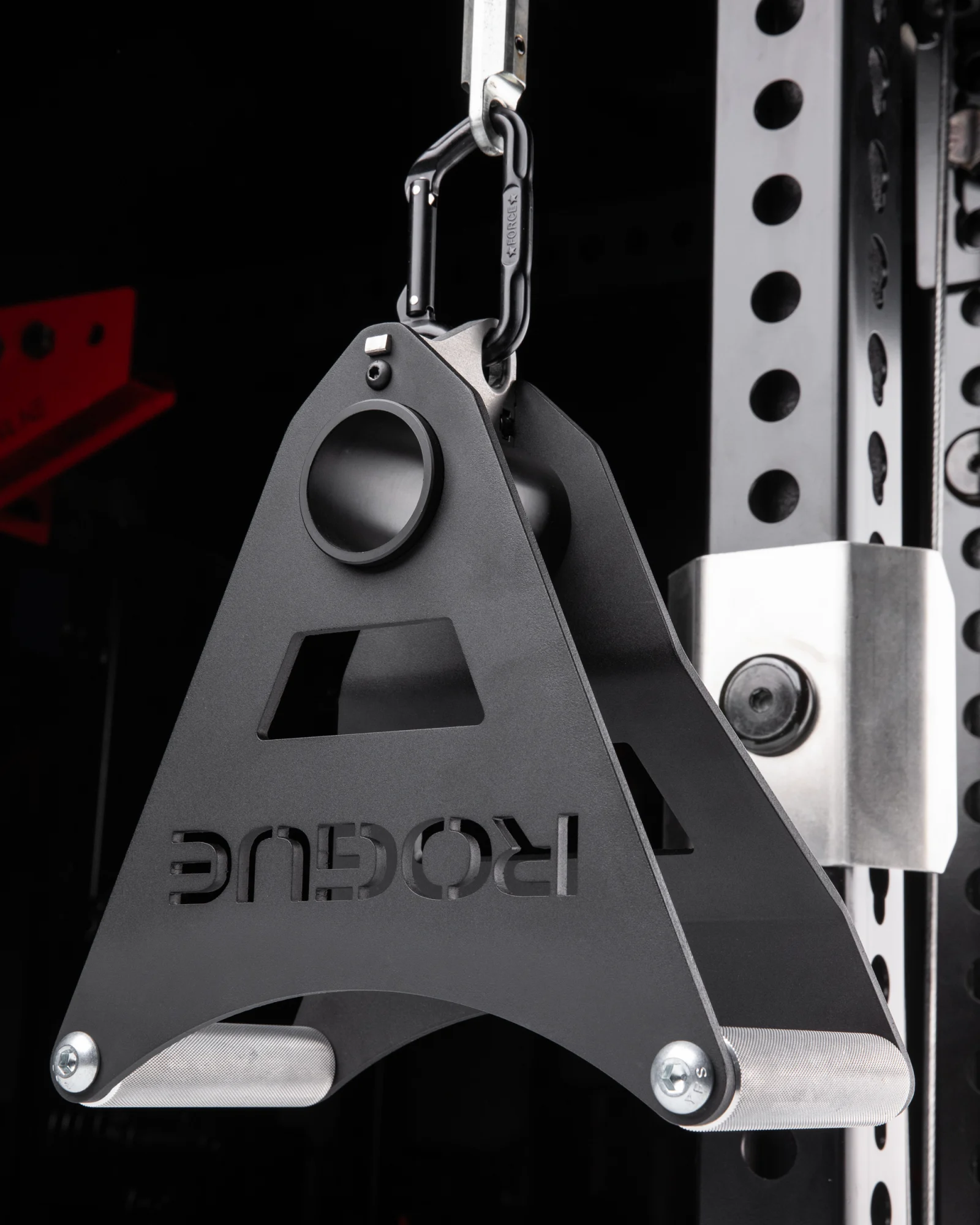
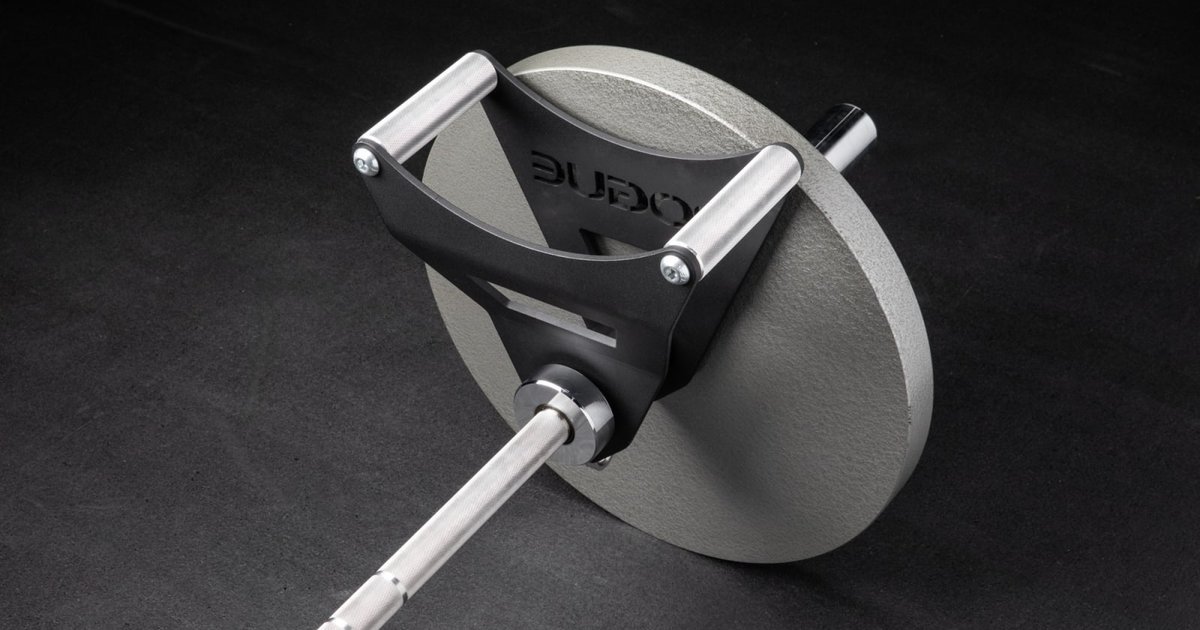
The LM-1P combines a barbell-sleeve opening with a stainless-steel cable clevis. Its non-welded construction and protective acetal bushing distinguish it from Rogue’s older steel Parallel Landmine Handle. Check the exact model name when comparing listings; similarly shaped equipment does not necessarily provide the same connection.
Start with the job that matters most. If you already have a cable handle you enjoy, the useful question is whether this attachment improves your landmine setup. If you already row comfortably around a barbell, assess the cable arrangement. Buying versatility you never use simply adds another object to the storage wall.
For the barbell, inspect the sleeve, plates and the path the attachment will follow. For the cable, inspect the machine’s intended attachment point and the space around the pulley. These are separate tests. A handle that fits one arrangement does not establish that every position on your other machine will work equally well.
Also consider changeovers. Moving one handle between stations is convenient when you train alone and use the exercises consecutively. It can be inconvenient when two people share the gym or you alternate exercises at opposite ends of the room. Sometimes two simple attachments are more useful than one adaptable attachment, even when the latter stores neatly.
Choose grip diameter before chasing heavier numbers
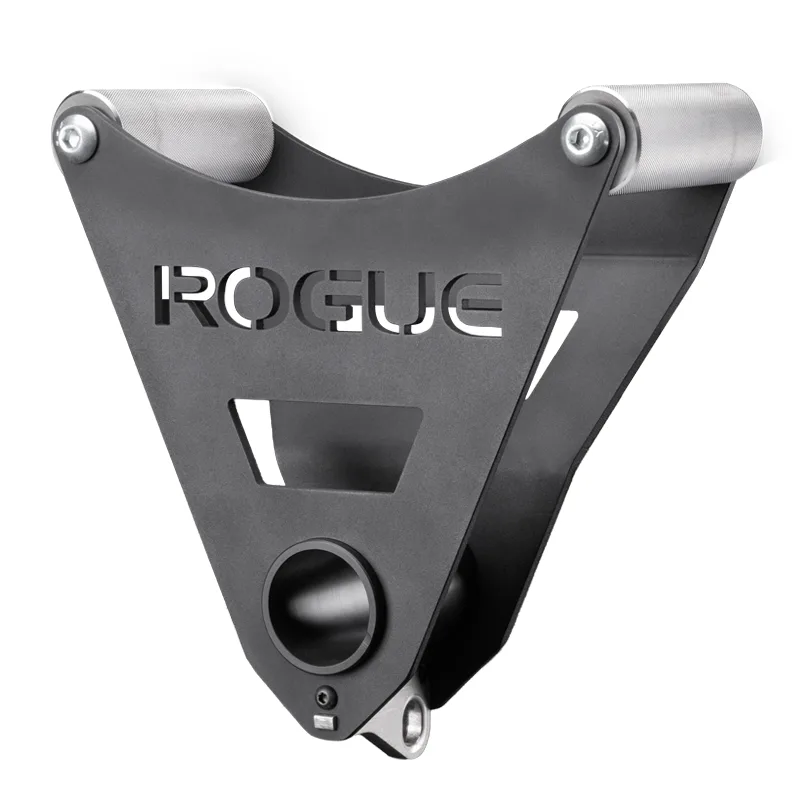
The listed grip choices are 32 mm and 45 mm in diameter. Both have 5-inch handles spaced 10 inches apart on center. The larger diameter changes what your hands must hold; it does not create an adjustable grip width. Separate those two measurements before deciding which version suits your pulling work.
If your main purpose is back training, ask whether the handle lets you complete the intended set without your hands becoming the first limiting factor. If you specifically want a thicker grip, that extra demand may be the point. Neither choice is automatically superior. The better match is the one that serves the exercise you actually intend to perform.
A useful comparison is the handle you currently use. Measure its diameter and the distance between your hands. Then consider where your wrists and elbows naturally travel. A product photograph can show the arrangement clearly, but it cannot tell you how a fixed spacing will feel across your own shoulders.
Keep comparisons honest after switching. A lower load with a different grip does not necessarily mean you became weaker, and an easier grip does not prove the new handle builds more muscle. Record the attachment and grip alongside repetitions and load. Otherwise, a small equipment change can make your training log compare different tasks under the same exercise name.
Set up the landmine before adding plates
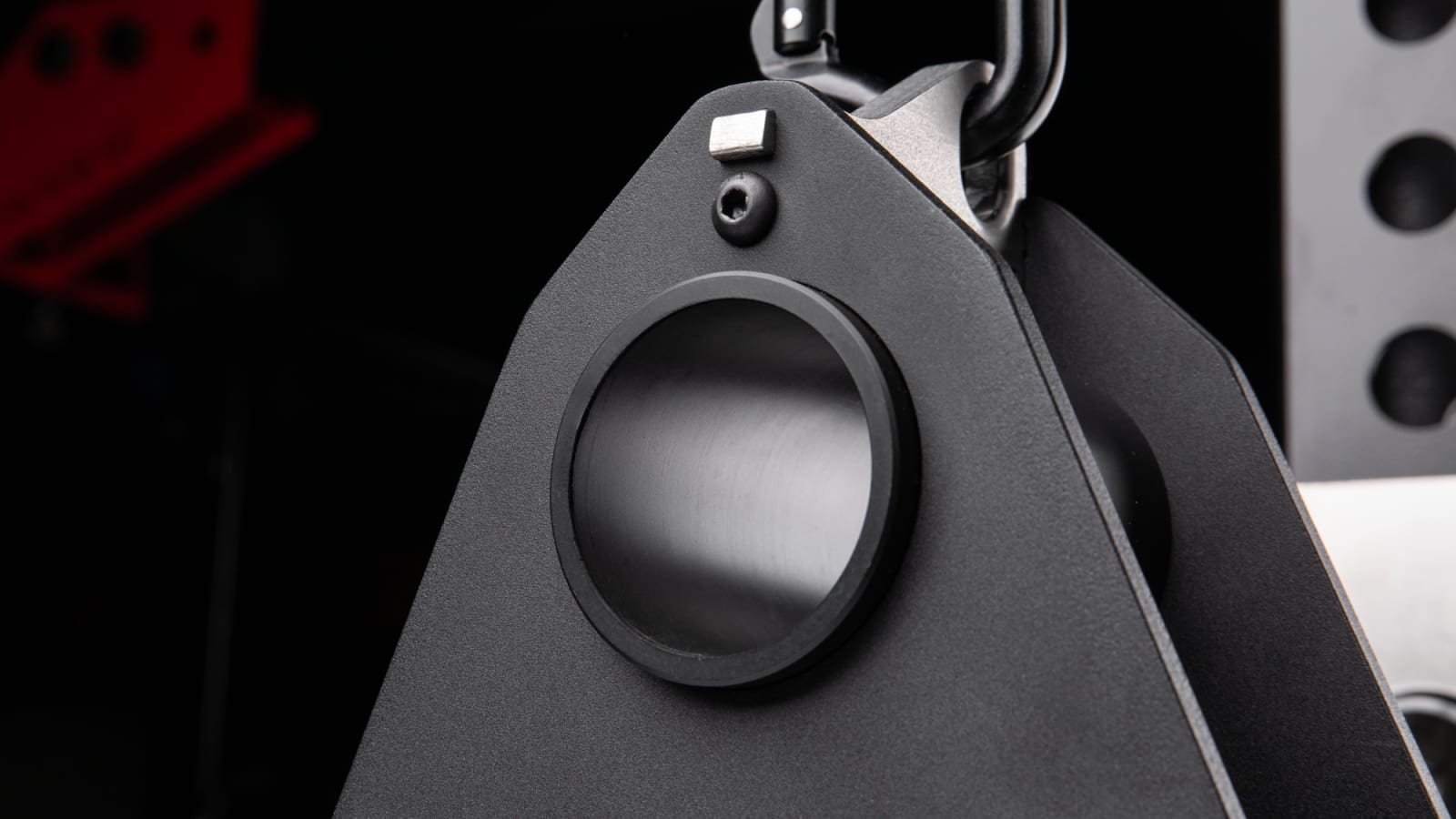
The offset frame is intended to preserve usable sleeve space, while the bushing separates the handle from the barbell sleeve. That is useful design information, but it is not a substitute for checking your actual combination of bar, plates and landmine base.
Begin with the pivot secured according to its instructions and the surrounding floor clear. Work through the intended movement before committing to a working load. Look for the handle meeting a plate, the plates meeting your body or the loaded end arriving somewhere your stance cannot accommodate. A small adjustment made now is easier than improvising midway through a heavy set.
For the row itself, establish a hip hinge with a softly bent knee and a braced trunk. Move the handle without turning every repetition into a larger rise of your torso. The objective is a repeatable pulling movement, rather than a contest to discover how much extra momentum you can add.
Our landmine-row guide to pivot position and hip hinge explains the exercise setup in more detail. Use it to distinguish a handle-fit issue from a stance or movement issue. Replacing hardware will not automatically solve a row that changes shape from repetition to repetition.
Plate numbers also need context. A landmine pivots around an anchored end, so the number printed on the plates is not a universal equivalent to a cable stack setting. Track progress within a consistent setup instead of converting unlike machines into a single supposedly comparable load.

Equipment Worth Exploring
Explore equipment, accessories and gear from our carefully selected range.

T-Bar Row Attachment
Welded barbell attachment that connects a D-handle bar for landmine and T-bar rows.

GymPin Barbell Row Handle
Heavy-duty handle attachment for barbell, landmine and T-bar rows.


GymPin D Handle Bar
Multi-use steel D-handle bar for cable rows, pulldowns and other cable exercises.

GymPin Ergo Handles
Pair of ergonomic cable handles shaped for comfortable triceps and pulling exercises.

Angles 90 Grips
Flexible grip attachments that allow natural wrist movement during pulling exercises.
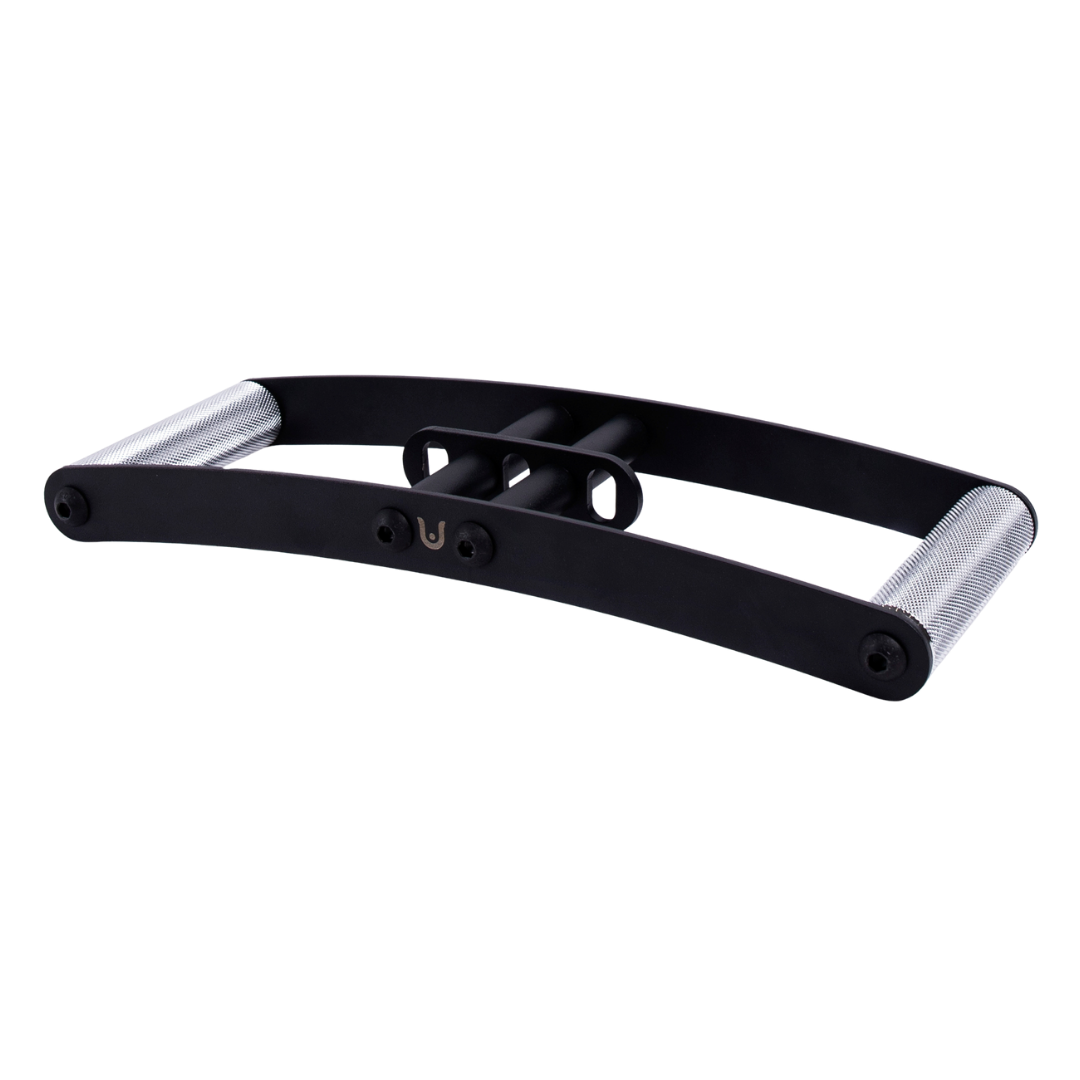
Horizon Grip
Ergonomic V-style cable grip for rows and back training.
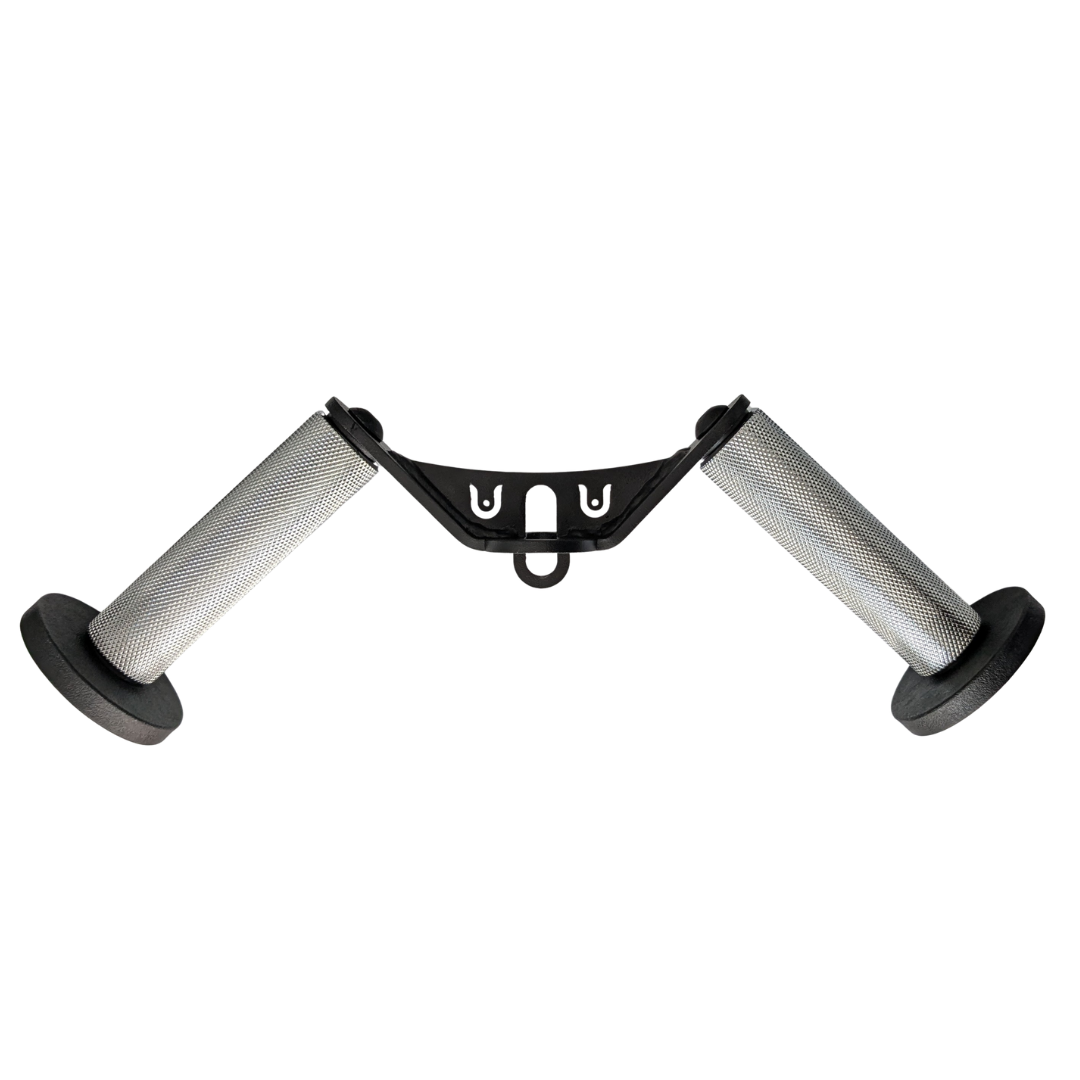
W Grip
Angled cable grip for comfortable rows, pushdowns, and curls.
Give the cable connection room to move
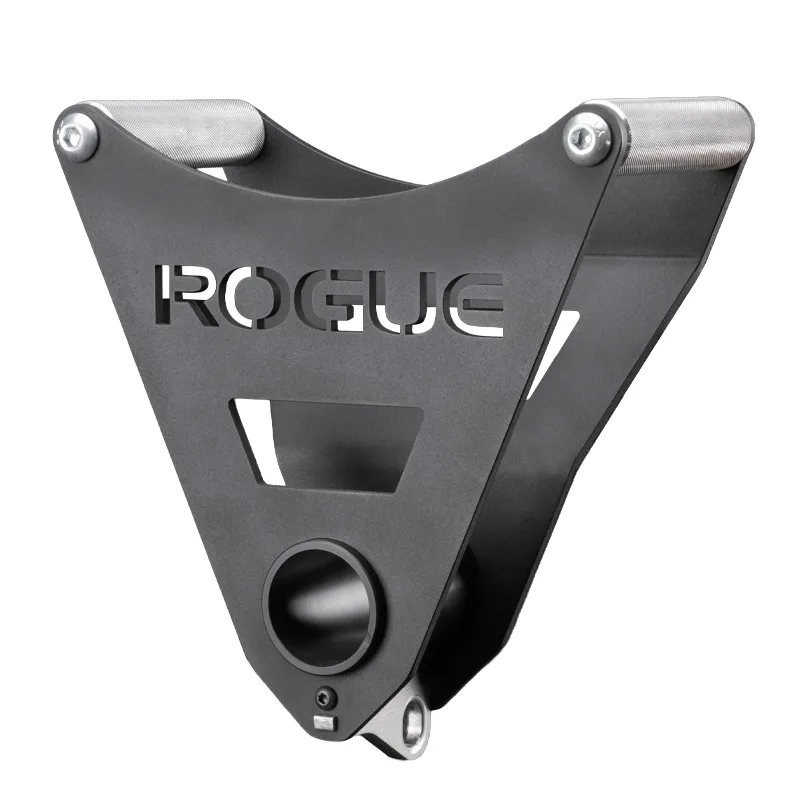
On the cable station, check the connector, the pulley approach and the full travel of the handle. Use the machine’s intended attachment method and confirm the connection closes properly. The presence of a clevis does not override the instructions or capacity of the equipment it connects to.
A low row and a pulldown place the same attachment in different surroundings. At the low pulley, consider the distance between your seat, feet and starting reach. At the high pulley, consider whether you can enter and leave the position comfortably and whether the handle reaches its intended endpoint without crowding your face or the machine.
Begin with an easy test set. Keep the return controlled and avoid bouncing or swinging the torso to finish a row. For more detail on the seated movement, see our seated-cable-row guide to grip choices and form. The attachment provides something to hold; a stable position and repeatable range still come from how you set up.
Do not assume a comfortable low row guarantees a comfortable pulldown. The direction of pull and the space around your body have changed. Evaluate each use separately, and keep an existing handle available if it solves one movement better. Versatility is valuable when it works in practice, not when every exercise must be forced through the same accessory.
Buy for the setup you will actually repeat
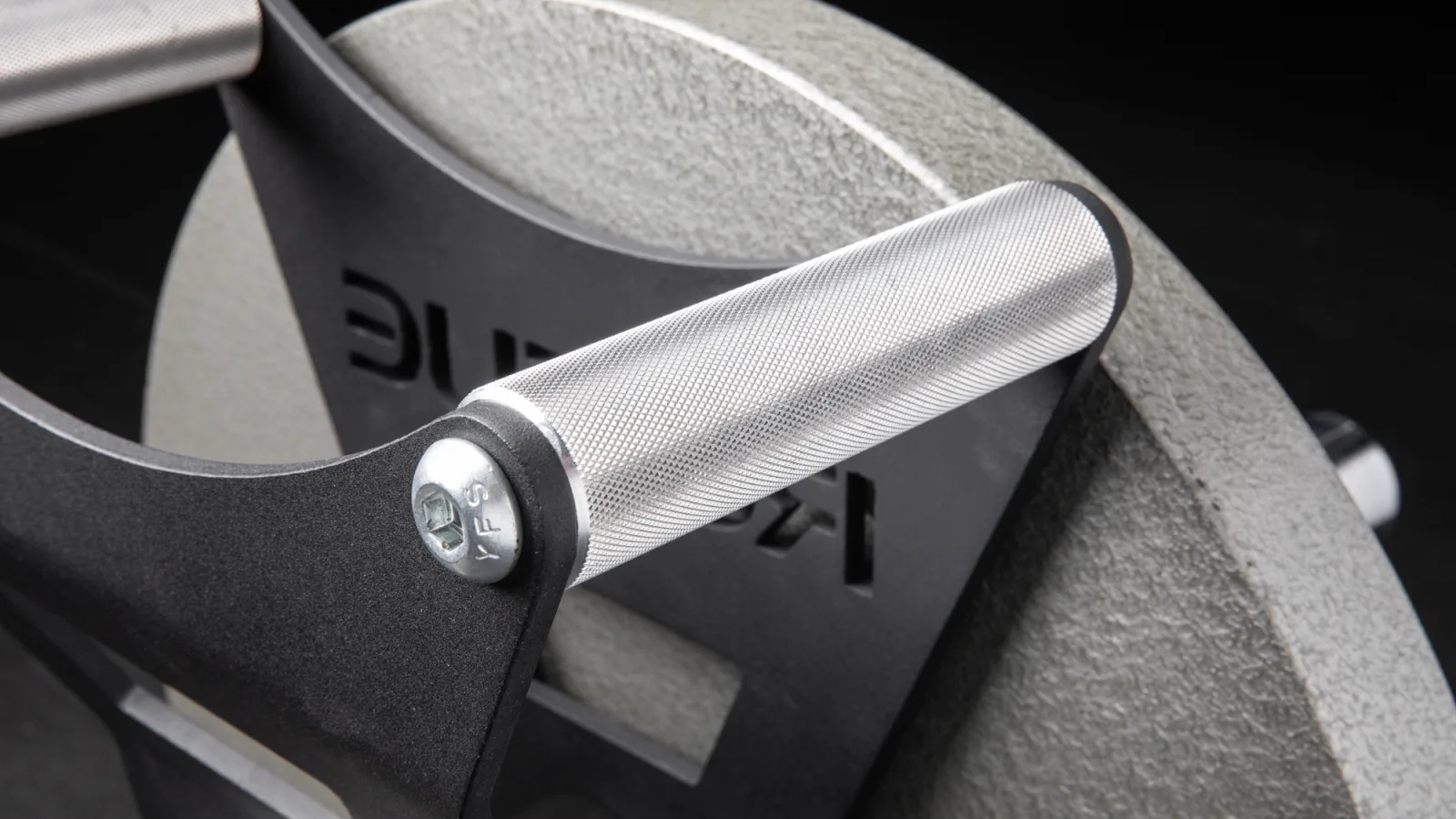
The aluminum versions weigh 4.6 lb with standard grips and 5.2 lb with fat grips. The corresponding HD-steel versions weigh 9.6 lb and 10.2 lb. The listed overall envelope is 11.25 inches wide, 6 inches deep and 11.75 inches high. Verify the selected variant rather than treating the lightest specification as universal.
That weight matters when you carry the attachment, change stations or position it overhead. It is also worth checking your storage hook or shelf before ordering. An accessory can be compact compared with a dedicated machine while still being an awkward fit for the place where you planned to keep it.
The strongest case for the LM-1P is straightforward: you use both a landmine and cables, want this fixed parallel-grip arrangement and have confirmed the clearance for both. The weaker case is replacing a comfortable existing setup simply because a new attachment promises more possibilities.
Before buying, write down the two or three movements it would serve and the specific inconvenience it would remove. After adding it, record the variant and establish a conservative baseline with consistent technique. Keep it if it makes useful training easier to repeat. A good attachment earns its place by fitting your gym and your sessions, not by expanding the list of exercises you could theoretically do.

Bodybuilding Shirts & Workout Gear
Bodybuilding shirts, tanks and gym gear for lifters chasing muscle, size, symmetry and the pump.

Nice Traps Big Back – Halloween Horror Jigsaw Meme Hood Hoodie
Keep it laid-back with a little “Nice Traps Big Back” attitude.

Lat Spread Mickey Mouse Meme Sweater T-Shirt
Bring “Lat Spread” humor to your everyday gym style.

Wide Privilege – Wide Back Meme Vest Muscle Shirt for A Tank Top
Show some personality between sets with “Wide Privilege”.


Dost Thou Even Hoist Sir? – Water Bottles & Gear Sticker
Put “Dost Thou Even Hoist Sir?” gym humor on your laptop, bottle, or gym gear.

Iron Addict Shirt – Weights & Lifting Meme & Gains T-Shirt
Bring “Iron Addict” humor to your next gym day.

Lifting Is My Therapy – Bodybuilding Powerlifting Meme Tank Top
Your gym-day look, with a playful “Lifting Is My Therapy” twist.

I’m Strong Barbell Heartbeat Decal for Powerlifting Str Sticker
A fun “I’m Strong Barbell Heartbeat” touch for bottles, laptops, and lockers.

Meme – "Shhh I'M Doing Plate Math" Hooded Hoodie
Bring “"Shhh I'm Doing Plate Math" Workout Hooded” gym humor to lazy days and post-workout plans.

Be Happy Lift Heavy Happy Weights Smiley Face Weight Pl T-Shirt
Show some gym-day personality with “Be Happy Lift”.