Advertising disclosure: This page includes affiliate product links that may earn us a commission, as well as products from our own store.
A taller box can make a jump look spectacular, but an impressive knee tuck is not the same thing as better lower-body power. The useful box jump is a crisp takeoff followed by a quiet, balanced landing on a stable surface. That distinction matters for anyone trying to build explosiveness without turning training into a contest to scrape their shins on the highest box in the gym. Here is how to choose an honest height, repeat clean jumps and fit six weeks of quality practice around ordinary strength training.
What a box jump trains: power rather than a knee-tuck trick
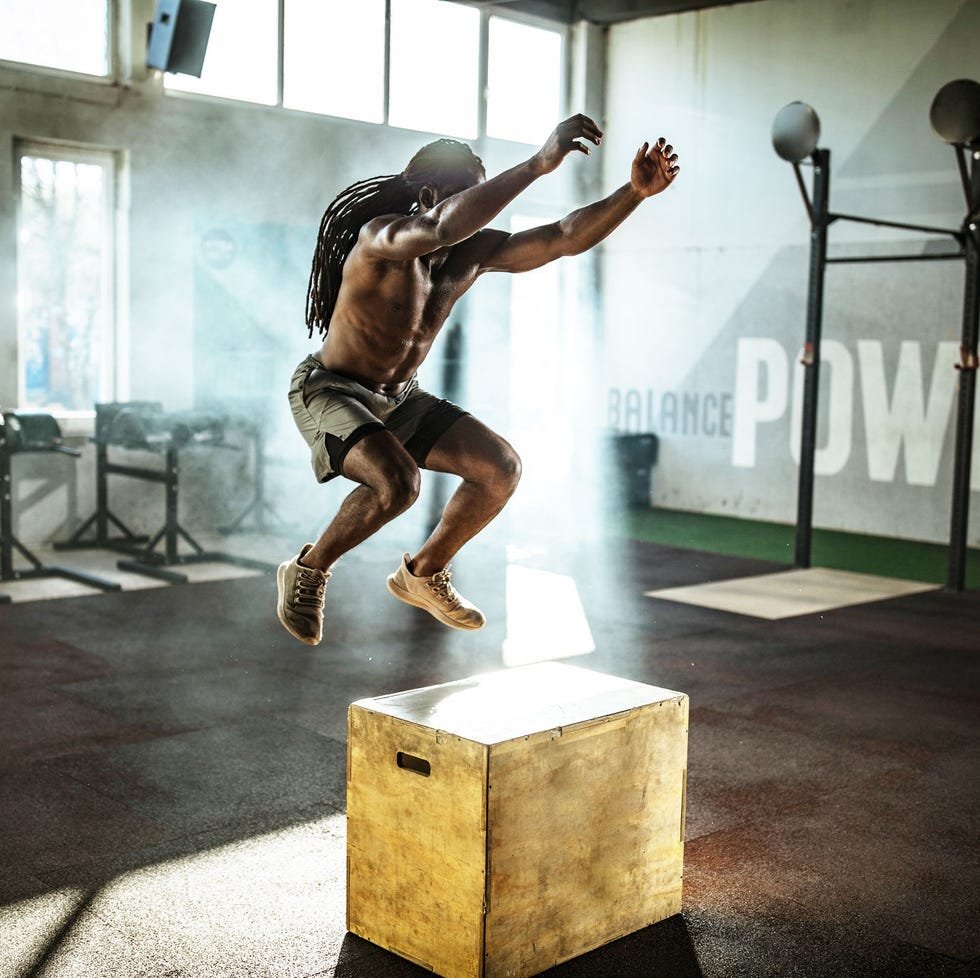
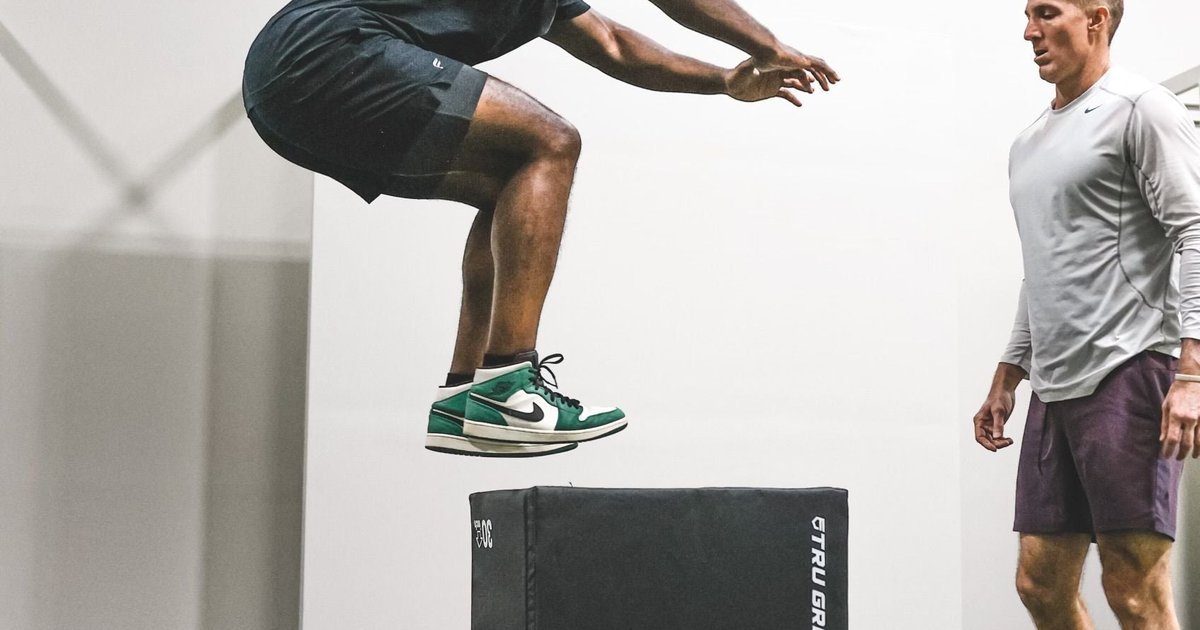
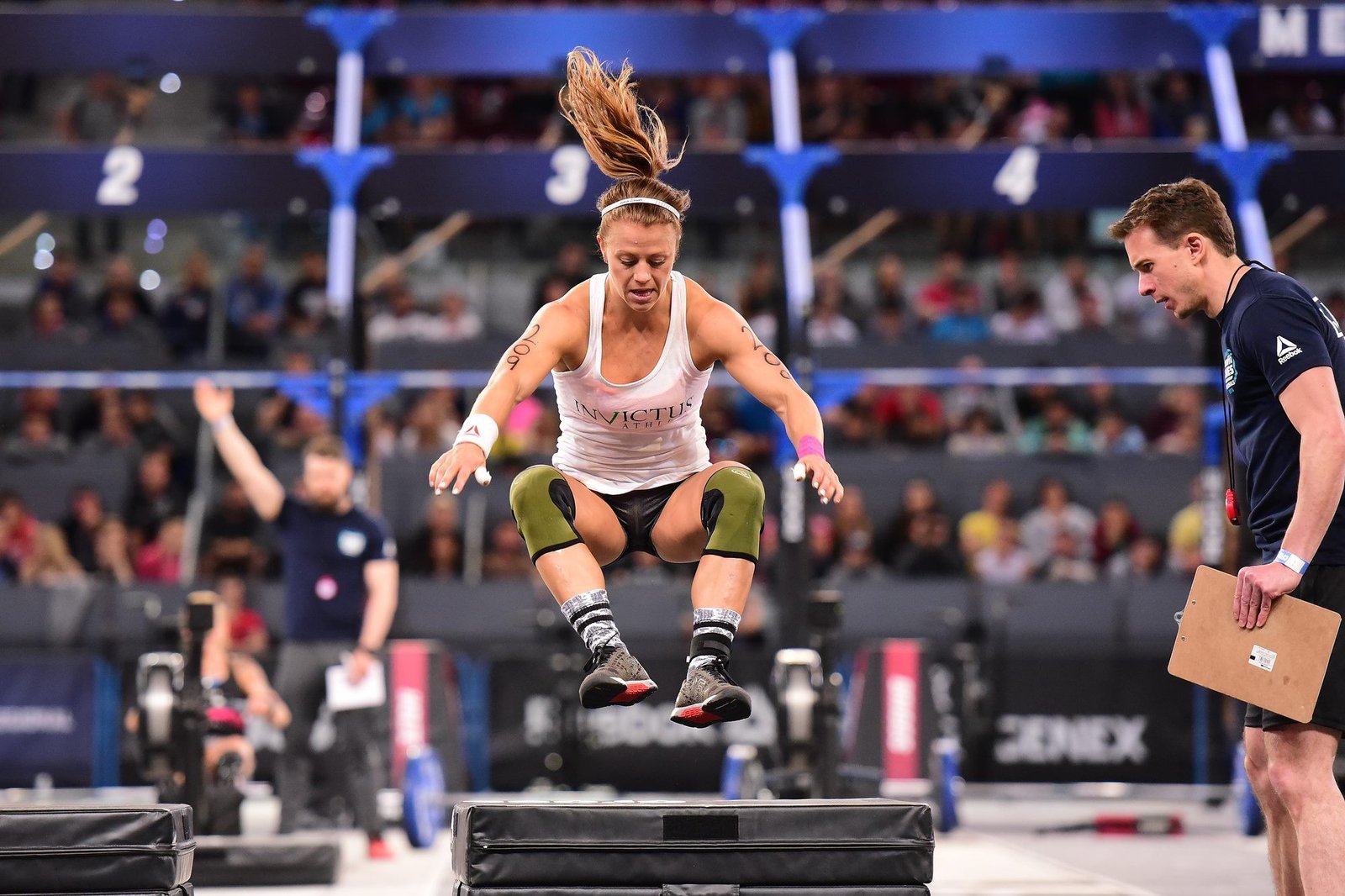
The working part of a box jump begins on the floor. A rapid but controlled dip loads the hips, knees and ankles, then the glutes, quadriceps and calf muscles help drive the body upward. Arm swing supports takeoff timing. The box changes where you land; it is not automatically a measure of how high your center of mass traveled. A person can raise their feet considerably by folding at the hips and knees without creating a correspondingly higher jump.
This is why landing position is part of the performance standard. If you must pull both knees toward your chest and collapse into a very deep squat to reach a box, the height may be measuring your flexibility and willingness to take a risk more than useful explosive output. Start with a landing in roughly the same athletic partial-squat depth you could hold confidently on the floor. Stand fully only after your feet have stopped moving.
Box jumps can be a practical part of a plyometric program, but jumping exercises are not interchangeable. Vertical jumps favor rapid upward force, while broad jumps emphasize forward projection. A depth jump intentionally adds a drop and fast rebound, making it a different and generally more demanding exposure. Box jumps also do not replace heavy squats, split squats or hip hinges, which let you progressively load muscles through larger ranges.
Broad reviews of plyometric training suggest improvements in several jump and athletic-performance measures, yet their studies vary widely in exercise selection, participants and training dose. A short box-jump block is therefore an opportunity to practice high-quality vertical power, not a guarantee of a particular sprint-time improvement or injury-prevention outcome. Track what you actually do, not the claims attached to the exercise.
Choose a box height and surface that let you land cleanly
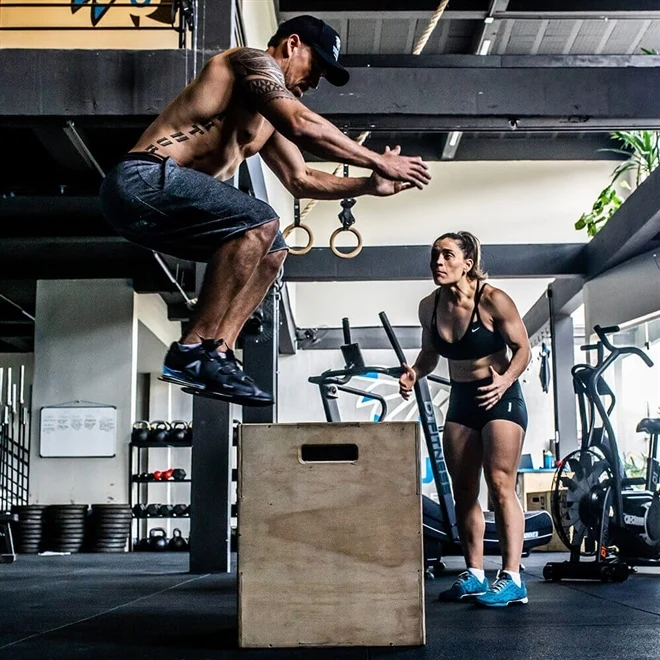
Begin lower than your ego suggests. The best initial height is one you can clear without catching the front edge, tilting the box, dragging your toes or needing an extreme knee tuck. For someone new to jumping, a low, secure step or plyometric box may be sufficient. Your body dimensions, jumping experience, footwear, fatigue and available equipment matter more than somebody else’s favorite number in inches.
Look at the box before the first rep. Is the base broad enough? Does it wobble if pushed? Is the top dry, non-slip and large enough for both shoes? A soft-sided box can reduce the consequence of a shin bump, but it still needs a firm core, grippy surface and stable base. Wooden boxes can be excellent when properly maintained, while very narrow platforms demand unnecessary precision. Never stack loose plates or weight benches as an improvised jumping tower.
Leave free space to approach the front face and to step down on the side or back. Move dumbbells, cords, spare plates and people out of that lane. In a compact home gym, the safe solution may simply be a lower box or a floor-based vertical jump. Shoes should be secure; a slick floor or loose laces are enough reason to change the setup.
To choose a height, first demonstrate three quiet floor jumps with a controlled landing. Then test a low box for two or three single repetitions with a complete reset. If the final landing is noticeably deeper than the floor version, reduce the height. Increase height only after several sessions of repeatably controlled jumps. A box-height personal best is optional; a safe, consistent takeoff and landing are not.
Takeoff technique: a small dip, strong arm swing and full extension
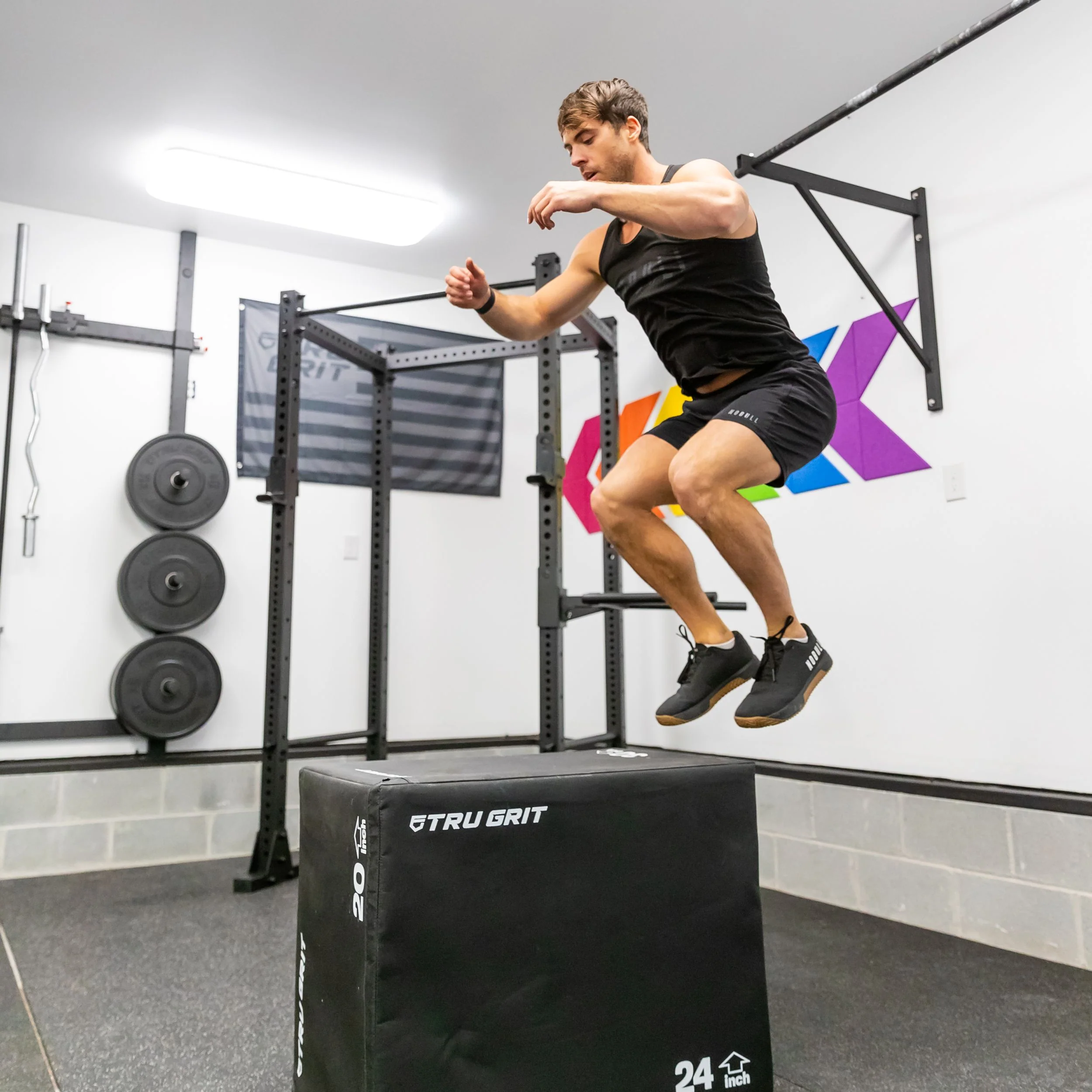
Stand an easy step in front of the box with feet around hip width and your whole foot rooted in the floor. Face it squarely. Take a modest dip by bending at the hips and knees, letting your arms travel backward. The dip should be quick enough to reverse into a jump, but not so deep that you have to climb out of a squat before leaving the floor.
Drive the floor away and swing the arms forward and upward. Think about extending ankles, knees and hips together rather than jumping only from your toes. The arm swing should help you rise, not twist your shoulders out of line with the landing surface. Keep eyes on your intended landing area without craning your neck excessively.
Both feet should leave the ground as part of one deliberate effort. As you approach the top of the box, bring your feet high enough to clear the edge and prepare for a soft landing. Raising the knees is a normal part of clearing the platform, but it should not become the entire strategy for reaching a box that is beyond your controllable jump height.
Do not turn a power set into a breathless circuit by rushing the descent and immediately bouncing upward. Return to the floor carefully, set your feet again and make each repetition look like the first. Two crisp jumps followed by one sloppy attempt are a signal to end or lengthen the rest, not to chase a fourth rep just to finish a number.

Equipment Worth Exploring
Explore equipment, accessories and gear from our carefully selected range.


Pro Sled System
Heavy-duty push-pull training sled for loaded conditioning, speed, and strength work.


Rubber Hex Dumbbells
Rubber-coated hex dumbbell pairs with a stable shape for home and commercial strength training.


Cast Iron Kettlebells
Textured cast-iron kettlebells for swings, squats, carries, and full-body training.

Land quietly and step down: the technique that protects the session
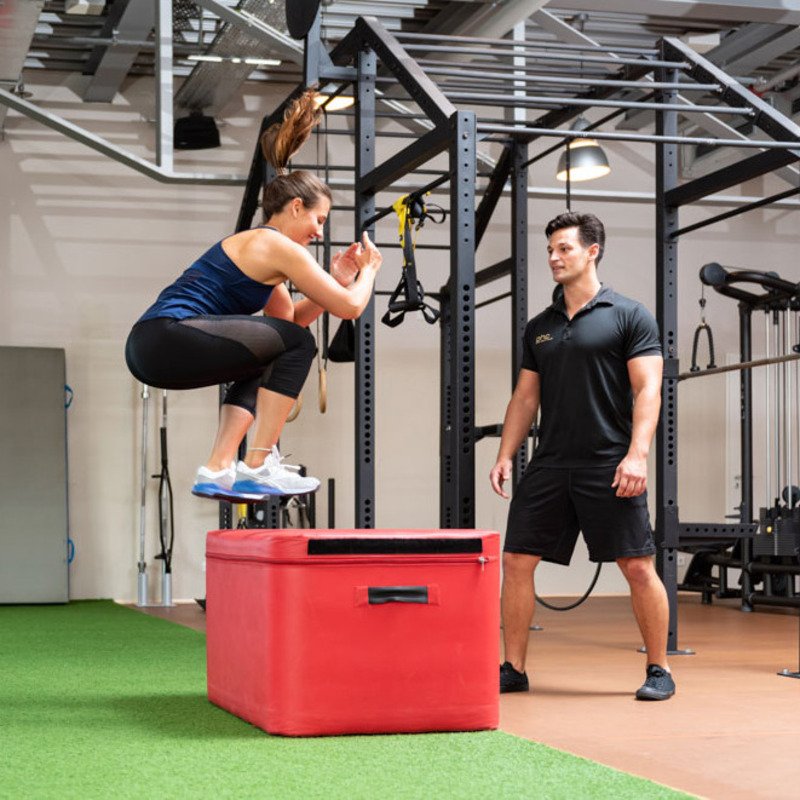
A good landing is controlled rather than perfectly silent. Aim to contact the platform with both feet securely on top and absorb the impact through bending hips, knees and ankles. Your knees should follow a comfortable line over your feet, not collapse sharply inward. Your torso may incline forward naturally, but you should not have to catch yourself with your hands or stagger toward the far edge.
Once you have stopped moving, stand tall on the box to finish the repetition. Look down and step off deliberately one foot at a time. Repeatedly jumping backward down from the top adds another landing exposure that is not required for basic box-jump power practice. Reserve reactive drop or depth-jump drills for a separate, suitably progressed program with appropriate coaching and surfaces.
Video from the side is helpful: compare the deepest point of the landing on several repetitions. When each jump demands a deeper crouch, you may be losing height. Video from the front can reveal uneven foot contact or one knee drifting unexpectedly. The objective is not rigidly identical anatomy between people, but a repeatable movement that you can control without pain.
Do not assume every quiet landing is safe, or every audible landing harmful. Noise is a practical coaching cue, not a diagnostic test. What matters is whether the box stays stable, the athlete can stop their momentum, the feet are placed reliably and the next repetition can begin from a settled position. When in doubt, take away height or repetitions before adding speed.

Functional Fitness Shirts & Workout Gear
Functional-fitness shirts, tanks and workout gear for athletes who train strength, conditioning and everything in between.


OnlyGains Kettlebell Meme Hooded Jumper Hoodie
Bring “OnlyGains” gym humor to lazy days and post-workout plans.

Cheeseburger Kettlebell – Burger Swings Meme Jumper Pul T-Shirt
Keep things casual with a little “Cheeseburger Kettlebell” attitude.

Donut Kettlebell – Bakery Gains Meme Jumper Pullover T-Shirt
Bring “Donut Kettlebell” humor to your everyday gym style.

Hybrid Athlete – Strength & Endurance Crewneck for Func T-Shirt
For laid-back days and lifting humor: “Hybrid Athlete”.


Happy Kettlebell Emoji Smiley Kettlebell Workout Shirt Tank Top
Bring “Happy Kettlebell Emoji” humor to your next lifting session.

Super Kettlebell Decal for Water Bottles Laptops Gym Ge Sticker
Bring “Super Kettlebell” attitude to your water bottle or laptop.
Box jumps, step-ups and depth jumps have different jobs
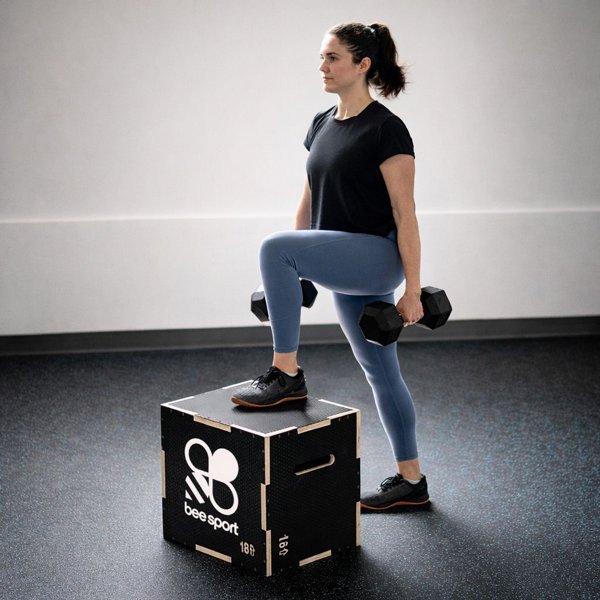
A box jump emphasizes a rapid upward takeoff and controlled elevated landing. A step-up is a slower, mostly single-leg movement where you drive through the foot already on the platform. You can load step-ups progressively with dumbbells or a vest, provided your balance and surface permit it. Those additions are not invitations to hold heavy dumbbells while attempting maximal box jumps.
A squat jump is a useful floor-based alternative when you have enough clear floor space but no appropriate box. It requires control on the landing surface and does not allow you to hide a short vertical jump with a very high knee tuck. A broad jump changes the direction of propulsion and is not a substitute for every vertical-power goal.
Depth jumps and drop jumps introduce an intentional descent from a platform, often followed by another explosive effort. These should not be quietly folded into the box-jump warm-up just because they use similar equipment. Their landing demands and skill requirements can be higher. A beginner is usually better served by mastering basic jumps and step-downs before experimenting with reactive jumps.
Strength training fills a different gap. Squats, hinges, calf raises and controlled split squats build the ability to produce force against resistance, while well-rested jumping practice trains how rapidly you express it. A practical home-gym combination might use a few box jumps early in a leg session, followed by low-repetition squats and later accessory work. The jump sets should be finished before fatigue causes takeoff speed or landing quality to deteriorate.
A six-week, two-day box-jump progression for better-quality reps
For a healthy trainee already comfortable with basic squats, brisk walking and low-impact hops, two short jump sessions a week can create a repeatable practice habit. Leave at least one day between the sessions if your other training is demanding. Use a 5–10 minute warm-up of easy locomotion, ankle and hip movement, a few controlled squats, then low floor jumps before working with the box.
| Weeks | Day A | Day B | Goal |
|---|---|---|---|
| 1–2 | 3 × 3 low box jumps | 3 × 2 low box jumps plus 2 × 5 controlled step-ups | Build a consistent setup and quiet two-foot landing. |
| 3–4 | 4 × 3 box jumps | 3 × 3 box jumps plus 2 × 5 step-ups | Repeat the same height without losing takeoff crispness. |
| 5–6 | 4 × 3 box jumps, same box or a small increase | 3 × 3 crisp box jumps plus 2 × 5 step-ups | Increase height only if all landings remain controlled. |
Rest roughly 90–180 seconds between demanding jump sets, longer when needed to recover enough to be explosive. Treat the table as a modest example, not a medical prescription or a race for weekly volume. If your landing becomes noisy, asymmetrical or rushed, repeat an earlier week’s dose, lower the box or stop. The progression can improve by making the same low height easier and more consistent; it does not require adding inches.
Keep strength exercises separate from the jump score. On Day A you might follow jumps with squats or a stable machine pattern, then a few accessory sets. On Day B you could use a hinge or split-squat emphasis. If you perform hard sprints, sport practices or high-impact conditioning elsewhere, account for those contacts before adding more jumps. For a novice who finds hopping uncomfortable, begin instead with step-ups and basic strength and balance work.
Log the box height, number of clean reps and a simple note on landing depth and confidence. A small video every two weeks makes changes in technique easier to notice. The best milestone at week six is often repeatable, calm landings at a known height, not one dramatic jump with a near miss.
Equipment Worth Exploring
Explore equipment, accessories and gear from our carefully selected range.

GymPin Squat Wedges
Non-slip 15-degree squat wedges help elevate the heels for deeper quad-focused squats.


Foldable Wall Rack
Wall-mounted folding squat rack designed to save floor space between workouts.

Squat Harness
Wearable harness for hands-free cable squats, sled work, and lower-body training.

Multi Pull Smith Rack MPHR-780
All-in-one rack with a Smith machine, functional trainer, lat pulldown and low row.


Competition Plates
Competition-style bumper plates for Olympic lifts and loaded strength training.

Common mistakes, recovery and when to skip jumping
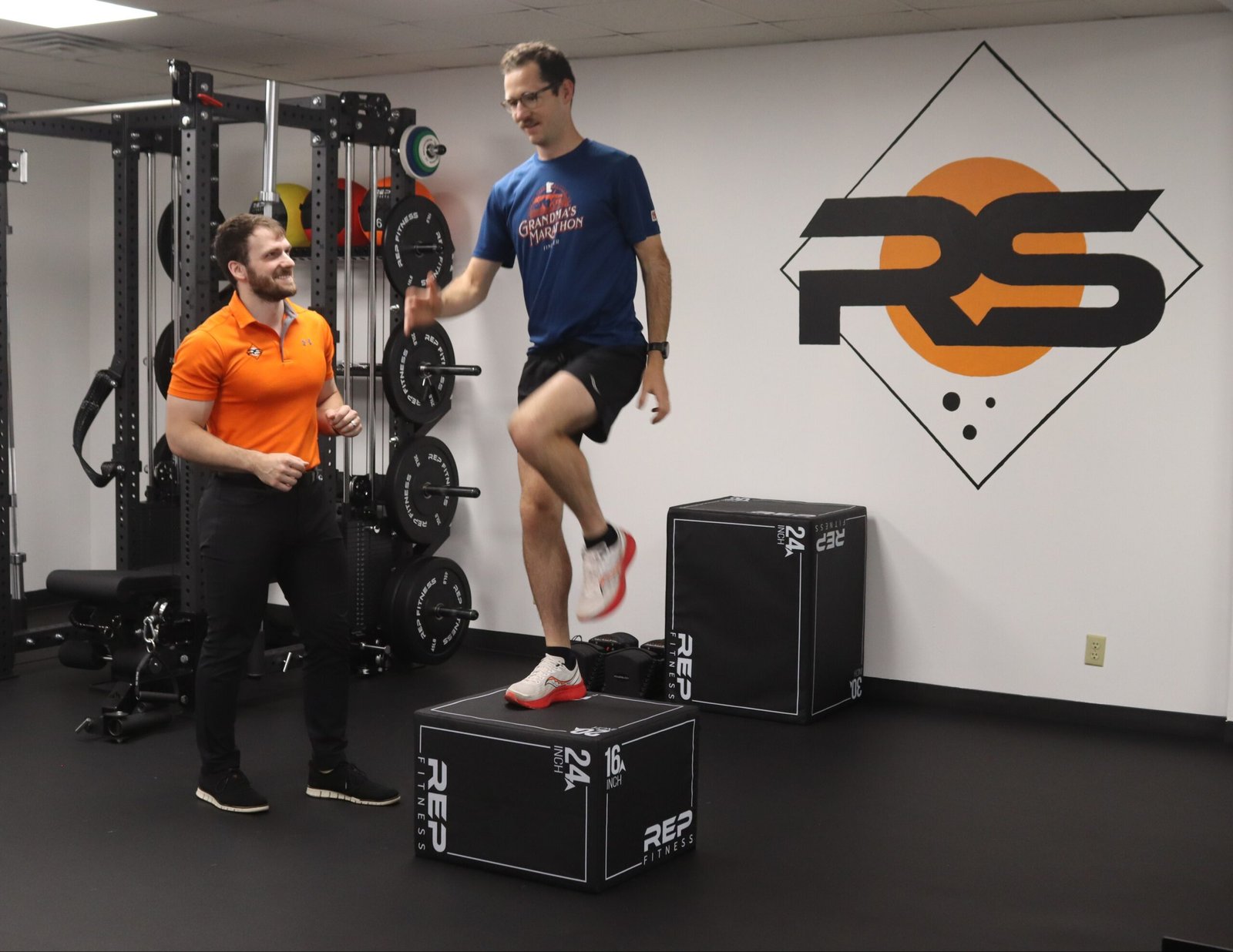
Using a box that is too tall is the obvious mistake. Reaching it by hauling knees high while the hips barely rise makes the drill harder to judge and the edge easier to catch. Rebounding immediately is another: it blurs the distinction between an elevated landing and a reactive depth jump, adding work you may not be prepared for. Slow down, step down and reset.
Another trap is letting conditioning goals displace power goals. When the session becomes a maximal-repetition race, contact quality commonly declines. If your aim is explosive jumping, do a handful of high-intent repetitions with sufficient rest. Higher-volume burpee-box-jump workouts have a different objective and should not be confused with a controlled technique session.
Watch for accumulated impact from runs, court sports, skipping rope and hard leg training. A little normal muscle fatigue is expected, but repeated ankle stiffness, tendon soreness or progressively worse landings means the total workload may need trimming. Sharp knee or Achilles pain, dizziness, foot instability and loss of balance are reasons to stop, not cues to push harder.
Older trainees, people returning from lower-limb injury, or anyone with uncertain joint tolerance can still train lower-body strength and power, but the starting exercise should be matched to individual capacity and any professional guidance they have received. Low step-ups, supported split squats and controlled calf raises are reasonable alternatives while rebuilding the prerequisite control; a particular box height is never mandatory.
The takeaway: practice a strong takeoff, own the landing, step down and earn each progression. A low box with clean mechanics offers more useful repeatable training than a high box you barely survive. Use strength exercises to develop force, box jumps to practice expressing it quickly, and your own recovery to decide when another session belongs on the calendar.
Leg Day Shirts & Workout Gear
Leg-day gym shirts and workout gear for lifters who never skip squats, lunges and lower-body punishment.


Squat Here | Edgy Workout | Gym Meme Hooded Jumper Hoodie
Make your off-duty look more fun with “Squat Here”.


Quadzilla Massive Quads Sweater Leg Day Squatting T-Shirt
Keep things casual with a little “Quadzilla” attitude.

Legday – Squats & Deadlifts , Meme Top Bros & T-Shirt
Bring “Legday” humor to your next gym day.

Leg Day Is Calling You Squats, Deadlifts & Gains T-Shirt
Rep “Leg Day Is Calling You” humor in and out of the gym.

Never Skip Leg Day Squats & Deadlifts Meme , Top T-Shirt
Show some leg-day attitude with a playful “Never Skip Leg Day” tee.

Quadzilla Massive Quads Decal Leg Day Squat Meme Sticker
Stick a little “Quadzilla” humor on your favorite gear.

Muscle Mommy : Snow White & Squats Vest Princess Tank Top
Show some personality between sets with “Muscle Mommy”.

I Love Squats – Valentine's Day Leg Day Meme Jumper T-Shirt
For laid-back days and leg-day humor: “I Love Squats”.