Advertising disclosure: This page includes affiliate links that may earn us a commission at no additional cost to you.
The Beastmaker 1000 and 2000 look like two levels of the same purchase. It is tempting to treat the higher number as the upgrade: buy the harder board now, grow into it later. That is a poor starting point if the holds you can use productively are the ones the harder board gives less space to.
The better question is which layout matches your current climbing and the grips you actually want to train. This is a specification-based buying comparison, not a hands-on MMP review or a universal finger-training prescription. Both boards can challenge strong climbers. Neither makes someone ready for demanding finger work simply because it is mounted above a door.
The 1000 gives useful space to accessible holds
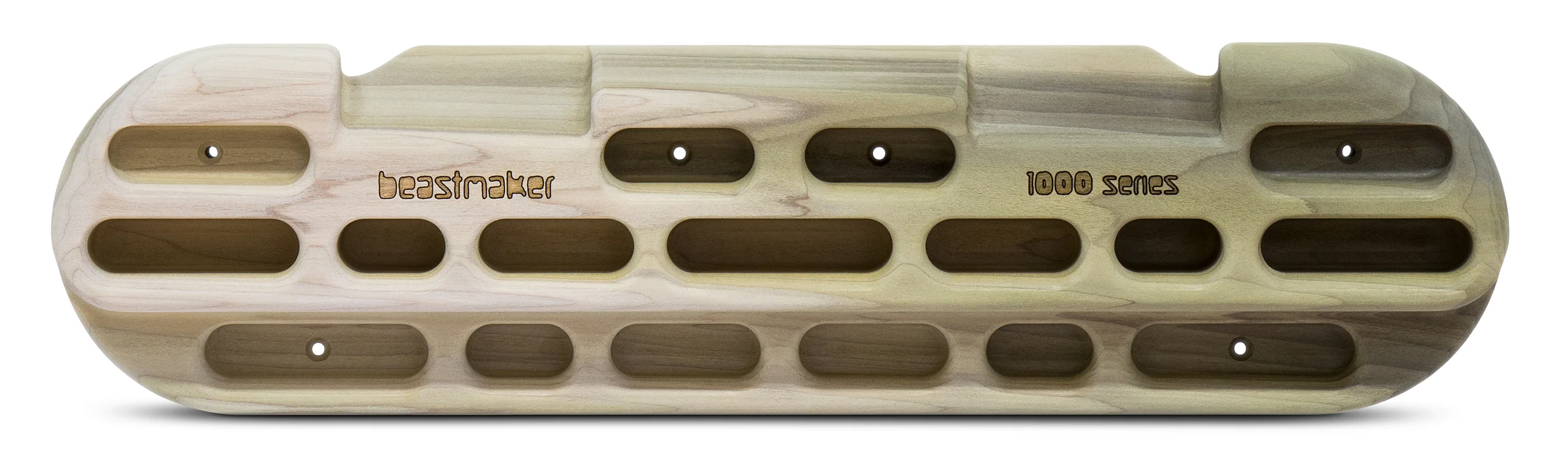
The Beastmaker 1000 has two large jugs, slopers at 20 and 35 degrees, and pockets with different depths and finger capacities. Its layout replaces the 2000’s steepest slopers and single-finger pockets with more approachable options. That is a meaningful design choice rather than a cosmetic difference between model numbers.
Large holds give you somewhere comfortable to establish position before thinking about smaller edges. They also leave more options when you want an easier effort. A board that supports several appropriate tasks can be more useful than one whose most distinctive features remain beyond your present needs.
That does not mean every pocket on the 1000 is easy. Small edges and reduced finger contact can still be demanding. Read the hold map rather than assuming the whole board belongs to one difficulty category. The label describes an intended range of users; it does not make every possible grip suitable for every beginner.
Imagine two buyers. One mainly wants a repeatable, comfortable edge for controlled hangs. The other wants to explore many pocket combinations because a specific climbing objective demands them. The first buyer should not pay attention only to how many difficult-looking holes appear in a product photo. Their regular usable hold matters more than the board’s most intimidating feature.
A practical shopping test is to list three tasks you expect to repeat, then identify where each fits on the board. If you cannot explain why you need a particular hold, treat it as an optional feature. That keeps the buying decision attached to a training purpose rather than a vague ambition to become stronger.
The 2000 makes sense when its extra grip options solve a problem
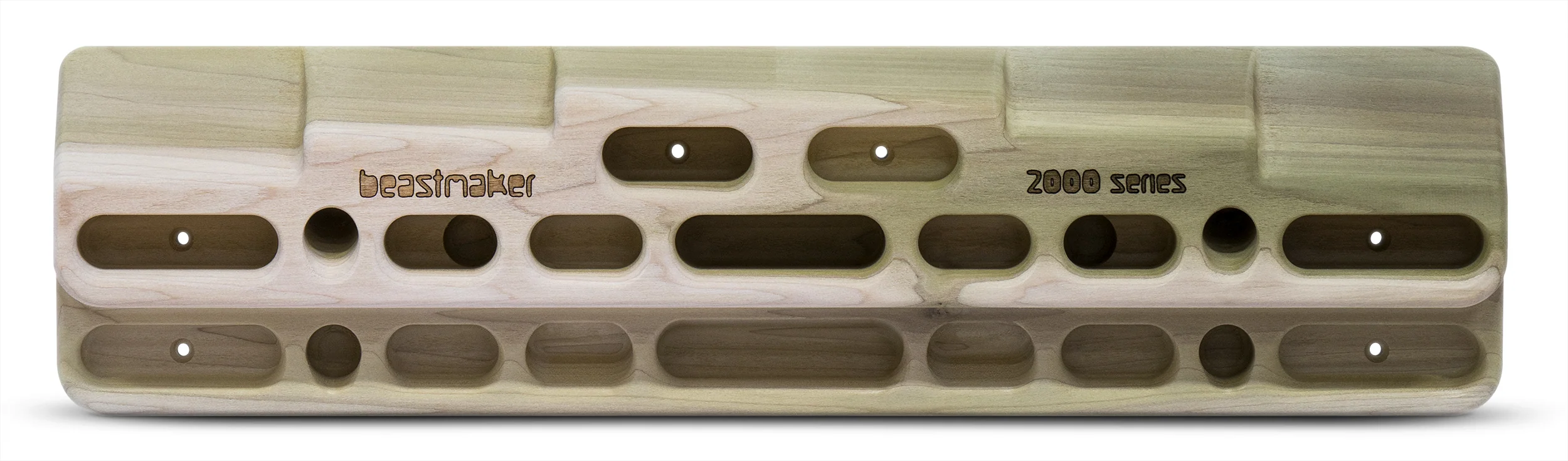
The Beastmaker 2000 adds 45-degree slopers and single-finger pockets alongside other edges and pockets. It is aimed at experienced climbers. Those features create different ways to challenge the hand, but their presence is not evidence that the board will produce better results for everyone.
Choose it because you have a clear use for the layout. Perhaps the grips relevant to your climbing are well represented, and you already understand how to manage their loading. That is a stronger reason than worrying that the 1000 will make you look inexperienced. Equipment should support the work, not become a public declaration of ability.
A more difficult hold can also make it harder to isolate what you are trying to train. If keeping contact becomes the entire struggle, you may lose the controlled position or repeatability that made the session useful. A suitably demanding task should still have a clear starting condition, an observable finish and a sensible way to compare efforts.
Do not use a single-finger pocket as an automatic next step from a four-finger edge. Reducing the number of fingers changes the task; it is not simply another small increase on the same loading scale. Likewise, a steep sloper relies on contact and friction in a different way from a deep pocket.
The sensible comparison is therefore not beginner versus serious climber. It is accessible layout versus a different collection of specialized options. A strong climber can continue to find the 1000 useful, while another experienced climber may prefer the 2000. Neither choice replaces coaching judgment about which holds to use.
Check the installation before comparing difficulty
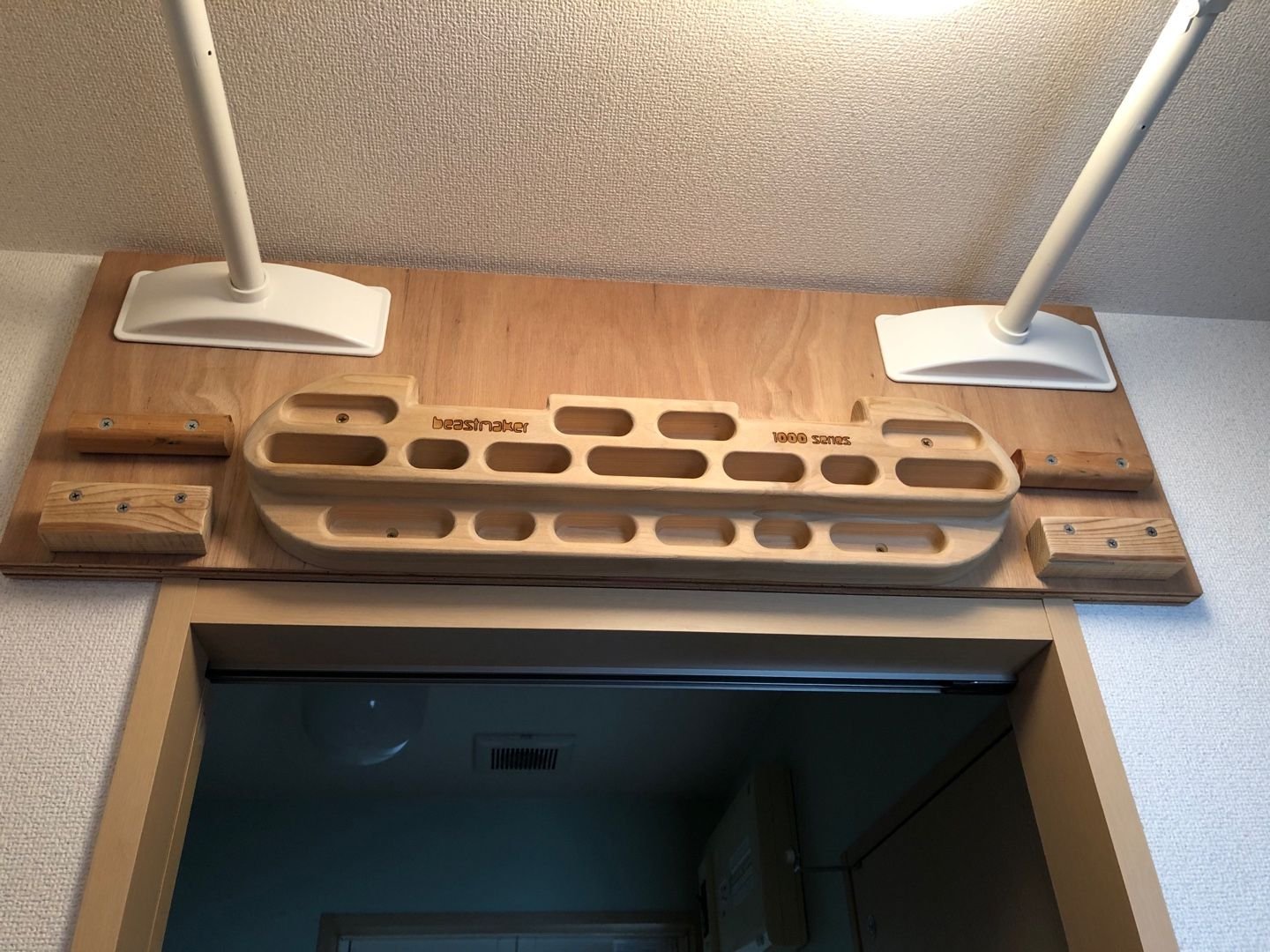
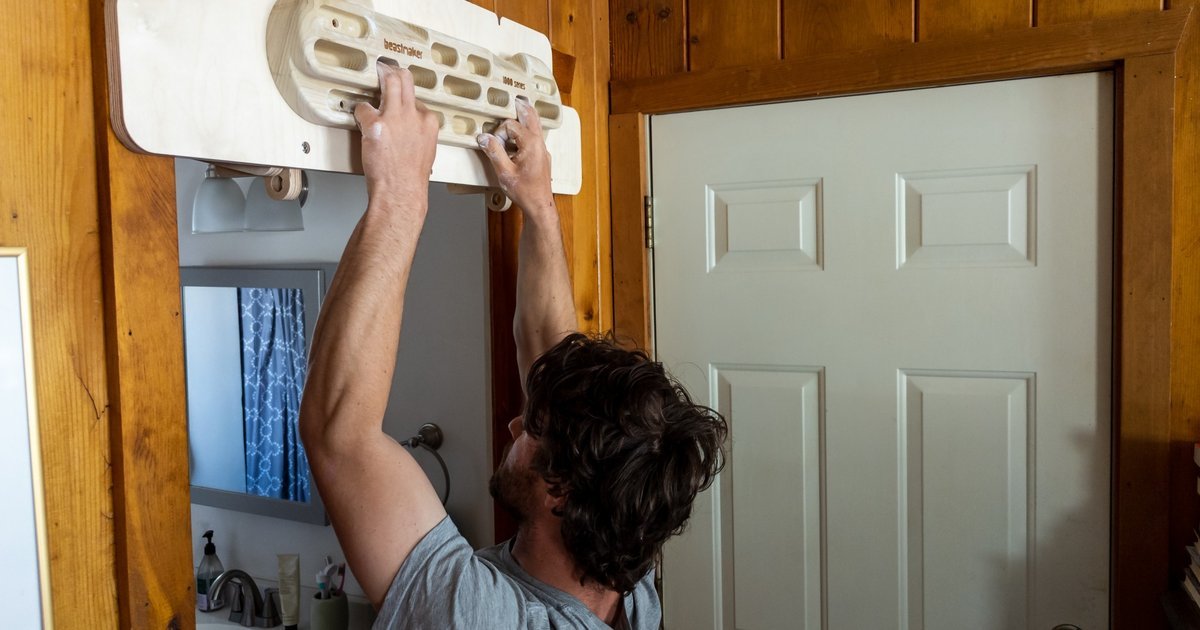
A fingerboard purchase includes an installation problem. The board must stay stable, the supporting structure must be suitable, and the surrounding space must let you hang without hitting the wall or ceiling. A doorway is a location, not proof that its trim or surrounding surface can support the installation.
Identify the actual wall or frame material before choosing fixings. A backboard may help arrange the mounting, but it does not turn an unsuitable structure into a suitable one. If you cannot assess the substrate or locate hidden services confidently, have the installation checked by someone qualified to do that work.
Orientation matters to the exercise as well as the fixing. A board mounted off vertical can change how its holds feel, particularly the slopers. Comparing your hangs with someone else’s becomes less meaningful if one setup is tilted and the other is not. Keep the physical setup attached to the result you record.
Think through access and clearance while the board is still a purchase decision. Can you reach the intended holds without jumping? Is there space for your head if you use the jugs for a pull-up? Is the area below clear? Those questions are easier to solve before drilling than after discovering that a convenient-looking position is awkward to use.
The illustrated boards show the different layouts; they are not a substitute for a mounting plan for your building. Treat improvised removable mounts as separate structures requiring their own assessment. Buying a compatible board and building a dependable support are related decisions, but they are not the same decision.
A stronger pull-up does not answer every finger-strength question
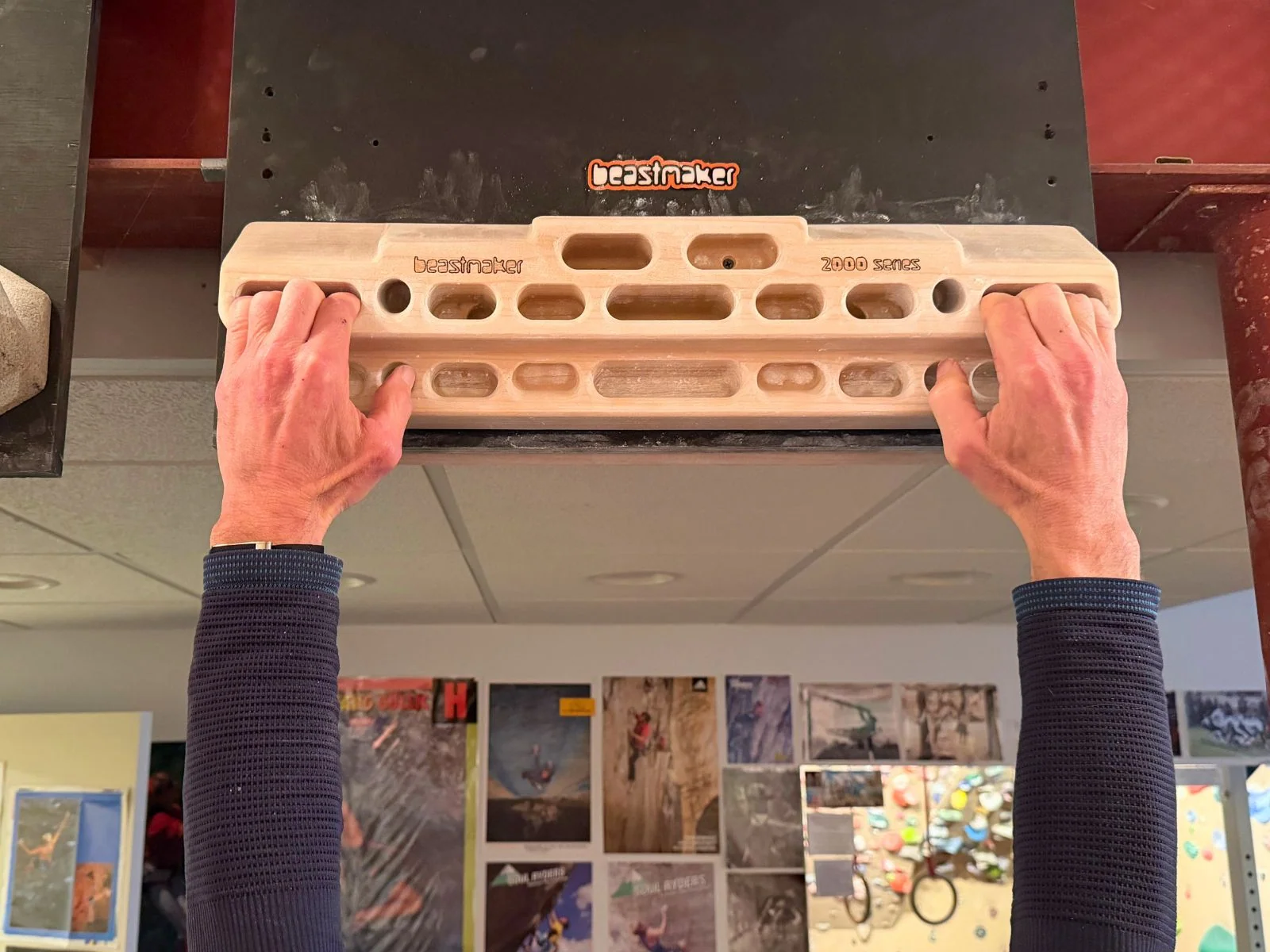
Climbing asks you to keep contact with varied holds while moving through positions. A pull-up on a large bar emphasizes a different task from maintaining contact on a small edge. General pulling strength can be useful without making it a complete test of climbing-specific finger strength.
Our guide to crush, pinch and support grip explains why different gripping tasks should not be treated as one interchangeable score. The same principle helps here: identify the contact problem rather than assuming that every forearm exercise solves it equally well.
Keep complementary strength work in its own role. Pull-up stations, rings and comfortable handles can support general upper-body training. Dips and push-ups offer pressing work alongside pulling. A belt, vest or small plates can change loading where appropriate; thick grips and forearm tools create other gripping tasks. None is an identical replacement for a climbing edge, and this comparison does not prescribe adding weight to finger hangs.

Equipment Worth Exploring
Explore equipment, accessories and gear from our carefully selected range.


Power Tower
Freestanding pull-up and dip station with adjustable handles for bodyweight training.




For a newer climber, movement practice may deserve priority over another off-wall session. Foot placement, route reading and learning different terrain can improve performance without turning every problem into a finger-strength deficit. Extra training also consumes recovery that could otherwise support useful climbing practice.

Calisthenics Shirts & Street Workout Gear
Calisthenics and bodyweight-training gear for pull-ups, dips, handstands and street-workout athletes.


Pull Up Or Shut Up Crewneck Pullover Sweater for Calist T-Shirt
Keep things casual with a little “Pull Up Or Shut Up” attitude.

Always Pull Yourself Up Hoodie
Make your off-duty look more fun with “Always Pull Yourself Up”.

Pullups Heartbeat Sticker
Stick a little “Calisthenics Pullups Heartbeat” humor on your favorite gear.

Calisthenics Heartbeat Tank
Add some lifting attitude to training with “Calisthenics Heartbeat”.


Calisthenics Muscle Shirt Athletic Vest for Bodyweight Tank Top
Your gym-day look, with a playful “Calisthenics” twist.

Big Dip Energy Decal for Water Bottles Laptops Dip Love Sticker
Give your everyday gear a playful “Big Dip Energy” twist.

T-Rex Hates Push Ups Hooded for Calisthenics Workout Fa Hoodie
Keep it laid-back with a little “T-Rex Hates Push Ups” attitude.

Be Stronger Than Your Excuses Funny Gym
Bring “Be Stronger Than Your Excuses” humor to your everyday gym style.
If targeted hangs fit your needs, the loading method remains a separate choice from the board. Our analysis of light hangs and max hangs discusses evidence and limitations behind those approaches. Use that distinction to ask better questions, rather than lifting a protocol out of context because you bought a particular model.
Choose the board you can use consistently and keep it comparable
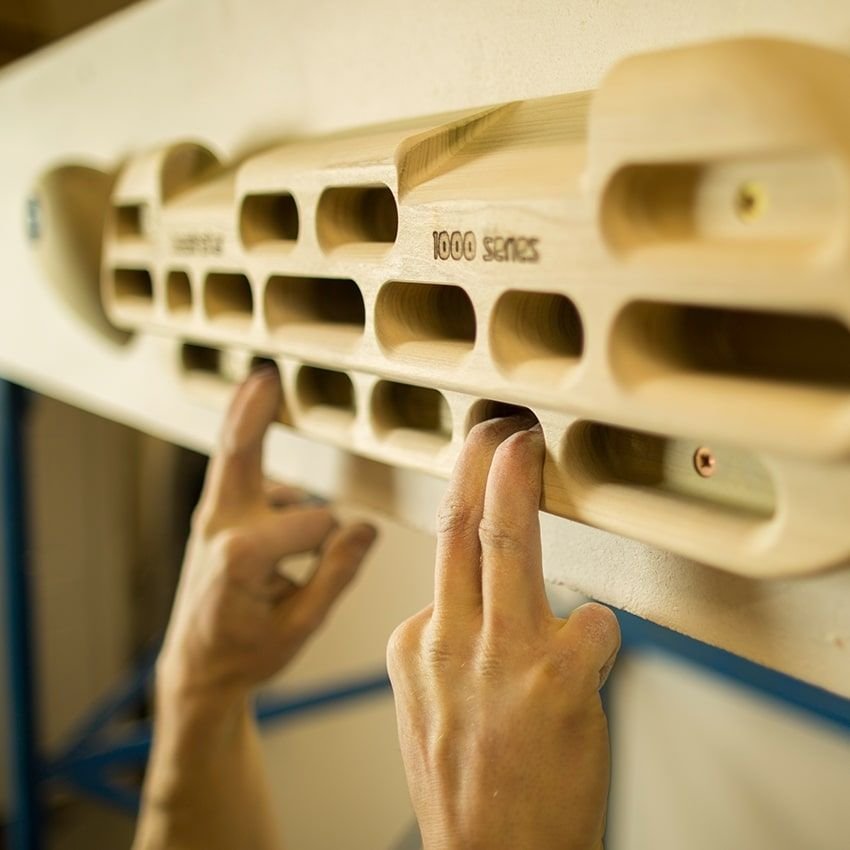
Before buying, check whether a board at your climbing gym lets you try the relevant holds. A short familiarization can clarify the layout question without becoming a maximal strength test. Notice reach, finger fit and how easily you can establish a controlled position, rather than competing with someone else’s hang time.
After installation, keep a simple record of the exact hold, grip, assistance or added load where appropriate, hang duration and rest. Changing several variables together makes progress difficult to interpret. A longer hang on a different hold is a different result, not automatically a better version of the previous one.
Keep the wooden surface clean with a suitable soft brush and avoid letting chalk accumulate heavily. Do not varnish the holds to make the board look finished: changing the surface changes its friction. Protect it from rain and unsuitable exposure. Maintenance belongs beside setup in the effort to make repeated sessions comparable.
Stop treating discomfort or an abrupt loss of control as evidence that you need a harder session. Finger work should fit your experience, recovery and individual circumstances. Persistent pain deserves assessment; purchasing an easier-looking model does not remove the need to manage loading sensibly.
For most buyers deciding between these two boards, the 1000 deserves serious consideration because of its useful accessible holds. The 2000 is a purposeful alternative when its specialized layout matches a real need. Choose the holds and installation you will use well, then let consistent practice determine progress instead of expecting the model number to do it.