Resistance bands fit in a drawer, travel in a backpack and can make a surprisingly demanding workout. Dumbbells, barbells and cable machines are easier to measure and often easier to load heavily. But which choice actually develops strength and muscle—and what should a home-gym owner buy first?
The useful answer depends on the exercise, the way resistance changes through the movement, and whether you can make training progressively harder. Comparing the tools only by price or the number printed on a band misses the important variables. This guide separates what controlled training comparisons support from practical decisions about space, progression and safe setup.
What the comparisons really tell us about strength
An eight-study quantitative review compared elastic devices, including tubes and flat bands, with conventional machines and free weights. Across the included upper- and lower-body strength outcomes, it did not find a statistically reliable advantage for either method. That is meaningful evidence that bands can train strength; it is not proof that a band and a heavy barbell are interchangeable for every person, lift or goal. The studies involved different participants, exercises and loading protocols, and a nonsignificant difference is not the same thing as demonstrated equivalence.
The distinction between general muscular strength and performance on a specific lift matters. Someone who practices a barbell squat learns to stabilize and coordinate a barbell squat. Someone who trains with a loop band becomes more capable at the movement and resistance profile that band provides. Both can build force-producing capacity, but a one-repetition maximum in a barbell lift is best developed partly by practicing that lift. Transfer is possible, yet it should not be assumed to be identical.
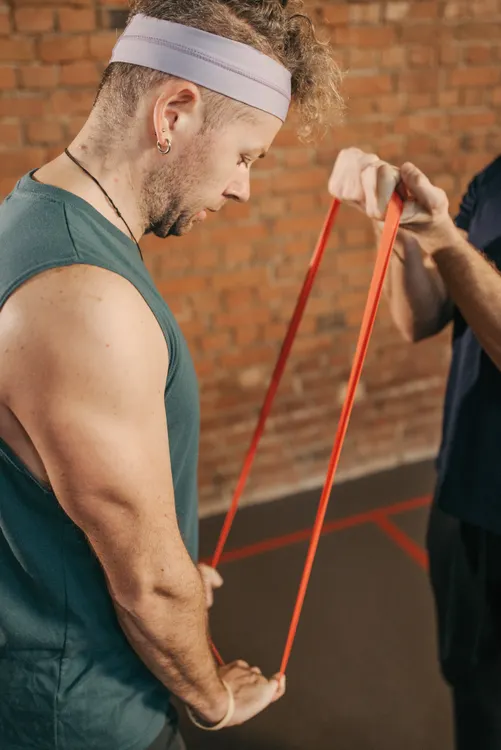
For a beginner who needs a repeatable push, pull, squat and hinge pattern, a carefully selected set of bands can be an effective starting point. For an experienced lifter trying to increase a very heavy deadlift, bands alone are less likely to reproduce the absolute load and setup demands of the target lift. The right question is not whether elastic training ‘works.’ It is whether the available resistance, exercise selection and progression suit the adaptation you want.
The practical verdict: use bands confidently for appropriately challenging resistance work, but keep the outcome measure in view. Track exercise performance over time rather than assuming that a certain color of band corresponds to a universal strength level.
Why a band feels different from a dumbbell or cable
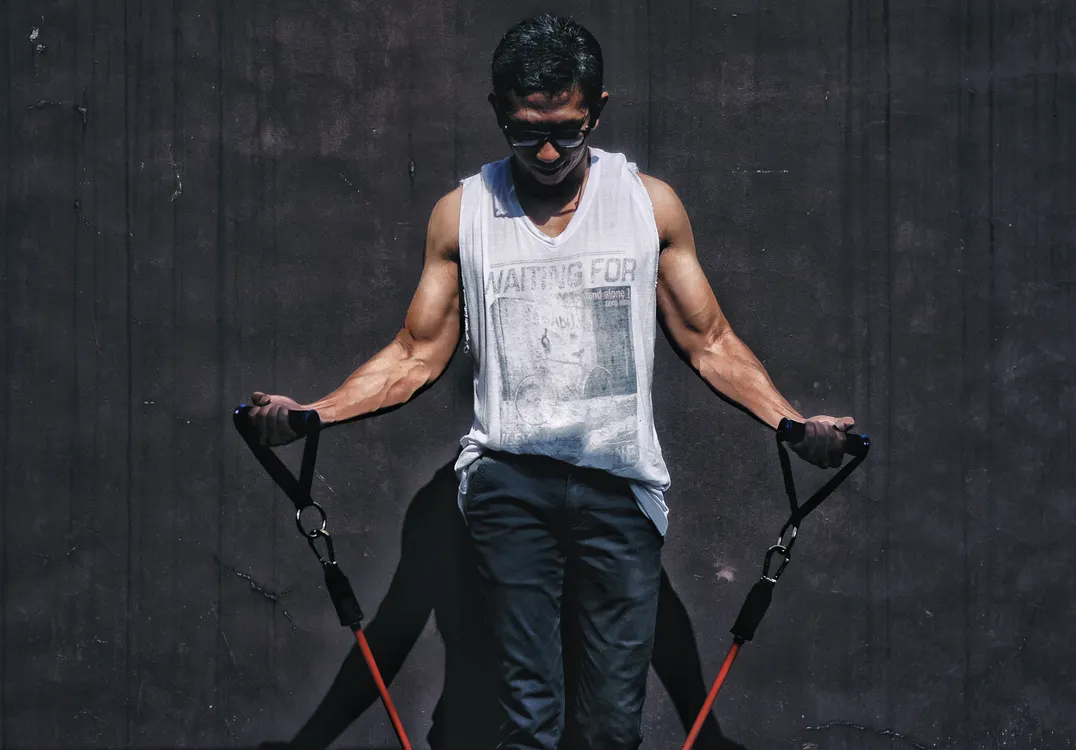
Elastic resistance typically rises as the band stretches. If a band is relatively slack at the beginning of a curl, the first part can be easy while the top becomes demanding. A dumbbell does not become heavier as it moves, although its torque around a joint changes as the arm’s angle changes. A cable machine can change the line of pull and keep tension through positions where a free weight provides less useful resistance. None of these resistance curves is automatically superior; each creates a different challenge.
Band length, initial stretch, thickness, attachment point and the person’s limb lengths all affect the load. Two people holding the same band may experience different tension at the same named exercise because their starting positions and movement paths differ. Manufacturer resistance figures are often estimates tied to a particular extension rather than a fixed weight that applies at every point. Laboratory measurements have found that actual band forces can differ from advertised estimates.
This explains why a banded lateral raise or triceps pressdown can feel hard near lockout while a banded row may be light at the stretched starting position. If the weak portion of an exercise occurs where band tension is lowest, you may not get the same stimulus as with a cable or a dumbbell. Conversely, a rising load can make sense when the lifter is mechanically stronger near the end of a movement.
You can alter the curve by pre-stretching the band, stepping farther from the anchor, using a longer or shorter loop, or changing the angle of pull. Make one change at a time and record it. ‘Green band, 12 reps’ is not a reproducible training prescription unless the setup is also consistent.

Equipment Worth Exploring
Explore equipment, accessories and gear from our carefully selected range.
VOLTRA
Compact digital cable trainer with smooth, adjustable resistance.

Go-Tone Pro
Portable digital cable trainer with up to 66 lb (30 kg) of adjustable resistance.


FID Bench MAX
Adjustable bench offering flat, incline, and decline positions + adjustable headrest.

Can resistance bands build muscle, not just endurance?
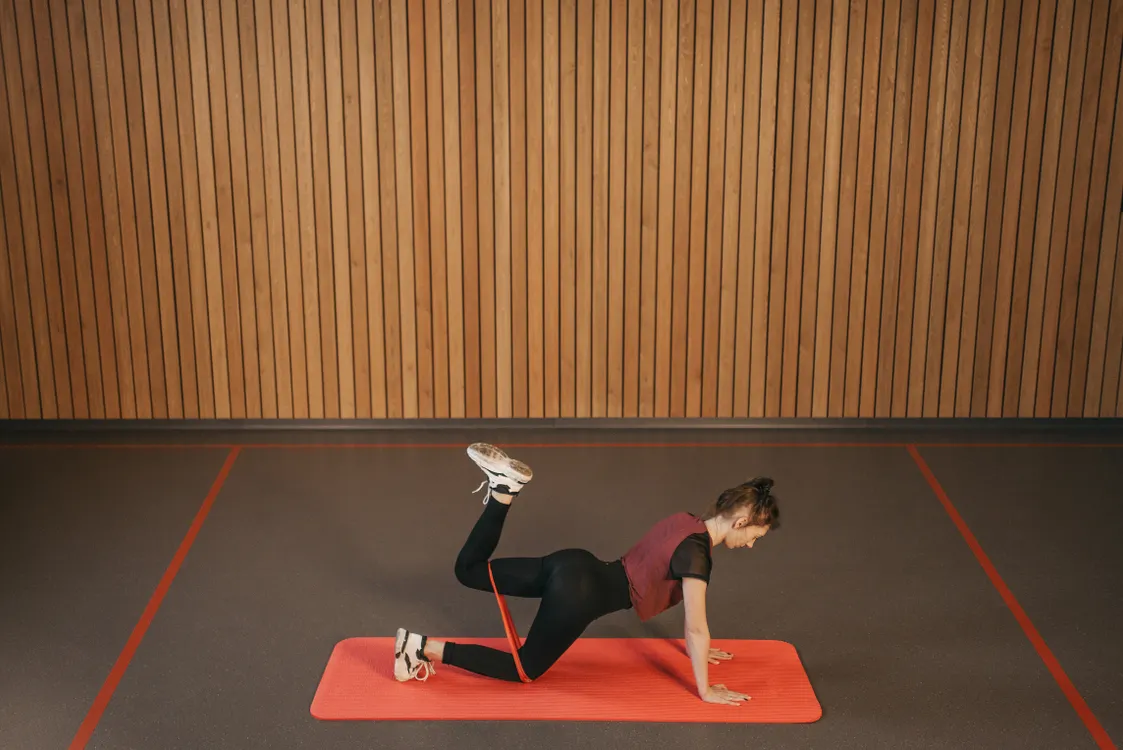
Muscle growth requires a sufficiently challenging stimulus repeated and progressed over time. The implement is only one way to provide it. An elastic band can make a set demanding enough to approach the point where another clean repetition would be difficult. A dumbbell, cable or machine can do the same. When work and effort are reasonably comparable, the available research does not justify declaring one resistance format universally better for hypertrophy.
A broader review of variable-resistance approaches found no consistent short- to medium-term muscle-growth superiority over conventional training. That review covered multiple variable-loading methods, not only standalone bands, and much of the evidence involved untrained participants. It therefore supports caution about marketing claims rather than a blanket prediction about highly trained bodybuilders. Research on strength, muscle thickness and short-term fatigue also measures different outcomes.
For home use, aim for controlled repetitions through a useful range of motion, with enough resistance that the final repetitions are genuinely demanding. If a set of 20 band rows is easy because the first half of every repetition has little tension, simply adding more repetitions may be less effective than changing the anchor and starting tension. The objective is to challenge the target muscles, not to collect an impressive repetition count.
Bands are especially practical for curls, lateral raises, rows, pressdowns, hip abductions and supplemental work after heavier compound lifts. They become less convenient when the exercise requires a very high stable load, when a long setup is necessary to avoid slack, or when the band’s pull makes balance the limiting factor. In those cases a weight stack, dumbbell or rack-supported movement may deliver a cleaner stimulus.

Funny Gym Shirts & Workout Gear
Funny gym shirts, tanks, hoodies and workout gear for lifters who like training hard.

Viva La Resistance Bands , Meme Shirt, Top T-Shirt
Make gym days more fun with “Viva La Resistance Bands” style.

Shirt – Home Is Where Your Is Hilarious Homegym, T-Shirt
Heavy lifts, good laughs, and a little “Home Is Where Your Gym Is Hilarious” energy.


Basement Meme & Gymbros – Top Home Gains T-Shirt
Show some lifting attitude with a playful “Basement Gym Meme” tee.

Anti Social Home Club – Meme & Gymbros – Shirt Gains T-Shirt
Bring “Anti Social Home Gym Club” humor to your next gym day.

Shirt Home Owners – Garage , Basement & – Meme T-Shirt
Bring “for Home Gym Owners” humor to your next gym day.

Home Hero – Garage & Basement – Meme Shirt T-Shirt
Make gym days more fun with “Home Gym Hero” style.

Home – Home Built Not Bought , Gymbros & Garage Gains T-Shirt
Rep “Funny Home Gym” humor in and out of the gym.

No Cars Allowed In My Garage – Meme , & Gains – Top T-Shirt
Make gym days more fun with “No Cars Allowed In My Garage” style.

I Work Out At Home So I Can Cry In Peace – Home Meme T-Shirt
Bring “I Work Out At Home So I Can Cry In Peace” humor to your next gym day.
Where weights and cables earn their space
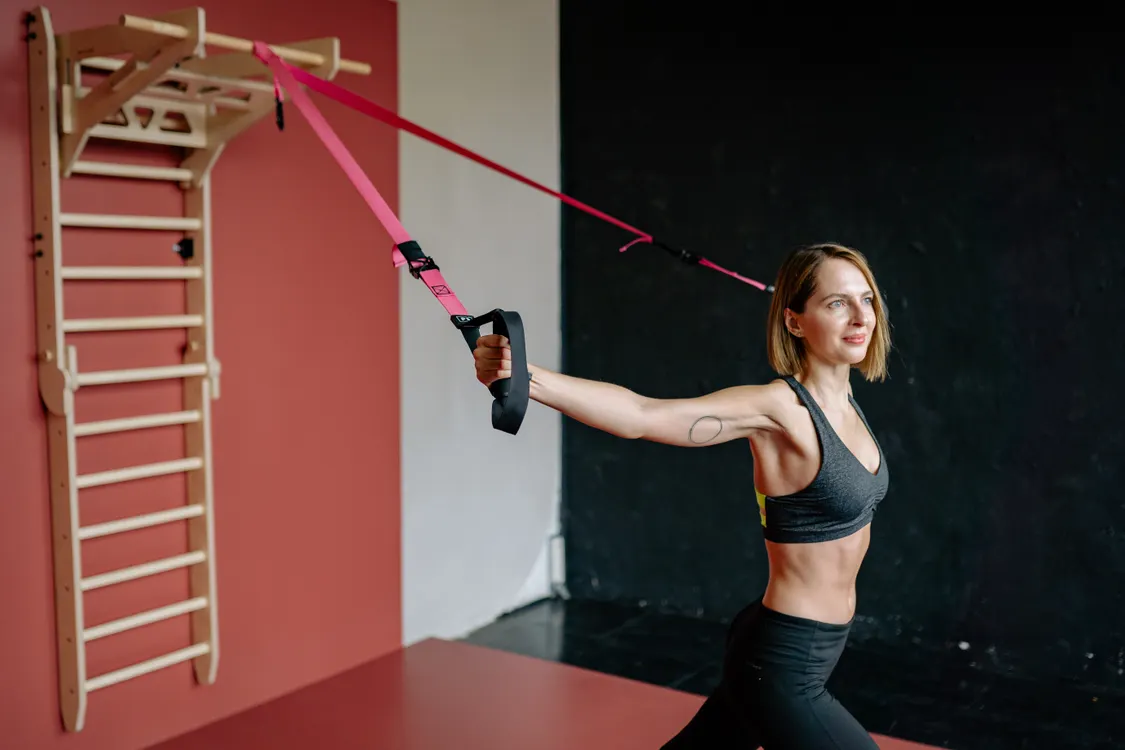
A pair of adjustable dumbbells offers a clear, repeatable load for presses, rows, split squats and hinges. Adding a small increment is straightforward, and the resistance does not depend on how far the dumbbell is from an anchor. Dumbbells still have limitations: heavy pairs take storage space, changing plates can interrupt a session, and some exercises become awkward when the dumbbells are too large for the available range of motion.
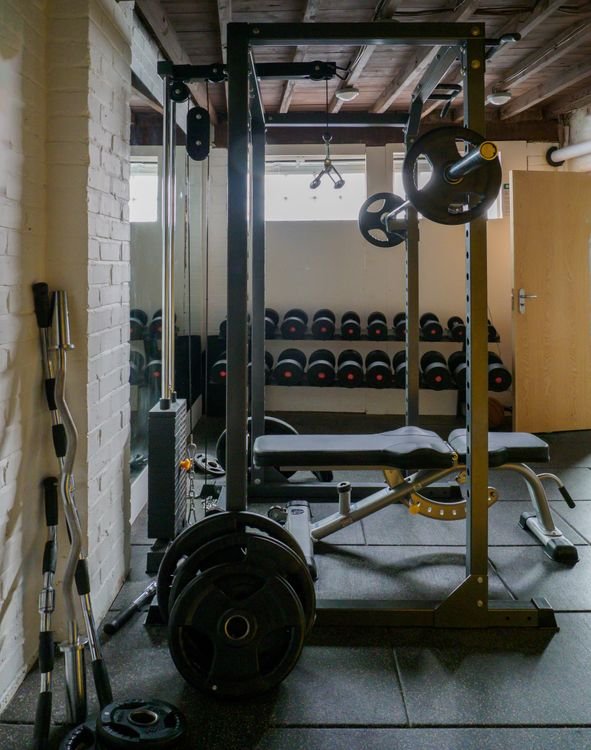
A barbell and rack are excellent when the goal includes practicing heavy squats, presses or deadlifts with measurable progression. They also require more floor area, safe clearance, appropriate safeties and an understanding of how to train without a spotter. For someone with a compact apartment gym, the total footprint of plates, bar, rack and bench may matter more than the purchase price of any one component.
A cable station or compact digital trainer occupies a useful middle ground. It can provide a repeatable resistance setting and a flexible line of pull for rows, pulldowns, presses, leg work and isolation movements. The tradeoffs are cost, attachment and mounting requirements, potential maintenance and the need to understand how pulley ratios or digital modes change the resistance you feel. Do not compare a cable display number directly with a band manufacturer’s printed range as though they were identical measurements.
If space is scarce, prioritize the movements you actually perform. A set of bands plus adjustable dumbbells can cover most general training patterns without duplicating every machine in a commercial gym. Add a cable trainer when it solves recurring problems such as poor exercise angles, limited load increments or cumbersome setup—not simply because the equipment is fashionable.
How to set up bands safely and make sessions repeatable
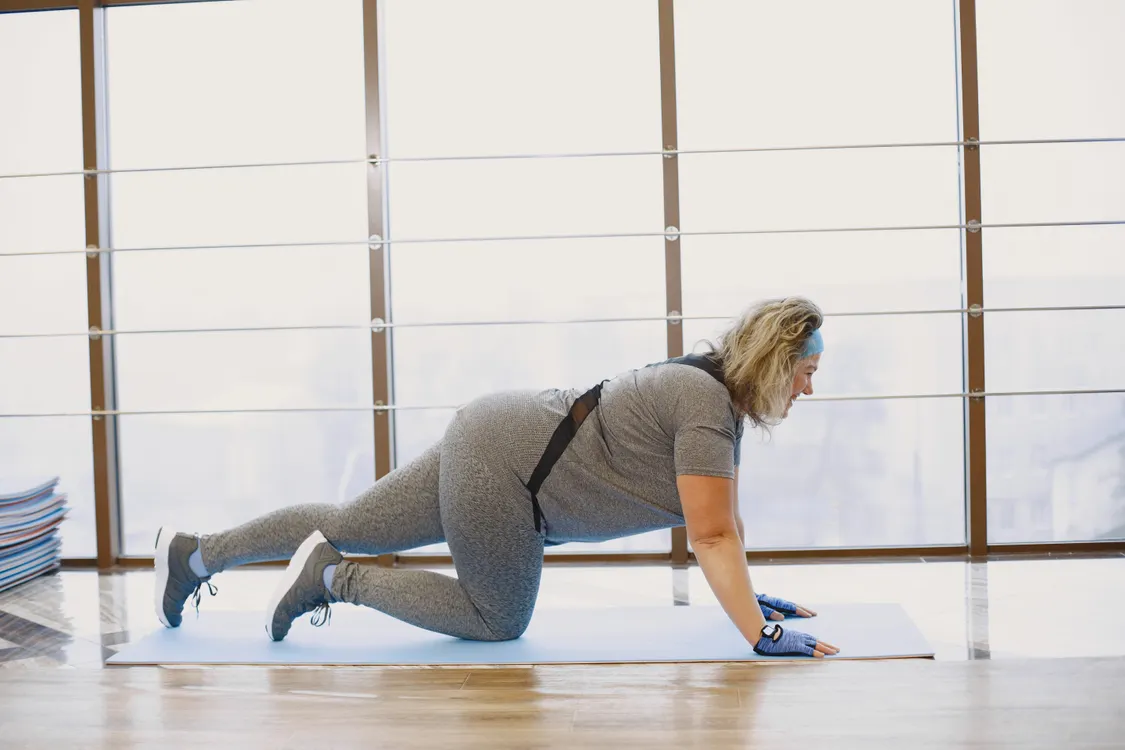
Start with the anchor. Use an attachment point designed to tolerate the direction and magnitude of the pull, and inspect the band, handles and clips before every session. A loose door, sharp rack edge or improvised hook can turn a simple exercise into a recoil hazard. Keep your face out of the potential path of a snapped band, and do not stretch elastic equipment beyond the manufacturer’s specified limits.
A simple repeatable setup log has five parts: band model, anchor height, starting distance, exercise stance and repetitions. For a standing row, mark your foot position relative to the anchor and use the same grip width each week. For a curl, record whether you stand on one strand or both and whether the band begins taut. These details often affect resistance more than the difference between two nearby band colors.
Use controlled movements and stop a set if the band slides, twists unpredictably or rubs against a sharp surface. If you are attaching elastic resistance to a barbell, make sure both sides are secured symmetrically and that the rack is stable. Banded barbells are a distinct method of variable loading; they should not be used as evidence that a band-only workout duplicates a barbell workout.
When choosing a band kit, a few genuinely different resistance levels and secure handles are more useful than a large number of nearly identical loops. Flat mini bands suit hip work and some mobility drills; longer loop bands and handled tubes offer more options for rows, presses and curls. Latex sensitivity, storage temperature and wear are practical considerations, not minor footnotes.
Equipment Worth Exploring
Explore equipment, accessories and gear from our carefully selected range.
U Clips
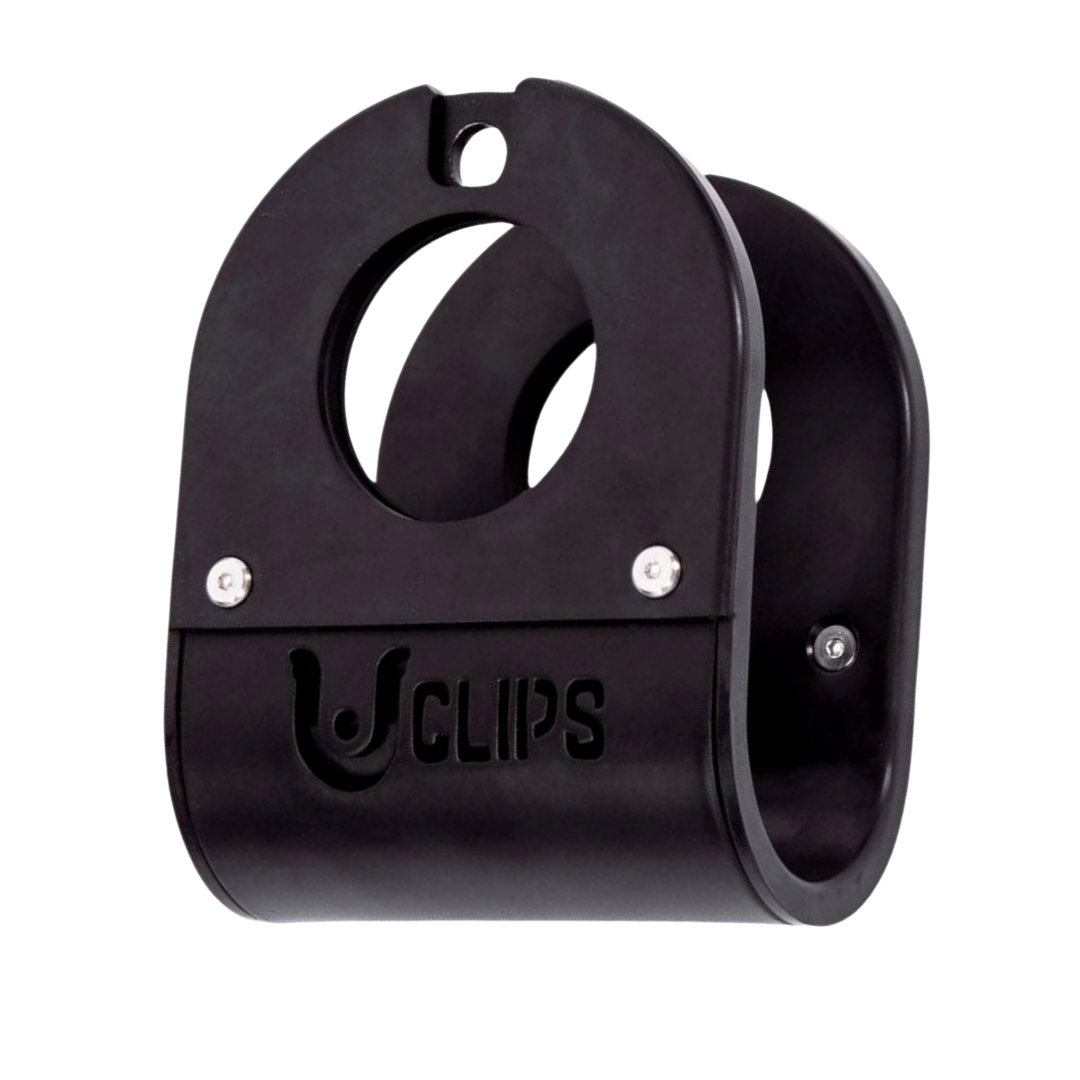
Versatile gym clips for barbell, landmine, and attachment setups.

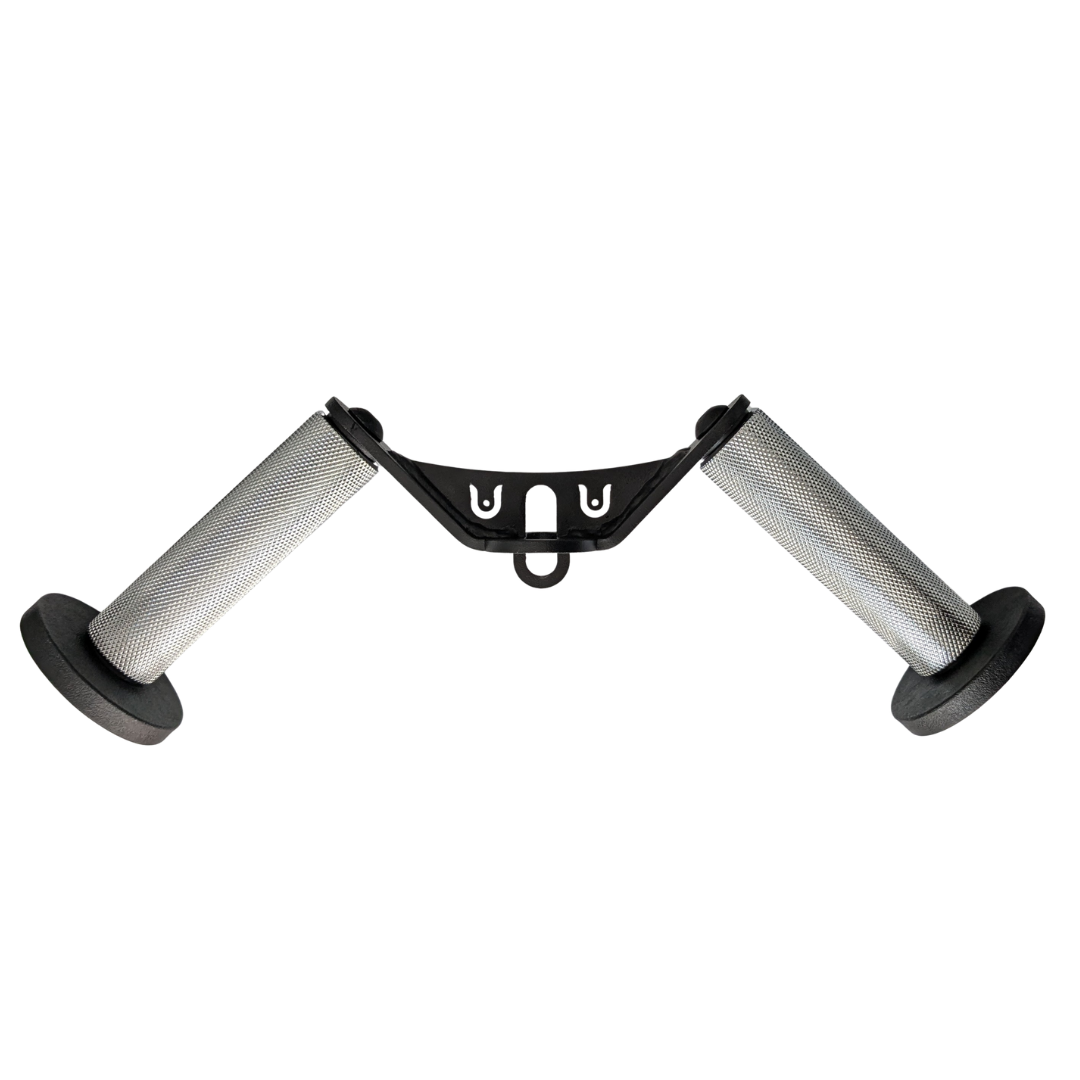
W Grip
Angled cable grip for comfortable rows, pushdowns, and curls.
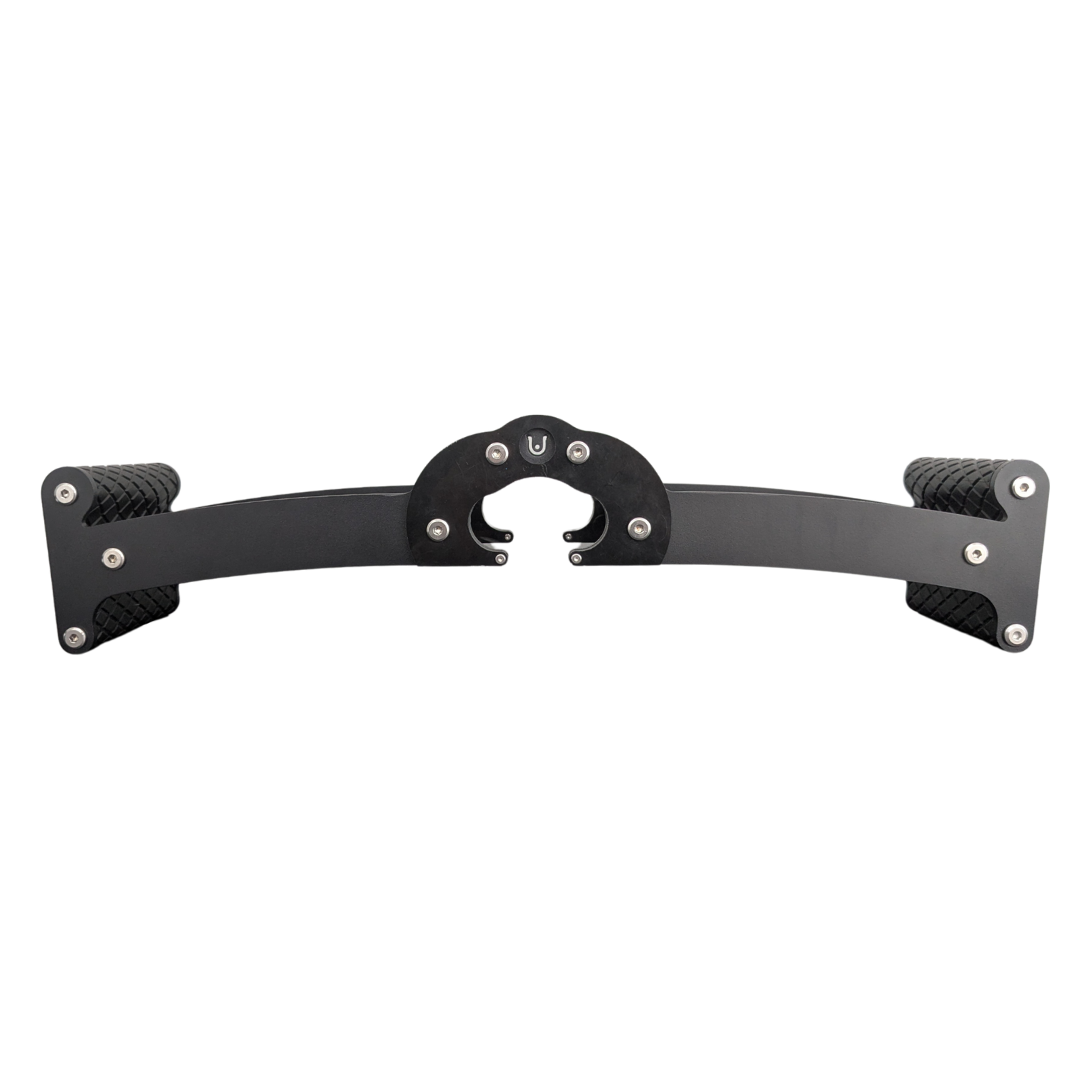
Back Bar
Multi-grip cable and landmine bar with a built-in deadlift jack.

GymPin Ergo Handles
Pair of ergonomic cable handles shaped for comfortable triceps and pulling exercises.

Angles 90 Grips
Flexible grip attachments that allow natural wrist movement during pulling exercises.
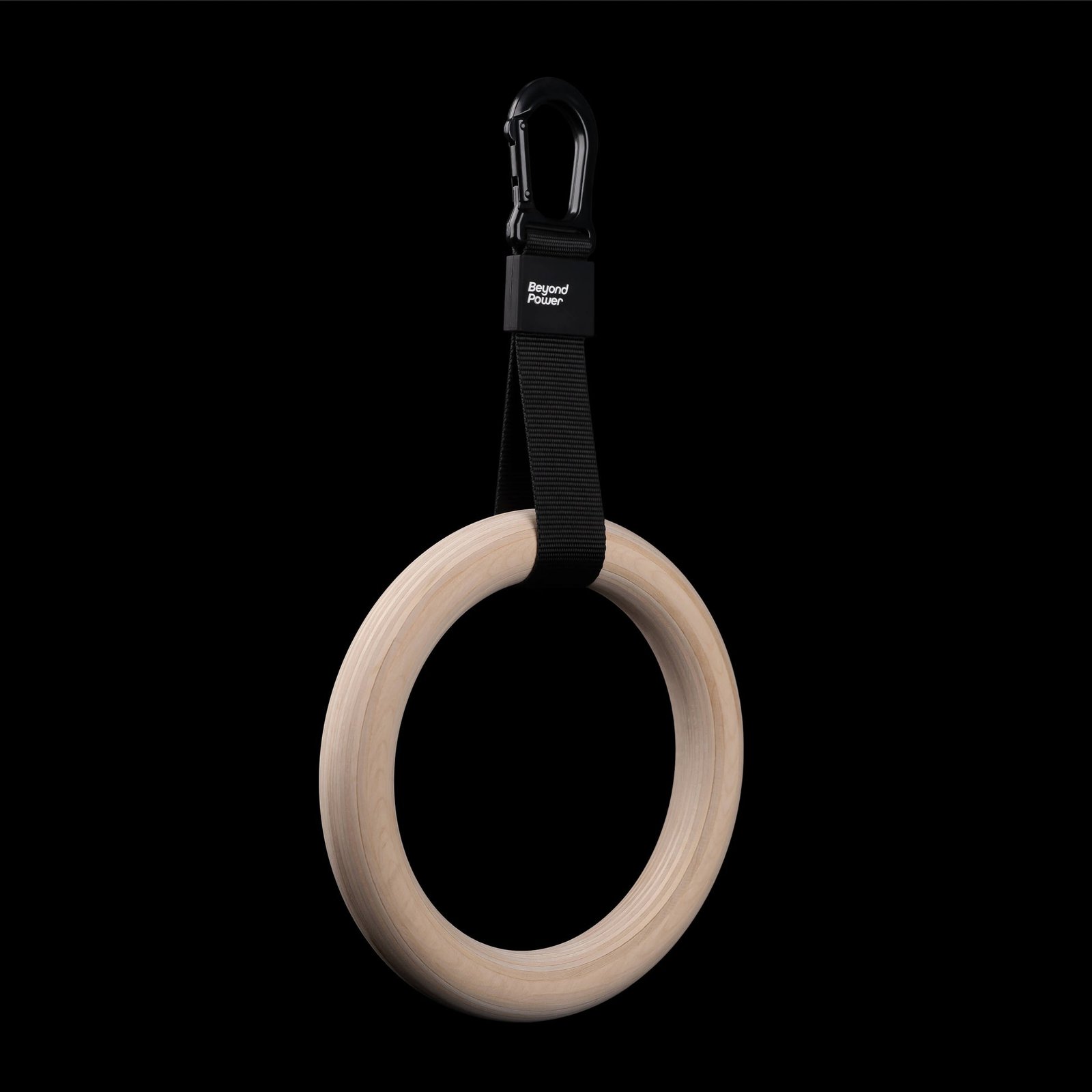
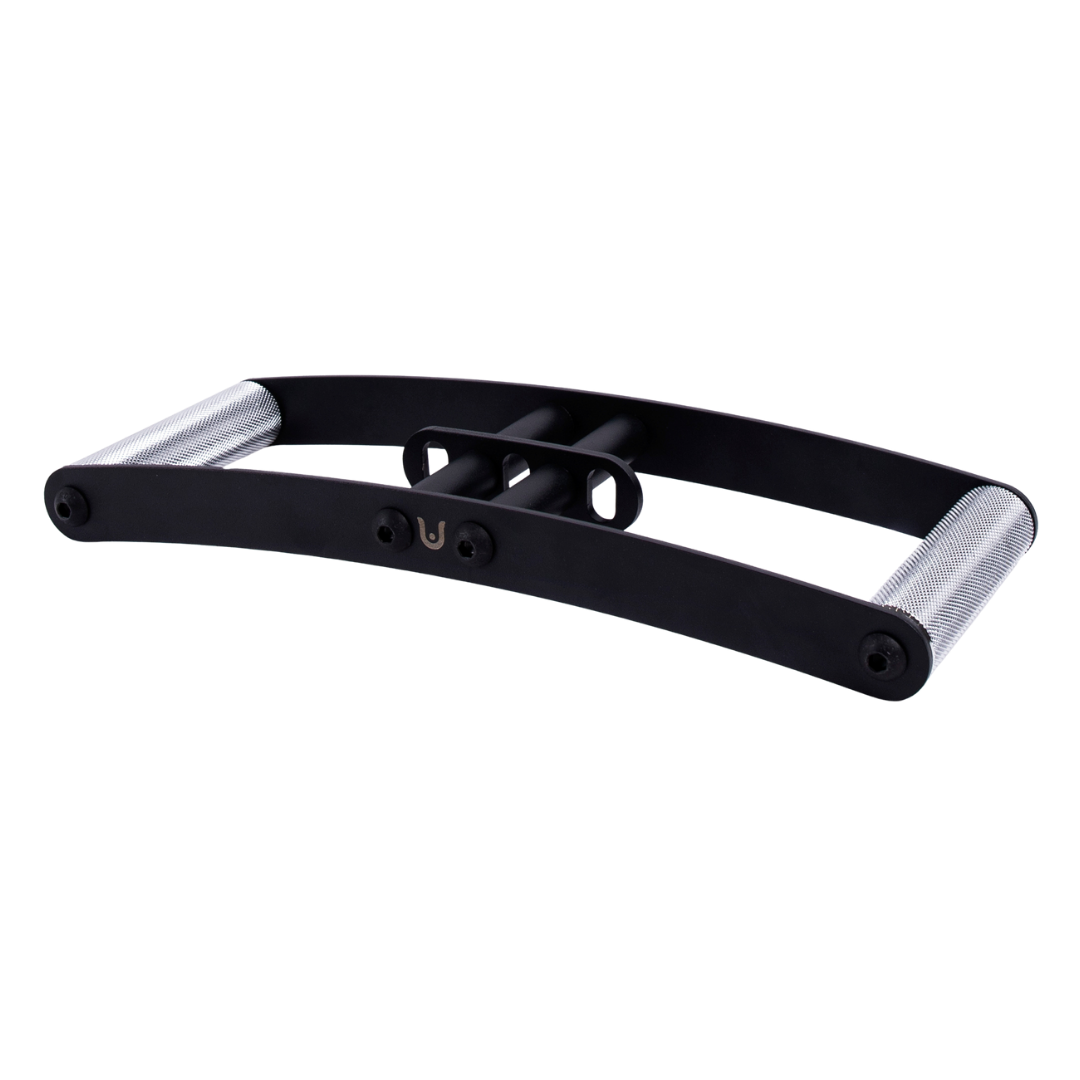
Horizon Grip
Ergonomic V-style cable grip for rows and back training.


Long Tricep ERGO Ropes
Extended triceps ropes with ergonomic grips for cable pressdowns and overhead extensions.
A practical three-day home-gym program using both tools
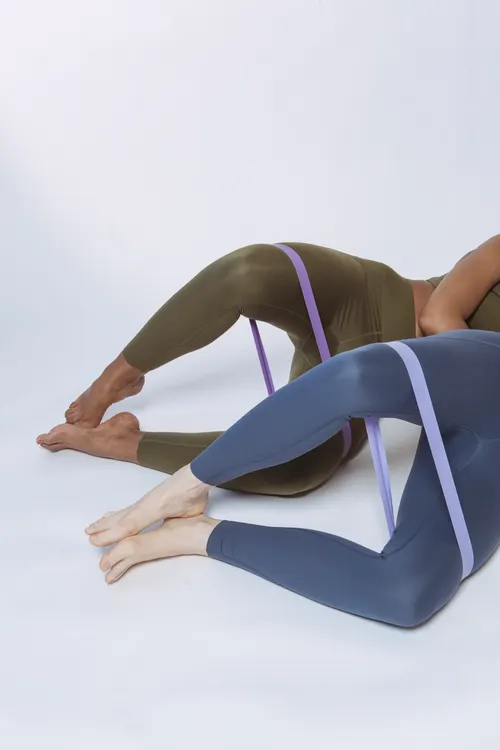
A hybrid plan can reserve precise external loading for major movements while using bands where portability and quick setup help. Train on three nonconsecutive days, adjusting exercise selection for available equipment and comfortable range of motion. Begin with a resistance that allows technically consistent repetitions and leave roughly one to three clean repetitions available on most working sets. That effort guideline is a programming choice, not a claim that every study used the same threshold.
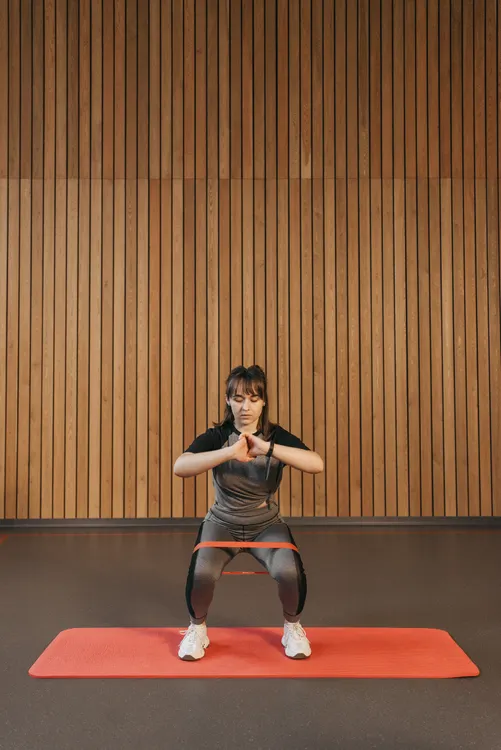
Day A — squat and horizontal push: goblet squat or band-resisted squat, three sets of 8–12; dumbbell floor press or band chest press, three sets of 8–12; standing band row, three sets of 10–15; and a band lateral raise, two sets of 12–20. For a squat with bands, position the loop so it cannot slide underfoot or snap upward. If balance or anchoring becomes the limiting factor, use a goblet squat instead.
Day B — hinge and vertical pull: dumbbell Romanian deadlift, three sets of 8–12; assisted pull-up or anchored band pulldown, three sets of 8–15; band overhead press if shoulder mechanics permit, two or three sets of 8–12; and band curls, two sets of 10–20. A stable cable pulldown is a sensible substitution when the band anchor cannot be made secure overhead.
Day C — single-leg and upper-body accessories: split squat, three sets of 8–12 per leg; one-arm dumbbell or cable row, three sets of 8–12; push-up or band chest press, three sets of 8–15; band triceps extension, two sets of 12–20; and band hip abduction, two sets of 15–25. Rest long enough to repeat good work: generally more for demanding compound movements and less for smaller isolation exercises.
Treat the numbers as a workable example, not a medical prescription or mandatory optimal plan. If your current weekly volume is already high, replace existing sets instead of stacking every exercise on top. The best routine is the one you can perform safely, track honestly and progress for months.
Bodybuilding Shirts & Workout Gear
Bodybuilding shirts, tanks and gym gear for lifters chasing muscle, size, symmetry and the pump.


Shirt – The Empire Lifts Back , & Back Training Gains T-Shirt
Bring “The Empire Lifts Back” humor to your next gym day.

Slip Not Grip Training – Heavy Metal & Gymbros – T-Shirt
Heavy lifts, good laughs, and a little “Slip Not Grip Training” energy.

Dadlift Meme Dads, & Dad Strength Gains Lifting T-Shirt
Show some powerlifting attitude with a playful “Dadlift” tee.

No Excuses Mermaid Strong , Leg Day Meme & T-Shirt
Make gym days more fun with “No Excuses Mermaid” style.

Viking Shirt – Training Ragnarok & Gymbros – Norse T-Shirt
Show some Viking attitude with a playful “Viking” tee.

Viking Shirt – Training Valhalla , Gymbros & Gains T-Shirt
Make gym days more fun with “Viking” style.

Cheat Reps Allowed Viking Tee
Show some Viking attitude with a playful “Cheat Reps Allowed Funny Viking” tee.

Mutant Strength Wolverine Hero – X- Comic Book & T-Shirt
Bring “Mutant Strength Wolverine Gym Hero” humor to your next gym day.
How to progress—and when to upgrade your equipment
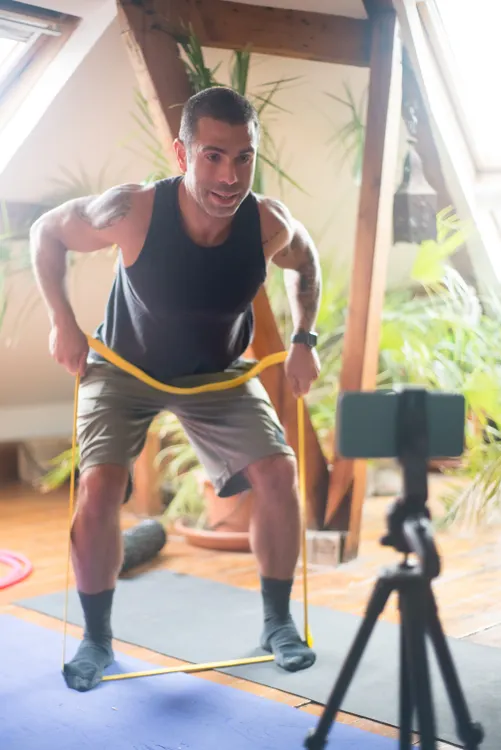
Progression with weights is easy to understand: complete the planned repetitions with stable technique, then increase the load by the smallest useful amount. With bands, you have more variables to control. First make the setup repeatable. Then add a repetition, improve the working range of motion, slow an uncontrolled transition, increase starting tension slightly or move to the next band. Do not change all of these at once or your training log stops telling you what improved.
For example, suppose you perform three sets of band rows for 12, 11 and 10 clean repetitions at a marked distance from a chest-height anchor. Over several sessions, you build toward three sets of 15. At that point, increase resistance modestly while keeping the same movement path, and work back toward the top of the range. If the heavier band makes the first half of the row nearly slack and the finish impossible, adjust the setup rather than forcing the progression.
Check whether the limiting factor is the muscle you intended to train. A band that pulls your feet out of position, a handle that slips or an anchor that moves is not a productive way to increase difficulty. When your strongest movements require awkward combinations of multiple bands, a heavier dumbbell, barbell or cable station may offer safer, more predictable progression.
A practical equipment ladder is straightforward: begin with a small band selection if portability and cost dominate; add adjustable dumbbells for clear load increments and versatile compounds; add a bench, rack or cable trainer only when the exercises and available space justify it. Keep the bands even after upgrading. Their portability, quick transitions and unusual lines of pull remain useful alongside conventional weights.
The bottom line is that elastic resistance is legitimate strength equipment, not merely a warm-up accessory. Its limitations are measurable load, resistance curve and setup consistency. Choose the tool that lets you train hard with control, record real progress and repeat that work safely next week.