Advertising disclosure: This page includes affiliate links that may earn us a commission at no additional cost to you.
The NordStick Pro offers a small way to hold your ankles down for Nordic curls. That sounds simple, but buying an anchor and being ready to perform a controlled Nordic are separate decisions. Your doorway, knee support, available floor space and chosen progression all belong in the calculation.
The current product page calls the device the NordStick Pro 3.0. This guide examines its doorway setup and the checks that matter before using it. It is a product-and-exercise guide, rather than an MMP hands-on durability review. The central question is whether the complete arrangement fits your training, not whether a small strap can replace every feature of a dedicated bench.
Start with the doorway, not the strength claim
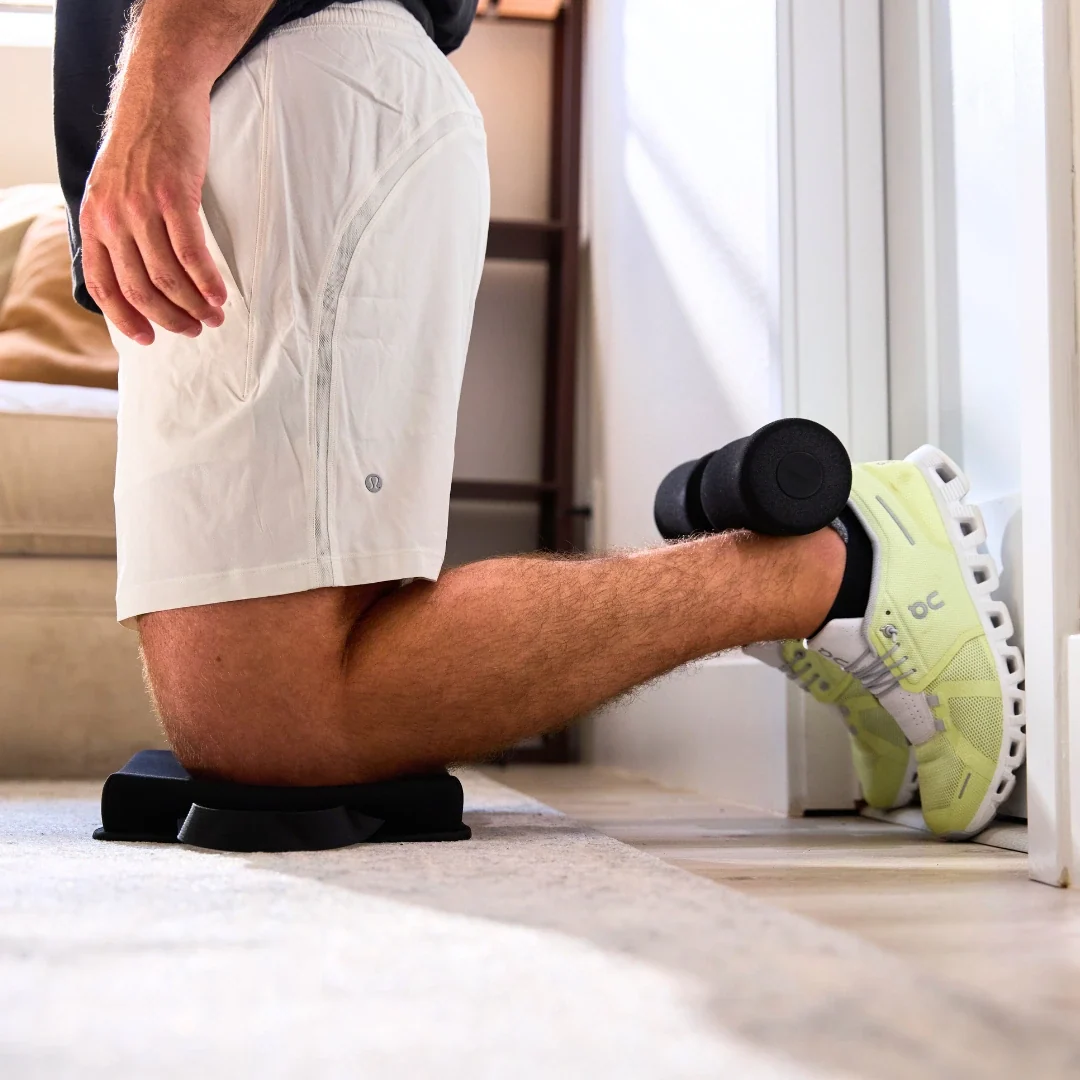
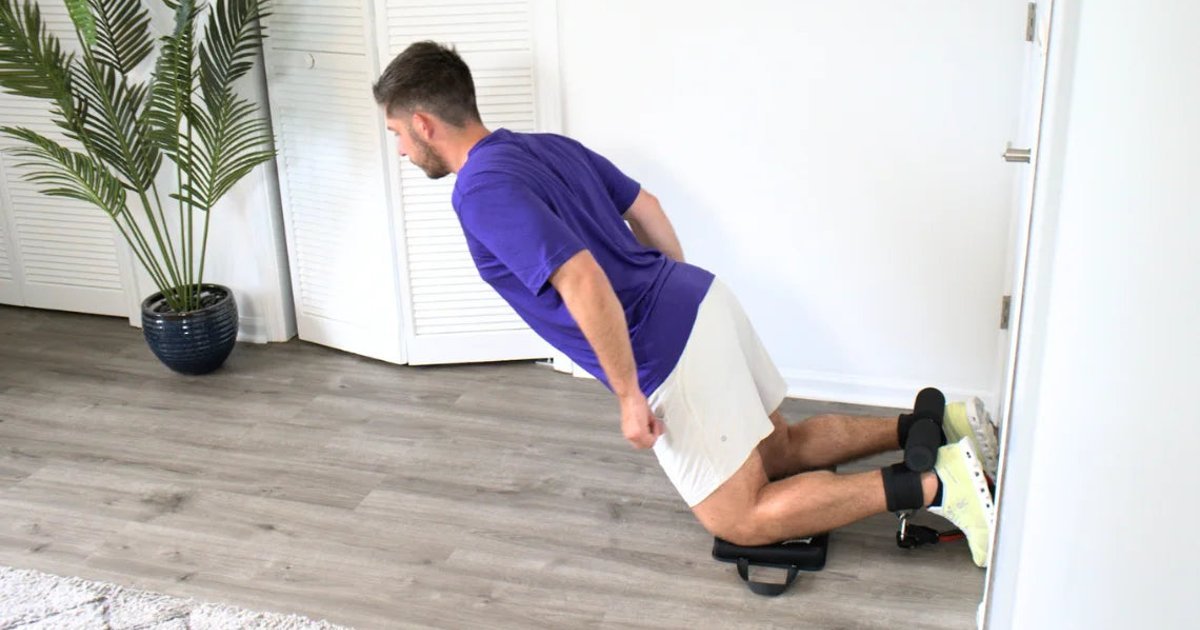
The basic setup uses a strap passing under a closed door, with padded supports holding the feet in position. The manufacturer’s instructions describe adjusting the strap, placing the anchor under the door and closing the door securely before positioning the feet. Follow the current instructions supplied with your actual version; a photograph is not an installation manual.
Before committing to that location, inspect the door, frame and hardware. A device’s advertised load rating does not establish that your particular door is suitable. A loose hinge, damaged frame or door that cannot remain securely closed is a reason to choose another arrangement. Check the setup gently before exercise rather than discovering movement during a demanding repetition.
Think about the room on both sides of the door. Someone entering unexpectedly can interrupt the set or disturb the anchor. Avoid a shared thoroughfare, and make sure anyone else using the space knows the door is occupied. This is a practical household consideration that a compact product photograph rarely communicates.
Then check your own position. The supports should sit comfortably and securely, without a loose strap allowing the feet to wander. Do not treat extra tightness as a substitute for a correct fit. If the device shifts, the door moves or the contact feels wrong, stop and reassess the arrangement. Choosing a different station is better than trying to finish a set around an unreliable anchor.
The footprint includes your body and knee support
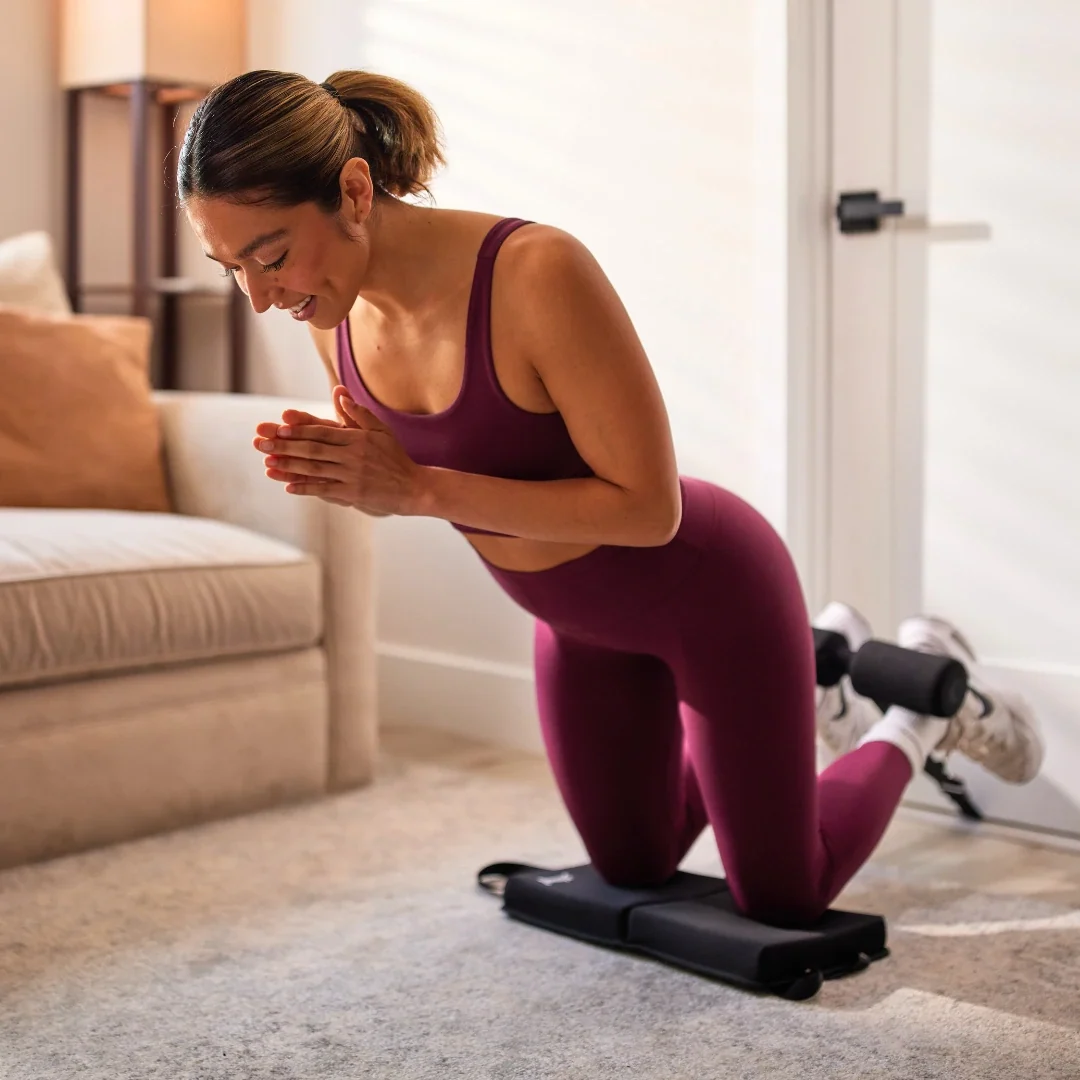
A rolled-up strap takes little storage space. Its working footprint is much larger because your body moves forward from a kneeling position. Clear the area in front of you, including furniture edges and anything you could strike with your hands. Measure the exercise space with your actual kneeling position rather than the dimensions of the stored product.
Knee support is another separate purchase-and-fit question. Check what your chosen package includes; product-page photographs may show pads and accessories sold as add-ons. A suitable support should stay in place and provide a comfortable base. A slippery stack of improvised cushions is a poor way to compensate for an unsuitable floor.
Your ankle position matters as well. Holding the feet down does not make every combination of support height and joint position equivalent. The useful goal is a repeatable arrangement that lets you focus on the movement. Our guide to Nordic-curl ankle fixation and progression explores why the way the heels are held deserves attention.
Make a short setup record once you have found a suitable position: which doorway, which pad and where the strap is adjusted. That can be more useful than repeatedly guessing between sets. If the same equipment serves several people, each person still needs to check the fit. A previous user’s adjustment does not automatically suit your feet or leg length.
Research on Nordic curls is not a device guarantee
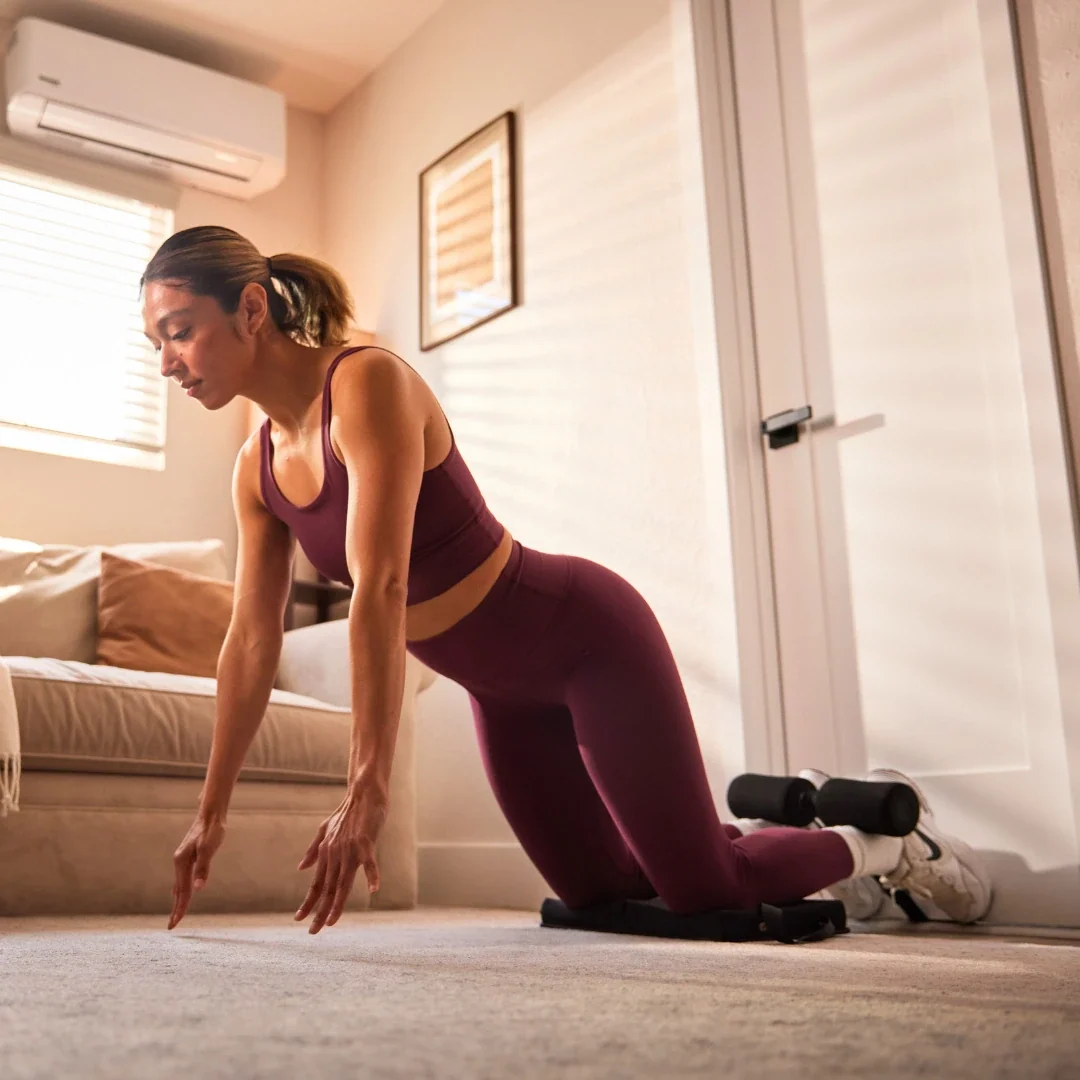
There is a research basis for including Nordic hamstring work in training. A 2011 trial allocated 942 male soccer players across 50 teams to usual training or a programme adding progressive eccentric hamstring work. It recorded fewer acute hamstring injuries in the intervention group over the season. That was a structured exercise intervention, not a test showing that buying a particular doorway product produces the same outcome.
A 2017 review also found lower hamstring injury rates in soccer programmes that included Nordic work. A later umbrella review, published in 2024, considered performance and injury outcomes across multiple reviews. These are connected bodies of evidence, with overlapping underlying studies; they should not be added together as if every review represents a completely new group of athletes.
The distinction matters when equipment advertising turns exercise findings into a broad promise. A reduction in injury rates across a sporting programme does not mean every participant is protected, and it does not establish that a product prevents all knee problems. Training history, previous injury and the way a programme is carried out still affect how evidence applies to an individual.
Use the research to understand why the movement may be worth considering. Use the equipment information to decide how you would perform it. Those questions complement each other, but neither answers the other automatically. If you are dealing with an injury or persistent pain, get individual advice rather than using an injury-prevention headline as a rehabilitation prescription.
Choose a progression you can control
A secure ankle anchor solves the problem of holding the feet; it does not remove the difficulty of lowering the body. Start by establishing what you can perform under control with an appropriate progression. Do not make an unsupported full-range repetition the entry requirement for using the exercise.
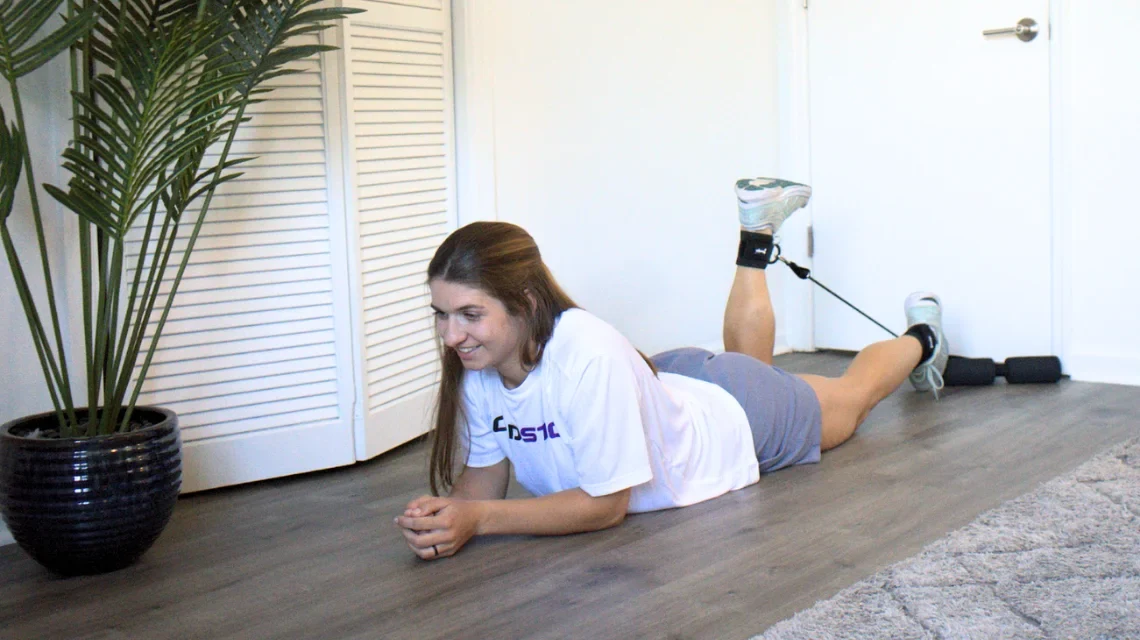
Assistance, a shorter movement and a different hamstring exercise are possible programming choices. Their suitability depends on the equipment and the person. Where bands are used, they introduce their own attachment points and condition checks. Avoid improvised anchors or an arrangement that sends a stretched band toward your face if it comes loose.
Changing the exercise is also a legitimate choice. A banded or cable leg curl loads knee flexion in a different setup from a Nordic curl. It can be useful to compare the control, comfort and practical access you have with each, without pretending they are identical. Our lying cable hamstring-curl setup guide covers one alternative and its own cuff and positioning checks.
Keep the first sessions manageable. Record what assistance or range you used and how the repetitions looked, rather than chasing a dramatic demonstration for its own sake. If control disappears, end that set instead of treating a collapsing repetition as an achievement. New hamstring work should fit into the rest of leg training, with room to judge how you respond before increasing the demand.

Leg Day Shirts & Workout Gear
Leg-day gym shirts and workout gear for lifters who never skip squats, lunges and lower-body punishment.

My Leg Hurts Leg Day Decal Water Bottles & Gear Meme Sticker
Stick a little “My Leg Hurts” humor on your favorite gear.

Never Skip Legday – Chicken Legs Meme , , & Leg Day T-Shirt
Heavy lifts, good laughs, and a little “Never Skip Legday” energy.


Leg Day Is Calling You Sweater Squats & Deadlifts T-Shirt
Add a playful “Leg Day Is Calling You” touch to your casual rotation.

Leg Day No Thanks Skip Leg Day Meme Squats Deadlifts Tank Top
Bring “Leg Day No Thanks” humor to your next lifting session.

Negative Leg Day Review 1 Star Not Recommended Decal Sticker
Stick a little “Negative Leg Day Review” humor on your favorite gear.

Legendary Leg Day – Squat Meme Hooded Pullover Hoodie
Keep it laid-back with a little “Legendary Leg Day” attitude.

Shirt Leg Day Lovers – Fried Chicken & Gains Meme – T-Shirt
Rep “for Leg Day Lovers” humor in and out of the gym.

Never Skip Leg Day Flamingo – Fitness Meme Pullover Jum T-Shirt
Keep things casual with a little “Never Skip Leg Day Flamingo” attitude.

Shirt Meme – Leg Day Yesterday Wheelchair Top T-Shirt
Rep “Funny Gym Shirt Meme” humor in and out of the gym.
Compare the complete setup before buying accessories
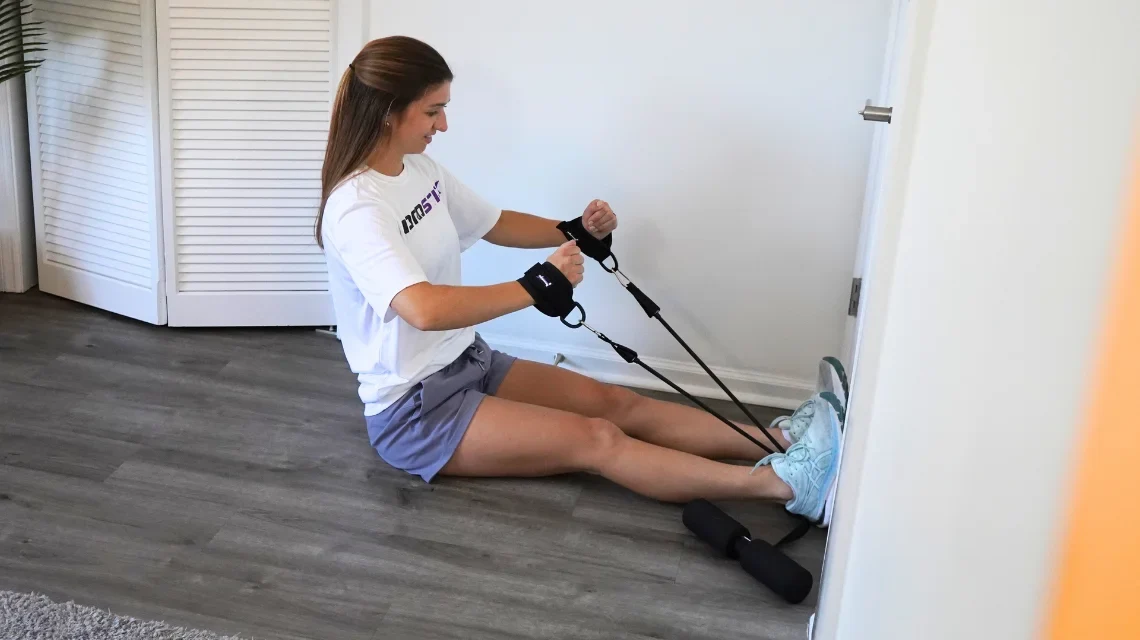
The product page also shows band-based exercises and related accessories. Those demonstrations illustrate additional configurations, not proof that every attachment is included with the base NordStick Pro. Check the exact contents of the selected package, including knee support, bands, cuffs and handles, before comparing prices.
Make the comparison against equipment you can actually use. A doorway strap may be appealing when storage matters and a suitable door is available. A dedicated Nordic station has a different structure, adjustment system and space requirement. If you already have access to a suitable station, another anchor may add less value than improving the progression you use there.
Put the total cost next to the total routine. Include necessary accessories, delivery and the time required to clear the area and set up. A low base price is less informative when the package needs several additions to match the demonstration that attracted you. Equally, buying a large bench makes little sense if you cannot keep enough working space around it.
Inspect the strap, buckle, anchor and padded supports regularly, and follow the maker’s care instructions. Stop using damaged components and ask about replacement parts instead of assuming a small accessory is disposable. Keep a record of the version purchased so that support questions refer to the right product.
The NordStick Pro’s appeal is the compact anchor. Its usefulness depends on the larger arrangement: a suitable doorway, comfortable support, enough room and a realistic exercise choice. Get those details right first, then decide which accessories earn a place. A repeatable setup is a better buying goal than the most ambitious claim on a product page.