Advertising disclosure: This page includes affiliate product links that may earn us a commission, as well as products from our own store.
Rest-Pause Training: Set a Mini-Set Limit Before Chasing More Reps
There is a difference between planning extra work and refusing to end a set. Rest-pause training can make that distinction easy to lose: you finish a demanding effort, take a short break and discover that a few more repetitions are possible. Repeat that discovery enough times and a simple accessory exercise can consume more fatigue than the session was designed to create.
A useful approach starts with boundaries. Decide which exercise will use the method, how the load will be put down, how long the pause will last and what ends the sequence. Those decisions make the work easier to repeat and evaluate. They also keep an intensity technique from becoming a substitute for a coherent program.
1. Define the complete sequence before the first repetition
Rest-pause extends a demanding initial effort with brief rest and additional repetitions at the same load. The pause happens after the initial effort, unlike a continuous set. Keeping the load unchanged also distinguishes it from a drop set, where reducing the weight is part of the method.
For a first experiment, use an exercise you already perform confidently and choose a deliberately small scope: one final working set, followed by one short additional effort. A planned 20-second pause is a practical example used in research protocols, not a universal physiological threshold. Secure the weight during the break rather than holding it in a tiring position.
Write the stopping rule before starting. It could be one additional mini-set, ending when another repetition would require a clear change in range or body position. The goal is not to produce a predetermined number at any cost. If the second effort produces only one controlled repetition, record that result and finish rather than inventing another round.
This keeps the method distinct from an unplanned series of attempts. You should be able to describe the whole sequence in one line: exercise, load, initial repetitions, pause duration and additional repetitions. If the format changes every session, the apparent progress may be a change in the rules.
2. Choose an exercise you can stop and restart cleanly
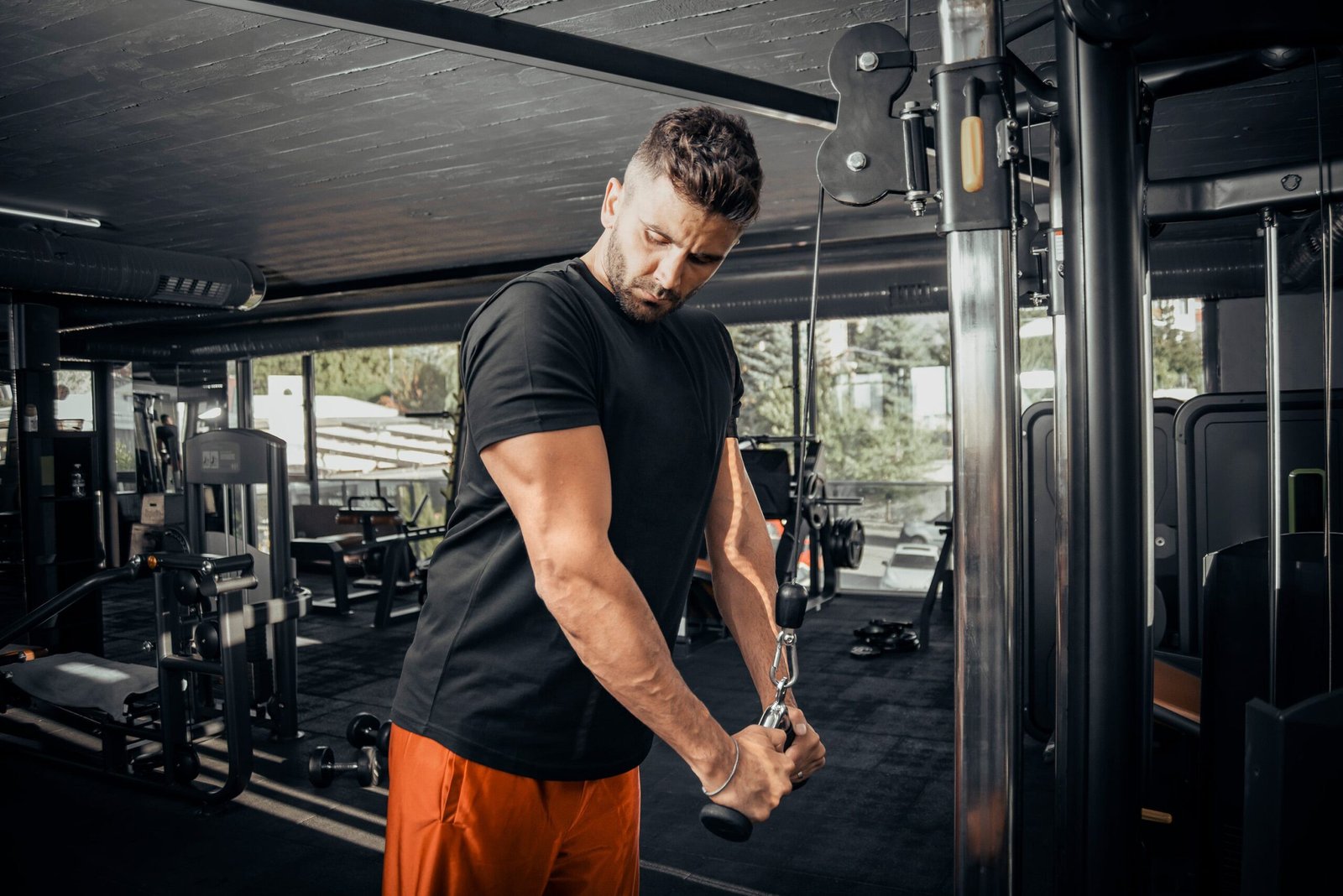
Exercise selection changes the cost of restarting. Consider a cable pressdown, a familiar machine exercise or a supported movement before adding repeated near-limit efforts to a demanding free-weight lift. Check how the resistance returns to its resting position and how you re-establish the start. A machine label alone does not make a setup appropriate.
A useful test is to rehearse the end of the set while fresh. Can you stop without twisting, dropping an implement or relying on someone to rescue the final repetition? Can you restart without shifting the seat or changing your range? If either answer is unclear, solve the setup or choose another movement.
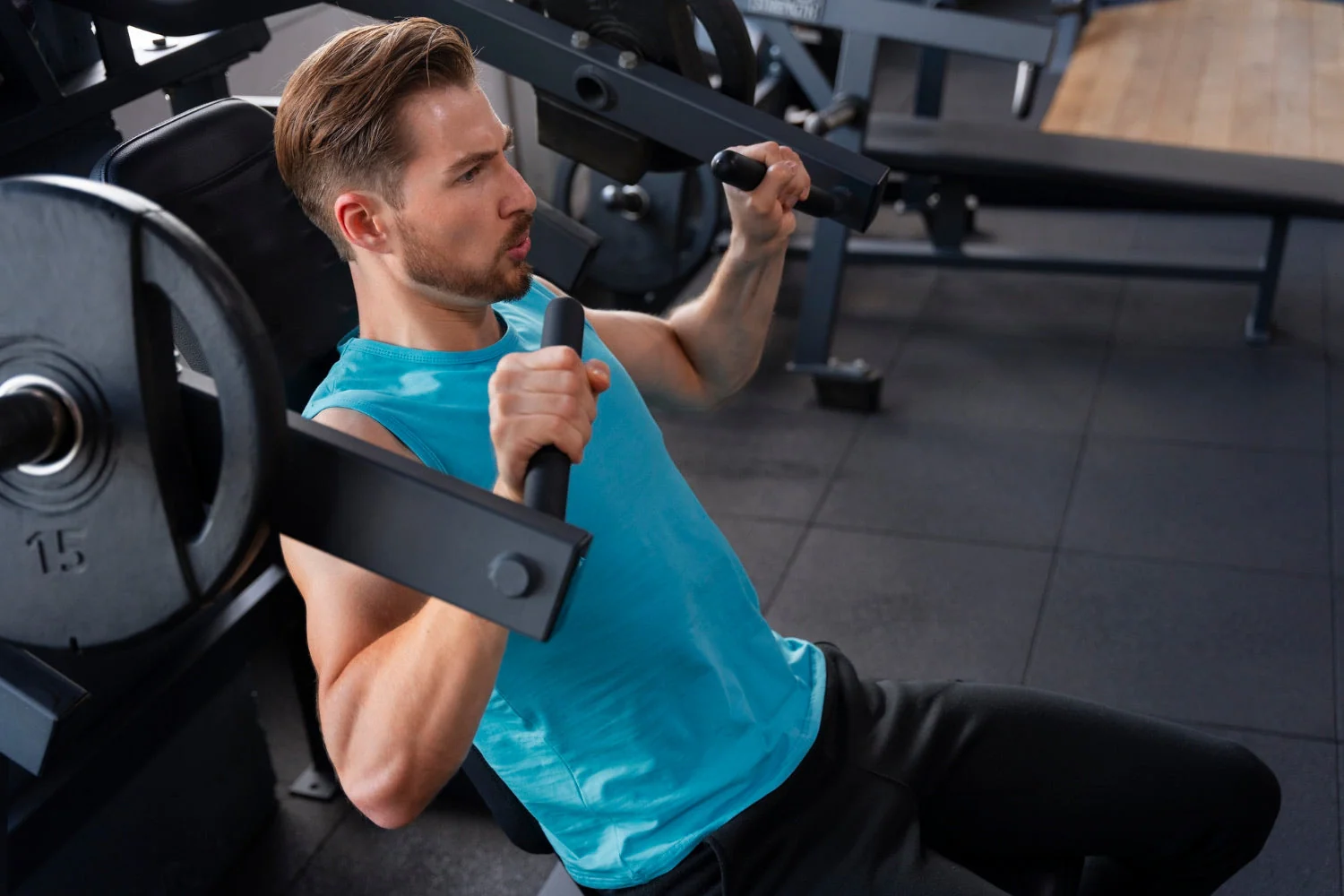
For example, a chest-press machine may allow a more straightforward return than repeatedly arranging heavy dumbbells at shoulder level. A cable exercise may be convenient, but only if the attachment and standing position remain controlled. The practical advantage comes from the complete routine, not from assuming one equipment category is universally safest.
Keep familiar technical standards. A curl still needs a repeatable elbow position and controlled lowering; a press still needs stable support. End the effort when those standards disappear. Rest-pause is a way to organize demanding work, not permission to replace the movement with whichever action gets the handle moving.

Equipment Worth Exploring
Explore equipment, accessories and gear from our carefully selected range.


Rubber Hex Dumbbells
Rubber-coated hex dumbbell pairs with a stable shape for home and commercial strength training.


VForce Wall Trainer
Space-saving wall-mounted functional trainer with pivoting cable arms and variable resistance ratios.

Standing Chest Press SCP-760
Standing chest-press machine with adjustable handle positions for chest and close-grip pressing.

Leg Extension/Curl BCO-780
Leg extension and lying leg curl combo with plate loading, band pegs and a cable-loading option.

Long Tricep ERGO Ropes
Extended triceps ropes with ergonomic grips for cable pressdowns and overhead extensions.

GymPin Ergo Handles
Pair of ergonomic cable handles shaped for comfortable triceps and pulling exercises.

Multi-Length Tricep Strap
Adjustable-length cable strap for triceps, biceps and upper-body cable exercises.
Horizon Grip
Ergonomic V-style cable grip for rows and back training.
3. Budget the fatigue beyond the last mini-set

A short pause can restore enough capacity for additional work without restoring you completely. That is the point of the method, and also why the rest of the session matters. Finishing a sequence does not erase its effect on the next exercise or the following workout.
In a six-week comparison involving 18 trained participants, rest-pause and traditional multiple-set training produced no significant between-group difference in maximal-strength gains. The rest-pause group had a larger improvement in thigh thickness and leg-press endurance in that small experiment. Those specific findings do not establish superior growth for every muscle or every rest-pause format.
The distinction matters when choosing what to measure. A harder sensation, a pump or more repetitions inside one compressed sequence is not itself a long-term result. If you add the method to an already demanding program, monitor whether later working sets deteriorate or whether the next session becomes harder to complete.
Place the experiment where it has a limited opportunity to disrupt priority work. For someone focused on progressing a main lift, an accessory exercise near the end of the session may be easier to evaluate than changing the main lift and several accessories simultaneously. Keep the surrounding program stable enough that you can identify what changed.
4. Log the sequence instead of hiding it in one total

Ten repetitions, a 20-second pause and three more repetitions should be recorded as separate parts. Writing only “13 reps” makes it look like a continuous set. That hides the very feature you are trying to assess and creates a misleading comparison with last week’s ordinary set.
A compact entry might read: cable pressdown, same attachment and load, 10 initial reps, 20 seconds secured rest, three additional reps. Add a short note if the last repetition shortened, if body position changed or if restarting required a different setup. These details matter more than inventing a precise fatigue score you cannot reproduce.
Compare like with like over several exposures. If the load, pause and technique remain consistent, an extra controlled repetition may be meaningful. If you quietly lengthen the pause, improve the leverage or add another mini-set, identify that change before calling the higher total a strength gain.
Also record how the method fits your schedule. Did it replace a longer block of work, or did it simply add another five minutes? Did you finish the exercises that matter most? An intensity technique can be interesting without being useful for the problem you intended to solve.

Funny Gym Shirts & Workout Gear
Funny gym shirts, tanks, hoodies and workout gear for lifters who like training hard.

I Want You To Do One More Rep – Uncle Sam Patriotic Ves Tank Top
Bring “I Want You To Do One More Rep” humor to your next lifting session.

One More Rep Shirt: Motivational & T-Shirt
Make gym days more fun with “One More Rep” style.

The Only Difference Between Good And Great Is One T-Shirt
Bring “The Only Difference Between Good And Great” humor to your next gym day.

Whole Lotta Reps AC/DC – Rock Music & Gymbros – Meme T-Shirt
Bring “Whole Lotta Reps AC/DC” humor to your next gym day.

Dwight Schrute Gun Show The Office Meme Sweater Bicep T-Shirt
Bring “Dwight Schrute Gun Show” humor to your everyday gym style.

Big Biceps Theory & Meme Fans Bro Science Vest Tank Top
Your gym-day look, with a playful “Big Biceps Theory” twist.

Beauty And The Biceps Decal Water Bottles & Gear Meme Sticker
Bring “Beauty And The Biceps” attitude to your water bottle or laptop.

Big Gun – AC/DC Rock Music Big Biceps & Gains – Meme T-Shirt
Rep “Big Gun” humor in and out of the gym.

Lightning Curls Pikachu Meme – Pokemon Shirt & T-Shirt
Make gym days more fun with “Lightning Curls Pikachu Gym Meme” style.

Kanye Rest Day Parody | Swole Ye Gym Jumper Funny Worko T-Shirt
Keep things casual with a little “Kanye Rest Day Parody” attitude.
5. Replace a little work before adding a lot more

The simplest trial is a small substitution. Keep the exercise, equipment and weekly schedule familiar, then replace one ordinary final set with the defined rest-pause sequence. This is a practical way to limit the number of changing variables; it is not a scientifically exact conversion between set types.
There is no universal rule that one extended sequence equals two or three traditional sets. The answer depends on initial effort, additional repetitions, loading, exercise and the rest of the program. Treat the substitution as something to evaluate rather than a calculation that guarantees an identical training stimulus.
After a few sessions, review repeatability, performance in subsequent work, recovery and whether you prefer the format. If the sequence repeatedly becomes sloppy or expands beyond the plan, return to ordinary sets. You do not need a dramatic intensity technique to justify a productive workout.
Consistent resistance training, appropriate effort and a program matched to your goals remain the foundation. Rest-pause can occupy a small, deliberate place within that structure. Set a mini-set limit, secure the load during the break and keep an honest record. The useful extra rep is the one that belongs to a plan you can repeat.