Advertising disclosure: This page includes affiliate product links that may earn us a commission, as well as products from our own store.
What if the difference between a grinding set and a crisp one were simply where you put thirty seconds of recovery? A new 2026 experiment tested that question in resistance-trained women. The intriguing result was not that participants rested longer, but that moving some of the same recovery time inside a set helped them complete more repetitions afterward and report less fatigue.
That distinction matters. Many advanced lifting methods appear impressive because they quietly add recovery, change the load or reduce the work. This trial tried to hold the total rest budget steady. Its findings offer a useful programming idea for people who want more repeatable high-quality work, but they do not prove faster muscle growth, safer blood-pressure responses or superior long-term strength gains.
Some equipment links may be affiliate links, supporting Mind Muscle Perfection without increasing your purchase price.
The simple idea: redistribute recovery instead of adding it
A traditional set asks you to perform all planned repetitions continuously, then rest before the next set. A cluster set inserts one or more short pauses between smaller groups of repetitions. Five reps, a brief pause, then another five is one practical example. Rest redistribution is related but not identical: it may reorganize the whole workout into smaller sets while preserving the planned work and recovery budget.
These are not tricks that manufacture extra energy. The pause lets you partially recover between contractions, making later repetitions potentially less affected by the fatigue created by earlier ones. A lifter may notice cleaner technique, less dramatic slowing and a more consistent effort across repetitions. The benefit is especially interesting with relatively heavy loads, where rep quality often deteriorates before the exercise is finished.
The fair comparison is not ten continuous repetitions with two minutes of rest versus two clusters with a bonus thirty seconds added on top. That would give the cluster approach more recovery. The important 2026 experiment instead compared different placements of a matched rest allowance, making the result more informative for anyone with a fixed training schedule.
There is still a trade-off. A short pause interrupts the continuous tension of a set and changes how effort feels. It can be useful when performance quality is the goal, but it is not automatically better for every hypertrophy set or for exercises where setting down and restarting a load creates more hassle than benefit. Think of cluster sets as a way to allocate recovery, not a new requirement for building muscle.
What the 12-woman crossover experiment actually tested
The October 2026 study recruited twelve healthy, resistance-trained women aged 18 to 35, each with at least two years of lifting experience. Every participant completed three supervised sessions in a randomized, counterbalanced crossover design. That means each woman experienced the traditional condition and both cluster conditions, reducing the influence of differences between people. Sessions were separated by a week.
The exercise was seated bilateral knee extension, chosen to isolate the quadriceps and keep cardiovascular measurements relatively controlled. After a warm-up, the main work involved three sets targeting ten repetitions at 80% of each participant’s one-repetition maximum. The researchers then tested how many technically valid repetitions participants could complete at 60% of one-repetition maximum in a fourth set.
The three recovery structures were straightforward. Traditional sets used ten continuous repetitions and a 120-second between-set rest. The ten-second cluster split the ten repetitions into five, a ten-second pause and another five, then used 110 seconds between sets. The thirty-second cluster used five reps, thirty seconds of intra-set rest and five more, then ninety seconds between sets. The recovery budget between sets remained 120 seconds in each configuration.
That detail is easy to overlook when copying a protocol into a personal workout. If you insert a thirty-second pause but still take the full two-minute break afterward, you have not reproduced the matched-rest comparison. You may still benefit, but the mechanism is now a combination of more total recovery and different recovery distribution.
The investigators also measured perceived fatigue, blood pressure, heart rate and derived cardiovascular indices at selected times. This was an acute experiment: a handful of testing visits, not a multi-month muscle-building program. It did not track increases in muscle size or one-repetition maximum across a training cycle. The participants were recreationally trained women, not an unrestricted sample of beginners, older adults or patients with cardiovascular disease.

Equipment Worth Exploring
Explore equipment, accessories and gear from our carefully selected range.

HUSLA Leg Extension Pad
Pad attachment designed to increase usable range of motion on compatible leg-extension machines.

VOLTRA
Compact digital cable trainer with smooth, adjustable resistance.


FID Bench MAX
Adjustable bench offering flat, incline, and decline positions + adjustable headrest.


GymPin Squat Wedges
Non-slip 15-degree squat wedges help elevate the heels for deeper quad-focused squats.

Why the 30-second clusters produced more test repetitions
The most visible difference emerged in the final muscular-endurance test. After the preceding heavy work, participants averaged 12.8 valid repetitions in the traditional condition, 15.8 in the ten-second cluster condition and 18.4 in the thirty-second cluster condition. These are group averages, not a guarantee that any particular lifter will gain five or six repetitions by changing a rest timer.
The difference was statistically strong within this small crossover sample. But interpreting it correctly is more important than the headline number. The final test used a lighter load than the preceding work and measured how much repetition capacity remained. It is evidence about short-term performance preservation under this particular knee-extension protocol. It is not evidence that thirty-second clusters instantly make the quadriceps stronger or that the same advantage will appear in a heavy barbell squat.
Perceived fatigue followed the same broad pattern. Immediately after exercise, the average rating was 7.00 in the traditional condition, 5.25 with ten-second pauses and 4.08 with thirty-second pauses. The lower ratings help explain why cluster sets may feel more manageable even when the planned repetitions and rest budget are similar. However, subjective scales can be affected by familiarity, expectations and individual response.
One useful lesson is to distinguish a set’s difficulty from the amount of productive work you can repeat. A workout that leaves you breathless or shaking may be challenging, but challenge is not automatically the same as the best stimulus for your objective. If a short pause allows consistent technique and more controlled repetitions, that can be worthwhile when performance quality matters.
It also works the other way. If your goal is a compact conditioning circuit or a deliberately continuous local muscular-endurance effort, breaking every set into clusters may undermine the experience you intended to train. The right set structure depends on whether you are protecting rep speed, accumulating work, managing fatigue or deliberately tolerating it. This is why cluster sets should be chosen deliberately rather than applied indiscriminately.

Leg Day Shirts & Workout Gear
Leg-day gym shirts and workout gear for lifters who never skip squats, lunges and lower-body punishment.


Quadzilla Massive Quads Decal Leg Day Squat Meme Sticker
Stick a little “Quadzilla” humor on your favorite gear.

Leg Day Squats Deadlifts Meme Hooded Hoodie
Show off your leg-day humor in a laid-back “Leg Day” hoodie.

Gym Girl Booty Builder Tank
Show some personality between sets with “Gym Girl Booty Builder”.

Booty Building Mode Gym Sweatshirt
Keep things casual with a little “Booty Building Mode” attitude.

Thick Thighs Crush Guys Shirt Leg Day Meme & Gymbros T-Shirt
Show some leg-day attitude with a playful “Thick Thighs Crush Guys” tee.

Hippo Thrust Leg Day Meme Sweater Glutes & Booty Day T-Shirt
For laid-back days and leg-day humor: “Hippo Thrust”.

Thicc AF Booty Lovers & Glute Gains Meme Athletic Tank Top
Train hard, laugh a little, and rep “Thicc AF”.

Shirt Squat Queen Leg Day Bros & Meme Gains T-Shirt
Bring “for Squat Queen” humor to your next gym day.

Deadlift Skull Explosion Graphic for Powerlifting Leg D T-Shirt
Make gym days more fun with “Deadlift Skull” style.
Lower fatigue per repetition did not mean lower blood pressure
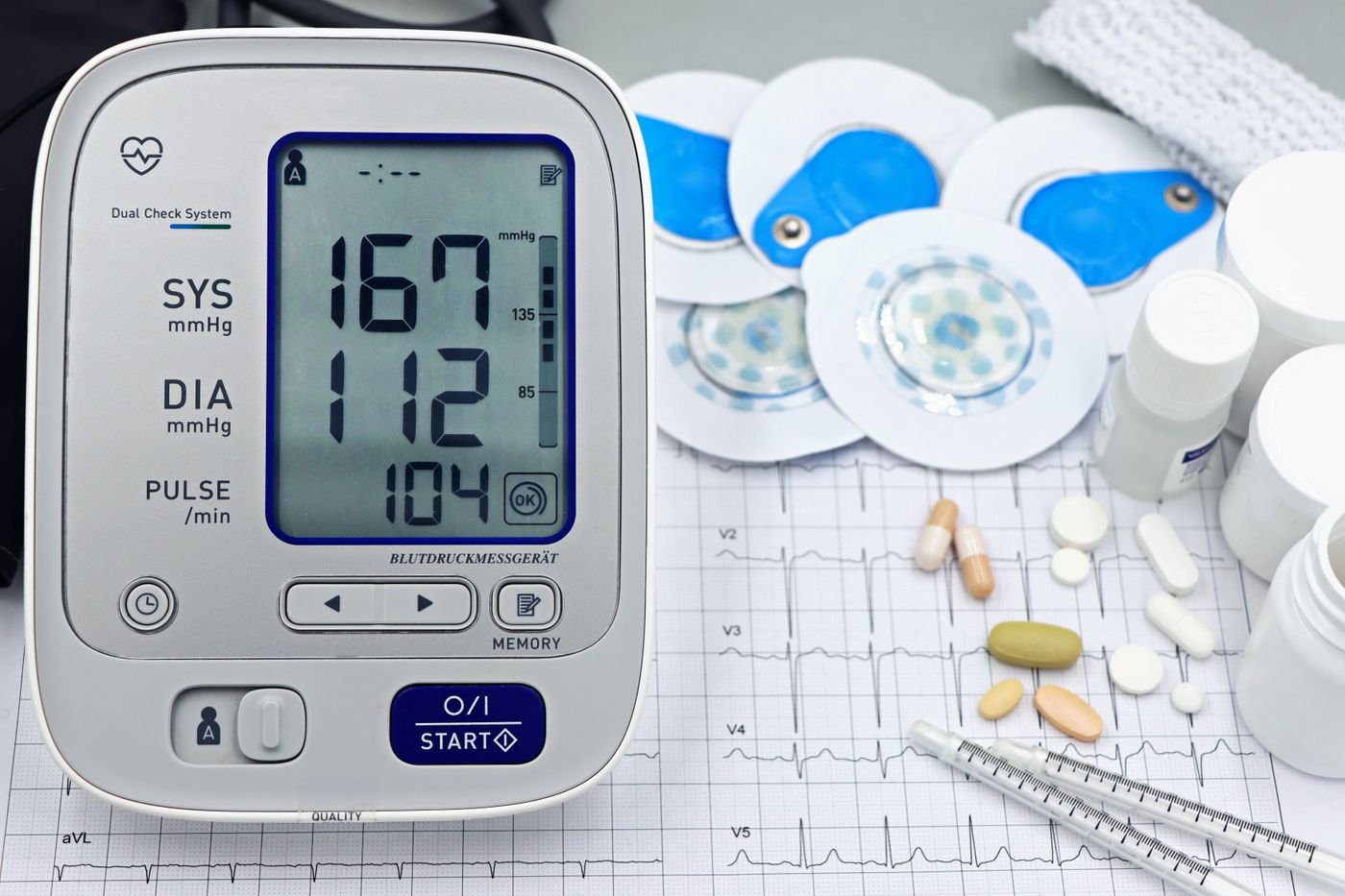
The researchers calculated two ratios: perceived fatigue divided by repetitions, and a cardiovascular load measure divided by repetitions. Both cluster conditions produced lower values than traditional sets. In plain language, participants achieved more repetition work relative to the measured fatigue and cardiovascular index. This is a potentially useful efficiency signal, but a ratio can improve simply because the denominator, the number of repetitions, increases.
Here is the essential distinction: the study did not detect statistically significant between-condition differences in the measured post-set systolic or diastolic blood pressure, heart rate, mean arterial pressure or rate-pressure product. It also did not find significant differences in their time-integrated measurements. Those absolute results are not interchangeable with the work-normalized ratios.
Someone reading only the efficiency finding might conclude that thirty-second cluster sets lower cardiovascular strain or make heavy training safer for people with hypertension. That conclusion goes beyond the evidence. Measurements were taken intermittently after selected sets rather than continuously during every contraction. Brief peaks during exertion may not have been captured. Only twelve normotensive trained women were studied, and the movement involved a relatively small muscle group.
There is no basis here for replacing medical exercise advice, ignoring symptoms or prescribing clusters as a cardiovascular intervention. People with known cardiovascular conditions should follow their clinician’s exercise guidance and avoid treating a single gym study as a safety clearance. For healthy lifters, the practical takeaway is narrower: clusters may help preserve work output without an observed increase in the particular post-set cardiovascular measures collected.
Breathing and bracing remain important regardless of set structure. Avoid making every repetition a prolonged maximal strain, especially if you are inexperienced. Use a controllable load, a stable setup and an effort level appropriate to your training history. If dizziness, chest pain or unusual breathlessness occurs, stop and seek appropriate medical evaluation rather than assuming the next thirty-second pause will solve it.
Does preserving repetitions translate into more muscle or strength?
Not necessarily. An acute advantage can be meaningful without producing a bigger adaptation months later. Longer-term comparisons of cluster, traditional and redistributed-rest training have generally not established clear superiority for muscle hypertrophy or maximal strength when the overall program is reasonably matched. Alternative set structures may reduce fatigue during sessions, but lower fatigue is a tool, not a direct measurement of growth.
Why might the acute and chronic findings diverge? Muscle development depends on repeated exposure to sufficiently challenging tension, progressive loading, adequate recovery and the total program. Clusters may let a lifter perform later repetitions with better speed and control, yet traditional sets can also provide a strong hypertrophy stimulus. The number of challenging sets, how close they approach failure and whether progression continues over weeks may matter more than the placement of one short pause.
Rest research also cautions against simplistic rules. Short rests can reduce repetition performance, but the literature does not establish a single ideal rest duration for every muscle or exercise. Longer breaks often help maintain output during demanding compound lifts. Cluster pauses address a different question: can a fixed rest budget be distributed to preserve performance? The answer appears promising in selected acute settings, while the long-term advantage remains uncertain.
Consider a cable row. If ten uninterrupted reps cause your torso to swing and your grip to fail near the end, two blocks of five with a short pause may let you keep the same load and better technique. But if ten continuous reps are already smooth, adding clusters could complicate the workout without adding much. The same reasoning applies to a leg extension or dumbbell press. Use the variation when it solves a measurable problem.
Be cautious about counting every additional cluster repetition as equivalent hypertrophy volume. A repetition that occurs after a pause may be performed under a different fatigue state. That is not inherently worse or better; it is simply different. Track progress over several weeks instead of declaring victory from one higher-rep day. A training method earns its place when it improves repeatable performance, tolerability or adherence without displacing more important work.
Equipment Worth Exploring
Explore equipment, accessories and gear from our carefully selected range.



Squat Harness
Wearable harness for hands-free cable squats, sled work, and lower-body training.

Safety Squat Handles
Barbell squat handles that reduce shoulder positioning demands during high-bar squats.


Original GymPin
Adds Olympic plates to compatible cable-machine weight stacks for extra resistance.


How to use clusters on machines, cables and free weights
The easiest starting point is a stable exercise where the load can be paused safely: leg extension, leg curl, seated cable row, chest-supported row or a controlled machine press. Choose a weight you can move with consistent technique. Instead of ten continuous reps, try five reps, a fifteen- to thirty-second pause and five more. Reduce the following between-set rest by the same amount if you want to keep the overall recovery budget comparable.
On a cable machine, the pause should not become a battle with the handle or an uncontrolled weight stack. Return the resistance to a stable position and restart without a jerky first repetition. If the machine has an electronic unloading feature, learn how it works before relying on it for an intra-set pause. The exercise should remain safe and predictable even when fatigue is high.
With a barbell squat, bench press or heavy deadlift, the practical constraints are greater. Reracking, resetting bracing and changing position can take longer than the planned pause, and a poorly controlled restart can introduce unnecessary risk. Experienced lifters may use small clusters with an appropriate rack and safeties, but beginners are usually better served by ordinary sets and generous inter-set rest. For heavy compound movements, consistency and setup quality outrank strict imitation of a knee-extension experiment.
Cluster sets are especially reasonable when you care about movement velocity, crisp technique or managing accumulated fatigue during a high-frequency block. They are less compelling when the primary objective is to create an uninterrupted local burn, or when changing equipment between mini-sets wastes more time than it saves. You can also reserve them for one exercise rather than restructuring an entire workout.
For home gyms, the equipment choice is secondary to controllable resistance and a stable setup. A compact cable system, adjustable dumbbells or a well-designed leg attachment can support structured pauses without requiring a large commercial machine footprint. Record the exact mini-set structure, rest intervals and load so that next week’s comparison is fair. If the new structure only works because you have quietly added extra rest, log that honestly too.
Gym Girl Shirts & Workout Gear
Gym shirts, tanks and workout gear for women who lift, train hard and live the gym lifestyle.

Muscle Mommy Pink Gym Graphic for Women, Female Lifters Hoodie
Keep it laid-back with a little “Muscle Mommy” attitude.

Flowers & Weights Pink 45LB Plate Floral Barbell Workou Hoodie
Keep it laid-back with a little “Flowers & Weights Pink 45LB Plate” attitude.

Tulips & Weights Pink 45LB Plate Spring Floral Fitness Tank Top
Add some Easter attitude to training with “Tulips & Weights Pink 45LB Plate”.

In My Era Shirt Meme & T-Shirt
Heavy lifts, good laughs, and a little “In My Workout Era” energy.

with Protein Shaker Print | Bodybuilding Muscle Shirt Tank Top
Train hard, laugh a little, and rep “with Protein Shaker Print”.

Smiley Face – Makes Me Happy Meme – Top & Gymbros T-Shirt
Show some gym-girl attitude with a playful “Gym Smiley Face” tee.


Bootybuilder Gym Girl Funny Workout T
Show some gym-girl attitude with a playful “Bootybuilder Gym Girl” tee.

Thicc Booty Meme – Glute Lovers – T-Shirt
Rep “Thicc Booty Gym Meme” humor in and out of the gym.

Juicy Booty – Bootybuilder Big Booty Gains – & T-Shirt
Make gym days more fun with “Juicy Booty” style.
A four-week cluster-set experiment you can actually evaluate
Rather than replacing your program overnight, run a small experiment on one or two stable exercises. Keep your other lifts, weekly schedule and effort targets as consistent as practical. A leg extension or seated row is a sensible first choice. The aim is not to prove that clusters are superior; it is to discover whether they improve your own repetition quality and fatigue management.
Week 1: establish a traditional baseline. Perform three working sets of eight to ten controlled repetitions with roughly two minutes between sets. Select a load that leaves one to three good repetitions in reserve on the first set. Record completed reps, technique notes, perceived fatigue and whether your last repetitions slowed markedly. Do not force failure just to make the baseline look difficult.
Week 2: try ten-second clusters. Keep the same load and planned total repetitions. Split each ten-rep set into five, ten seconds of recovery and five more, then reduce the following rest to about 110 seconds. If your equipment requires longer to reset safely, use that actual duration and record it. Compare the final set’s quality and how ready you feel for the next exercise.
Week 3: try thirty-second clusters. Use the same five-plus-five structure but pause thirty seconds, then take about ninety seconds between sets. This matches the basic rest redistribution principle of the trial more closely. Do not automatically add extra sets because the exercise feels easier. If a repetition loses range of motion or requires momentum, it does not count as a clean success.
Week 4: repeat the best-fitting approach. Choose the structure that gave you the most consistent controlled work with acceptable fatigue. Repeat it at the same load, or increase resistance slightly only if the prior sessions were clearly manageable. Compare total valid repetitions, time spent, technique, fatigue and performance on the next exercise. If the traditional approach is equally good and simpler, keep it.
Do not extrapolate a short trial into a promise of faster hypertrophy. For muscle gain, continue monitoring weekly hard sets, progressive overload, sleep, nutrition and recovery. If you want to test whether clusters actually improve strength or muscle size, you would need a longer, controlled block and meaningful outcome measurements. A single great session is not a transformation.
Bottom line: in a small 2026 crossover study, moving the same rest allowance into ten- or thirty-second intra-set pauses improved subsequent knee-extension repetition performance and reduced perceived fatigue in trained women. Absolute post-set cardiovascular responses did not differ significantly, and long-term muscle-growth benefits remain unproven. The useful lesson is to organize rest around the work you want to preserve, not to confuse exhaustion with progress.