Advertising disclosure: This page includes affiliate links that may earn us a commission at no additional cost to you.
One number is usually enough to introduce Tommie Smith: 19.83 seconds. But the American sprinter’s Olympic 200-metre victory in 1968 tells only part of the story. Two years before Mexico City, Smith had already run a remarkable time over a straight sprint course, and he was also capable of racing a genuinely fast 400 metres. His career is a useful way to examine the difference between raw speed, sustaining speed and being able to produce both under competition conditions.
The college sprinter who could handle several distances
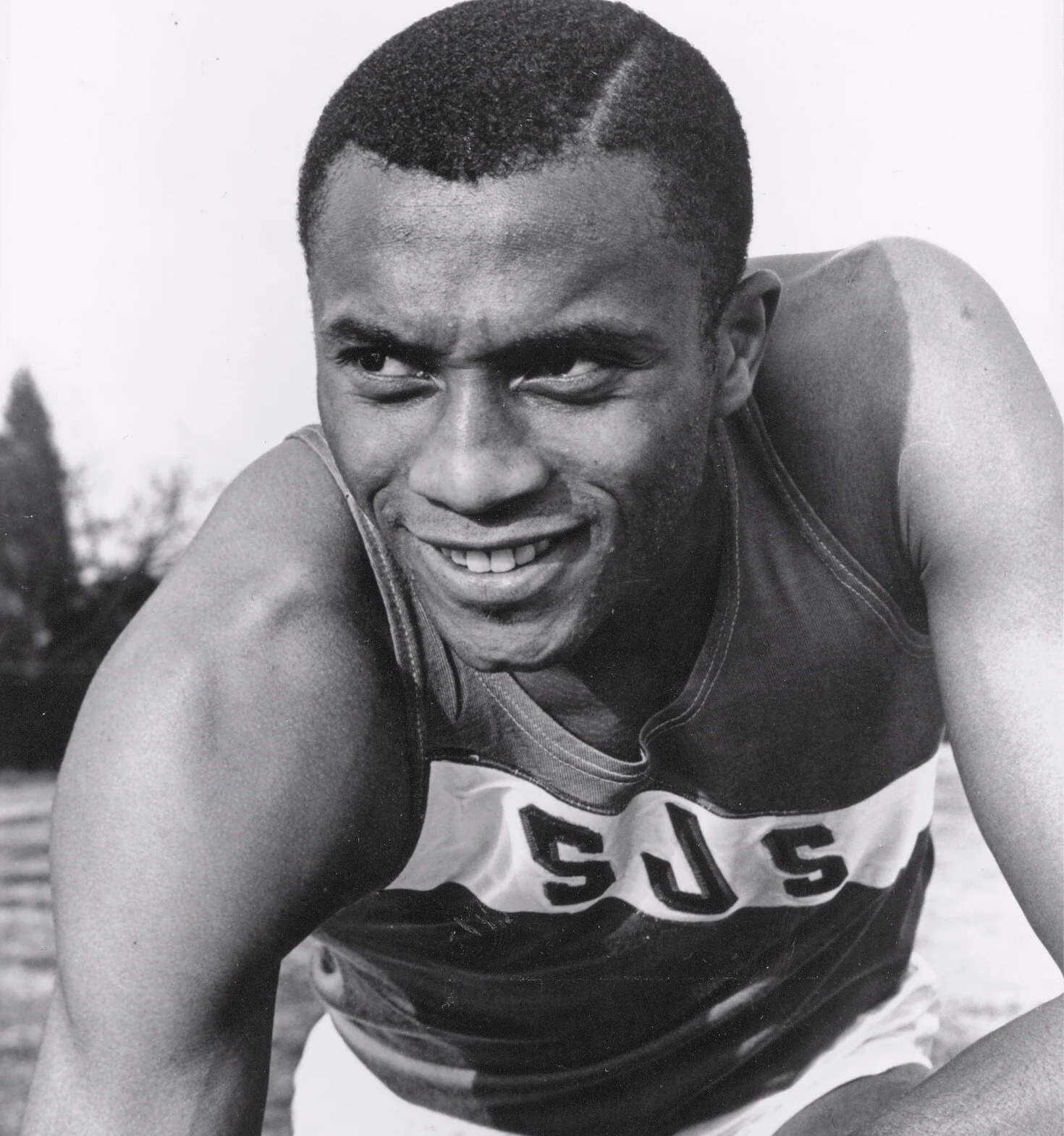
At San Jose State, Smith trained under coach Bud Winter and developed into an athlete whose abilities stretched beyond a single distance. He won the 220-yard event at the 1967 NCAA championships and went on to compete successfully in the American national championships. His range mattered: in addition to his short sprint performances, he recorded a hand-timed 44.5 seconds for 400 metres in 1967. That is a particularly revealing combination for anyone who thinks of a sprinter as someone who simply gets out of the blocks quickly.
The first few seconds of a race reward acceleration. The ability to keep running efficiently once near top speed becomes more important as distance increases. A 400-metre runner additionally has to manage a much greater accumulation of fatigue. None of these tasks is identical, even though all demand an exceptional ability to generate force against the ground in a short time.
Smith’s range does not mean an athlete should try to become equally good at every distance. Instead, it demonstrates that a single athlete can possess complementary qualities: acceleration, maximum velocity, coordination and the ability to resist deceleration. A lifter who is excellent over five metres may be relatively weak over 60 metres, while a runner with a strong aerobic base might struggle to accelerate from a stationary start. Identifying the actual limiting quality is more useful than simply labelling someone explosive.
Why a straight 200 is not the same test as a curved 200
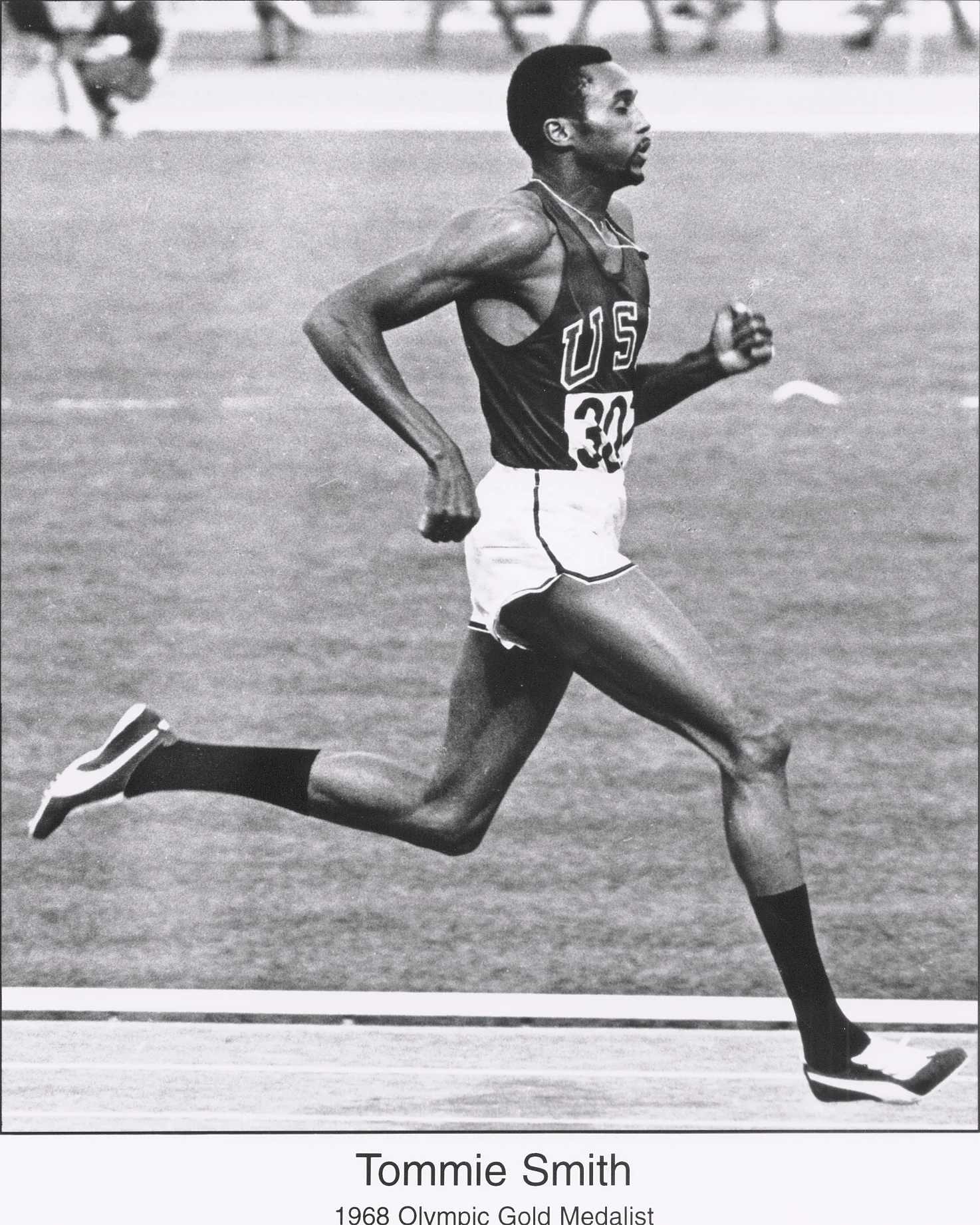
On May 7, 1966, Smith ran a straight-course sprint in 19.5 seconds by hand timing. The performance covered 220 yards, a distance of approximately 201.17 metres, and was also recorded over 200 metres. It was a remarkable demonstration of speed, but it is not appropriate to compare that figure directly with today’s fully automatic 200-metre records on a standard oval. The course layout, timing method and applicable record categories matter.
On a straight, an athlete can direct the running pattern along a single line throughout the race. On a bend, the runner has to generate the inward acceleration needed to follow the curve while continuing to move rapidly forward. The orientation of the body and the distribution of force between steps change. The lane also influences the radius of the bend. These demands are why a straight-line sprint and a curved sprint are related skills rather than interchangeable tests.
The same principle applies to gym exercises. A heavier sled push may improve someone’s ability to apply force during acceleration, but it cannot establish how fast that person will run around a bend. A treadmill session may be valuable for conditioning without reproducing the demands of a track start. Strength work is a tool to support the performance you want, not a replacement for practicing it.
For a recreational athlete who wants to run faster, separate the measurements. Record a short acceleration split on a consistent surface. Use another session for a longer, controlled sprint. If racing on a track, practice running a bend at a speed you can control. Keep footwear, starting method and timing consistent so that a change in the number is more likely to reflect a change in performance rather than a change in the test.

Equipment Worth Exploring
Explore equipment, accessories and gear from our carefully selected range.


Pro Sled System
Heavy-duty push-pull training sled for loaded conditioning, speed, and strength work.


Rubber Hex Dumbbells
Rubber-coated hex dumbbell pairs with a stable shape for home and commercial strength training.


Mexico City: putting speed together for 19.83 seconds
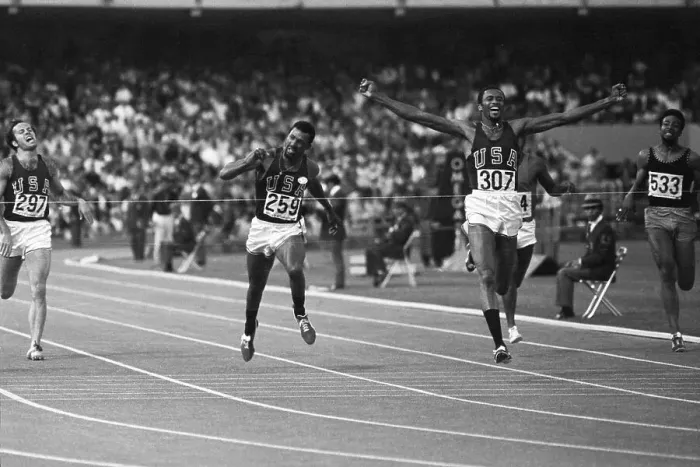
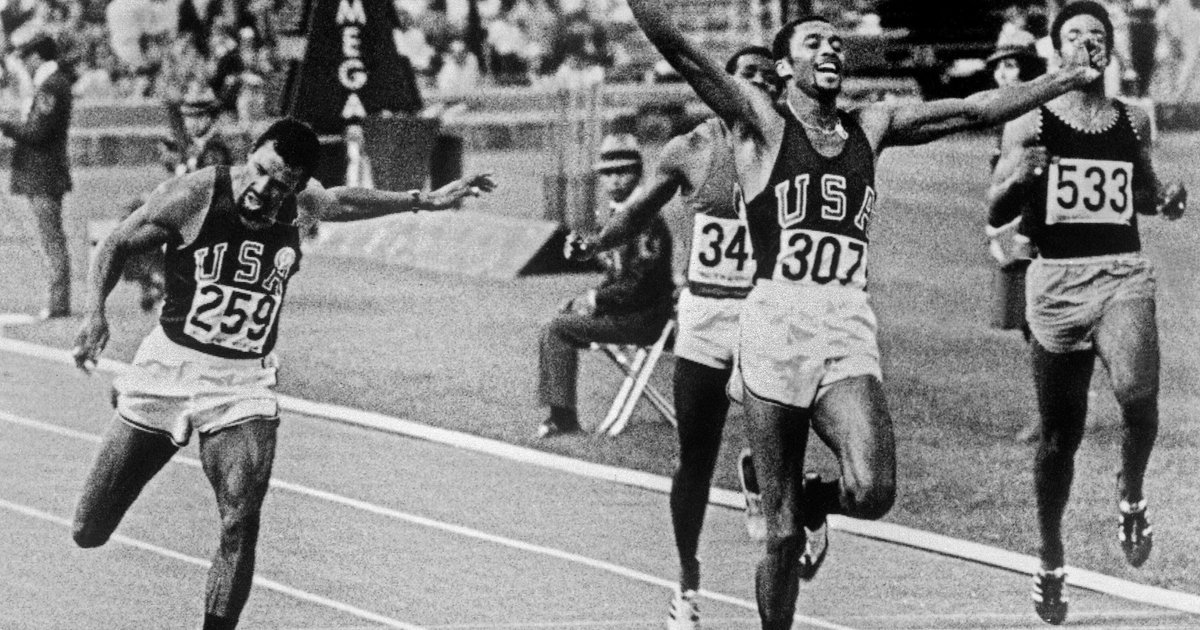
On October 16, 1968, Smith won the Olympic 200 metres in Mexico City in 19.83 seconds. Peter Norman took silver in 20.06 seconds and John Carlos won bronze in 20.10. Smith’s mark was an electronically timed world record for the event. The difference between gold and silver was 0.23 seconds, enough to separate two excellent performances but far too small to appreciate casually on a stopwatch held by a spectator.
The 200 metres is neither two separate 100-metre races nor a long acceleration drill. The first part combines getting up to speed with negotiating the bend. As the runner reaches the straight, the task becomes maintaining useful velocity while fatigue rises. Trying to force every stride longer or to tense the upper body in the closing metres can interfere with the rhythm that makes sprinting efficient. The objective is to sustain the fastest effective movement available, rather than to look as though you are trying harder.
Mexico City’s altitude is also relevant when comparing historical sprint times. Reduced air density can assist fast running through lower aerodynamic resistance, but it does not make winning an Olympic final automatic. Everyone still has to execute a race on the day, and all finalists face the same venue. Smith’s ability to translate his speed into a championship performance was what earned the gold medal.
When reviewing your own training, resist the temptation to turn one great session into a permanent estimate of ability. Keep a record of several comparable runs. A repeatable improvement across sessions is more informative than a single unusually fast hand-timed effort. And if the final strides consistently fall apart, there may be more to gain from improving rhythm and fatigue resistance than from adding another maximum-effort start.
The podium is part of the history, not an optional footnote
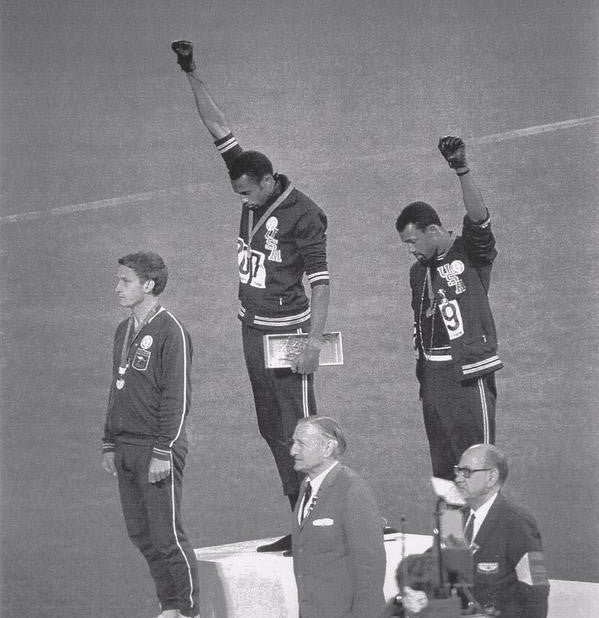
Smith’s name is inseparable from the medal ceremony that followed the race. He and Carlos raised gloved fists during the American anthem in a protest against racial injustice. Norman wore an Olympic Project for Human Rights badge in support. The photograph became a lasting symbol of athlete activism, and Smith and Carlos were subsequently expelled from the Olympic Village.
It is important not to reduce this event to a motivational slogan about working harder. The protest concerned the treatment of people outside the sporting arena, and the consequences were real. The athletic achievement and the historical significance of the ceremony both deserve to be acknowledged. The fact that Smith was the fastest runner in the race is not a substitute for understanding why the image of the podium matters.
For athletes today, the broader lesson is that competitive results do not encompass the whole person. A personal record is meaningful, but it is only one part of an athlete’s life. A sustainable approach to sport should make space for education, relationships, recovery and the individual’s own priorities rather than treating performance as the sole measure of worth.
What ordinary athletes can borrow from sprint versatility
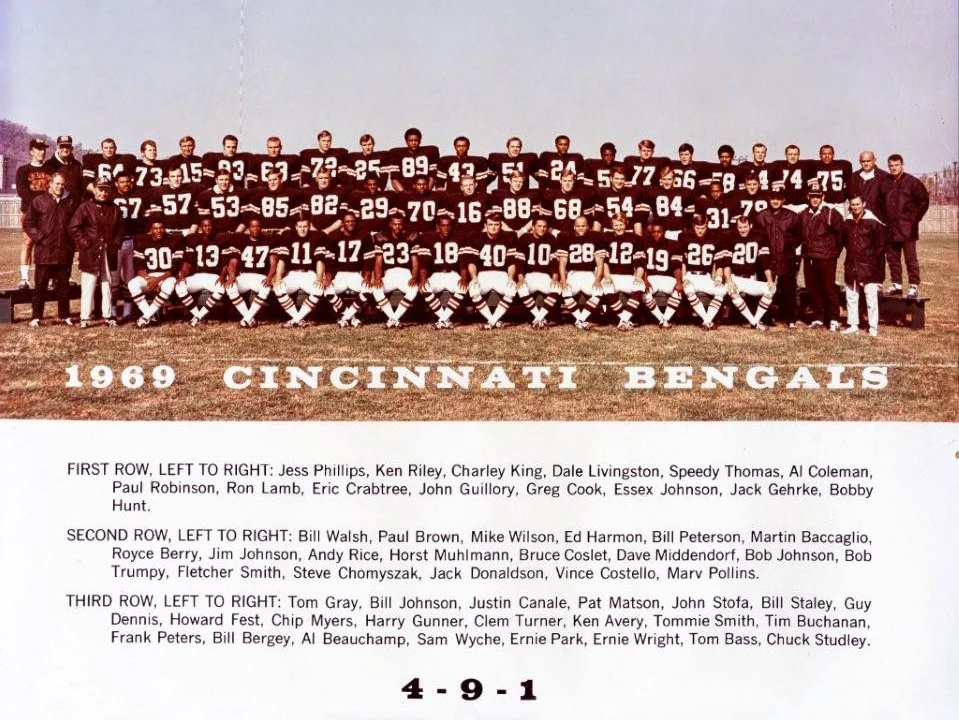
After his Olympic career, Smith also played professional football. He appeared in two games for the Cincinnati Bengals in 1969, recording one reception for 41 yards, and later worked in education and coaching. That brief football record illustrates a useful distinction: extraordinary track speed is an asset in another sport, but it is not by itself a guarantee of a long career there. Running routes, reading play, catching the ball and tolerating contact impose additional requirements.
For someone who lifts weights and wants to become a more capable runner, the sensible objective is not to recreate Smith’s undocumented daily schedule. Start with a small amount of high-quality sprint practice and build progressively. A beginner might practice short, submaximal accelerations after a thorough warm-up once a week, walking back and resting until the next effort feels controlled. Only after adapting to that work should the athlete gradually introduce faster efforts and longer distances.
A separate gym session can include a squat or split squat, a hip hinge, a calf exercise and a small amount of trunk work. Choose loads that allow good technique and leave enough recovery for running. Nordic curls can be introduced conservatively if appropriate, and sled work should initially use a resistance that still permits coordinated steps. Do not assume that increasing every load every week will automatically make a sprint faster.
Someone already accustomed to sprint training might organize a second track day around a few controlled longer runs, with generous recovery, rather than making each session an exhausting conditioning circuit. Stop a speed session when mechanics or pace deteriorate appreciably. Avoid abrupt increases in sprint volume, particularly after a long break; seek qualified coaching or medical advice when pain, previous injuries or other health concerns make progression uncertain.
Smith’s achievements demonstrate how extraordinary speed can express itself across different distances, courses and competitive settings. The most transferable lesson is to build several supporting qualities while continuing to practice the exact task you intend to improve. Track the sprint, not just the weight on the bar. Make conditioning support fast running, rather than making every fast-running session a test of conditioning.