Advertising disclosure: This page includes affiliate product links that may earn us a commission, as well as products from our own store.
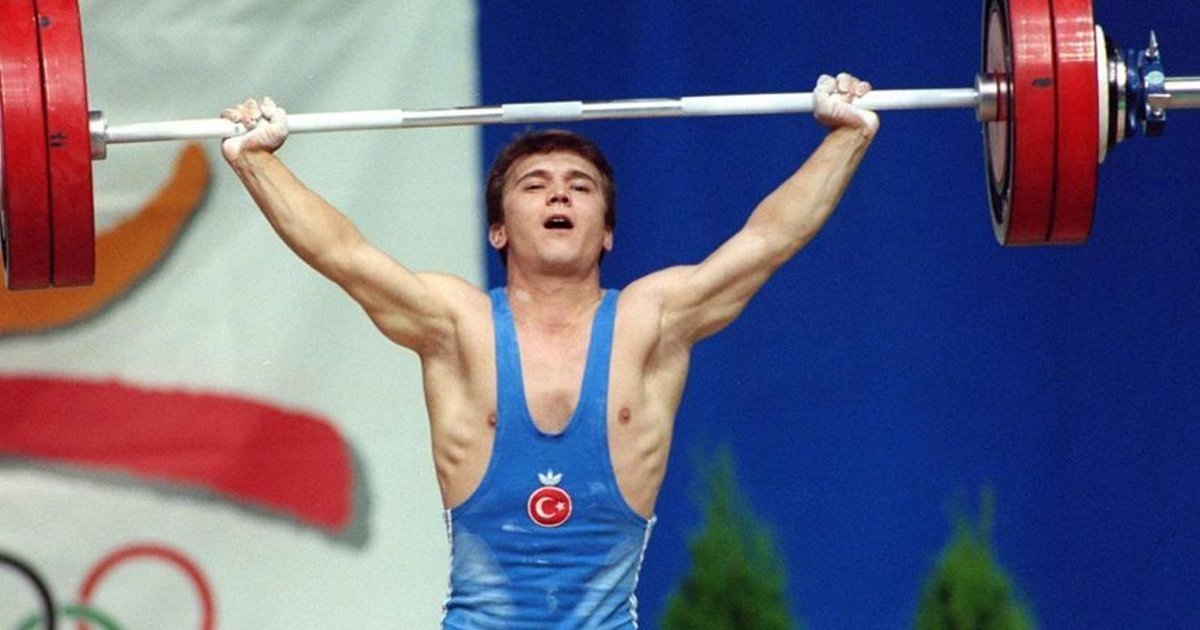
A 190 kg clean and jerk is an extraordinary lift before you ask who performed it. Add Naim Süleymanoğlu’s 59.70 kg bodyweight at Seoul 1988 and the achievement becomes harder to comprehend: he took more than three times his own mass from the floor to an overhead finish in Olympic competition.
The nickname “Pocket Hercules” captures the contrast, but it can also hide the details. His Seoul performance involved two different lifts, a total that decided the medals and a career that extended across three Olympic victories. Understanding those details makes the feat more impressive, while keeping it separate from exaggerated gym comparisons and invented accounts of how he trained.
Put the 190 kg lift beside the right numbers
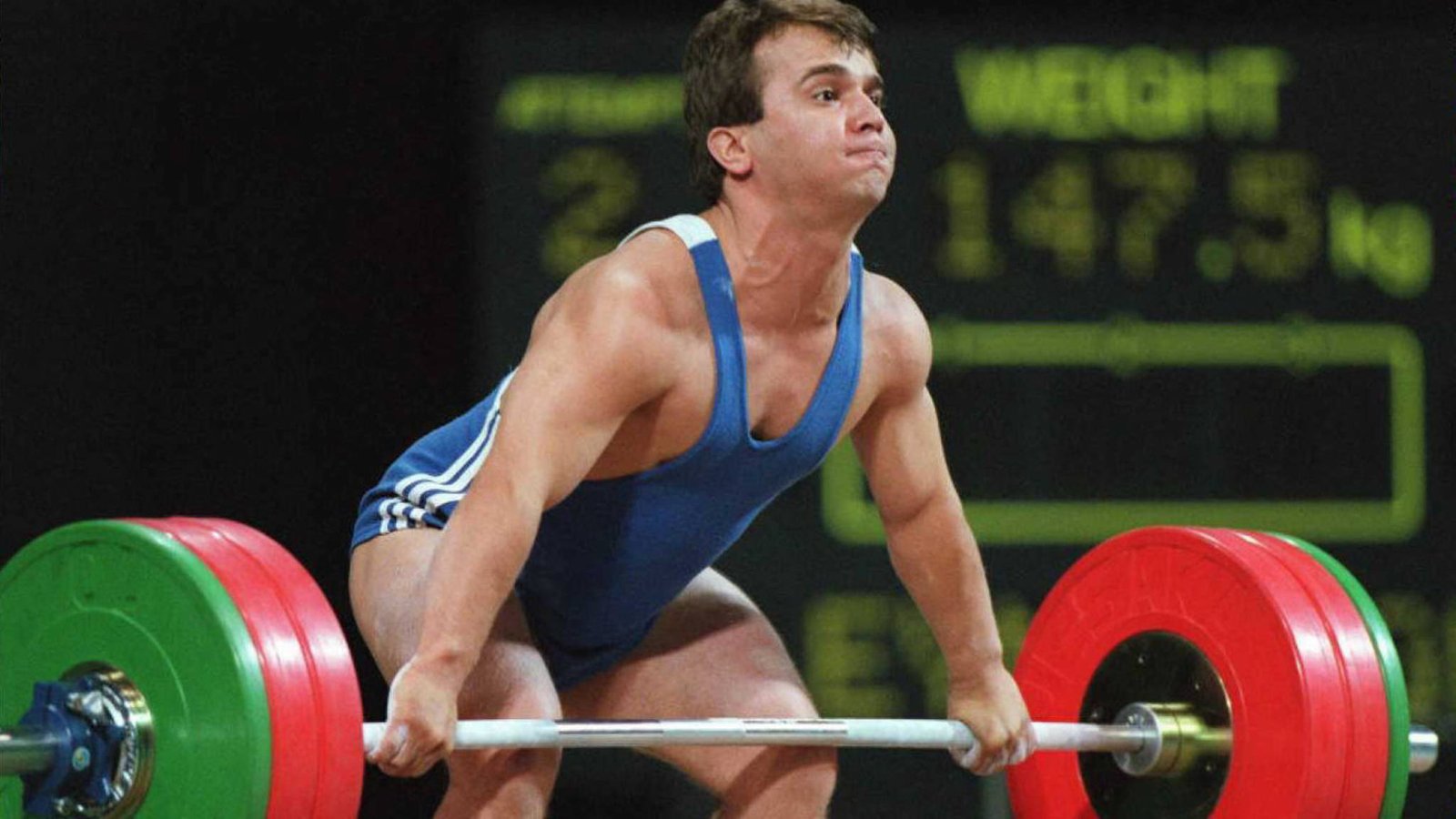
On 20 September 1988, Süleymanoğlu won the men’s 60 kg weightlifting category with a 152.5 kg snatch and a 190 kg clean and jerk. The two best lifts produced a 342.5 kg total. Stefan Topurov finished second with 312.5 kg, leaving a 30 kg gap between gold and silver. Those are the useful scoreboard facts behind the famous footage.
The category limit and the athlete’s measured bodyweight are related but different numbers. Using 60 kg as a rounded comparison gives 190 divided by 60, or about 3.17 times bodyweight. Using his recorded 59.70 kg gives approximately 3.18. Neither calculation changes the barbell. The second is simply the more precise description of this athlete on this occasion.
For another way to understand the arithmetic, three times 59.70 kg is 179.10 kg. His 190 kg result was 10.90 kg above that threshold. This is a comparison of masses, not a measure of muscular force or a prediction of what a heavier person should lift. Doubling someone’s bodyweight does not automatically double every aspect of their performance.
Keep the total distinct too. He did not lift 342.5 kg in one movement; that number adds his best snatch and best clean and jerk. It describes competitive success across both disciplines. Confusing a total with a single lift turns an exceptional real result into a different, imaginary feat.
The snatch and clean and jerk test different solutions
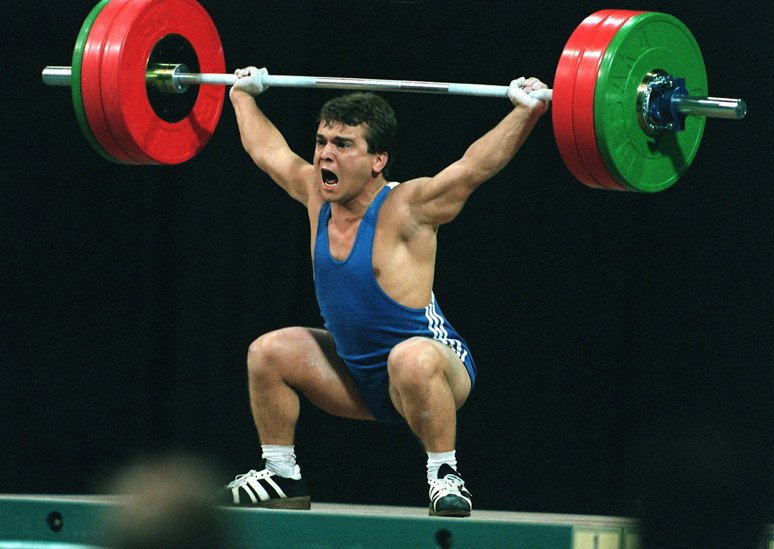
In the snatch, the bar travels from the floor to overhead in one continuous lifting action. In the clean and jerk, the athlete first brings it to the shoulders, then drives it overhead in a separate phase. Both demand strength and coordination, but the tasks and the loads are different. Süleymanoğlu’s two Seoul results should therefore be read together rather than treated as interchangeable demonstrations.
His clean and jerk exceeded his snatch by 37.5 kg. That difference is a description of his competition performance, not a universal ratio for programming your own lifts. Two athletes with similar squats or deadlifts can have different experience in receiving a bar overhead, securing a front rack or timing a jerk. A single strength number cannot explain all of those details.
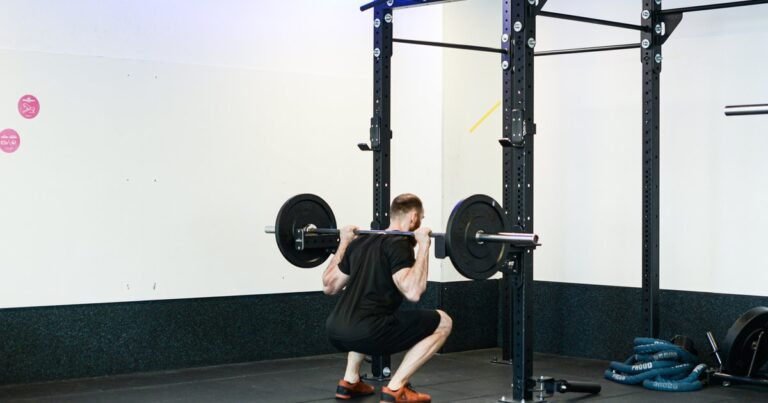
Slowly examining the positions is more useful than labelling the entire lift explosive. Notice where the bar is received and what the athlete must control before finishing. A still photograph can illustrate a position; it cannot establish the speed of the full movement, identify a precise attempt weight by itself or show every judging decision.
For lifters learning the movements, our guide to the tall snatch and practising the pull under explores one specific component. That drill is not presented as Süleymanoğlu’s secret or a reconstruction of his routine. It is a way to separate a technical question from the excitement of watching a champion’s maximum lift.
His route to Seoul was bigger than a sporting transfer
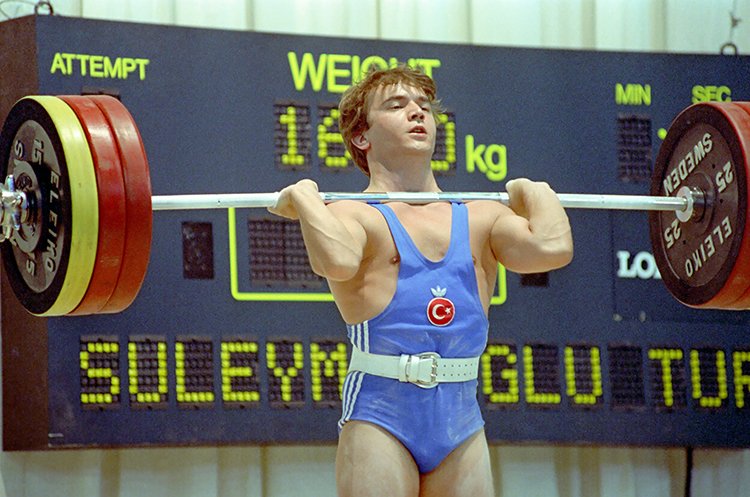
Süleymanoğlu was born in Bulgaria to Turkish parents and initially competed for Bulgaria. During the 1980s, the state’s oppression of its Turkish minority included forced name changes. His own name was changed to Naum Shalamanov. In 1986, while abroad with the Bulgarian team for competition in Melbourne, he defected and subsequently represented Turkey.
That history gives the Seoul performance significance beyond a change of flag on a results sheet. The athlete arriving at the Games carried an established lifting career and an intensely personal national story. Reducing the move to a recruitment transaction would leave out why it mattered to him and to the people following his performances.
It also changes how we read the word breakthrough. Seoul was his first Olympic gold, but he did not arrive as a beginner who had suddenly discovered an unusual method. His earlier international career included world-level success. A first appearance on a particular stage can follow years of preparation elsewhere, which is easy to forget when a short clip becomes the main introduction to an athlete.
That distinction travels well beyond weightlifting. A dramatic competition moment shows the performance that reached the public; it rarely shows the full training history behind it. Before turning an athlete’s breakthrough into a promise about rapid progress, ask what happened before the camera started recording and what the available evidence actually establishes.
Three Olympic golds make the story larger than one day
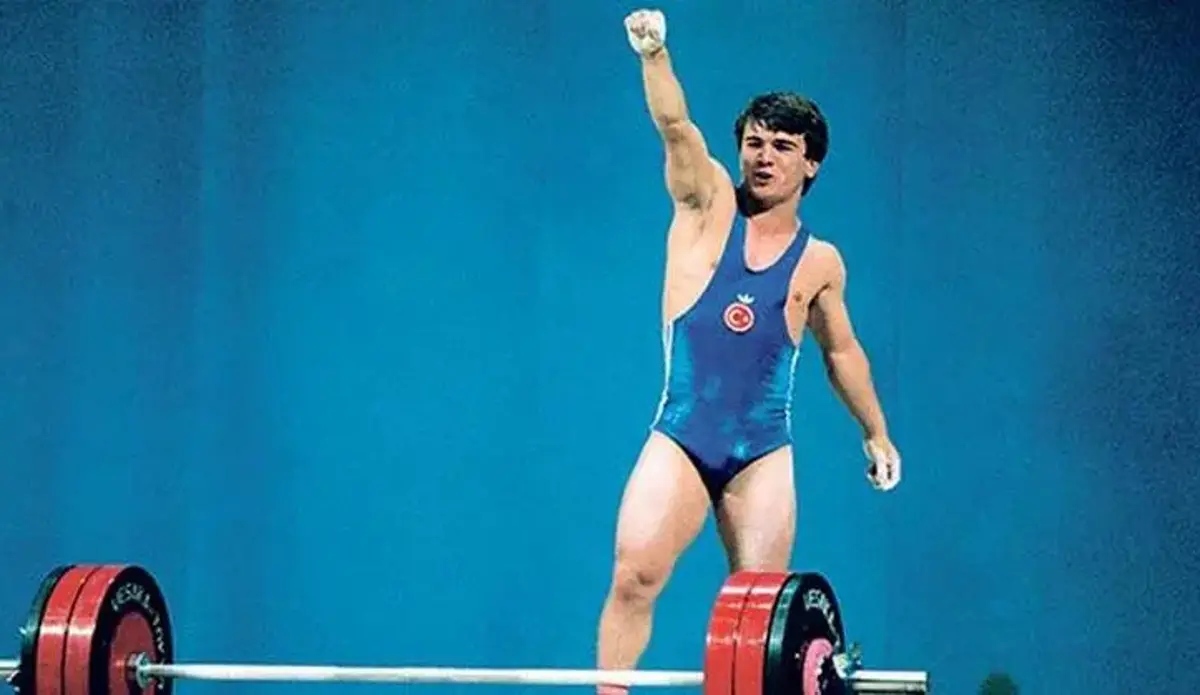
Süleymanoğlu followed Seoul with Olympic gold at Barcelona 1992 and Atlanta 1996. He became the first weightlifter to win gold at three Olympic Games. The first two titles came in the 60 kg category; the third came at 64 kg. The sequence matters because it shows repeated competitive success rather than leaving his reputation attached to one remarkable afternoon.
It is tempting to assume a champion’s best-looking highlight must come from the latest point in their career. In his case, the Seoul snatch, clean and jerk and total remained his best absolute results. Later victories do not need larger numbers to be meaningful. Winning is determined by the competition being contested, within its category and conditions.
That is also why historical categories deserve attention. A 60 kg division from 1988 is not automatically the same record category as one with a different limit today. You can compare performances for interest, but a conversation about the greatest lifter needs to explain its criteria: absolute load, relative load, medals, longevity or a particular scoring system.
Our feature on Launceston Elliot’s one-hand Olympic lift in 1896 shows how much the sporting task itself has changed. Historical lifting becomes more interesting when we preserve those differences. Different implements, events and judging contexts should not be flattened into one timeless leaderboard.
Take the lesson without inventing the training plan
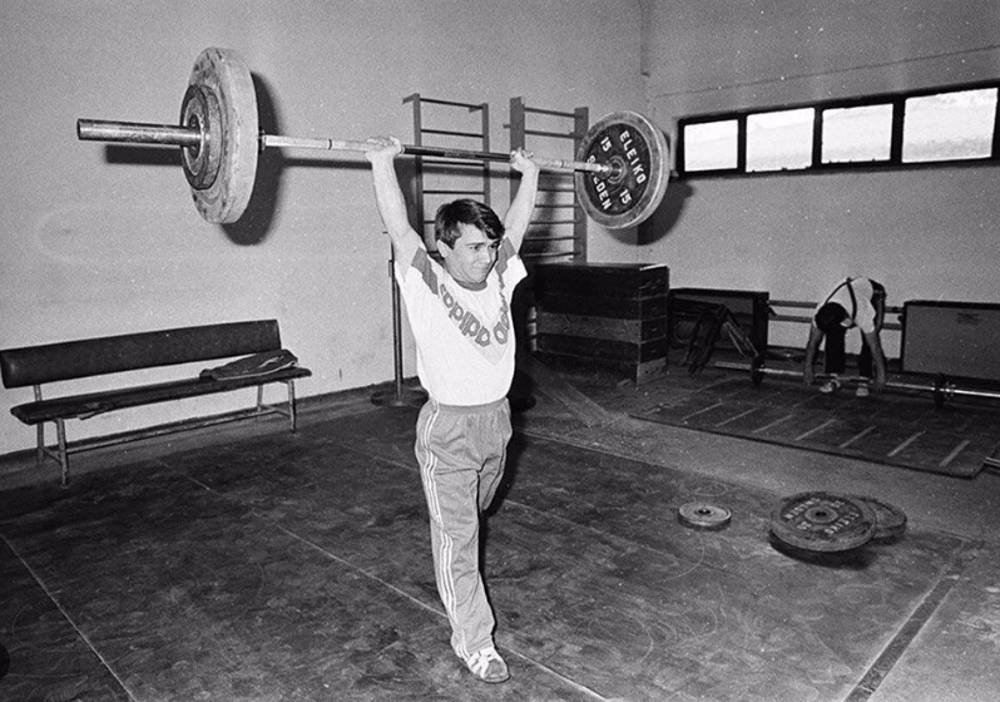
There is a useful training lesson here, but it starts with restraint. A competition result tells us what an athlete achieved. It does not reveal his exact weekly volume, current fatigue, assistance exercises or the decisions his coaches made throughout the build-up. Writing an elaborate routine around a famous photograph would supply details the photograph cannot support.
For an ordinary lifter, choose a narrower question. If you are learning Olympic lifts, work on the positions and timing that currently limit you with suitable instruction and manageable loads. If you primarily train for general strength, admire the performance without assuming that a different sport’s bodyweight ratio must become your next target. The comparison should clarify your goal, not replace it.
Record enough context to understand your own progress: which movement you performed, the load, the conditions and what counted as a successful repetition. A cleaner receive, a more stable overhead position or a repeatable setup can matter before a heavier number appears. These are editorial takeaways about practice, not claims about Süleymanoğlu’s personal training prescriptions.
His legacy needs no extra mythology. A 152.5 kg snatch, a 190 kg clean and jerk, a 342.5 kg total and three Olympic gold medals already provide an exceptional story. Keeping the numbers, movements and career context intact lets the real athlete remain more compelling than a simplified legend.

Funny Gym Shirts & Workout Gear
Funny gym shirts, tanks, hoodies and workout gear for lifters who like training hard.

Hercuflex Gym Hoodie
Stay casual and show some powerlifting attitude with “Hercuflex Legendary Lift”.


Huh Huh Snatch Shirt – Beavis And Butt-Head T-Shirt
Bring “Huh Huh Snatch” humor to your next gym day.

Huh Huh Jerk & Clean Shirt Beavis And Butt-Head & Top T-Shirt
Heavy lifts, good laughs, and a little “Huh Huh Jerk & Clean” energy.

Meme – "Shhh I'M Doing Plate Math" Sweater & Jumper T-Shirt
Keep things casual with a little “"Shhh I'm Doing Plate Math" Workout Sweater” attitude.

Safety Practice Safe Sets Vest Weightlifting Tank Top
Bring “Gym Safety” humor to your next lifting session.

Effort Defined: Stoic Sigma Greek God Marble T-Shirt
Show some lifting attitude with a playful “Effort Defined: Stoic Sigma Greek God” tee.

Power Stoic Bodybuilder Greek God Marble Sculpture T-Shirt
Heavy lifts, good laughs, and a little “Power Stoic Bodybuilder Greek God Marble” energy.

Poise & Power Stoic Sigma Bodybuilder – Greek God T-Shirt
Make gym days more fun with “Poise & Power Stoic Sigma Bodybuilder” style.

Power Stoic Sigma Greek God Marble Sculpture Shirt – T-Shirt
Heavy lifts, good laughs, and a little “Power Stoic Sigma Greek God Marble” energy.