Advertising disclosure: This page includes affiliate product links that may earn us a commission, as well as products from our own store.
Kettlebell Halos: Choose a Light Bell and Control the Circle
A kettlebell halo is easy to recognise: hold a bell with both hands and guide it around your head. The challenge is keeping that circle deliberate without ducking away from the weight, arching your back or turning a short warm-up drill into a test of endurance.
Used sensibly, it can be one option for practising controlled shoulder movement before training. It is not a compulsory warm-up, a cure for shoulder pain or proof that a heavier kettlebell makes your preparation better. Start with the movement you can comfortably control, then give the drill a clear and modest role.
1. Choose an implement you can hold securely
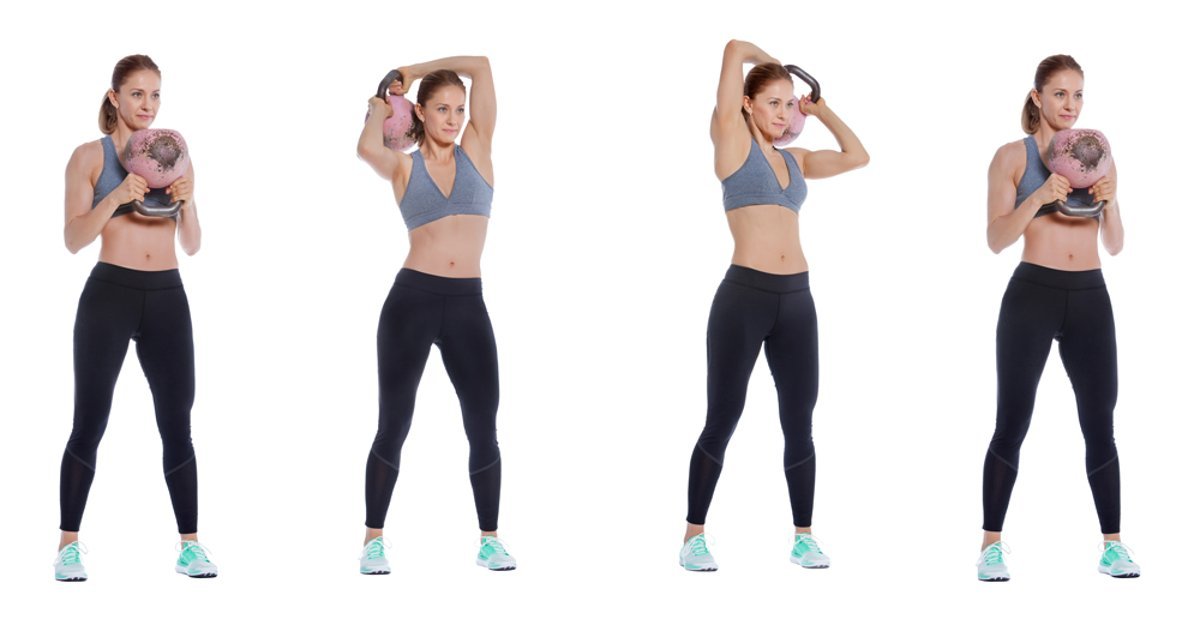
The bell matters because it passes close to your face. Select a manageable weight with a handle you can hold confidently in both hands. A kettlebell used for swings may be far too demanding for this purpose; the halo is not a way to demonstrate your usual kettlebell strength.
A common starting position holds the bell upside down in front of the chest, with a hand on each side of the handle. Keep the wrists comfortable rather than folding them sharply to maintain the grip. As you move, the bell’s orientation changes; it does not need to stay rigidly upside down throughout the circle.
Rehearse picking it up and returning it to the floor before beginning. There should be enough clear space around your head and elbows, including behind you. Check for nearby people, low fittings and equipment that could interrupt the movement. A small exercise still needs an uncluttered working area.
A dumbbell is another possible implement, but its shape changes the available grip and clearance. Use a secure hold that you understand, keep adjustable components locked and avoid improvising with loose plates near your head. If the handle or shape makes you hesitant, choose another weight instead of trying to compensate with speed.
Think about size as well as mass. A bulky bell and a compact bell of the same weight can feel different when passing behind your head. Record which implement you use while learning. Changing its dimensions at the same time as the load can make a familiar drill unexpectedly awkward.
2. Move the bell around your head, not your head around the bell
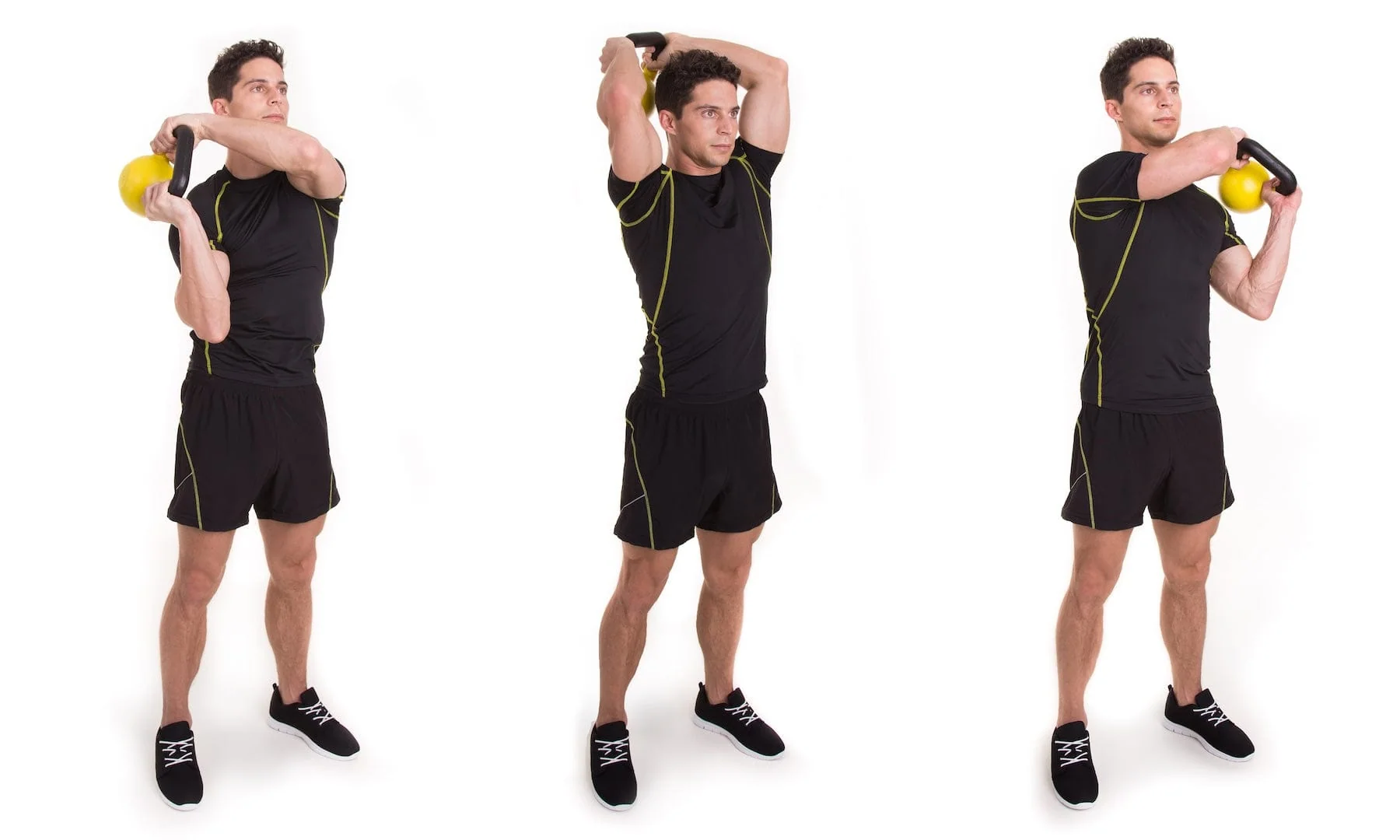
Stand comfortably tall and guide the weight slowly past one side of the head, behind it and around the other side to the start. Reverse direction. Keep the head reasonably still and let the shoulders and elbows organise the circle within a range you can comfortably manage.
The bell can tilt as it travels, with its base pointing in the direction of movement. Avoid forcing a deep position behind your neck. A lower or tighter path is not automatically better, especially if reaching it requires pain, a sudden head movement or an exaggerated change in your back position.
Take time at the awkward part rather than accelerating through it. If you cannot control the transition behind the head, reduce the demand and reconsider the range. Momentum can make a repetition look smooth from a distance while hiding the point where you have lost control.
Use a simple observation checklist: did the weight complete the circle without contacting your head, did you keep a consistent stance, and did the second direction feel similarly manageable? You do not need identical-looking circles in both directions, but a large difference is useful information when deciding how much to attempt.
A mirror or short video can help you notice repeated ducking or leaning. Keep the camera far enough away to show the torso and bell together. Reviewing the movement is more informative than judging it solely by whether the bell returned to the front. The purpose is a controlled route, not merely a completed lap.
3. Pick a stance that lets you stay organised
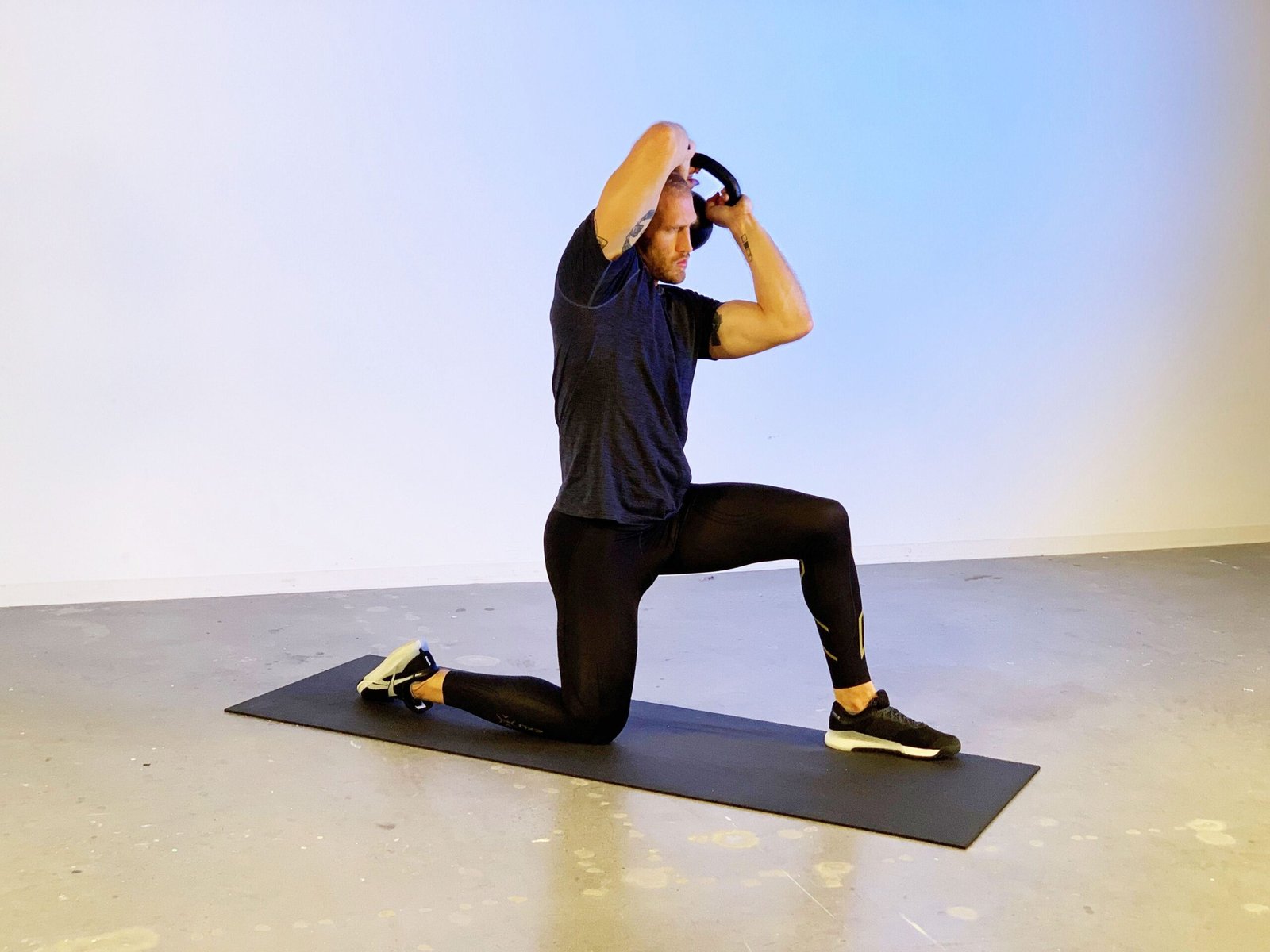
Halos can be performed standing, kneeling or half-kneeling. Each changes your base of support, so choose a position that allows you to handle the weight calmly. Kneeling is not automatically an advanced progression, and standing is not an inferior version that must be replaced.
Across positions, keep the torso steady enough that the circle does not come mainly from leaning backwards and flaring the ribs. Move slowly and maintain comfortable abdominal tension. The bell should not pull you into a dramatic change of posture every time it travels behind your head.
For half-kneeling practice, use suitable padding and place the front foot where you feel stable. Settle into the position before lifting the weight into the starting hold. If you are continually adjusting your balance, put the bell down and organise the stance first.
Try the other leg forward if you want to compare how the position feels, while keeping the implement and pace similar. That is a practical comparison rather than a diagnostic test. Do not interpret a wobble as proof of a particular injury, weakness or anatomical problem.
When kneeling is uncomfortable or the floor space is unsuitable, use a standing version or another warm-up movement. There is no need to endure knee discomfort to practise a shoulder drill. A variation earns its place by fitting the task and the person performing it, not by looking more complicated.
4. Judge the load by control, not by your swing weight
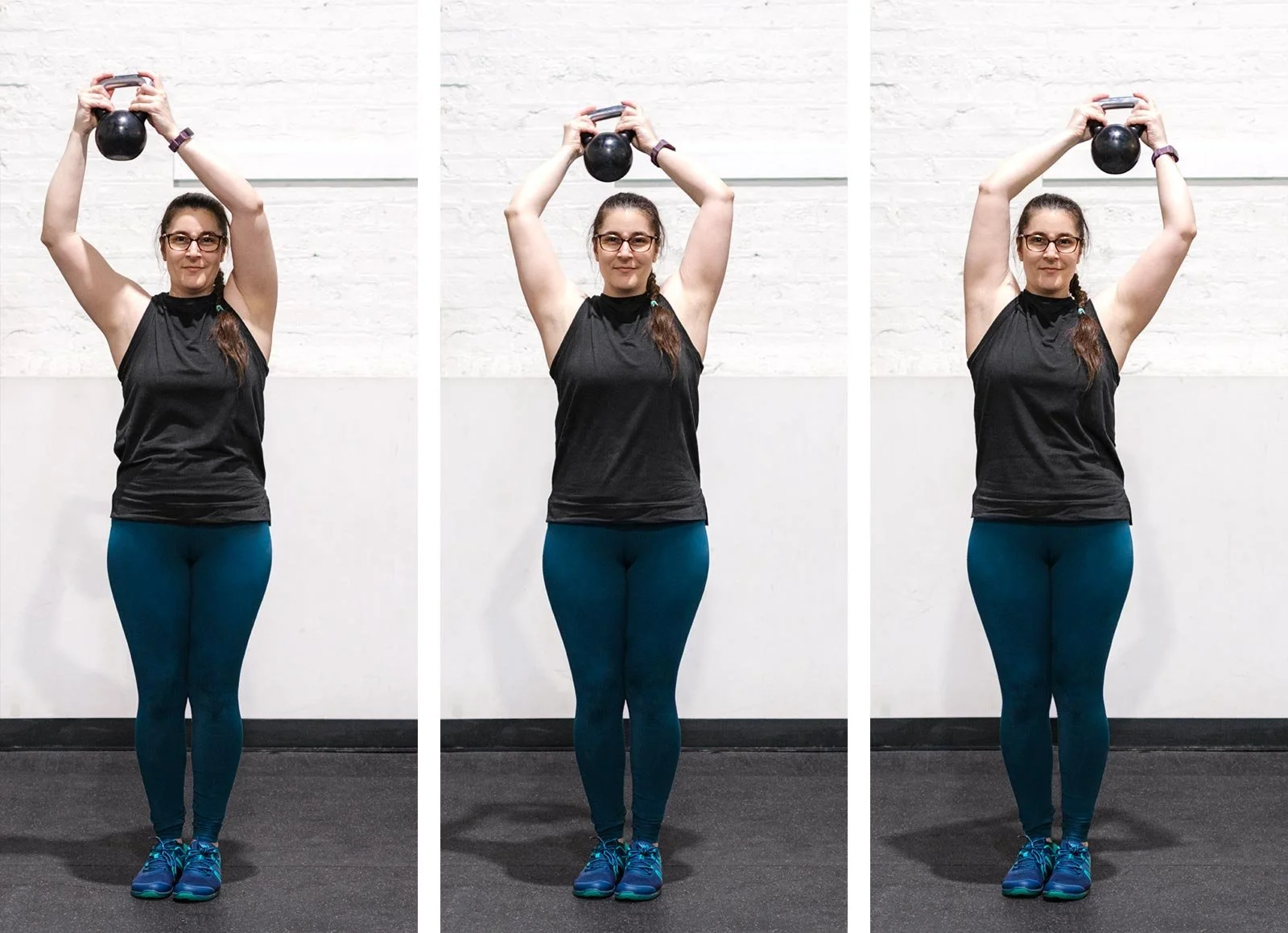
For this drill, a lighter load and a few deliberate repetitions are a sensible starting point. The relevant question is whether the weight lets you move smoothly through your available range. A bell you can swing many times may still be too heavy to guide around your head without compensation.
Choose the lightest useful option available while learning. There is no universal kilogram target that accounts for every person, handle shape and training history. If the smallest bell on the rack is too demanding, practise the intended arm route without that load or select another suitable movement.
Do not change everything at once. Keep the implement, stance and approximate pace stable while deciding whether you need more range or a small load adjustment. Adding weight while also tightening the circle and changing to a different stance gives you several reasons for the drill to feel harder.
Adjustable equipment can be useful when its minimum weight, locking system and handle suit the task. Read the maker’s instructions before combining handles, plates or collars. Compatibility cannot be assumed from their appearance, and a loading accessory is not itself an instruction to use more weight.
The equipment below includes kettlebells, dumbbells and accessories for compatible loadable implements. Check the complete setup and starting load before buying or using them. These are equipment options rather than evidence that a particular product improves mobility or that MMP tested every model for this exercise.

Equipment Worth Exploring
Explore equipment, accessories and gear from our carefully selected range.


Cast Iron Kettlebells
Textured cast-iron kettlebells for swings, squats, carries, and full-body training.


Rubber Hex Dumbbells
Rubber-coated hex dumbbell pairs with a stable shape for home and commercial strength training.


5. Keep the halo a short part of your warm-up
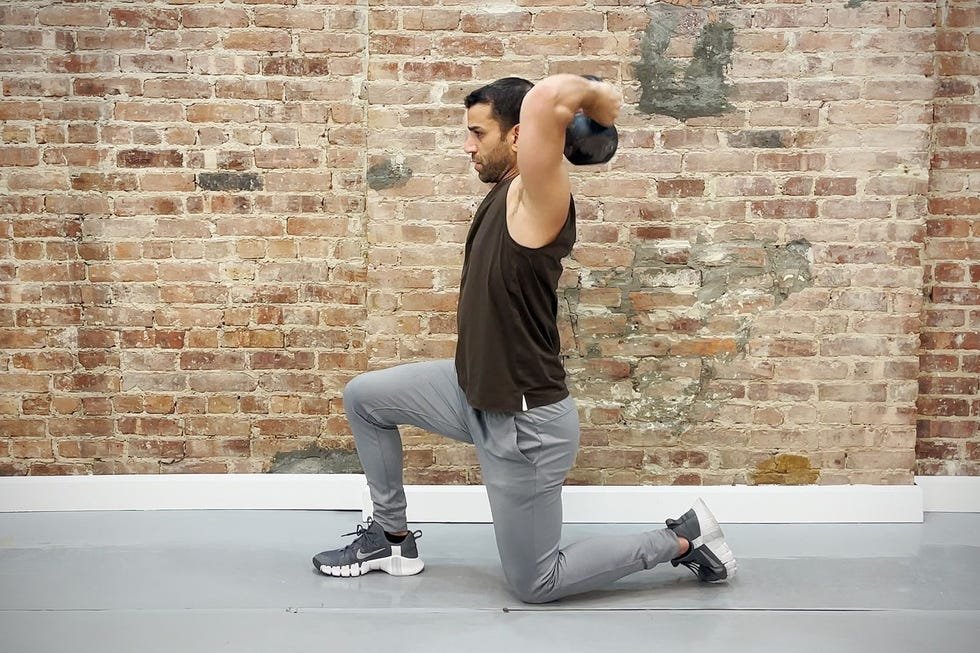
Give the drill a small job: a few controlled circles before the main session, if you find them useful. Three to five in each direction is one coaching starting point, not a required dose or a research-established optimum. Stop before tired arms or a weakening grip change the movement.
Then move on to preparation specific to the work ahead. If you plan to press, you still need appropriate lighter practice sets for that press. If you plan to swing, rehearse the hinge and swing setup. Circling a kettlebell does not establish readiness for every movement that follows.
A simple trial might keep the same bell and stance for several sessions, with one short round before your usual warm-up sets. Note whether it feels comfortable and easy to repeat. This is an illustrative way to assess usefulness, not a promise that adding halos will improve your lifting numbers.
Separate sensation from outcome. Feeling temporarily freer after a drill does not establish that it prevents injury, permanently changes your mobility or treats an existing shoulder condition. If the exercise causes pain, stop and reconsider it; persistent symptoms need individual assessment rather than more determined repetitions.
Broader training guidance favours regular participation and individualisation over unnecessary complexity. You do not need to exhaust yourself during preparation. Keep the useful parts of a routine, remove movements that do not fit and preserve energy for the training you actually intend to perform.
Log only what helps: implement, stance, a rough repetition count and any important comfort or control note. More administrative detail is not automatically better. Kettlebell-themed clothing and accessories are optional extras; a repeatable, appropriate warm-up is the part that matters in your training week.

Functional Fitness Shirts & Workout Gear
Functional-fitness shirts, tanks and workout gear for athletes who train strength, conditioning and everything in between.

OnlyGains Kettlebell Meme Sweater Meme T-Shirt
Keep things casual with a little “OnlyGains” attitude.


Donut Kettlebell – Bakery Gains Meme Decal for Water Bo Sticker
A fun “Donut Kettlebell” touch for bottles, laptops, and lockers.

Strawberry Kettlebell – Viral Kettlebell Meme Hooded Pu Hoodie
Make your off-duty look more fun with “Strawberry Kettlebell”.

Watermelon Kettlebell – Fruit Themed Workout Vest Muscl Tank Top
Train hard, laugh a little, and rep “Watermelon Kettlebell”.

Pineapple Kettlebell – Gym Meme Pullover Jumper T-Shirt
Bring “Pineapple Kettlebell” humor to your everyday gym style.

Heart Shaped Kettlebell Valentine’s Day for Kettlebell Sticker
Give your everyday gear a playful “Heart Shaped Kettlebell Valentine’s Day” twist.

Kettlebell Heart X-Ray Meme Top T-Shirt
Show some lifting attitude with a playful “Kettlebell Heart X-Ray” tee.


Earth Kettlebell Meme Shirt – Lifting The Earth T-Shirt
Show some lifting attitude with a playful “Earth Kettlebell” tee.