Some product links may be affiliate links, which can support Mind Muscle Perfection at no additional cost to you.
A lifting belt can help you squat and deadlift more confidently, but buying the thickest model and tightening it as far as possible misses the point. The useful decisions are how you brace, whether 10mm or 13mm fits your torso, and whether a lever, prong or flexible belt suits your training. Here is a practical guide to the mechanics, buying choices and six-week learning curve.
1. What a lifting belt actually does
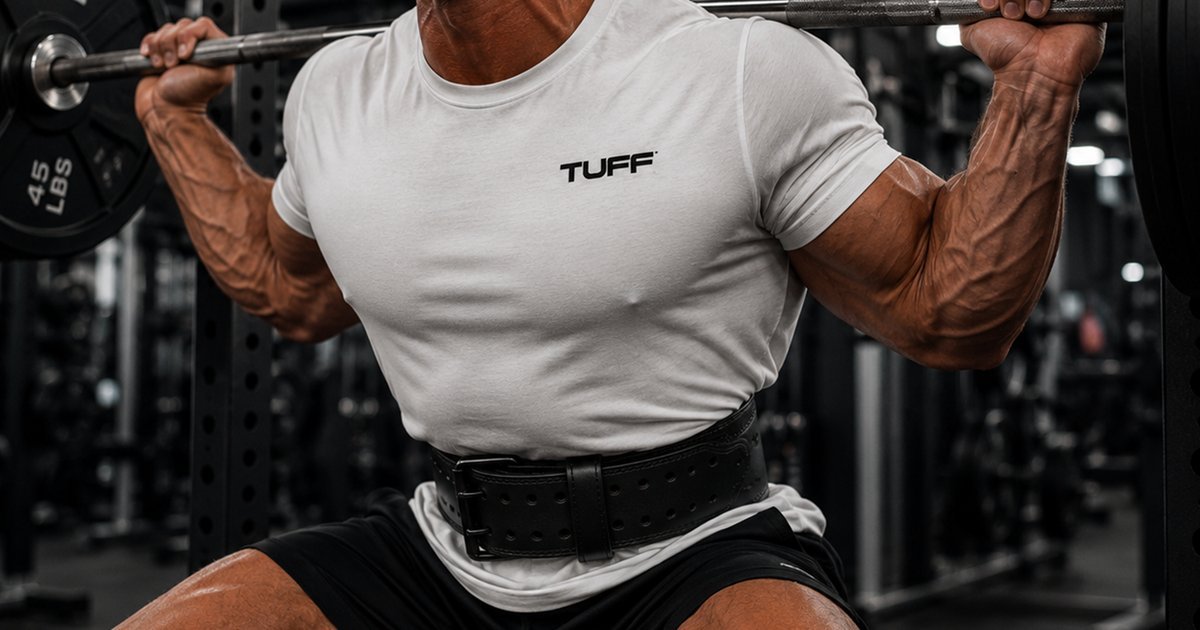
A lifting belt is not a rigid shield that prevents injuries. It is a tool that gives your trunk a firm surface to brace against. When your diaphragm, abdominal wall, obliques and back muscles coordinate, pressure inside the abdomen increases and your torso becomes better able to resist unwanted movement. A stiff belt can make that pressure easier to generate and repeat during a heavy squat or deadlift. The payoff is more consistent force transfer from the floor through your hips and trunk into the bar.
Laboratory research has measured abdominal pressure and muscle activity with and without belts during squat-like lifting. One early experiment involved only six participants moving loads around 73 to 91 kilograms under different breathing conditions. Such work helps explain a mechanism, but it cannot establish that every belted lift prevents injury or guarantees a fixed percentage of extra strength. Many studies assess immediate mechanics, not long-term injury rates or years of muscle growth.
Think of the belt as an aid to performance rather than a replacement for skill. It cannot fix a bar drifting forward, poor foot pressure, uncontrolled squat depth or a rushed deadlift setup. The best reason to wear one is that it helps you create a stable, repeatable brace when the load becomes demanding. Learn the lift first, then let the belt reinforce a technique you already understand.
2. Build a 360-degree brace before tightening the buckle
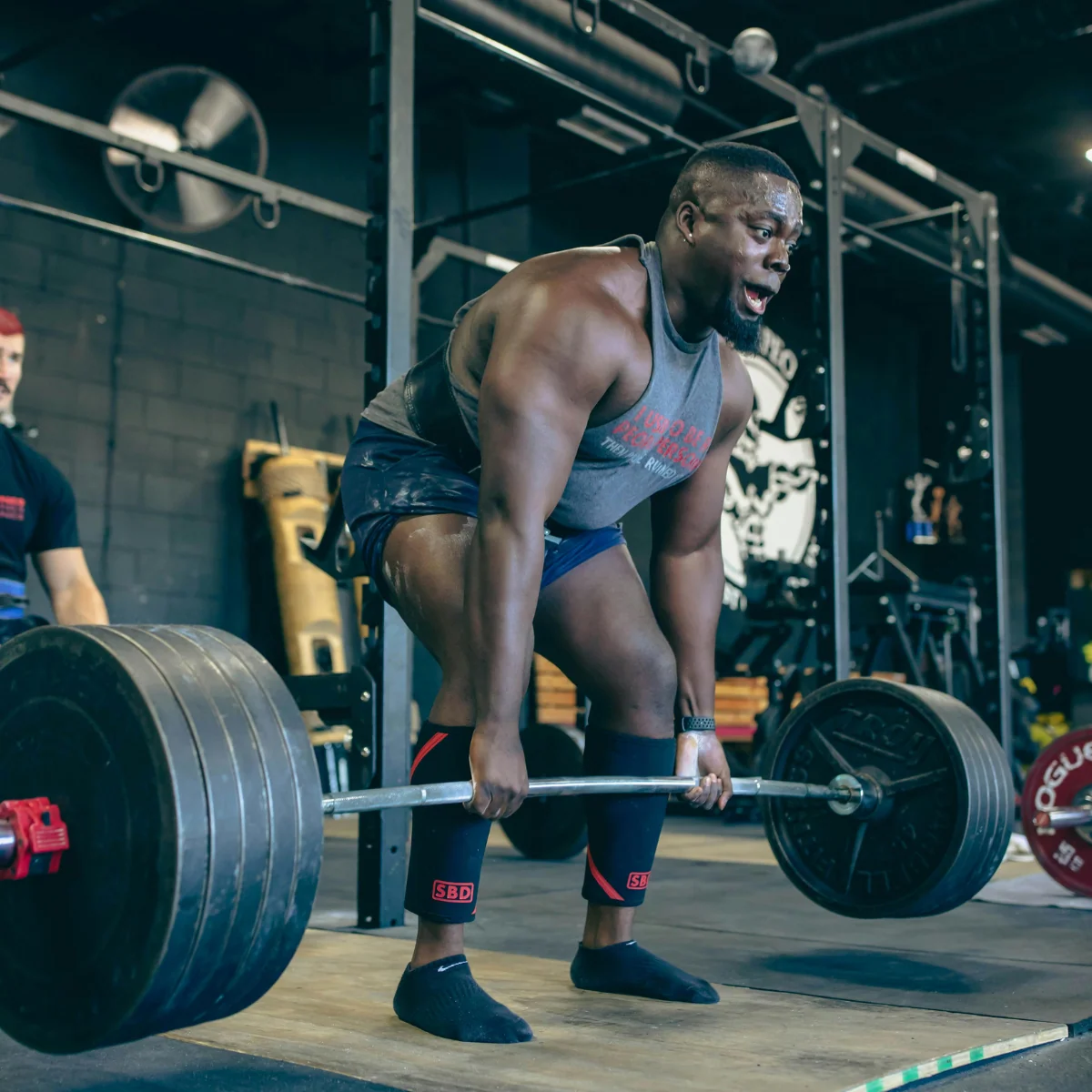
Stand with your ribs roughly stacked over your pelvis, rather than flaring your chest dramatically upward. Take a breath that expands the abdomen forward, into both sides and toward your back. Imagine filling a cylinder around the waist. Then tighten the abdominal wall around that pressure, as if preparing to absorb a punch. The belt should provide something firm to expand against. If it is so tight that you cannot inhale fully, you are losing the very mechanism it is meant to support.
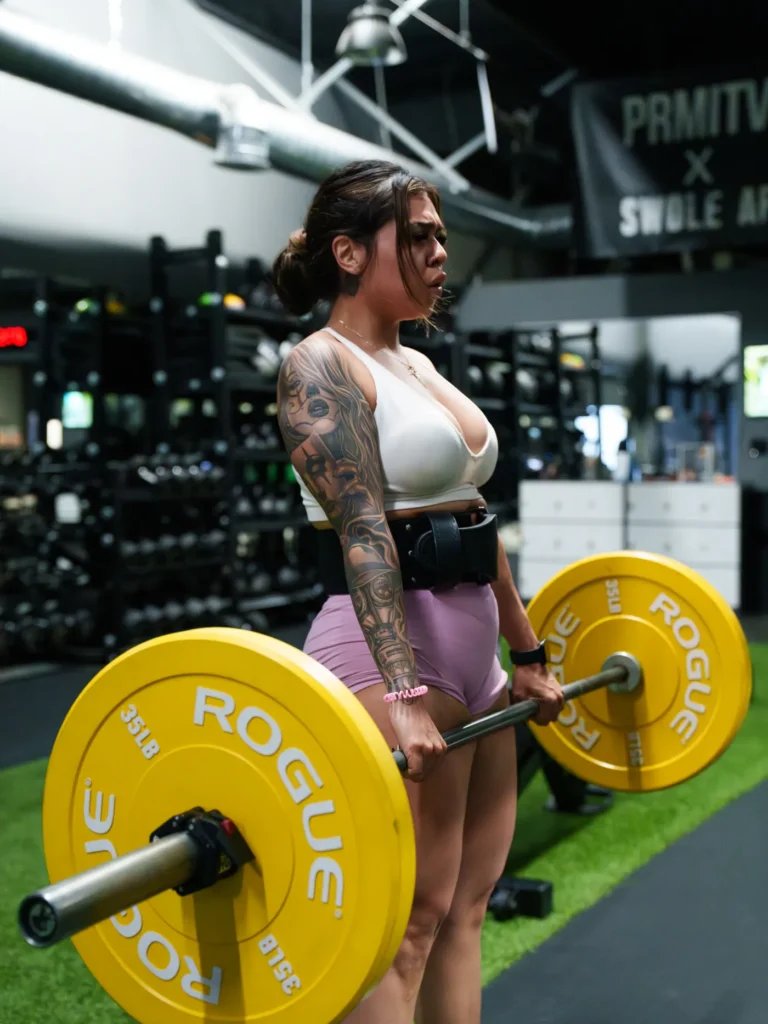
Practice first with an empty bar or a light goblet squat. Inhale and establish tension before descending, maintain that tension through the hardest part of the rep, then reset your breath at a controlled point. For deadlifts, set the feet, take slack out of the bar, brace before it leaves the floor, and push against the ground. Do not rush a new breath while the torso is collapsing. A belt should strengthen this sequence, not become an excuse to skip it.
Common mistakes include lifting the shoulders while breathing only into the upper chest, pulling the stomach inward instead of generating outward pressure, and cinching the belt until the brace becomes shallow. Film a light set from the side and front to check consistency. Heavy breath-holding and straining can sharply raise blood pressure; lifters with cardiovascular concerns should obtain individualized medical advice rather than copying maximal-effort breathing techniques.

Equipment Worth Exploring
Explore equipment, accessories and gear from our carefully selected range.


GymPin Squat Wedges
Non-slip 15-degree squat wedges help elevate the heels for deeper quad-focused squats.

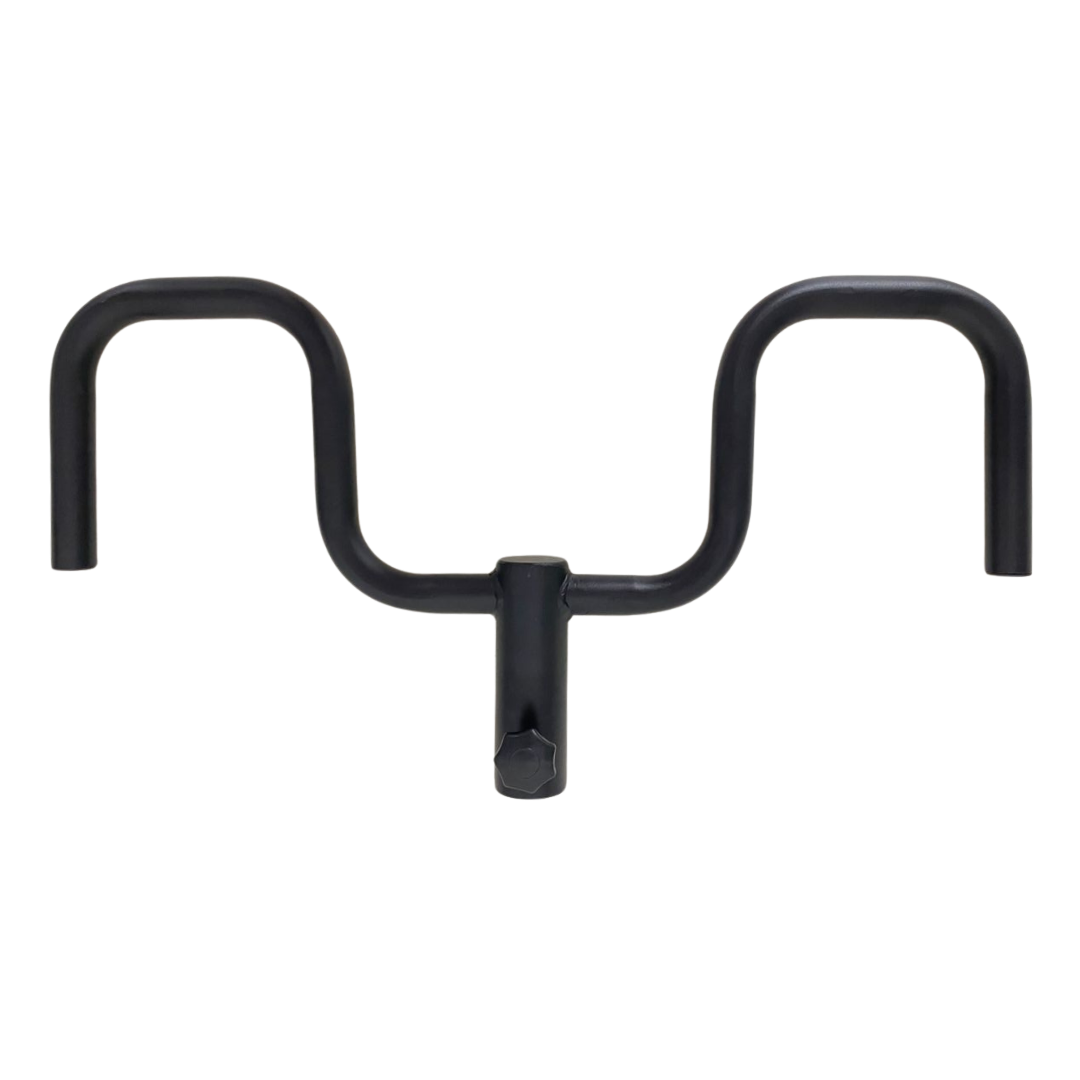
Safety Squat Handles
Barbell squat handles that reduce shoulder positioning demands during high-bar squats.


Belt Squat Collar
Heavy-duty collar adapter for compatible belt-squat and landmine bar setups.


3. 10mm vs 13mm: stiffness, comfort and competition rules
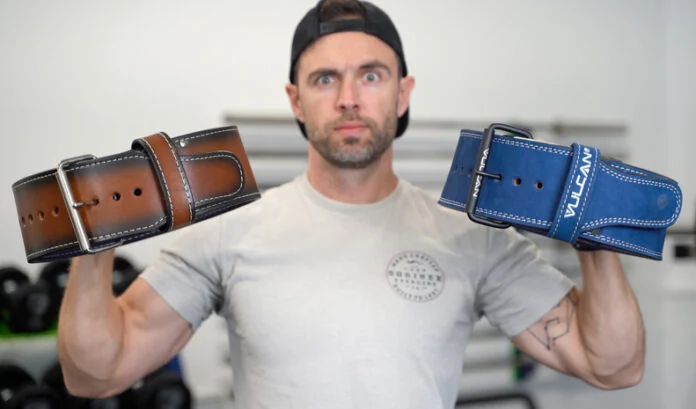
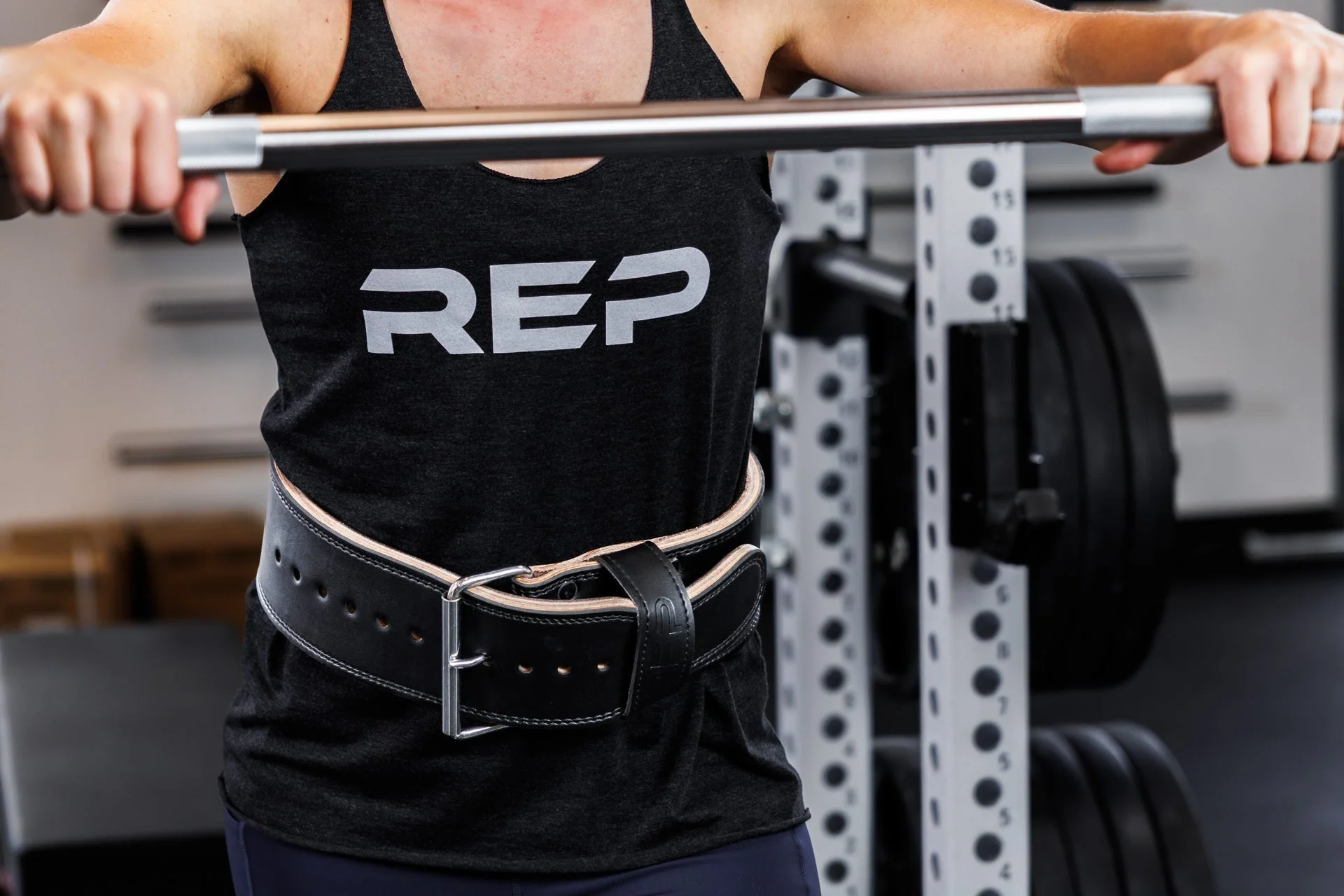
Leather powerlifting belts commonly come in 10mm and 13mm thicknesses. The thicker option is usually more rigid and often takes longer to break in. A 10mm belt generally conforms to the torso more readily, making it comfortable for a broader range of squats, pulls and accessory exercises. Both can offer a firm surface for abdominal expansion. There is no reliable basis for promising that a 13mm belt automatically adds more kilos to everyone’s total or produces greater muscle growth.
Width and torso proportions matter just as much as thickness. A straight belt around 10 centimeters wide offers broad support across the abdomen and sides. But a shorter rib-to-hip distance, deep squat or pronounced deadlift hinge may make a narrower or tapered model more comfortable. If the belt digs painfully into your ribs or thighs at the bottom of the lift, more rigidity is not the answer. Try your actual movement while wearing the belt, not just a standing mirror pose.
Under the international powerlifting technical rules effective March 1, 2026, belts are limited to a maximum width of 10cm and a maximum thickness of 13mm, along with construction requirements. Competition approval also depends on the equipment list and federation, so dimensions alone do not guarantee acceptance. For many recreational lifters, a well-fitting 10mm belt is a practical starting point. Choose 13mm when the extra stiffness suits your body and training preferences.

Powerlifting Shirts & Lifting Gear
Powerlifting shirts and gym gear for squat, bench and deadlift lifters who live for heavy numbers.

Deadlift PR or ER Bloody Skull Gym Pullover , Horror Wo Hoodie
Bring “Deadlift” gym humor to lazy days and post-workout plans.

Funny Minecraft Deadlift Gym | Pick Up Heavy Blocks Mus Tank Top
Show some personality between sets with “Minecraft Deadlift”.

I Love Deadlifts Valentine's Day Shirt | Black Heart We T-Shirt
Show some deadlift attitude with a playful “I Love Deadlifts Valentine's Day” tee.

Bar Breaker Barbell Breaker Ballbreaker Album Parody He T-Shirt
For laid-back days and metalhead humor: “Bar Breaker Barbell Breaker”.

Barbells and Suffering – Satanic Heavy Metal Gym Decal Sticker
Give your everyday gear a playful “Barbells and Suffering” twist.

I Was Made Liftin You Barbell Meme – KISS Rock Music T-Shirt
Heavy lifts, good laughs, and a little “I Was Made For Liftin You Barbell Meme” energy.

Stars Stripes & Squats Patriotic Eagle – 4th of July Ju T-Shirt
For laid-back days and leg-day humor: “Stars Stripes & Squats Patriotic Eagle”.

Uncle Sam Squats Funny Patriotic Gym – USA Meme Decal f Sticker
A fun “Uncle Sam Squats Funny Patriotic” touch for bottles, laptops, and lockers.

Zombie Deadlift Lifting Dead Halloween Vest Tank Top
Your gym-day look, with a playful “Zombie Deadlift” twist.

Deadlift You Must Star Wars Yoda Decal Water Bottles Sticker
Put “Deadlift You Must” gym humor on your laptop, bottle, or gym gear.
4. Lever vs single-prong vs nylon: which closure wins?
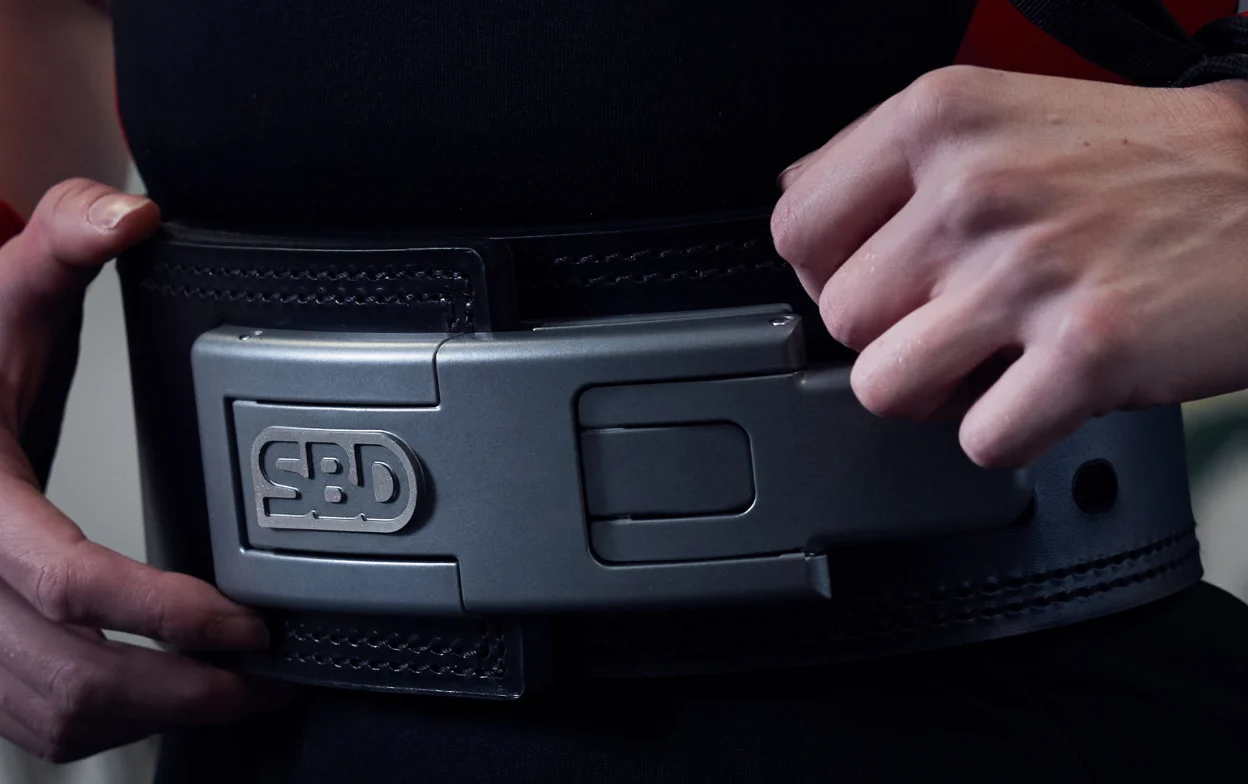
A lever belt closes quickly to a repeatable tension, making it convenient when heavy sets use the same waist setting. A traditional fixed lever is less convenient when you need to adjust fit between exercises or as your waist changes, though adjustable lever mechanisms are available. A lever’s security can be appealing, but the buckle itself does not create intra-abdominal pressure. Your breathing and bracing technique still determine how effectively you use the belt.
A single-prong leather belt is easy to adjust one hole at a time and remains an excellent all-round powerlifting option. Double-prong belts can work, but securing both prongs is often fussier without a demonstrated performance advantage. Check the stitching, buckle, leather edges and whether the hardware presses into your abdomen in a deep hinge. A belt that is technically strong but painful to wear will be difficult to use consistently during demanding training.
Nylon hook-and-loop belts are lighter and easy to loosen between sets. They suit some conditioning workouts, Olympic-lifting practice and mixed training where mobility matters. Their flexibility differs from a stiff leather powerlifting belt, so compare them as different tools rather than expecting identical performance. Choose the closure according to your main lifts, comfort, adjustment needs and competition rules. There is no single best buckle for every body.
5. How to size and position a belt for squats and deadlifts
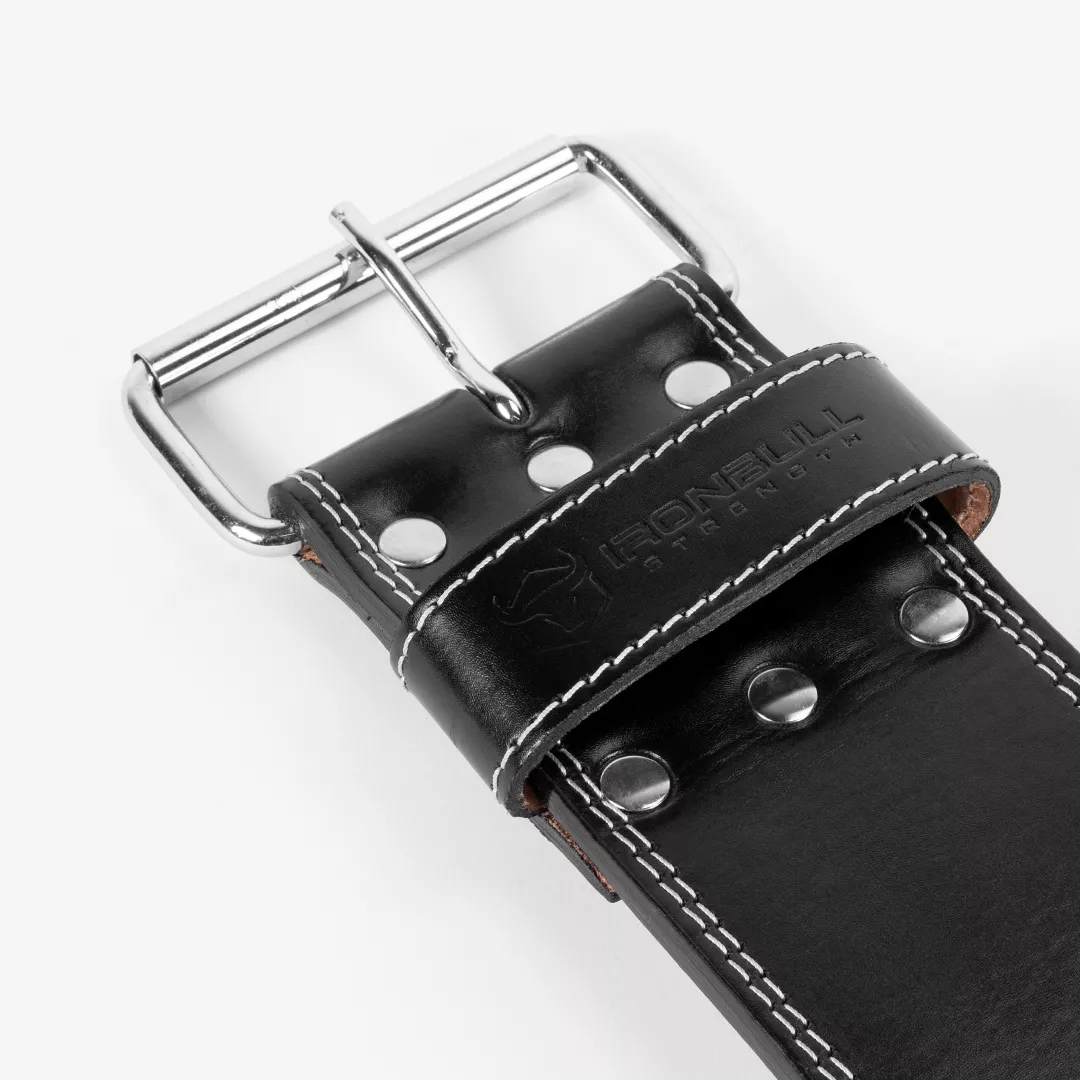
Measure your midsection at the location where the belt will actually sit, commonly near the navel, instead of using your trouser size. Choose a size that leaves adjustment room in both directions. The belt should be snug enough to provide resistance against expansion but loose enough for a full 360-degree breath. If you can barely close it, you are not necessarily getting more support. You may simply be making the brace harder to execute.
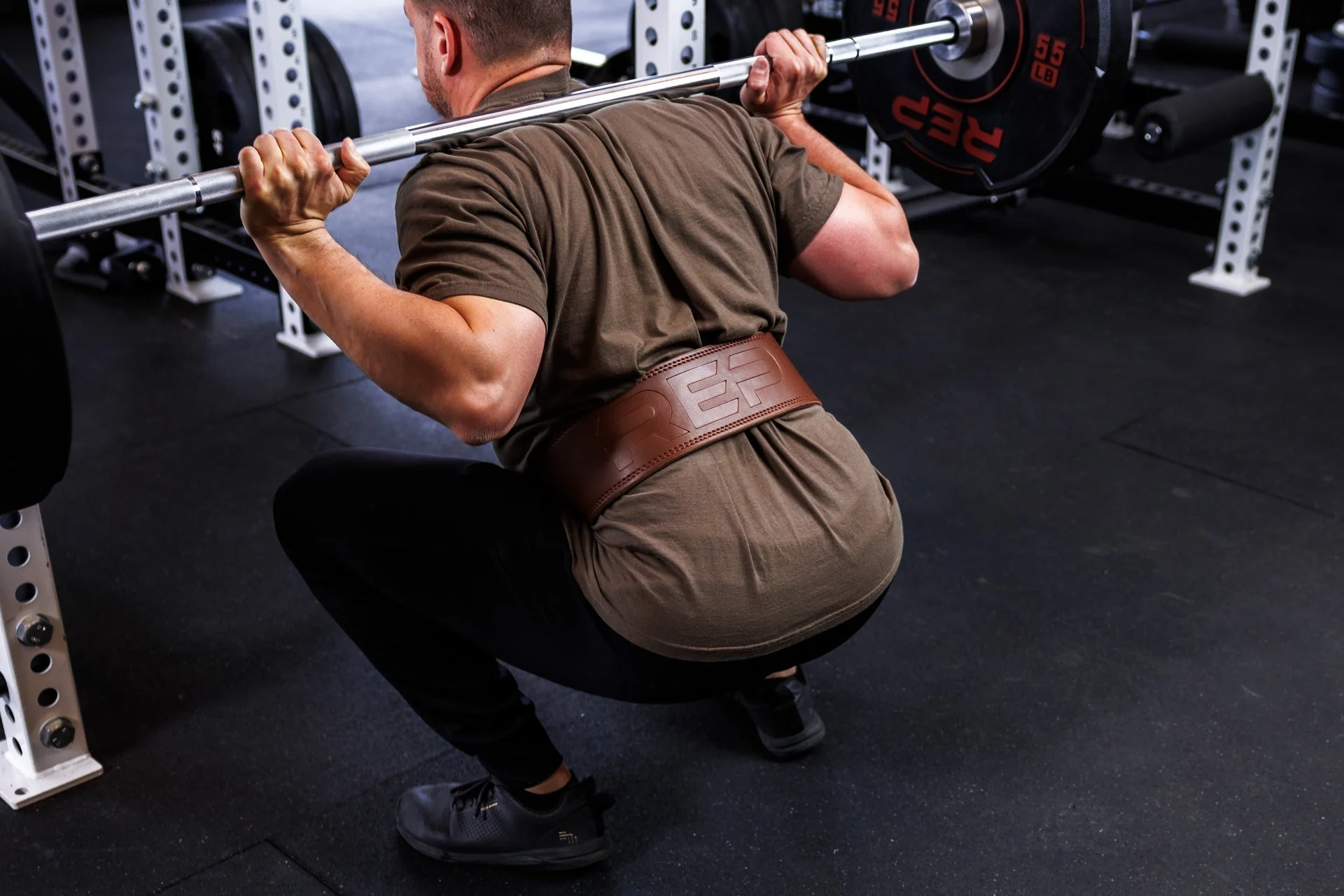
During squats, many lifters position the belt around the middle of the abdomen with enough clearance for the thighs at the bottom. Walk out the bar, establish your stance, inhale, brace and descend. During deadlifts, a deep hip hinge may make that same position uncomfortable. Try moving the belt slightly higher or lower or loosening it by one hole. Make changes under moderate loads before using them for heavy attempts, and check that the buckle does not catch on your body.
Good bracing is not the same as forcing an exaggerated lower-back arch. Aim for a controlled trunk position appropriate to the exercise. If the belt pinches sharply, causes numbness, rides up or stops you reaching the bar, change the fit or model. Give yourself several training sessions to learn a new belt. An unfamiliar setup is not a reason to test a one-rep maximum on day one.
Equipment Worth Exploring
Explore equipment, accessories and gear from our carefully selected range.


FID Bench MAX
Adjustable bench offering flat, incline, and decline positions + adjustable headrest.


Squat Harness
Wearable harness for hands-free cable squats, sled work, and lower-body training.

Leather Lifting Straps
Padded leather straps support grip during heavy rows, deadlifts and pulling exercises.

VOLTRA
Compact digital cable trainer with smooth, adjustable resistance.
6. When to wear a belt and when to train beltless
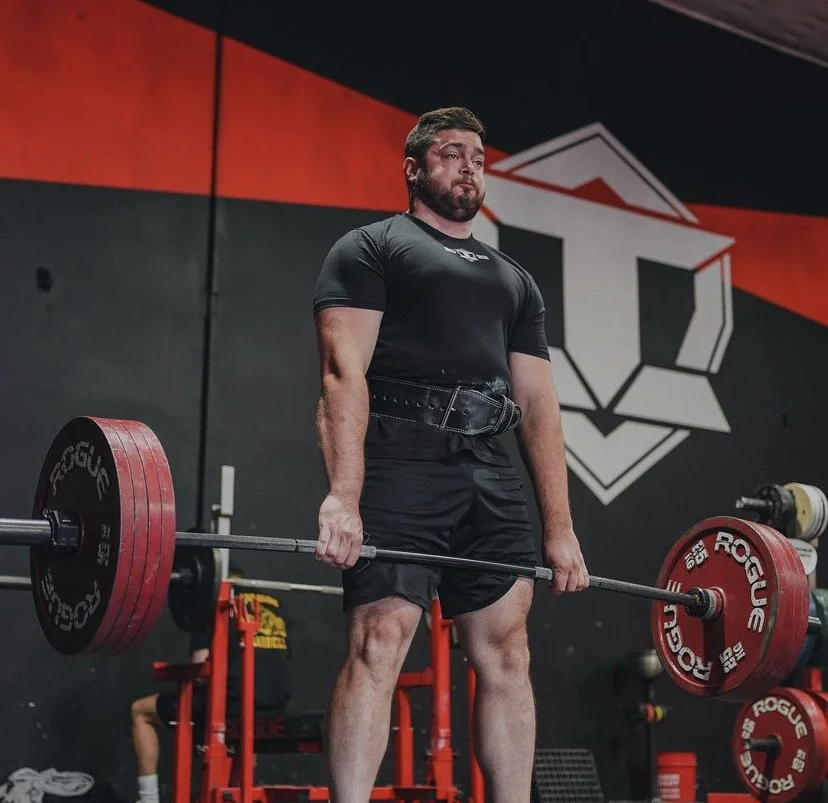
Use a belt where it adds something measurable: demanding squat and deadlift working sets, competition-specific practice or variations where torso stability limits performance. Introducing it during the final warm-up sets can make the transition to heavy work smoother. A powerlifter who competes with a belt should practice that setup regularly. Someone training primarily for general hypertrophy may have less need for it on machines, cables and isolation exercises.
Beltless work still matters. Controlled warm-up sets, technique practice and moderate accessory lifts give you opportunities to create trunk tension without external feedback. The claim that wearing a belt automatically makes your abdominal muscles weak is too simplistic; the muscles continue working while belted. Develop your own bracing skill and use an additional tool when it helps express strength. You can train both ways during the same week without treating them as opposing philosophies.
Prioritize the fundamentals around the belt. A stable rack, suitable barbell, secure collars and correctly positioned safeties are more important than an expensive buckle. Trap bars, cambered bars, squat wedges and safety-squat handles may change movement demands or improve setup. Landmine movements, dumbbells and cable resistance can provide productive training when maximal barbell loading is not the goal. Lifting straps address grip limitations, not torso bracing, so do not confuse their jobs.
7. Six weeks to make your belt genuinely useful
During weeks one and two, practice five controlled breaths with the belt lightly fastened before each squat or deadlift session. Progress through three to five warm-up sets, using the belt on the final one or two. Keep working sets near RPE 6–7, leaving several clean repetitions in reserve. Film a set and check torso stability, depth and buckle clearance. Record the hole or lever setting that works for each lift so you can reproduce it next time.
In weeks three and four, maintain the same bracing routine while gradually increasing selected main-lift sets toward RPE 7–8. One simple example is three sets of four to six squats on one day and three sets of three to five deadlifts on another. Rest long enough to preserve technique, commonly two to four minutes for these sets. Add a moderate beltless accessory movement or technique drill. If the belt worsens your bar path or range of motion, reduce load and solve the setup.
During weeks five and six, practice one heavier but technically clean top set near RPE 8, followed by two back-off sets with a modest weight reduction. You do not need to attempt a true maximum. Track bar speed, perceived stability and how consistently you hit the same positions at comparable loads. If discomfort or form breakdown increases, return to lighter practice. The takeaway: learn the brace first, buy for fit, and let repeatable performance—not belt thickness hype—determine whether the tool earns a place in your training.
Funny Gym Shirts & Workout Gear
Funny gym shirts, tanks, hoodies and workout gear for lifters who like training hard.

I Said Maybe Barbell Saves Me | Oasis Workout Parody Hoodie
Stay casual and show some metalhead attitude with “I Said Maybe Barbell Saves Me”.

Wonderbarbell Crewneck | Workout Sweater with Oasis Par T-Shirt
Add a playful “Wonderbarbell” touch to your casual rotation.

Since I've Been Lifting You | Led Zeppelin Barbell Meme Sticker
Put “Since I've Been Lifting You” gym humor on your laptop, bottle, or gym gear.

Star Wars Shirt Barbell May The Gains Be With You Top T-Shirt
Show some lifting attitude with a playful “Star Wars” tee.

I Want You To Lift Heavy Gym | Funny Uncle Sam Patrioti Sticker
Bring “I Want You To Lift” attitude to your water bottle or laptop.

Barbell Flag Patriotic Gym | Funny USA Workout | Gymbro T-Shirt
Show some powerlifting attitude with a playful “Barbell Flag Patriotic” tee.

Swolebob Squatpants Gym | Funny SpongeBob Leg Day Meme Sticker
Give your everyday gear a playful “Swolebob Squatpants” twist.

Hold My Mop Anatoly Shirt Lift Heavy Gymbro Meme Top T-Shirt
Make gym days more fun with “Hold My Mop” style.

The Ultimate Deadlifter Jesus Christ – Deadlifts Liftin T-Shirt
Heavy lifts, good laughs, and a little “The Ultimate Deadlifter Jesus Christ” energy.

We'Re Not Gonna Lift It Twisted Sister Meme Heavy T-Shirt
Rep “We're Not Gonna Lift It” humor in and out of the gym.