Some product links may be affiliate links, which can support Mind Muscle Perfection at no additional cost to you.
Palms up for biceps, thumbs up for arm thickness, palms down for forearms: every gym regular has heard the debate. A controlled October 2026 experiment in 56 resistance-trained men directly tested how forearm orientation changes the electrical activity of the biceps during dumbbell curls. Its results were consistent, but the difference between a muscle-activation measurement and actual long-term muscle growth matters. Here is what the experiment means for arm training, which grips deserve space in your program, and how to progress without turning every curl into a swinging contest.
1. Why your hand position changes a curl
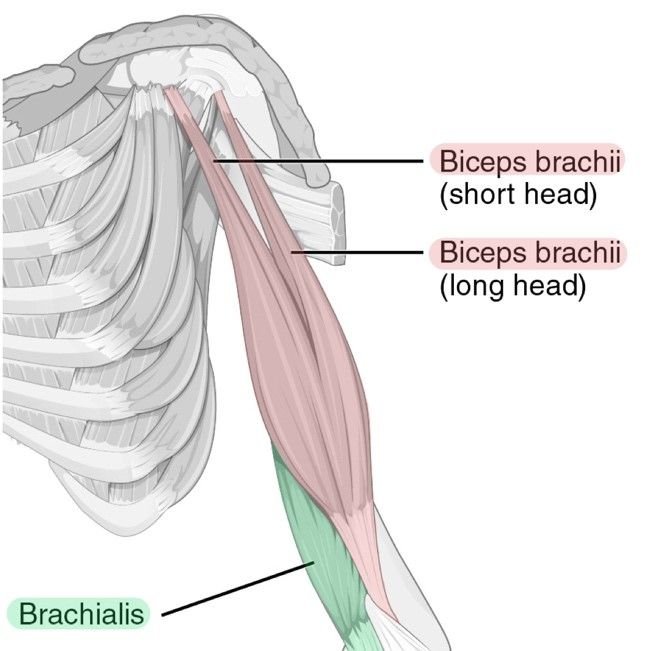
The biceps brachii has two heads and crosses both the shoulder and elbow. Its familiar job is bending the elbow, but it also helps rotate the forearm into supination, the palms-up position. That second job is why the same dumbbell can feel different when you turn your wrist. The brachialis, which sits beneath the biceps, flexes the elbow regardless of hand position. The brachioradialis, a prominent forearm muscle, also helps bend the elbow, particularly when a challenging load is held with a neutral grip.
A supinated curl keeps the palm upward, a hammer curl keeps the thumb pointing upward, and a reverse curl keeps the palm facing down. Each variation changes leverage and the contribution of the elbow flexors. None completely isolates a single muscle, and none magically switches another muscle off. The practical question is not whether a muscle works at all, but how much useful tension you can accumulate with comfortable joints and repeatable technique.
There is also a difference between rotating a dumbbell as you curl and holding one grip throughout a set. Shoulder position, elbow travel, wrist comfort and the resistance curve can change the challenge just as much as hand orientation. To make meaningful comparisons in your own workouts, use consistent range of motion and avoid compensating with your torso when one grip feels weaker.
2. The 56-man experiment: supination led the EMG readings
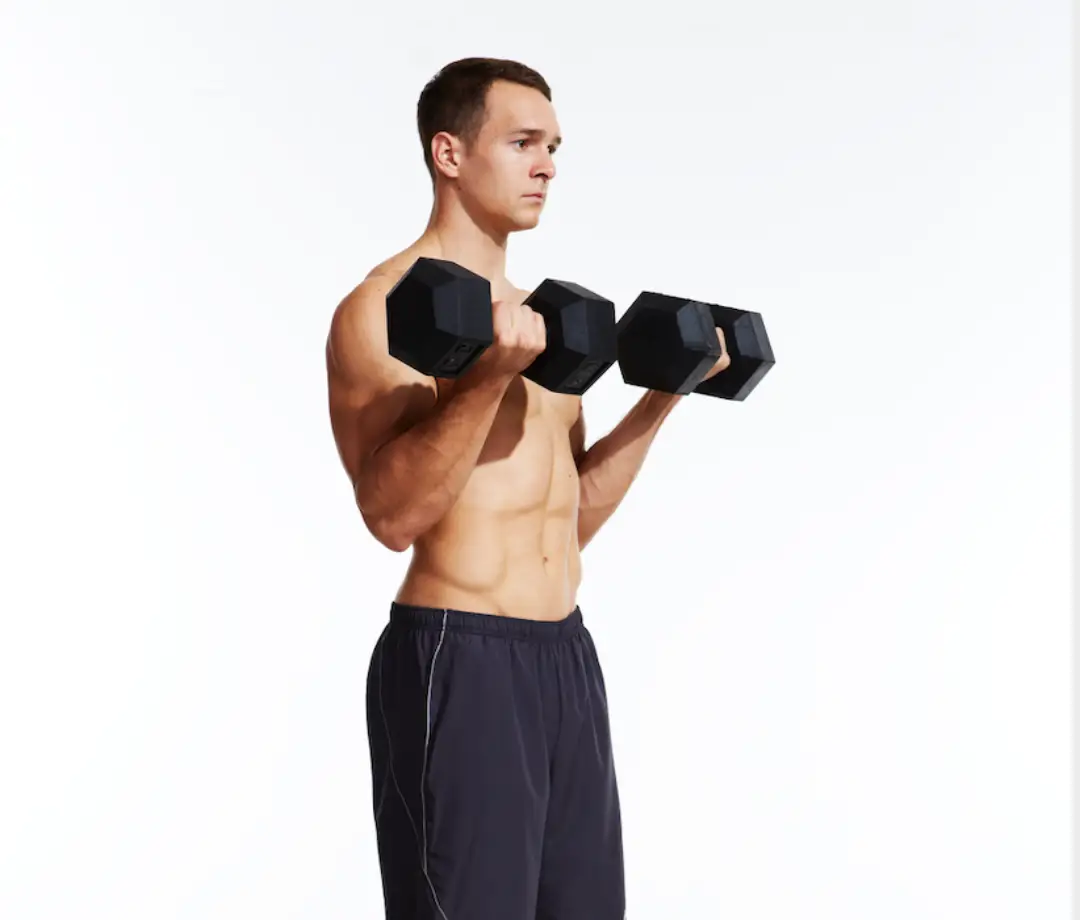
The October 2026 experiment included 56 right-handed men with strength-training experience. Participants performed dumbbell elbow-flexion exercises with supinated, neutral and pronated grips. Researchers recorded electrical activity over the biceps brachii using surface electrodes. They used two reversed exercise-order sequences to help account for fatigue and order effects. This made it a controlled acute comparison, not a trial in which men trained for months and had their arms measured afterward.
The right-arm average was 215 microvolts in pronation, about 321 microvolts in neutral and about 421 microvolts in supination. For the left arm, the averages were approximately 249, 437 and 530 microvolts, respectively. In both arms, the direction was the same: palms up recorded the strongest biceps electrical signal, hammer position was intermediate, and palms down was lowest. The differences were statistically meaningful under the standardized testing conditions.
These figures are not percentages of muscle fibers recruited. They are also not a prediction that the palms-up group would grow a certain percentage more muscle, because there were no long-term training groups. Electrode placement, skin and tissue characteristics, exercise load, repetition timing and normalization methods all influence the raw signal. The appropriate conclusion is specific: forearm position changed recorded biceps activation during the tested dumbbell curls. Whether those differences translate into different hypertrophy outcomes requires separate longitudinal evidence.

Equipment Worth Exploring
Explore equipment, accessories and gear from our carefully selected range.


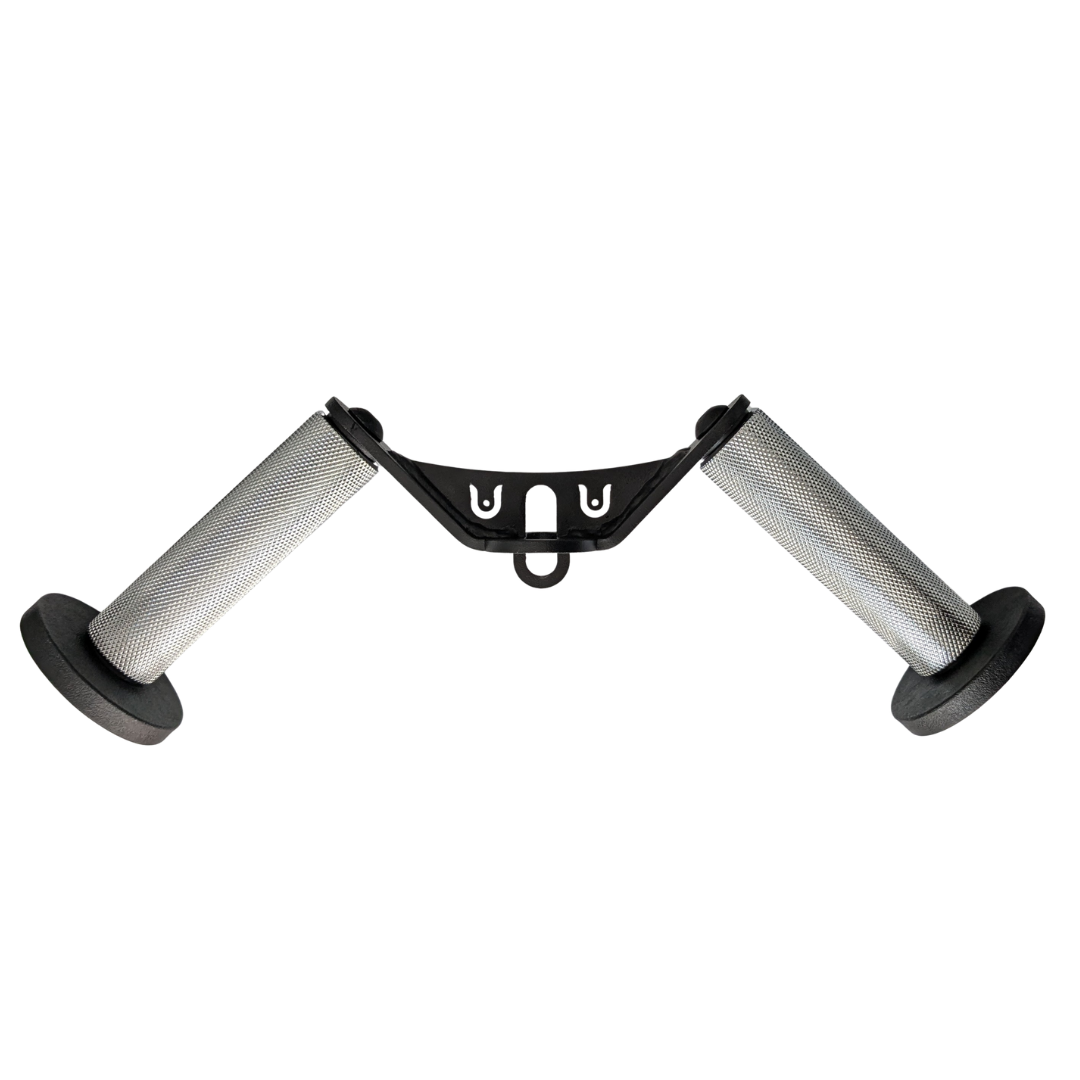
W Grip
Angled cable grip for comfortable rows, pushdowns, and curls.


GymPin Ergo Handles
Pair of ergonomic cable handles shaped for comfortable triceps and pulling exercises.
VOLTRA
Compact digital cable trainer with smooth, adjustable resistance.

Go-Tone Pro
Portable digital cable trainer with up to 66 lb (30 kg) of adjustable resistance.

FID Bench MAX
Adjustable bench offering flat, incline, and decline positions + adjustable headrest.
3. Higher activation is not a muscle-growth guarantee
Surface EMG records electrical activity near a muscle. It can help compare conditions inside a controlled experiment, but muscle growth is driven by repeated mechanical loading over weeks and months. The best exercise for you must also permit enough challenging repetitions, a tolerable range of motion, sensible progression and recovery between sessions. A grip that scores higher in a short EMG test is not automatically the best exclusive exercise for every lifter.
A separate study involving ten competitive bodybuilders found greater biceps excitation during the lifting phase of supinated curls than during neutral or pronated curls. That supports keeping a palms-up curl in an arm program. It does not make hammer curls useless. The brachialis and brachioradialis still work during neutral-grip elbow flexion, and a comfortable hammer grip may let you accumulate additional productive training when wrists dislike full supination.
Think of a lifter doing three strict palms-up sets and another doing three well-controlled hammer sets. The first might show a stronger biceps electrical signal in a standardized test, yet you cannot calculate a twelve-week size difference from that alone. Nor can you compare EMG numbers across different laboratories as universal rankings. For bodybuilding, a smart compromise is to make a supinated curl your main biceps-biased movement, then add another grip because it offers a useful training stimulus or better joint comfort, not because variety itself is magic.

Bodybuilding Shirts & Workout Gear
Bodybuilding shirts, tanks and gym gear for lifters chasing muscle, size, symmetry and the pump.

Biceps of the Caribbean Gym | Funny Pirate Muscle Shirt Tank Top
Show some personality between sets with “Biceps of the Caribbean”.

Patriotic Abraham Lincoln Abolish Sleevery Muscle Shirt Tank Top
Bring “Patriotic Abraham Lincoln” humor to your next lifting session.

The Real Rocky Mountains – Bicep Mountain Meme Pullover T-Shirt
Keep things casual with a little “The Real Rocky Mountains” attitude.

Love Gun Big Biceps – KISS Rock Music Hooded Pullover Hoodie
Make your off-duty look more fun with “Love Gun Big Biceps”.

Macro Biceps Ant Man Crewneck Pullover Sweater Gymbros T-Shirt
Show some gym-day personality with “Macro Biceps Ant Man”.

Beavis And Butt-Head Big Biceps & Booty Meme T-Shirt
Show some bodybuilding attitude with a playful “Beavis and Butt-Head Big Biceps & Booty” tee.

Beauty And The Biceps Decal Water Bottles & Gear Meme Sticker
Bring “Beauty And The Biceps” attitude to your water bottle or laptop.

Ha Ha Hammer Curls Joker Gym Funny Workout Crewneck Pul T-Shirt
Keep things casual with a little “Ha Ha Hammer Curls Joker” attitude.

Guns N Poses – Rock Music Arm Day Meme Decal for Gym Ge Sticker
Put “Guns N Poses” gym humor on your laptop, bottle, or gym gear.

Mentzer Heavy Duty Flexing Tee
Heavy lifts, good laughs, and a little “T-Shirt Mike Mentzer Heavy Duty Flexing” energy.
4. How to get more from a supinated curl
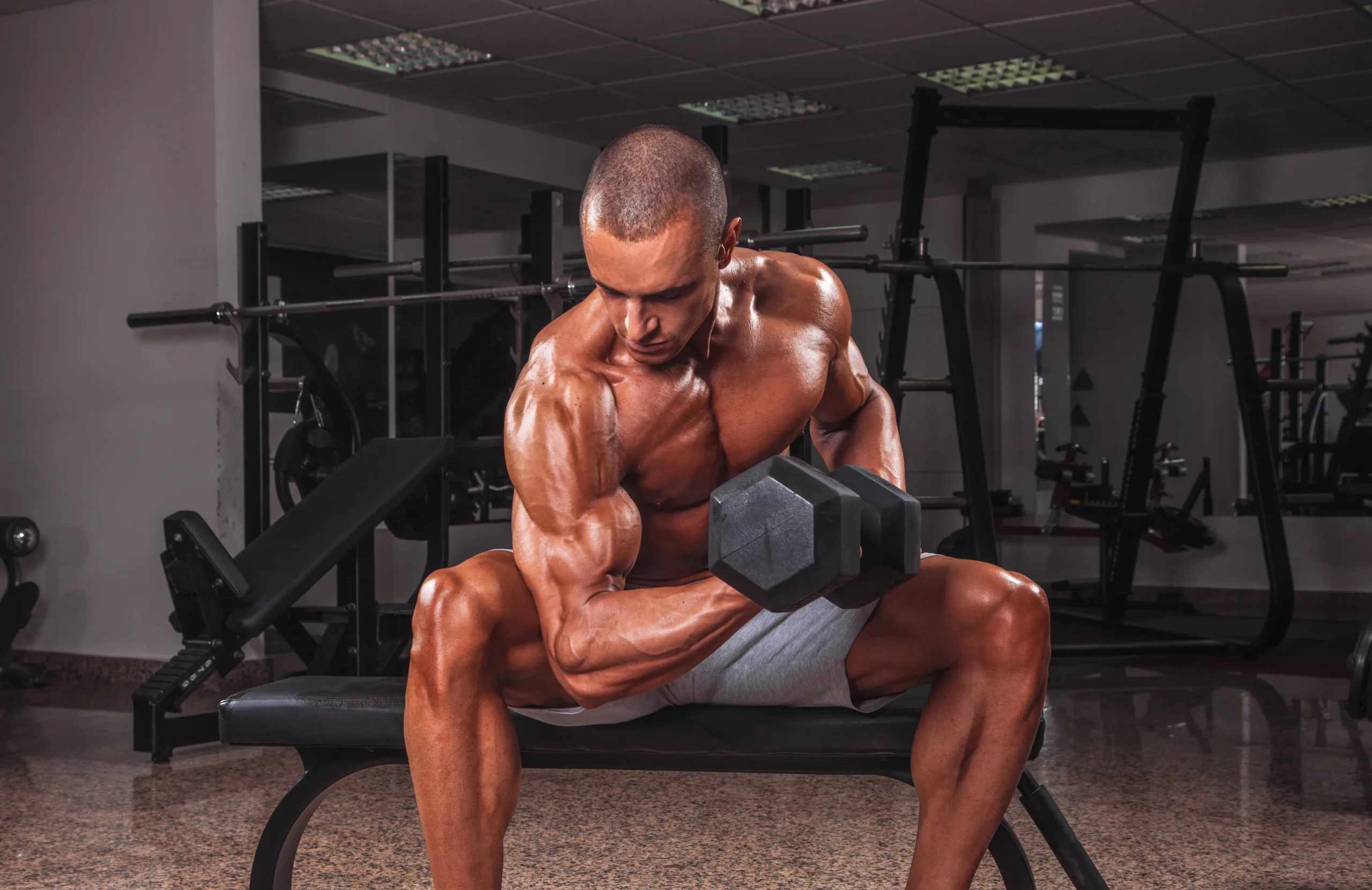
Stand tall with the elbows close to the ribs or sit against a supportive bench. Hold dumbbells with palms facing forward, or gradually rotate toward supination if that feels natural. Bend the elbows without driving them far in front of the body. Lower under control until the arms are comfortably extended. Keep wrists straight rather than folding them backward, and do not lean away from the weight just to finish the final repetition.
For a primary biceps movement, choose a load that allows roughly eight to twelve strict repetitions, usually finishing with one to three good reps in reserve. If your upper arms swing or your shoulders take over, the weight is too heavy for the target technique. An incline curl changes the upper-arm position and lengthens the biceps under load. A concentration curl braces the arm against the thigh and limits torso momentum. These are useful options, but neither needs to replace a straightforward standing curl.
Progress with a simple rule: use three sets of eight to twelve, record every clean rep, and keep the weight unchanged until all three sets reach twelve without cheating. Then move up by the smallest available increment. Repeat the process rather than chasing a new weight every workout. If full supination causes wrist discomfort, use a comfortable partial rotation or an angled curl bar instead of forcing a painful position. Consistency and progressive loading matter more than a theoretically perfect hand angle.
5. Hammer curls build useful elbow-flexor volume
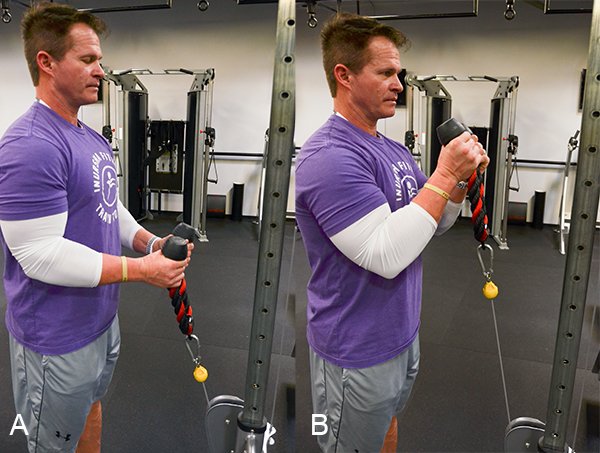
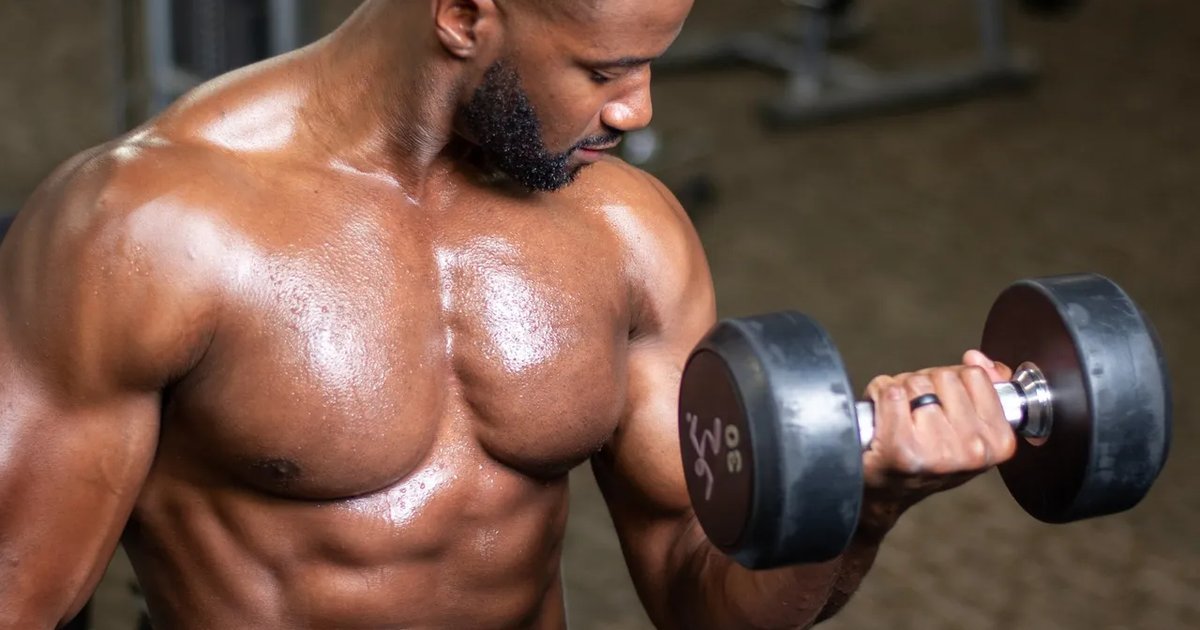
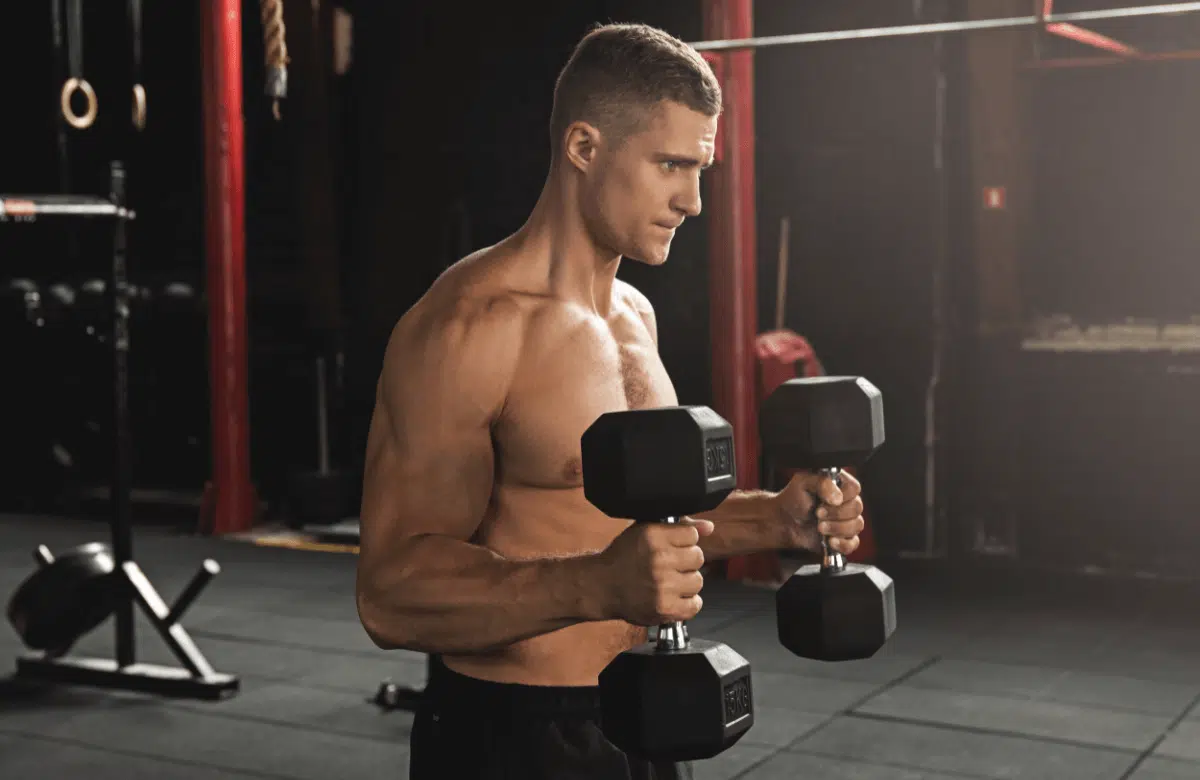
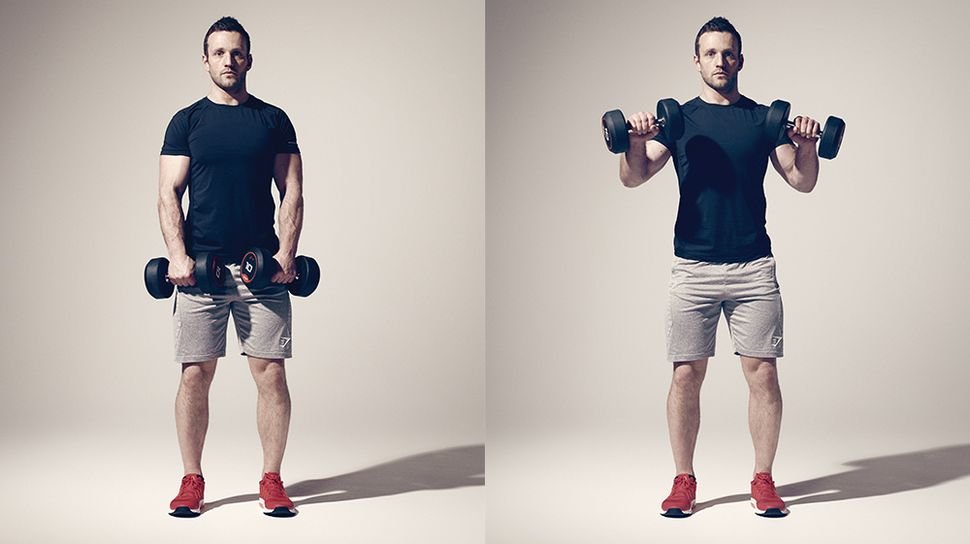
A hammer curl keeps the palms facing inward and the thumbs pointing upward. The biceps still contributes, while the brachialis and brachioradialis also help move the weight. Hold a dumbbell in each hand, brace the torso, keep the upper arms mostly still and lift without flaring the elbows or swinging your hips. Cross-body hammer curls travel toward the opposite side of the chest; standard hammer curls travel more directly upward. Choose whichever path lets you control the load and keep the wrists comfortable.
A rope attached to a low cable is a strong alternative for home gyms with a functional trainer. Step back enough to maintain tension, keep the shoulders down, and curl without dragging the elbows forward. A pair of independent handles can also work. Because cable resistance changes the external force direction, do not expect a cable hammer curl to feel identical to a dumbbell hammer curl at the same displayed weight. Choose your resistance based on the repetitions you can perform, not the number printed on a stack.
Two or three sets of ten to fifteen controlled reps after the main supinated curl is a practical starting point. If you already do heavy rows and pull-ups, remember those movements also load your elbow flexors. Additional direct sets are useful only when you recover from them. A bigger pump is not proof of better results, and persistent elbow soreness is a reason to reduce workload or adjust the exercise rather than add more volume.
Equipment Worth Exploring
Explore equipment, accessories and gear from our carefully selected range.

GymPin D Cuffs
Adjustable wrist cuffs with textured grips for supported cable-machine exercises.
Horizon Grip
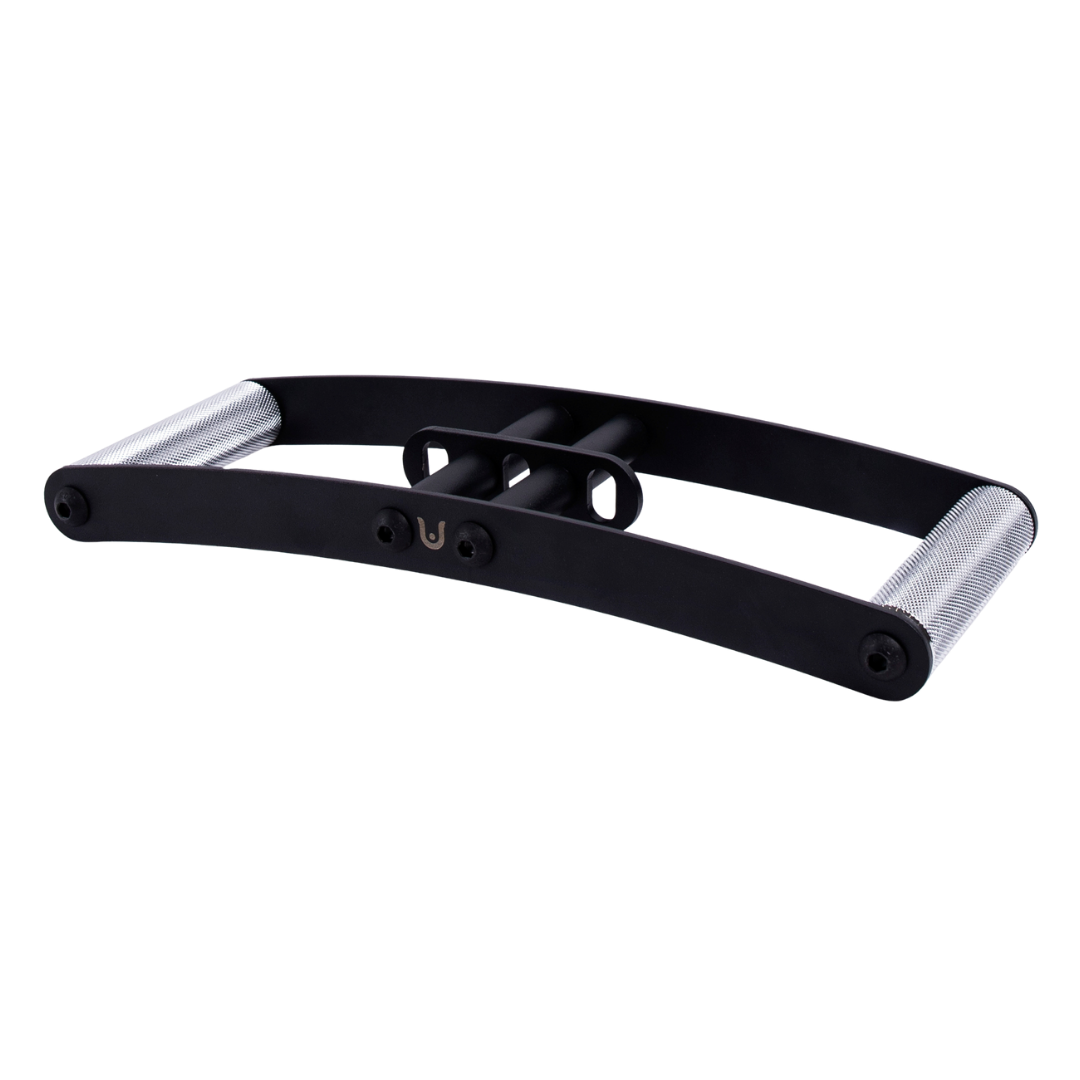
Ergonomic V-style cable grip for rows and back training.

GymPin D Handle Bar
Multi-use steel D-handle bar for cable rows, pulldowns and other cable exercises.

Long Tricep ERGO Ropes
Extended triceps ropes with ergonomic grips for cable pressdowns and overhead extensions.




Power Tower
Freestanding pull-up and dip station with adjustable handles for bodyweight training.
6. Reverse curls: train the forearms without ego lifting
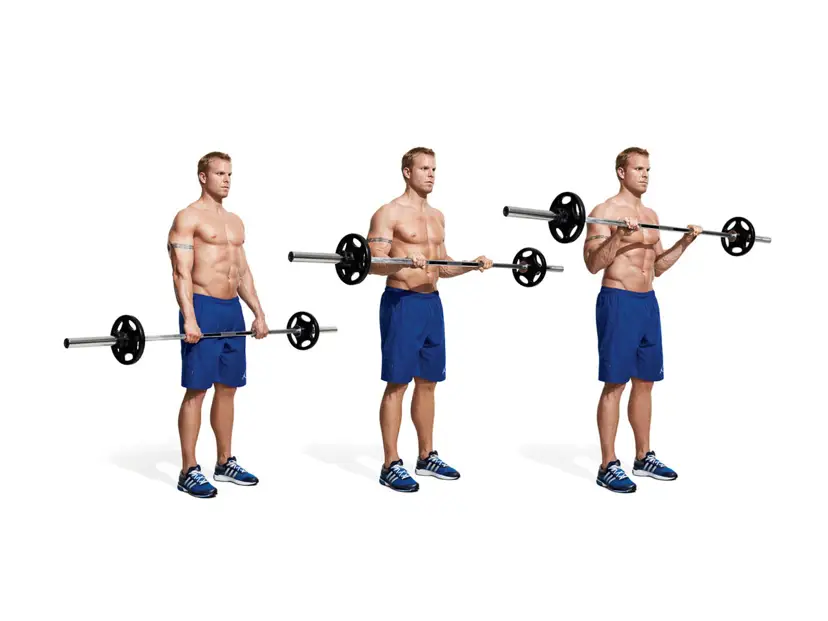
In a reverse curl, the palms face down. Pronation changes the biceps’ leverage, but the brachialis and brachioradialis continue to assist elbow flexion. That makes reverse curls a sensible accessory for lifters who want to challenge the forearms and elbow flexors through a different grip. It does not mean the biceps is inactive, nor does it prove that reverse curls build forearms faster than every alternative.
Use a straight bar, an angled EZ bar or light dumbbells. Keep wrists approximately aligned with forearms, bend the elbows without swinging, and lower slowly. Expect to use considerably less weight than on a palms-up curl. If you attempt to match your supinated-curl load, the movement often becomes a wrist-extension contest with the shoulders and hips helping the bar. That defeats the purpose of a controlled accessory.
Start with one or two lighter sets of twelve to twenty reps near the end of an arm session. If a pronated grip aggravates the wrists or outside of the elbow, use a lighter weight, reduce range modestly, switch to an angled bar or return to hammer curls. There is no benefit to forcing painful pronation. Persistent joint pain should be assessed rather than treated with a self-prescribed exercise challenge. The best grip is one you can load repeatedly without provoking avoidable problems.
Funny Gym Shirts & Workout Gear
Funny gym shirts, tanks, hoodies and workout gear for lifters who like training hard.

Gym Dost Thou Even Curl Medieval Knight Bicep Shirt & B T-Shirt
Make gym days more fun with “Dost Thou Even Curl Medieval Knight Bicep” style.

Dwight Schrute Gun Show The Office Bicep Vest Tank Top
Show some personality between sets with “Dwight Schrute Gun Show”.

I Love Gym Bicep Heart | Swole Heart Decal For Water Bo Sticker
Stick a little “I Love Gym Bicep Heart” humor on your favorite gear.

Welcome to the Gun Show for Big Biceps Gains | Rock Mem Sticker
Put “Welcome to the Gun Show” gym humor on your laptop, bottle, or gym gear.

GymTok – TikTok Parody Bicep for Gymbro Content Creator Hoodie
Show off your bodybuilding humor in a laid-back “GymTok” hoodie.

Micro Biceps Club President Gym | Funny Workout Decal | Sticker
Stick a little “Micro Biceps Club President” humor on your favorite gear.

Tyrannosaurus Flex Gym | Funny T-Rex Dinosaur Muscle Sh Tank Top
Train hard, laugh a little, and rep “Tyrannosaurus Flex”.


For Whom The Bell Curls Dumbbell Metallica Workout Heav T-Shirt
Rep “For Whom The Bell Curls” humor in and out of the gym.

Mind Muscle Perfection Embroidered Brain and Biceps Gym Hat
A playful “Mind Muscle Perfection Embroidered Dad” cap for workouts and weekends.
7. Six weeks of smarter biceps training
Train direct curls twice weekly, ideally with at least two days between sessions. Count your rows and chin-ups when judging overall elbow-flexor fatigue. If you already have a demanding back program, start with around six to eight direct curl sets per week. You can add work later if performance, recovery and elbow comfort justify it. Do not treat every extra set as automatically productive.
Session A: supinated dumbbell curl, three sets of eight to twelve; neutral hammer curl, two sets of ten to fifteen. Session B: incline or concentration supinated curl, two sets of ten to fifteen; rope cable hammer curl, two sets of ten to fifteen; reverse curl, one lighter set of twelve to twenty. Rest roughly ninety seconds to two minutes between demanding sets, or longer if necessary to keep technique and repetitions consistent. Stop most sets with one or two reps in reserve.
Weeks 1–2: establish clean loads and record repetitions. Weeks 3–4: add reps before weight, increasing the main curl only after reaching the top of its range with the same technique. Week 5: aim for modest progress in total quality repetitions without adding exercises. Week 6: compare performance using the same grips and setup; if fatigue has built up, reduce the number of direct sets before beginning another block.
A Zottman curl, which raises the dumbbells palms-up and lowers them with a rotated grip, can occasionally replace the reverse-curl finisher if you want to experiment. But keep enough movements stable to track progress. The takeaway: the 56-man experiment makes a good case for prioritizing supinated curls when targeting biceps activation, while hammer and reverse curls remain useful for complete, sustainable arm training. Choose your exercises for progress and comfort, not just for a high EMG number.