Should you schedule your hardest lifting days around the follicular phase of your menstrual cycle, or ease off automatically when the luteal phase arrives? Cycle-based training plans sound precise: hormones change, so the ideal workout must change too. Yet a useful training rule needs more than a plausible biological explanation. It needs evidence that following the rule actually produces better results.
A randomized trial reported in 2026 tested that question directly. Its central finding was practical rather than flashy: women gained muscle and strength with consistent resistance training, but concentrating more sets in one menstrual phase did not outperform the alternatives. That does not mean symptoms are imaginary or that every day feels identical. It means a fixed calendar may be a weaker guide than your actual performance, recovery and ability to train consistently.
Some product links may be affiliate links, which can support Mind Muscle Perfection at no additional cost to you.
1. What the 2026 trial actually tested
The study followed 24 healthy women with regular menstrual cycles for approximately 12 weeks, spanning three consecutive cycles. Rather than compare unrelated groups with different training backgrounds, it used a within-participant design: legs were allocated to conditions that either trained consistently, emphasized higher volume during the follicular phase, emphasized higher volume during the luteal phase, or served as a nontraining control. This helped reduce the noise that can arise when comparing different people.
Training focused on unilateral lower-body resistance exercise. The higher-volume condition used five sets per exercise twice a week; the lower-volume condition used one set twice a week. The two phase-focused approaches shifted when the larger dose occurred, while the continuously trained approach spread work across the cycle. The investigators assessed thigh lean mass, muscle cross-sectional area, other body-composition measures and maximal strength before and after the intervention.
Importantly, this was not merely a calendar app guessing when ovulation occurred. The protocol used biological verification of menstrual phases, an essential distinction because cycle length and timing vary. The question was whether redistributing training volume according to phase produced a meaningful advantage, not whether hormones exist or whether symptoms ever affect workouts.
The study was relatively small, involved lower-body training in women with regular cycles, and lasted three cycles. It cannot establish a universal training response for every athlete, exercise, contraceptive method or health condition.
2. The results: training mattered more than phase timing
All three resistance-training approaches improved measured muscle and strength outcomes compared with the nontraining control. Improvements were seen in thigh lean mass, vastus lateralis muscle size, fat-free mass and one-repetition maximum strength. Across the training approaches, however, the investigators did not detect statistically significant differences in those gains. In the published comparisons, the training conditions differed from control at p < 0.001, while differences among the training schedules were not significant at p ≥ 0.17.
That is a useful result, but it is not proof that all possible schedules are identical. A small trial can miss modest effects, and an absence of statistical significance is not the same as demonstrating exact equivalence. What the results do challenge is the confident claim that everyone must place their high-volume lifting in a particular phase to build muscle.
The analysis also found that training volume-load related to several adaptations. That fits a broader coaching principle: the amount of productive work you can perform, recover from and progressively challenge over time is likely more important than making the calendar look hormonally sophisticated.
For someone who currently trains two or three times weekly, the immediate lesson is simple. Keeping those sessions consistent, recording loads and repetitions, and adjusting when needed is a better starting point than overhauling a proven routine every few weeks. You can still adapt individual workouts when symptoms warrant it.

Equipment Worth Exploring
Explore equipment, accessories and gear from our carefully selected range.


GymPin Squat Wedges
Non-slip 15-degree squat wedges help elevate the heels for deeper quad-focused squats.

FID Bench MAX
Adjustable bench offering flat, incline, and decline positions + adjustable headrest.

HUSLA Leg Extension Pad
Pad attachment designed to increase usable range of motion on compatible leg-extension machines.

Belt Squat Collar
Heavy-duty collar adapter for compatible belt-squat and landmine bar setups.

3. Follicular and luteal phases are not automatic workout prescriptions
The menstrual cycle is commonly described in two broad phases. The follicular phase begins with menstruation and ends around ovulation; the luteal phase follows ovulation and ends before the next period. Estrogen and progesterone concentrations change across those phases. Those changes can influence temperature regulation, fluid balance, sleep, appetite and how an individual feels during training.
But moving from hormones fluctuate to everyone should lift heavier on specific days is a leap. The same nominal cycle day can represent different hormonal states in different people. Even within one person, the timing of ovulation and the severity of symptoms can change between cycles. Calendar predictions are therefore not precise enough to justify a rigid strength program on their own.
Previous evidence has also been mixed. A broad performance review found, on average, only a trivial difference between phases, with considerable variation and generally limited study quality. A later evidence overview warned that inconsistent phase verification made strong training prescriptions premature. Some analyses of short-term maximal strength have suggested phase differences for particular tests, but that is a different question from whether months of phase-targeted training build more muscle.
Think of phase information as context, not a command. A workout that feels excellent during menstruation need not be downgraded simply because a template says it should be. Likewise, a session that feels unusually difficult deserves an adjustment even if the calendar labels it an optimal strength day.

Gym Girl Shirts & Workout Gear
Gym shirts, tanks and workout gear for women who lift, train hard and live the gym lifestyle.

Muscle Mommy Pink Barbell Plate Crewneck for Women Who T-Shirt
For laid-back days and gym-girl humor: “Muscle Mommy”.

Pink 45LB Weight Plate Barbell Lifting Apparel Tank Top
Add some gym-girl attitude to training with “Pink 45LB Weight Plate”.

Plants & Weights 45LB Plate Plant Fitness Barbell Worko Hoodie
Keep it laid-back with a little “Plants & Weights 45LB Plate” attitude.

Flowers & Weights 45LB Plate Floral Fitness Barbell Wor Sticker
Put “Flowers & Weights 45LB Plate” gym humor on your laptop, bottle, or gym gear.

I Love Squats – Valentine's Day Leg Day Meme Vest Muscl Tank Top
Add some leg-day attitude to training with “I Love Squats”.

Meme : I Love Weights Top Valentine'S Day Gains T-Shirt
Bring “: I Love Weights” humor to your next gym day.

Strawberry Kettlebell – Viral Kettlebell Meme Hooded Pu Hoodie
Make your off-duty look more fun with “Strawberry Kettlebell”.

– "I Would Have Quit Already But My Trainer Scares T-Shirt
Keep things casual with a little “"I Would Have Quit Already But My Trainer” attitude.

I Love Bench Press Gym | Funny Heart Plate Muscle Shirt Tank Top
Add some lifting attitude to training with “I Love Bench Press”.

Break The Stereotype Gym | Feminist Workout Decal For S Sticker
Stick a little “Break The Stereotype” humor on your favorite gear.
4. One hard session and long-term muscle growth are different outcomes
It helps to separate three questions that are often blended together: Can a person produce the same force today? Can they tolerate the same workload this week? And will a different monthly schedule produce more muscle after several months? The first is an acute performance question, the second is about training tolerance, and the third is about adaptation. A study answering one does not automatically settle the others.
For example, discomfort, cramps, poor sleep or lower motivation can make a heavy session feel harder without meaning the muscles have lost their capacity to adapt. Conversely, feeling energetic for a few days does not guarantee that doubling training volume will improve results. The useful dose remains the one you can repeat with adequate technique and recovery.
There is also a measurement issue. Muscle growth is usually gradual, while daily performance is noisy. Small changes in hydration, glycogen, meal timing, fatigue and testing familiarity can influence what a single workout looks like. Coaches who react to every fluctuating number may change programs so often that they cannot tell whether the plan works.
A better approach is to track performance trends across multiple sessions: similar exercises, comparable ranges of motion, a consistent rep target and an effort rating. When the same load becomes easier or more repetitions are possible with good form, progression is evident. When several sessions deteriorate together, review recovery and workload before assigning the change to menstrual phase alone.
5. Symptoms deserve flexibility, not a mandatory deload
Rejecting a universal cycle-based lifting schedule does not mean ignoring individual experience. Menstrual cramps, headaches, bloating, sleep disruption, gastrointestinal symptoms and fatigue can meaningfully affect some people’s willingness or ability to train. Others notice little disruption. Both experiences are compatible with the evidence.
A separate study of competitive cycling found that reported negative symptoms, rather than measured changes in estrogen or progesterone alone, were associated with worse time-trial performance. Cycling races and resistance-training adaptations are different outcomes, but the practical message is relevant: listen to what the athlete is experiencing instead of assuming every athlete responds identically to a phase label.
On a difficult day, useful adjustments might include reducing the load by a small amount, stopping a set one or two repetitions earlier, shortening the session, substituting a comfortable movement or shifting the hardest exercise to another day. On a good day, complete the planned work; there is no evidence-based requirement to undertrain merely because of the date.
Try recording a simple symptom score alongside training logs for two or three cycles. Note cramps, sleep quality, perceived effort and any missed sessions. If a reliable personal pattern emerges, plan around it. If not, there is no need to manufacture one. Severe pain, unusually heavy bleeding, persistent loss of periods or symptoms that disrupt daily life warrant appropriate medical assessment rather than a workout hack.
Equipment Worth Exploring
Explore equipment, accessories and gear from our carefully selected range.
VOLTRA
Compact digital cable trainer with smooth, adjustable resistance.

Go-Tone Pro
Portable digital cable trainer with up to 66 lb (30 kg) of adjustable resistance.


Leather Lifting Straps
Padded leather straps support grip during heavy rows, deadlifts and pulling exercises.


6. A practical four-week strength plan that can flex
Start with a repeatable full-body or upper/lower schedule instead of making separate follicular and luteal programs. For a two-day lower-body emphasis, use Day A for a squat pattern, a hip hinge, a single-leg movement and a calf or core exercise. Use Day B for a leg press or alternative squat, a hamstring movement, a hip-dominant lift and a smaller accessory. Add upper-body pulling and pressing across the week according to your usual split.
For the main movements, choose two to four challenging sets in a comfortable rep range, often six to twelve repetitions. Keep one to three repetitions in reserve on most working sets, and use consistent technique. When all prescribed sets reach the upper end of the range at the planned effort, increase the resistance modestly. These are flexible coaching examples, not the exact protocol used in the trial.
Week 1: establish baseline loads and record symptoms without pre-emptively reducing volume. Week 2: try to add a rep or improve control on one or two exercises. Week 3: keep the same structure, progressing only where performance supports it. Week 4: review total sessions completed, loads, repetitions, soreness and recovery. Repeat the structure or make a small adjustment based on actual data.
If a day feels unusually hard, use a traffic-light system. Green means complete the plan. Amber means keep the exercises but trim one set or reduce intensity. Red means choose light movement or rest, especially if pain or illness is present. Do not try to compensate for one missed session by cramming excessive volume into the next. Over several months, adherence and sustainable progression matter more than whether each hard day landed in a predicted hormone window.
Bodybuilding Shirts & Workout Gear
Bodybuilding shirts, tanks and gym gear for lifters chasing muscle, size, symmetry and the pump.

Be Stronger Than Your Excuses Motivational Workout Pull Hoodie
Make your off-duty look more fun with “Be Stronger Than Your Excuses”.

Pumping Love Strong Heart Stronger Soul Valentine’s Day T-Shirt
Show some gym-day personality with “Pumping Love Strong Heart Stronger Soul”.

I Miss Gym Crewneck Pullover Sweater Who Find Happiness T-Shirt
Show some gym-day personality with “I Miss”.

Deadlift Viking Skull Muscle Shirt for Powerlifters, No Tank Top
Add some Viking attitude to training with “Deadlift”.

LiftIn Professional Lifter Gym Parody for Bodybuilding Tank Top
Add some lifting attitude to training with “LiftIn”.

First Progressive Overload President Theodore Roosevelt Hoodie
Stay casual and show some bodybuilding attitude with “First Progressive Overload President”.

Meme – It's All Genetics Natty , , & Gains – Bro T-Shirt
A t-shirt featuring the Meme – It's All Genetics Natty , , & Gains – Bro Humor Shirt design for lifters who appreciate gym-themed style.

Protein Shaker Bottle Gym Meme | Funny Bodybuilding Gra T-Shirt
Bring “Protein Shaker Bottle Gym Meme” humor to your next gym day.

Gym Skull Muscle Shirt for Powerlifting Bodybuilding Tr Tank Top
Train hard, laugh a little, and rep “Skull”.
7. Who the findings apply to, and the bottom line
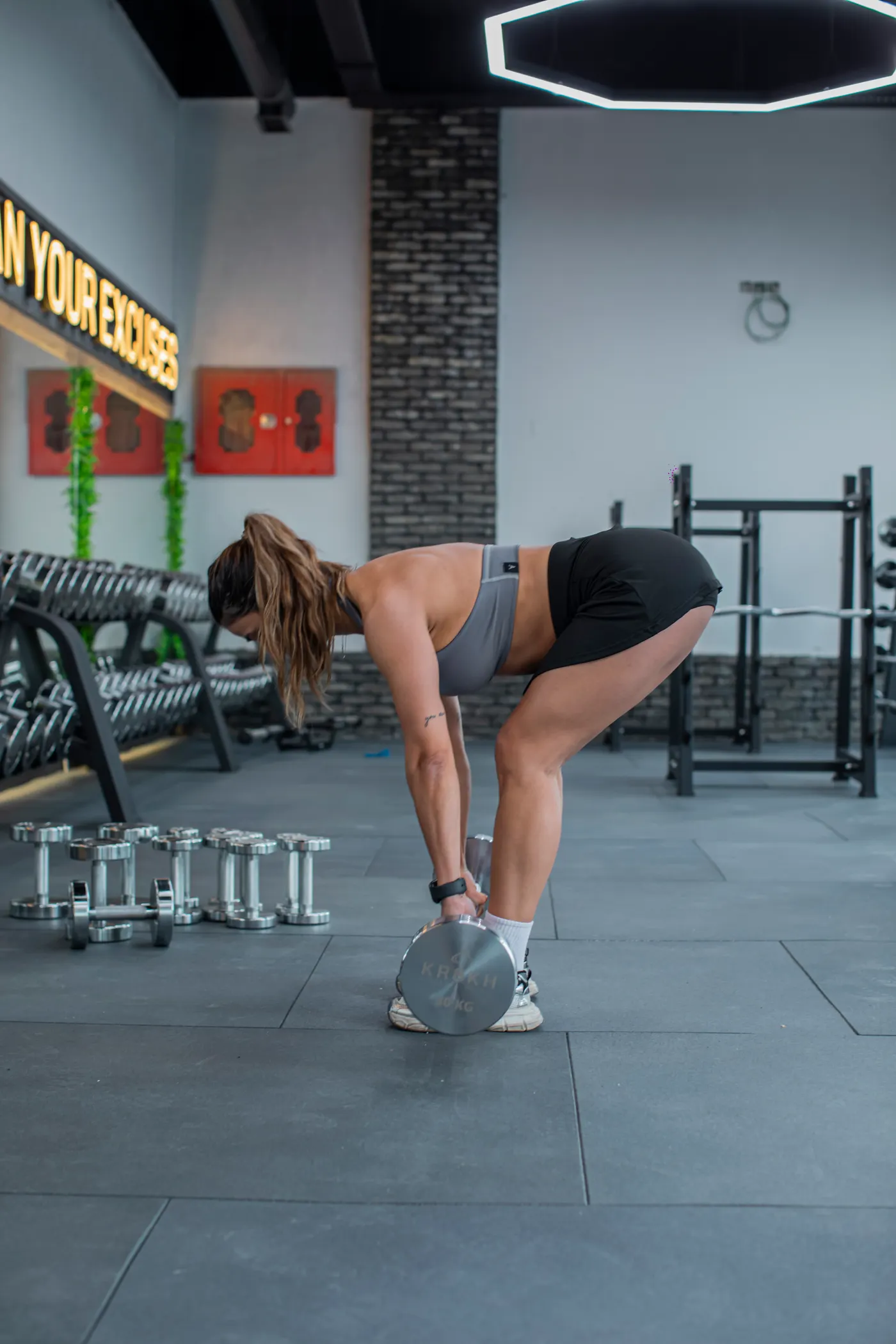
This trial gives a direct test of an appealing claim, but its boundaries should stay visible. The participants were healthy women with regular cycles. The intervention involved unilateral lower-body resistance exercise for about 12 weeks. It did not establish what happens across years of training, during elite competition, with every hormonal contraceptive regimen, during perimenopause, or in people with irregular or absent periods.
It also did not demonstrate that menstrual symptoms never affect performance. A participant can have a meaningful bad day even if the average muscle-growth result is similar across training schedules. Likewise, the finding does not rule out that a particular athlete may benefit from a personally tailored routine. The distinction is between a useful individual adjustment and an unsupported universal rule.
For most lifters, the practical hierarchy is straightforward: choose exercises you can perform well, train regularly, accumulate an appropriate amount of challenging work, progress gradually, eat adequately and recover. Use symptom tracking to make that plan more sustainable. If the calendar helps you anticipate a difficult week, it can be useful; if it makes you skip good workouts or force bad ones, it is working against the goal.
Bottom line: the 2026 trial found no clear muscle or strength advantage from concentrating more resistance-training volume in one menstrual phase. Consistency and productive training remain the foundation. Individual symptoms can guide day-to-day flexibility, but the evidence does not justify making every woman’s lifting program obey the same cycle-based schedule.