Some product links may be affiliate links, which can support Mind Muscle Perfection at no additional cost to you.
Is getting stronger mostly about putting more plates on the bar, or about grinding until the last rep barely moves? A large eight-week bench-press experiment involving 158 resistance-trained men offers a sharper answer than the usual heavy-versus-light argument. The study separated relative weight from the fatigue accumulated within each set. Its message matters for anyone chasing a bigger bench, thicker pecs, or more productive training at home: load and fatigue do different jobs, and you can program both.
1. Two different dials: how heavy and how tired
Most lifters think of intensity as one number: the percentage of their one-rep max. An 80% bench press feels heavier than a 55% bench press, so the heavier set must be the more intense one. But that misses the other dial. A set of three clean reps with 80% is a very different training experience from a long set that ends with the same bar crawling upward. The load might be identical while the amount of fatigue is not.
Relative load describes the weight compared with your maximum strength. Set fatigue describes how much performance declines as you repeat the movement. You can lift a challenging weight and stop early, or use a lighter weight and accumulate far more local fatigue. Those choices change the number of repetitions, the quality of each rep, recovery demands, and probably which adaptation gets emphasized.
This matters particularly when comparing research on heavy and light weights. If the light-load group performs many more demanding repetitions, the experiment may be comparing both weight and fatigue at once. A useful program asks two separate questions: what load gives the specific strength stimulus I want, and how much fatigue should I accept to get the muscle-building work done? Neither requires chasing failure on every set.
2. Inside the eight-week study of 158 trained men
The experiment assigned 158 resistance-trained men to 12 bench-press training groups for eight weeks. Three relative-load ranges were compared: approximately 40–55%, 55–70%, and 70–85% of one-rep max. Within those ranges, training sets were also prescribed using four velocity-loss thresholds: 0%, 15%, 25%, and 50%. That design allowed researchers to examine how load and fatigue interact rather than treating them as the same variable.
Velocity loss is the drop in repetition speed as a set progresses. Imagine your first smooth bench repetition moves at 0.60 meters per second. If a later rep slows to 0.45, speed has fallen by 25%. In a controlled setting, that percentage becomes a repeatable way to stop the set. A zero-loss condition means almost no accumulated speed decline; a 50% threshold permits much more slowdown and typically more demanding repetitions.
The major finding was not that everyone should train at one magic percentage. When fatigue was matched, heavier loads generally produced greater maximal-strength improvements. When load was held constant, more accumulated fatigue tended to produce larger muscle-growth adaptations. Strength gains also followed a more nuanced pattern: moderate fatigue often outperformed both extremely low and very high fatigue. The findings come from bench training in men already familiar with lifting, not every exercise or every population. They are a framework for programming, not a universal guarantee.

Equipment Worth Exploring
Explore equipment, accessories and gear from our carefully selected range.


FID Bench MAX
Adjustable bench offering flat, incline, and decline positions + adjustable headrest.


3. For a bigger one-rep max, heavy practice still matters
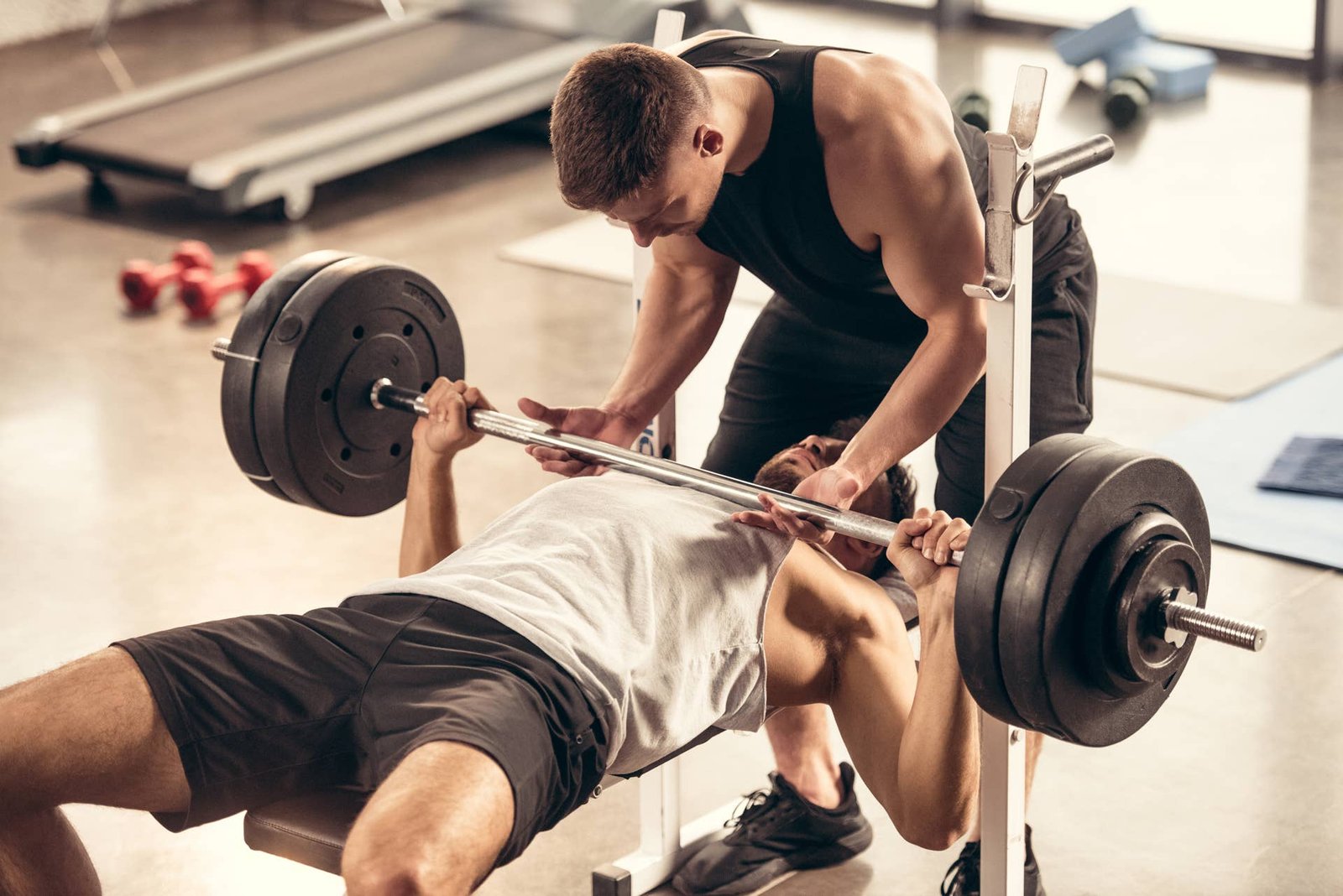
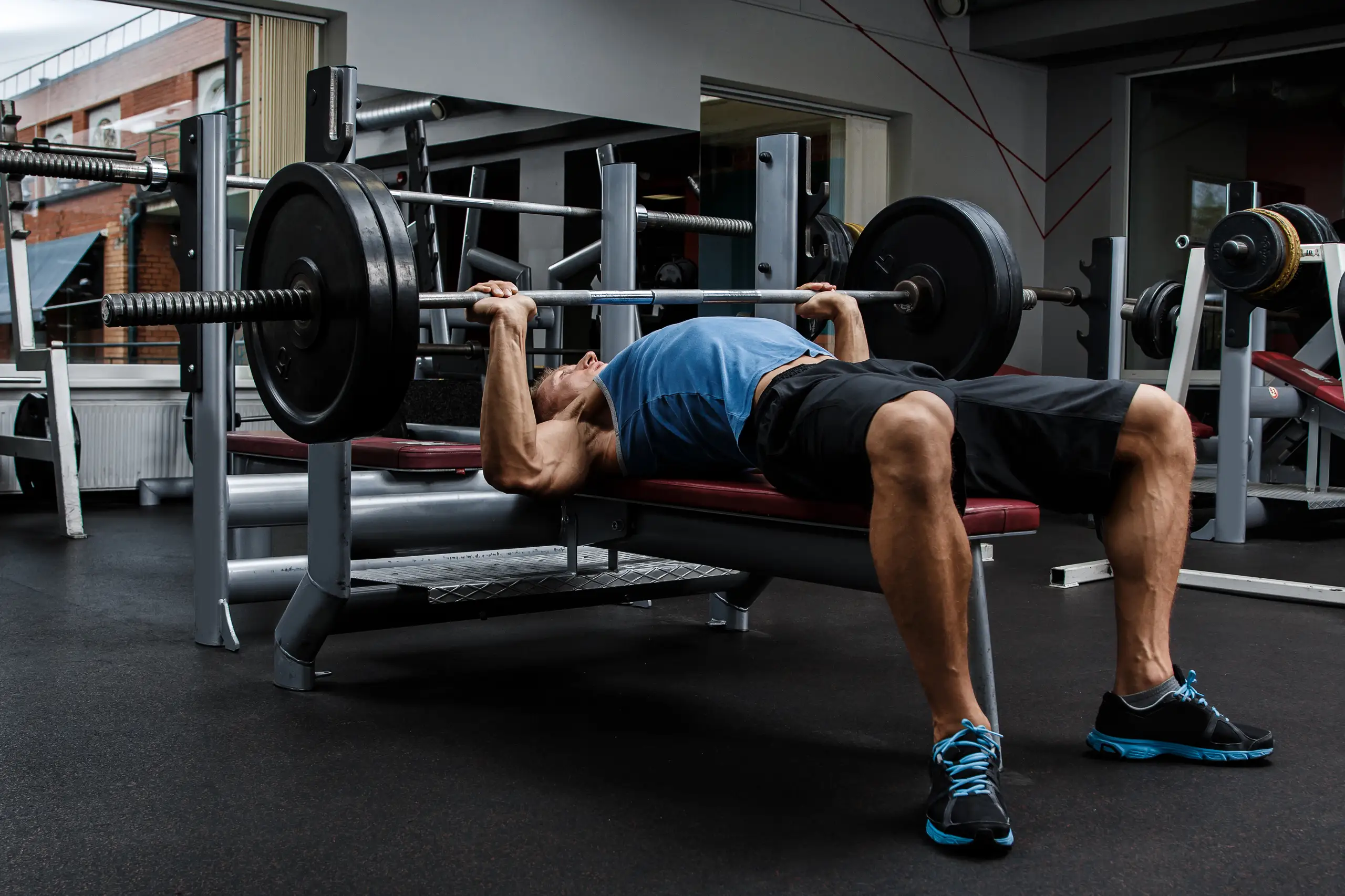
If the goal is to increase your competition bench or your best single, the study reinforces something experienced lifters already know: you need meaningful exposure to heavy weights. A 50% bench performed until your arms shake is not mechanically identical to handling 85% with a tight setup and deliberate drive. Heavy loads train the skill of bracing, controlling a challenging bar, and producing force under the conditions you actually want to improve.
That does not mean every heavy set should be a maximal grind. When bar speed collapses, technique can deteriorate and the next set may become substantially worse. Moderate within-set fatigue can provide enough work without consuming all your recovery. For a typical intermediate lifter, a practical heavy day might use three to five working sets of three to five repetitions, with two or three repetitions left in reserve on most sets. Rest long enough to reproduce clean, powerful reps.
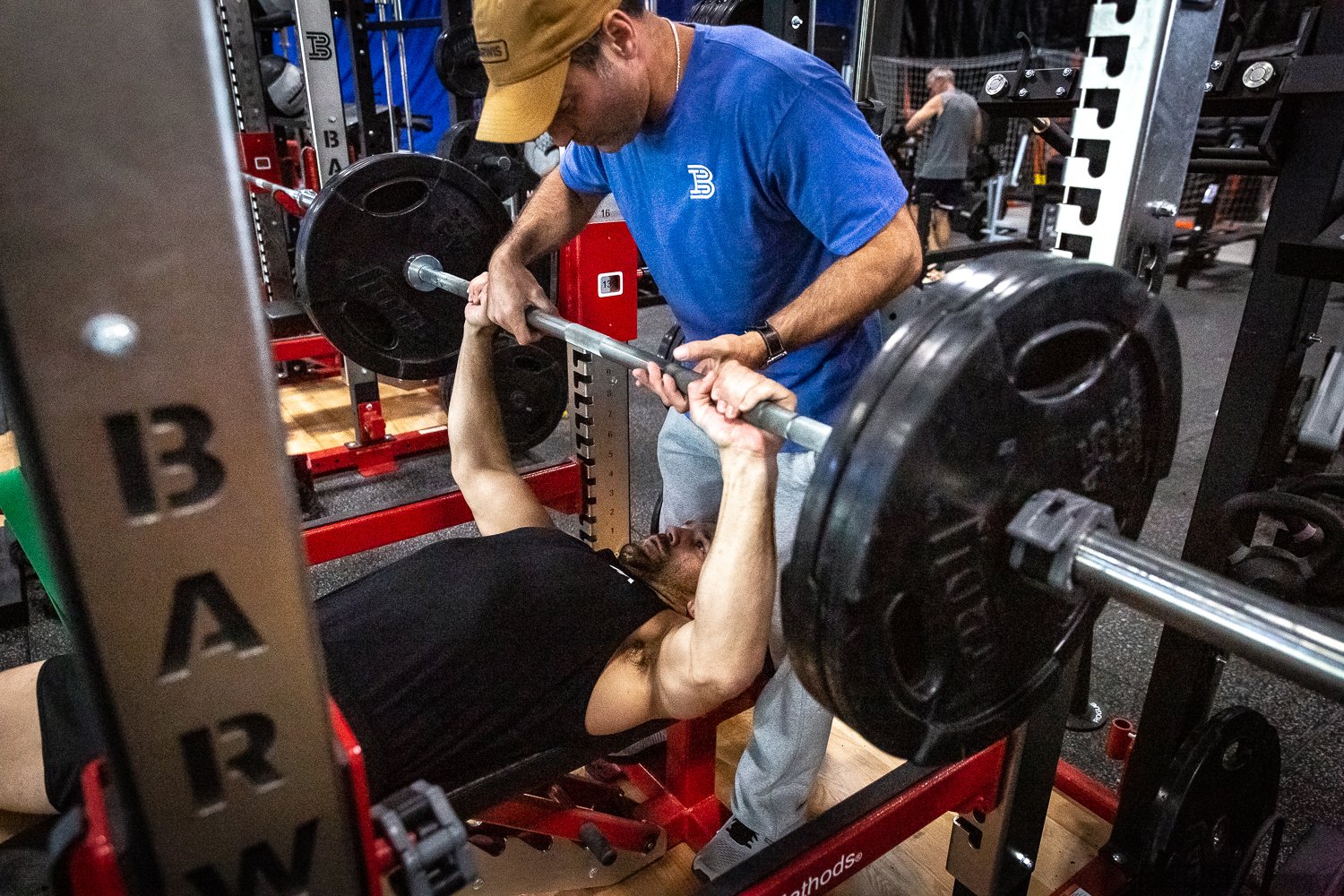
Specificity also explains why a heavier bench session and a higher-repetition chest session can coexist. The former develops force production and bench skill. The latter adds quality muscular work without requiring near-maximal weights every time. Treat a planned top single as a technical check, not a weekly test of survival. If the bar path, shoulder position, or spotter confidence deteriorates, the weight has stopped serving the purpose of the session.

Powerlifting Shirts & Lifting Gear
Powerlifting shirts and gym gear for squat, bench and deadlift lifters who live for heavy numbers.

Gym Sir Swole of Benchalot Medieval Knight Bench Press T-Shirt
Make gym days more fun with “Sir Swole of Benchalot Medieval Knight” style.

I Love Bench Press Muscle | Heart Plate Gym Vest for Ch Tank Top
Add some lifting attitude to training with “I Love Bench Press”.

1 Plate Bench Club Meme – Top T-Shirt
Bring “1 Plate Bench Club” humor to your next gym day.

My Bench Press Is Stuck Horror Scary Movie Meme Hoodie
Show off your Halloween humor in a laid-back “My Bench Press Is Stuck Horror” hoodie.

Chest Day Sweater Bench Press & Meme T-Shirt
Add a playful “Chest Day” touch to your casual rotation.
Lift Heavy – Hardcore Heavy Metal Gym Shirt for Powerli T-Shirt
A t-shirt featuring the Lift Heavy – Hardcore Heavy Metal Gym Shirt for Powerlifting and Bodybuilding artwork, bringing lifting-inspired humor and distinctive gym graphics to your everyday gear.

Train Hard Gains Gym | Funny Thomas The Tank Engine Wor Hoodie
Show off your lifting humor in a laid-back “Train Hard Gains” hoodie.

Ultimate Bench Press Tee
Heavy lifts, good laughs, and a little “Ultimate Bench Press” energy.

Shirt – I Want You To Bench Press Uncle Sam T-Shirt
Heavy lifts, good laughs, and a little “I Want You To Bench Press Uncle Sam” energy.

Heavy Barbell – Meme Shirt & Top T-Shirt
Make gym days more fun with “Heavy Barbell Powerlifting Graphic” style.
4. Why more fatigue can help hypertrophy, but not infinitely
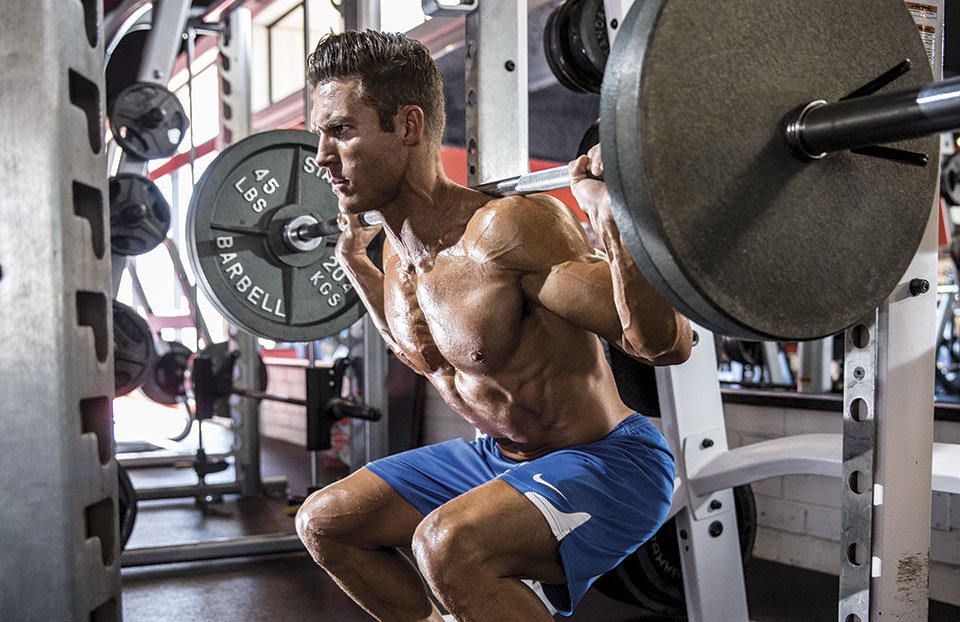
Muscle growth responds to hard, repeatable muscular work. Allowing more repetitions before stopping a set often increases the amount of demanding work the muscle performs. In the controlled bench-press experiment, greater velocity loss at a given load was associated with greater hypertrophic adaptation. A broader synthesis of velocity-loss research has likewise found that higher thresholds can favor hypertrophy while lower thresholds tend to better preserve jump, sprint, and fast-lifting performance.
There is an important distinction between productive fatigue and simply being exhausted. More slowdown may be useful when the objective is local muscle growth, but it can also lengthen recovery, reduce the quality of later sets, and make it harder to train the same muscle again soon. One brutally slow set does not automatically beat three technically sound sets across the week. Nor does this study prove that absolute muscular failure is necessary for hypertrophy.
For bodybuilding, think in terms of enough hard sets that you can recover from. On a stable exercise such as a machine chest press or cable fly, it can be reasonable to take the final set close to failure. On a free-weight bench press, stopping with one or two clean reps available is often a better trade-off, especially when training alone. The point is not to avoid effort; it is to place that effort where it builds muscle without turning the next session into damage control.
5. Bar speed, reps in reserve, and affordable tracking
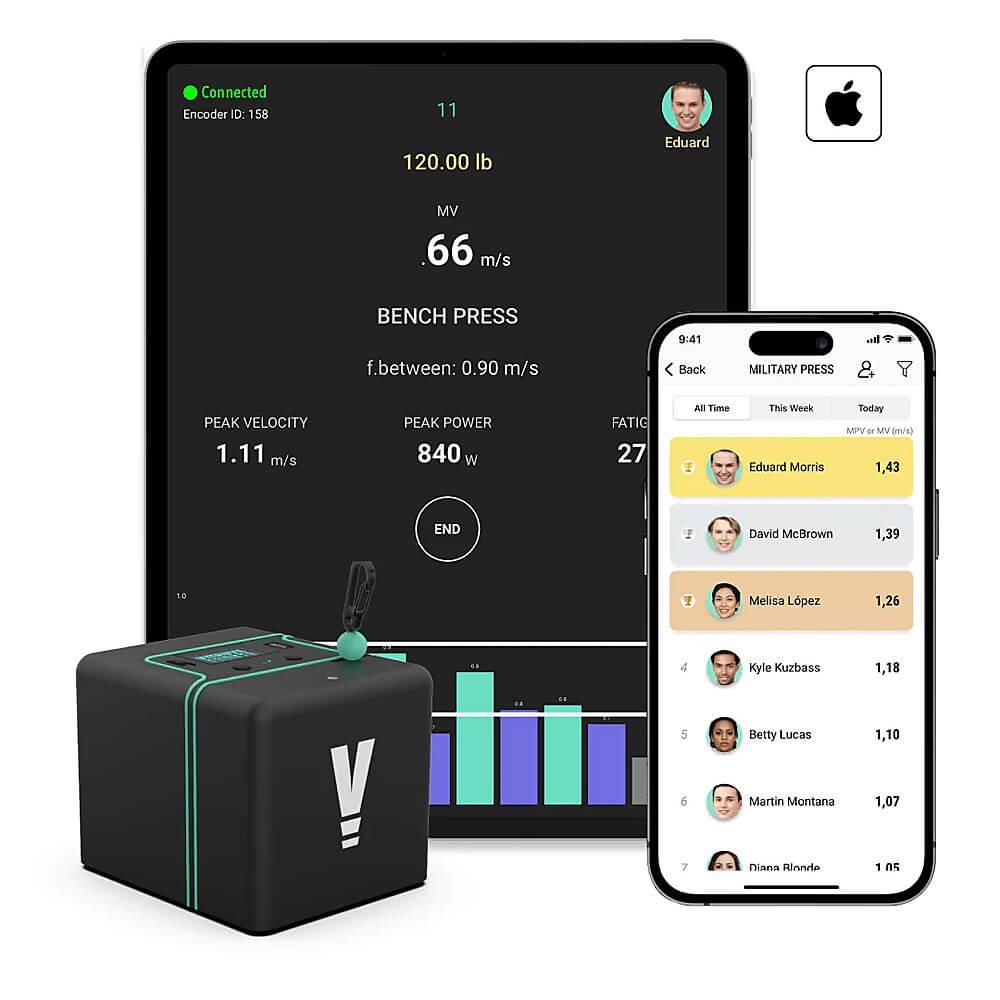
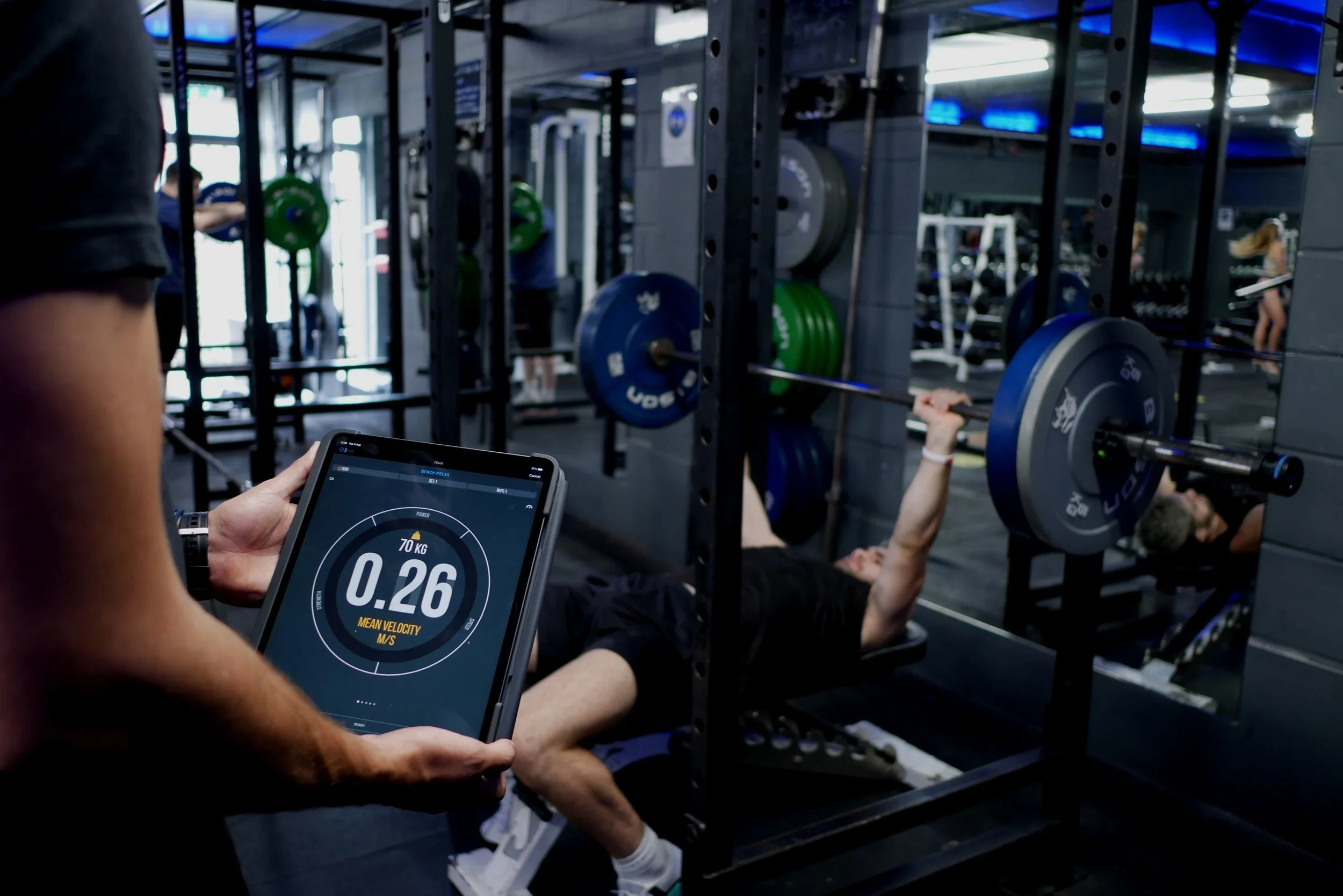
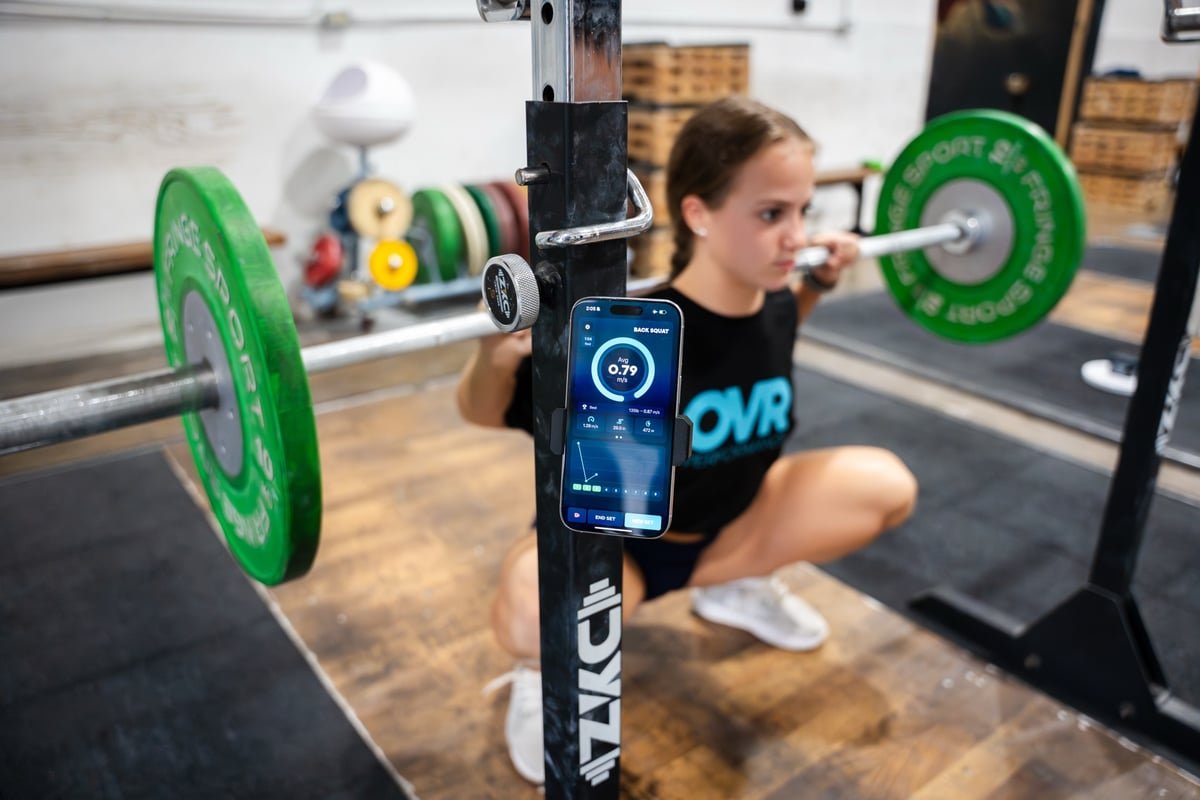
A velocity tracker can make fatigue visible. Sensors and apps estimate how quickly the bar moves and display the percentage of speed lost during the set. They are useful for athletes who want repeatable thresholds, especially across bench press and squats. But the study’s laboratory thresholds should not be copied blindly across exercises: a squat, bench, and cable curl have different movement characteristics, and rep speed changes with technique and intent.
You do not need expensive electronics to use the principle. Film a consistent set from the same angle and watch for obvious slowing. Record the weight, repetitions, and how many good reps you believe were still possible. That estimate is called reps in reserve or RIR. Two RIR on a heavy bench usually means you could complete about two more controlled repetitions without sacrificing form. It is not the same as measuring 15% or 25% velocity loss, but it is a practical coaching tool.
For a home gym, prioritize a sturdy rack with correctly positioned safety arms, a stable bench, a barbell and incremental plates before buying measurement technology. Adjustable dumbbells and a cable machine can handle higher-repetition chest and triceps work with less setup. If you do use a bar-speed device, compare the same lift, load, range of motion and intent over time. A number on a screen is only useful if it helps you make a better training decision.
Equipment Worth Exploring
Explore equipment, accessories and gear from our carefully selected range.
VOLTRA
Compact digital cable trainer with smooth, adjustable resistance.

Go-Tone Pro
Portable digital cable trainer with up to 66 lb (30 kg) of adjustable resistance.



Leather Lifting Straps
Padded leather straps support grip during heavy rows, deadlifts and pulling exercises.

GymPin Ergo Handles
Pair of ergonomic cable handles shaped for comfortable triceps and pulling exercises.


6. A six-week strength-and-size bench plan
Use two pressing sessions each week, separated by at least 48 hours. The first emphasizes heavy practice; the second emphasizes controlled hypertrophy work. Start with loads you can move consistently, and do not increase weight just because the calendar says so. The sample below assumes you already know basic bench technique and have appropriate safeties or a reliable spotter.
Day A — strength emphasis: bench press for four sets of four to six repetitions at roughly two RIR; then perform three sets of a horizontal row and two sets of a triceps movement. Rest around three minutes between heavy bench sets. Keep the concentric phase intentional and fast without bouncing or lifting your hips. If the last rep becomes a technical grind, reduce the load or end the set rather than forcing the target number.
Day B — muscle emphasis: bench or dumbbell press for three sets of eight to twelve repetitions at one to two RIR; add two to three sets of cable flyes or a machine chest press, then finish with two sets of triceps work. Take a stable isolation exercise closer to failure if recovery is good, but do not turn every compound set into an all-out test. A few hard sets with consistent range of motion are more useful than extra sloppy repetitions.
Weeks 1–2: establish repeatable loads and record performance. Weeks 3–4: add a repetition within the range before increasing weight. Week 5: add a small load increment only if all sets meet the target with clean technique. Week 6: keep the program or reduce volume if accumulated fatigue is clearly hurting performance. Judge progress by bar control, repeated strength, and recoverable volume rather than soreness alone.
Bodybuilding Shirts & Workout Gear
Bodybuilding shirts, tanks and gym gear for lifters chasing muscle, size, symmetry and the pump.

First Progressive Overload President Theodore Roosevelt Hoodie
Stay casual and show some bodybuilding attitude with “First Progressive Overload President”.

– Muscle Inflation Graph Meme Jumper | Gym Economics Pu T-Shirt
Keep things casual with a little “Muscle Inflation Graph Meme” attitude.

T
Heavy lifts, good laughs, and a little “T-Shirt Mike Mentzer Heavy Duty Old School” energy.

– Installing Muscles Downloading Gains Meme Tank Top
Your gym-day look, with a playful “Installing Muscles Downloading Gains Meme” twist.

Funny Hustle For That Muscle Gym | Greek God Meme Muscl Tank Top
Train hard, laugh a little, and rep “Hustle For That”.

5 AM Squad Morning Bro Meme & T-Shirt
Heavy lifts, good laughs, and a little “5 AM Squad” energy.

Everything Hurts and I'm Tired Tee
Make gym days more fun with “Everything Hurts And I'm Tired” style.

OnlyGains Meme – Bros – & Lifting, Humor T-Shirt
Rep “OnlyGains Gym Meme” humor in and out of the gym.

Bodybuilder Repsody – Queen Rock Music Meme T-Shirt
Make gym days more fun with “Bodybuilder Repsody” style.

Unlock Your Gains: DNA Meme – Ultimate Top T-Shirt
Heavy lifts, good laughs, and a little “Unlock Your Gains:” energy.
7. Five mistakes that waste your best repetitions
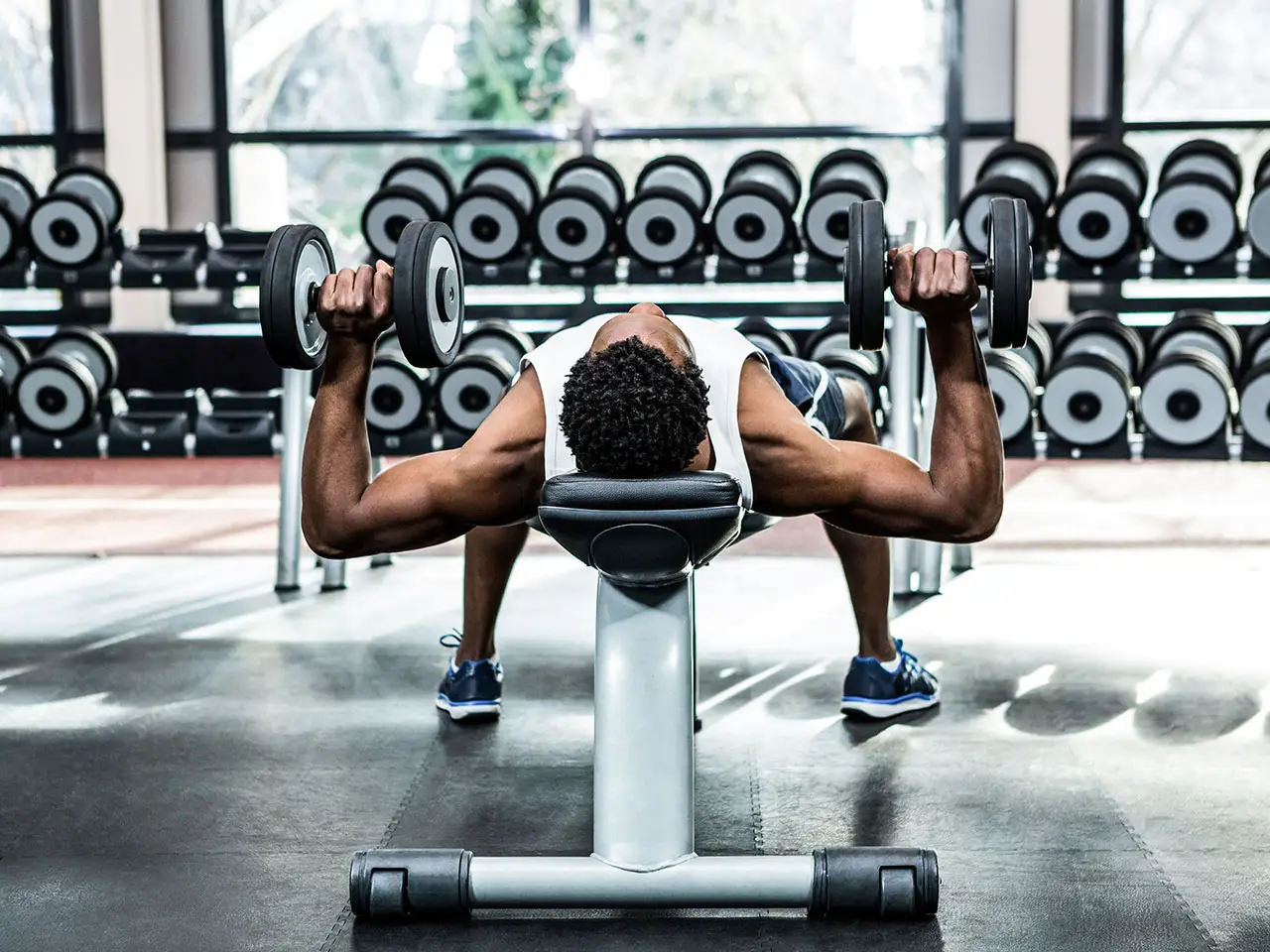
The first mistake is confusing a heavier bar with a better workout. If your setup falls apart, the additional load may reduce useful training. The second is assuming every set must end at failure. Near-failure work has a place, especially on stable accessories, but maximal grinding on a heavy free-weight bench can carry a steep fatigue cost. The third is using speed loss as a contest: intentionally moving the bar slowly does not create the same measurement as trying to lift quickly and observing the natural slowdown.
The fourth mistake is comparing your own fatigue threshold across completely different movements. A squat involves far more total-body bracing than a cable fly; the same percentage of speed loss need not mean the same stimulus. The fifth is changing load, range of motion, rest time, and effort all at once. When everything changes, you cannot tell why your strength improved or stalled. Keep enough variables stable to interpret your log.
Pay attention to recovery signals: performance falling across consecutive sessions, unusually persistent joint discomfort, or a need to grind loads that were previously easy. Reduce volume or intensity temporarily rather than forcing a personal record through bad form. If shoulder or chest pain is sharp or unfamiliar, stop the provoking movement and seek appropriate evaluation.
The bottom line: heavier weights are especially valuable for maximal strength, while accumulating enough hard repetitions matters for hypertrophy. The best plan does not choose one side of that argument. It combines specific heavy practice with recoverable muscular work, uses fatigue deliberately, and leaves you able to train productively again.