
Advertising disclosure: This page includes affiliate links that may earn us a commission at no additional cost to you.
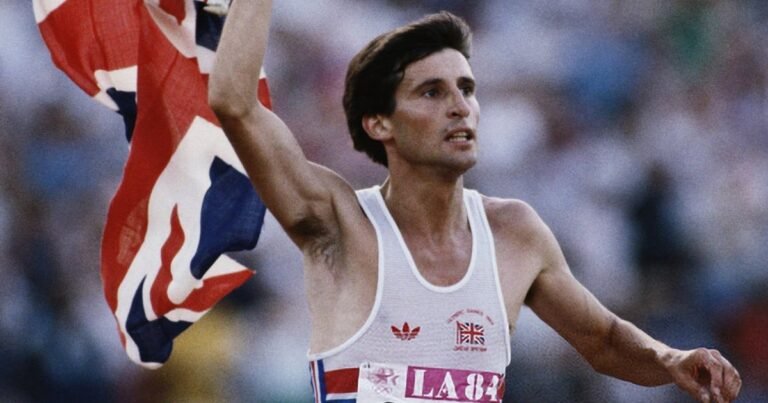
Daley Thompson won Olympic decathlon gold in Moscow in 1980 and defended it in Los Angeles in 1984. The second title was not simply another demonstration of the same single skill. It meant returning to a competition built from ten events, with different implements, movement demands and ways of measuring performance.
That is what makes his career interesting to a fitness audience. Speed, jumping ability, throwing skill and the capacity to finish two days of competition all belong in the picture. His record is worth exploring as an example of sporting breadth, without turning the champion’s highlights into a ready-made workout for everyone else.
1. Two Olympic titles sit inside a wider championship career
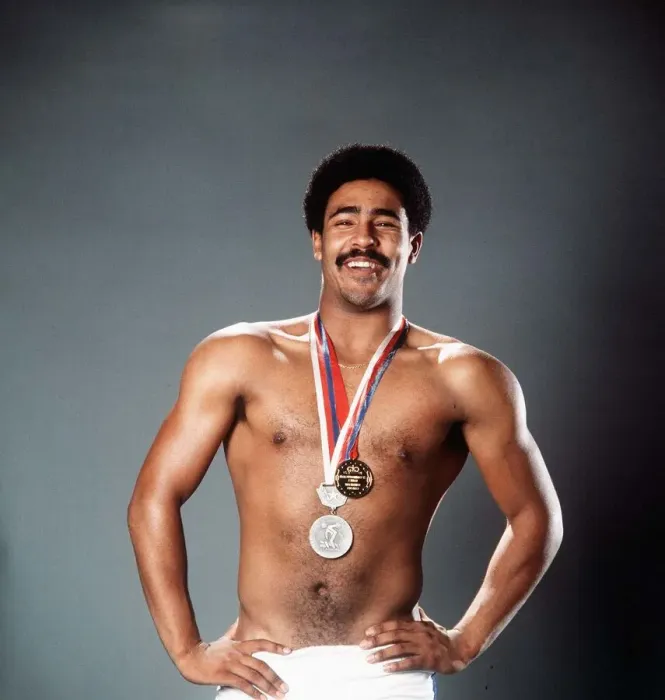
Thompson’s major decathlon successes extended beyond those two Olympic Games. He won the inaugural World Championships title in 1983, European titles in 1982 and 1986, and Commonwealth titles in 1978, 1982 and 1986. Each competition belongs to its own championship history; the medals should not be bundled together as though they were repeated wins at one annual event.
His Olympic record also includes 18th place in Montreal in 1976 and fourth in Seoul in 1988. Those results add shape to the career. A retrospective that shows only the gold medals can make sporting development and longevity seem much smoother than the actual sequence of appearances.
The achievement is not that he was unbeatable in every individual discipline. It is that he repeatedly produced a winning combined performance against the field at important championships. That distinction matters whenever an athlete is described as an all-rounder. Breadth is meaningful when it is attached to a defined sporting test.
For the viewer, a useful starting point is to keep the competition and year beside the result. An Olympic title, a national mark and a particularly impressive event performance can all deserve attention while answering different questions about the athlete.
2. Ten events make one contest across two days
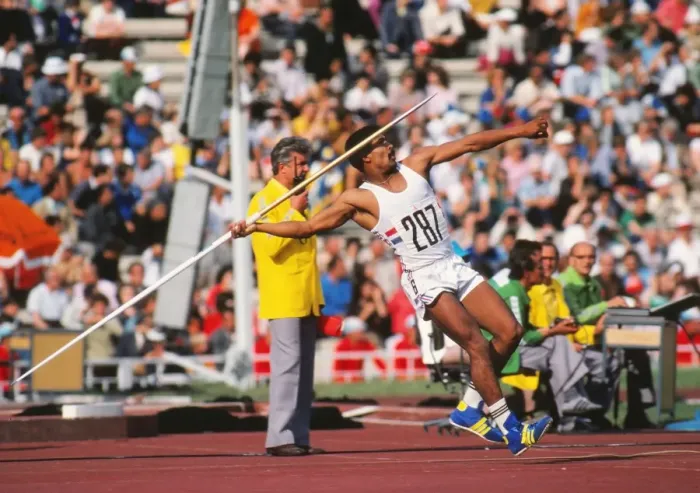
The decathlon’s first day includes the 100 metres, long jump, shot put, high jump and 400 metres. The second brings the 110 metres hurdles, discus, pole vault, javelin and 1500 metres. That order puts short races, jumps, throws and a longer closing race inside one combined competition.
Results are converted into points, and the points are added to determine the overall standings. The winner is therefore decided by the combined score. Winning the greatest number of individual events is not the same scoring proposition, and the order in which athletes finish one race does not by itself settle the decathlon.
This format makes the transitions part of the sporting interest. The demands of a pole-vault approach are different from putting the shot. Both differ again from negotiating hurdles or completing the closing 1500 metres. Familiarity with running and strength training does not automatically supply the technical skill for every task.
There is also a difference between having many abilities and displaying them within a fixed competition. A casual collection of personal bests, gathered whenever conditions suit each attempt, is not the same result as performances produced through the scheduled sequence. The event gives breadth an organized test rather than leaving it as a compliment.
3. The 1984 score needs its scoring-table context
Thompson’s Los Angeles total is commonly recorded as 8,847 points under the revised scoring tables. The original-table total, after a one-point correction associated with the hurdles photo finish, was 8,798. The correction brought him level with Jürgen Hingsen’s existing mark; the later tables made Thompson the outright world-record holder.
Those figures describe the historical scoring context, not two different decathlons. A recalculation does not mean Thompson returned to perform a longer jump or run a faster race after the Games. It means the marks were translated through a different points system.
This is why a bare number can be a poor guide to an old result. Before comparing totals, establish whether both use the same tables and what the record label meant at the time. The appropriate response to an unfamiliar figure is to identify its basis, rather than silently replacing it with whichever version looks largest.
Similar care helps with sprint records. Our look at Michael Johnson’s 1996 double separates the events and record contexts behind two famous performances. The numbers become more informative when their meaning travels with them.
Historical precision need not make sport less enjoyable. In Thompson’s case, it explains why different totals appear in discussions of the same Olympic victory. Keeping the scoring system attached protects the achievement from a confusing comparison.
4. Running power does not remove the need for technical skills
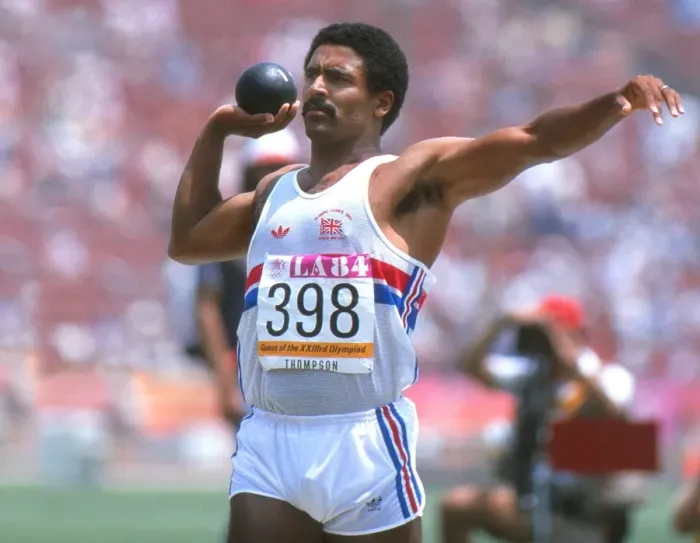
Four parts of the decathlon take place on the running track: the 100 metres, 400 metres, hurdles and 1500 metres. Even within that group, the tasks differ. A short acceleration, a complete lap, a race over barriers and the longer closing event should not be treated as interchangeable tests.
The throws and jumps add another layer. Strength can contribute to an athletic task, but a throw still requires the implement to be delivered effectively. A jump depends on the approach and take-off as well as what a gym exercise might reveal about the athlete’s physical capacity.
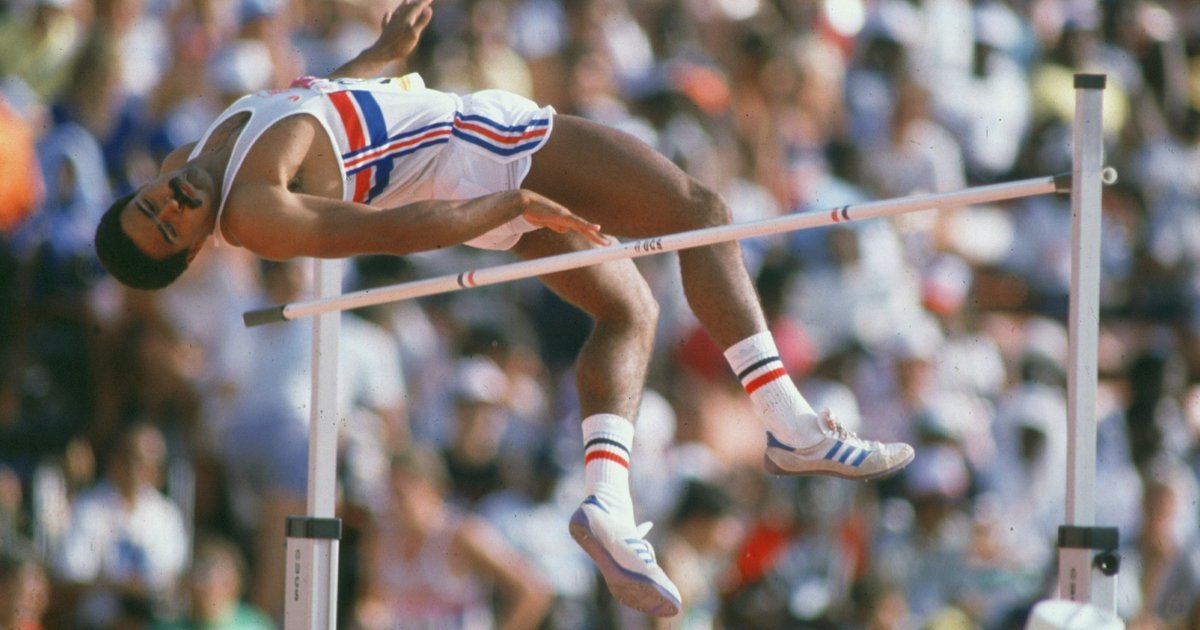
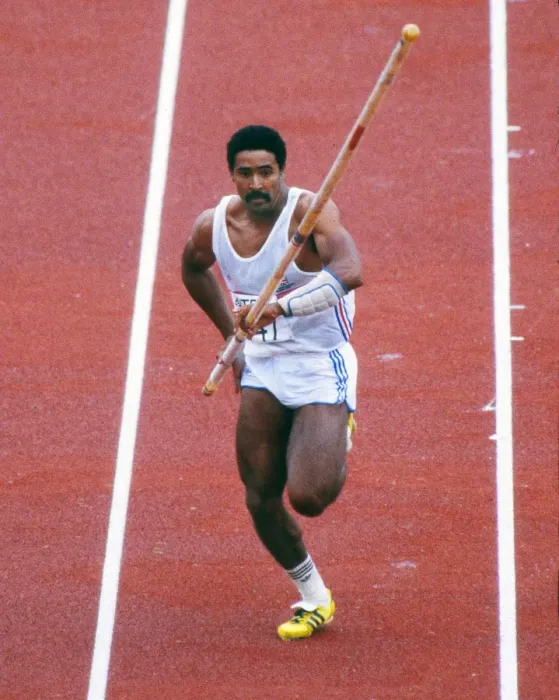
Thompson’s 1984 competition offers a concrete example of how the overall contest can turn. His lead narrowed during the second day, and the pole vault became an important part of establishing his advantage. Reading the event sequence tells a richer story than looking only at the final score or choosing one powerful-looking photograph.
For fitness readers, the distinction is useful without making the decathlon a template for everyday training. Running, strength work and skill practice can each have a purpose. The challenge is to understand the actual task you want to improve, then assess it directly rather than relying on a different exercise as proof.

Cardio Shirts & Workout Gear
Cardio and conditioning gym gear for runners, endurance athletes and anyone who earns the sweat.

Running Dost Thou Even Trot Medieval Treadmill Pullover Hoodie
Show off your medieval humor in a laid-back “Running” hoodie.

Cardio Heartbeat for Runners, Cyclists, Rowers and Fitn Sticker
Give your everyday gear a playful “Cardio Heartbeat” twist.

Cardio Is Calling Decline Vest Meme Tank Top
Show some personality between sets with “Cardio Is Calling”.

Cardio Is Hardio – Workout Meme Pullover Jumper T-Shirt
For laid-back days and cardio humor: “Cardio Is Hardio”.

Anti Running Club Tee
Heavy lifts, good laughs, and a little “Anti Running Running Club” energy.

Anti Cardio Cardio Club Shirt Meme & Top T-Shirt
Bring “Anti Cardio Cardio Club” humor to your next gym day.

Shirt: Does Running Out Of F*Cks Count As Cardio? & T-Shirt
Heavy lifts, good laughs, and a little “: Does Running Out Of F*cks Count As” energy.

Cardio Kills Gains Shirt 'S Meme & Top T-Shirt
Rep “Cardio Kills Gains” humor in and out of the gym.

Meme Shirt – Two Things I Like Lifting Weights Not T-Shirt
Make gym days more fun with “Two Things I Like Lifting Weights Not” style.

Death By Cardio Shirt Meme & Top T-Shirt
Bring “Death By Cardio” humor to your next gym day.
5. Borrow the curiosity, not an imaginary ten-event workout
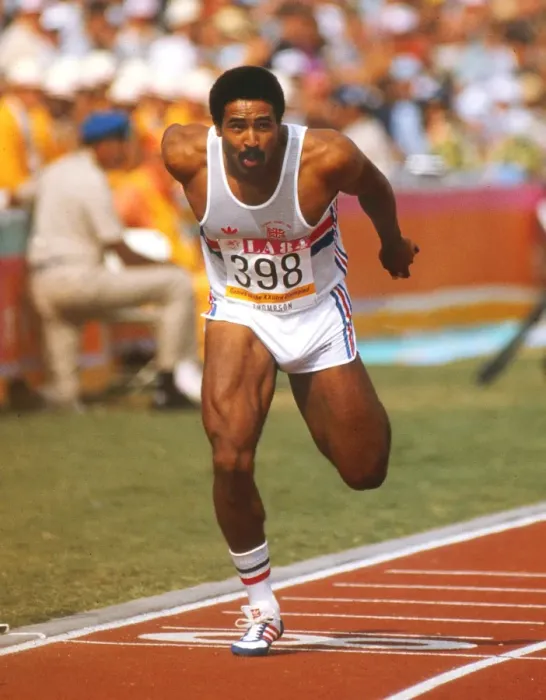
Archive photographs make it easy to appreciate Thompson’s range. They do not reveal the weekly schedule, session intensity, technical feedback, recovery or years of preparation behind a performance. A collection of competition images is not a training log.
There is no verified Daley Thompson workout prescribed here. Nor does an Olympic decathlon establish that every recreational lifter needs to add hurdles, javelin and pole vault to an existing program. Those are specialized athletic disciplines that need appropriate facilities and instruction.
A more useful response is to define the quality you want to develop. If you want to improve a running performance, choose an appropriate running measure. If your goal is a particular lift, track that lift consistently. If you are learning a skill, assess the skill rather than assuming greater effort elsewhere has already solved it.
Our article on squats, step-ups and transfer to sprinting examines that question in a specific training comparison. It is a separate discussion from Thompson’s preparation, but it illustrates why the outcome you measure should match the claim you make.
Thompson’s two Olympic titles and success across other championships provide plenty to admire. The enduring interest is the combination: different physical demands, technical skills and a points system that rewards the complete contest. Keep those details visible, and the athlete’s breadth becomes easier to appreciate without inventing a routine or a universal definition of fitness.







One Comment