Advertising disclosure: This page includes affiliate product links that may earn us a commission, as well as products from our own store.
Can short, light hangboard sessions improve climbing grip strength, or do you need heavy hangs? A large observational study offers an intriguing comparison. Here is what its results mean for training, where the evidence is limited and how to use the two approaches without unnecessarily increasing finger load.
What makes finger strength different from ordinary grip strength?
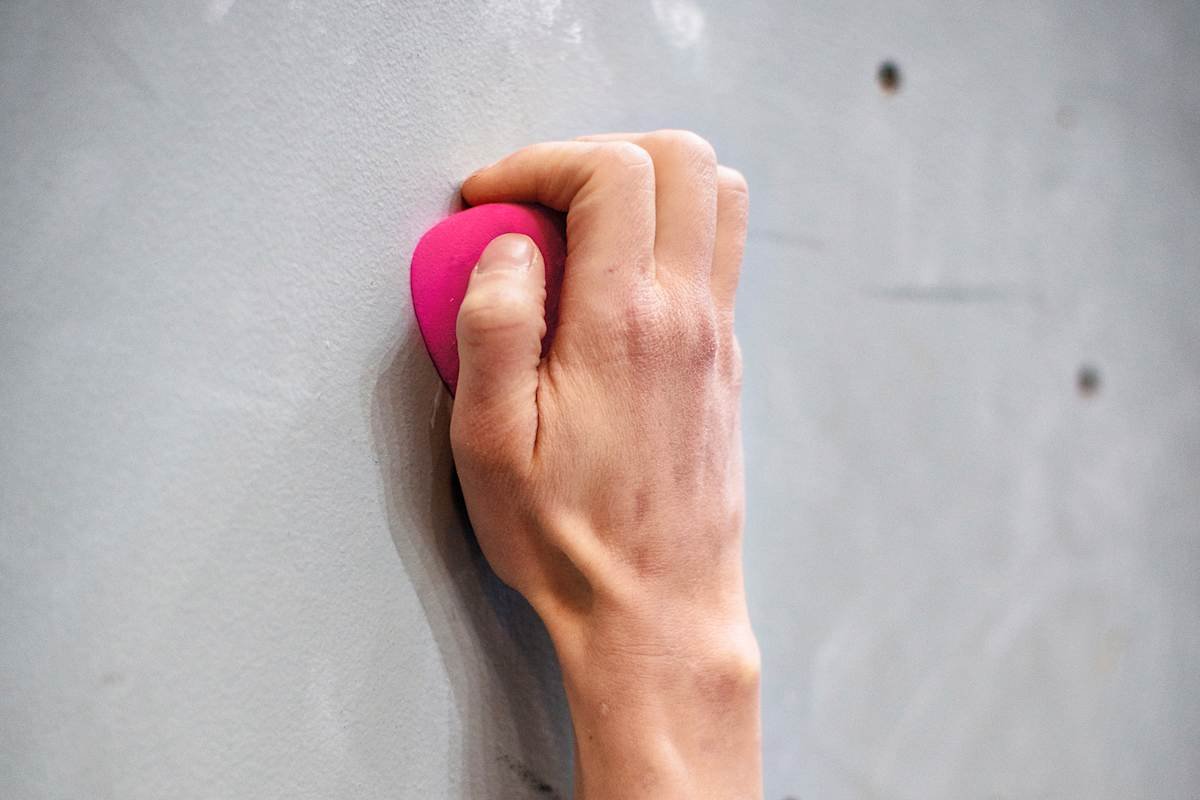
A heavy deadlift, a long bar hang and a difficult boulder problem can all challenge your grip. But they challenge it in different ways. On a bar, you can wrap your fingers around a large cylinder and use friction over much of your hand. On a climbing edge, the contact surface may be little more than the pads of your fingertips. Your ability to produce force through that particular grip can become the limiting factor even when your back and arms feel strong.
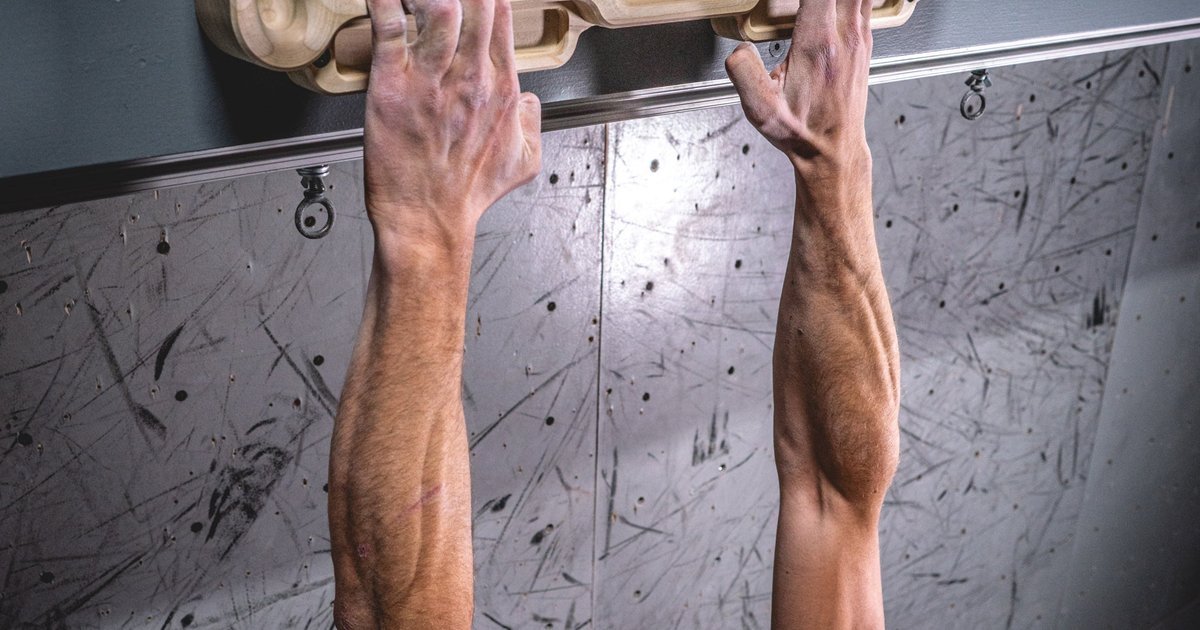
Hangboarding is a way to isolate that demand. Instead of trying to complete a climb, you load a fixed edge for a defined period of time. You can record the edge depth, grip position, duration and amount of assistance or added weight. That makes the training unusually measurable. It also makes it easy to turn a sensible exercise into a test of how much your fingers can tolerate.
The appeal of lighter hangs is obvious: they can be easier to fit around a climbing session than another maximal effort. The appeal of heavy hangs is equally straightforward: when the objective is to increase peak force, high relative loading provides a specific stimulus. The important question is whether a few minutes of lighter loading can contribute meaningfully alongside heavier training, rather than whether light and heavy work feel equally difficult.
For a useful comparison, keep the grip and edge consistent. A half-crimp and an open-hand grip distribute the effort differently, so a personal best on one cannot automatically be transferred to another. Similarly, changing from a comfortable 20 mm edge to a tiny edge changes both the loading conditions and the demands on technique. Improving one standardized test is not the same thing as improving every climbing grip.
What the 526-climber analysis actually found
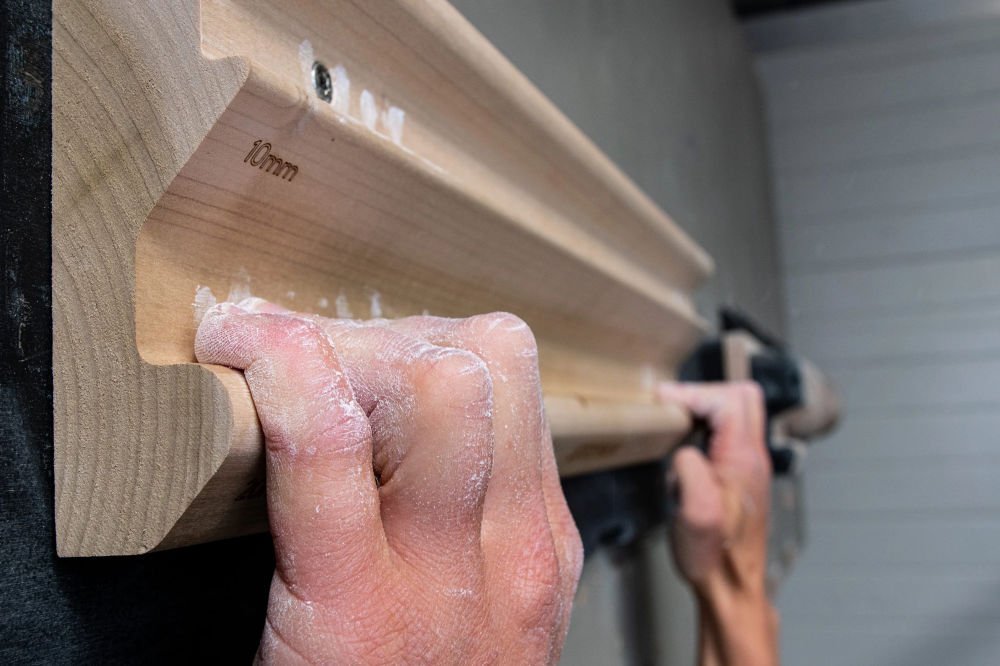
A retrospective analysis published in November 2024 examined training logs from more than 500 rock climbers. The results reported for 526 participants compared changes in standardized finger-strength testing among people who continued climbing without a hangboard program and those who recorded low-intensity hangs, maximal hangs or both. The training periods ranged from four to sixteen weeks.
The outcome was relative finger strength measured on a standardized edge. In the logged low-intensity group, the mean improvement was approximately 2.5%. The maximal-hang group averaged about 3.2%, while the group combining both approaches averaged around 5.8%. The combined group improved significantly more than either single-program group. The light-only group did not improve significantly more than the climbing-only comparison group.
Those numbers should not be interpreted as guaranteed gains from a prescription. Participants chose their own training; they were not randomly allocated to the programs. Climbing frequency, previous experience, recovery, other exercises and motivation could all influence the results. A person willing to complete both programs may also differ systematically from someone doing neither. The data support further investigation of combining loading methods, not a claim that the combination must outperform either method for everyone.
Smaller randomized studies offer complementary context. An eight-week trial comparing increased resistance with progressively smaller edges found an advantage for the resistance approach in a grip-strength measure relative to the control group. A separate ten-week trial found improvements in finger force with structured hangboard work, but not a clear between-group advantage in every dead-hang-duration outcome. The evidence points toward specificity and progressive loading, while reminding us that strength, endurance and climbing performance are distinct outcomes.
None of these results establishes that lighter hangs prevent finger injuries, that heavy hangs are universally appropriate, or that the two methods are equivalent. The most useful interpretation is that low and high loading are different tools and that their total dose matters.
Light hangs: a way to manage training load
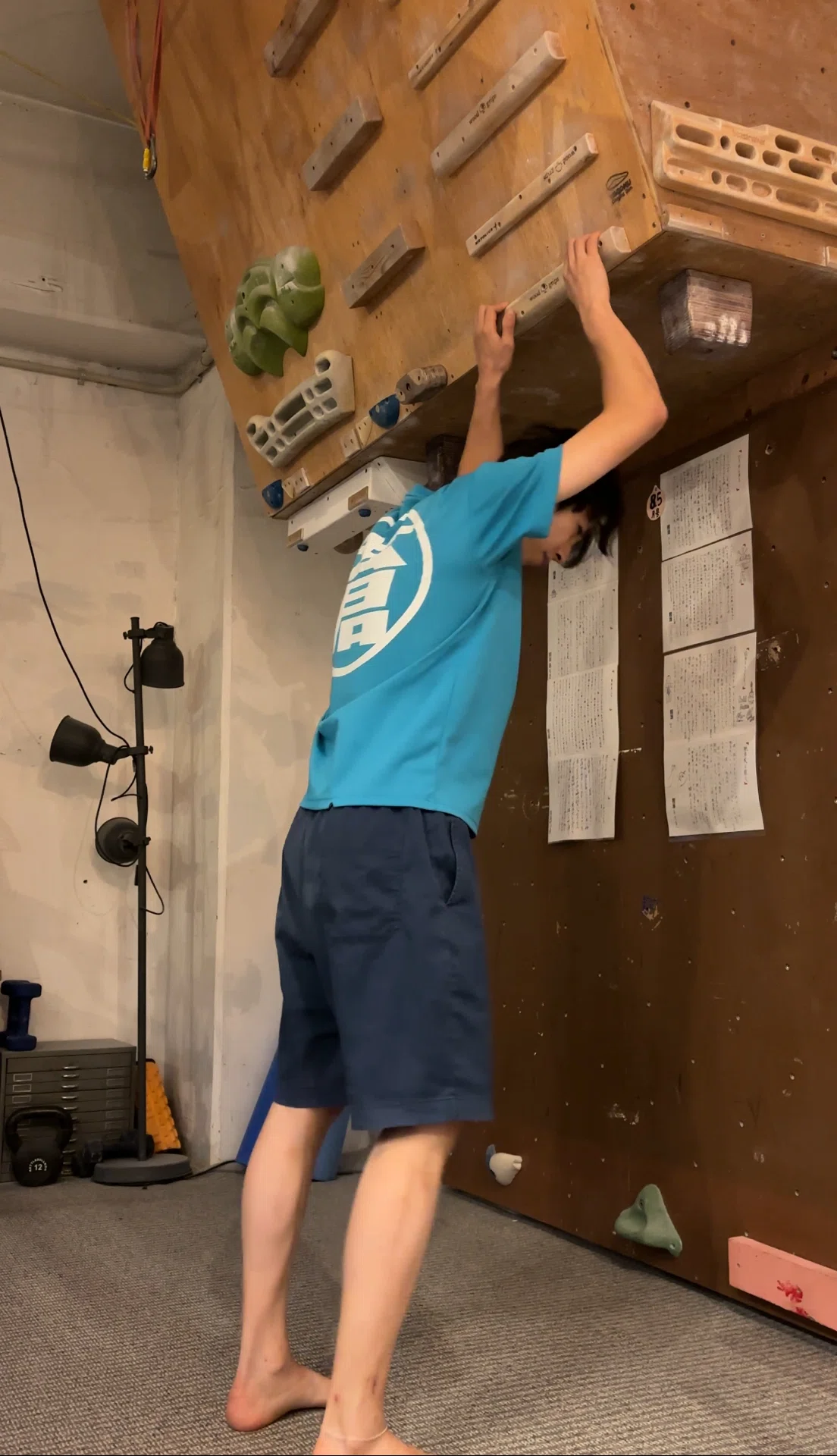
The low-intensity routine in the observational analysis used approximately ten minutes of work, with feet remaining on the floor. The climbers applied tension to an edge around 18–22 mm for short bouts of about ten seconds separated by twenty seconds of recovery, rotating through finger positions. The point was to produce deliberate but relatively low force, not to lift the feet and turn each interval into a full-bodyweight hang.
If you have never used a hangboard, even that edge might be unnecessarily small. Choose a comfortable positive hold that you can load while standing securely. Lean into the hold gradually, keep the shoulders comfortable, and release the tension under control. A gentle warm-up on easy holds or easy climbing should precede the work. Avoid bouncing onto the board or letting your fingers suddenly take your entire body weight.
Feet-supported work has an obvious limitation: unless you measure the force, you do not know the precise training load. You can lean harder on one day or stand a little closer on another and create a different stimulus without realizing it. Record the position, the hold, the duration and a simple effort rating. An appropriate force-measurement setup can make the load more reproducible, but it is not a requirement for a conservative introduction.
Do not assume that light means unlimited. Repeated finger loading adds to everything else you do on the wall, including difficult crimping. If your fingers are sore after a hard climbing session, adding a second loading session because it is labeled low intensity may not be the best choice. Persistent localized discomfort, swelling or loss of function warrants stopping the provoking exercise and obtaining appropriate clinical advice.
Max hangs: build force without chasing smaller edges
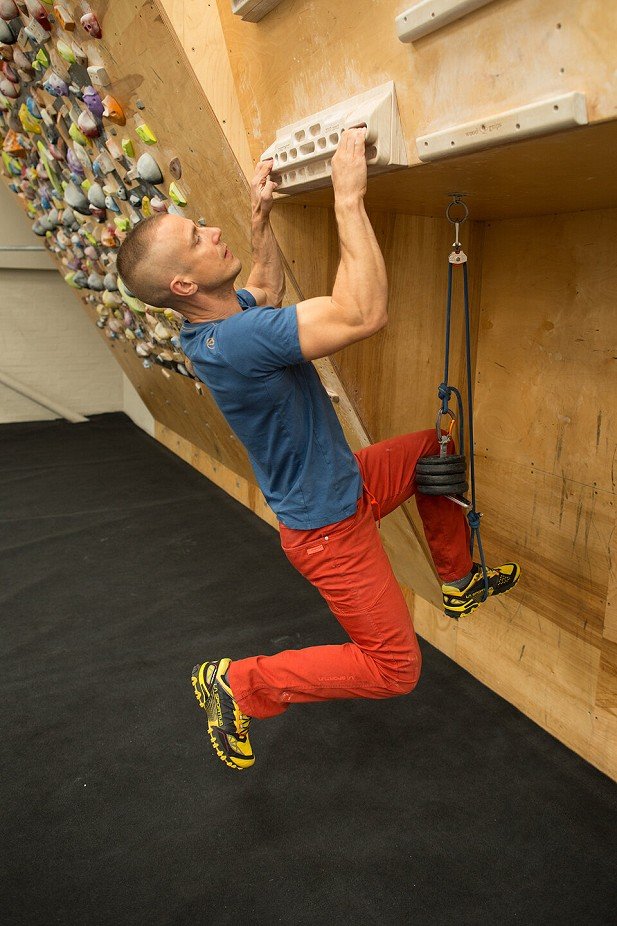
For the maximal-hang routine, the logged protocol used six ten-second efforts at roughly 85–95% of tested maximum supported load, separated by approximately two minutes of recovery. The strength assessment used a 20 mm edge and a seven-second hold. A maximum supported load includes the climber’s body mass and any additional mass, minus assistance when applicable.
That distinction matters. Imagine an 80 kg climber who can hold a standardized edge with 20 kg added. The total supported load is 100 kg, not 20 kg. A target of 85% would correspond to about 85 kg of total support, or roughly 5 kg added, assuming a static vertical hang and negligible assistance. If someone can only support 60 kg on that edge, an 85% target is about 51 kg and their feet or a counterweight must provide the remaining assistance.
This calculation is useful for experienced climbers with an established and repeatable test. It is not an invitation for a new climber to attempt a maximum on the first session. Start with submaximal efforts on a comfortable edge, use an appropriate mounting system, and allow enough rest for each repetition to look the same. Progress by a small amount of resistance or by reducing assistance only after the previous load has been well tolerated.
When the goal is finger force, adding a little resistance to a familiar edge can be easier to track than constantly moving to a smaller edge. A smaller edge is a different skill and may place different demands on grip position. Keep the edge fixed for a training block. Stop the set before grip position collapses; there is no reward for extending a hold after the intended stimulus is gone.
Supplementary gym work can still matter: neutral-grip pull-ups, controlled rows and ordinary bar or rope grip exercises can develop pulling capacity. Loading belts, rings and small change plates can help make that work progressive. These are not substitutes for specific edge training, and they should not be presented as equivalent tests of finger strength.

Equipment Worth Exploring
Explore equipment, accessories and gear from our carefully selected range.


Power Tower
Freestanding pull-up and dip station with adjustable handles for bodyweight training.


Angles 90 Grips
Flexible grip attachments that allow natural wrist movement during pulling exercises.
How to combine hangboarding with climbing and gym training
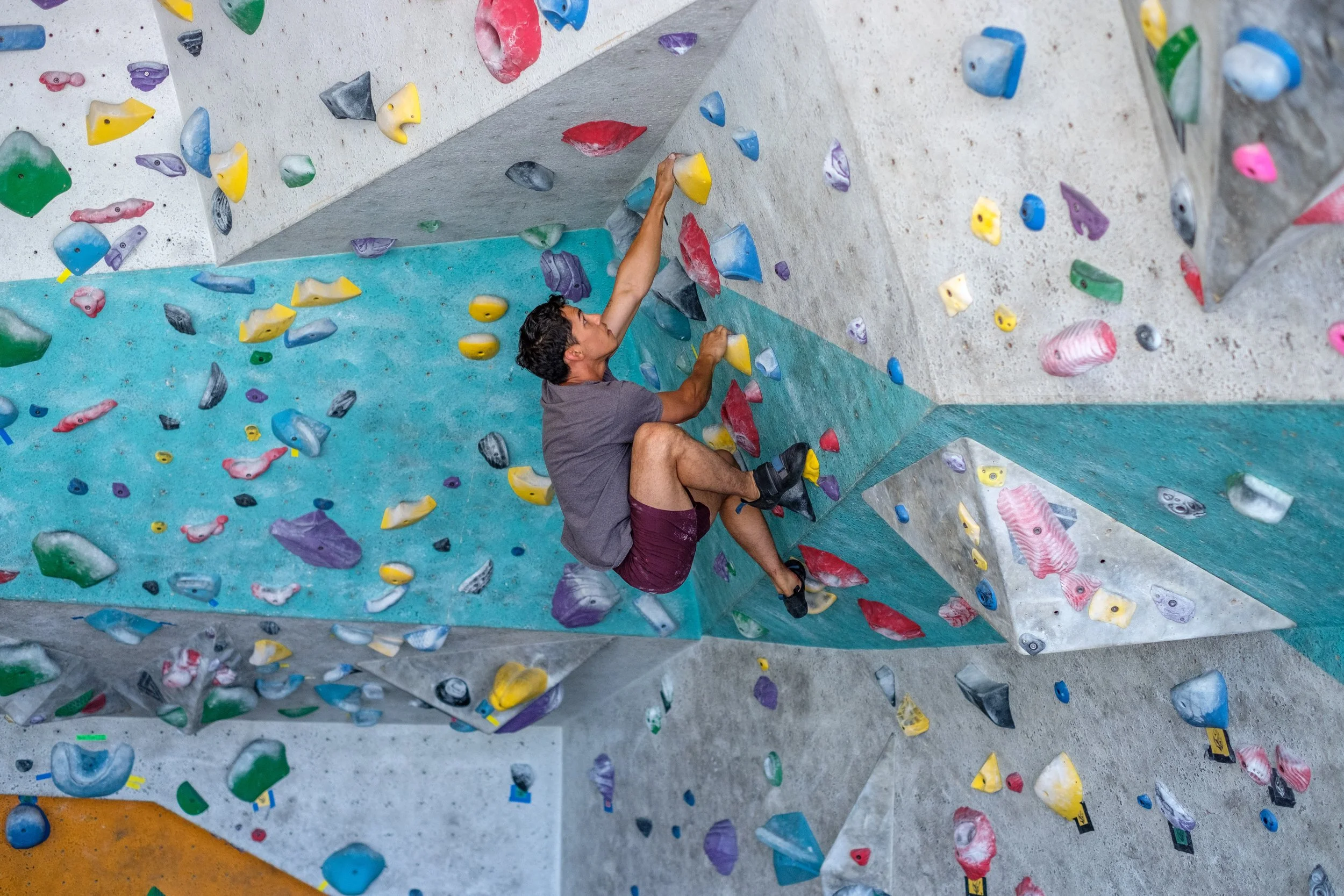
Start by deciding what problem you are trying to solve. A climber who can barely complete easy routes because their technique is developing may benefit most from more low-fatigue climbing practice. An experienced climber whose fingers repeatedly fail on familiar short, steep sequences might have a stronger reason to prioritize a structured finger-strength block. A lifter interested in grip training may not need a climbing edge at all.
For an experienced, healthy climber with two climbing sessions each week, an illustrative four-week progression could look like this:
- Week 1: establish a comfortable supported hang on a consistent hold. Perform a short light session and keep the climbing workload familiar. Avoid maximal testing.
- Week 2: repeat that session. If it was well tolerated, introduce one modest submaximal strength session after warming up, with generous rest between efforts.
- Week 3: maintain the same number of sessions. Change only one variable, such as a small reduction in assistance, if recovery and technique remain good.
- Week 4: consolidate the workload or reduce it if your climbing performance has declined. Evaluate repeatability rather than forcing a maximum attempt.
Schedule the demanding finger work away from other high-load pulling whenever possible. An experienced athlete might perform it when fresh before a short climbing session, then use a separate day for easy technique work. If a second hangboard exposure compromises climbing quality, remove it. The combined group in the retrospective analysis is an encouraging observation, not a reason to double your weekly workload.
Keep a simple log: edge, grip, supported load or assistance, hold duration, completed sets, rest intervals, climbing volume and how your fingers feel the following day. Reassess with the same test conditions after a suitable block. A stronger test is valuable, but only if it supports your climbing rather than replacing it. The best program is one you can repeat consistently while continuing to enjoy and improve at the sport.

Calisthenics Shirts & Street Workout Gear
Calisthenics and bodyweight-training gear for pull-ups, dips, handstands and street-workout athletes.

Calisthenics Hanging Out Tank
Show some personality between sets with “Calisthenics Is My Idea of Hanging Out”.

Pull Up Or Shut Up Decal for Water Bottles Laptops Cali Sticker
Stick a little “Pull Up Or Shut Up” humor on your favorite gear.

Calisthenics Heartbeat – Pullups & Handstands & T-Shirt
Show some lifting attitude with a playful “Calisthenics Heartbeat” tee.

Calisthenics Evolution Sweatshirt
Keep things casual with a little “Calisthenics Evolution” attitude.

Always Pull Yourself Up Calisthenics Decal for Water Bo Sticker
A fun “Always Pull Yourself Up” touch for bottles, laptops, and lockers.

Pull Up Not Out Hoodie
Show off your bodybuilding humor in a laid-back “Pull Up Not Out” hoodie.

Calisthenics Heartbeat Muscle Shirt Athletic Vest Human Tank Top
Bring “Calisthenics Heartbeat” humor to your next lifting session.

Human Flag Calisthenics Hooded Workout Gymbro Pullover Hoodie
Make your off-duty look more fun with “Human Flag”.

Be Stronger Than Your Excuses Motivational Workout for Sticker
A fun “Be Stronger Than Your Excuses” touch for bottles, laptops, and lockers.

Turn Off Gravity Funny Calisthenics Gym Decal for Water Sticker
Give your everyday gear a playful “Turn Off Gravity Funny Calisthenics” twist.