A complete back workout does not require a loaded barbell, a pulldown station or a room full of machines. Dumbbells can train much of the upper and middle back with a bench, a stable stance and a repeatable plan. The challenge is not finding fifteen different ways to row. It is choosing a few movements that load the muscles you want, keeping technique consistent and progressing them over time.
There is an important distinction between building a thicker back, strengthening the hip hinge and making the lats look wider. Those goals overlap, but no single exercise perfectly covers all three. This guide organizes dumbbell movements by what they actually demand, then turns them into two sessions you can repeat for six weeks.
Some equipment links may be affiliate links, supporting Mind Muscle Perfection without increasing your purchase price.
What dumbbells can and cannot do for your back
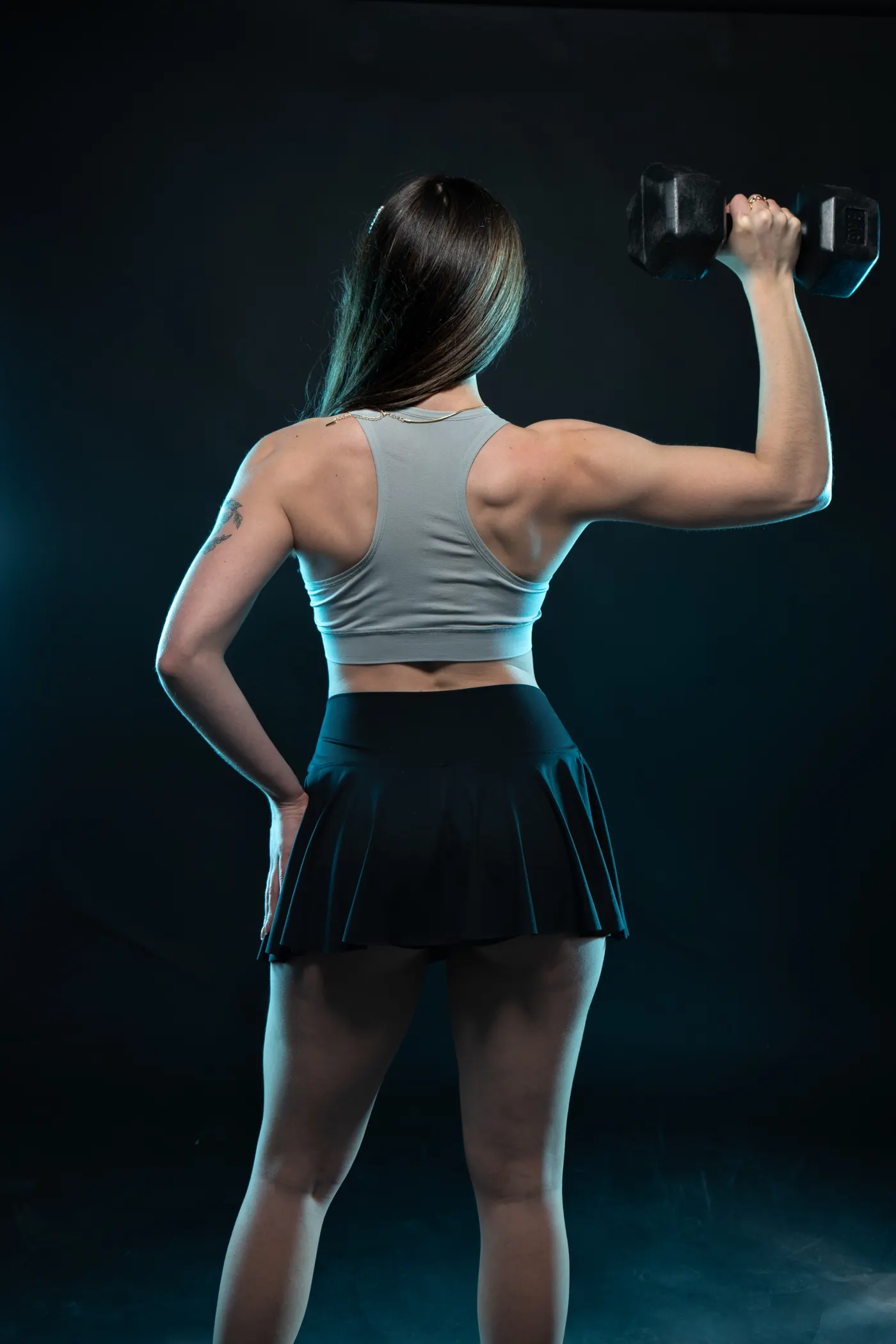
The back is not one muscle. Your latissimus dorsi contributes to pulling the upper arm toward the torso. The rhomboids and middle trapezius help manage the shoulder blades. The rear deltoids assist with pulling the arms backward, while the spinal erectors stabilize or extend the trunk depending on the exercise. Dumbbell rows can challenge several of these tissues at once, but the distribution changes with torso angle, elbow path and support.
For most home lifters, the biggest advantage is unilateral freedom. Each arm can follow a comfortable path rather than being forced into a fixed bar position. You can use a neutral grip, move the elbow closer to your hip or flare it moderately, and compare your weaker and stronger sides without needing a second machine. Adjustable dumbbells also store efficiently, making them a natural fit for a compact gym.
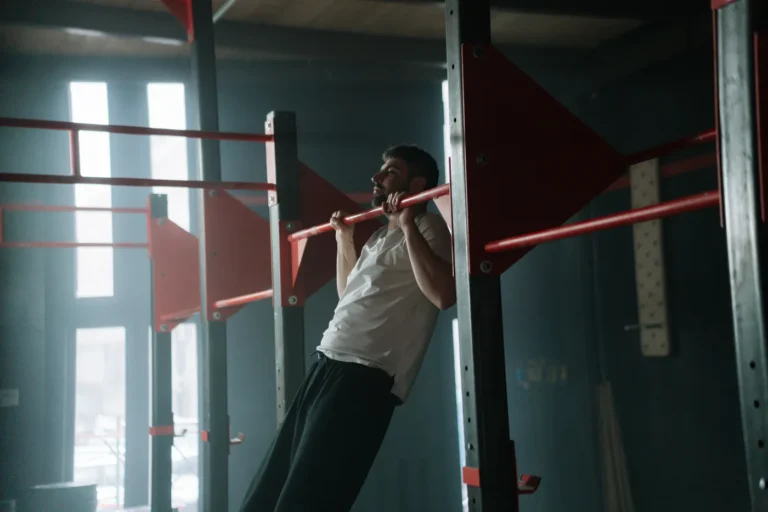
The limitation is that dumbbells do not automatically replicate vertical pulling. A pulldown or pull-up trains a different arm path, and a heavy dumbbell can become awkward before the target muscle reaches its limit. A dumbbell pullover offers some shoulder-extension work, but it is not a perfect substitute for every lat-focused vertical pull. If you have a safe pull-up bar or cable station, combine it with rows rather than pretending one exercise does everything.
Start by defining the outcome: stronger rows, more back-muscle volume, better posture under load or a complete minimalist routine. Use the dumbbell as a tool, not as an excuse to turn every variation into a separate mandatory exercise.
Elbow path changes the emphasis of your rows
Imagine drawing the dumbbell toward your front pocket. Your elbow stays relatively close to your ribs, and the upper arm travels backward toward the hip. Many lifters find this a useful cue when trying to emphasize the lats. Now pull toward the lower chest with the elbow somewhat farther from the body. The upper-back muscles and rear deltoid usually become more noticeable. These are practical biases, not switches that turn one muscle completely off.
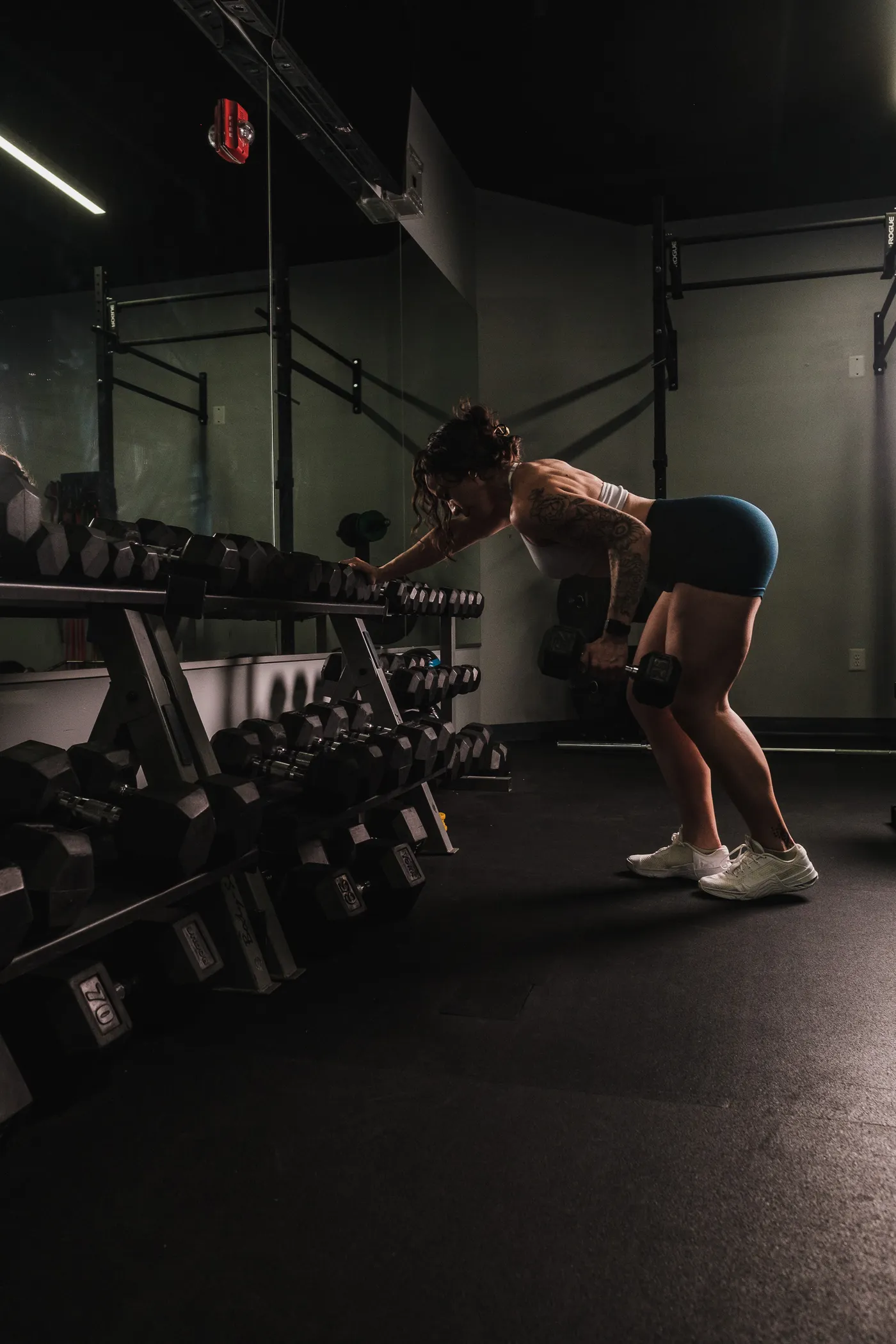
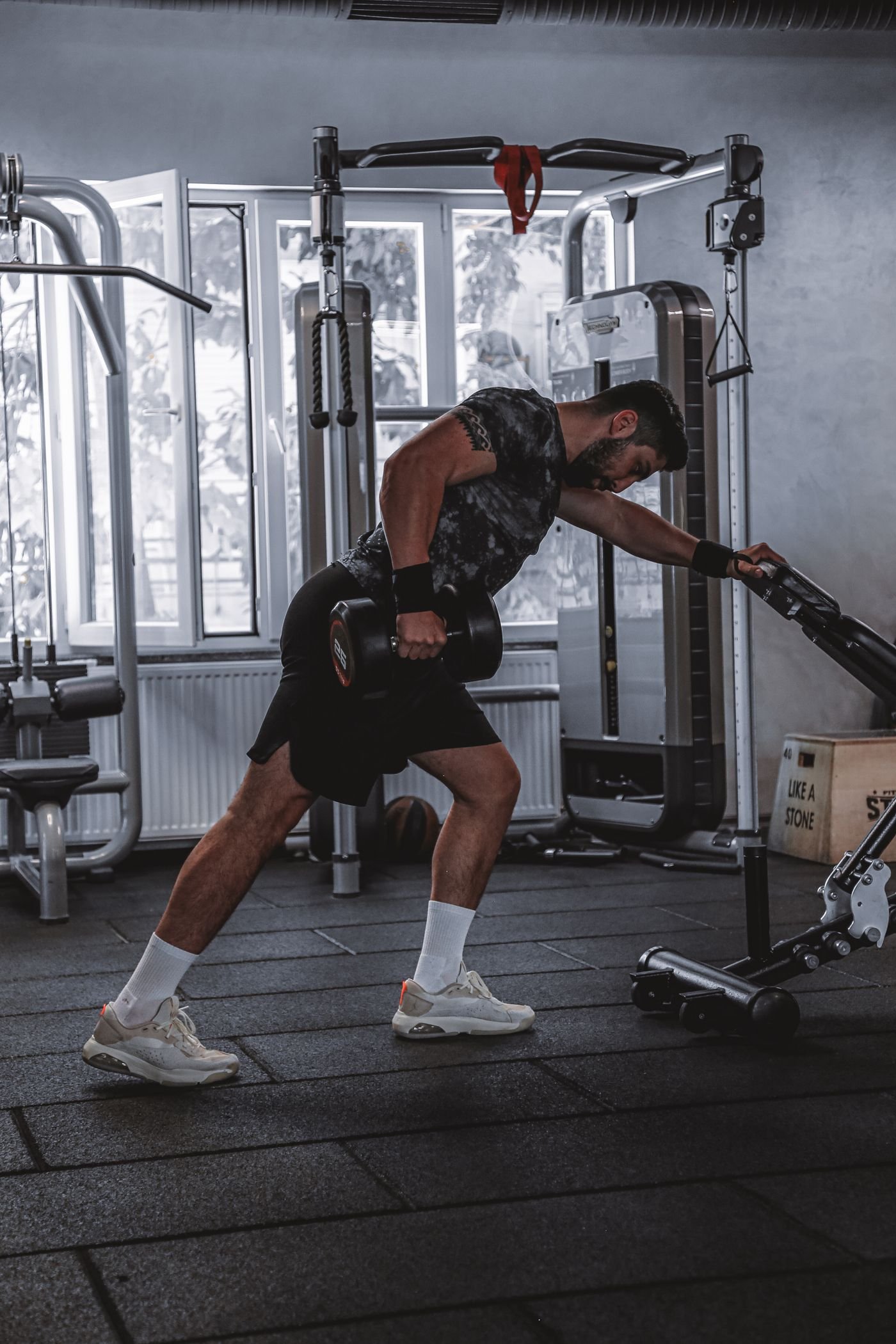
For a hip-directed row, support your free hand on a stable bench, brace your abdomen, and let the working arm extend at the bottom without rounding your whole torso. Initiate the pull with the upper arm, pause briefly near the hip and lower under control. Do not twist the rib cage to make the dumbbell travel higher. For an upper-back row, choose a slightly wider elbow path and pull toward the ribs, allowing the shoulder blade to move naturally instead of pinning it rigidly throughout the rep.
Choose loads that permit eight to twelve clean repetitions while leaving roughly one to three good repetitions in reserve. If the last reps require a violent hip turn, the set is no longer comparable to the first. A smaller weight moved through a repeatable range often provides a better progression signal than a bigger number achieved by shortening the motion.
Use both paths during the week if you enjoy them, but there is no need to alternate your elbow position every repetition. Pick one variation, log the load and reps, and give it several weeks to work. If you only have time for one, a neutral-grip row with a comfortable elbow path is a strong default.
Grip can be the limiting factor before the back. Straps may help on the heaviest working sets when the goal is back training; separate loaded carries or timed holds can preserve dedicated grip practice. There is no virtue in ending every lat set because the fingers failed first.

Equipment Worth Exploring
Explore equipment, accessories and gear from our carefully selected range.


FID Bench MAX
Adjustable bench offering flat, incline, and decline positions + adjustable headrest.


Leather Lifting Straps
Padded leather straps support grip during heavy rows, deadlifts and pulling exercises.


Leather Wrist Grips
Padded leather lifting grips help support the hands and wrists on heavy pulling exercises.


Angles 90 Grips
Flexible grip attachments that allow natural wrist movement during pulling exercises.

One-arm, two-arm and chest-supported rows solve different problems
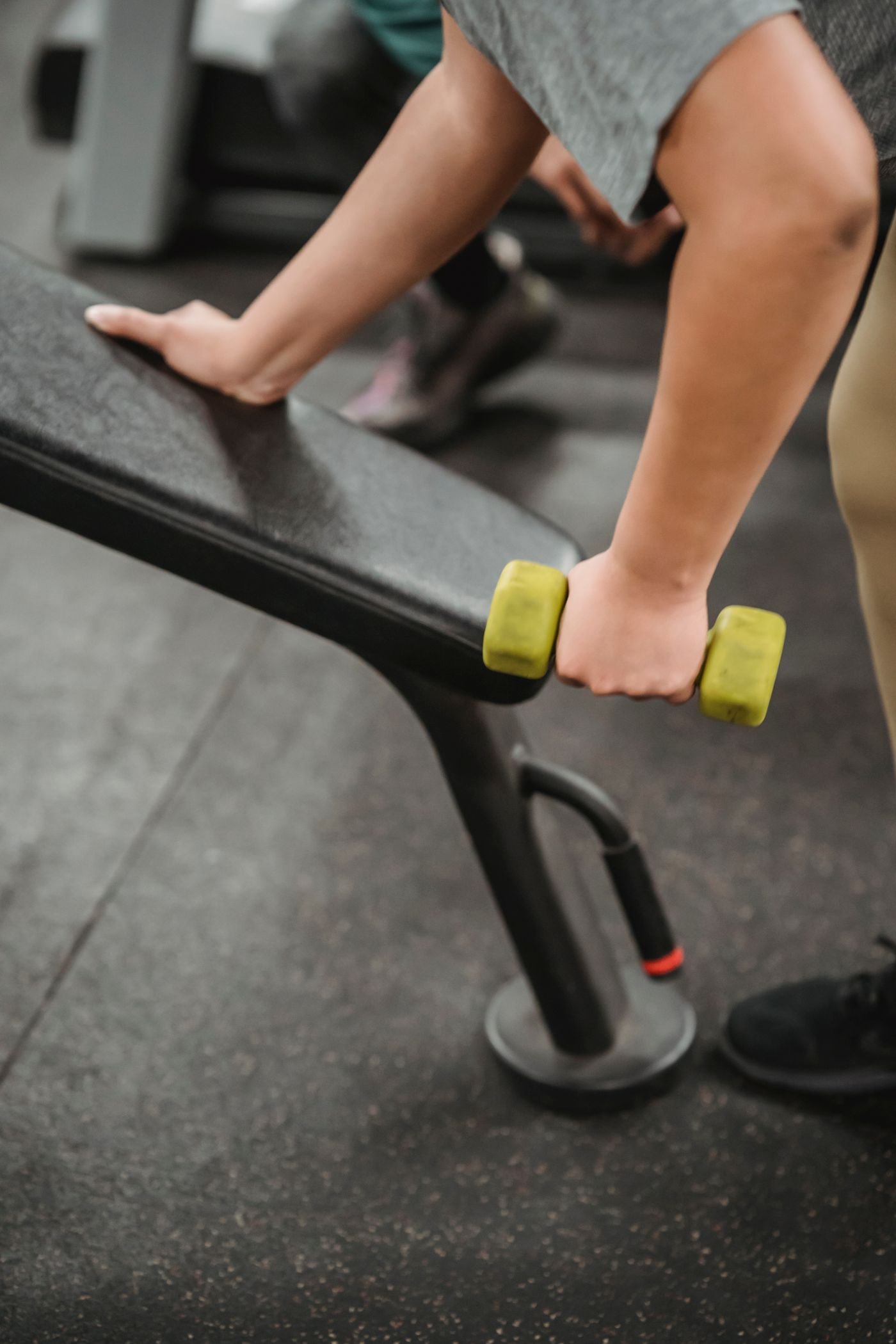
A one-arm row is easy to load and easy to individualize. Place one hand on a bench or rack upright that cannot shift, keep both feet planted and resist rotating your torso. Pull the dumbbell toward your hip or ribs, then lower until the arm is comfortably extended. Complete all repetitions on one side before switching, or alternate sides while preserving the same rep target.
A two-arm bent-over row trains both sides together but adds a sustained hip-hinge demand. Your hamstrings, glutes and spinal erectors help keep the torso stable. This can be useful when you want that challenge, yet it can also make the lower back the first thing to fatigue after squats or deadlifts. If your position changes substantially halfway through a set, reduce the load, shorten the set or move to a supported option.
Chest-supported rows remove much of the need to hold a bent-over position. Set an adjustable bench at a comfortable incline, lie with your chest supported and let the dumbbells hang freely without striking the frame. Pull the elbows backward, pause briefly, then lower without bouncing the weights. A study comparing rowing variations found greater erector-spinae activity in free-weight bent-over rows than in machine rows. That observation concerns muscle activation, not a proof that one version grows more back muscle over months.
Support is especially valuable when a session already contains heavy hinges, when your back is tired from work or when you want to focus on the target muscles rather than balancing your torso. The tradeoff is practical: some benches are too low, too narrow or too bulky to allow full dumbbell travel. Test the setup unloaded before committing to a working set.
For a compact home gym, keep one supported row and one free-standing or single-arm variation. They offer meaningfully different constraints without turning a simple back day into an equipment collection.

Bodybuilding Shirts & Workout Gear
Bodybuilding shirts, tanks and gym gear for lifters chasing muscle, size, symmetry and the pump.

We Are So Back Shirt | Bodybuilding Back Workout | Grap T-Shirt
Heavy lifts, good laughs, and a little “We Are So Back” energy.

Wide Privilege – Wide Back Meme Hooded Pullover Hoodie
Make your off-duty look more fun with “Wide Privilege”.

Demon Back Big Back & Lat Workouts Vest Tank Top
Your gym-day look, with a playful “Demon Back” twist.


Dumbbell Heartbeat Crewneck Pullover Sweater Workout Fa T-Shirt
Add a playful “Dumbbell Heartbeat” touch to your casual rotation.

Unbreakable Gains Back Tee
Make gym days more fun with “Unbreakable Gains: Strong Back Greek God” style.

Gym Dost Thou Even Pull Medieval Knight Lat Pulldown Hoodie
Show off your medieval humor in a laid-back “Dost Thou Even Pull Medieval Knight Lat” hoodie.

Shirt Pull Day – Back & Biceps Meme Top T-Shirt
Heavy lifts, good laughs, and a little “Pull Day Graphic” energy.

Hardcore Gains Gym | Funny No Pain No Gain Workout Swea T-Shirt
For laid-back days and lifting humor: “Hardcore Gains”.

I Love Gym Bicep Heart | Swole Heart Decal for Gym Love Sticker
Stick a little “I Love Gym Bicep Heart” humor on your favorite gear.
Pullovers, reverse flies and hinges: useful additions, not replacements
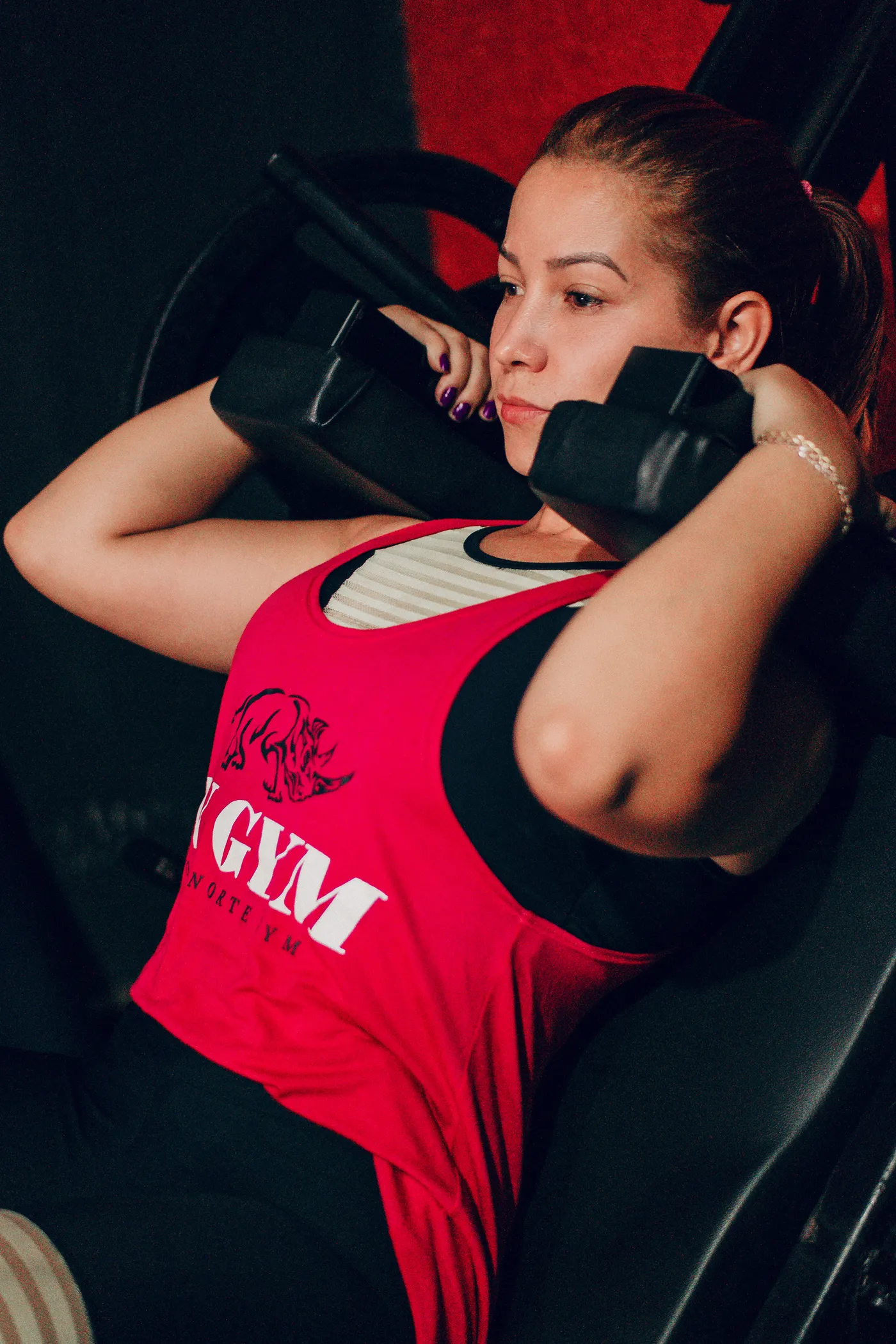
The dumbbell pullover is often sold as a pure lat builder, but the shoulder and chest also contribute. In a small electromyography experiment, the pectoralis major showed greater activity than the latissimus dorsi during a barbell pullover. That is a useful caution against promising precise muscle isolation from an exercise name. It does not prove pullovers cannot help the lats, and EMG alone cannot tell us which movement produces the most long-term growth.
If you use a pullover, lie securely on a bench, hold a manageable dumbbell with both hands and keep your ribs from flaring. Lower only as far as your shoulders comfortably allow. The movement should feel controlled, not like a stretch contest. Lifters with shoulder irritation may prefer a cable straight-arm pulldown or skip the exercise rather than forcing an overhead position.
Reverse flies and wide-elbow rows serve a different purpose. They can add work for the rear shoulders and upper-back muscles, often with much lighter weights than a conventional row. Keep the elbows softly bent and move the upper arms without swinging the torso. If you are already doing many upper-back rows, a few precise reverse-fly sets may be enough.
Dumbbell Romanian deadlifts belong in a complete posterior-chain program, but their main moving demands fall on the hip extensors. The back works hard to maintain position, not primarily to row the weights. Calling a hinge an equivalent substitute for lat training can lead to an imbalanced program. Count it as a hinge and program it alongside, rather than instead of, your upper-body pulls.
Renegade rows add anti-rotation and plank demands. They can be enjoyable for conditioning, but the core often limits the load before the lats receive a strong stimulus. Use them as an accessory or circuit exercise, not automatically as the centerpiece of a hypertrophy-focused back workout.
Progressive overload is more than adding dumbbell weight
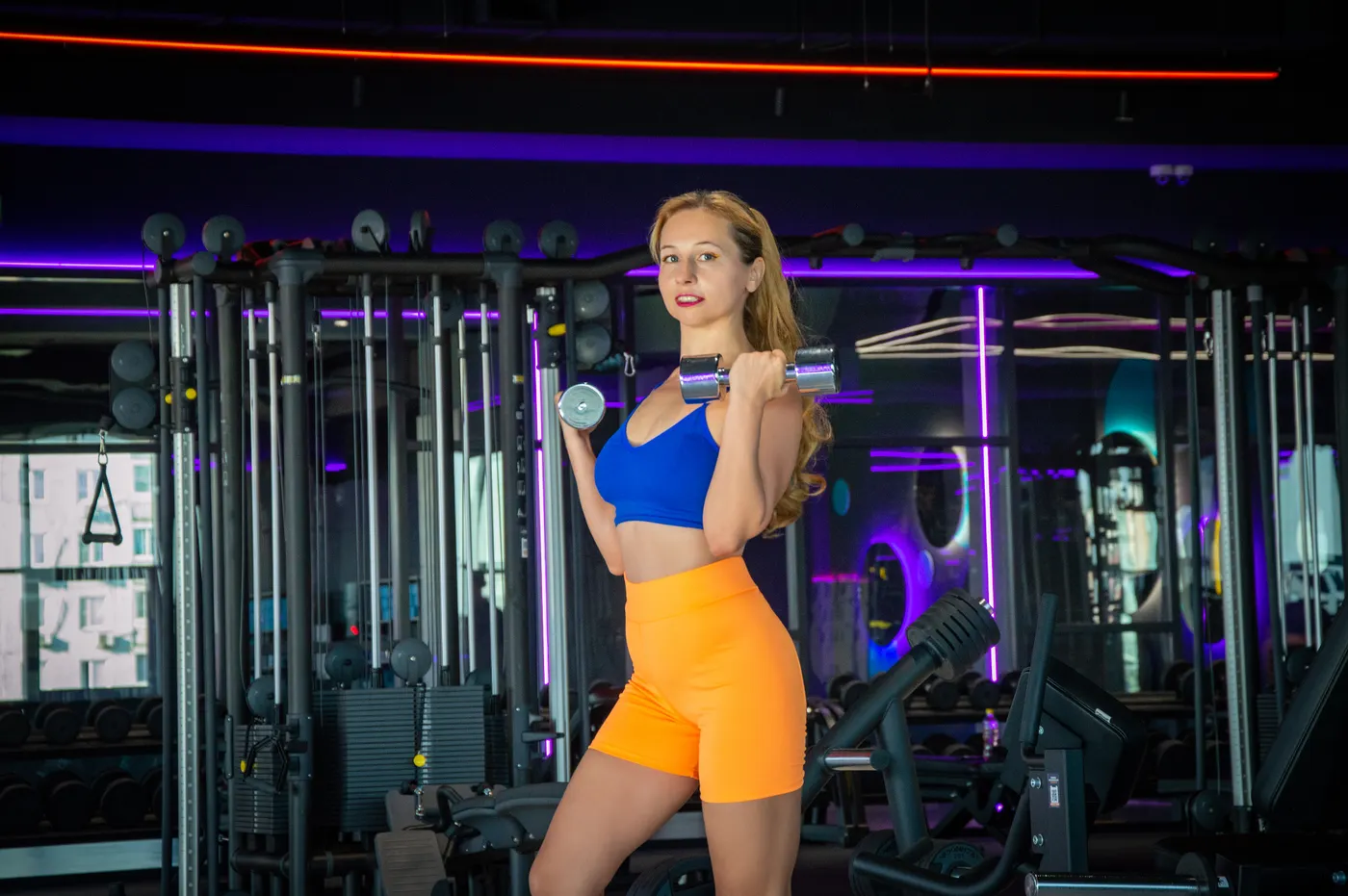
Muscle growth responds to a sufficient training stimulus repeated over time. A large synthesis of resistance-training studies found that greater weekly set volume generally supported more hypertrophy, with diminishing returns. That does not mean every lifter should immediately chase twenty sets. Productive volume is volume you can recover from while preserving good repetitions.
Begin with approximately eight to twelve challenging weekly sets of direct rowing and pulling work, adjusting for your experience and other training. A beginner may progress on less. An advanced lifter already doing pull-ups, cable rows and deadlifts should count those demands before adding more dumbbell sets. Frequency is a scheduling tool: two moderate sessions often make it easier to maintain quality than one marathon workout.
Double progression works well with adjustable dumbbells. Choose a range such as eight to twelve repetitions. Keep the weight constant until every prescribed set reaches the top of the range with clean technique and an appropriate effort level. Then increase the dumbbell by the smallest available increment and allow the reps to fall toward the bottom again. This produces a clear progression without turning the final repetitions into a different exercise.
When the next dumbbell jump is large, progress through better control, a brief pause, a small increase in reps or an additional set before increasing weight. Range of motion matters too: systematic reviews generally support training through a comfortable full or long range, although the advantage varies by muscle and outcome. Record whether the same movement was performed rather than comparing a strict set of ten with a shortened, swinging set of twelve.
Stop sets when technique deteriorates or pain develops. Ordinary muscular effort is expected; sharp joint pain, numbness or radiating symptoms are not signals to push harder. The goal is a repeatable stimulus that your shoulders, elbows and lower back can tolerate for months.
Equipment Worth Exploring
Explore equipment, accessories and gear from our carefully selected range.
VOLTRA
Compact digital cable trainer with smooth, adjustable resistance.

Go-Tone Pro
Portable digital cable trainer with up to 66 lb (30 kg) of adjustable resistance.
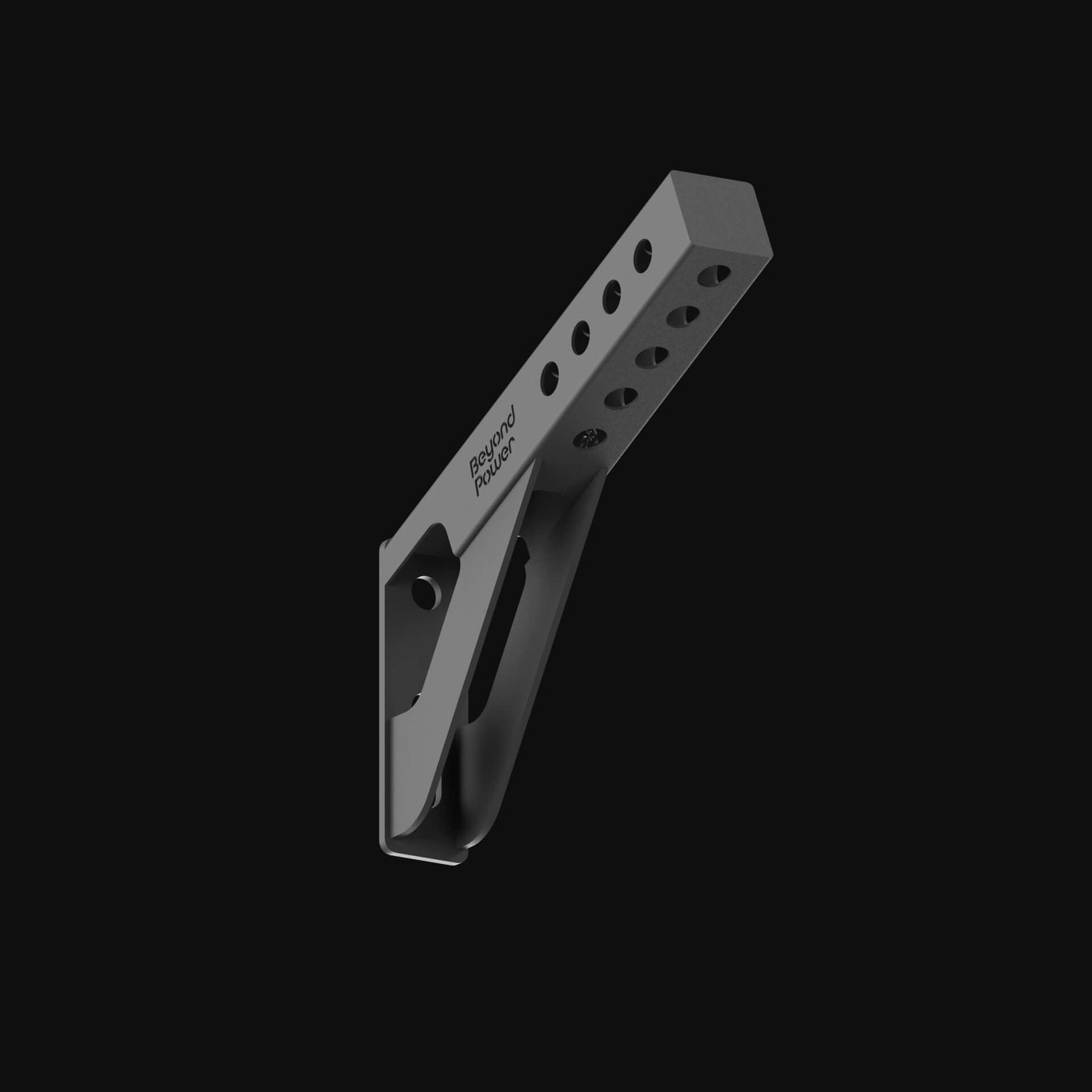
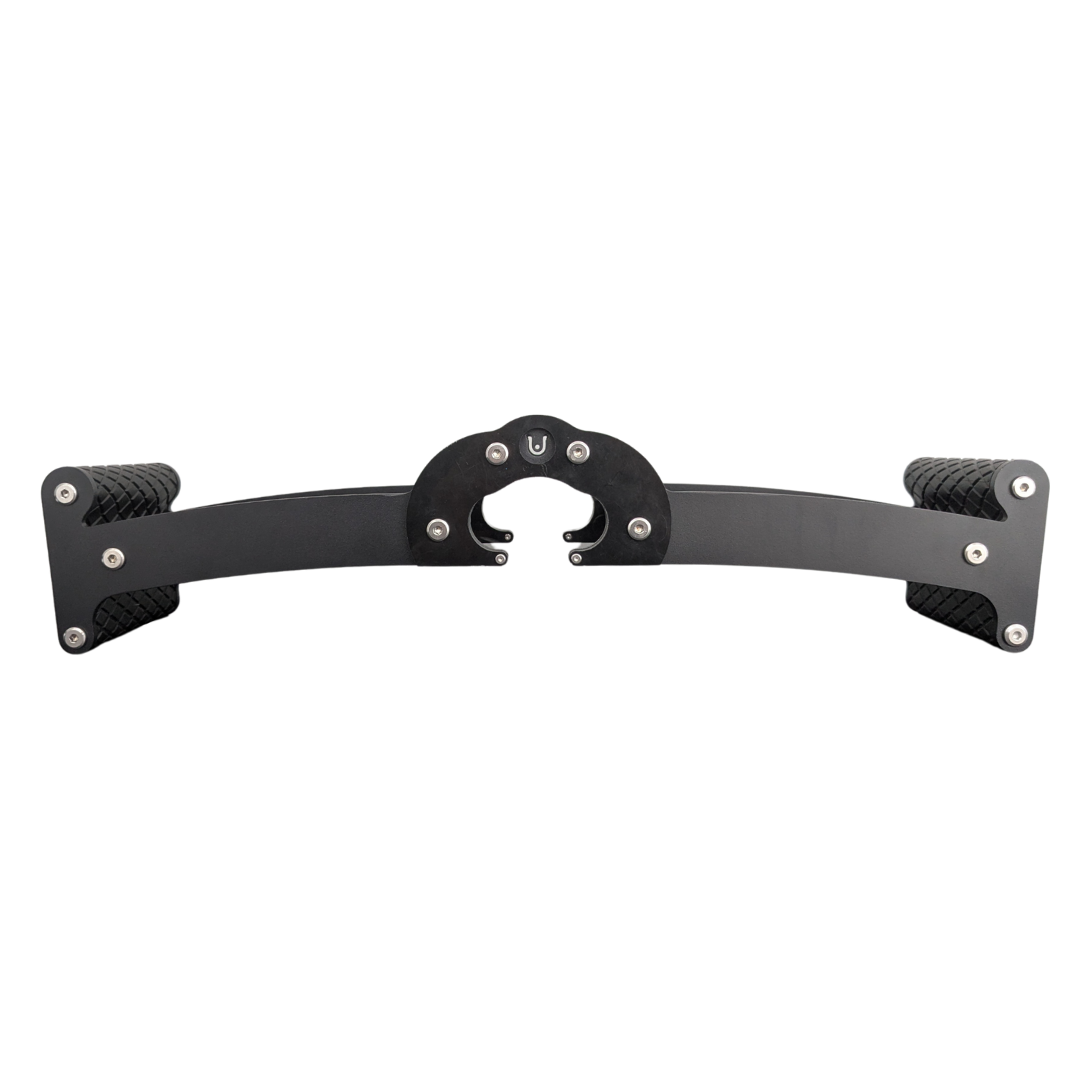
Back Bar
Multi-grip cable and landmine bar with a built-in deadlift jack.
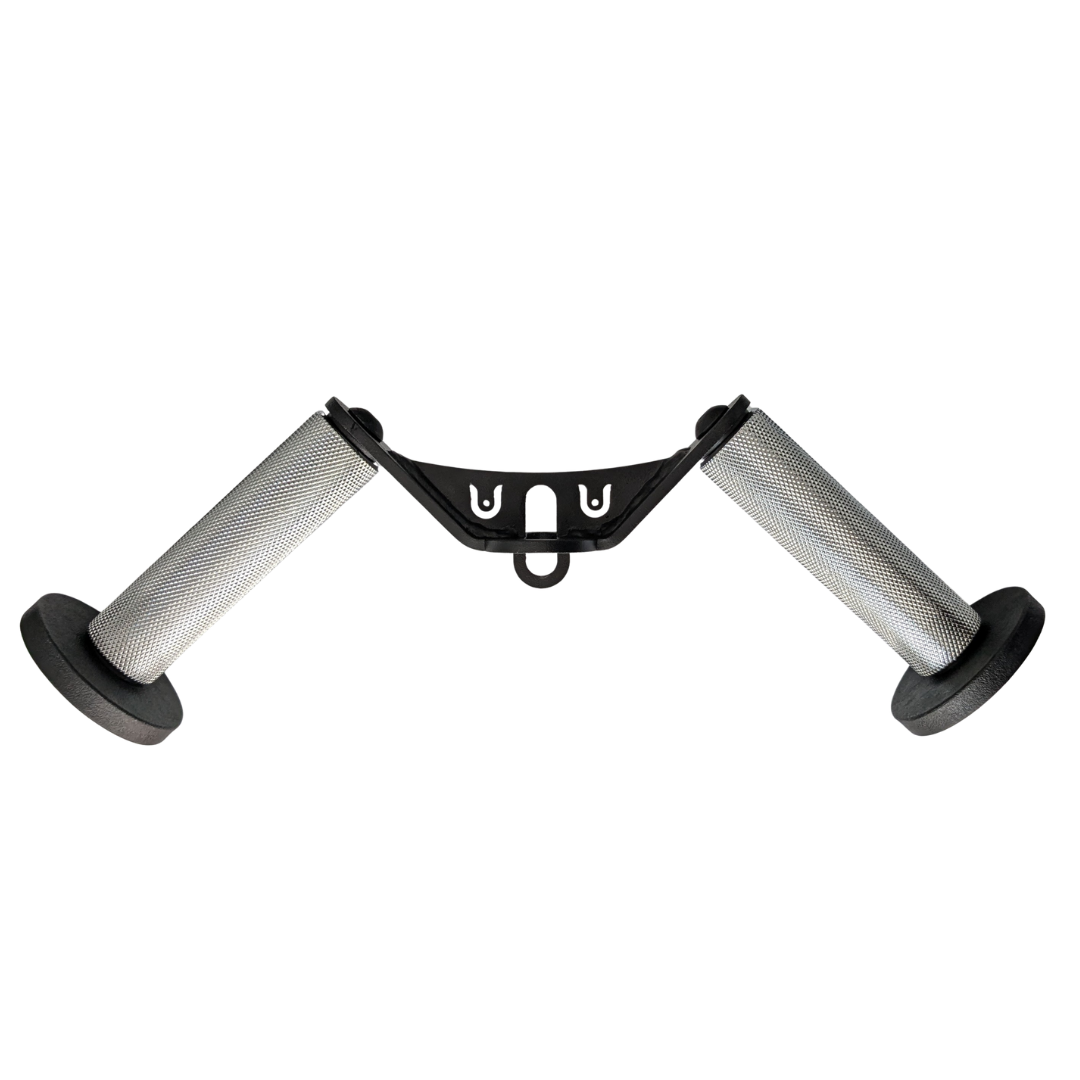
W Grip
Angled cable grip for comfortable rows, pushdowns, and curls.
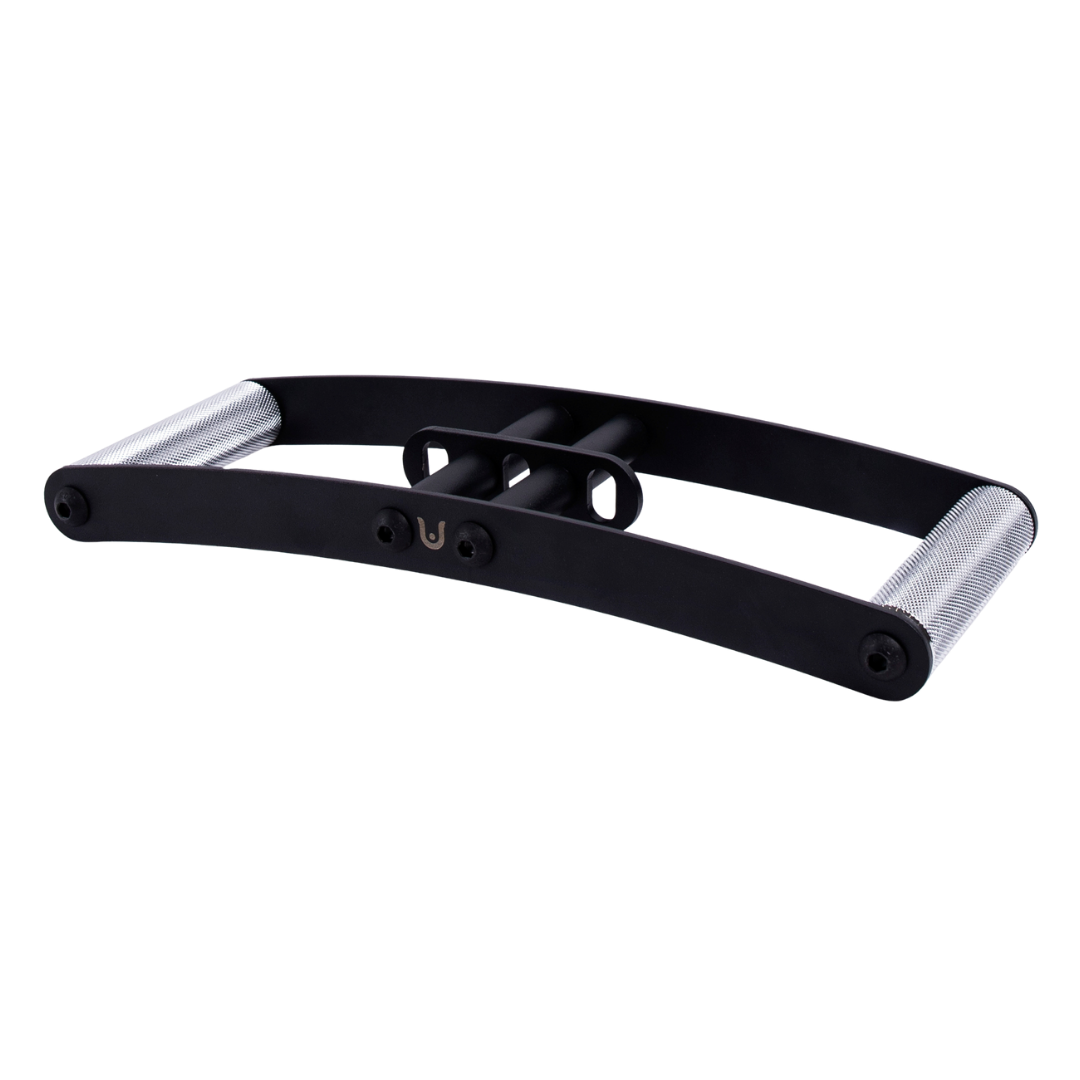
Horizon Grip
Ergonomic V-style cable grip for rows and back training.

GymPin D Handle Bar
Multi-use steel D-handle bar for cable rows, pulldowns and other cable exercises.

GymPin Barbell Row Handle
Heavy-duty handle attachment for barbell, landmine and T-bar rows.

T-Bar Row Attachment
Welded barbell attachment that connects a D-handle bar for landmine and T-bar rows.

GymPin Ergo Handles
Pair of ergonomic cable handles shaped for comfortable triceps and pulling exercises.
A two-day dumbbell back workout for a small home gym
Use the following sessions on nonconsecutive days, ideally with at least one rest day between them. The program assumes access to adjustable dumbbells and a sturdy bench. A rack, pull-up bar or cable station can be added, but the core plan does not depend on them. Warm up with five minutes of easy movement, a few controlled shoulder-blade movements and two lighter practice sets of the first row.
Day A: lat-biased rows and basic pulling strength
- Supported one-arm dumbbell row: three sets of eight to twelve repetitions per side, elbow toward hip, ninety to one hundred twenty seconds of rest.
- Chest-supported neutral-grip row: three sets of ten to fifteen repetitions, with a brief pause near the ribs.
- Optional pull-up or cable pulldown: two sets of six to twelve repetitions if equipment is available; otherwise add one controlled row set.
- Loaded carry or timed dumbbell hold: two rounds of twenty to forty seconds, stopping before your posture collapses.
On Day A, prioritize controlled lat-directed pulling. Keep the elbow path similar from set to set. If the bench prevents a full chest-supported row, substitute a stable one-arm row with a slightly different elbow angle.
Day B: upper-back thickness and posterior-chain support
- Chest-supported elbows-out row: three sets of eight to twelve repetitions with a moderate elbow flare.
- Two-arm bent-over dumbbell row: two sets of eight to ten repetitions, or replace with a supported row if your lower back is fatigued.
- Rear-delt reverse fly: two sets of twelve to twenty controlled repetitions with light weights.
- Dumbbell Romanian deadlift: two sets of eight to twelve repetitions, counted as hip-hinge work rather than extra lat sets.
The direct rowing work totals roughly eleven to twelve weekly sets before optional vertical pulls. That is a starting template, not a prescription everyone must follow. If your main training plan already contains pulling exercises, remove overlapping sets rather than stacking this entire routine on top. For someone with only twenty minutes, choose the first two exercises on each day and progress those consistently.
Log the dumbbell load, repetitions, perceived effort and any changes to bench angle. These details let you compare the next session with the one before it. More exercises are not necessarily more progress.
Funny Gym Shirts & Workout Gear
Funny gym shirts, tanks, hoodies and workout gear for lifters who like training hard.


Lift Together Grow Stronger for Workout Partners and Li Hoodie
Show off your powerlifting humor in a laid-back “Lift Together Grow Stronger” hoodie.

I’m Strong Barbell Heartbeat Hooded Pullover for Streng Hoodie
Make your off-duty look more fun with “I’m Strong Barbell Heartbeat”.

In My Muscle Mommy Era for Gym Girls, Lifting, Bodybuil T-Shirt
Heavy lifts, good laughs, and a little “In My Muscle Mommy Era” energy.


Deadlift Viking Skull Gym Pullover for Powerlifters, No Hoodie
Keep it laid-back with a little “Deadlift” attitude.


Gymhead Skull Weight Plate Meme T-Shirt
Make gym days more fun with “Gymhead Skull Weight Plate” style.

Dumbbell Meme Shirt – Essential & Gymbros Seeking T-Shirt
Make gym days more fun with “Dumbbell Gym Meme” style.

Always Pull Yourself Up Calisthenics Decal for Water Bo Sticker
A fun “Always Pull Yourself Up” touch for bottles, laptops, and lockers.
Six weeks of progression and the mistakes to avoid
Weeks 1–2: Establish repeatable positions and a sensible starting load. Finish most sets with two or three good reps available. Note the bench setting, elbow path and whether your torso stays stable. If the last repetition changes dramatically, use a lighter dumbbell. The first two weeks are about collecting a baseline you can trust.
Weeks 3–4: Add repetitions within the programmed ranges while maintaining the same technique. When all working sets reach their upper target, move up one dumbbell increment. If grip gives out first, use straps selectively for the heaviest back-focused sets and train grip separately. Do not add exercises simply because you no longer feel sore.
Weeks 5–6: Continue double progression. If recovery is good and progress has stalled on only one movement, add one set to that movement rather than expanding every exercise at once. If sleep, joints or performance are worsening, hold volume steady or reduce it briefly. A sustainable six-week trend matters more than one spectacular workout.
Three common errors deserve special attention. First, pulling the weight toward the shoulder while calling it a hip-directed lat row changes the movement. Second, rotating the torso or bouncing the dumbbell creates momentum that hides the target muscle’s actual contribution. Third, trying to make every session harder by shortening rest periods can reduce the load and repetitions you can perform with control.
Use simple outcome checks. Are your strict rows increasing in load or reps? Does your back feel like the intended working area rather than your lower spine? Can you recover and repeat the workout? Photos and body measurements can supplement those logs over longer periods, but daily mirror changes are a poor guide.
Dumbbells are not a compromise when used intelligently. Two deliberate row variations, a modest amount of rear-shoulder work and a consistent progression can build a strong foundation. Add vertical pulling when you can, but keep the fundamentals first: stable positions, sufficient effort, realistic volume and weeks of repeatable practice.