Advertising disclosure: This page includes affiliate links that may earn us a commission at no additional cost to you.
Sebastian Coe’s Olympic record has a neat symmetry: two appearances, two 1500m gold medals and two 800m silvers. The pattern is easy to remember. Understanding it takes a little more care, because a world record, a personal best and a championship placing answer different questions about a runner.
Coe had exceptional ability over both distances. Yet his Olympic victories came in the longer event, while his celebrated 800m best was produced outside the Games. His career is an especially useful example of why the fastest performance on a results sheet does not settle every race before it starts.
Moscow delivered a silver and a different kind of response
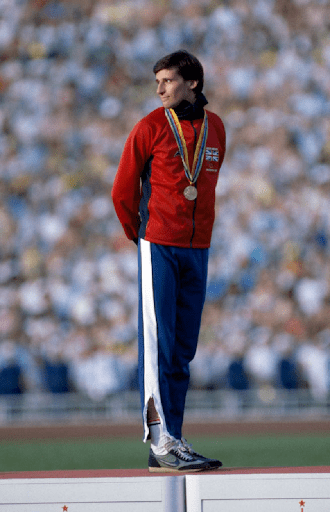
At Moscow in 1980, Coe finished second in the 800m and won the 1500m. Steve Ovett won the shorter event. For a runner with Coe’s record-breaking ability, that sequence became part of the story of the Games: the athlete associated with extraordinary speed over two laps left with his gold medal from the longer race.
A silver medal is an achievement in its own right. Calling it a disappointment describes expectations around the athlete, rather than changing the placing. Keeping those two ideas separate avoids the familiar sports habit of treating every result below first place as though the athlete had achieved nothing.
The 1500m provided another contest, with another field arrangement and another finish to execute. Coe’s victory does not erase the 800m result, and the 800m does not diminish the fact that he became an Olympic champion. The useful account holds both results together instead of selecting whichever one supports a simple label such as unbeatable or inconsistent.
That distinction also matters outside elite running. A competition result is a record of what happened in that contest. It is not a complete assessment of every physical quality an athlete possesses, and one disappointing attempt does not automatically determine the next event. Coe’s Moscow medals make that point unusually clearly without requiring an invented explanation of his private thoughts.
Los Angeles repeated the medal pattern four years later
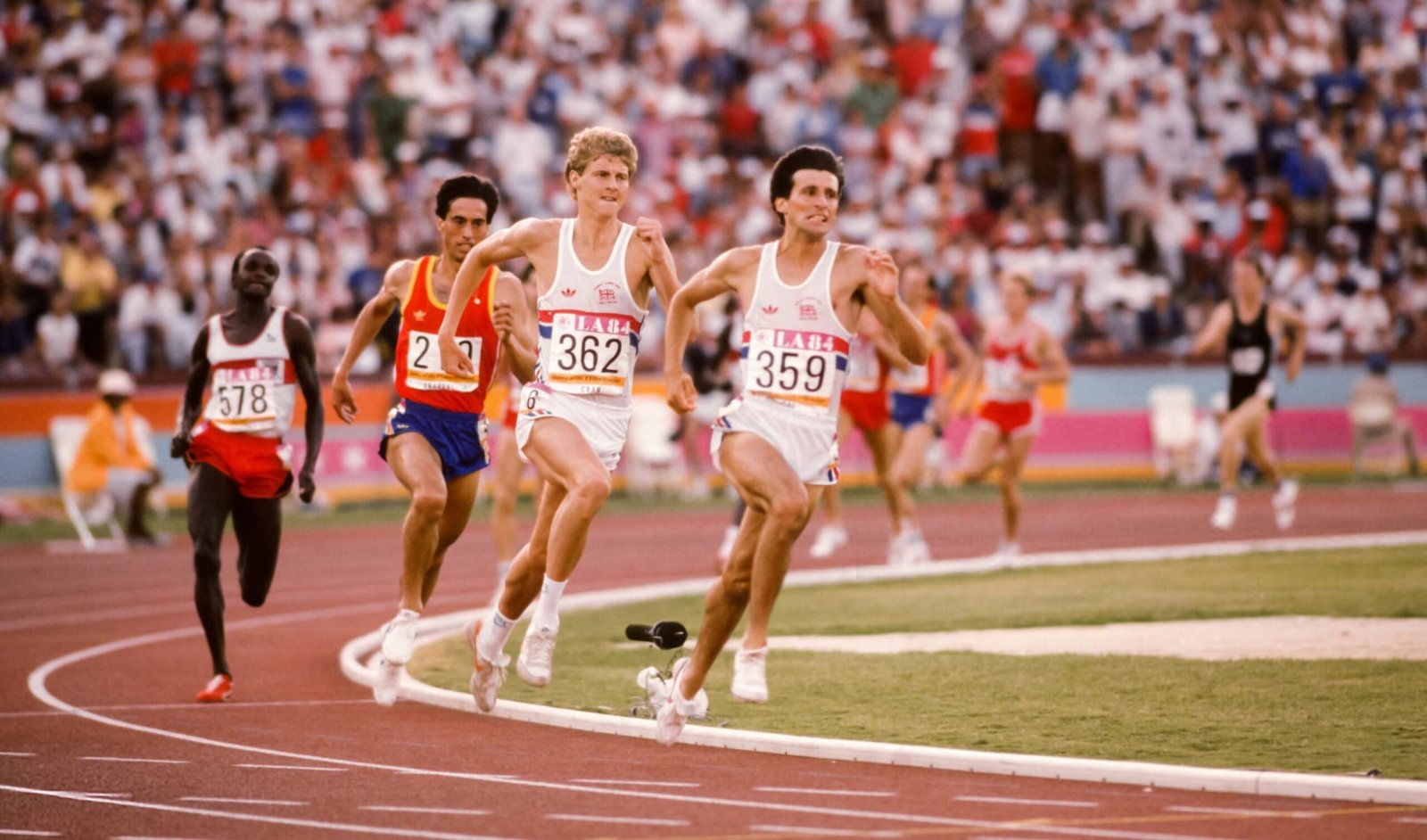
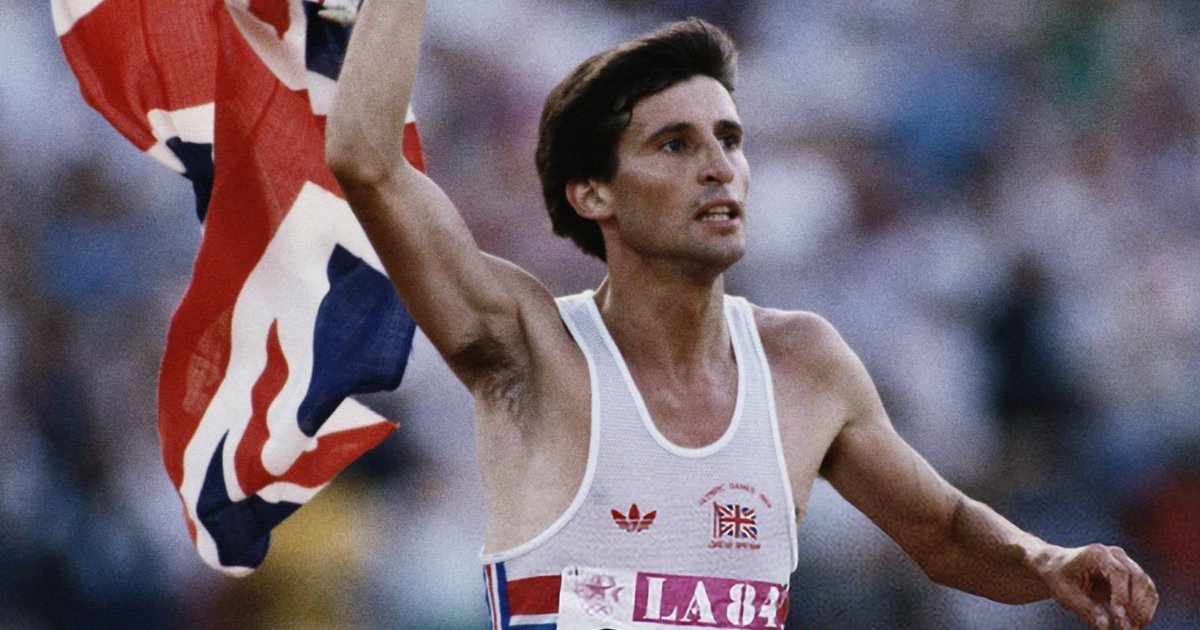
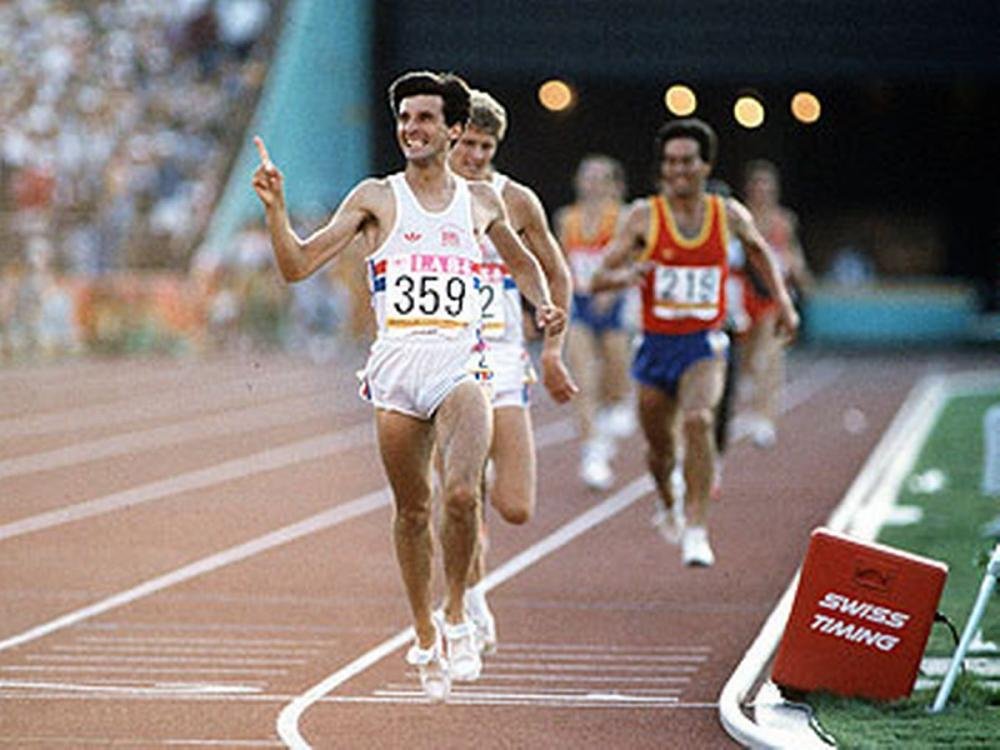
Coe returned at Los Angeles in 1984 and again won silver in the 800m and gold in the 1500m. Defending an Olympic title four years after first winning it is a different achievement from producing one outstanding afternoon. The result required success at another Games, rather than simply retaining the reputation earned at the previous one.
His 1500m winning time was 3:32.53, an Olympic record at that competition. The number gives the victory an additional reference point, but the medal and the record still describe different things: one states his position in the final, the other compares the time with the relevant Olympic benchmark.
Be precise about the distance, too. A 1500m race is not a mile, and its time should not be placed beside mile performances without that distinction. On a standard 400m track, 1500m is three laps plus 300m. A mile is longer. Familiar names and dramatic finishes can make those events feel interchangeable in a short highlight clip, even though their results are recorded separately.
The repeated gold-and-silver pattern is striking because it resists an overly tidy explanation of Coe as simply an 800m runner or simply a 1500m runner. He reached the Olympic podium over both distances at both Games. The gold medals identify where he won those finals; they do not imply that he lacked the qualities needed for the shorter event.
The stopwatch adds detail rather than replacing the medals
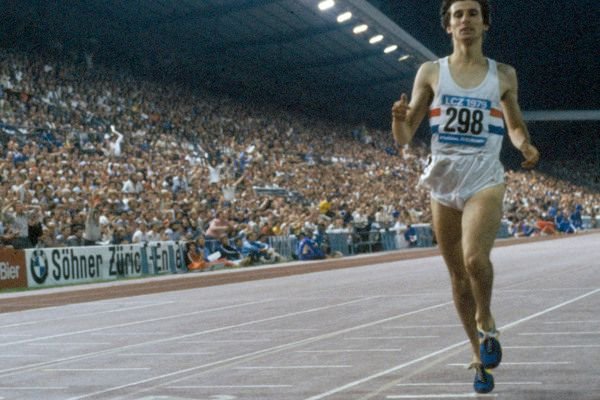
Coe’s 800m personal best was 1:41.73, set on 10 June 1981. His listed bests also include 2:12.18 for 1000m and 3:47.33 for the mile, both from 1981. His 1500m personal best, 3:29.77, came on 7 September 1986, after his two Olympic gold medals.
That chronology is worth pausing over. The fastest 1500m of his career was not the race that gave him his first Olympic title, nor the one that secured his second. A personal-best list and a medal list therefore illuminate different parts of the same career. Neither is a defective substitute for the other.
MMP’s account of Roger Bannister’s four-minute mile explores a related question about how a timed milestone acquires meaning. Coe’s case adds another layer: a runner can leave an exceptional set of marks across several distances while his most important championship victories follow their own timetable.
For an ordinary runner reviewing progress, the practical lesson is to label the comparison before interpreting it. Are you comparing the same distance, a personal best, a particular race result or performance across a season? A clean comparison gives the number meaning. Mixing several standards together can turn a perfectly useful result into an apparent contradiction.
A race asks for more than an impressive best time
A personal best tells you that an athlete has completed the distance in a certain time. It does not specify how every later race will unfold. Competitors still have to establish position, respond to changes in speed and reach the finish ahead of the people actually in that field. Those demands are part of the contest, not noise to remove from its outcome.
This is why a championship profile benefits from more than a list of fastest marks. The placings show execution against opponents on the day. The times help describe the performance. The athlete’s wider record provides context. Reading all three together is more informative than turning any one of them into a universal ranking.
Coe’s two 800m silvers do not disprove his speed over that distance. His two 1500m golds do not make every other 1500m performance irrelevant. The point is narrower: outstanding capability and a particular competitive result can coexist without matching perfectly every time.
There is no need to reconstruct a secret training method to make that history interesting. The verified results already provide a substantial story. Nor does an archival racing photograph establish the athlete’s weekly mileage, strength programme or interval prescription. Those would require separate evidence, and this profile does not present a workout as Coe’s actual routine.

Cardio Shirts & Workout Gear
Cardio and conditioning gym gear for runners, endurance athletes and anyone who earns the sweat.


Cardio Is Hardio – Workout Meme Hooded Pullover Hoodie
Keep it laid-back with a little “Cardio Is Hardio” attitude.

Don't Quit Do It – Motivational Workout Hooded Pullover Hoodie
Show off your cardio humor in a laid-back “Don't Quit Do It” hoodie.

Anti Running Club Tee
Heavy lifts, good laughs, and a little “Anti Running Running Club” energy.

Everything Hurts And I'M Tired Motivation Jumper T-Shirt
Add a playful “Everything Hurts And I'm Tired” touch to your casual rotation.

Cardio Is Calling Decline Decal Water Bottles Meme Sticker
A fun “Cardio Is Calling” touch for bottles, laptops, and lockers.

Skip Cardio Exit Cardio Meme Sweater Top T-Shirt
For laid-back days and cardio humor: “Skip Cardio”.

Negative Cardio Review Cardio Sucks 1 Star Vest Tank Top
Bring “Negative Cardio Review” humor to your next lifting session.

Cardio Sucks Shirt Meme & Gymbros Top T-Shirt
Make gym days more fun with “Cardio Sucks” style.
Choose the measure before borrowing the lesson

For people who lift as well as run, the transferable idea is to define the task clearly. A best training performance, an official competition attempt and the ability to repeat a performance through a season are related, but they are not identical. Choose the measure that matches the goal instead of asking one number to describe everything.
MMP’s profile of Daley Thompson’s two Olympic decathlon titles offers a different version of that problem. A decathlon combines ten events, so the overall result has to be read through its scoring system. Coe’s individual races require a different framework, but the need to understand what the result measures remains.
Coe put the emphasis on improvement: “The improvement was the goal. The medal was simply the ultimate reward for achieving that goal.” That emphasis gives a personal dimension to the distinction between building capability and the moment a medal is awarded.
Use that perspective when setting your own next target. Improving a repeatable training benchmark can be useful without pretending it is the same as winning a race. Equally, a race that falls short of a personal best can still represent a successful competitive performance. Decide which question you are evaluating, then interpret the evidence on that basis.
Coe’s Olympic record stands without embellishment: 1500m gold and 800m silver in both 1980 and 1984. His personal-best list broadens the picture. Together, they describe a career in which exceptional speed and championship achievement reinforced each other while remaining distinct accomplishments.