Advertising disclosure: This page includes affiliate product links that may earn us a commission, as well as products from our own store.
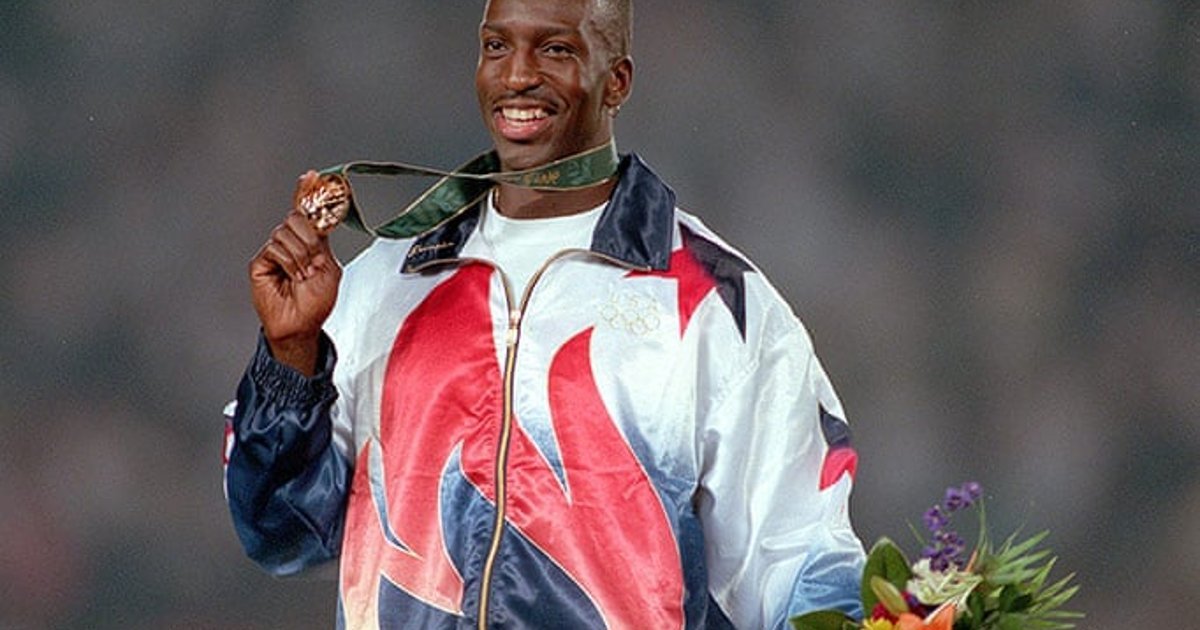
Michael Johnson left Atlanta in 1996 with a sprint double no man had previously achieved at the Olympics: gold in both the 200 and 400 metres. The gold shoes made the photographs unmistakable. The results made the achievement historic.
His 43.49 in the 400m and 19.32 in the 200m describe different races and different kinds of records. Looking at the sequence, the timetable and the numbers gives the double more substance than a highlight reel alone. It also offers useful ways to think about performance without inventing Johnson’s training schedule or asking ordinary runners to copy an elite sprinter’s workload.
The double needed a workable timetable
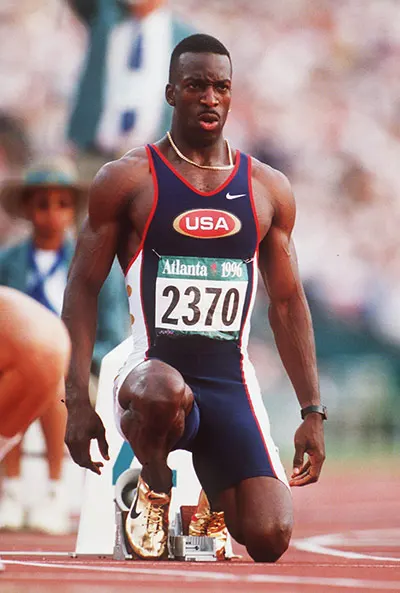
Before the medals came a scheduling problem. The original Atlanta timetable overlapped the men’s 200m and 400m programmes in a way that made attempting both especially difficult. Changes announced before the Games separated the events: the 400m rounds would come first, followed by the 200m competition.
This was more than an administrative footnote. A double involves heats and semifinals as well as the races that appear in the medal table. An athlete must advance repeatedly while managing the time between starts. Counting only two finals hides much of the competitive task.
Johnson already had major championship experience before arriving in Atlanta. He had won Olympic relay gold in 1992 and individual world titles over both sprint distances. His college career had also included NCAA success. The double was an exceptional extension of an established career, rather than a sudden transformation created by one accessory or a last-minute training trick.
For someone planning competitions now, the general question is useful even though the circumstances differ enormously: what does the complete schedule require? Include warm-ups, rounds, travel between venues and recovery time. Being capable of two events separately does not establish that they fit equally well when placed close together.
That is a planning principle, not a claim that the timetable alone explains Johnson’s success. The revised schedule made the attempt more practical. It did not run either final for him, remove the other competitors or guarantee that he would arrive at the second event ready to win.
The 400 metres came first
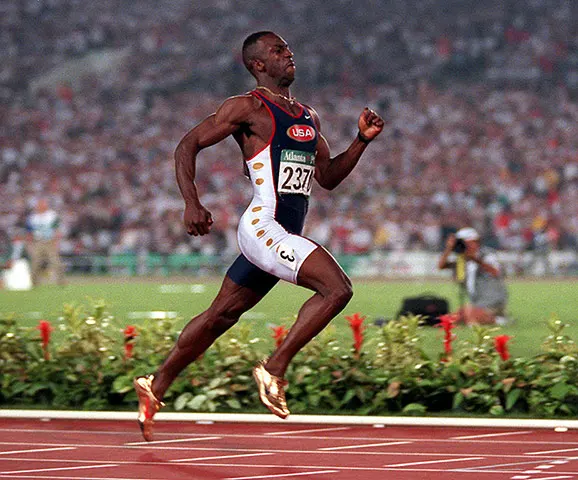
Johnson won the Olympic 400m final on July 29 in 43.49 seconds, an Olympic record at the time. Roger Black finished second. Three days later, Johnson would line up for the 200m final with the first individual gold already secured.
Keep the record categories precise. The Atlanta 400m result was not Johnson’s 43.18 world record, which came in Seville in 1999. Combining the famous numbers into a single imagined Games makes the story sound even more dramatic while making it less accurate.
The 200m and 400m are related sprint events, but a result in one is not a calculator for the other. They differ in distance, duration and the demands of completing the race. Doubling a 200m time does not predict an athlete’s 400m finish, and halving a 400m time does not reveal the two actual halves of that race.
It is also easy to confuse a photograph with a performance record. A running image can show posture, kit and the setting. It cannot establish an exact finishing time unless the event and result are separately verified. A memorable pose deserves a different kind of reading from the official result beside an athlete’s name.
When reviewing your own efforts, keep the same distinctions. Write down the distance, date and conditions that make a time meaningful. If you changed the route or the timing method, record that too. A clearer log is more useful than an impressive number whose context disappears as soon as you tell the story.
What 19.32 changed in the 200 metres
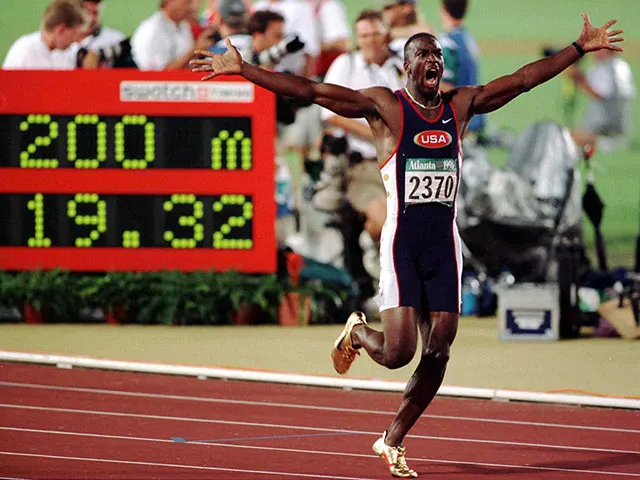
On August 1, Johnson won the 200m in 19.32 seconds. He improved the world record of 19.66 that he had set at the US Olympic Trials earlier that summer. Frankie Fredericks took silver in 19.68 and Ato Boldon bronze in 19.80.
The reduction from 19.66 to 19.32 was 0.34 seconds. Expressed relative to the earlier time, that is approximately 1.73 percent: 0.34 divided by 19.66, multiplied by 100. That calculation describes a reduction in race time. It is not a measured improvement in strength, power or the effectiveness of a particular workout.
Another simple calculation illustrates scale. Covering 200 metres in 19.32 seconds gives an average speed of about 10.35 metres per second. Average speed is not maximum speed. Johnson did not travel at one constant speed from the starting gun, and dividing the total cannot recover every phase of the run.
Our look at Roger Bannister’s four-minute mile makes a similar distinction between a verified finishing time and arithmetic performed afterward. The events are very different, but keeping the distance and units visible helps prevent a useful comparison from turning into a claim the evidence never measured.
Johnson was the first man to win this Olympic double, not the first athlete of either sex. Valerie Brisco-Hooks had won the women’s 200m and 400m in 1984, and Marie-José Pérec completed the women’s double in Atlanta. Precision preserves those achievements while leaving Johnson’s place in the men’s event entirely clear.
The gold shoes were an identity, not an explanation
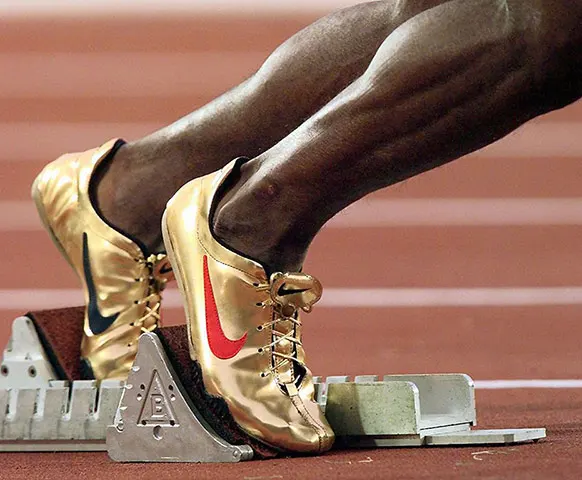
Johnson’s gold spikes became part of the visual memory of Atlanta. The colour made the performance easy to recognise in a photograph and gave the story a memorable object. It does not, by itself, quantify how much the footwear contributed to either finishing time.
A photograph of shoes in starting blocks answers a visual question: what was the athlete wearing in that moment? A causal claim needs more. The image does not compare the same athlete under controlled conditions in different footwear, and it does not isolate equipment from preparation or execution.
That distinction applies far beyond sprint spikes. An accessory can be real, distinctive and important to an athlete without being the single explanation for the result. Treating the most visible object as the cause overlooks everything a finishing photograph cannot show.
It is reasonable to enjoy the spectacle. The mistake is turning admiration into an equipment prescription for somebody with a different background, surface, event or training history. A famous athlete’s shoe colour offers inspiration; it cannot assess whether a particular pair suits your own running.
Admire the execution without copying a silhouette
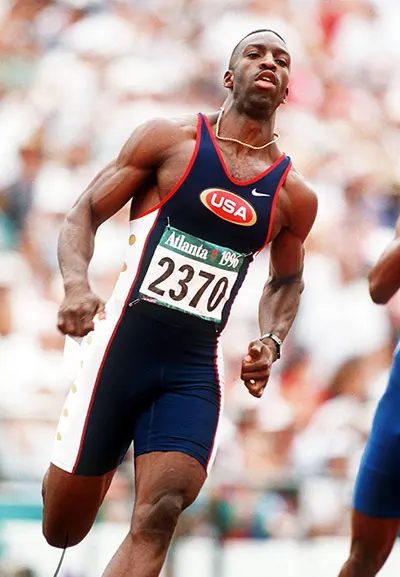
Johnson’s upright appearance and rapid stride were recognisable parts of his running. They are useful observations about a particular sprinter, rather than a universal set of instructions. A still frame does not tell another runner what posture, cadence or training volume will improve that person’s performance.
For a practical discussion of those variables, our running-form guide to cadence and stride length considers changes in the context of the runner and the pace. Use that kind of assessment rather than trying to reproduce the outline of a champion from a photograph.
The broader takeaway from Atlanta is to define the task and recognise the full sequence behind a result. Johnson completed rounds, won the 400m and then produced a world-record 200m. The timetable, the two distances and the record categories all belong in that account.
If the story motivates you to run, make your next objective specific to your current circumstances. Choose a distance you can measure consistently and a manageable training commitment. This is an editorial suggestion for setting a useful goal, not Johnson’s own programme, a reconstructed week of workouts or a promise of an elite outcome.
The double remains remarkable with those limits intact. It combines two individual victories, one extraordinary world-record time and a visual identity people still recognise decades later. The verified achievement is strong enough to stand without a secret routine added afterward.

Cardio Shirts & Workout Gear
Cardio and conditioning gym gear for runners, endurance athletes and anyone who earns the sweat.


Running Dost Thou Even Trot Medieval Treadmill Pullover Hoodie
Show off your medieval humor in a laid-back “Running” hoodie.

Anti Running Club Tee
Heavy lifts, good laughs, and a little “Anti Running Running Club” energy.

Cardio Is Calling Decline Decal Water Bottles Meme Sticker
A fun “Cardio Is Calling” touch for bottles, laptops, and lockers.

Cardio Is Hardio – Workout Meme Vest Muscle Shirt For S Tank Top
Add some cardio attitude to training with “Cardio Is Hardio”.

Negative Cardio Review 1 Star Sweater Cardio Sucks T-Shirt
Show some gym-day personality with “Negative Cardio Review”.

Cardio Sucks Shirt Meme & Gymbros Top T-Shirt
Make gym days more fun with “Cardio Sucks” style.

Skip Cardio Exit Cardio Meme Hooded Hoodie
Keep it laid-back with a little “Skip Cardio” attitude.

Shirt – Don'T Quit Do It – Meme & Gains T-Shirt
Show some lifting attitude with a playful “Don't Quit Do It” tee.

Straight Outta Shape – Out Of Shape Meme Vest Tank Top
Your gym-day look, with a playful “Straight Outta Shape” twist.