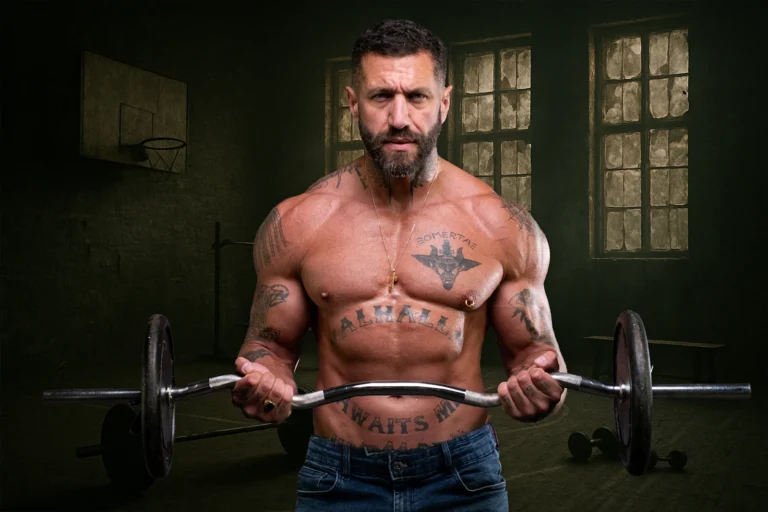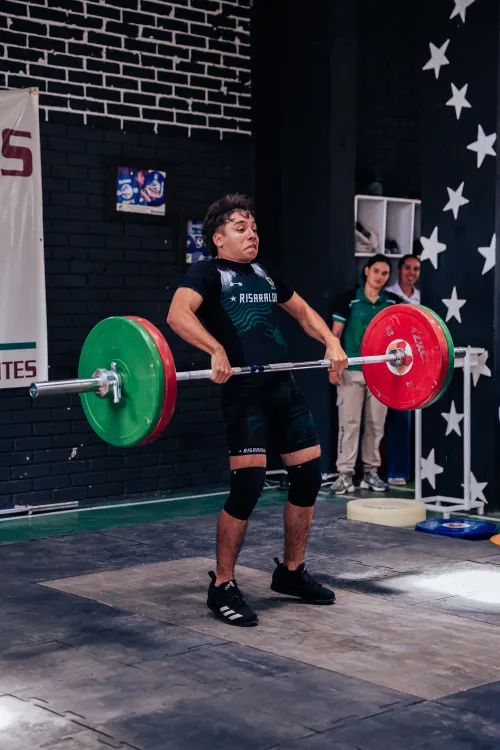
Heavy weights for fast-twitch muscle fibers, light weights for slow-twitch fibers: it sounds like a tidy training rule. It is also much too tidy. Human muscles contain a mixture of fiber types, and a demanding set does not switch one group on while leaving the others asleep. Load, effort, repetition speed and fatigue all influence what a set asks your body to do.
A 2026 review of fiber-level growth studies offers an intriguing clue about how loading might influence different fibers. It does not prove that one rep range selectively builds a single type. Here is what the biology actually says, what the new analysis found, and how to use that knowledge when your home gym has only a few adjustable weights or a cable trainer.
Fast-twitch and slow-twitch fibers: the useful distinction
Type I fibers are often called slow-twitch. They generally contract more slowly, have strong oxidative capacity and resist fatigue well. They help sustain repeated, lower-force activity. Type II fibers have higher potential for rapid force production, but their fatigue characteristics differ. Type IIa fibers are relatively versatile; Type IIx fibers are associated with particularly fast contractions and high power potential. The familiar label “Type IIb” appears in some simplified fitness explanations, but adult human skeletal muscle is usually discussed in terms of Type I, IIa and IIx rather than a distinct common IIb category.
None of these labels describes an entire exercise. A squat recruits multiple motor units across a mixed muscle. Your calves, quads and upper back also have different fiber distributions, and two people can have different proportions within the same muscle. Fiber characteristics reflect genetics, training history and the muscle’s job, not just whether someone looks lean or muscular.
Think of fiber type as one layer of an exercise prescription, not a personality test for your muscles. A set of twenty controlled squats is not automatically a slow-fiber workout; a set of five squats is not exclusively fast-fiber work. The effort required, the movement and how close the set comes to its limit change recruitment. You can build a sensible training plan without knowing your personal biopsy results.
Why a long run and an explosive sprint feel different
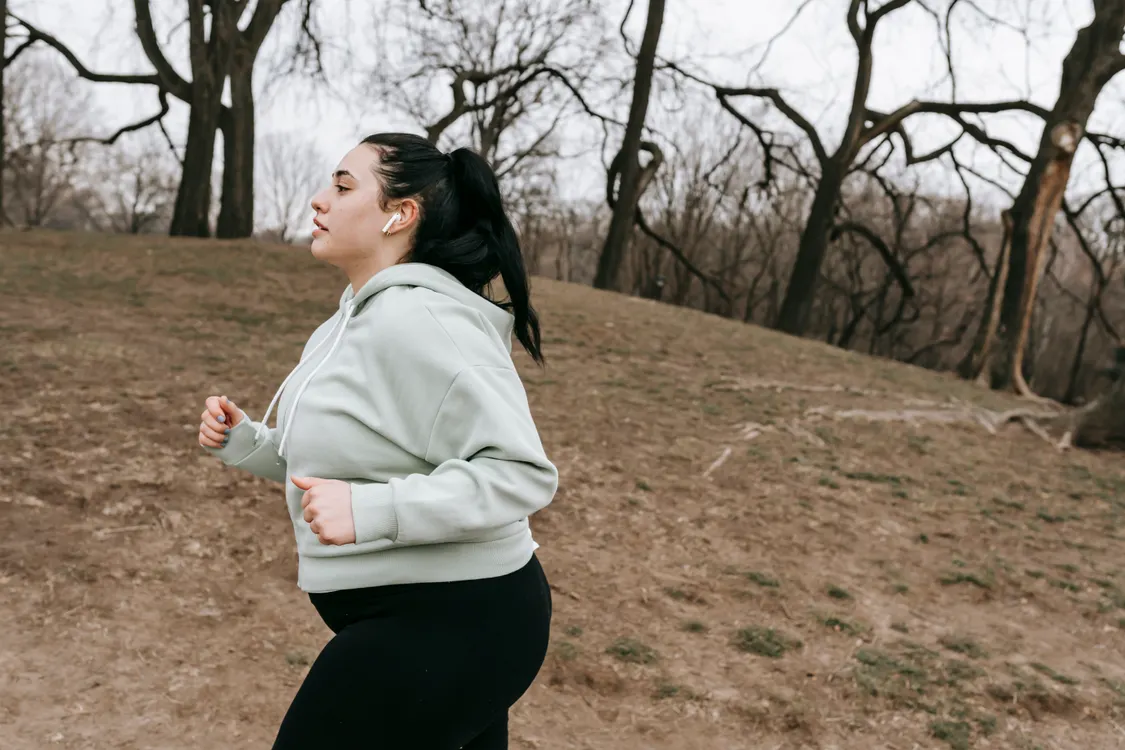
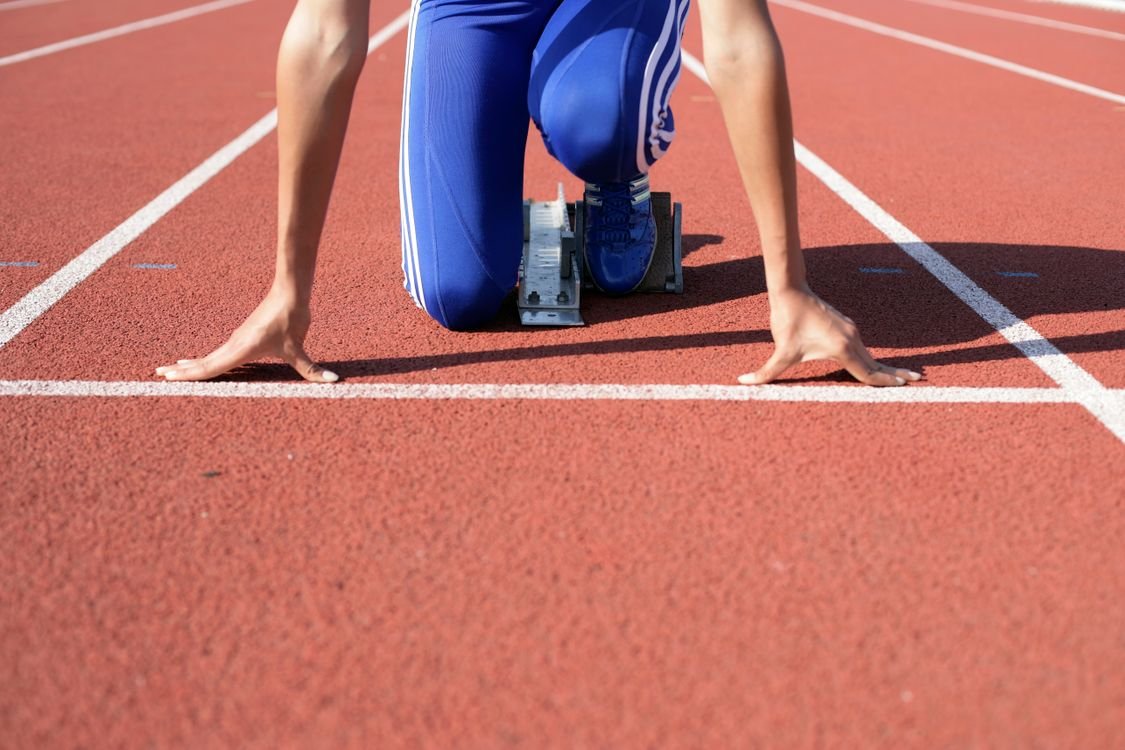
Endurance activity rewards economical force production repeated for a long time. Jogging, cycling and sustained walking depend heavily on aerobic energy delivery and fatigue resistance. Short accelerations, jumps and maximal lifts require high force or rapid force production over a brief period. That distinction helps explain why different training styles produce different adaptations, even though all of them involve overlapping muscle-fiber populations.
Repeated endurance work can improve mitochondrial function, capillary support and the ability to sustain a given pace. Heavy strength work develops maximal force, coordination and skill with demanding loads. Explosive training emphasizes the ability to produce force quickly. Those adaptations are related, but they are not interchangeable. A faster 100-meter sprint does not necessarily mean a better twenty-minute run, and a larger squat does not automatically mean a higher jump.
There is also a major difference between contractile speed and the speed at which you deliberately move a weight. A slow grinding repetition under a heavy load can involve high-threshold motor units. A deliberately slow repetition with a light weight may create fatigue but is not a reliable method for isolating slow-twitch fibers. Movement intent and external resistance are different variables. For general fitness, combining sustained activity with progressive resistance training is usually more useful than chasing a supposed fiber-type label.

Equipment Worth Exploring
Explore equipment, accessories and gear from our carefully selected range.


VOLTRA
Compact digital cable trainer with smooth, adjustable resistance.

Go-Tone Pro
Portable digital cable trainer with up to 66 lb (30 kg) of adjustable resistance.

FID Bench MAX
Adjustable bench offering flat, incline, and decline positions + adjustable headrest.

What the 2026 review of 195 people actually found
A 2026 systematic review and exploratory meta-regression pooled eight resistance-training studies involving 195 participants. Unlike studies that only measure the size of an entire muscle, these experiments used muscle biopsies to examine the cross-sectional area of Type I and Type II fibers. That is closer to the biological question: does the weight used in training change which fibers grow more?
At lighter loads around 20-30% of one-repetition maximum, model estimates leaned toward relatively greater Type I growth. At higher modeled loads around 60-90% of maximum, the estimates leaned toward Type II growth. The crucial qualification is that the 95% confidence intervals for the pairwise comparisons included zero. The analysis therefore did not establish a statistically convincing difference at those loading points.
The evidence base was narrow. The eight studies were small, averaging roughly ten weeks, and largely involved young adults. Six used male-only samples, one included both sexes and one used women only. Every study biopsied the vastus lateralis in the thigh, so the results cannot automatically be extended to the chest, arms or back. Most participants were untrained, and the analysis had little direct evidence in the middle loading range around 53-70% of maximum. Some modeled load values were estimates rather than actual tested points.
These details matter because a smooth graph can look more certain than the observations behind it. The finding is a plausible hypothesis worth testing, not a reason to abandon moderate-repetition training or to declare that light weights only grow one fiber type. Whole-muscle growth can be similar across a broad range of loads when sets are sufficiently challenging, while maximum strength tends to benefit from practicing heavier loads.

Funny Gym Shirts & Workout Gear
Funny gym shirts, tanks, hoodies and workout gear for lifters who like training hard.

Ronnie Yeah Buddy Tee
Make gym days more fun with “Lightweight Baby Yeah Buddy Ronnie Coleman” style.

Progressive Overload Milo Bull : Greek Mythology T-Shirt
Show some bodybuilding attitude with a playful “Progressive Overload Milo Bull” tee.

Heavy Enough Tee
Bring “If You're Not Scared It's Not Heavy Enough” humor to your next gym day.

I’m Strong Barbell Heartbeat Muscle Shirt for Powerlift Tank Top
Show some personality between sets with “I’m Strong Barbell Heartbeat”.

No Cars Allowed In My Garage Gym Muscle Shirt Vest for Tank Top
Train hard, laugh a little, and rep “No Cars Allowed In My Garage”.

Iron Is My Therapy – Lifting Bodybuilding Powerlifting Tank Top
Your gym-day look, with a playful “Iron Is My Therapy” twist.

Die Hard Lift Harder Graphic | Shirt & Workout for Body T-Shirt
Make gym days more fun with “Die Hard Lift Harder Graphic” style.

Be Happy Lift Heavy Happy Weights Smiley Face Weight Pl T-Shirt
Show some gym-day personality with “Be Happy Lift”.

One More Rep Shirt: Motivational & T-Shirt
Make gym days more fun with “One More Rep” style.

Weights & Protein Shakes Tee
Bring “Heavy Weights and Protein Shakes” humor to your next gym day.
Can light weights still recruit powerful fast-twitch fibers?
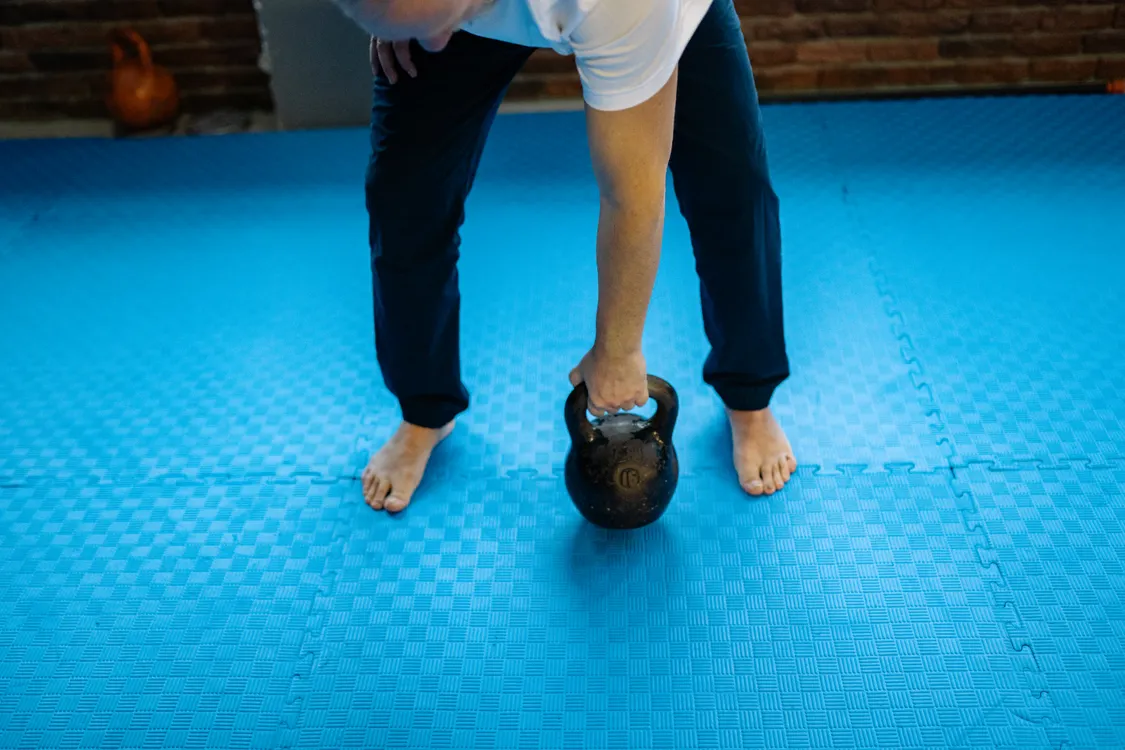
Muscle recruitment follows a general size principle: lower-threshold motor units tend to become active first, with additional higher-threshold units recruited as force requirements rise. A heavy set creates high force demand from the outset. A lighter set may begin with less recruitment, but as repetitions accumulate and fatigue grows, maintaining the required force can call on more motor units. That is why a hard set of fifteen or twenty repetitions is not simply a slow-twitch isolation drill.
However, reaching the point where another clean repetition is impossible is not mandatory on every set. Training close enough to a challenging effort can stimulate adaptation while reducing the discomfort and technique breakdown associated with constant all-out failure. Beginners, people returning from a layoff and anyone managing joint irritation may benefit from leaving a few controlled repetitions in reserve. On demanding barbell lifts, especially, a missed repetition has a different risk profile than stopping a machine exercise.
Very light loads can be inconvenient. A thirty-repetition set may take longer, generate more burning discomfort and make it harder to judge whether technique is still sound. A heavy triple, meanwhile, may deliver excellent strength practice but relatively little repeated work unless sufficient sets are programmed. Neither extreme is inherently superior for every outcome. Instead of trying to “feel” individual fiber types, ask whether the chosen load lets you produce high-quality effort, progress over time and recover for the next session.
Choose rep ranges for the result, not the fiber myth
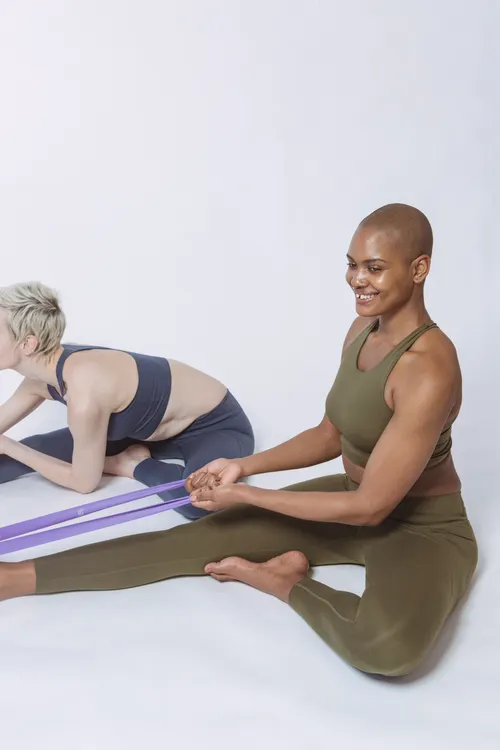
For maximal strength, regularly practicing relatively heavy loads is useful because strength is specific to the task. For muscle growth, a wider loading range can work when the sets are challenging and enough productive work accumulates. For muscular endurance, lighter loads and longer sets provide practice sustaining repeated contractions. Power training adds a separate requirement: moving a manageable load with fast, technically sound intent, without turning every repetition into a slow grind.
A practical starting framework is three to six repetitions on a heavy main lift, six to twelve on many compound or accessory exercises, and twelve to twenty on smaller or lighter movements. These are planning zones, not biological borders. A set of eight does not magically stop working at rep nine. Nor is there evidence that everyone must include every rep zone in every session. If your equipment has coarse weight jumps, using extra repetitions before increasing resistance can be a perfectly sensible progression method.
Consider a lifter who can perform three sets of eight goblet squats with a 24-kilogram dumbbell while keeping two repetitions in reserve. Over several sessions they build to three sets of twelve at the same load. Once all sets are controlled, they move to the next available weight and return to eight repetitions. That is progressive overload without pretending that a new fiber type was unlocked. On a cable machine with small increments, adding a little resistance instead may be easier.
Keep rest periods appropriate to the lift. Two to three minutes or more can help maintain performance on challenging compound sets; shorter rests may be practical for lighter accessories. Use controlled lowering and a strong, deliberate lifting phase. The objective is repeatable high-quality work, not maximum soreness.
Equipment Worth Exploring
Explore equipment, accessories and gear from our carefully selected range.




T-Bar Row Attachment
Welded barbell attachment that connects a D-handle bar for landmine and T-bar rows.
A two-day compact-home-gym plan that covers both demands
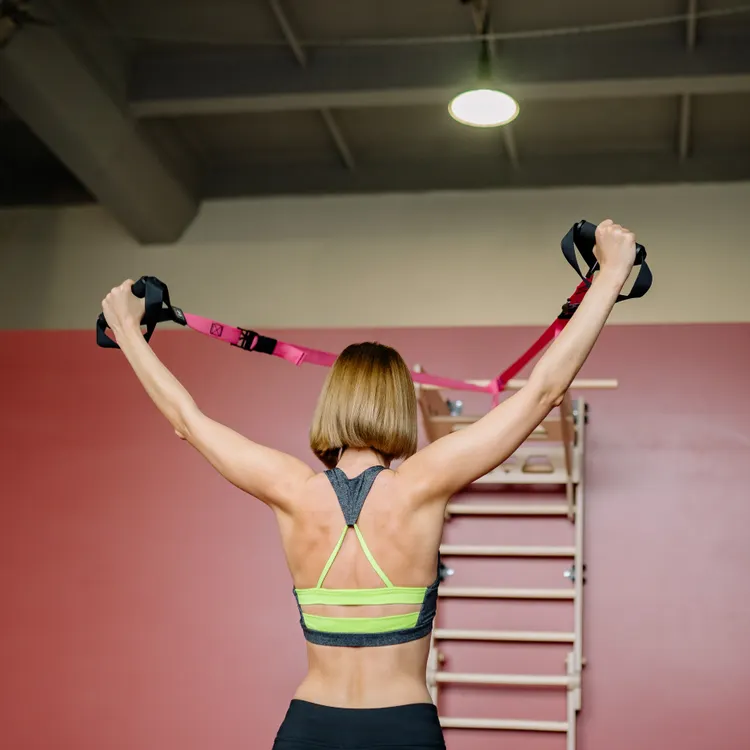
A rack and barbell are useful but not required. Adjustable dumbbells, a stable bench, resistance bands or a compact cable trainer can provide the same broad movement patterns. Start each session with five to eight minutes of easy movement, then two or three progressively heavier practice sets for the first exercise. Choose loads you can control and leave roughly one to three repetitions in reserve on most working sets.
Day A – strength emphasis: Perform three sets of five to eight squats or goblet squats, three sets of five to eight bench presses or dumbbell presses, three sets of six to ten rows, and two sets of eight to twelve Romanian deadlifts. Finish with two sets of twelve to fifteen calf raises or curls. Rest longer after the main lifts so the next set is not limited by breathlessness.
Day B – volume and movement quality: Perform three sets of ten to fifteen split squats, three sets of eight to twelve cable or dumbbell presses, three sets of ten to fifteen pulldowns or supported rows, and two sets of twelve to twenty lateral raises. Add two sets of ten to fifteen hip hinges or hamstring curls. If your joints and experience permit, place three to five low-volume jumps or quick medicine-ball throws early in the warm-up, with full recovery; otherwise omit explosive work.
Separate the two sessions by at least a day when possible. On nonlifting days, easy cycling or brisk walking can build general endurance without turning every day into another maximal workout. If you own only one adjustable weight, single-leg movements, unilateral presses and slower controlled lowering can make a moderate load useful. Progress the exercise you can perform well, not the one that looks most impressive on paper.
Bodybuilding Shirts & Workout Gear
Bodybuilding shirts, tanks and gym gear for lifters chasing muscle, size, symmetry and the pump.

Mike Mentzer Heavy Duty Old School Bodybuilding Muscle Tank Top
Show some personality between sets with “Tank Top Mike Mentzer Heavy Duty Old”.

Muscle Mommy Lifting Club for Gym Girls, Lifting & Stre T-Shirt
Bring “Muscle Mommy Lifting Club” humor to your everyday gym style.

Muscle Mommy Pink Gym Graphic for Women, Female Lifters T-Shirt
Show some gym-girl attitude with a playful “Muscle Mommy” tee.

Deadlift Military Skull Muscle Shirt for Powerlifters, Tank Top
Add some deadlift attitude to training with “Deadlift”.

Deadlift Pink Skull Crewneck for Powerlifting Leg Day a T-Shirt
Show some gym-day personality with “Deadlift”.

Deadlift Electric Skull Graphic , Hardcore Leg Day Trai Tank Top
Bring “Deadlift” humor to your next lifting session.

Hypertrophy Stoic Sigma Greek God Marble Sculpture T-Shirt
Bring “Hypertrophy Stoic Sigma Greek God Marble” humor to your next gym day.

Hardcore Gains Gym | Funny No Pain No Gain Workout Swea T-Shirt
For laid-back days and lifting humor: “Hardcore Gains”.

Squat Bench Deadlift Read Shirt Literary Bookworm Top T-Shirt
Bring “Squat Bench Deadlift Read” humor to your next gym day.

Flower : Meme Shirt Gains & T-Shirt
Make gym days more fun with “Flower Powerlifting Graphic” style.
Audit four weeks of progress without guessing your fiber mix
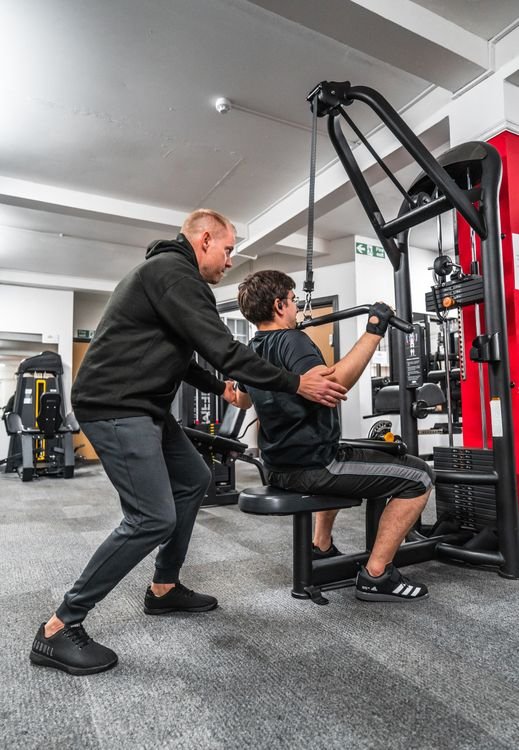
For week one, record each exercise, load, repetitions and how many more clean repetitions you think were possible. Keep the movement range and setup consistent. In week two, try adding one repetition to a working set while keeping form and effort similar. In week three, add a small load increment once you reach the top of your chosen rep range on all sets. In week four, compare performance under similar conditions rather than judging progress from one unusually good or bad session.
Track a few useful outcomes: a representative five-to-eight-rep lift for strength, a ten-to-fifteen-rep accessory for work capacity, and whether you can complete the planned sessions without excessive lingering fatigue. Optional measurements such as arm or thigh circumference are noisy over short periods; hydration, glycogen and measurement technique can move the numbers. A home workout log cannot identify which individual muscle fibers grew. That requires specialized laboratory methods.
Eat enough to support your goals, obtain adequate protein across the day, and protect sleep. If pain changes your movement, reduce the load or choose a tolerable alternative rather than trying to train through sharp symptoms. People with relevant medical restrictions should adapt the plan with qualified guidance. The point of a mixed approach is flexibility: heavy work practices force, moderate and lighter work adds useful volume, and regular aerobic activity supports endurance.
Bottom line: Fast- and slow-twitch fibers have different characteristics, but no rep range belongs exclusively to either. The latest fiber-level evidence suggests an interesting loading pattern without proving it. Choose weights that match the task, train hard enough to progress, and measure what your body can actually do.
Some product links may be affiliate links, which can support Mind Muscle Perfection at no additional cost to you.