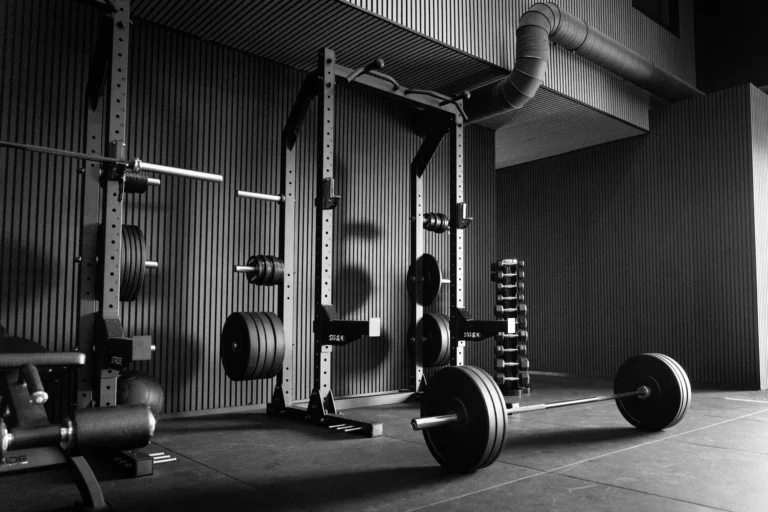
After a hard lifting session, a sauna can feel like the perfect finish: warm air, a slower pace and the sense that recovery has officially begun. But the feeling of recovery is not the same thing as a measurable increase in muscle size. Heat is a genuine physiological stressor, and its effects depend on temperature, duration, timing and the person using it.
One controlled six-week experiment found that adding short infrared-sauna sessions to strength and power training did not produce extra muscle growth. It did hint at improvements in certain loaded-jump measures. Other experiments using much hotter, longer sessions have reported different strength outcomes. Put together, the evidence supports a more interesting conclusion than either “sauna builds muscle” or “sauna is useless”: the goal and the heat dose matter.
What the six-week infrared-sauna experiment actually tested
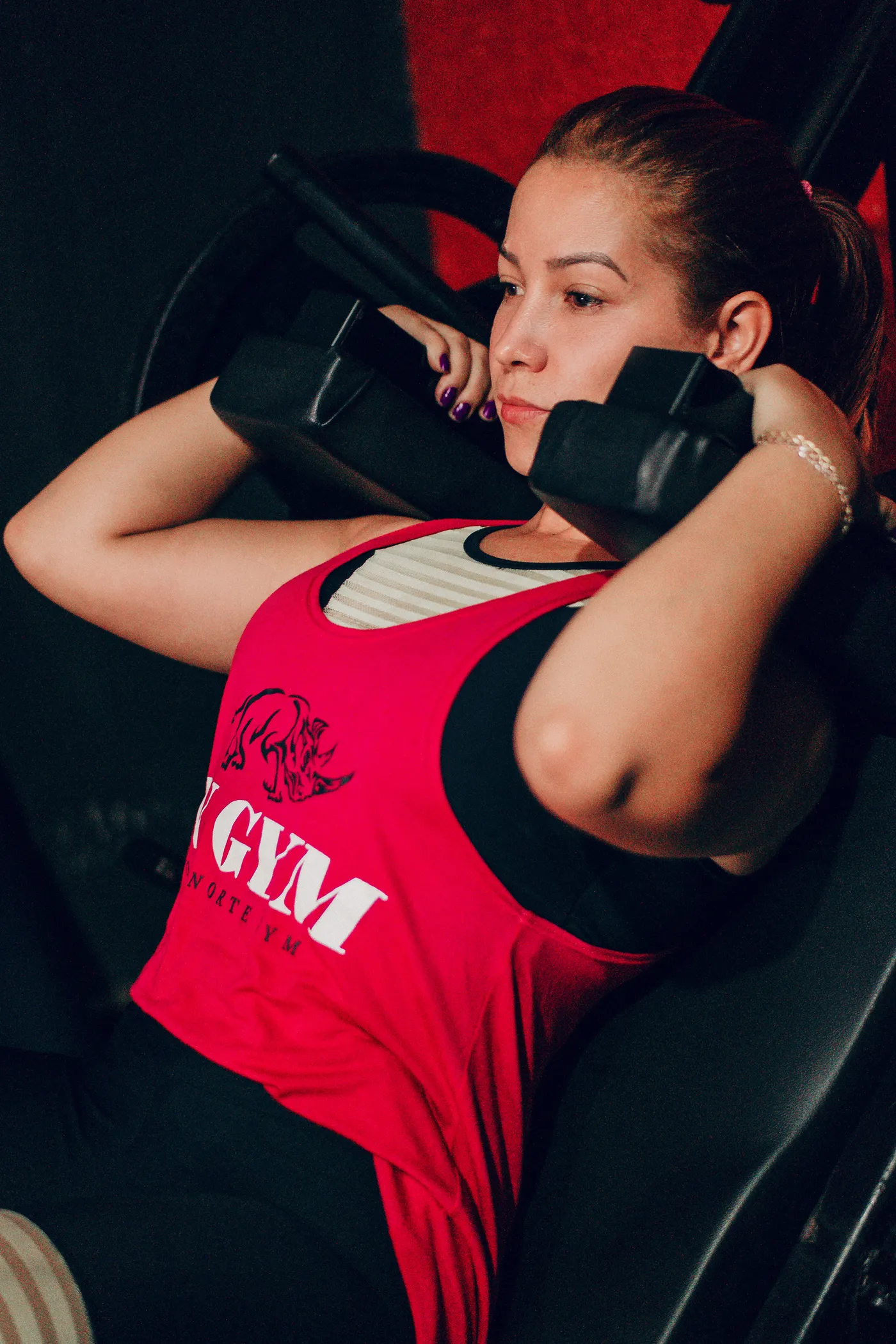
Forty female team-sport athletes completed a six-week training period that included strength and power work two or three times weekly. They were pair-matched into two groups of twenty. One group added a ten-minute infrared-sauna session at 50°C after training, three times a week; the other completed the training without that extra heat exposure.
The testing was unusually relevant to lifters because it went beyond asking whether participants felt refreshed. Measurements included whole-body composition, ultrasound estimates of the vastus lateralis muscle, maximal isometric leg-press force, sprint performance and several versions of the countermovement jump, including jumps performed with extra load.
Both groups improved from training. That is the first important point: a well-designed resistance program can work whether or not a sauna is part of the routine. The useful comparison is not “before versus after” within the sauna group, but whether the sauna group improved more than the training-only group.
There are limits to what this setup can answer. Six weeks is relatively short for detecting small differences in hypertrophy, especially when the groups contain only twenty athletes each. The participants were female team-sport athletes, not a broad sample of novice lifters, older adults or competitive bodybuilders. And a short 50°C infrared session is not interchangeable with sitting in a much hotter traditional dry sauna for half an hour.
Still, the design gives a concrete starting point: if someone adds a brief, repeatable infrared-sauna routine after lifting, what changes can actually be measured over the next several weeks?
Muscle growth: the extra heat did not produce a clear advantage
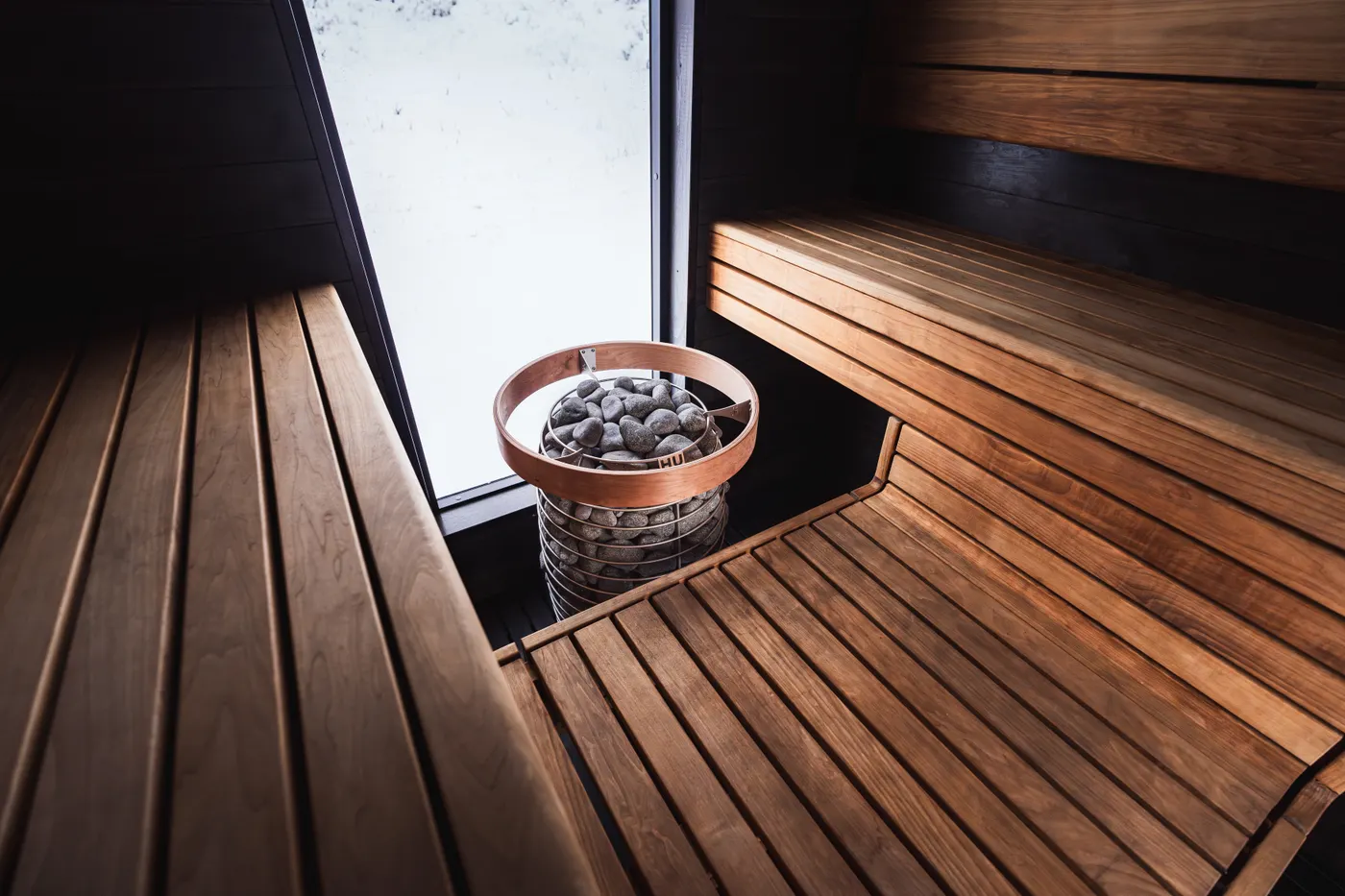
The clearest result was also the least glamorous. Muscle size increased with training, but there was no meaningful between-group interaction in the hypertrophy measurements. In other words, the athletes who used infrared sauna did not demonstrate a reliably larger muscle-growth response than the athletes who trained without it.
That finding matters because sauna discussions often jump from a plausible mechanism to a guaranteed result. Heat can affect blood flow, thermal regulation and cellular stress responses. None of those changes automatically proves that a lifter will build more contractile tissue over months. A warm, relaxed feeling after training is a subjective experience; hypertrophy is a structural adaptation that needs to be measured.
Another experiment in healthy older adults adds useful perspective. Participants underwent repeated passive infrared heat exposure for eight weeks. Muscle capillarization increased, yet measurements did not show higher muscle-protein-synthesis rates, larger vastus lateralis cross-sectional area or improved leg strength. More small blood vessels around muscle fibers did not translate into a measurable gain in muscle mass under that protocol.
These results do not establish that heat can never help hypertrophy. The studies differ in age, training status, exposure schedule and whether resistance training was paired with the heat. They do, however, argue against presenting sauna as a substitute for progressive overload, sufficient food, protein and recovery.
For a lifter focused primarily on size, the practical hierarchy remains straightforward: train consistently, progress the work, eat enough and sleep. Sauna can be an optional addition if it fits your schedule and you enjoy it. It should not displace the things already known to drive muscle growth.

Equipment Worth Exploring
Explore equipment, accessories and gear from our carefully selected range.


FID Bench MAX
Adjustable bench offering flat, incline, and decline positions + adjustable headrest.


VOLTRA
Compact digital cable trainer with smooth, adjustable resistance.

Go-Tone Pro
Portable digital cable trainer with up to 66 lb (30 kg) of adjustable resistance.


Strength and power: a possible signal, not a proven shortcut
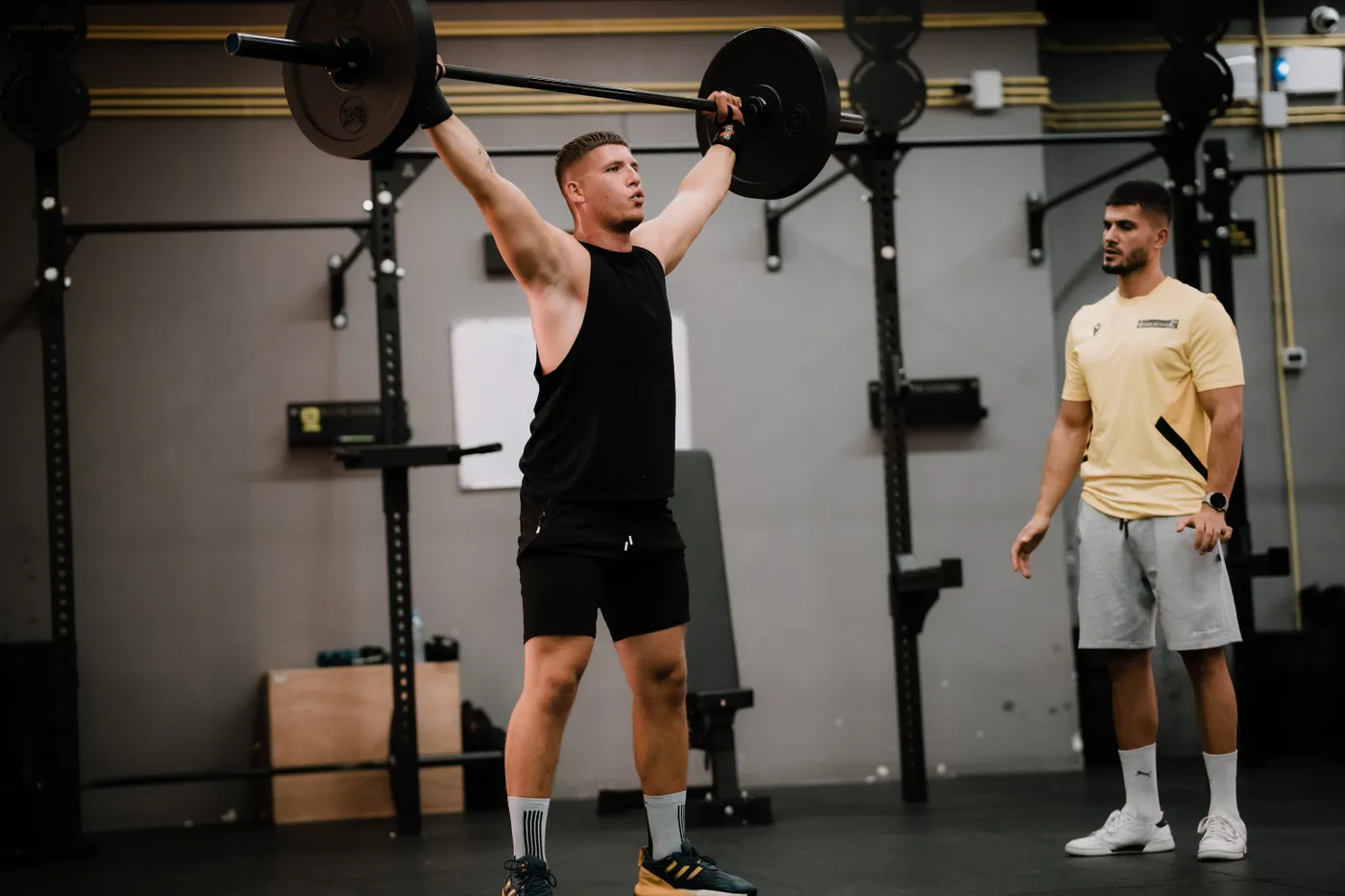
The infrared-sauna trial was not entirely neutral across every outcome. The researchers observed an interaction for jump height and peak power during a countermovement jump performed with an added load equal to 15% of body weight. The sauna group improved on those measures over the training period, although the pattern of statistical comparisons was not identical across all tests.
That is interesting because loaded jumping combines rapid force production with coordination and movement speed. It is not the same outcome as a one-repetition-max squat, a deadlift personal record or muscle thickness. A promising signal in one jump condition should not be advertised as proof that sauna makes every lift stronger.
The study also assessed sprint splits, heavier loaded jumps and maximal isometric leg-press force. There was no consistent broad advantage across the full performance battery. When a small study tests many outcomes, a few positive results are useful hypotheses, but they need replication before they become dependable programming advice.
It is possible that repeated heat exposure affects training readiness or the ability to express power under certain conditions. It is also possible that individual variation, the sport background of the participants or chance contributed to the observed differences. The trial cannot cleanly identify the mechanism.
For lifters, the distinction is practical. If your primary target is maximal strength, you still need heavy, specific practice with the relevant movement. If your sport rewards explosive power, a carefully tolerated heat routine might be worth investigating—but it should be judged against your actual sprint, jump and training results rather than the promise of an abstract “performance boost.”

Bodybuilding Shirts & Workout Gear
Bodybuilding shirts, tanks and gym gear for lifters chasing muscle, size, symmetry and the pump.

Gym Recovery Rap God Athletic | Funny Bodybuilding Vest Tank Top
Train hard, laugh a little, and rep “Gym Recovery Rap God Athletic”.

Science Based Lifting Rick And Morty Evidence-Based Tank Top
Train hard, laugh a little, and rep “Science Based Lifting”.

Blood Sweat & Gains | Dracula Vampire Workout T-Shirt
Bring “Blood Sweat & Gains” humor to your next gym day.

Flaming 45LB Weight Plate Fire Barbell Lifting Workout T-Shirt
Show some powerlifting attitude with a playful “Flaming 45LB Weight Plate” tee.

The Big Flex Theory | Science Based Lifting Sweater | B T-Shirt
For laid-back days and bodybuilding humor: “The Big Flex Theory”.

Come As You Are Sweaty Hooded Pullover Nirvana Fans Hoodie
Keep it laid-back with a little “Come As You Are Sweaty” attitude.

Lift Eat Sleep Repeat Meme Sweater & T-Shirt
Bring “Lift Eat Sleep Repeat” humor to your everyday gym style.

E = mc² Energy Muscle Confidence Albert Einstein Scienc T-Shirt
Show some lifting attitude with a playful “E = mc² Energy Muscle Confidence” tee.


Kanye Rest Day | Swole Ye Lifting Parody Hooded Hoodie
Bring “Kanye Rest Day” gym humor to lazy days and post-workout plans.
Why a much hotter sauna study found different outcomes
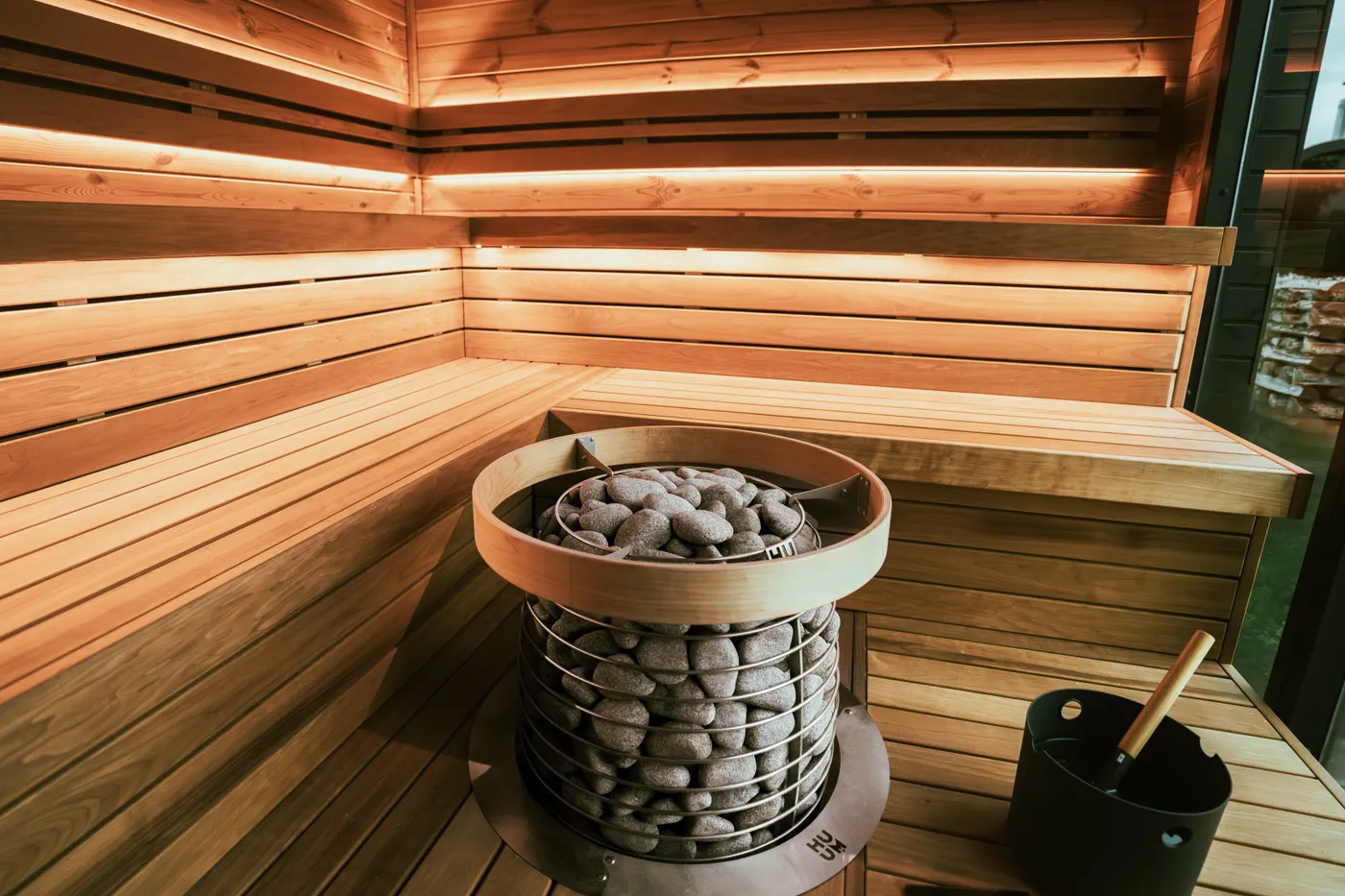
A separate four-week experiment paired lower-body resistance training with very hot traditional sauna exposure, approximately 100°C. The heat group completed repeated ten-minute bouts twice weekly, while a comparison group trained without that sauna program. Researchers reported favorable patterns in some strength and body-composition measurements, including observations after a subsequent period without training.
It is tempting to place that result beside the 50°C infrared trial and conclude that hotter must be better. That would be a mistake. The experiments used different populations, different heat delivery, different exposure lengths and different testing protocols. One was a six-week program with female team-sport athletes; the other was a small four-week intervention in young men. A much more aggressive thermal dose can create a different physiological challenge and a different burden of fatigue.
Small-group results are also vulnerable to baseline differences and measurement noise. In the extreme-heat experiment, hydration control and group comparability were among the limitations. Changes in body composition during substantial heat exposure require careful interpretation because shifts in body water can complicate some measurements.
There is a useful middle ground between dismissing the result and turning it into a prescription. Extreme-heat training is an area worth studying, but a preliminary favorable signal does not establish an optimal temperature, duration or safety margin for ordinary gym members.
Most importantly, do not copy an extreme protocol because it sounds more anabolic. A temperature that is tolerable in a supervised study may be inappropriate for someone with different cardiovascular health, hydration status or sauna experience. The question should be whether a heat routine provides a meaningful benefit after accounting for its costs.
Feeling recovered is not the same as being ready to perform
Heat can be relaxing, but it also increases cardiovascular strain, sweating and fluid loss. That creates a paradox: you may leave the sauna feeling mentally refreshed while your body has experienced an additional stressor after an already demanding workout.
An acute experiment with physically active men measured strength and explosive performance before exercise, immediately after exercise and sauna, and again the following day. Traditional sauna exposure at around 70°C added a substantial load to the session. After strength work followed by sauna, several neuromuscular measures remained depressed at the 24-hour check. The researchers did not find that sauna amplified the exercise-induced hormonal response in a way that could justify claims of instant muscle-building benefits.
This does not mean every sauna session ruins recovery. The acute study used a particular sequence and exposure protocol, and it measured short-term performance rather than long-term gains. But it demonstrates why adding heat to a hard session should not automatically be treated as rest.
Another eight-week experiment in previously sedentary adults with cardiovascular risk factors found no additional long-term heart-rate-variability benefit from adding short post-exercise sauna sessions compared with exercise alone. Heart-rate variability is only one marker and is not a universal recovery score, yet the result reinforces the idea that more recovery technology does not guarantee more adaptation.
Consider the next day’s training. If heavy squats, intervals or sport practice are scheduled within twenty-four hours, a long sauna immediately after today’s workout might be a poor trade. If tomorrow is an easy day and the heat session leaves you sleeping well and feeling normal, the cost may be smaller. Track performance, thirst, dizziness, sleep and fatigue—not just whether the session felt luxurious.
Equipment Worth Exploring
Explore equipment, accessories and gear from our carefully selected range.


Leather Lifting Straps
Padded leather straps support grip during heavy rows, deadlifts and pulling exercises.


How to fit sauna into a realistic lifting week
Start with the goal. If muscle growth is the priority, treat sauna as a personal recovery preference rather than a hypertrophy intervention. If you are preparing for sport in hot conditions, heat acclimation may be a separate performance objective, but that calls for a structured plan rather than random extra minutes after leg day.
A sensible trial for someone already accustomed to sauna is to keep sessions short, choose a moderate temperature they tolerate comfortably and avoid stacking an unfamiliar heat exposure onto their hardest workout. There is no research-backed universal dose that maximizes muscle growth. The ten-minute 50°C infrared protocol studied in female athletes is a research condition, not a guarantee of benefit or a prescription for everyone.
Think about scheduling. A lifter training Monday, Wednesday and Friday could place a brief sauna session after a less demanding day, then observe the following session’s bar speed, energy and hydration. If performance falls or fatigue lingers, reduce the exposure or move it farther from demanding training. Do not chase a particular number of minutes simply because a study used it.
For a hypertrophy-focused week, you might prioritize a normal cooldown, food, fluids and sleep, with sauna as an optional extra. For a power-focused block, protect high-quality jumps and heavy lifts by avoiding a heat dose that compromises readiness. For someone training in the heat, acclimation decisions should be made around the sport schedule and appropriate supervision.
Keep the comparison honest: record what you actually do and how you respond. If adding sauna shortens your lifting session, delays meals, worsens sleep or makes you skip a workout, the overall program may be worse despite any theoretical benefit. If it helps you unwind without affecting the fundamentals, it may still be a worthwhile habit for reasons other than bigger muscles.
Funny Gym Shirts & Workout Gear
Funny gym shirts, tanks, hoodies and workout gear for lifters who like training hard.

Red Hot Gains – Rock Music Gym Meme Pullover Jumper Top T-Shirt
For laid-back days and rock-and-lifting humor: “Red Hot Gains”.

Blood Sweat and Tears Weight Plate 45LB Plate Blood & W Tank Top
Add some Halloween attitude to training with “Blood Sweat and Tears Weight Plate”.

| Pencilneck Science-Based Lifting Gym Nerd Muscle Shir Tank Top
Train hard, laugh a little, and rep “Pencilneck Science-Based Lifting Gym Nerd”.

Funny Viking Gym – Blood Sweat Protein Shakes Workout H Hoodie
Show off your Viking humor in a laid-back “Viking” hoodie.

Physical Mass Albert Einstein Science Based Lifting Bro Hoodie
Keep it laid-back with a little “Physical Mass” attitude.

Broscientology Muscle Shirt Athletic Vest Bro Science W Tank Top
Bring “Broscientology” humor to your next lifting session.

Bro Science Periodic Table Tee
Heavy lifts, good laughs, and a little “Bro Science Periodic Table Graphic” energy.

The Bro Science Theory Big Bang Decal Sticker
Bring “The Bro Science Theory” attitude to your water bottle or laptop.

Hallowed Gains Hoodie
Show off your metalhead humor in a laid-back “Hallowed Be Thy Gains” hoodie.

Bro Science Breaking Bad Shirt Meme T-Shirt
Make gym days more fun with “Bro Science Breaking Bad” style.
Hydration, warning signs and the bottom line

Sauna safety is not just about how tough you feel. Heat exposure can increase heart rate, lower blood pressure in some circumstances and accelerate sweating. Going in already dehydrated after hard training raises the chance of feeling faint or unwell. Alcohol, illness, certain medications and underlying cardiovascular problems can change individual risk.
Drink according to thirst and the demands of the session, and replace fluid losses sensibly rather than trying to sweat out as much weight as possible. When workouts are long or especially sweaty, normal meals and appropriate electrolytes may matter too. Avoid treating a temporary drop on the scale after sauna as fat loss; it is largely fluid.
Stop the heat session if you feel dizzy, nauseated, unusually weak, confused or develop chest discomfort. Move to a cooler environment and seek appropriate help if symptoms are severe or persistent. People with heart disease, unstable blood pressure, pregnancy-related concerns or medications that affect heat tolerance should get individualized guidance before experimenting with prolonged or extreme heat.
There is no need to turn a relaxing practice into a test of endurance. The hottest setting and longest session are not badges of effective training. Tolerance develops differently between people, and what worked for an athlete in a supervised experiment is not a universal safety benchmark.
Bottom line: short post-lifting infrared sauna did not add measurable muscle growth in a six-week controlled trial, although some loaded-jump outcomes were encouraging. More extreme heat protocols have generated interesting but limited findings, and acute sauna exposure can add fatigue. Use sauna because you enjoy it or because you have a specific, carefully planned heat-adaptation goal—not because it has been proven to build extra muscle after every workout.