Advertising disclosure: This page includes affiliate product links that may earn us a commission, as well as products from our own store.
Grip failure can make a strong back or pair of legs look weaker than they are. But buying a harder hand gripper is not automatically the answer. Closing two handles, keeping a bar from opening your fingers and squeezing the edges of a plate ask different things of your hands. A useful grip plan begins with the task you want to improve, then gives that task a repeatable test. This guide separates crush, pinch and support work, explains where wrist training fits, and offers a simple way to add practice without turning every pulling workout into a forearm endurance contest.
Crush grip: make the close repeatable
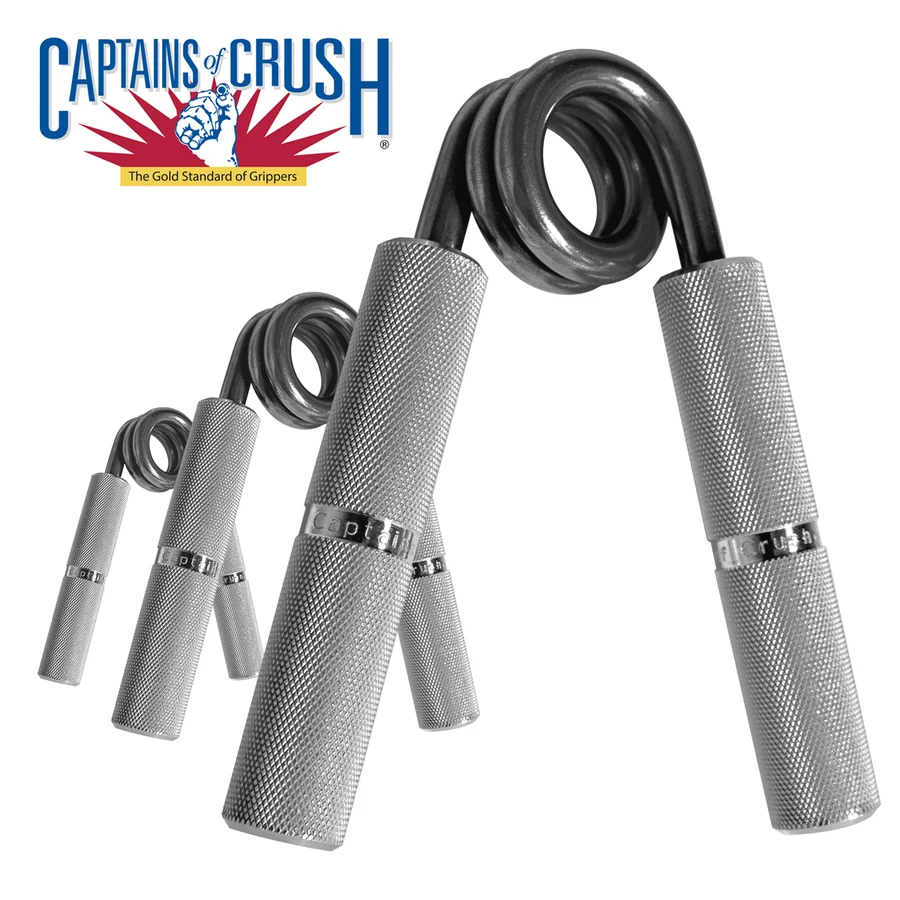
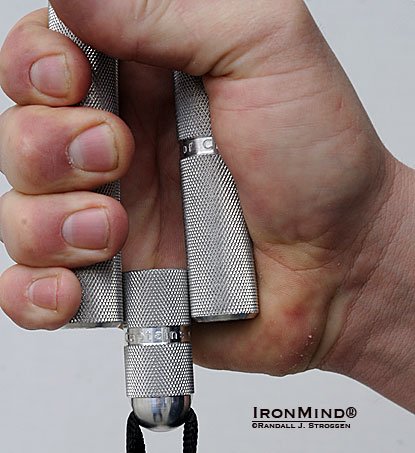
Crushing describes bringing the fingers toward the palm. A spring gripper makes that action easy to see: the handles move closer together as you squeeze. The practical question is whether you can complete the same close with the same setup, not whether you can hold the biggest-looking gripper in your hand. A partially closed heavy tool and a fully closed lighter one should have separate entries in your training record.
Start with a resistance that permits controlled repetitions. Keep the spring orientation and starting handle spread consistent. Use the other hand only to position the device if that is your chosen setup; do not quietly turn a one-hand repetition into an assisted close. Finish each rep deliberately and reopen under control. If the handle slips into a different place in your palm, reset before deciding that the next attempt is comparable.
As an introductory example, try two sets of five clean closes per hand after your main training. That is a starting template rather than a proven optimum. Pick an easier setting if the last repetitions require twisting your torso or aggressively bending the wrist. You can work toward more clean repetitions before testing a harder gripper, and keep the easier tool available for warm-ups.
Treat package resistance numbers cautiously when comparing different products. A useful personal benchmark is the same actual device, the same setup and a clearly recorded result. Better gripper performance is evidence of better performance on that gripper. To find out whether it helps your lifting, also track the barbell or dumbbell task that originally exposed the weakness.
Pinch grip: train the thumb and control the width
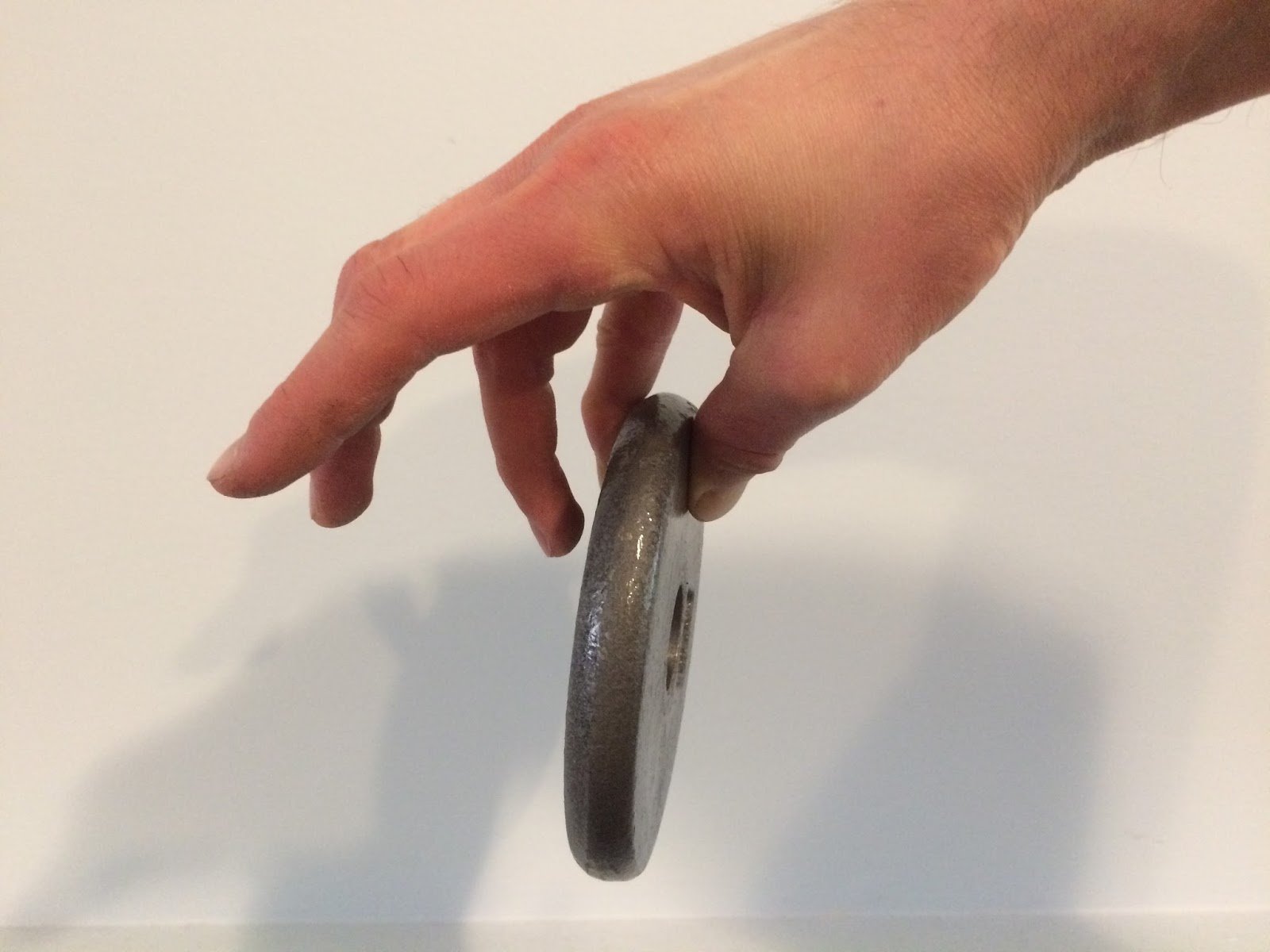
A pinch places the thumb against the fingers across an object instead of wrapping the fingers around a conventional handle. Weight plates can provide a convenient implement, but their geometry matters. A thin smooth plate, a thick bumper plate and a plate with hand holes are not interchangeable tests. Holding a cutout handle changes the task from the edge pinch you intended to practise.
Begin close to the floor with the feet outside the potential drop zone. Choose an object you can pick up and put down deliberately. Keep the thumb opposed to the fingers and avoid trapping fingers between plates as you assemble the setup. If two plates are used, check that they sit securely together before lifting. A small controlled lift is sufficient; raising the load higher does not make the pinch a better test.
An example practice session is two holds of ten to twenty seconds per hand with a manageable load. End the hold while you can still set the implement down safely. Record which plates you used, their orientation and the grip width, along with the time. The next session can aim for a slightly longer clean hold using the same setup. A heavier or wider implement starts a new comparison.
Keep the exercise honest. Resting the plate against the thigh, supporting it with the other hand or catching a rim with the fingertips can rescue the weight while changing the test. None of those observations requires a dramatic failure attempt. Stop, write down what happened and choose a more manageable load next time. Progress is easier to interpret when the rules stay simple.
Support grip: hold the load your lift actually uses
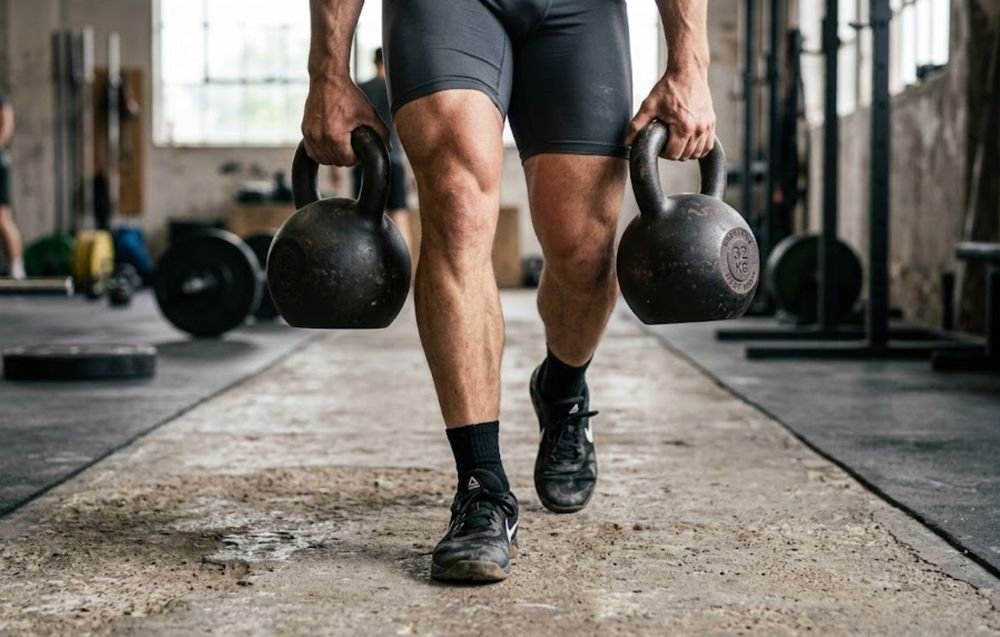
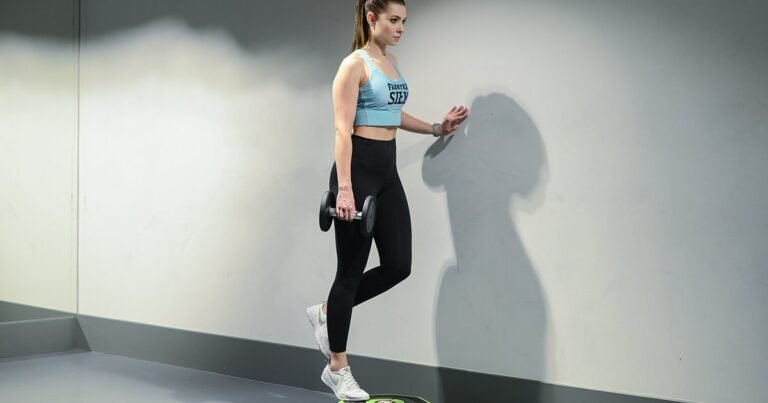
Support grip is the ability to retain a load for a period of time or distance. A dumbbell carry is one practical example, and a static hold can remove the walking component when space or balance is the limiting factor. For a lifter whose hands open during rows, the first useful comparison may simply be a consistent dumbbell hold rather than another type of grip implement.
Choose a clear area with room to put the weights down. Stand tall without deliberately shrugging or leaning backward to appear more upright. Keep the weights under control and take short, unhurried steps if carrying. Once the grip starts opening, finish the set by lowering the load safely instead of racing to extend the distance. Keep bystanders and loose equipment out of the lane.
For example, use two controlled holds or carries lasting about twenty seconds. Repeat the same route or time target so that walking speed does not become a hidden progression method. If your legs, breathing or ability to turn around end the set first, note that limitation. You may need a static version to judge hand endurance more clearly.
Straps and grip training can coexist. If your main goal is back training, using straps on selected hard pulling sets can keep hand fatigue from deciding the whole session. Separate unassisted holds then give the hands a defined job. Record which sets used assistance. A longer strapped row set is useful training information, but it is not an unassisted grip personal record.
Handle shape also matters. Moving from a familiar dumbbell to a thicker handle changes the challenge. Compare like with like before adding load, and check that add-on grips fit securely. Adjustable dumbbells and plate-loaded handles have their own loading and handling instructions; do not assume every model is suitable for every carry variation.
Wrist work adds a different movement
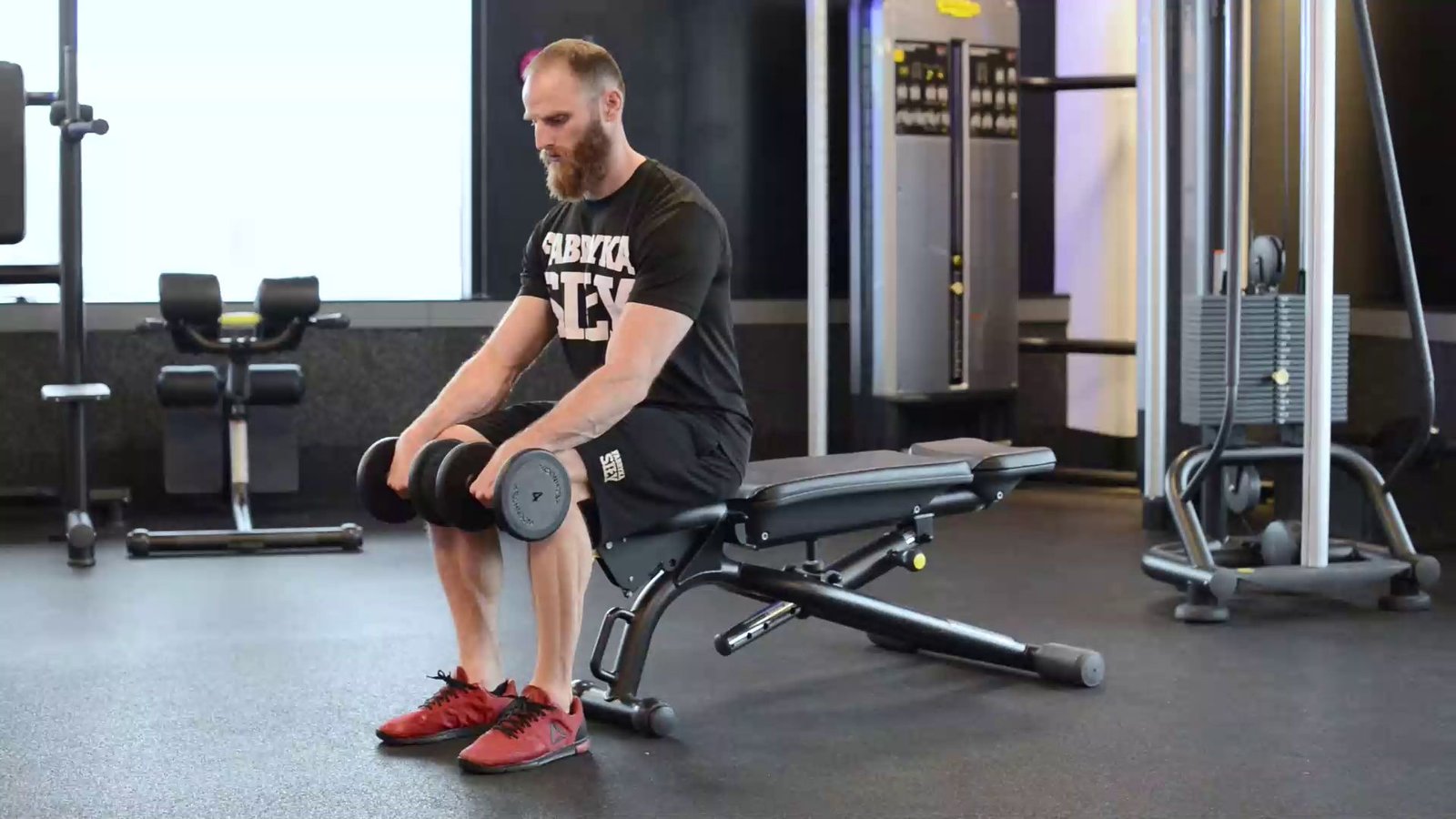
Grip training and wrist training overlap, but the movement you perform still matters. Supported wrist flexion moves the palm toward the inner forearm; wrist extension raises the back of the hand toward the outer forearm. Keep those movements separate in the log instead of combining them into one vague category called forearms.
For a supported dumbbell wrist extension, rest the forearm securely with the hand free beyond the support and the palm facing down. Start with a light dumbbell and move through a comfortable controlled range. Keep the rest of the arm quiet. In the palm-up flexion variation, reverse the orientation and curl at the wrist without using the shoulder to throw the weight upward.
Maintain a secure grip rather than deliberately letting a dumbbell roll toward the fingertips. Supported work should make it easier to control the wrist, not create a dropping exercise. If symptoms appear, reduce the demand and stop the provoking movement; persistent pain, numbness or weakness deserves individual assessment rather than a more aggressive training challenge.
A wrist roller is another option, but its setup changes what limits the set. Holding a roller out in front asks the shoulders to support the arms while the hands turn it. A securely mounted roller removes that particular holding demand. Keep the mounting arrangement, winding direction, rope travel and load consistent when judging progress. Never let the hanging weight unwind freely to finish faster.

Equipment Worth Exploring
Explore equipment, accessories and gear from our carefully selected range.
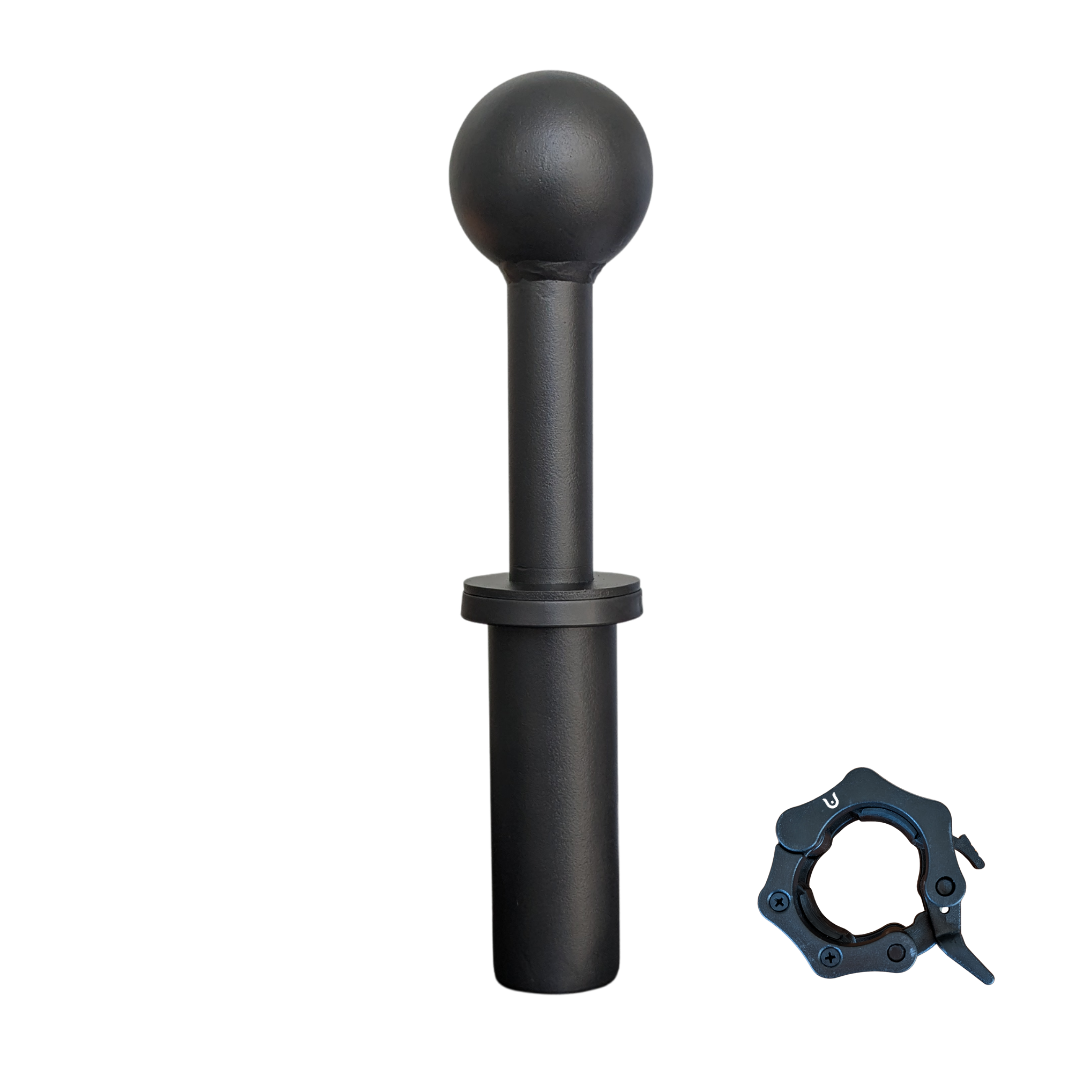


Grip Plates
Rubber-coated weight plates with handholds for loading barbells and machines.

Rubber Hex Dumbbells
Rubber-coated hex dumbbell pairs with a stable shape for home and commercial strength training.


Leather Lifting Straps
Padded leather straps support grip during heavy rows, deadlifts and pulling exercises.
Build a small plan and measure the right result
Choose one priority for the next few weeks. If a bar slips during your pulling sets, begin with support work. If you want to improve a gripper close, practise that close. If your thumb is the obvious missing piece, add a controlled pinch. You do not need to make every category equally demanding in the same session.
A manageable starting experiment is two brief grip sessions per week after the important lifts. Session A could use two controlled support holds and light wrist extensions. Session B could use two short pinch holds and two easy sets of gripper closes. These are illustrative choices, not a research-validated prescription or a requirement to add all four exercises immediately. Start with less if your existing pulling work is already substantial.
Write down the implement, load or setting, repetitions or hold duration, hand, setup and stopping reason. For grippers, record the starting spread and whether a close was complete. For pinches, record the plate combination and width. For carries, record whether the limiting factor was the hands, posture, route or breathing. Those details explain much more than a single number labelled grip strength.
Change one variable at a time. Extend a clean hold before making the load heavier, or add a clean close before choosing a stiffer gripper. When you change the implement, establish a new baseline. Keep the hardest grip work away from a session where fresh hands are essential, and reduce accessory volume if your main pulling performance deteriorates.
At the end of the experiment, review both the accessory result and the original lifting problem. More clean gripper closes can be a success even if your deadlift grip needs separate work. Longer carries can reflect useful progress even when pinch strength remains unchanged. The point is to build the hand strength your training actually asks for, then keep enough consistency to know whether the plan is working.

Funny Gym Shirts & Workout Gear
Funny gym shirts, tanks, hoodies and workout gear for lifters who like training hard.

Grip Training Essential Gymbro Jumper & T-Shirt
For laid-back days and lifting humor: “Grip Training Essential”.


Consistency Is Key Stoic Greek God Marble Sculpture T-Shirt
Make gym days more fun with “Consistency is Key Stoic Greek God Marble” style.

Deadlift Frozen Skull Gym Shirt for Powerlifters, Hardc T-Shirt
Bring “Deadlift” humor to your next gym day.

Trap Bar Deadlift Behold Thee Trap Bar Medieval Gym Pul Hoodie
Show off your medieval humor in a laid-back “Trap Bar Deadlift” hoodie.

Deadlift Flaming Skull Graphic , Hardcore Bodybuilding Tank Top
Add some deadlift attitude to training with “Deadlift”.

Progressive Overload Milo Tee
Bring “Progressive Overload Milo Bull” humor to your next gym day.


Iron Addict Shirt – Weights & Lifting Meme & Gains T-Shirt
Bring “Iron Addict” humor to your next gym day.

Barbell Buddies for Gym Buddies, Friendship, and Liftin Sticker
Put “Barbell Buddies” gym humor on your laptop, bottle, or gym gear.