Advertising disclosure: This page includes affiliate product links that may earn us a commission, as well as products from our own store.
Flat, incline or decline: which bench angle actually makes you stronger? A 2026 experiment measured force and skin temperature during static presses at three angles. The findings are interesting, but a heavier flat press is not automatic proof of superior muscle growth. Here is what the experiment really tested and how to apply it alongside longer training studies.
1. What the ten-man experiment measured
The August 2026 study enrolled ten resistance-trained men averaging about 22 years old. Each performed a maximal voluntary isometric contraction lasting ten seconds at flat, incline and decline bench positions. Isometric means generating force without the usual lowering-and-pressing movement. A handheld dynamometer measured force, while infrared thermography recorded skin temperature over different chest regions before and immediately after each effort.
Measured force was generally higher in flat and decline positions than incline. After correcting for multiple comparisons, the clearest differences remained for decline on both sides and flat on the right. Flat and decline were not significantly different. The flat position also produced the most consistent immediate thermal changes across the measured chest regions.
These observations describe a tightly defined task, not a ranking of muscle-building exercises. The sample was small and exclusively young trained men. Participants did not perform conventional sets of moving repetitions, and nobody followed a training program long enough to assess muscle growth. The investigators explicitly cautioned against extrapolating the findings to dynamic bench pressing.
The accurate conclusion is narrow: bench position changed static force and immediate skin-temperature responses in this laboratory setup. It did not establish which exercise builds the most upper chest, which is most comfortable for the shoulder, or which produces better strength gains after months of training.
2. Why flatter angles can produce more force
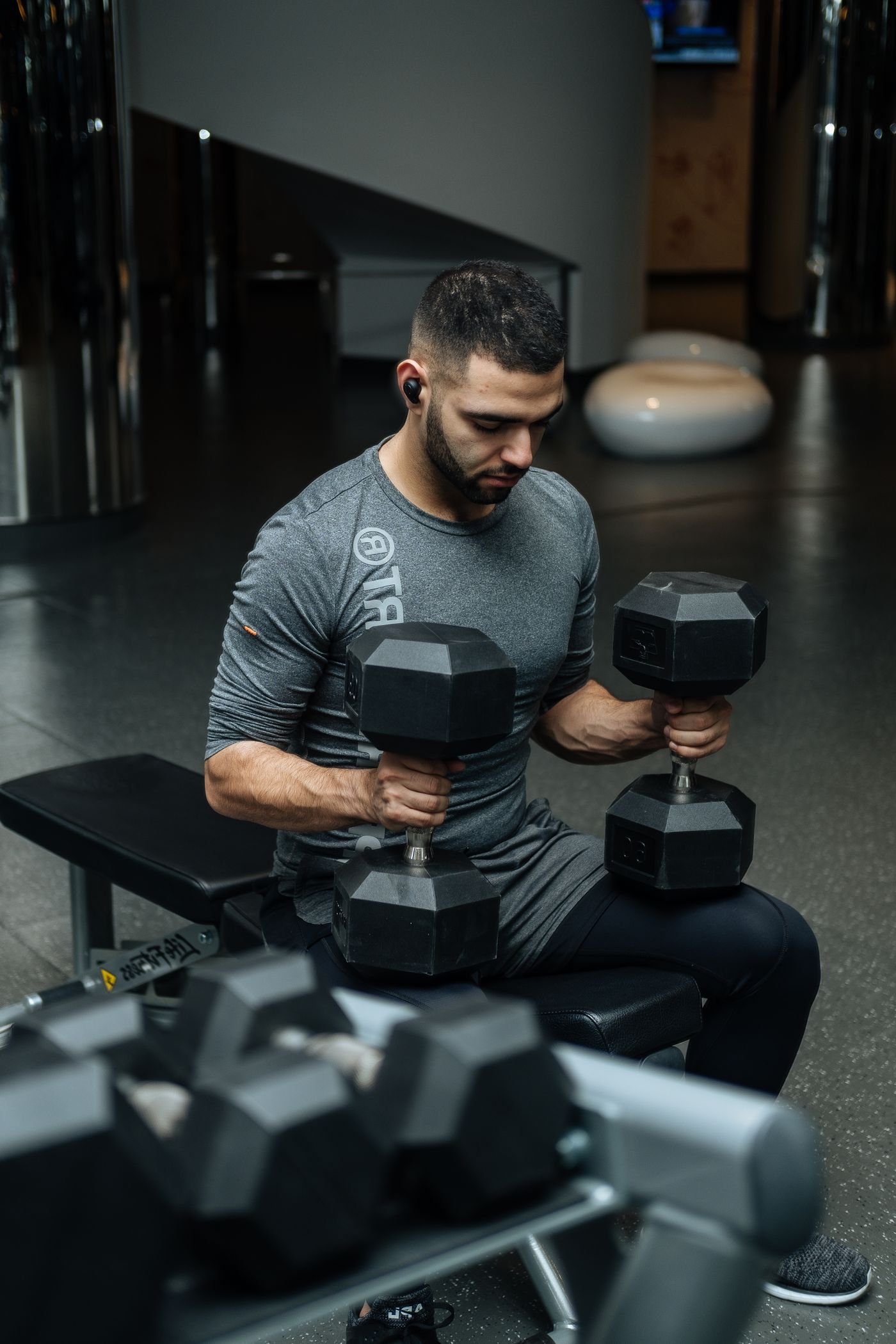
Changing bench inclination changes the upper arm’s position relative to the torso and the leverage of the chest, shoulder and elbow muscles. A flat press emphasizes horizontal pressing. Raising the backrest adds shoulder flexion and changes the contribution of the clavicular pectoralis, anterior deltoid and triceps. A very steep incline begins to resemble a shoulder press.
Force also depends on elbow angle, grip, limb lengths, bar path and stability. A heavier number on one variation does not make that variation inherently superior. If you press two 30 kg dumbbells flat for ten repetitions but use two 26 kg dumbbells on an incline, you have changed the task and its mechanical demands. Compare progress within each exercise rather than just absolute loads between them.
For chest-focused incline pressing, a moderate angle is a reasonable starting point. Try roughly 15–30 degrees, assess comfort and control, and adjust. The exact setting is a practical preference informed by other research, not a universal optimum established by this ten-man static test. A high backrest may simply increase the amount of work performed by the front delts.
Flat, incline and decline pressing can all have a role. Mechanical differences help explain how each variation feels and where effort is distributed. Controlled long-term training comparisons are required to establish how those differences translate into hypertrophy or strength. Do not mistake the ability to lift more weight for a complete measure of training value.

Equipment Worth Exploring
Explore equipment, accessories and gear from our carefully selected range.




FID Bench MAX
Adjustable bench offering flat, incline, and decline positions + adjustable headrest.

VOLTRA
Compact digital cable trainer with smooth, adjustable resistance.

Go-Tone Pro
Portable digital cable trainer with up to 66 lb (30 kg) of adjustable resistance.


3. Skin temperature is not a hypertrophy score
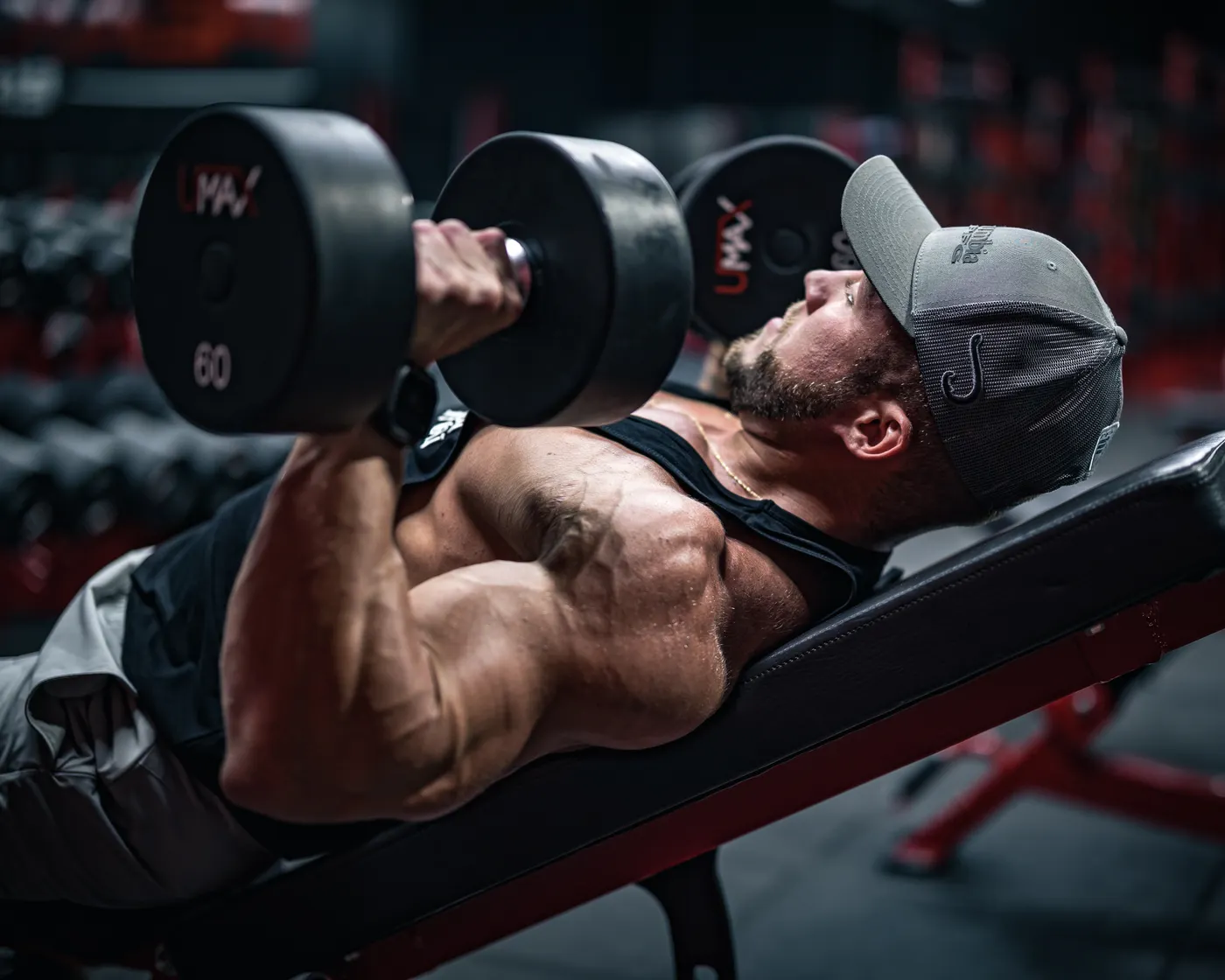
An infrared camera measures temperature at the skin surface. That reading varies with blood flow, sweating, room conditions, timing, skin characteristics and the testing protocol. It does not directly measure the size of the pectoralis major, the number of motor units activated or the growth that may occur over several weeks.
The flatter press generated more widespread immediate thermal changes in the new experiment. It would be misleading to translate this into “flat bench grows the whole chest better” or “incline bench fails to train the upper chest.” Neither claim was tested. Temperature observations belong alongside static force measurements as acute physiological data, not predictions of future muscle size.
Surface electromyography, or EMG, also requires care. EMG records electrical signals associated with muscle excitation during a movement. It can show how an angle shifts activity, but it is not a direct percentage estimate of future muscle growth. Electrode placement, fatigue, technique and loading all affect the signal.
For training decisions, track repeatable performance, adequate hard sets, range of motion, proximity to failure and recovery. A pump, soreness or a warm feeling may accompany productive exercise, but none is a reliable scoreboard. If your goal is a stronger or bigger chest, the evidence you should prioritize is progressive training and longer-term outcomes, not the immediate appearance of a thermal image.

Bodybuilding Shirts & Workout Gear
Bodybuilding shirts, tanks and gym gear for lifters chasing muscle, size, symmetry and the pump.


Kanye Chest Gym | Funny Bodybuilding Parody Pullover | T-Shirt
Keep things casual with a little “Kanye Chest” attitude.

Dost Thou Even Fly Tee
Make gym days more fun with “Dost Thou Even Fly Medieval Knight Pec Fly” style.

The Chestfather Sticker
Put “The Chestfather” gym humor on your laptop, bottle, or gym gear.

I Want You To Bench Press Uncle Sam – 4th of July Patri T-Shirt
Keep things casual with a little “I Want You To Bench Press Uncle Sam” attitude.

I Love Bench Press | Heart Weight Plate Hooded For Ches Hoodie
Keep it laid-back with a little “I Love Bench Press” attitude.

Gym Sir Swole of Benchalot Medieval Knight Chest Day Mu Tank Top
Bring “Sir Swole of Benchalot Medieval Knight” humor to your next lifting session.

The Chestfather Arnold – Big Chest , Meme Shirt, T-Shirt
Bring “The Chestfather Arnold” humor to your next gym day.

Enjoy The Swoleness – Depeche Mode Music Meme Hooded Hoodie
Make your off-duty look more fun with “Enjoy The Swoleness”.
4. What longer bench-press research adds
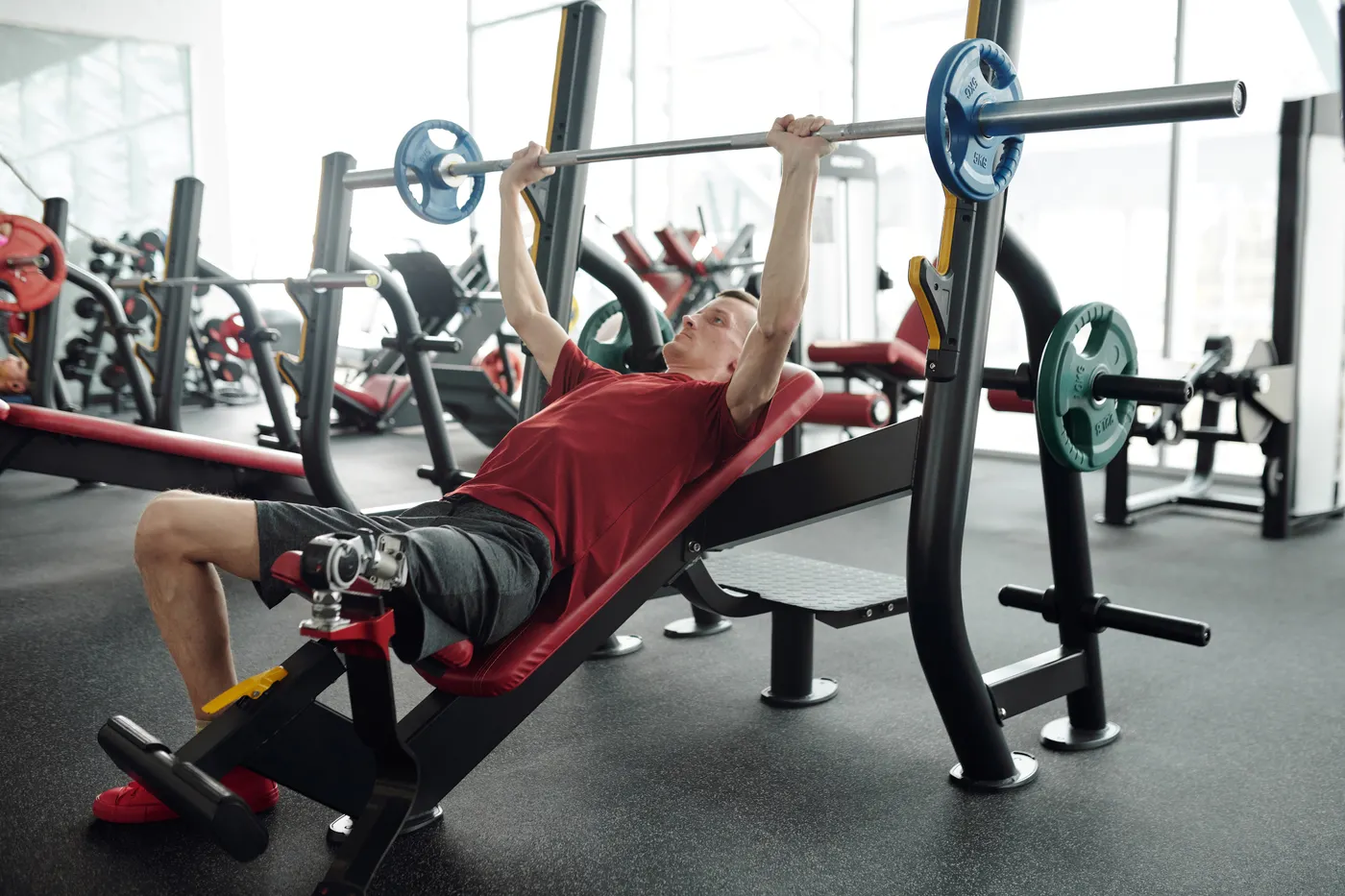
One experiment tested thirty trained adults at bench angles of zero, fifteen, thirty, forty-five and sixty degrees using sixty percent of one-repetition maximum. Upper-pectoralis EMG activity peaked around thirty degrees, while middle and lower chest regions showed greater activity on a flat bench. Front-deltoid activity increased at steeper inclines and was greatest at sixty degrees. This supports a moderate incline for possible upper-chest emphasis, but EMG remains an acute measurement.
An eight-week randomized training trial assigned forty-seven previously untrained young men to flat bench pressing, incline pressing or a combination, with equalized set counts. All groups improved measured isometric strength similarly. Muscle-thickness changes differed significantly at only one of three chest measurement sites, where the incline-only group improved more. The trial used a Smith machine and an incline near forty-four degrees, not free dumbbells.
Important limitations remain: only thirty participants had usable muscle-thickness measurements, the program lasted eight weeks and training occurred once per week. These results cannot tell us whether experienced lifters should abandon flat presses or whether one specific angle wins after years of training. A smaller dumbbell-press EMG comparison in women also found angle-dependent differences in muscle excitation without establishing superior long-term growth.
Together, the evidence supports sensible exercise variation rather than a magical angle. Flat pressing is useful for heavy, stable horizontal work. Incline pressing can distribute training emphasis toward the upper chest. Both can be productive when they are performed consistently and progressively.
5. Set up incline presses without sacrificing control
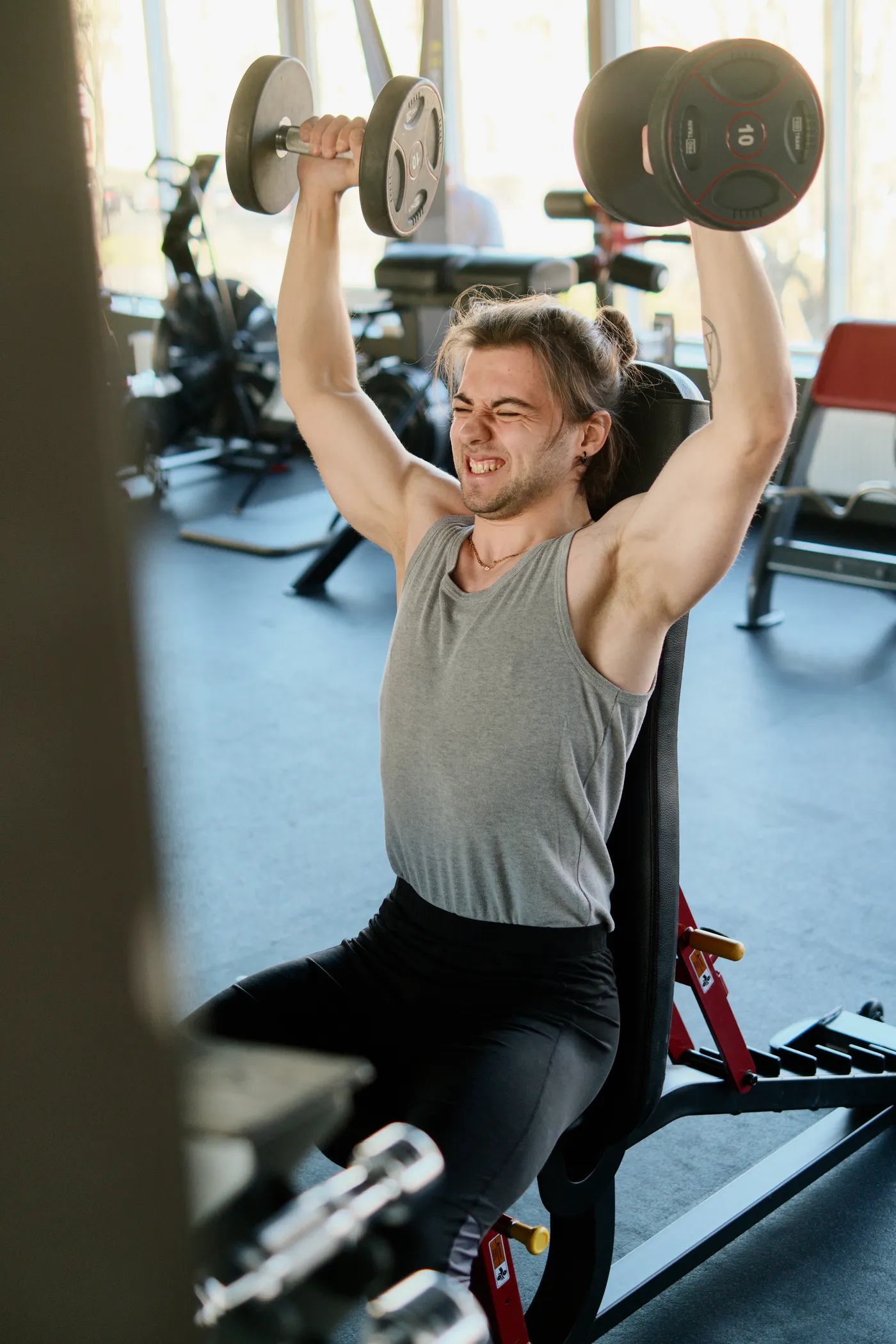
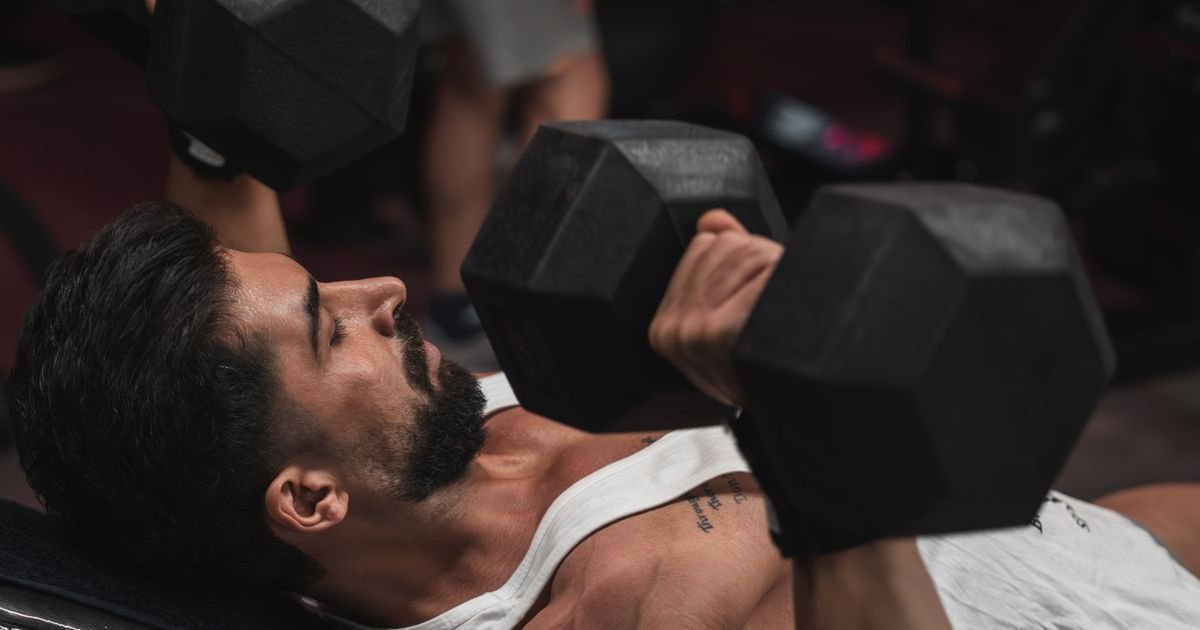
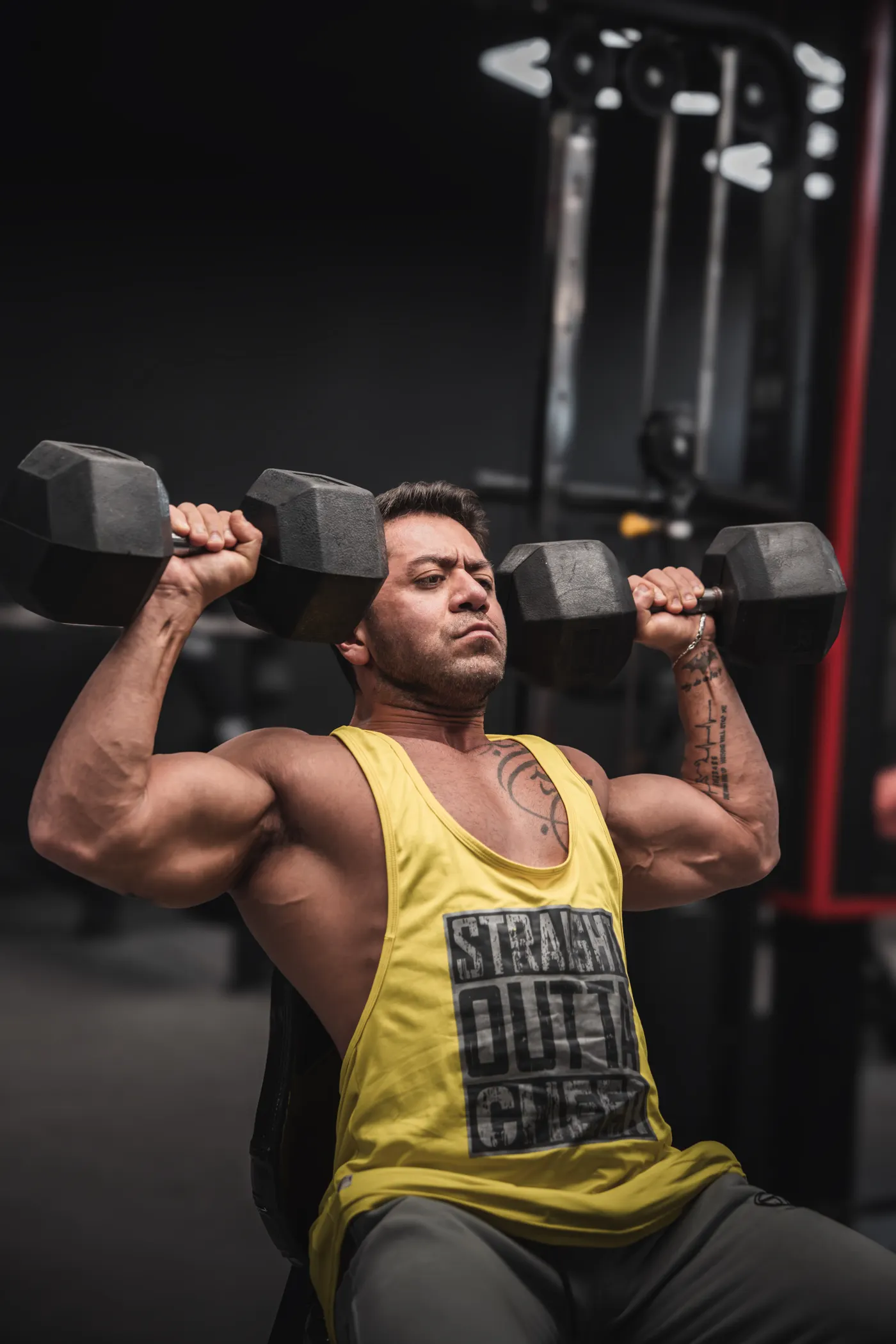
Begin with a stable bench at a moderate incline. Plant your feet, keep your glutes supported and settle your upper back against the pad. Bring dumbbells into position under control. If you must twist violently or throw the weights into place, use a lighter pair or arrange a safe handoff. Keep the forearms approximately vertical near the bottom and let the elbows travel in a comfortable plane rather than flaring directly sideways.
Lower slowly enough to control the weights and use the deepest pain-free range you can own without losing position. Do not force the dumbbells to touch the chest if shoulder mobility does not permit it. Press smoothly and avoid bouncing or turning the set into a front-delt heave. If you feel mostly shoulders, try a lower incline, lighter weights or a slightly different elbow path.
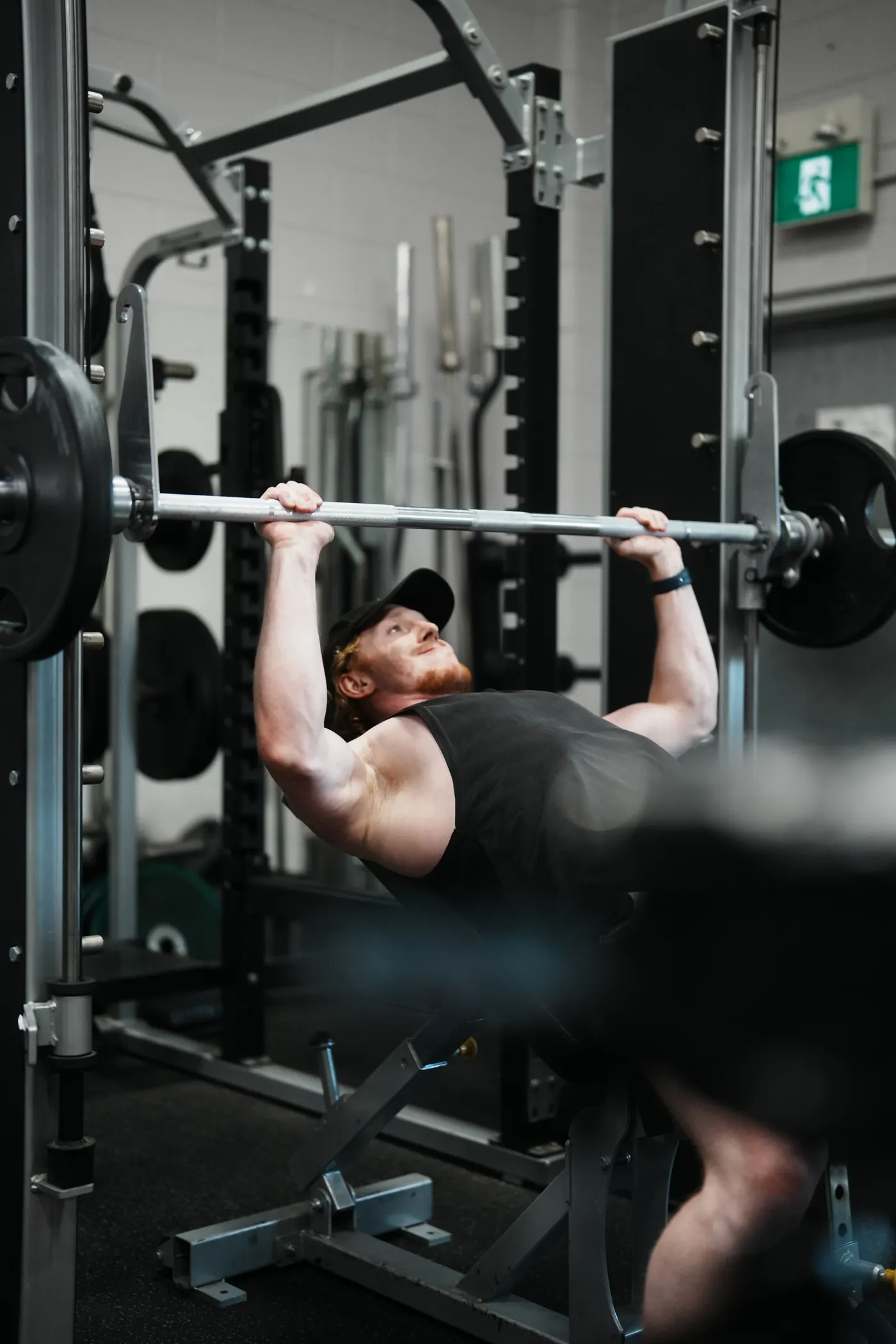
A natural small back arch is not a problem. An exaggerated arch that makes the torso nearly horizontal effectively changes the exercise. For barbell incline pressing, position the bench and rack carefully, set appropriate safeties or use a competent spotter, and ensure the unrack is stable. Dumbbells allow independent hand paths but require a safe start and finish; barbells simplify loading but constrain hand position.
Neither implement is universally safer. Choose based on control, comfort and available equipment. Sharp pain, instability, tingling or persistent symptoms warrant stopping and obtaining appropriate assessment instead of forcing another set. There is no benefit to choosing a technically impressive angle that you cannot train consistently.
Equipment Worth Exploring
Explore equipment, accessories and gear from our carefully selected range.


GymPin Ergo Handles
Pair of ergonomic cable handles shaped for comfortable triceps and pulling exercises.

GymPin D Handle Bar
Multi-use steel D-handle bar for cable rows, pulldowns and other cable exercises.


6. A two-day flat-and-incline chest program
You do not need a separate high-volume workout for every chest angle. Start with a manageable amount of challenging pressing, then adjust based on experience, performance and recovery. A practical illustrative range is six to ten dedicated chest-press sets per week, but no single count fits every lifter. Include other pressing work when assessing total fatigue.
Monday: flat emphasis. Perform flat barbell or dumbbell presses for three sets of five to eight, incline dumbbell presses for two sets of eight to twelve, and a row for three sets of eight to twelve. Add one or two optional triceps sets if elbows and shoulders tolerate them. Leave roughly one to three repetitions in reserve on most working sets and rest long enough to preserve quality.
Thursday: incline emphasis. Start with incline dumbbell or barbell presses for three sets of six to ten. Follow with two sets of controlled push-ups or cable chest presses, plus three sets of pulldowns or rows. An optional light shoulder movement can finish the session if recovery permits. Starting with incline once per week gives it a fresh position without eliminating flat pressing.
If your routine already includes substantial overhead pressing, dips or push-ups, replace existing work instead of adding five more sets. The front delts and triceps share pressing demands. Keep the program balanced with pulling work and track joint comfort alongside strength. The same principles apply to a commercial gym, a rack and adjustable bench, or a compact setup with dumbbells.
Powerlifting Shirts & Lifting Gear
Powerlifting shirts and gym gear for squat, bench and deadlift lifters who live for heavy numbers.

My Bench Press Is Stuck Horror Movie Meme Sweater T-Shirt
Show some gym-day personality with “My Bench Press Is Stuck”.


I Love Bench Press Gym | Heart Plate Chest Day Funny Wo T-Shirt
For laid-back days and powerlifting humor: “I Love Bench Press”.

Who'S Next To Use This Bench Rock Music Meme & T-Shirt
Rep “Who's Next To Use This Bench” humor in and out of the gym.

5 Plates Bench Club Chest Day Meme & T-Shirt
Show some powerlifting attitude with a playful “5 Plates Bench Club” tee.

Squat Bench Deadlift Pet Dogs – Meme Shirt T-Shirt
Rep “Squat Bench Deadlift Pet Dogs” humor in and out of the gym.

Bending Bars Meme – Barbell Squat Bench Deadlift, & T-Shirt
Heavy lifts, good laughs, and a little “Bending Bars Gym Meme” energy.

Shirt – Squat Bench Deads Gains T-Shirt
Heavy lifts, good laughs, and a little “Squat Bench Deads” energy.

2 Plates Bench Club Chest Day Meme & Top T-Shirt
Heavy lifts, good laughs, and a little “2 Plates Bench Club” energy.
7. Four weeks of progress beat one infrared snapshot
Week one: choose one flat and one incline variation. Record the bench angle or notch, grip, working loads, repetitions, sets and estimated repetitions in reserve. Keep the setup consistent. If useful, film a controlled set from the side to check whether your range of motion changes when the weight increases.
Week two: repeat the movements and aim for one additional clean repetition on at least one working set. If incline suddenly feels harder, check sleep, accumulated fatigue and exercise order before changing the program. A different bench notch can also explain an unexpected performance difference.
Week three: once all sets reach the top of their repetition range with good technique, increase load by the smallest practical increment. If the new weight compromises shoulder control, return to the previous load and build more quality repetitions. A stable training stimulus matters more than rushing to a heavier dumbbell.
Week four: compare performance at similar effort, joint tolerance and recovery. Keep both angles if they are productive. If one repeatedly irritates a shoulder, try a lower incline, neutral-grip dumbbells, a machine or cable press, or a reduction in volume while investigating the cause.
The ten-man study illustrates a limitation: one laboratory measure answers only one laboratory question. Static force and skin temperature cannot substitute for long-term muscle and strength outcomes. Flat and incline presses can both earn their place when your logbook shows steady, controlled progress.