Advertising disclosure: This page includes affiliate links that may earn us a commission at no additional cost to you.
Joe Kovacs has a bench press that would impress a room full of powerlifters. But the result he cares about is not the number on the bar. It is the point at which a 7.26 kg sphere lands after leaving his hand. At the elite end of shot put, those two measures of performance have a complicated relationship: the gym builds potential, while the throwing circle demands that the athlete express it with extraordinary precision and speed.
Kovacs offers an especially interesting case because his career combines conspicuous weight-room strength with a long record of top-level competition. The useful lesson is not to chase his training weights. It is to understand how a strength athlete can distinguish capacity, skill and the ability to express force quickly.
Three Olympic silvers and a breakthrough beyond 23 metres
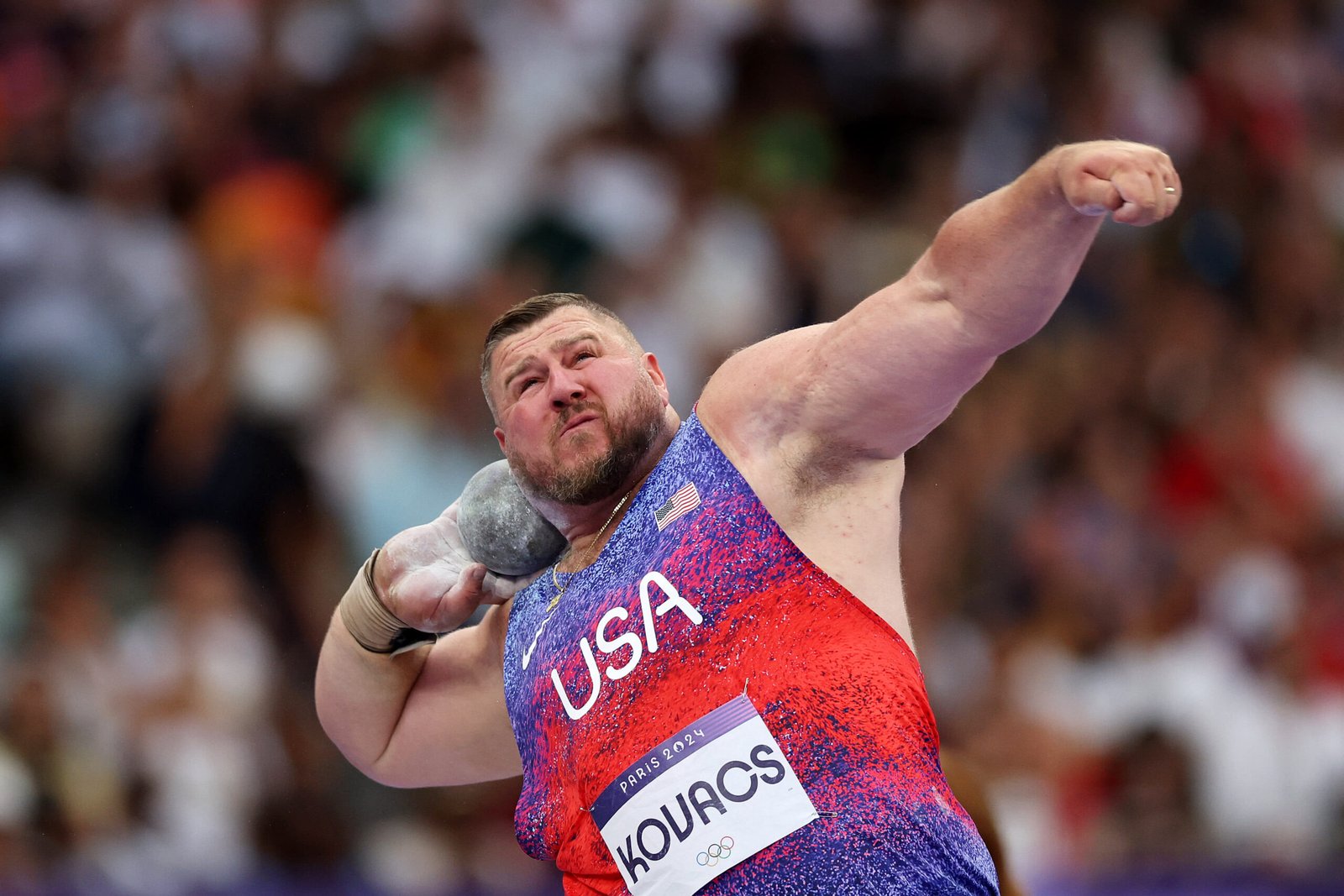
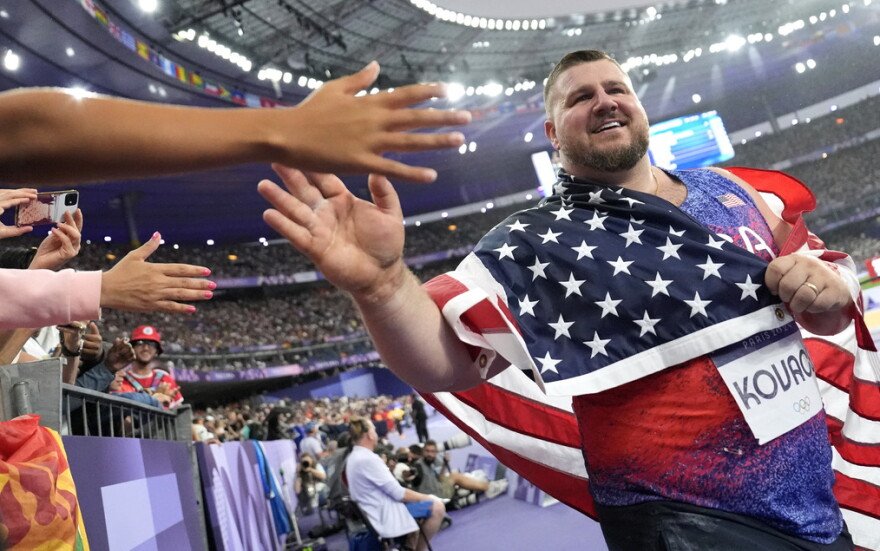
In Paris on August 3, 2024, Kovacs took his third consecutive Olympic silver medal in men’s shot put. His final attempt travelled 22.15 metres. His earlier silver medals came in Rio in 2016 and Tokyo in 2021. That is a remarkable span for an event in which a single poorly executed attempt can separate competitors who have spent years getting stronger.
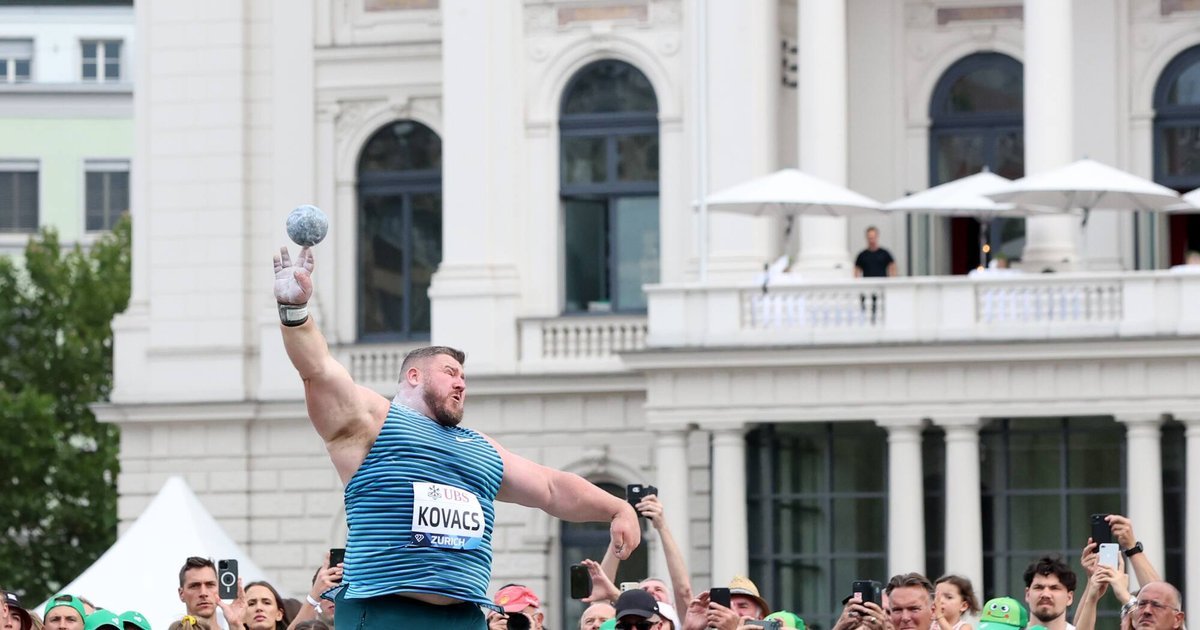
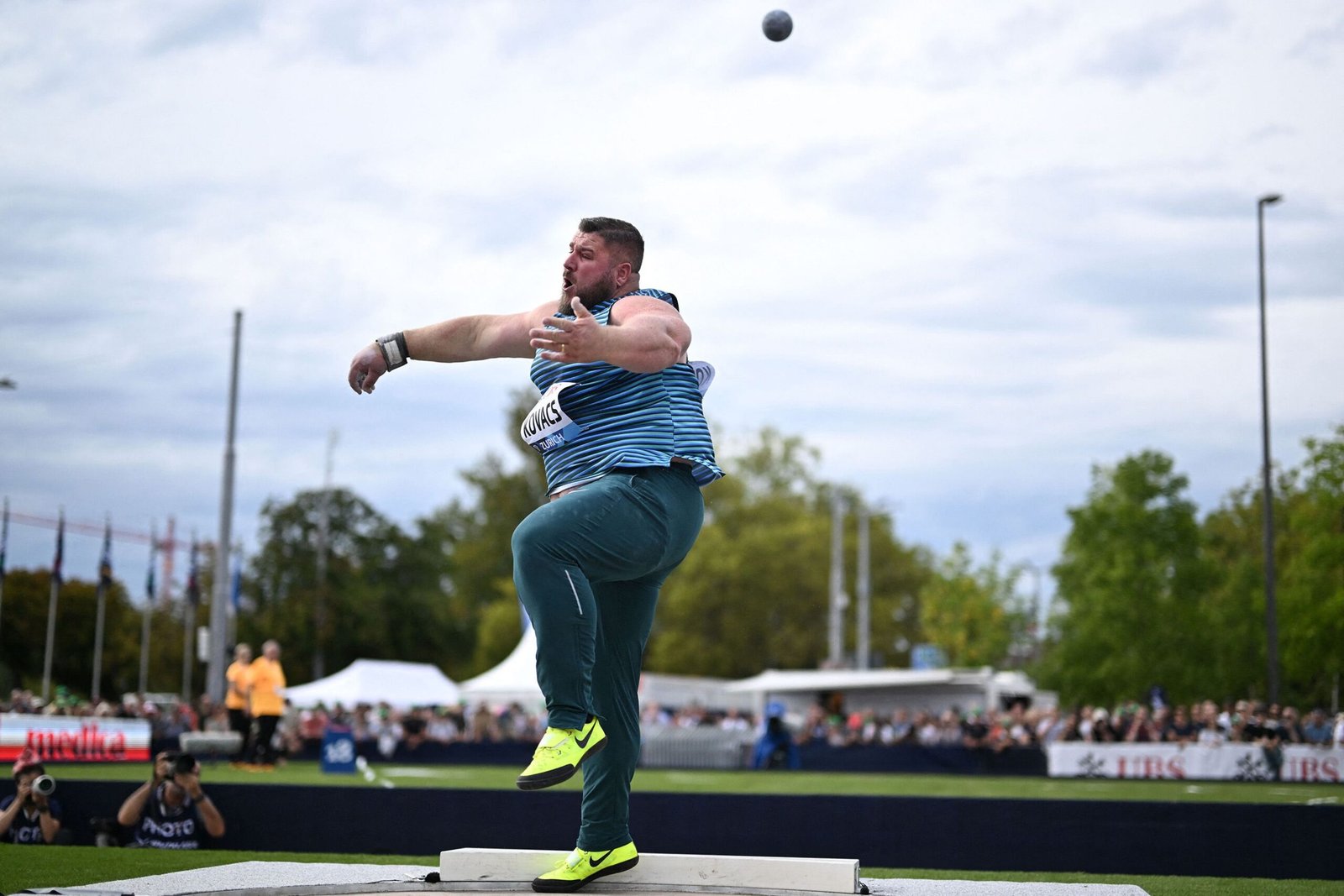
His best performances are not limited to Olympic finals. In Zurich in September 2022 he put the shot 23.23 metres. Earlier, at the 2019 world championships in Doha, he won with 22.91 metres. Those numbers matter because they give his training a clear competitive context. He was not simply a strong lifter who happened to enter athletics. He was an athlete producing exceptional distances against other highly trained throwers.
The implements used in elite men’s competition have a standardized mass. The throwing circle has a diameter of 2.135 metres. Within that small space, the athlete must create speed and put the shot without violating the event’s rules. There is no chance to take another step or spend ten seconds grinding through the sticking point as in a squat. The movement must work in the available space and at the required pace.
This is why his medal record deserves separate attention from his individual gym lifts. The competition result is evidence of throwing performance. A video of a big squat is evidence of a squat. Both are impressive, but neither alone proves what caused a particular competitive result.
What enormous strength contributes to a short throw
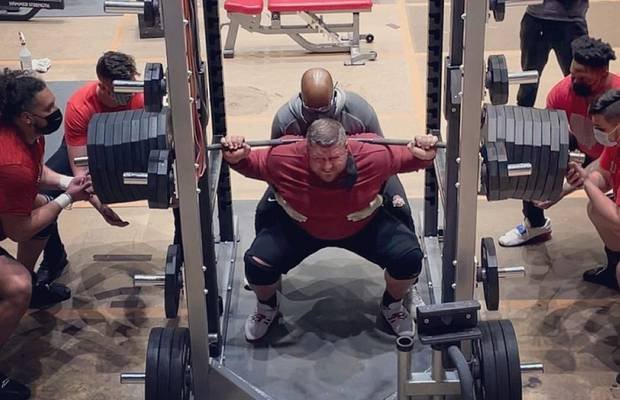
Kovacs has described benching 540 pounds for two repetitions, about 245 kg, in a 2025 interview about the demands of his event. Footage from 2021 also shows him squatting a very heavy barbell. He has discussed Romanian deadlifts, squats, swings, reverse hypers and work on hip mobility. These are examples of his preparation, not an exhaustive list of what he does every week or evidence that a particular exercise guarantees a medal.
The squat and Romanian deadlift build the ability to produce and tolerate force through the legs and hips. Pressing builds upper-body strength. A stronger athlete can potentially produce the necessary force with a smaller fraction of maximum effort. However, a high one-repetition maximum says little about whether that athlete can apply force at exactly the right moment during a rapid, complex action.
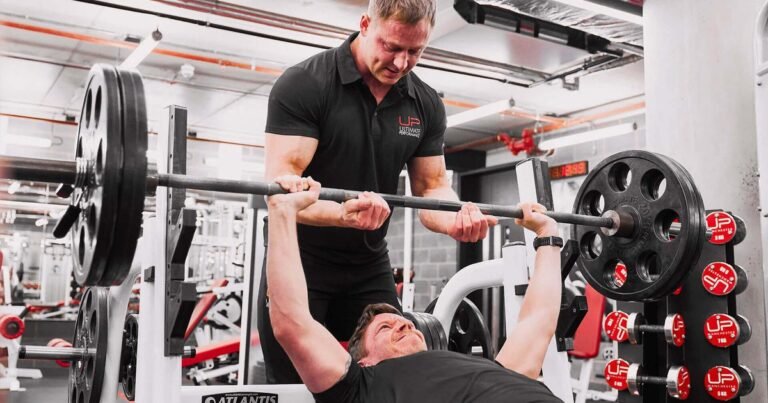
Think about the bench press. A heavy repetition rewards a stable base, a repeatable bar path and the capacity to finish against resistance even when the bar slows. In shot put, the athlete needs to accelerate a relatively light implement and coordinate the upper body with the lower body. The event is not a standing bench press. A big bench is a useful resource only when the rest of the movement allows it to contribute.
For the recreational lifter, there is no need to change a good strength programme just because a throwing champion uses some of the same exercises. Start with a technically sound squat, hip hinge and press, progress them gradually, and leave enough recovery for whatever sport or physical skill you want to improve. If you have no sport-specific objective, the gym lifts can legitimately be the main goal rather than a means to another end.
Why footwork and speed cannot be replaced by more plates
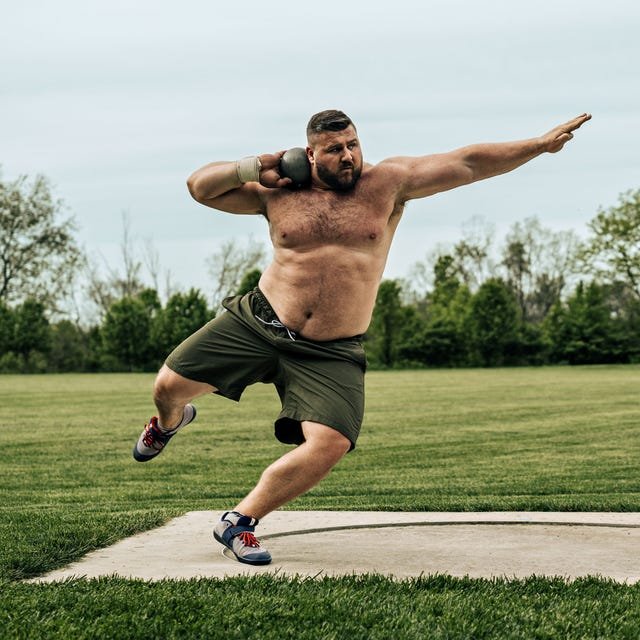
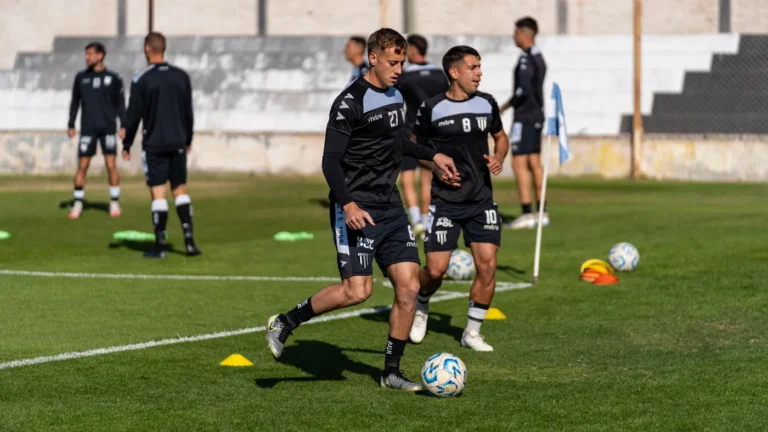
The 2025 interview highlights a part of shot put that can be easy to miss when watching a powerful athlete: quick, coordinated footwork. A technically demanding rotational throw has several linked actions. The feet need to establish the right positions, the body needs to build speed without losing control, and the final delivery must be timed so the athlete can direct the implement effectively.
Imagine a lifter who can squat a great deal but cannot land a simple jump under control. That mismatch does not mean the squat is useless. It means the lifter has not necessarily practised the fast action enough to express their strength well in it. The same distinction applies to throwing, sprinting and changing direction. Heavy training and fast movement are related, but they are not interchangeable.
It is also possible to practise speed badly. Turning every jump into a conditioning circuit, rushing every repetition or performing technical drills after exhausting the legs can make fatigue the dominant challenge. When the objective is to practise a crisp movement, quality matters more than completing an arbitrary number of repetitions.
Shot put technique should be learned with a qualified throwing coach and in a designated throwing area. Do not copy an elite athlete’s rotational delivery with a heavy ball in a normal gym. For a general fitness trainee, low-complexity jumps or controlled medicine-ball exercises in a permitted space are enough to explore the contrast between heavy force production and faster movement. They are separate exercises, not substitutes for coached shot put technique.
Mobility belongs in this discussion too. A person must be able to access the positions they intend to use. Simply forcing additional range of motion is not the goal; controlled, useful range is. Appropriate warm-ups and gradual exposure to faster movements help make the training more repeatable.
A four-week strength-and-speed experiment for ordinary lifters
You can investigate the strength-and-speed distinction without pretending to follow Kovacs’s actual programme. The following is a conservative editorial example for a healthy lifter already familiar with basic resistance exercises. Use comfortable technique, adapt loads to experience and equipment, and stop any exercise that produces pain. It is not a prescription for competitive throwing.
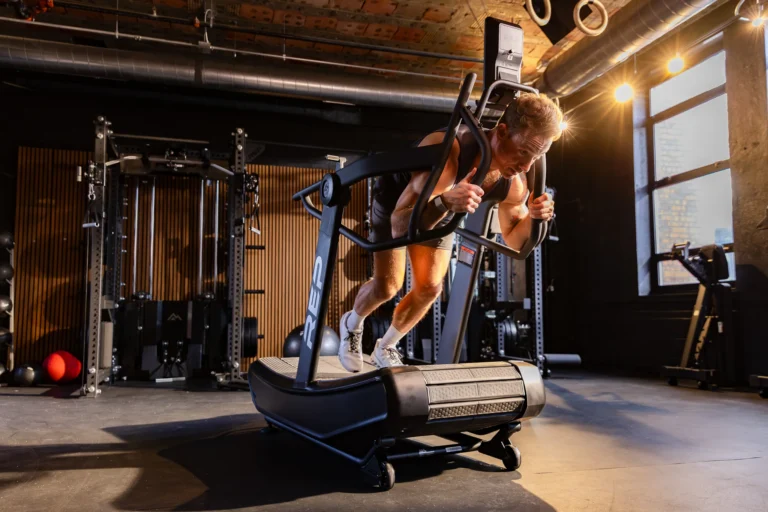
For four weeks, keep two full-body strength sessions separated by at least two days. Begin each session with a short general warm-up and a few progressively faster, low-effort practice repetitions of the movement you intend to use. Choose a simple explosive exercise: a small countermovement jump or a light medicine-ball chest pass toward an appropriate wall. If you cannot jump or throw safely, use a brisk sit-to-stand from a stable bench instead.
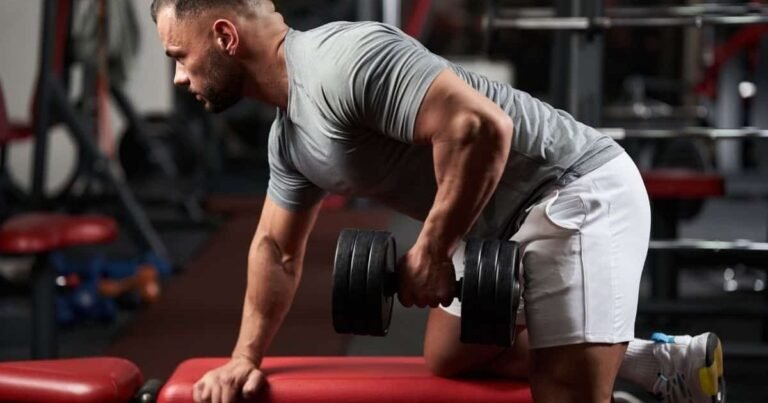
- Session A: three sets of three easy, crisp jumps or chest passes with generous recovery, followed by three sets of five squats, three sets of six bench presses and two sets of eight supported rows.
- Session B: three sets of three of the same explosive movement, followed by three sets of six Romanian deadlifts, three sets of six dumbbell presses and two sets of eight split squats per side.
Choose resistance that leaves approximately two or three technically clean repetitions in reserve. Rest long enough between strength sets to maintain the planned technique. The fast work should stay brief and well rested; if movement quality or height falls noticeably, end that part of the session. You do not have to add load to a jump to make it useful.
In week one, establish the loads and record a simple baseline. In week two, keep the explosive exercise unchanged and increase resistance only if the strength work was comfortably completed. In week three, repeat the plan and prioritize execution rather than adding more sets. In week four, keep the strength work moderate and repeat the baseline measurement under similar conditions. Avoid testing maximum loads simply because it is the last week.
Ordinary equipment is enough: a stable rack with appropriate safeties, a barbell, a bench and suitable free weights. If you train alone, use the rack safeties and choose exercises you can perform safely without a spotter. Kettlebells or dumbbells can replace some barbell accessory work when equipment is limited.

Equipment Worth Exploring
Explore equipment, accessories and gear from our carefully selected range.


Multi Bench MBX-650 2.0
Adjustable multi-bench with roller adjustment, 15 backrest positions and accessory mounts.

Rubber Hex Dumbbells
Rubber-coated hex dumbbell pairs with a stable shape for home and commercial strength training.

Cast Iron Kettlebells
Textured cast-iron kettlebells for swings, squats, carries, and full-body training.


Measure transfer, not just your biggest lift
Track the outcome you actually want to improve. If it is a squat, record load, repetitions, range of motion and perceived effort. If it is a jump, measure jump height using the same method each time. If it is a medicine-ball pass, use the same ball, surface, stance and safe testing area. A smartphone video can help you compare your execution, but do not assume a casual recording measures force or power with laboratory accuracy.
A better jump on one day does not prove a permanent adaptation. Warm-up, sleep, practice and fatigue can all affect a short test. Compare several observations rather than treating a single personal best as an explanation. If you are also trying to improve a sport, keep a simple log of practice quality so that increased gym performance does not hide reduced sport performance.
There are several useful outcomes after four weeks. Your strength may improve while the fast movement stays similar; you might then need more specific practice rather than more weight. Your fast movement may become cleaner without a large increase in gym load; that is still useful progress. Both measures might stall if the programme leaves you persistently tired. In that case, consider reducing unnecessary volume and reviewing recovery before increasing the intensity.
Kovacs’s career makes the distinction vivid. His extraordinary physical strength is a tool, but the distance on the competition scoreboard ultimately decides his result. For most lifters the standard will be different. You might want better performance in a recreational sport, more confidence in a quick movement, or simply a stronger and more capable body. Choose your own target and use the weight room in service of it. The impressive number on a bar matters most when it supports the outcome you value.

Powerlifting Shirts & Lifting Gear
Powerlifting shirts and gym gear for squat, bench and deadlift lifters who live for heavy numbers.

I Want You To Deadlift – Patriotic Uncle Sam 4th of Jul Hoodie
Keep it laid-back with a little “I Want You To Deadlift” attitude.

Shirt – I Want You To Lift Weights Uncle Sam T-Shirt
Make gym days more fun with “I Want You To Lift Weights Uncle Sam” style.

Heavy Squatter Harry Potter Squat Meme Decal Water Sticker
Give your everyday gear a playful “Heavy Squatter” twist.

My Bench Press Is Stuck Horror Movie Meme Scary Vest Tank Top
Bring “My Bench Press Is Stuck” humor to your next lifting session.


Be Happy Lift Heavy Happy Weights Smiley Face Weight Pl Tank Top
Bring “Be Happy Lift” humor to your next lifting session.

Deadlift Lovers Grim Reaper Skeleton Decal Water Sticker
Bring “Deadlift Lovers” attitude to your water bottle or laptop.

Gym Sir Swole of Benchalot Medieval Knight Chest Day Cr T-Shirt
Show some gym-day personality with “Sir Swole of Benchalot Medieval Knight”.

Barbell Country Club Shirt Meme Top & T-Shirt
Heavy lifts, good laughs, and a little “Barbell Country Club” energy.

5 Plates Bench Club Chest Day Meme & T-Shirt
Show some powerlifting attitude with a playful “5 Plates Bench Club” tee.