Advertising disclosure: This page includes affiliate product links that may earn us a commission, as well as products from our own store.
Trap Bar High vs Low Handles: Setup, Range and a Six-Week Plan
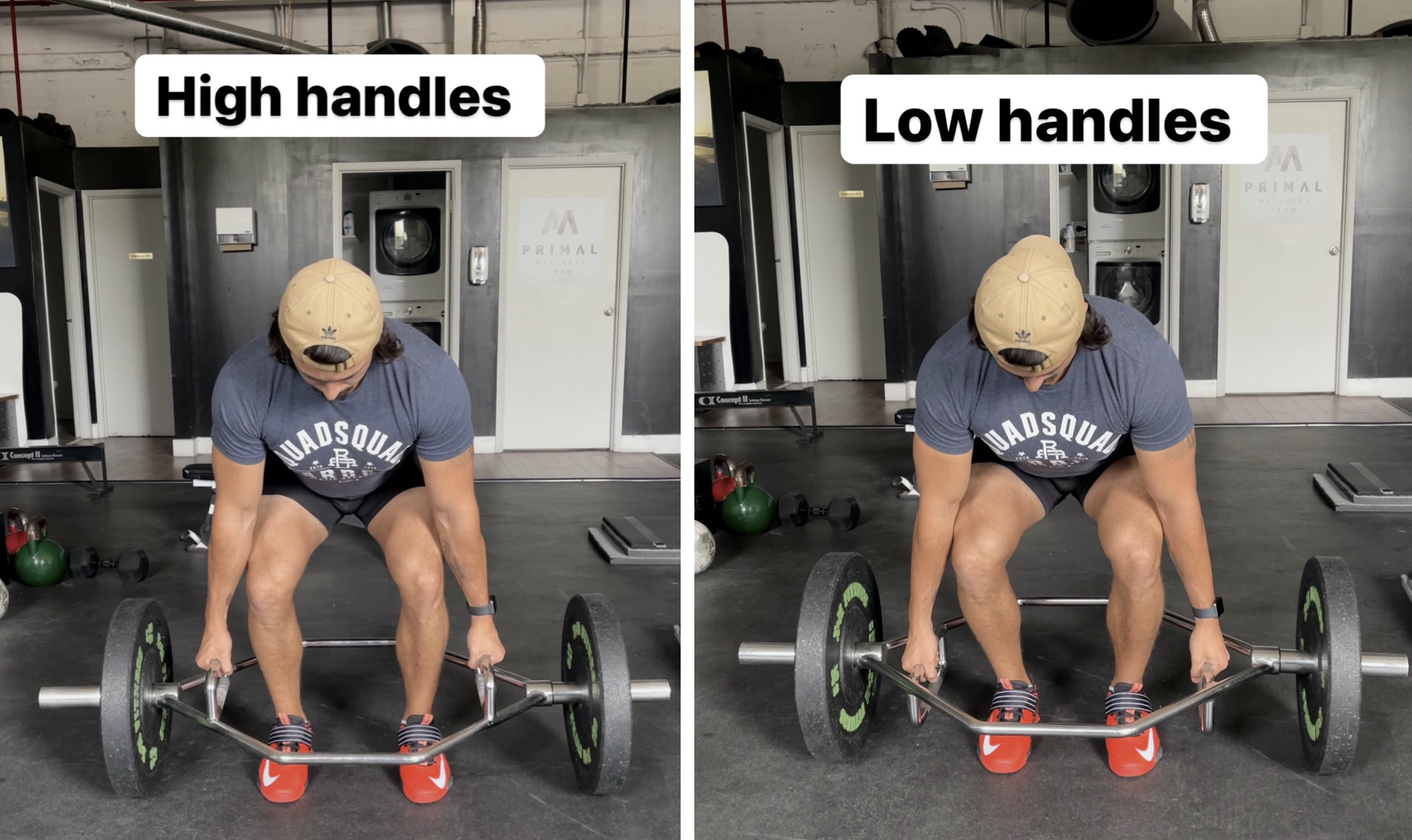
The same trap bar can give you two different starting positions. Raised handles shorten the movement; handles level with the frame demand more range. That affects the weight you can lift, the setup you need and the progress you should track. Neither choice is automatically better. This guide explains the practical differences, the limits of common research claims and a progression you can actually repeat.
1. What raised and low handles change
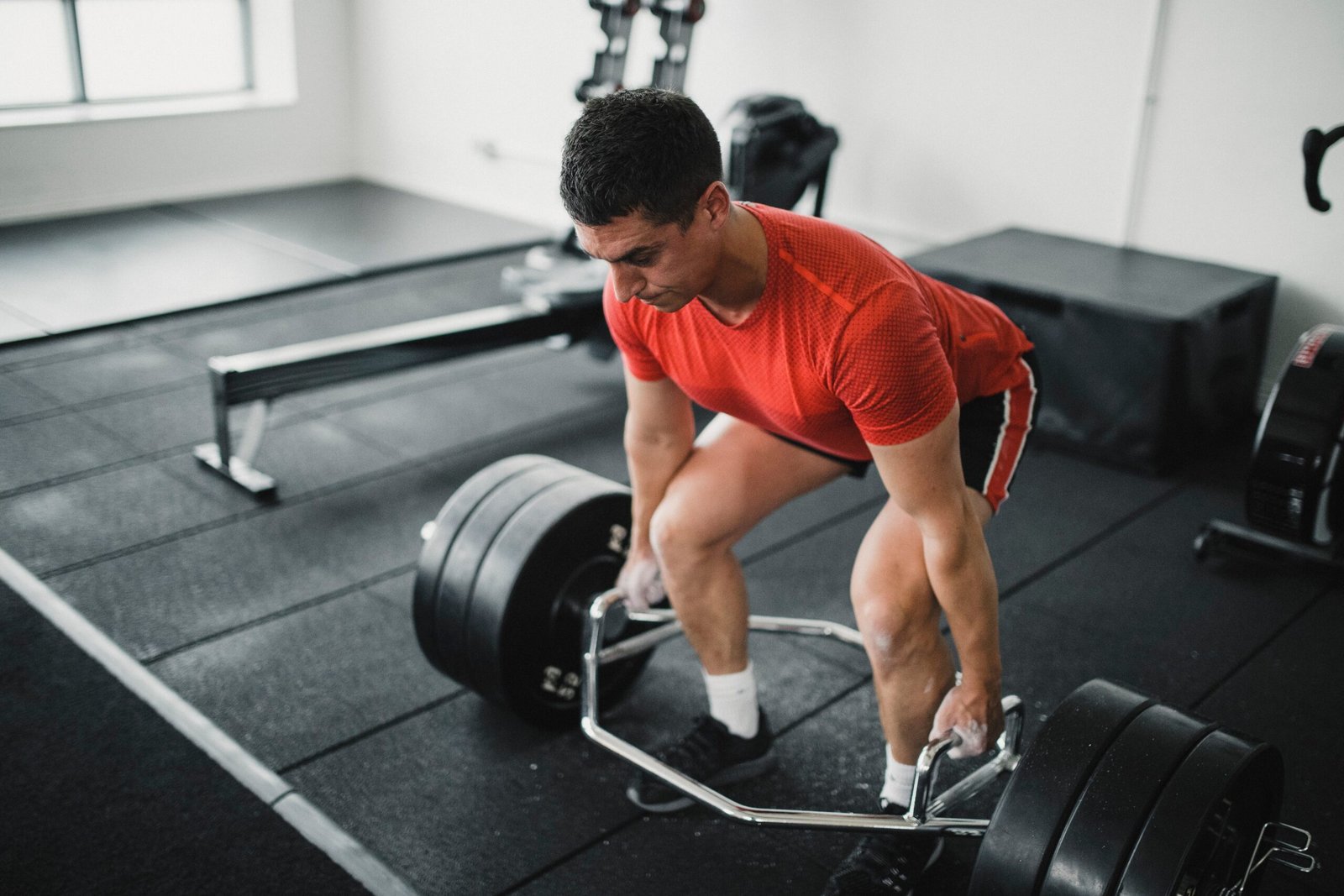
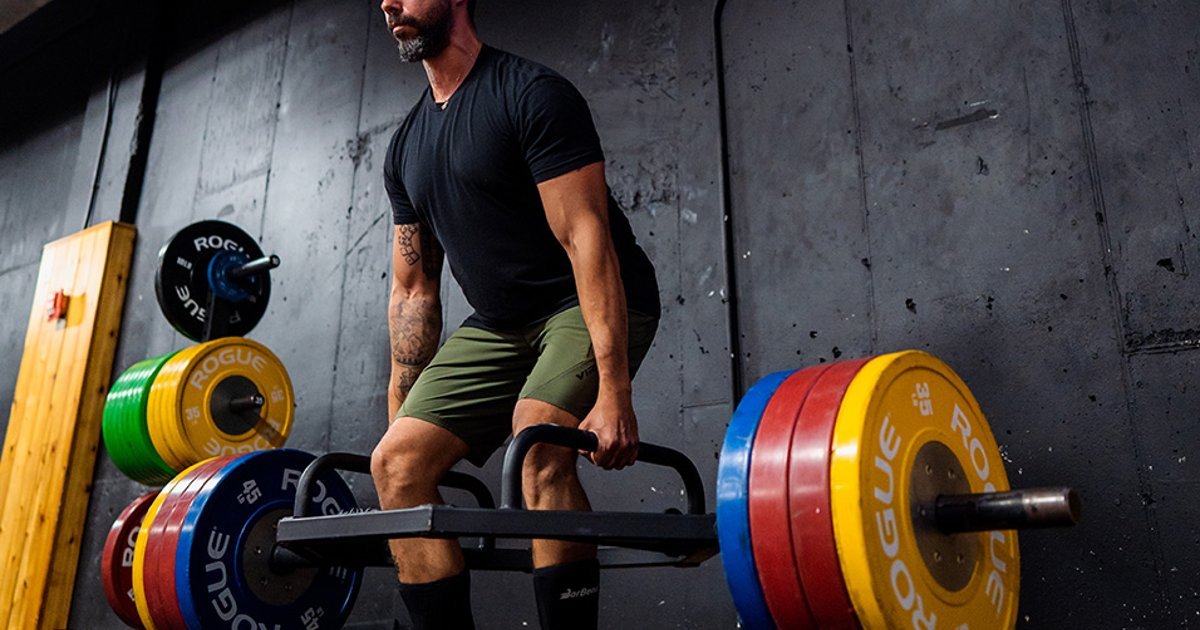
A dual-height trap bar generally provides raised grips above the steel frame and a second pair aligned with the frame. Many closed hex bars are flipped over to change position; open models might use separate or adjustable grips. Always check the specific bar.
High handles shorten the distance from the beginning of the lift to standing. Your hands start higher, so you usually need less hip and knee flexion to reach them. That can make it easier to establish a stable position, especially if low handles force an awkward start. You might lift heavier weights from this shorter range, but that does not prove your strength from a deeper position has improved equally.
Low handles require a longer pull, generally with more bending at the hip and knee. They can be useful for practicing strength nearer the floor. They are not automatically better for muscle growth, nor should you force the depth if you cannot stay braced. Arm length, leg proportions, mobility and the grip design all shape the result.
Log high-handle and low-handle sets as different exercises. Record the empty bar’s actual weight too: specialty hex bars do not share one universal mass. Keep the plate size and floor surface consistent when comparing repetitions across weeks. Otherwise a supposed personal record may come from a different starting height or a different bar, not stronger lifting.

Equipment Worth Exploring
Explore equipment, accessories and gear from our carefully selected range.


Open Hex Bar
Open-frame trap bar with multiple handles for deadlifts, carries, and lower-body training.


Competition Plates
Competition-style bumper plates for Olympic lifts and loaded strength training.

Grip Plates
Rubber-coated weight plates with handholds for loading barbells and machines.


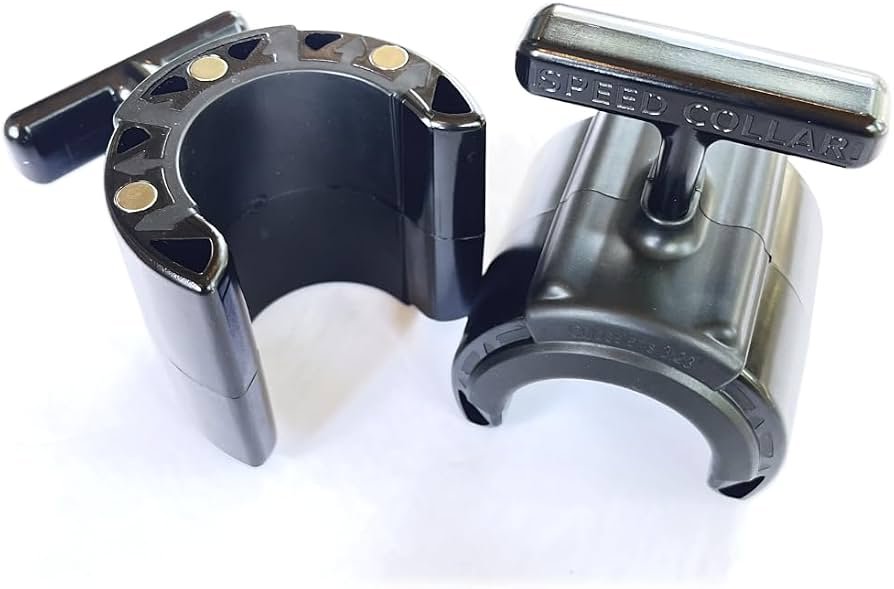
Speed Collar
Quick-release collars designed to secure weight plates on standard two-inch Olympic bars.
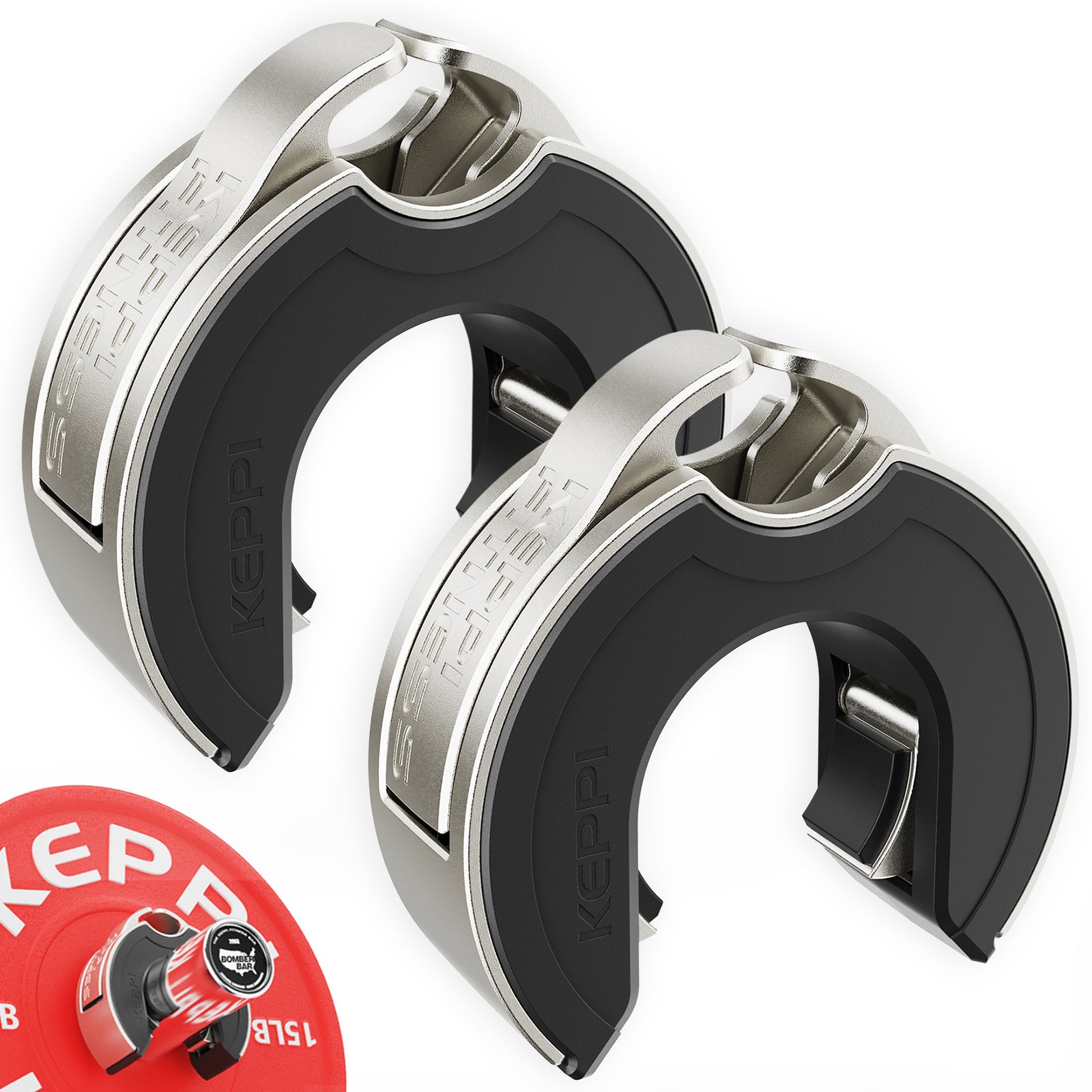
Keppi Open Collars
C-shaped magnetic Olympic barbell collars with a quick-lock mechanism and grippy lining.
2. How to set up either trap bar handle height
Step inside the unloaded frame with feet approximately hip-width apart. Put the handles over the middle of your feet rather than ahead of your toes. Gripping too far forward or backward can tilt the bar as it leaves the floor; place both hands near the center of their handles to avoid unequal rotation.
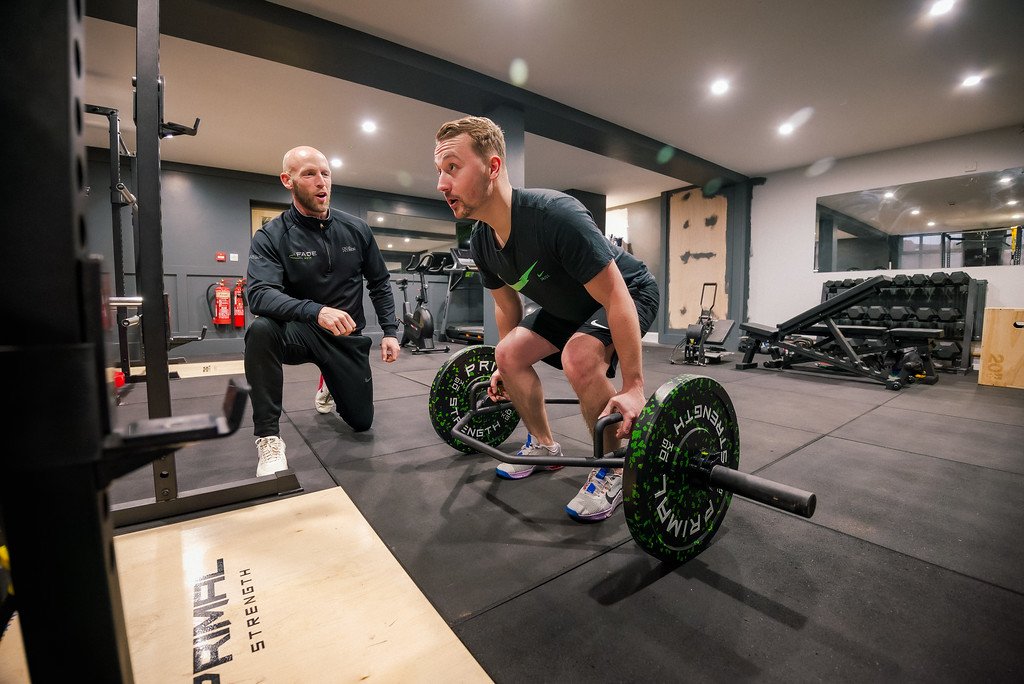
Push the hips backward and bend the knees enough to reach the grips. Keep the ribs and pelvis organized with a firm abdominal brace; do not force your back into an exaggerated arch. Arms stay long. Think of pressing the whole foot into the floor while hips and shoulders begin rising together. A little natural forward torso angle is fine if your position remains controlled.
With high handles, resist turning the lift into a shallow knee dip followed by a violent back extension. With low handles, do not round aggressively to touch the frame if your body cannot comfortably reach. Reduce weight, adjust the stance slightly or use the raised handles until you can make a consistent start.
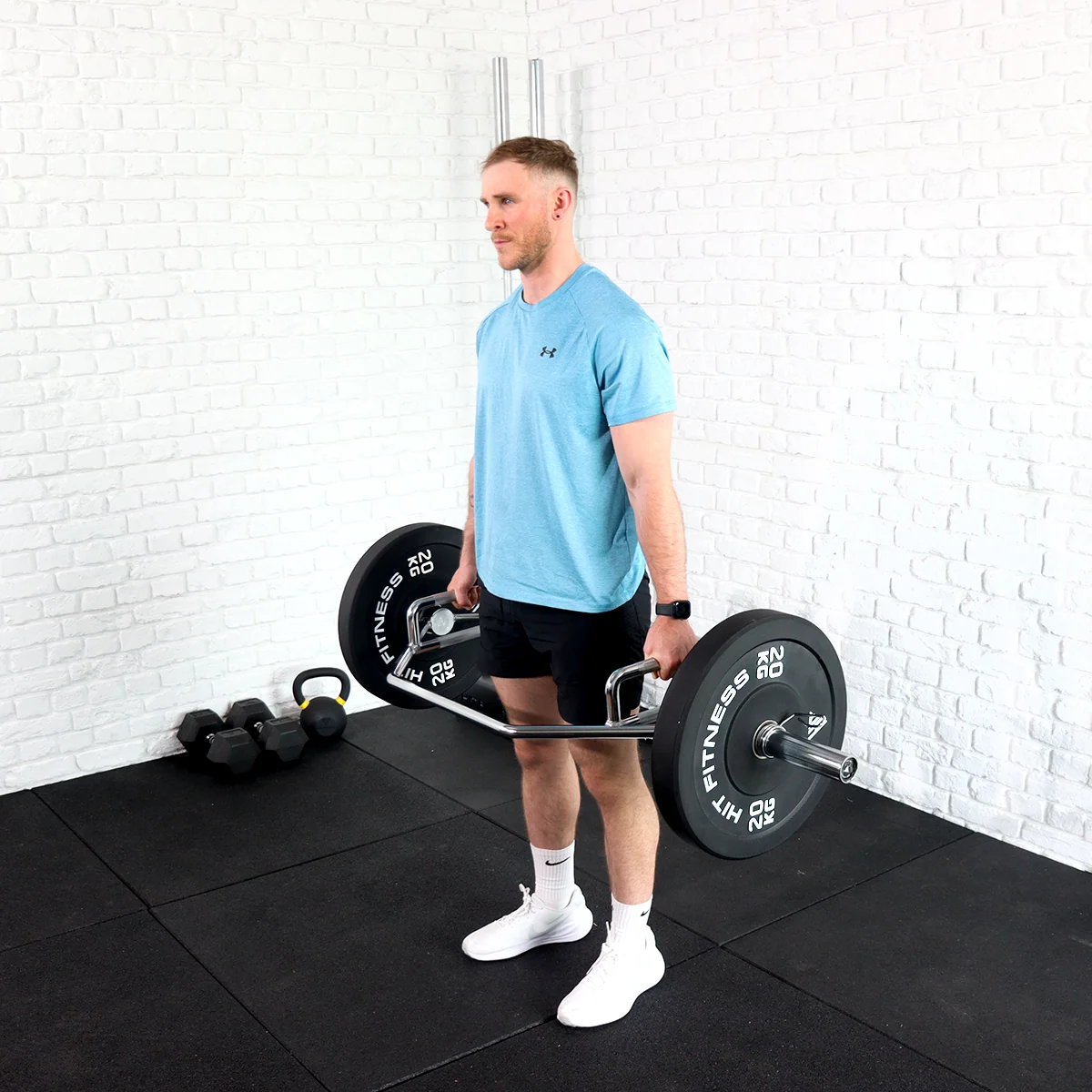
Stand tall by extending knees and hips. Do not lean backward or shrug for additional lockout. Lower with a backward hip hinge followed by knee bend as the plates approach the floor. Reset rather than bouncing off the rubber. Before heavy sets, practice several light repetitions and watch that the frame rises evenly instead of pitching to one side.
3. What the lifting research really supports
Because the hands are beside your body, a trap bar can allow a more upright torso and somewhat different knee and hip action than a straight barbell. Both patterns still require coordinated leg and hip extension, trunk bracing and grip strength. Neither is only a squat or only a stiff-legged hinge.
Laboratory comparisons of hex bars and straight bars have found differences in force, velocity, power, muscle activation and joint moments. Those measurements normally come from brief lifting experiments. They are not direct proof of long-term hypertrophy, a lower injury rate, or identical results for all lifters. Moreover, individual experiments have used raised or low handles and different relative loads. It is misleading to present them as a controlled comparison of every trap bar’s handle heights.
Even within one trap bar, changing the handle changes the amount of motion. A heavier raised-handle one-rep maximum can reflect that shorter distance, not a sudden improvement in full-range strength. A lighter low-handle session can still be valuable because you are training a more demanding initial position.
Choose high handles if you need a manageable start or deliberately want a shorter pull. Choose low handles if your setup is repeatable and you want to strengthen that deeper position. If competitive barbell deadlifting is the objective, practice the actual barbell lift as well. Keep expectations specific to the exercise and goal rather than trusting one variation as universally superior.
Equipment Worth Exploring
Explore equipment, accessories and gear from our carefully selected range.

Leather Lifting Straps
Padded leather straps support grip during heavy rows, deadlifts and pulling exercises.

Leather Wrist Grips
Padded leather lifting grips help support the hands and wrists on heavy pulling exercises.


Rubber Hex Dumbbells
Rubber-coated hex dumbbell pairs with a stable shape for home and commercial strength training.

Cast Iron Kettlebells
Textured cast-iron kettlebells for swings, squats, carries, and full-body training.

4. Common mistakes and practical corrections
Off-center stance: If the frame rocks forward or back, reset your shoes between the sleeves. Position each hand at the handle midpoint. A tilted bar consumes attention and grip strength that could be directed toward the deadlift itself.
Jerking from the floor: Brace first, make the arms taut and push the floor away smoothly. A sudden shoulder yank often changes the torso angle before the weight even starts moving. The first inch should look deliberate, even when you intend to accelerate the bar.
Hips rising too soon: If the knees straighten well before the shoulders rise, the movement becomes an unintended stiff-legged pull. Try setting hips slightly higher before starting, use less load and coordinate leg drive with trunk position.
Shortening every rep: When a low-handle set gets hard, do not quietly change where the bar comes down. Finish clean reps, stop, or use a separately logged high-handle variation. Consistent range makes your progression meaningful.
Overextending at lockout: Stand straight. Leaning back, shrugging and craning the neck add movement but not a better deadlift. Return the bar under control. If grip fatigue repeatedly limits lower-body effort, straps may help on selected work sets while carries or holds continue developing grip.
After a set, note one specific cue: balanced bar, unchanged bottom position or a quiet finish. A short technical observation is easier to apply next session than an elaborate checklist.
5. A six-week trap bar deadlift plan
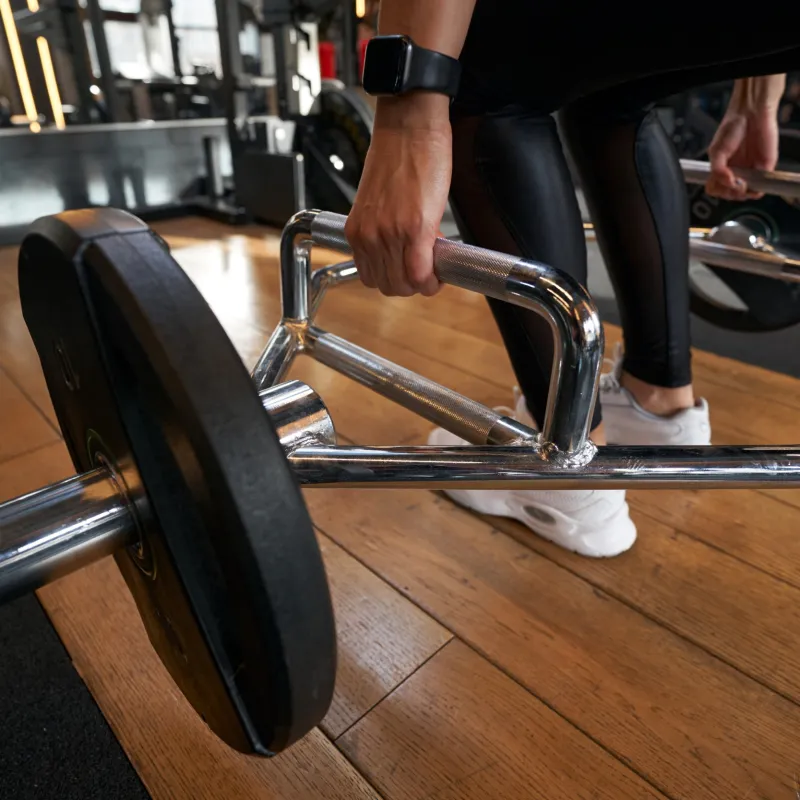
Lift twice weekly with at least two days between sessions. Use the handle height you can reproduce consistently and begin at a weight that leaves around two or three clean repetitions in reserve. Adjust the suggested workload around your other lower-body sessions and recovery.
Weeks 1–2: On Day A perform three sets of six; on Day B three sets of eight with a slightly lighter load. Rest about two to three minutes between sets. Keep the bar centered and lower each rep to the same position. Treat these sessions as your movement baseline, not attempts to set a new maximum.
Weeks 3–4: Work toward three sets of seven, then eight on Day A. On Day B aim for nine, then ten reps per set. Once all sets reach the top with stable technique, increase the plates by the smallest practical increment and return to the bottom of the target range. Do not change handles during the progression to make the numbers look better.
Week 5: Try three sets of five on Day A with a modestly heavier load and three sets of eight on Day B with a moderate load. Stop the set when your hips shoot upward, the bar starts to rock or your bracing falters. Repeating good reps is more useful than forcing a grinder every workout.
Week 6: Repeat a familiar earlier working load for a controlled set of eight, and compare effort, balance and consistency with your training log. Complete two lighter back-off sets. If the same load feels smoother at the same starting height, that is progress even without a new maximum. To introduce the other handle height, start a separate lighter progression rather than transferring the heavier handle’s numbers.
Supplement the deadlift with only as much Romanian deadlifting, split-squat work or carries as you can recover from. The bar should serve a plan, not become a weekly competition with last session’s number.

Powerlifting Shirts & Lifting Gear
Powerlifting shirts and gym gear for squat, bench and deadlift lifters who live for heavy numbers.


Skeleton Deadlift – Meme Deadlift Lovers, Leg Day & T-Shirt
Heavy lifts, good laughs, and a little “Skeleton Deadlift” energy.

Nice Try Gravity Astronaut Deadlift – , Gymbros & T-Shirt
Rep “Nice Try Gravity Astronaut Deadlift” humor in and out of the gym.

Be Happy Lift Heavy Happy Weights Smiley Face Weight Pl T-Shirt
Show some gym-day personality with “Be Happy Lift”.

Deadlift or Die Tryin Sticker
A fun “Deadlift or Die Tryin” touch for bottles, laptops, and lockers.

Do You Even Deadlift Sweatshirt
Keep things casual with a little “Do You Even Deadlift” attitude.

Dead Pull Muscle Shirt Athletic Vest for Deadlift Lifte Tank Top
Show some personality between sets with “Dead Pull”.

Captain Deadlift Hooded Pullover Leg Day Workout Top Hoodie
Stay casual and show some leg-day attitude with “Captain Deadlift”.

45LB Metal Weight Plate Barbell Standard Lifting Tank Top
Add some metalhead attitude to training with “45LB Metal Weight Plate”.

Pink 45LB Weight Plate Barbell Lifting Workout Decal Fi Sticker
Put “Pink 45LB Weight Plate” gym humor on your laptop, bottle, or gym gear.