Advertising disclosure: This page includes affiliate product links that may earn us a commission, as well as products from our own store.
Concentration Curls: A Stable Setup, Cleaner Reps and Sensible Progression
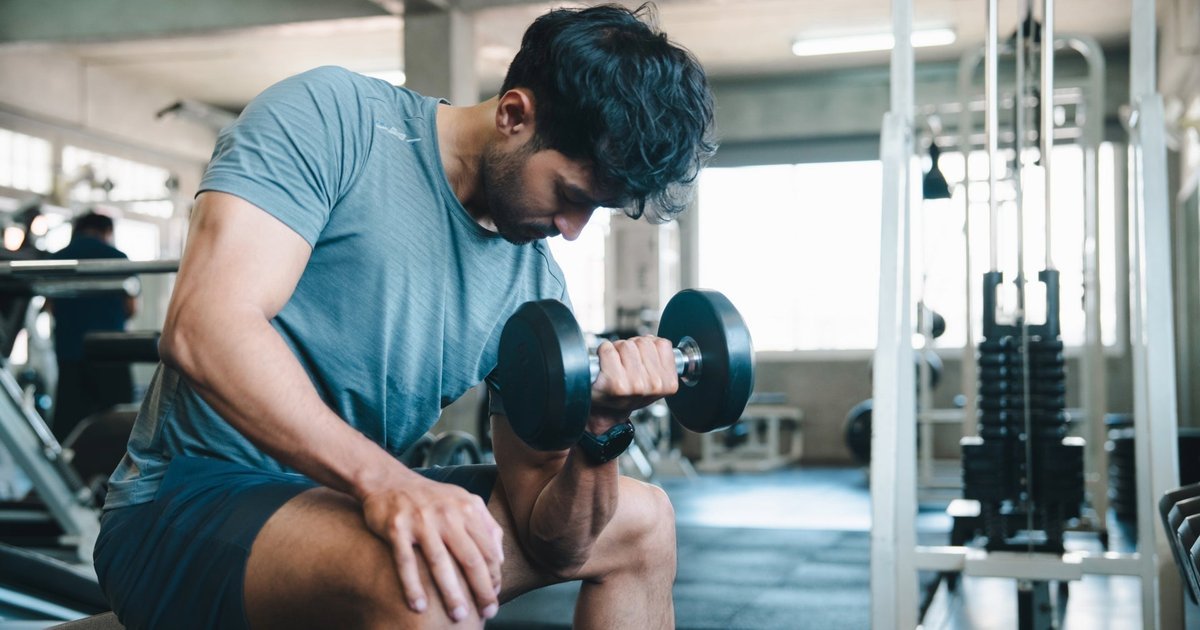
The concentration curl earns its place by making a small movement easier to control. With one upper arm supported against your thigh, you can watch the dumbbell travel, notice when your wrist bends and spot the moment your torso starts helping. That feedback is more useful than treating the exercise as a competition to move the heaviest weight.
You need a stable seat, one suitable dumbbell and enough room for the weight to clear the floor. From there, the important decisions are personal: where to sit, how to brace, what counts as a completed repetition and when to increase the load. Use those decisions to make your arm training repeatable.
1. Fit the seat and arm support to your proportions
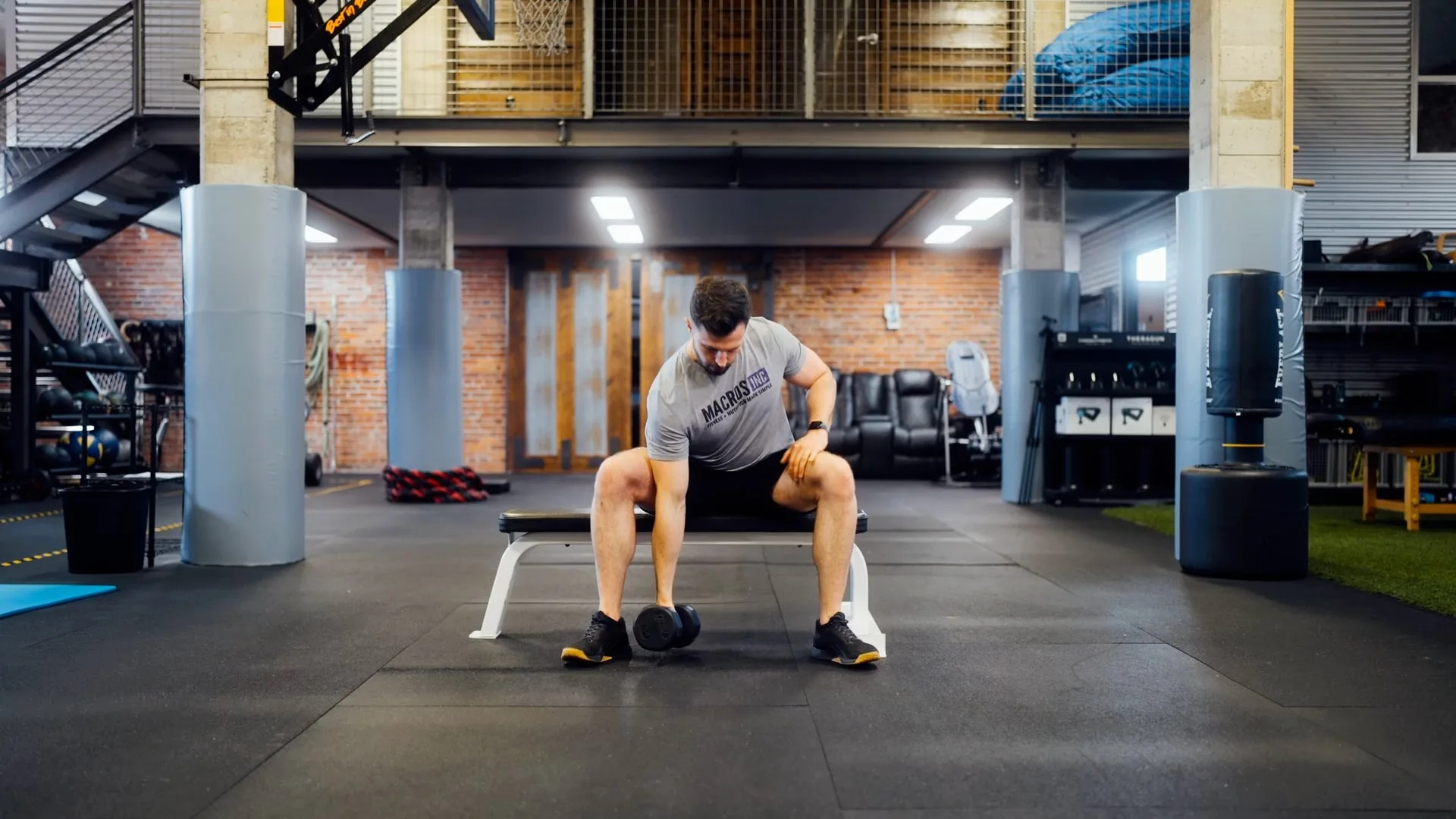
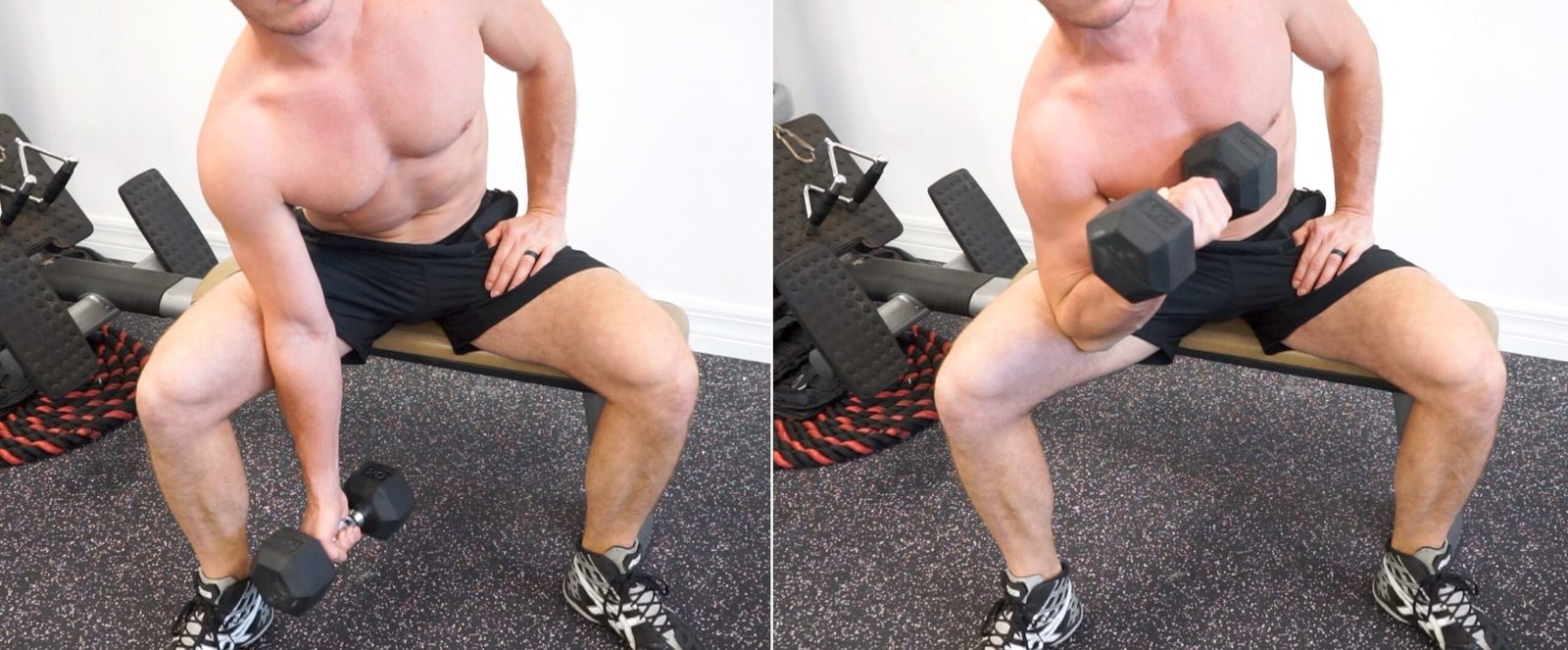
Start near the edge of a stable bench with both feet supported and your knees apart. Lean forward enough to place the back of the working upper arm against the inside of the same-side thigh. Rest your free hand on the other leg if that helps you maintain your position.
Aim for comfortable contact across the upper arm rather than digging the point of your elbow into the knee joint. Your thigh provides a brace; it should not become a lever that pushes the dumbbell upward. Check that you can bend and straighten the elbow without moving your whole body to create clearance.
Seat height changes that geometry. A bench that suits a shorter training partner may leave a taller lifter crowded between the floor and the knee. Before adding weight, rehearse the movement with an empty hand. If you cannot find a comfortable path, change your seat position or choose another curl instead of forcing yourself into a photograph.
Keep the dumbbell away from your shoe, the bench frame and nearby equipment. Adjustable models can have larger ends than a fixed dumbbell of similar weight, so test their clearance through the whole movement. Secure the adjustment mechanism according to its instructions before lifting it.
A useful setup note is specific: which bench, approximately where you sat and which dumbbell you used. That gives you something you can reproduce next time. Simply writing “concentration curls” does not explain why one session felt comfortable and the next felt awkward.
2. Let the elbow move while the upper arm stays supported
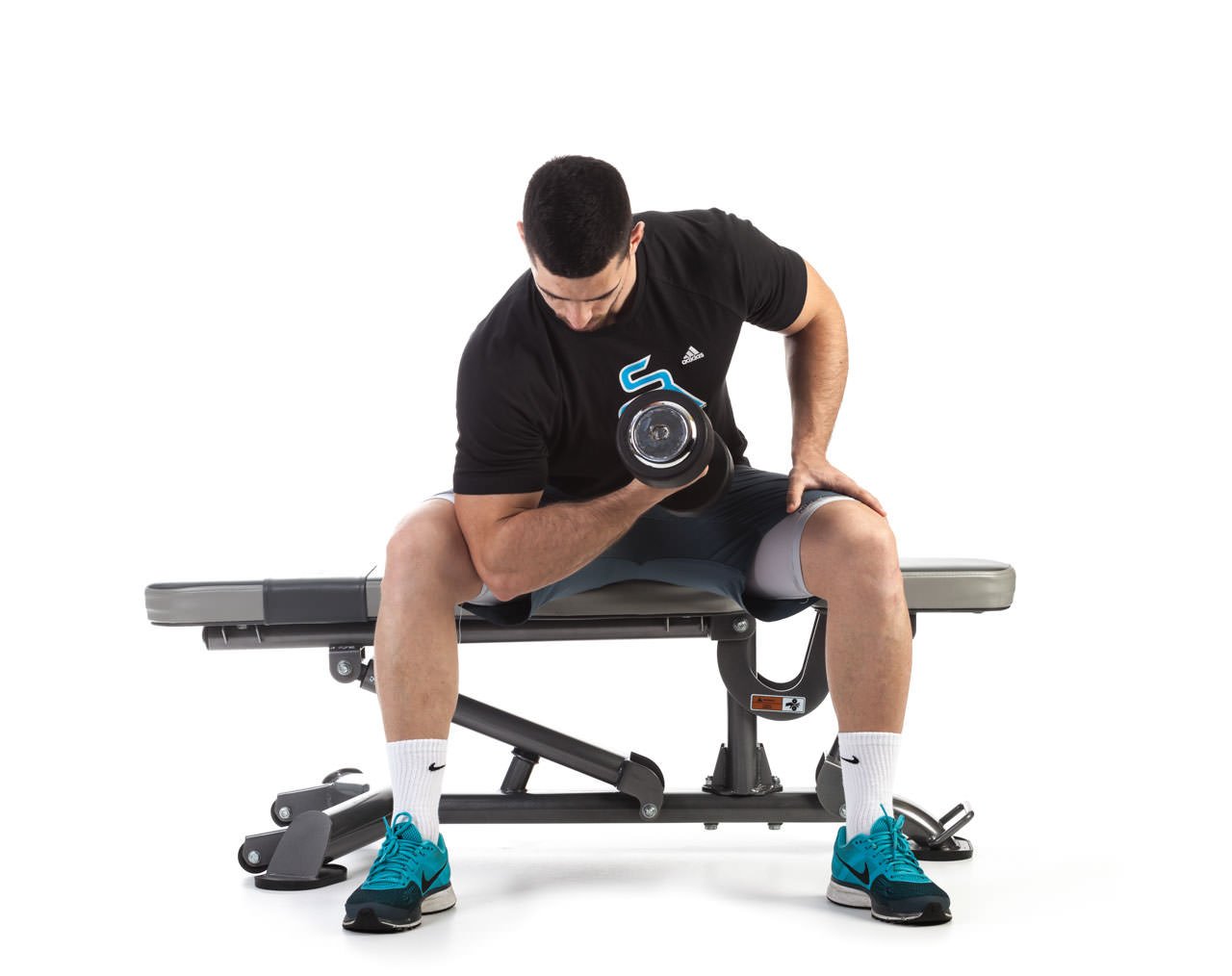
Hold the dumbbell with an underhand grip and let the forearm hang into a comfortable starting position. Keep your wrist broadly aligned with your forearm. Curl by bending the elbow, allowing the forearm to travel upward while the upper arm remains against the thigh.
The dumbbell does not have to touch your shoulder. End the upward phase before you need to lift the upper arm away from its support or fold the wrist to gain another centimetre. A brief, controlled change of direction is enough; an exaggerated squeeze does not rescue a repetition completed with a moving torso.
Lower the weight deliberately rather than letting it pull your arm down. Use a comfortable range that you can repeat without bouncing out of the bottom. Do not force a painful lockout, and do not shorten every repetition merely to keep a heavier dumbbell moving.
Watch the upper arm, not only the weight. If the dumbbell rises while the elbow slides up the thigh, you have changed the task. Reset with a lighter load and compare a few repetitions. The goal is to make the intended movement clear enough that you can tell which part became difficult.
Breathing should support that control rather than create another distraction. Avoid holding a prolonged breath through a whole set. The exact rhythm matters less here than keeping the seat, feet and supporting arm stable while you complete each repetition.
3. Troubleshoot the movement before blaming the exercise
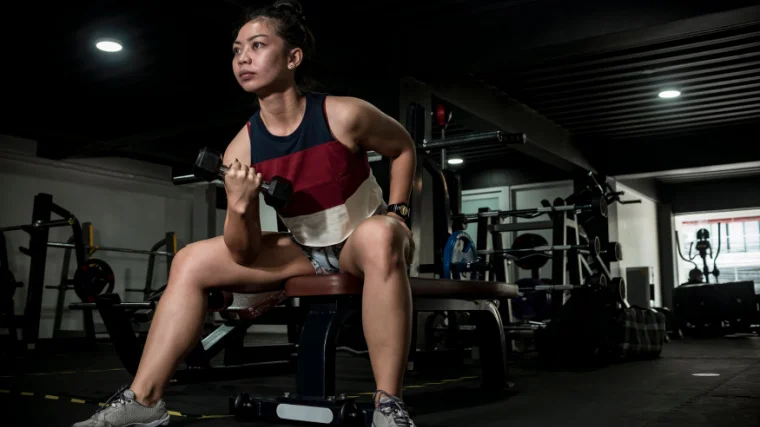
If your wrist bends as the dumbbell rises, reduce the load and check the handle position in your hand. Keep a secure grip without turning the movement into repeated wrist flexion. The forearm will contribute to holding the weight; feeling it work does not automatically mean the biceps are doing nothing.
If your torso rocks backward, compare the first repetition with the last. A set that begins with a stable brace and ends with repeated body swings has crossed your chosen technique limit. Finish the set there rather than counting assisted repetitions as identical to the earlier ones.
If the thigh feels uncomfortable, reposition the upper-arm contact and check whether you are pressing a sharp elbow point into the leg. Do not compensate by driving the knee into the arm. If a comfortable brace remains unavailable, a different supported curl can be the more practical option.
A strong pump can be enjoyable, but it is not a complete scorecard. Neither soreness nor a dramatic burning sensation proves that the exercise will build more muscle than your other curls. Judge it partly by whether you can train consistently, control the intended movement and progress without discomfort.
For a quick technique review, place a phone where the whole working arm and torso are visible. Compare the opening and closing repetitions: did the contact point move, did the wrist fold, and did the lowering phase disappear? Review the recording after the set rather than turning your head repeatedly while holding the weight.
4. Progress the repetitions you can actually reproduce
Choose a weight that lets you practise the brace and control the descent. It may be lighter than your standing curl, particularly if you normally use some body movement there. Comparing the numbers directly misses the point: the two versions allow different amounts of assistance.
As a simple starting example, use two manageable sets of eight to twelve repetitions per side, leaving roughly two repetitions you could still complete cleanly. This is an adjustable training example, not a compulsory prescription. Your existing pulling work, other curls and recovery should influence how much additional work you add.
Start with the side that currently performs fewer controlled repetitions. Let it set the shared target rather than adding extra work automatically to the stronger side. Record the actual result for each arm, especially if one side loses its brace earlier.
When both sides reach the top of your chosen range with consistent technique across comparable sessions, try the next sensible increment. If that increase makes the movement much less controlled, return to the previous load and build repetitions there. A large jump between dumbbells is a loading problem to manage, not a reason to swing harder.
Rest long enough that you can set up the next effort carefully. If your breathing is still rushed, the dumbbell is slipping or you cannot reproduce the brace, take more time before continuing. You do not need a rigid stopwatch contest for an isolation exercise. A short note about how you alternated sides and rested makes future comparisons more useful than remembering only the heaviest dumbbell you picked up.
For example, a log might show ten and nine clean repetitions at one load. Repeating that load until both sides achieve your target is progress even before the weight changes. Record your rest as well: switching arms immediately and rushing the next set can make a familiar load feel unexpectedly difficult.

Bodybuilding Shirts & Workout Gear
Bodybuilding shirts, tanks and gym gear for lifters chasing muscle, size, symmetry and the pump.


Shirt – Micro Biceps Club President – Gymbros, & T-Shirt
Rep “Micro Biceps Club President” humor in and out of the gym.

Big Gun – AC/DC Rock Music Big Biceps & Gains – Meme T-Shirt
Rep “Big Gun” humor in and out of the gym.


Dost Thou Even Curl Tank
Bring “Dost Thou Even Curl Medieval Knight Bicep” humor to your next lifting session.

Muscle Mountain – Bicep Mountain Meme Hooded Pullover Hoodie
Keep it laid-back with a little “Muscle Mountain” attitude.

Big Biceps Theory Meme Sweater Bro Science T-Shirt
Add a playful “Big Biceps Theory” touch to your casual rotation.

For Whom The Bell Curls Dumbbell Metallica Workout Deca Sticker
Bring “For Whom The Bell Curls” attitude to your water bottle or laptop.
5. Give the curl a clear job in your arm session
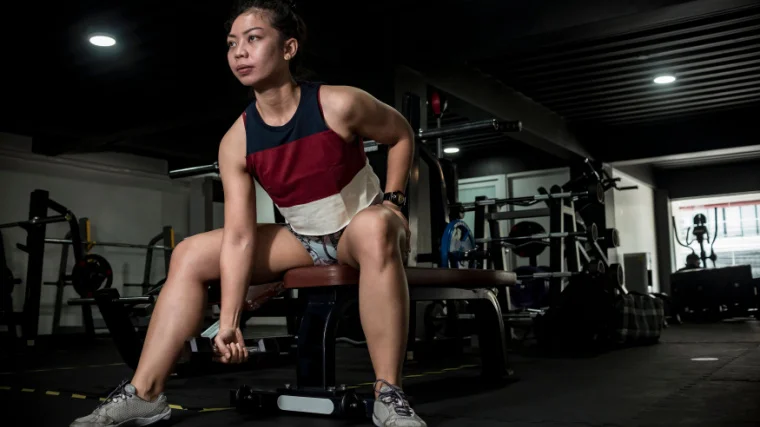
Concentration curls work well when you want deliberate unilateral practice without setting up a dedicated preacher station. They can follow your main pulling exercises or another curl, provided fatigue still allows a stable position. They can also come earlier when improving this specific movement is your priority.
Check the whole session before adding them. Rows, pulldowns and other curls already involve the elbow flexors. Adding a new exercise to every workout is different from replacing a curl that no longer fits your needs. Begin with a manageable change and observe whether the next session remains productive.
Your equipment choice should serve that plan. Fixed dumbbells are straightforward; adjustable dumbbells offer several loads in less space. A stable flat bench is enough for the seated version, while an adjustable bench offers other training positions. Neither a premium bench nor an entire matching dumbbell range is necessary to start.
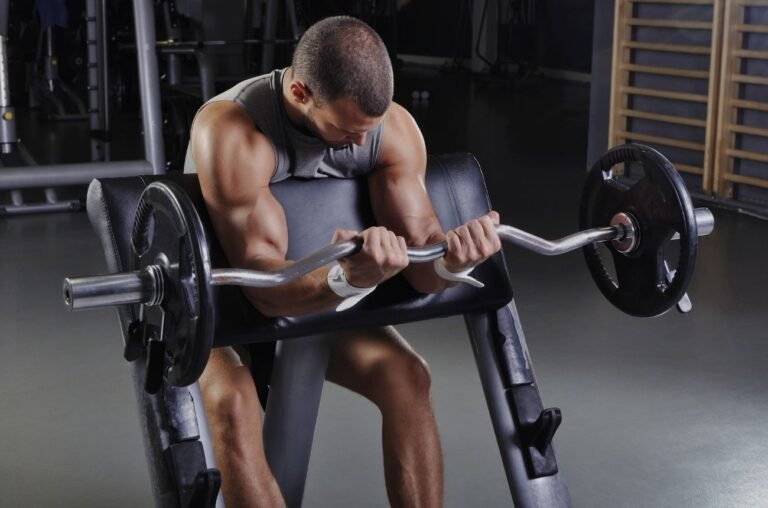
If thigh support is uncomfortable, consider a preacher curl with suitable upper-arm support. A standing EZ-bar curl is another option, but it removes the thigh brace and trains both arms together. A low-cable variation changes the direction of resistance and needs its own clear setup; it is not the same test simply because you selected a similar number on the stack.
Keep one version stable long enough to learn from it. If you change the seat, grip, resistance source and repetition target together, your log becomes harder to interpret. Choose the version you can position comfortably, perform deliberately and repeat next week. That gives the concentration curl a useful role beyond chasing a temporary pump.

Equipment Worth Exploring
Explore equipment, accessories and gear from our carefully selected range.


Rubber Hex Dumbbells
Rubber-coated hex dumbbell pairs with a stable shape for home and commercial strength training.


FID Bench MAX
Adjustable bench offering flat, incline, and decline positions + adjustable headrest.


Multi Bench MBX-650 2.0
Adjustable multi-bench with roller adjustment, 15 backrest positions and accessory mounts.


EZ Curl Barbell
Olympic EZ curl bar with angled grips for curls and triceps exercises.