Advertising disclosure: This page includes affiliate links that may earn us a commission at no additional cost to you.
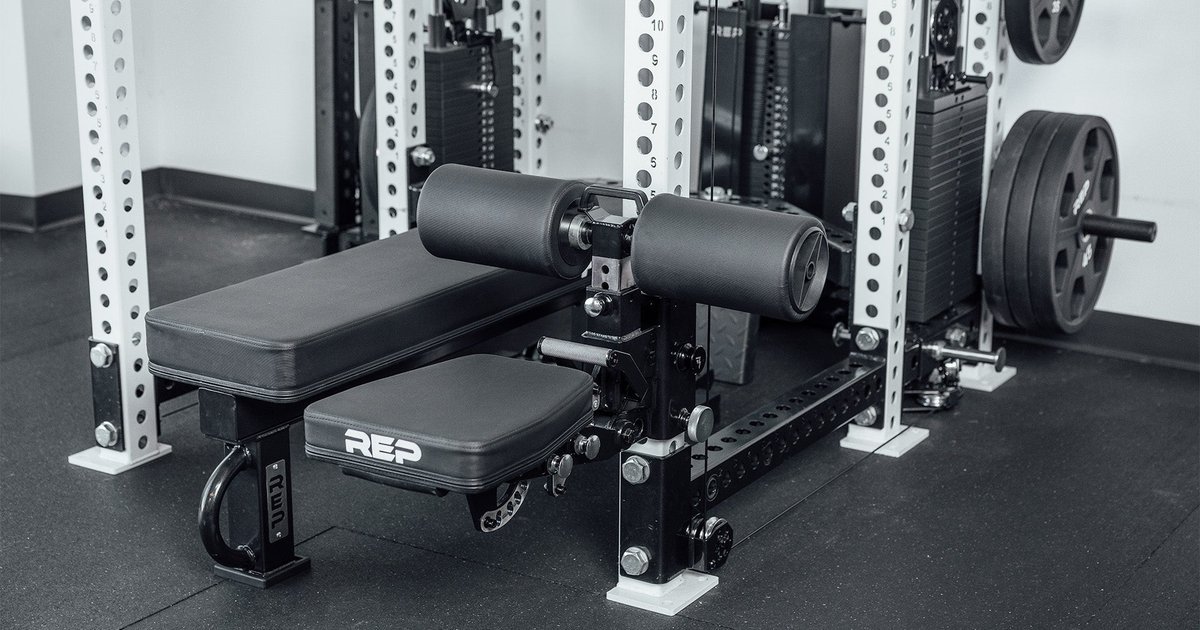
A rack-mounted seat can be a useful addition without turning a cable rack into every machine in a commercial gym. The REP Pegasus is worth assessing through three practical questions: will the correct version fit your rack, can you position yourself comfortably for your main exercise, and is there enough room to use and remove it?
Start with those questions before counting the exercises in a demonstration video. A versatile attachment earns its place when it makes a few regular movements easier to organise. This is a specifications-based setup guide, not an MMP hands-on review or a promise that the attachment will improve your results.
Match the attachment version to the actual rack
The Pegasus is offered for REP’s 4000 and 5000 Series. The 4000 version matches 5/8-inch holes, while the 5000 version matches 1-inch holes; the listed compatible systems use 2-inch hole spacing. REP does not guarantee fit on other manufacturers’ equipment.
That is the beginning of the compatibility check, rather than a reason to assume every upright that looks similar will work. Write down the exact rack and cable-system model you own. Then compare it with the selected attachment variant and the current compatibility information. If your configuration is unclear, resolve that specific question before ordering.
Photographs are useful for understanding the arrangement, but they do not replace that check. Two racks can look almost identical in a small picture while differing in the details that determine whether an attachment mounts as intended. Likewise, a photograph of a complete cable station does not mean the seat includes that station.
Think about the mounting location as well as the rack name. Which upright would you use? What equipment already occupies it? Would the seat obstruct a regular lift or access to a cable? A quick sketch of the current arrangement can expose a conflict that a product-only view hides.
Plan the mounting and adjustments as one task
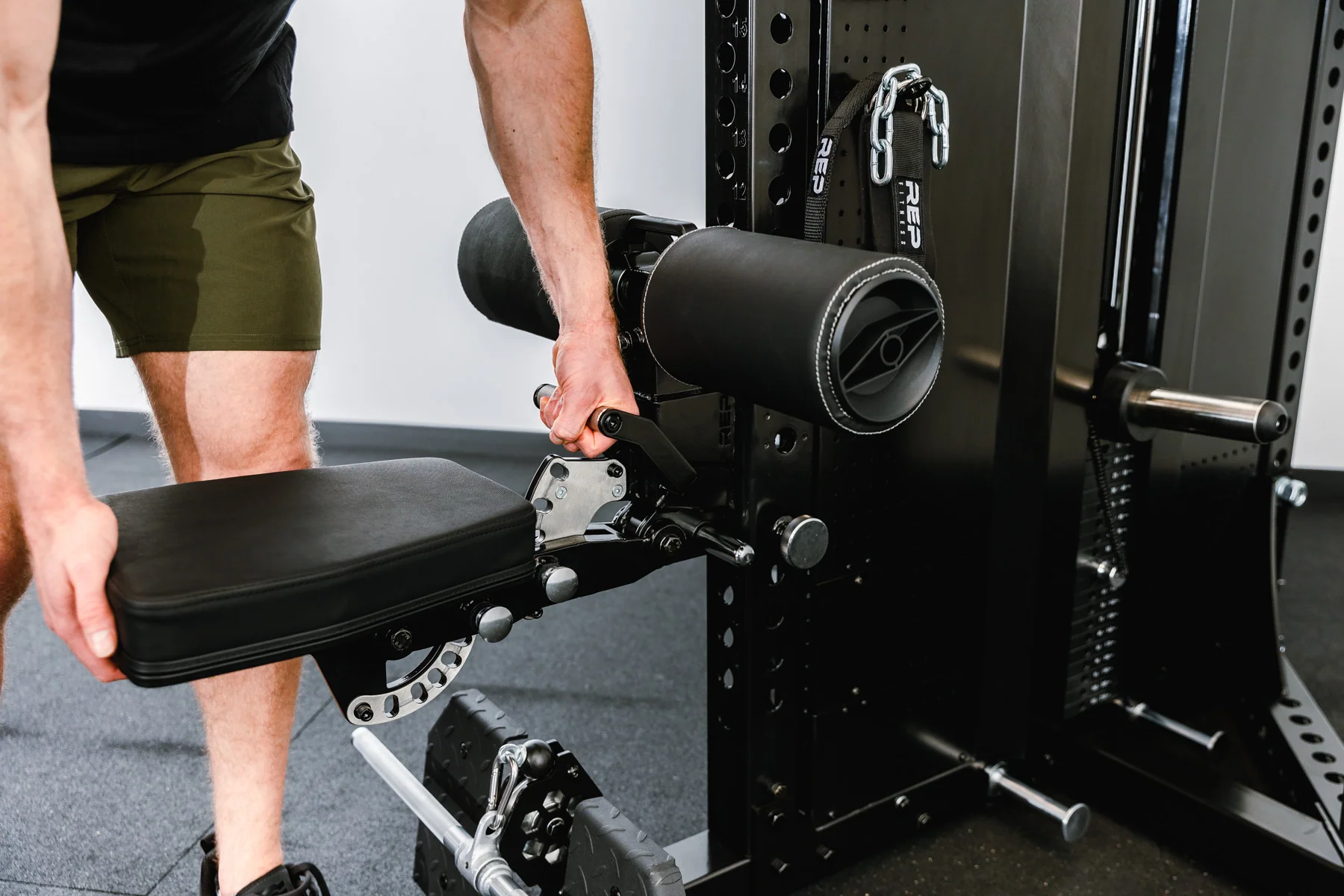
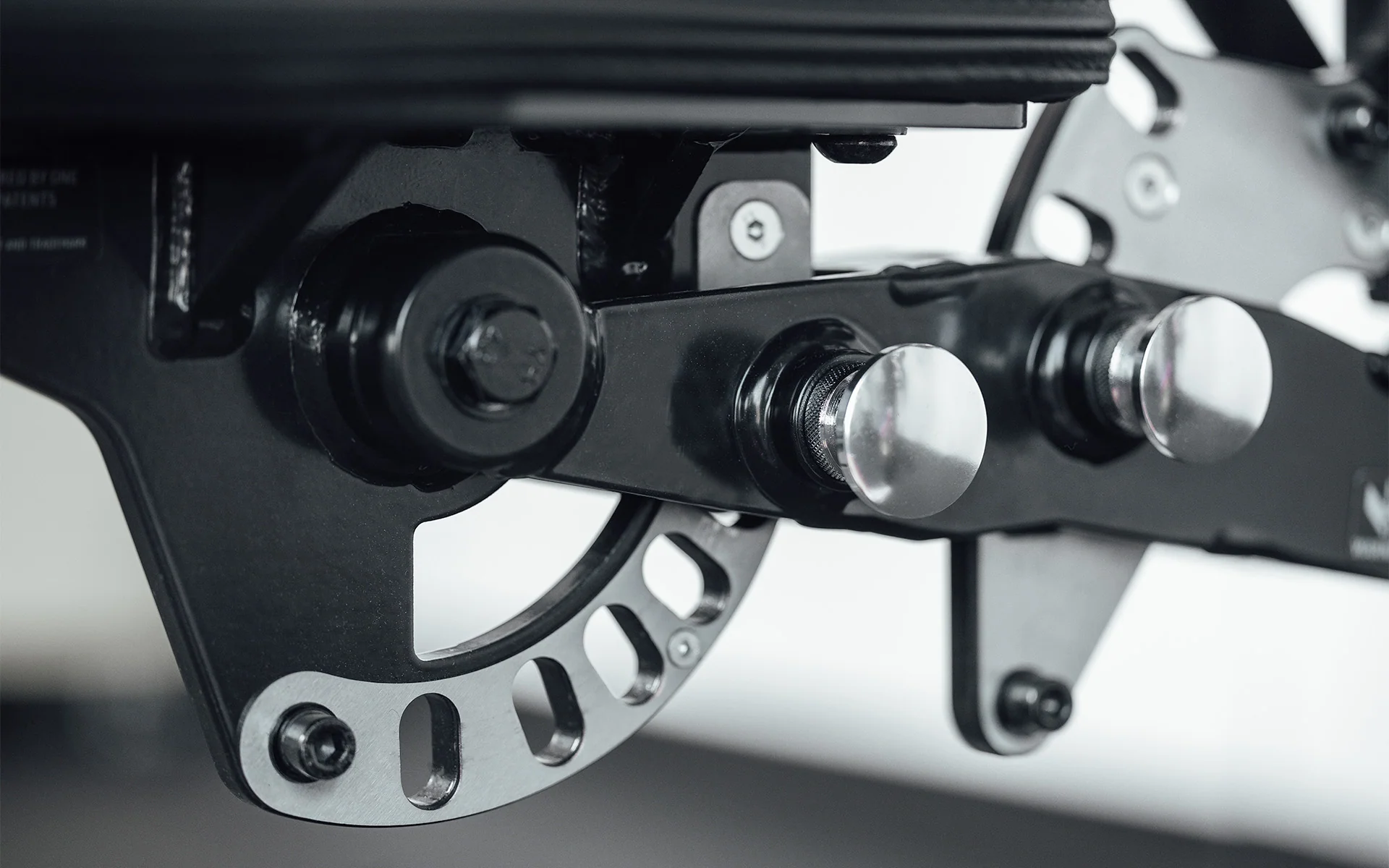
The attachment uses a mounting pin and a tightening knob, with adjustment at the seat and support arm. The leg rollers also adjust. Treat those as a setup sequence: mount securely, configure the support for the chosen movement, then check your position before loading the exercise.
Follow the installation instructions for the specific version supplied. Do not substitute a guessed pin or an improvised fixing because it appears to hold during a quick test. Once installed, begin with a light practice set and confirm that the position lets you enter, reach the handle and exit without an awkward manoeuvre.
Record settings that actually work for you. A useful note might identify the upright hole, pad setting, roller position and cable starting height. The point is to make the next session repeatable, rather than spend it remembering which combination felt right.
If several people share the gym, keep separate notes. Height alone does not describe every difference in reach, leg length or preferred position. A setup that suits one person may need adjusting for another. Changing several settings at once can make the effect difficult to judge, so work through them deliberately.
Also rehearse the changeover. If the seat must come off before squats, identify where it goes and how you will move it. The convenience of an attachment includes the steps between exercises, not just the exercise shown with everything already arranged.
Use the rollers to organise a pulldown position
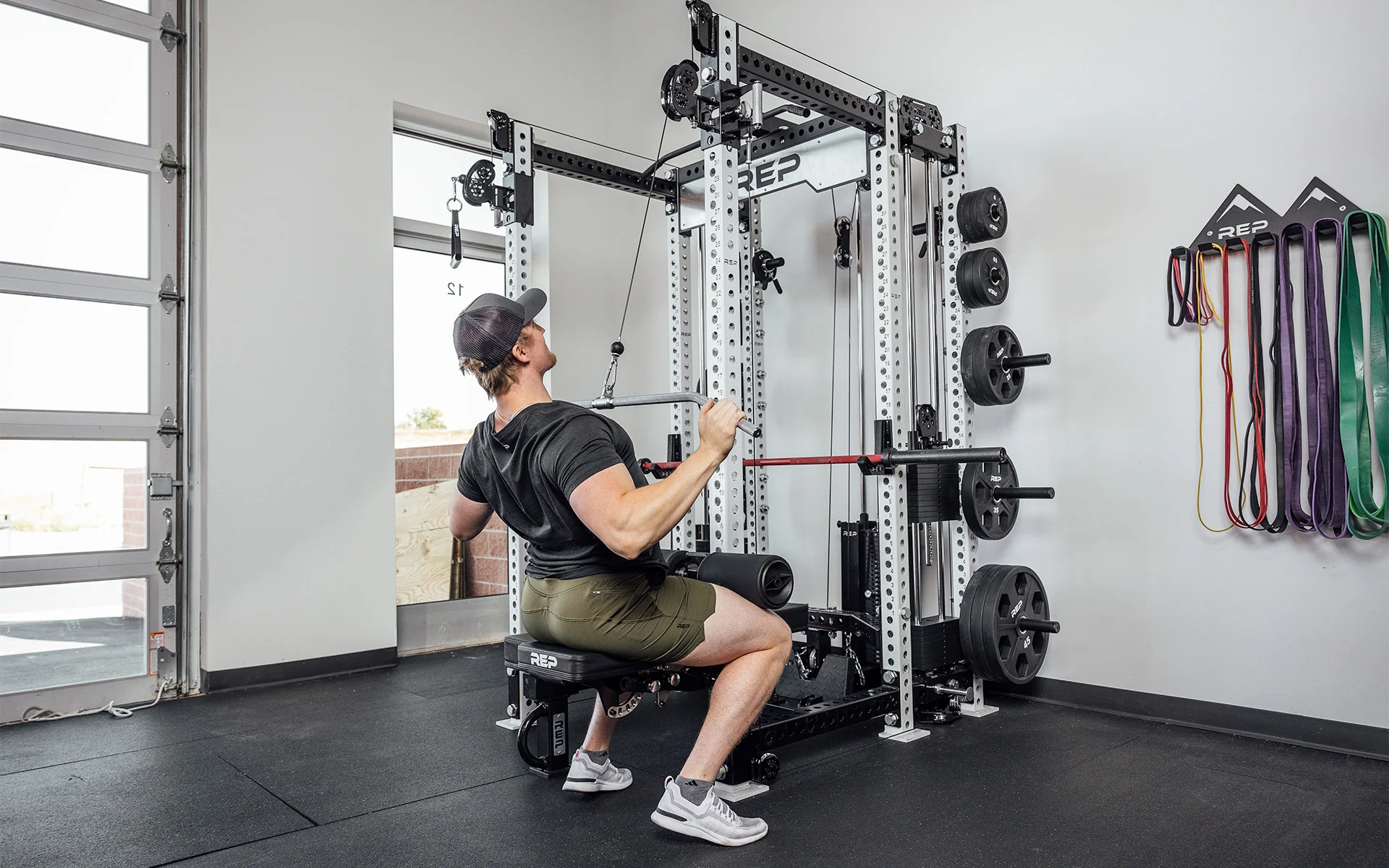
For seated pulldowns, a stable lower-body position helps you control the movement. Arrange the thigh support to fit firmly without forcing an uncomfortable position. Start with a manageable load and pull towards the upper chest while keeping the torso controlled, rather than turning each repetition into a large backward swing.
The useful test is the complete repetition. Can you reach the handle, begin under control, pull through a comfortable range and return smoothly? If you must reach awkwardly just to start, address the setup before adding weight. A different handle length can change the starting reach even when the seat stays in the same place.
Grip choice is a separate decision. Muscle-activation studies of pulldowns have produced differing findings across hand positions and protocols. An electrical activity measurement during a set is also not a direct demonstration of long-term muscle growth. There is no basis here for promising that one handle or seat setting produces superior gains.
Choose a grip you can use comfortably with consistent technique, then assess it within your own programme. Avoid changing the grip, seat and load simultaneously if you want to understand why the exercise feels different. A repeatable starting position makes those comparisons more useful.
The same principle applies to unilateral work. Our guide to single-arm pulldown elbow path and torso control explains how to think about the pull itself. An attachment organises support; it does not automatically supply the movement skill.
Set chest support around the row you want to perform
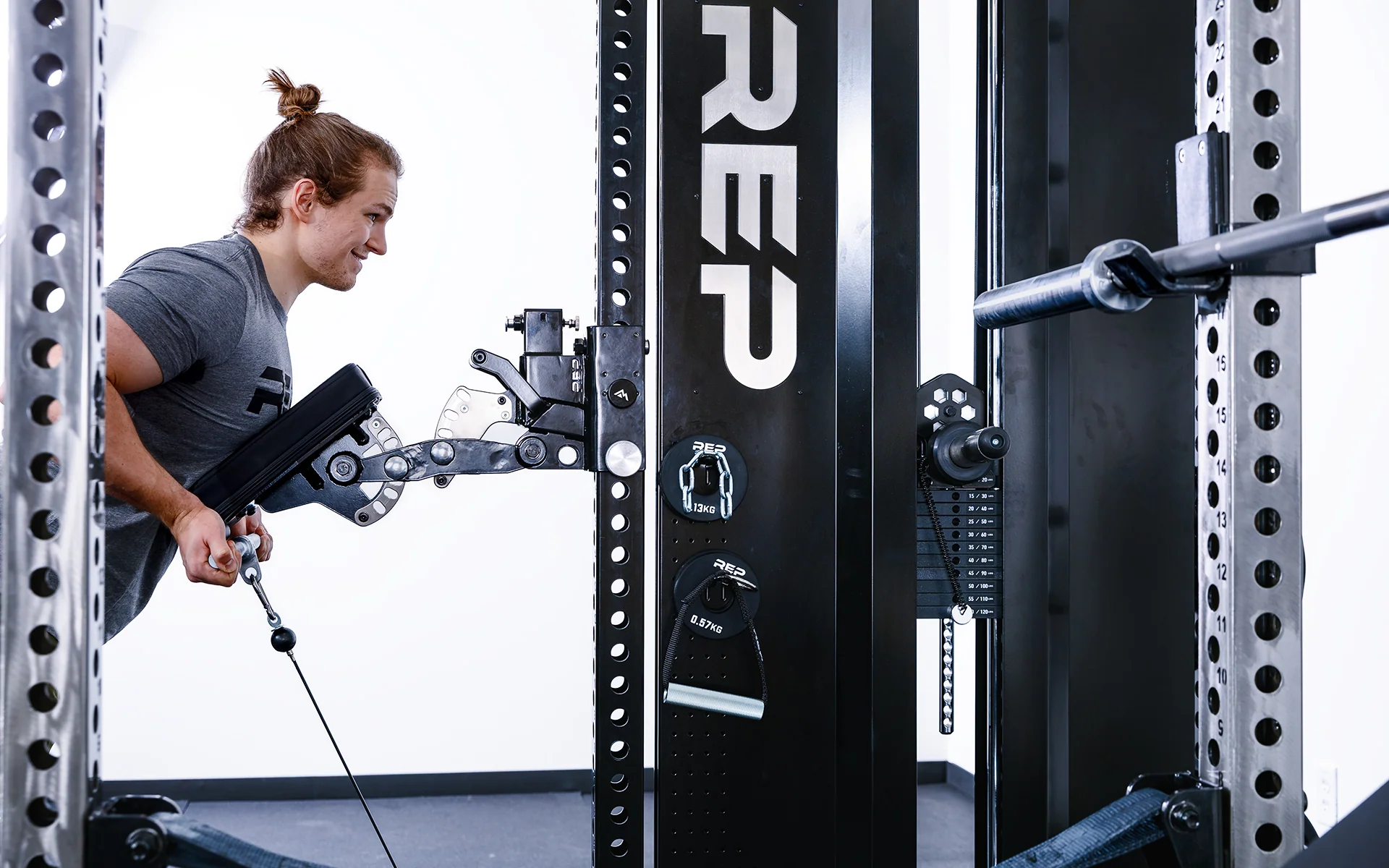
For a supported cable row, position the pad so you can reach the handle and move the arms without the support blocking the intended path. Begin lightly. Check that you can breathe comfortably and maintain contact without having to wrench yourself into position.
The cable’s direction matters alongside the pad angle. A low cable and a higher cable create different pulling arrangements. Do not choose the setup only because it resembles a demonstration still; check the path from the pulley to your hands throughout the movement. Make sure the cable and connector have a clear route.
A supported row is also a different arrangement from a free-standing row. If your aim is to reduce how much you move the torso during the set, use the support consistently rather than pushing away from it to finish a heavy repetition. Record the setup alongside the load so progress reflects a comparable exercise.
For readers comparing an attachment with an existing bench, this chest-supported dumbbell row setup guide covers another way to organise support. The choice depends partly on the exercises you already have available, rather than an assumption that another accessory is always necessary.
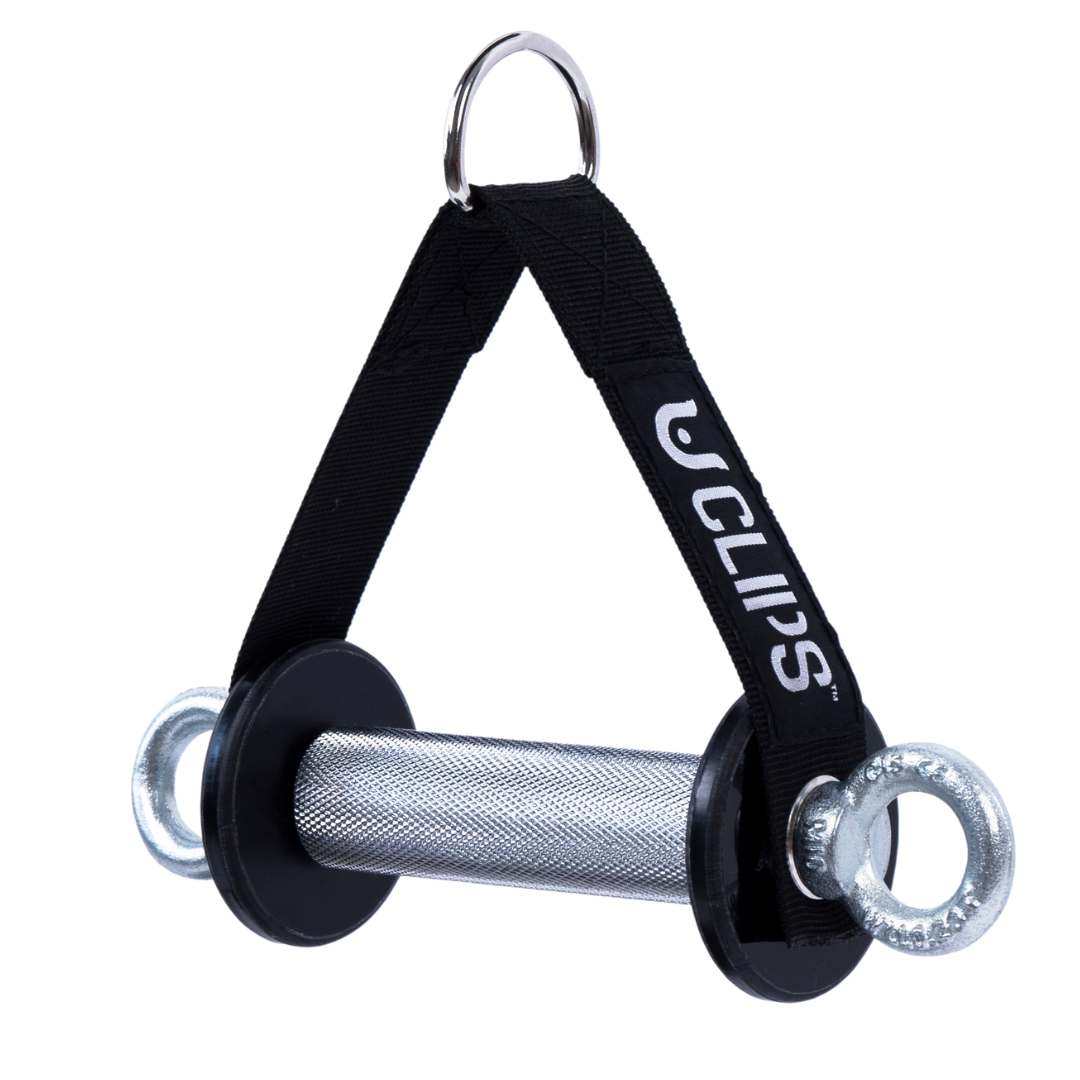
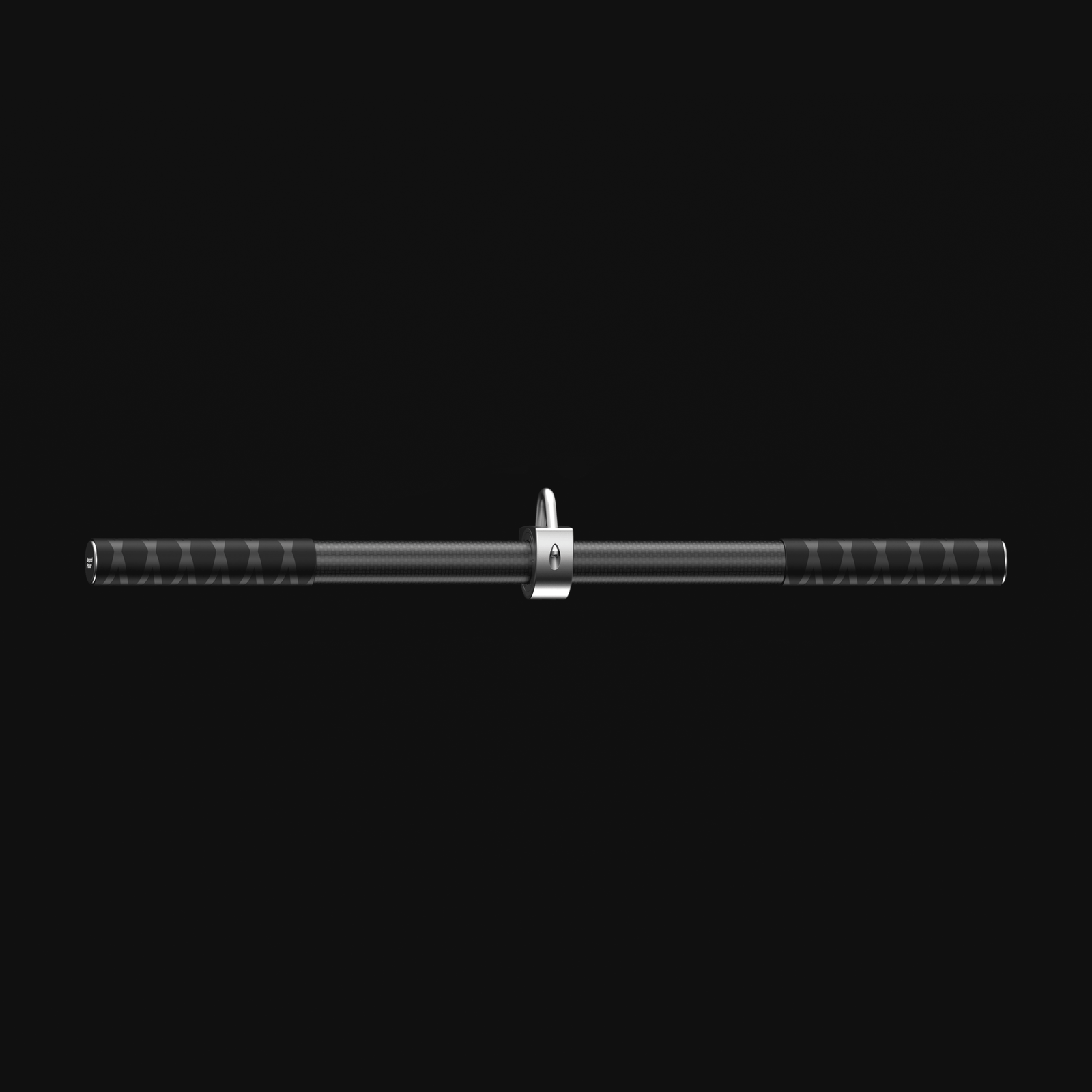
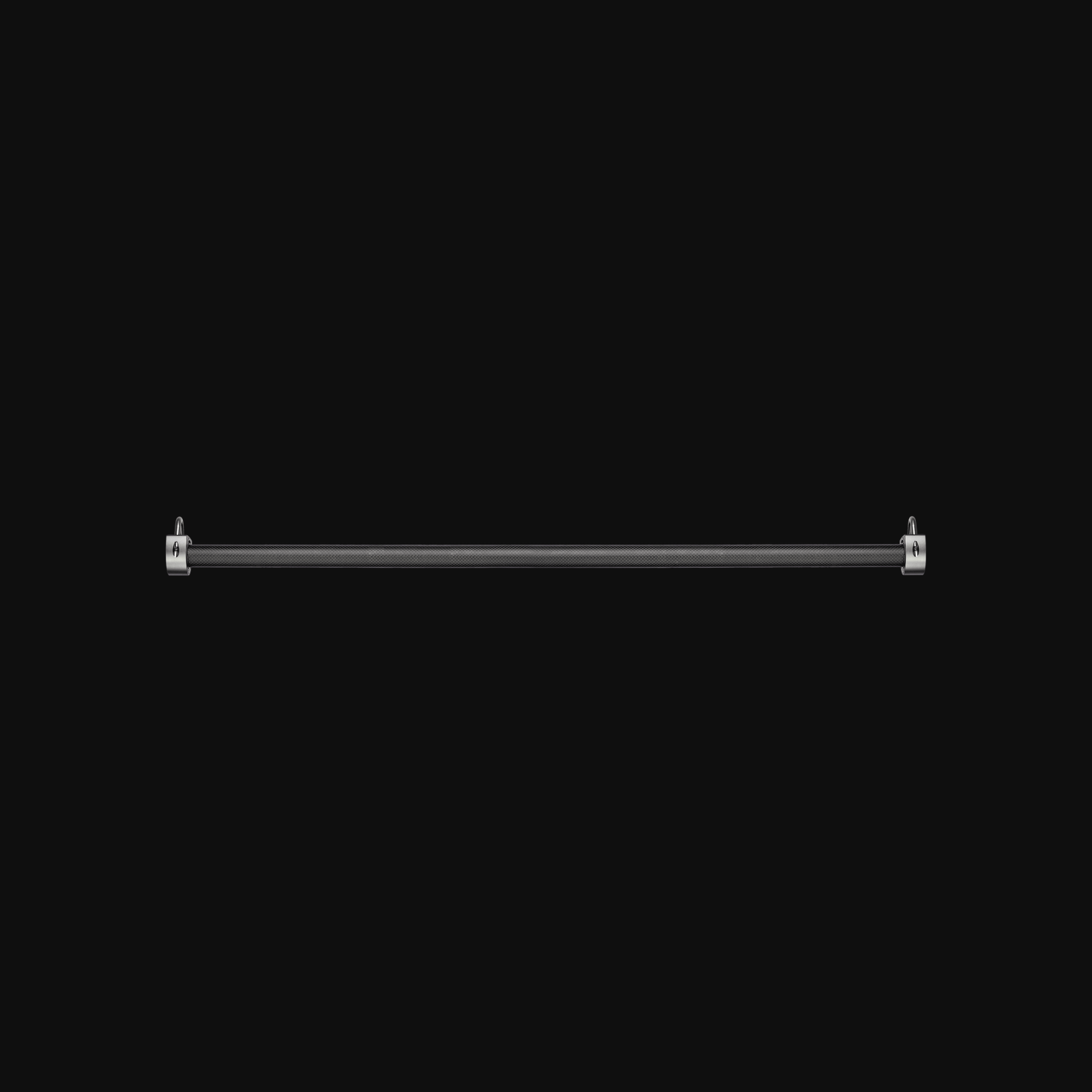
The cable handles below are separate equipment options for pulling and related cable work. Check each handle’s connector, dimensions and intended use against your actual cable system. Their inclusion is not a guarantee that every item directly attaches to the Pegasus or suits every configuration; bench options are alternatives for organising support.

Equipment Worth Exploring
Explore equipment, accessories and gear from our carefully selected range.
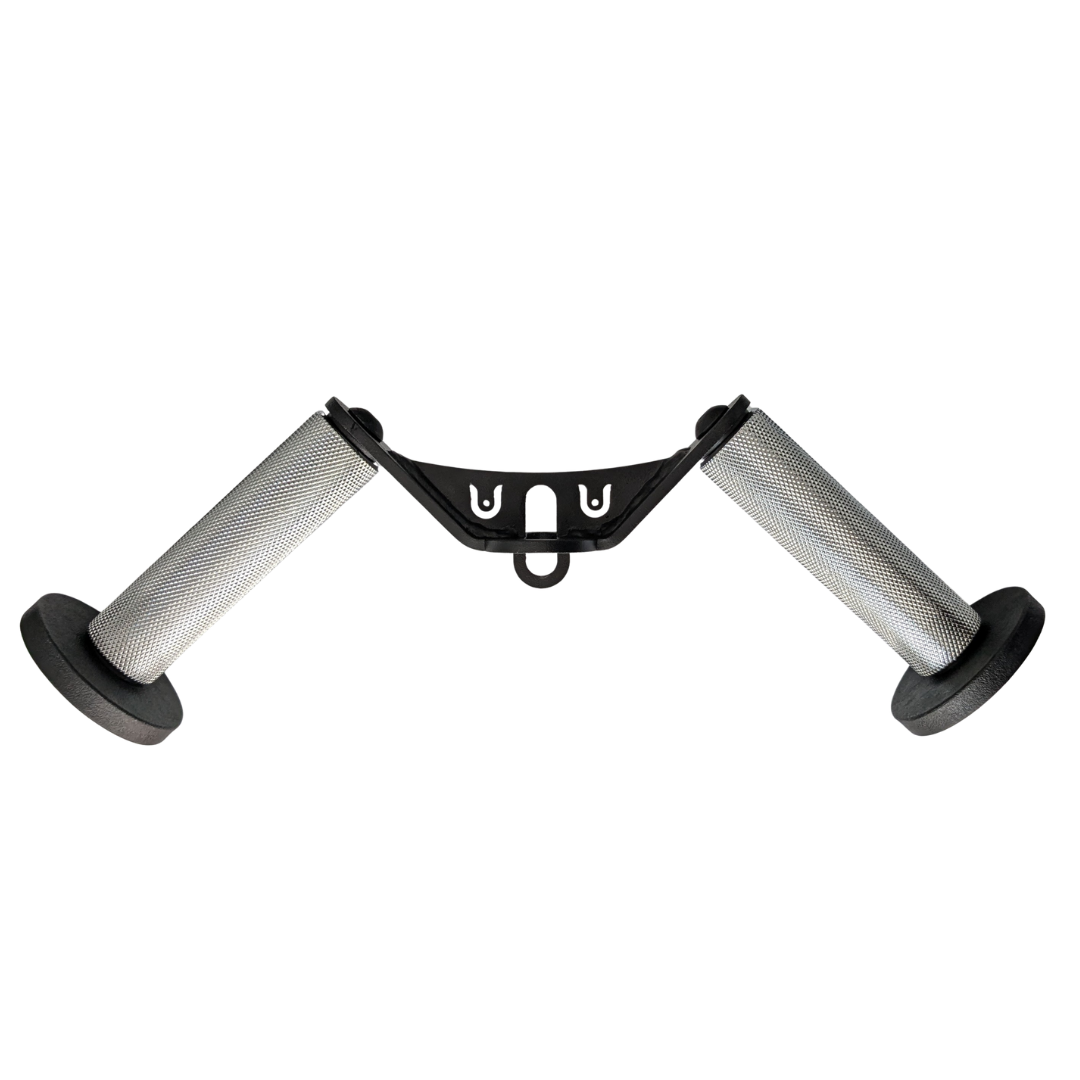
W Grip
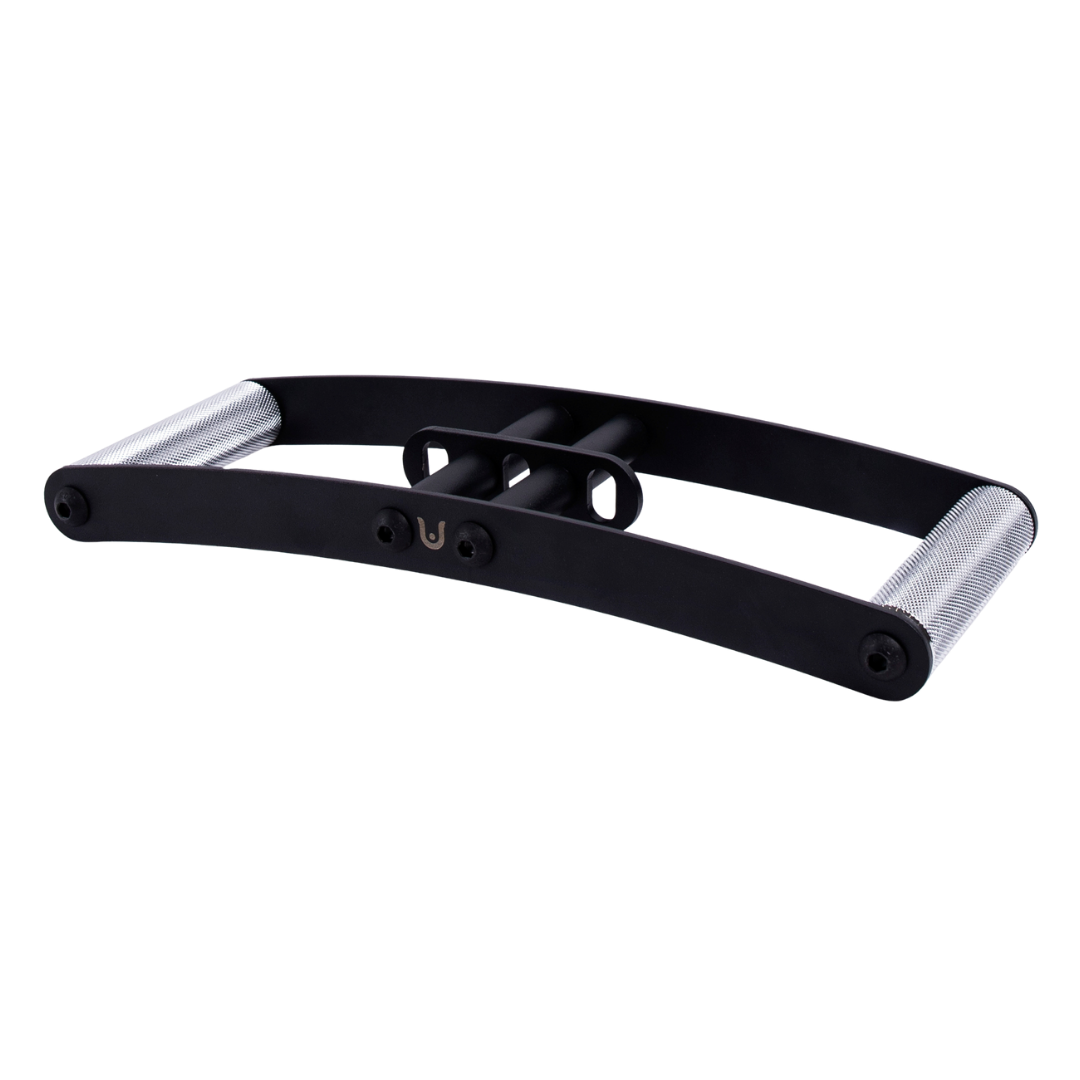
Angled cable grip for comfortable rows, pushdowns, and curls.
Horizon Grip
Ergonomic V-style cable grip for rows and back training.

GymPin Ergo Handles
Pair of ergonomic cable handles shaped for comfortable triceps and pulling exercises.

GymPin D Handle Bar
Multi-use steel D-handle bar for cable rows, pulldowns and other cable exercises.

Angles 90 Grips
Flexible grip attachments that allow natural wrist movement during pulling exercises.

48in Aluminum Lat Bar
48-inch aluminum lat pulldown bar with knurled grip and rotating center swivel.
Measure working space before deciding it belongs
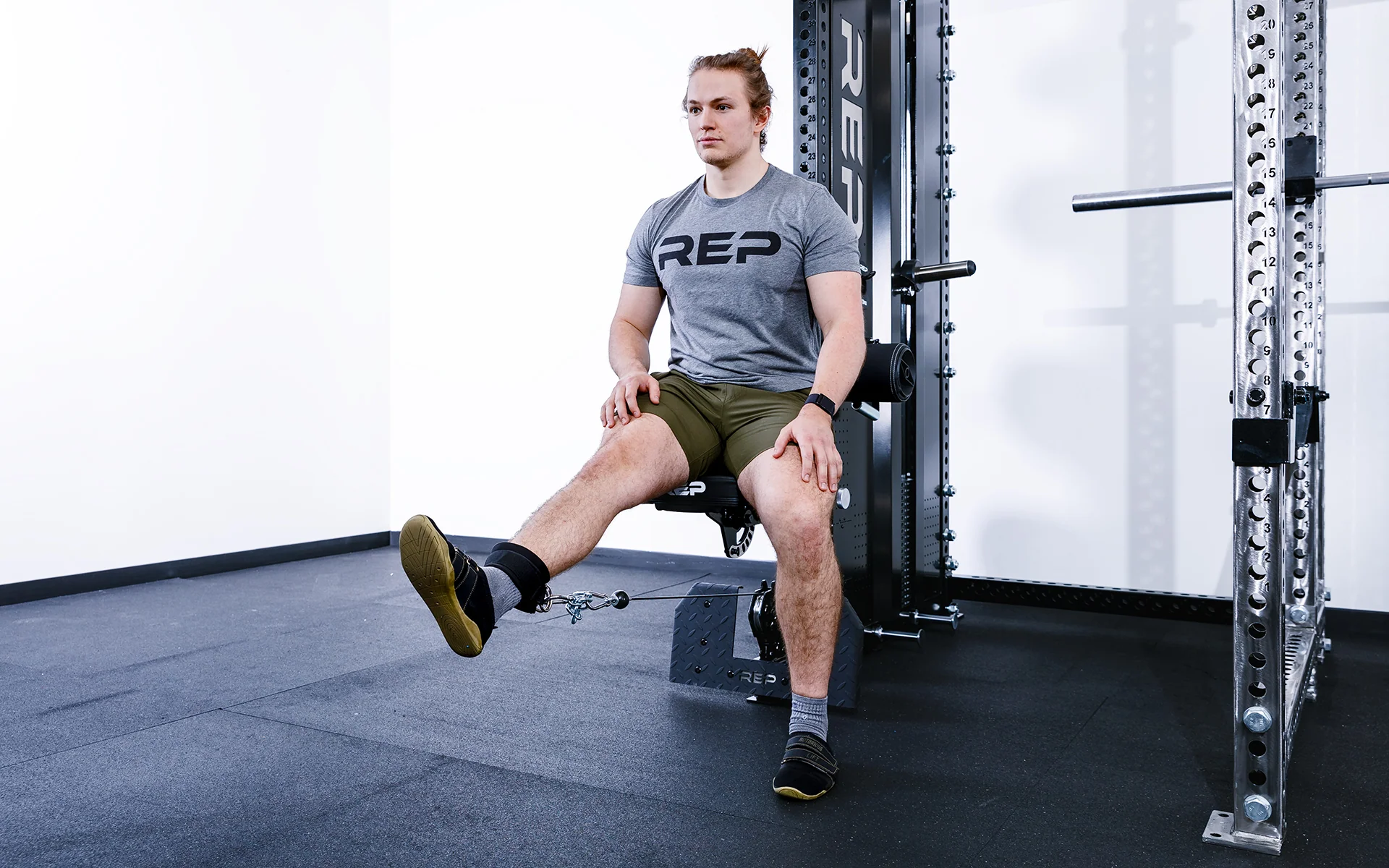
The listed extension from the rack is 24.8 inches. The seat capacity is 300 pounds, while the leg rollers have a separate 500-pound rating. Those are different specifications. The attachment is intended for static support, not dynamic jumping.
A footprint figure is not the full working area. Add the person using the attachment, the handle’s travel and a route to get in and out. Consider where your feet go, where the cable runs and whether nearby stored equipment would be in the way. Check the arrangement in your room rather than assuming an empty demonstration space represents it.
Make a short list of the movements you would actually use each week. Next to each, write the current alternative and the problem you hope the attachment solves. Perhaps it is a more convenient pulldown position, or a repeatable supported row. If the problem is vague, buying more functions may not resolve it.
Then include the practical costs of ownership: installation, changing settings, moving the attachment and finding a storage position when the rack is needed for something else. These are personal workflow questions, not specifications that a manufacturer can answer for every gym.
Back training also includes choices beyond a seated cable station. Pull-ups, pulldowns and rows are distinct options, while consistency and controlled progression matter more than treating any accessory as a shortcut. The back-day, pulling and workout-motivation designs below are merchandise themes, not performance claims.

Bodybuilding Shirts & Workout Gear
Bodybuilding shirts, tanks and gym gear for lifters chasing muscle, size, symmetry and the pump.


Wide Privilege – Wide Back Meme Vest Muscle Shirt for A Tank Top
Show some personality between sets with “Wide Privilege”.

Consistency Is Key Stoic Greek God Marble Sculpture T-Shirt
Make gym days more fun with “Consistency is Key Stoic Greek God Marble” style.

Discipline Greek God Statue Stoic Sigma T-Shirt
Heavy lifts, good laughs, and a little “Discipline Greek God Statue Funny Stoic” energy.

Shirt Pull Day – Back & Biceps Meme Top T-Shirt
Heavy lifts, good laughs, and a little “Pull Day Graphic” energy.

Unbreakable Gains Back Tee
Make gym days more fun with “Unbreakable Gains: Strong Back Greek God” style.


Always Pull Yourself Up Crewneck Calisthenics Pullover T-Shirt
Bring “Always Pull Yourself Up” humor to your everyday gym style.

Calisthenics Pullups Heartbeat Hoodie
Bring “Calisthenics Pullups Heartbeat” gym humor to lazy days and post-workout plans.

Shirt – Don'T Quit Do It – Meme & Gains T-Shirt
Show some lifting attitude with a playful “Don't Quit Do It” tee.
The strongest case for the Pegasus is a clear task in a compatible setup with enough space to perform it. Verify the version, test the intended positions sensibly, and judge the purchase by the exercises it would improve in your own routine.