Advertising disclosure: This page includes affiliate product links that may earn us a commission, as well as products from our own store.
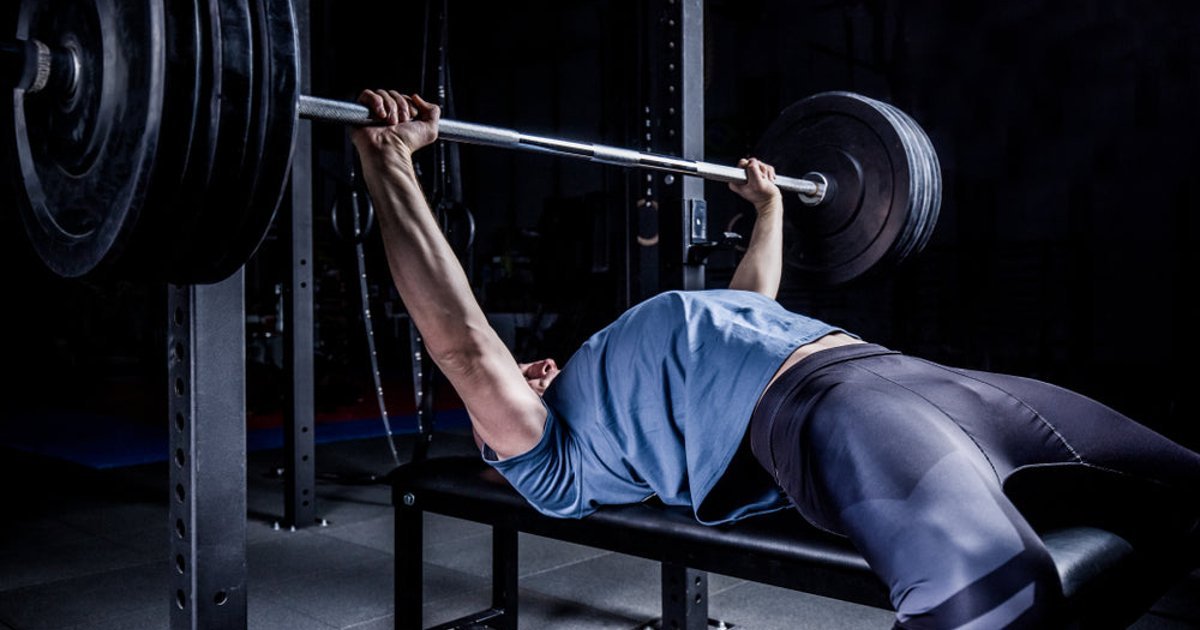
A pin bench press is not just a bench press performed near a safety bar. The defining feature is a loaded barbell that comes to a complete rest on two correctly positioned rack safeties before the next press begins. That fixed starting point changes the job. Instead of borrowing the rebound of a normal repetition, you have to re-establish pressing tension and move a stationary bar from the height you selected. Get the rack position wrong and you train the wrong range—or create a poor setup that is difficult to exit safely.
For home-gym lifters, the exercise is attractive because it needs equipment many already own: a sturdy power rack with properly rated and matched safeties, a stable bench, an appropriate barbell and plates. It is also demanding enough to punish rushed setup. This guide separates the actual dead-stop technique from ordinary paused bench pressing, then gives you a practical way to build it into training without turning every session into an overload test.
Set the bench and safety pins before you touch a heavy bar
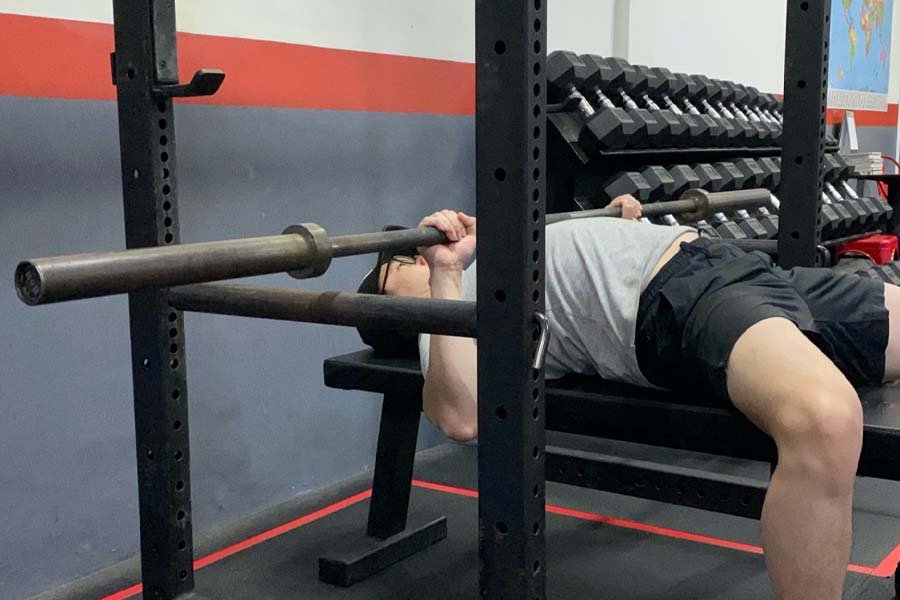
Start with the empty bar, not with the load you normally bench. Place a flat bench lengthwise inside the power rack and make sure its feet sit securely on level flooring. Both safeties must be approved for that specific rack and set at the same height. A pin, pipe, strap or spotter arm is not automatically interchangeable with another design; use the manufacturer’s fit and loading guidance. Check that the bar rests evenly on both supports and cannot roll toward your face or off the available supporting length.
Lie down in your normal bench position with upper back on the pad, eyes positioned consistently relative to the bar and feet on the floor. Bring the empty bar to the intended start position and inspect the clearance over the chest, ribs, throat and face. You should be able to take a full grip, keep your wrists reasonably stacked over your forearms and straighten your elbows comfortably at the top. An unusually high pin setting can leave almost no useful pressing travel; a very low setting can trap you beneath the bar if you misjudge where your torso sits.
The bench’s location matters as much as pin height. If the bench is too far toward the head or foot of the rack, the fixed starting position forces your elbows into an odd angle before the bar moves. Center the pad and test several unloaded reps. The bar should start near your normal lower-to-mid-chest pressing line for the chosen range, then travel slightly back toward your shoulders as you press, not drift into the uprights. Use collars and load the sleeves symmetrically only after the empty-bar check is comfortable.
Do not assume the pins that work as emergency catches during a full-range bench press are automatically at the correct height for a pin press. In a regular bench, safeties are normally low enough to stay out of a successful repetition. In a dead-stop pin bench, the supports define the working bottom. That distinction deserves its own rack-height note in your training log.
Make every repetition a genuine dead-stop press
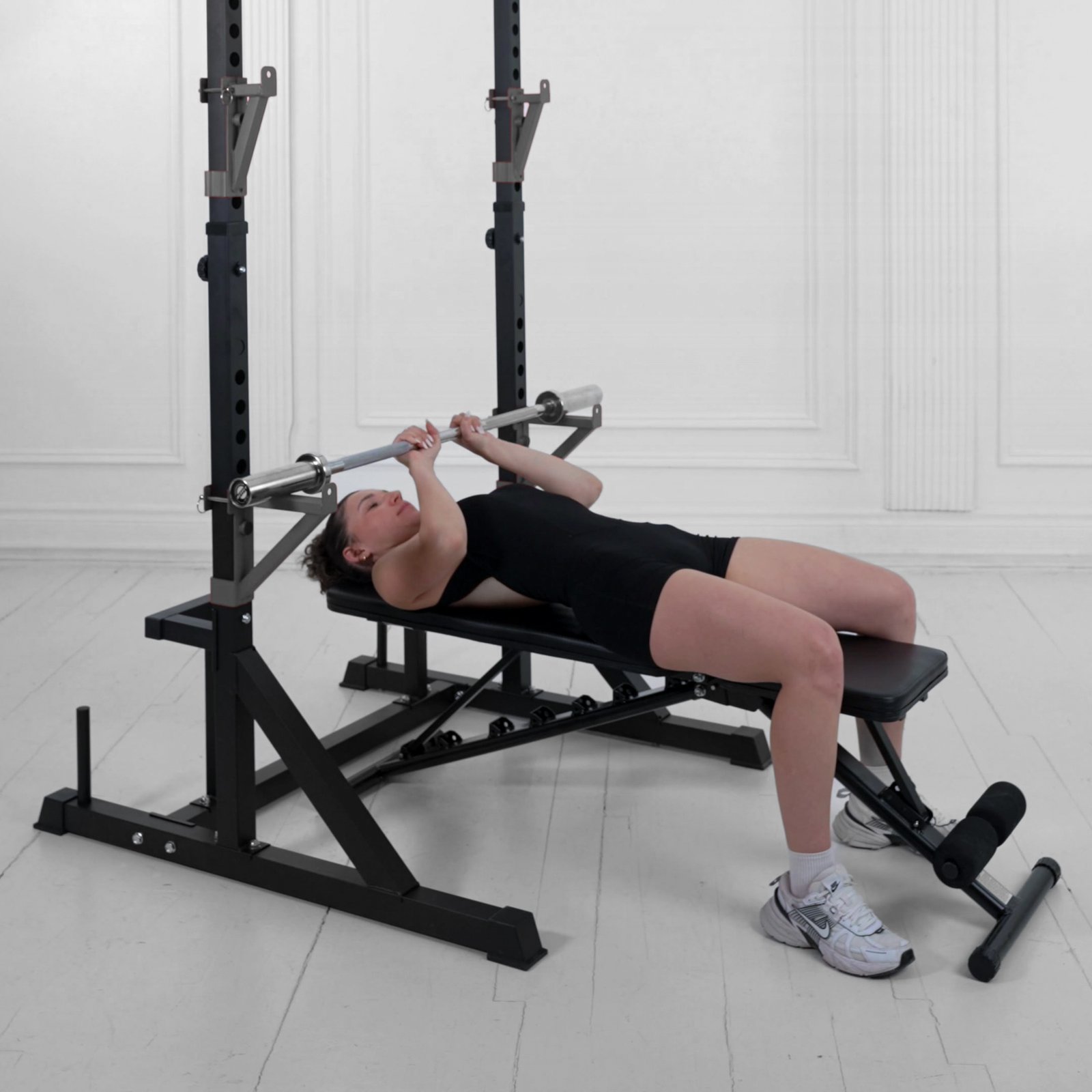
There are two legitimate ways to organize the movement. You can begin with the bar already resting on the pins and press upward from there, or lower the bar under control from the top, let it settle on both supports and press again. Either way, the next upward drive begins from a motionless bar. A slight tap or metallic rattle does not count as a reset; it simply turns the exercise into a noisy touch-and-go variation.
Set the shoulder blades firmly against the bench, squeeze the bar with the thumbs wrapped, plant the feet and take a breath before each drive. Keep your glutes on the pad. At the bottom, allow the rack to carry the load completely while keeping your body organized. Then re-brace and push through the same controlled bar path you rehearsed with the empty bar. The chest, front shoulders and triceps produce the press; the upper back and legs help maintain a stable position instead of moving the bar by bouncing your torso.
Think of the initial inch as its own repetition. When the plates stop moving, your upper body has no descending bar momentum to assist the turnaround. Rushing through that first inch, letting the wrists fold backward or suddenly lifting the hips changes the mechanical task. If the bar twists off one support before the other, stop and check the bench centerline, hand spacing and how evenly the plates are loaded.
A one- or two-second settled pause is a simple coaching tool, not a magic training number. A pause long enough to see that the bar has stopped and feel that its weight is resting on the supports is useful. A deliberately prolonged dead hang with relaxed shoulders is not. Keep your pressing setup organized, start each rep on command and end the set while bar speed and alignment still look deliberate.
Because the bar rests on the rack, you should not try to slide under an unevenly loaded bar, force a compromised shoulder position or perform an untested bailout on your own. If you cannot complete a rep, lower it evenly to the supports, leave it there and exit in the manner your rack and bench arrangement safely permit. A spotter remains valuable for unfamiliar or high-effort sets.

Equipment Worth Exploring
Explore equipment, accessories and gear from our carefully selected range.


FID Bench MAX
Adjustable bench offering flat, incline, and decline positions + adjustable headrest.


Multi Bench MBX-650 2.0
Adjustable multi-bench with roller adjustment, 15 backrest positions and accessory mounts.


Foldable Wall Rack
Wall-mounted folding squat rack designed to save floor space between workouts.

Multi Pull Smith Rack MPHR-780
All-in-one rack with a Smith machine, functional trainer, lat pulldown and low row.


Pick pin height to target a real sticking point
Pin height is a way to select a particular segment of the bench press, not a universal measurement that works for everyone. A lower starting point close to the chest can challenge the first part of a press, provided there is secure bar clearance and the shoulders tolerate the angle. A somewhat higher setting around a measured sticking region emphasizes that portion of the range. Raise the bar still further and the movement becomes a short lockout drill. Those are different training problems, so do not compare the numbers as if they were the same lift.
Film a few ordinary bench sets from a safe side angle. Look for where the bar consistently slows as effort rises, rather than guessing from one shaky near-max attempt. Place the pins near the segment you want to practice, and make sure your grip, bench position and torso arch are reproducible. There is no benefit in choosing an impressively short range simply because it lets you stack extra plates onto the bar.
Also distinguish dead stops from a Spoto press and a competition-style paused bench. During a Spoto press, the bar is held hovering just above the chest without touching the rack or body. During a paused bench, the bar is controlled against the chest before the press command. In a true pin bench press, the rack supports the bar between drives. The exercises overlap in the muscles they use, but the way the bottom position is supported—and the skill being practiced—is not identical.
For strength transfer, ask what you are trying to improve. A lifter who loses the initial push just above the chest may choose a lower pin position for practice. A lifter who struggles only near lockout might select a higher one, while continuing full-range work elsewhere. But a pin press cannot diagnose a weak pec, triceps or shoulder on its own, and a few weeks of partial-range performance do not prove that your full bench max has improved.
Write down the rack model, pin-hole position, bench position and whether every repetition began fully supported. This makes future sessions comparable. If the safety hardware or bench changes, treat the height as a new setup rather than carrying over a previous load automatically.
Correct the mistakes that turn dead stops into bouncing reps
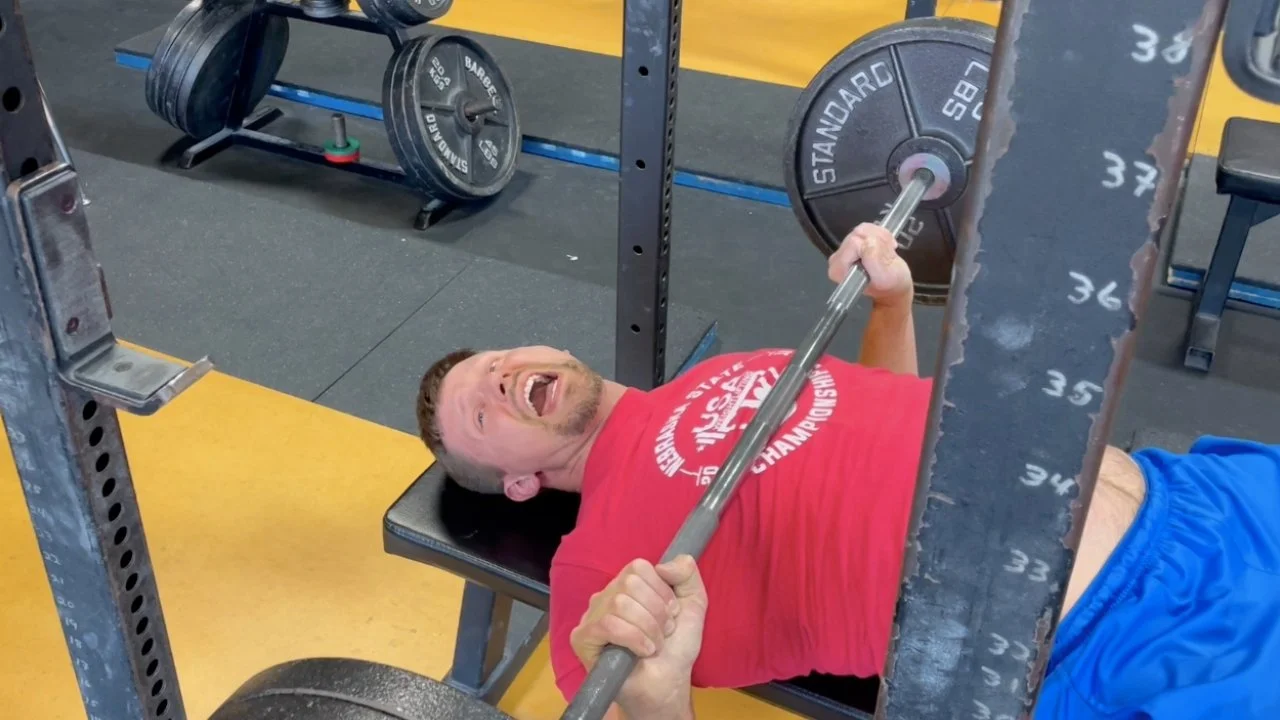
The commonest technical error is bouncing. Dropping the bar onto metal or deliberately using the rack to spring it upward can damage equipment, disrupt the shoulder position and defeat the reason for choosing this variation. Lower slowly, let both ends settle, then restart. If the barbell clatters off the pins with every repetition, reduce the load and make the pause visible.
Another problem is setting the pins in the wrong direction for the goal. Very high supports can make a set look powerful while removing the hardest part of the ordinary bench. Low supports can force an uncomfortable bottom angle or leave inadequate clearance for the ribcage. The fix is not a prescribed number of inches: it is a careful empty-bar test with the correct bench position, sturdy supports and the intended joint angles.
Watch the elbows, wrists and shoulder blades together. Flaring the elbows drastically, allowing the wrist to bend so the bar rolls toward the fingers, or shifting the shoulders on the pad between dead stops all make the restart less repeatable. Keep the bar over the lower palm, elbows tracking under the grip, upper back braced and shoulder blades stable against the bench. Use a full thumb-wrapped grip, especially when starting from a stationary loaded bar.
Do not lift the hips to generate extra drive. The feet should add stability, not allow the glutes to launch off the pad. If the backside lifts, first reduce the weight, then review foot placement and whether the pin height is forcing an awkward press path. Uneven contact on the supports is a separate stop signal: check plate symmetry, bench centering, left-right support level and any interference with the rack uprights before trying another repetition.
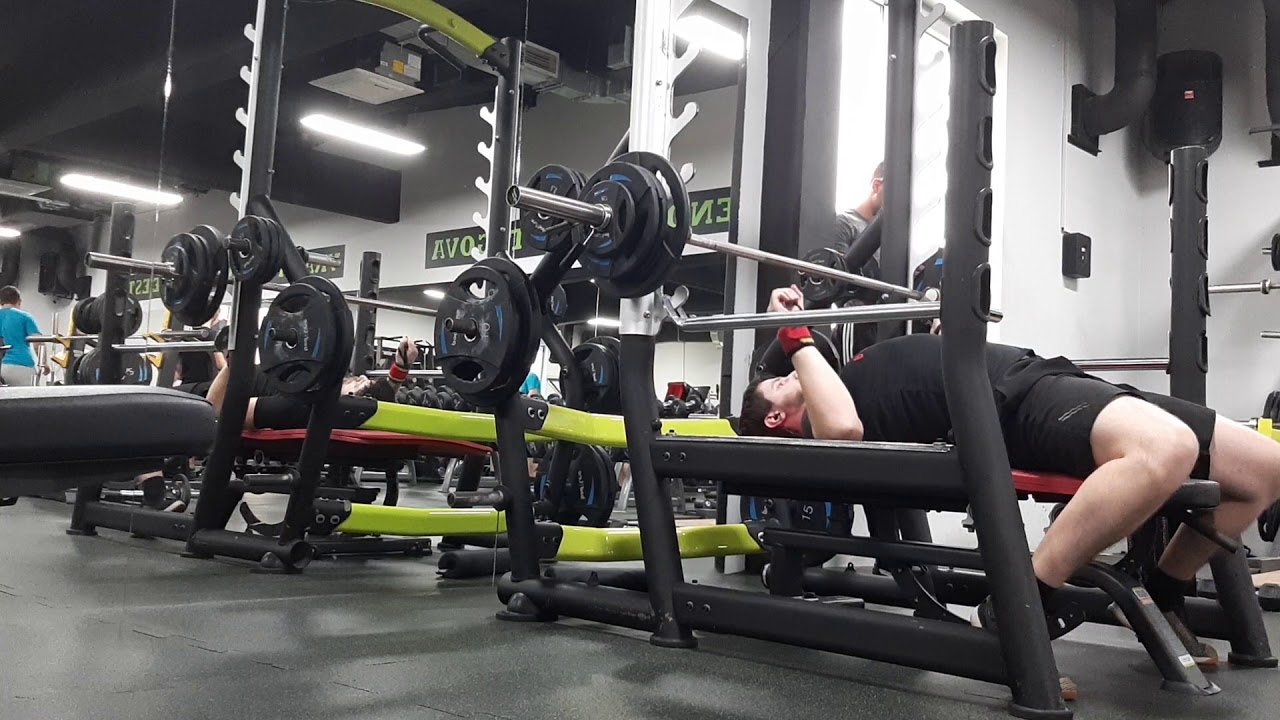
Finally, remember that some photos of bench presses inside racks illustrate ordinary bench safety, not pin-press execution. The difference is whether the bar actually settles onto the safeties before the next concentric phase. Use video of your own set to verify the pause. If you feel sharp shoulder, elbow, wrist or chest pain, stop rather than trying to press through it; persistent symptoms warrant advice from a qualified professional.
Use a four-week plan without abandoning full-range benching
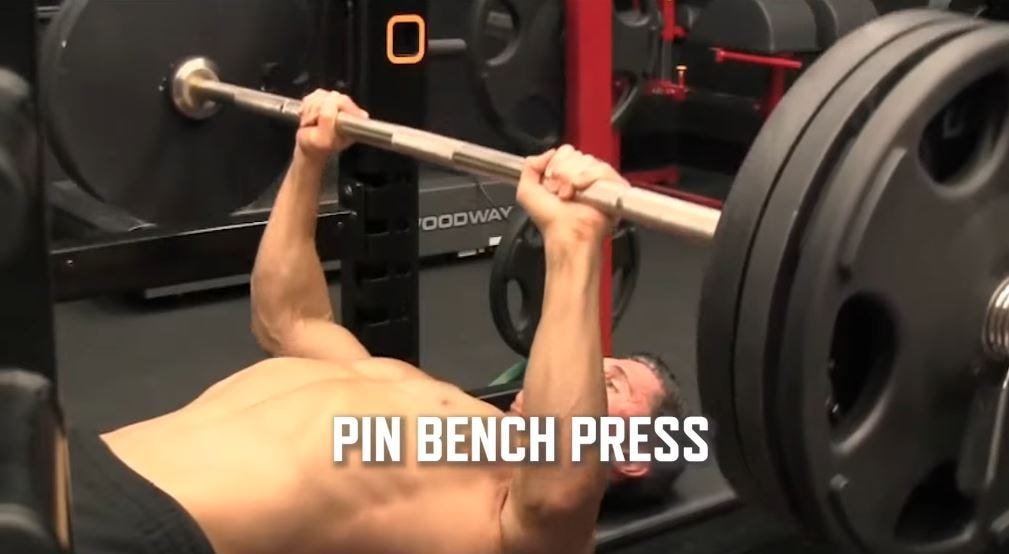
A sensible first block keeps the pin press an accessory rather than replacing your regular full-range bench. Use one main bench session and one lighter variation session per week if your recovery and schedule allow, leaving enough rest between hard pressing days. The table below gives a four-week example; the loads are deliberately selected by clean execution instead of an arbitrary percentage of a one-rep maximum.
| Week | Pin bench assignment | What decides progression |
|---|---|---|
| 1 | 3 sets of 5 at a comfortable working weight | Same pin height, complete rest on pins, level bar |
| 2 | 3 sets of 6 with the same weight | Every restart stays smooth, no hip lift |
| 3 | 4 sets of 5 with a small load increase if earned | Maintain bar path and full pauses |
| 4 | 3 sets of 5 at a manageable load, then review | Compare video and full-range bench practice |
Take roughly two to three minutes between meaningful work sets, or longer if the bar speed and breathing have not recovered. Keep about two good repetitions in reserve while learning the movement. Once you can reproduce the same first-inch drive, you can gradually load the pins more heavily for a short block, but an additional plate is not success if it makes the bar rebound or your body shift position.
For the rest of your session, use full-range bench or dumbbell presses and a complementary horizontal row to maintain balanced pressing and pulling practice. Accessory triceps training may fit afterward. A home-gym lifter with just one rack can set the bench inside it for pin work, then lower the safeties to their appropriate protective height before regular full-range benching; never leave the pins in the wrong position and assume the next exercise is safe.
At the end of four weeks, compare the same pin height at similar effort and examine ordinary bench performance separately. Faster, cleaner dead-stop repetitions are useful evidence that your control at that selected range improved. They do not automatically mean a new competition bench record. The win is making your weak segment more repeatable while preserving the bigger movement pattern.
A rack, a stable bench and appropriately loaded barbell are enough to do this well. If your rack does not offer safe, properly rated support at the height you need, choose another bench variation rather than improvising unstable blocks. Consistent setup and a motionless restart are what make the pin bench press worth doing.

Powerlifting Shirts & Lifting Gear
Powerlifting shirts and gym gear for squat, bench and deadlift lifters who live for heavy numbers.

I Want You To Bench Press Uncle Sam – 4th of July Patri T-Shirt
Keep things casual with a little “I Want You To Bench Press Uncle Sam” attitude.

9 Plates Bench Club : Exclusive Meme & Gymbro T-Shirt
Show some powerlifting attitude with a playful “9 Plates Bench Club” tee.

Squat Bench Deadlift Pet Dogs – Meme Shirt T-Shirt
Rep “Squat Bench Deadlift Pet Dogs” humor in and out of the gym.

Pink 45LB Weight Plate Barbell Lifting Style Hoodie
Keep it laid-back with a little “Pink 45LB Weight Plate” attitude.

USA Barbell Flag Muscle | Patriotic Gym Vest | Funny Wo Tank Top
Add some lifting attitude to training with “USA Barbell Flag”.

Heart Weight Plate Funny Valentine's Gym | I Love Gym C T-Shirt
Add a playful “Heart Weight Plate Funny Valentine's” touch to your casual rotation.

Flaming 45LB Weight Plate Fire Barbell Lifting Workout Tank Top
Add some powerlifting attitude to training with “Flaming 45LB Weight Plate”.

Personal Record Birthday Cake Meme – Celebrate Your T-Shirt
Bring “Personal Record Birthday Cake” humor to your next gym day.

My Bench Press Is Stuck Horror Movie Meme Decal Scary Sticker
Give your everyday gear a playful “My Bench Press Is Stuck” twist.

Gym Is My Religion Barbell Cross Muscle Shirt for Chris Tank Top
Train hard, laugh a little, and rep “Gym Is My Religion Barbell Cross”.