Advertising disclosure: This page includes affiliate product links that may earn us a commission, as well as products from our own store.
The AbMat Barbell Bomb solves a specific equipment problem: creating a landmine pivot without permanently attaching hardware to a rack or floor. That makes it worth considering for a shared training area or a setup you pack away. Its small size, however, does not tell you whether the complete barbell arrangement will suit your floor, available space and preferred exercises. Those are the checks that should drive the decision.
Start with the original model and your barbell
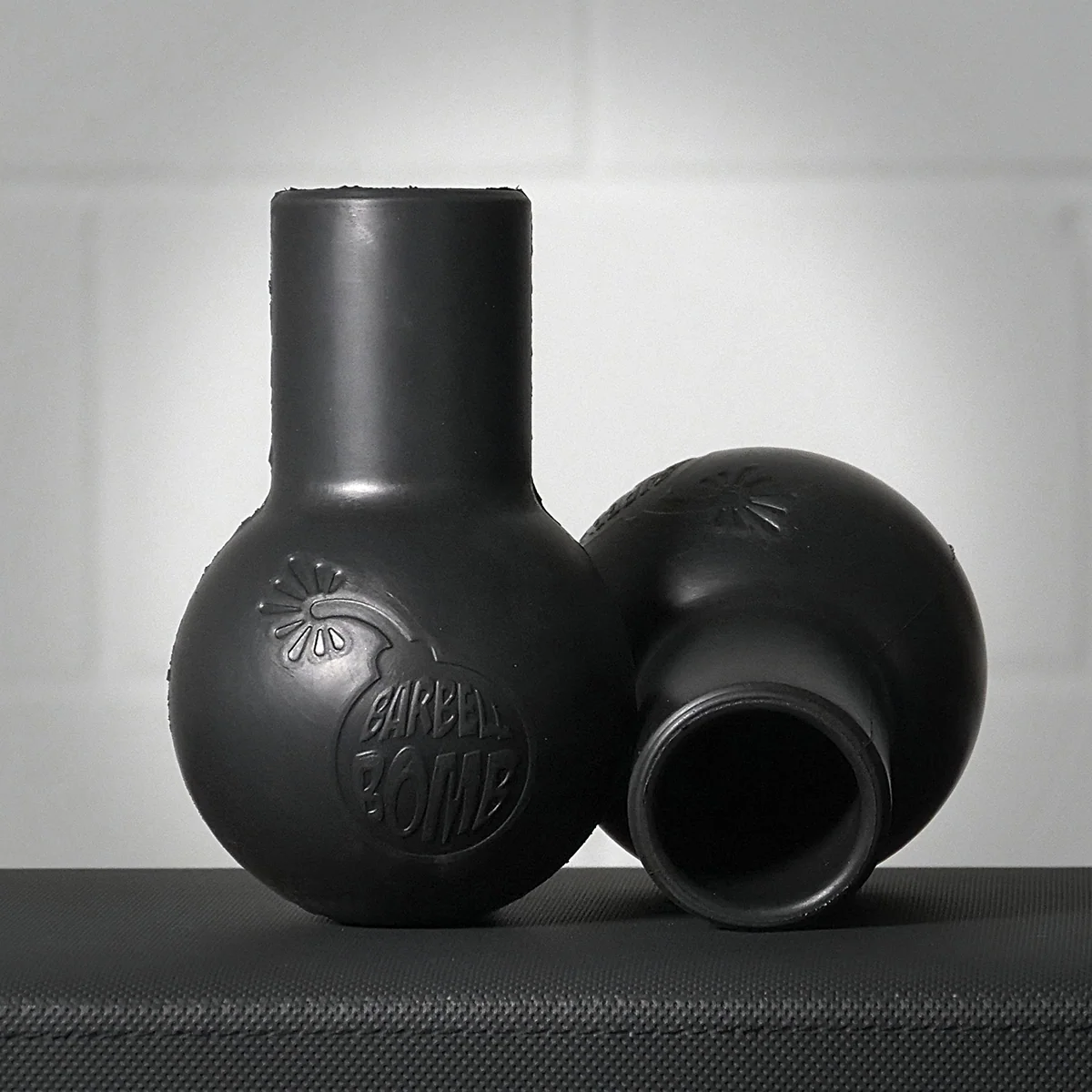
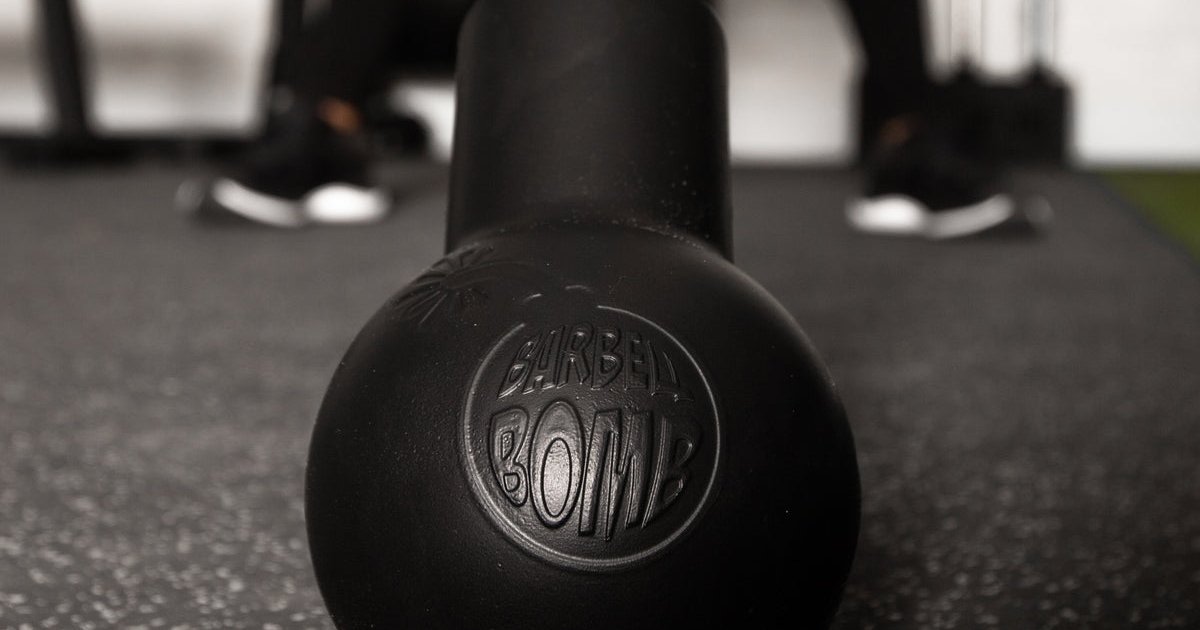
The original Barbell Bomb is a rounded, high-density foam attachment that slides over a compatible Olympic barbell sleeve. It weighs four ounces and is intended for approximately two-inch sleeves. A smaller one-inch standard bar is a different fit. Check the actual sleeve rather than assuming that every bar described as a barbell has the same dimensions.
AbMat lists the current original model at 7.5 by 4.25 by 4.25 inches, with roughly 5.5 inches of sleeve coverage. The important purchase check is the sleeve interface. A specialty bar, unusual sleeve finish or nonstandard diameter deserves confirmation before you order. Neither the light weight nor the foam construction establishes compatibility with an arbitrary bar.
Keep the original separate from the Barbell Bomb HD. They are different products, and a heavier version’s behavior cannot be used as evidence for how this lighter one will work. This guide concerns the original foam attachment. It does not report MMP hands-on testing, a measured load limit or a comparison trial between the two models.
Also distinguish the pivot from the implement’s working end. The base supports one end of the bar; your exercise happens at the other. You may choose a separate handle for a row or a press, but adding that handle does not change the stability requirements at the floor. Build the setup as a complete system rather than buying each accessory without considering the others.
The floor is part of the equipment
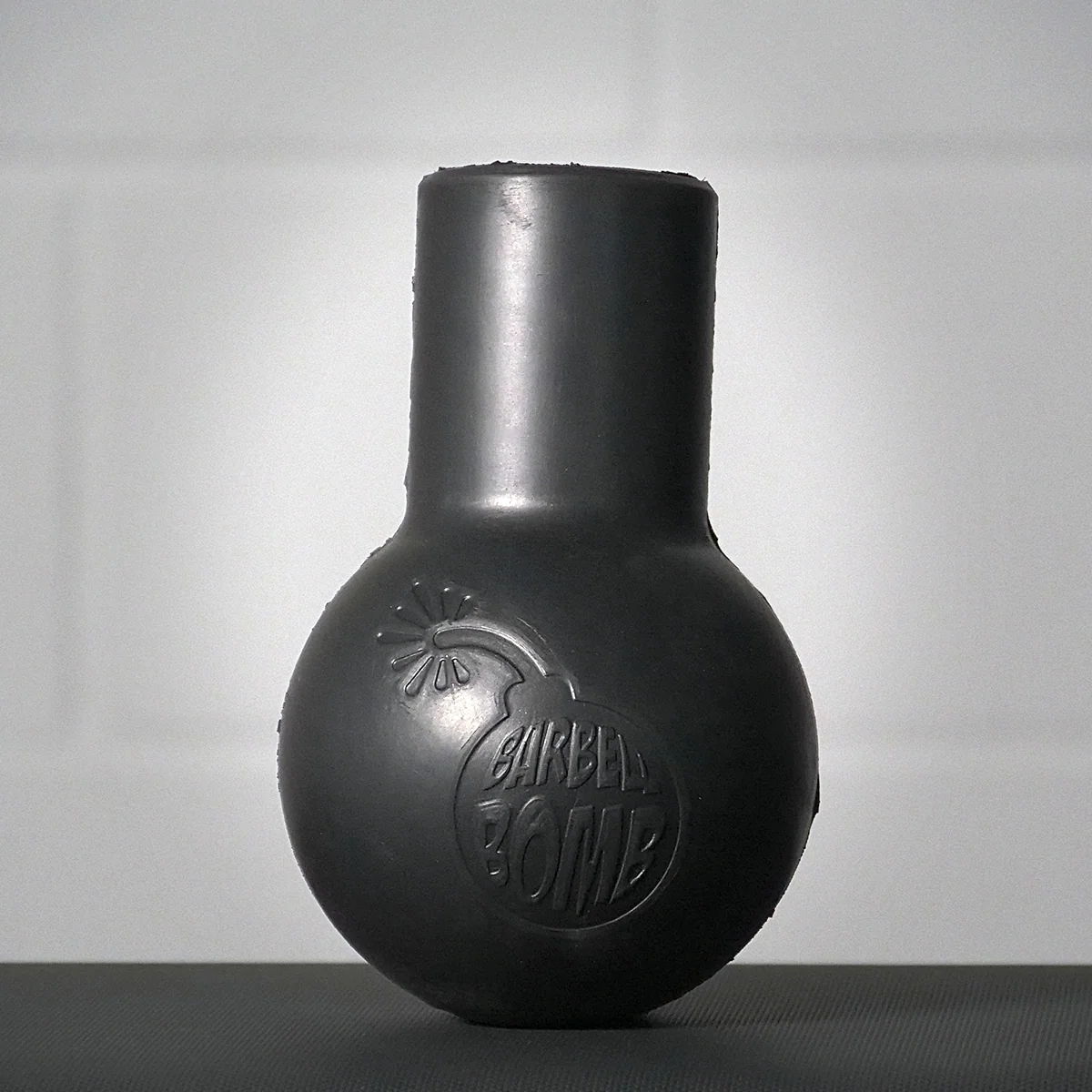
A slip-on foam pivot is not a bolted anchor. Its behavior depends on the surface, exercise and load. The current product guidance acknowledges that movement can occur on some floors or during heavier lifts. That is a useful limitation to understand before treating portability as equivalent to fixed mounting.
Inspect the actual training area. Loose mat edges, dust, uneven transitions and nearby obstacles can all make a setup harder to assess. Clear the space, check the bar’s resting position and follow the product’s directions. Start with a manageable setup and watch what the base does through the entire planned movement, including the return to the start.
If the base moves, do not compensate by standing somewhere awkward or trying to hold the pivot down with a foot. Stop and reconsider the surface or the anchoring method. A fixed attachment may be the more appropriate choice for your particular exercise and loading needs. No portable accessory has to be the answer to every session.
Surface compatibility and floor protection are separate questions. Something can feel grippy without proving it cannot mark a finish, and a soft exterior does not establish that every floor is suitable. If protecting a particular surface matters, confirm the manufacturer’s recommendations and the flooring requirements. Treat social-media demonstrations as examples of one arrangement, not permission to reproduce it anywhere.
Measure the bar’s movement, not just the base
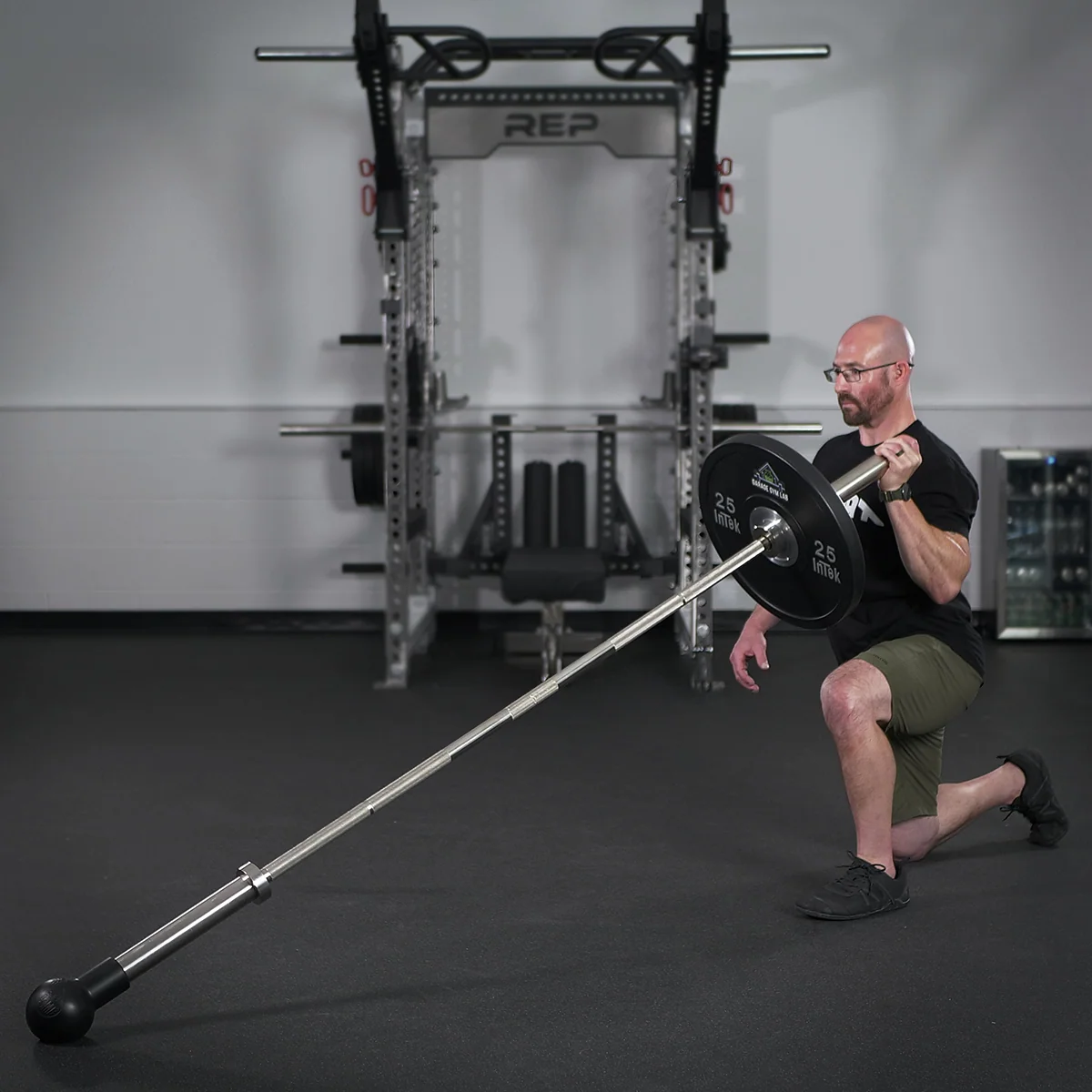
The attachment takes little storage space. The exercise still needs room for the bar, loaded plates, your body and a route into and out of position. A landmine movement follows an arc, so an arrangement that looks tidy while resting may run out of clearance when the working end rises or moves sideways.
Check both ends of your chosen range. Include the plate diameter, a collar where appropriate, your hands and any attachment. Then consider nearby benches, rack uprights and anything another person could move into the area. Leaving access to the loading end is useful too; repeatedly shifting the whole setup to change plates makes a supposedly convenient station less practical.
A half-kneeling press illustrates the difference between fitting equipment and fitting the lifter. You need space to settle into position, grip the bar, press along a comfortable path and return it under control. Standing work changes your body position and the angle at which you handle the load. One arrangement does not automatically accommodate both.
Our guide to half-kneeling and standing landmine presses explores those movement choices. Choose the position because it suits the task and your available range, rather than because a photograph makes it look like the default. There is no need to turn every new piece of equipment into an entirely new workout.
Make the first sessions easy to compare
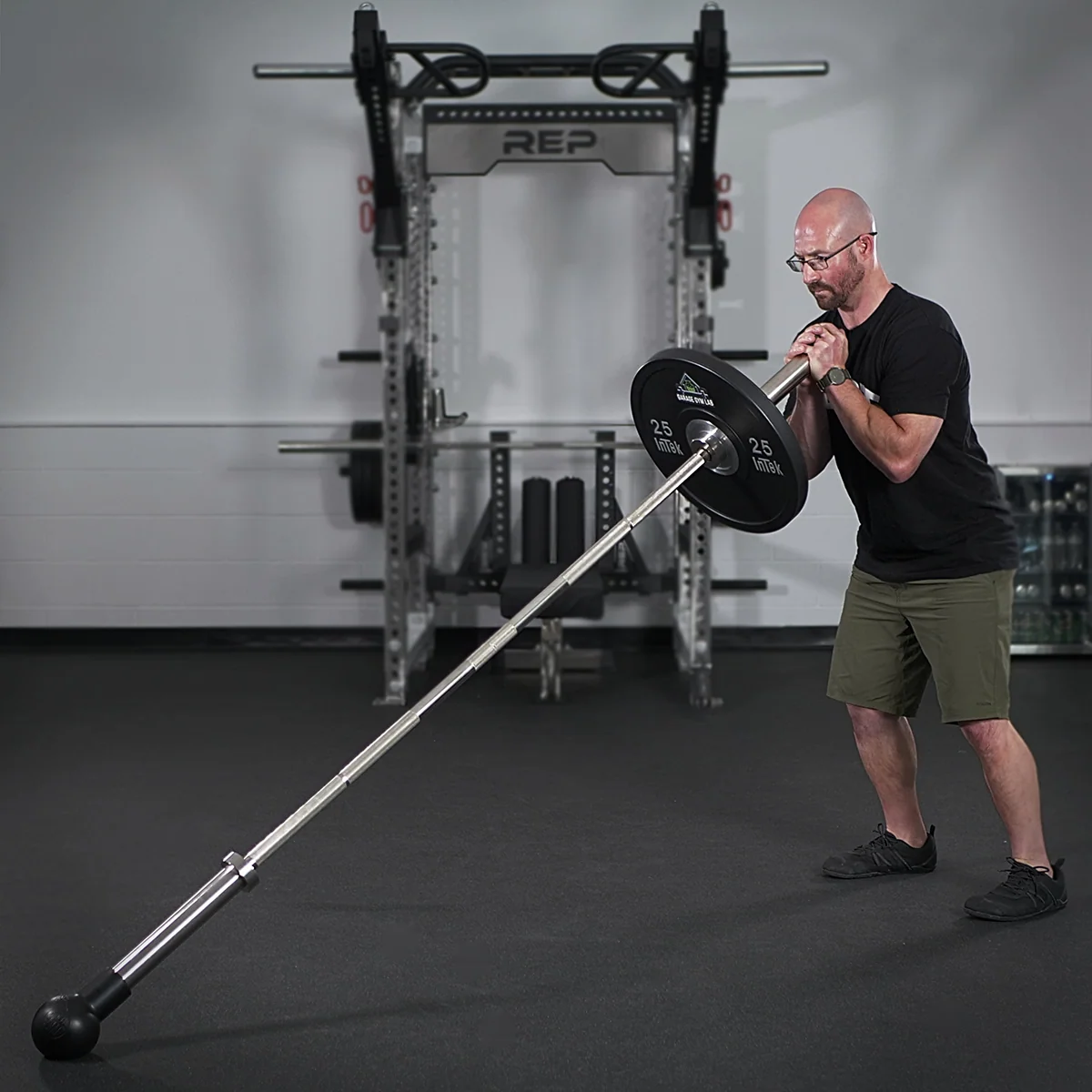
Pick a familiar movement and establish a repeatable setup before chasing heavier plates. Useful notes include the bar used, pivot position, surface, stance, handle and plate load. If several of those change between workouts, a different feel may reflect the geometry rather than an improvement or decline in strength.
For a row, the handle can affect where your hands sit and how much clearance remains near the plates. Your body position also matters. Our guide to landmine rows, grip and the hip hinge gives that exercise its own attention. It should not be reduced to simply pulling whatever end of the bar happens to be available.
Record the plates as plates, rather than declaring an exact resistance at the hands. The bar’s angle, the position of the load and your grip all affect the task. Two different barbells or handle arrangements can therefore make the same added plate total a poor comparison. Keep the conditions consistent when you want to judge progress.
The supporting equipment below offers options for bars, plates, collars and handles. Check each item’s fit independently. A landmine handle is not necessarily compatible with every exercise, and a grip accessory does not certify the pivot. Buy the component that solves a real limitation in your setup instead of adding several attachments simply because they share the landmine label.

Equipment Worth Exploring
Explore equipment, accessories and gear from our carefully selected range.


T-Bar Row Attachment
Welded barbell attachment that connects a D-handle bar for landmine and T-bar rows.

GymPin Barbell Row Handle
Heavy-duty handle attachment for barbell, landmine and T-bar rows.


Choose portability or fixed mounting for the right reason
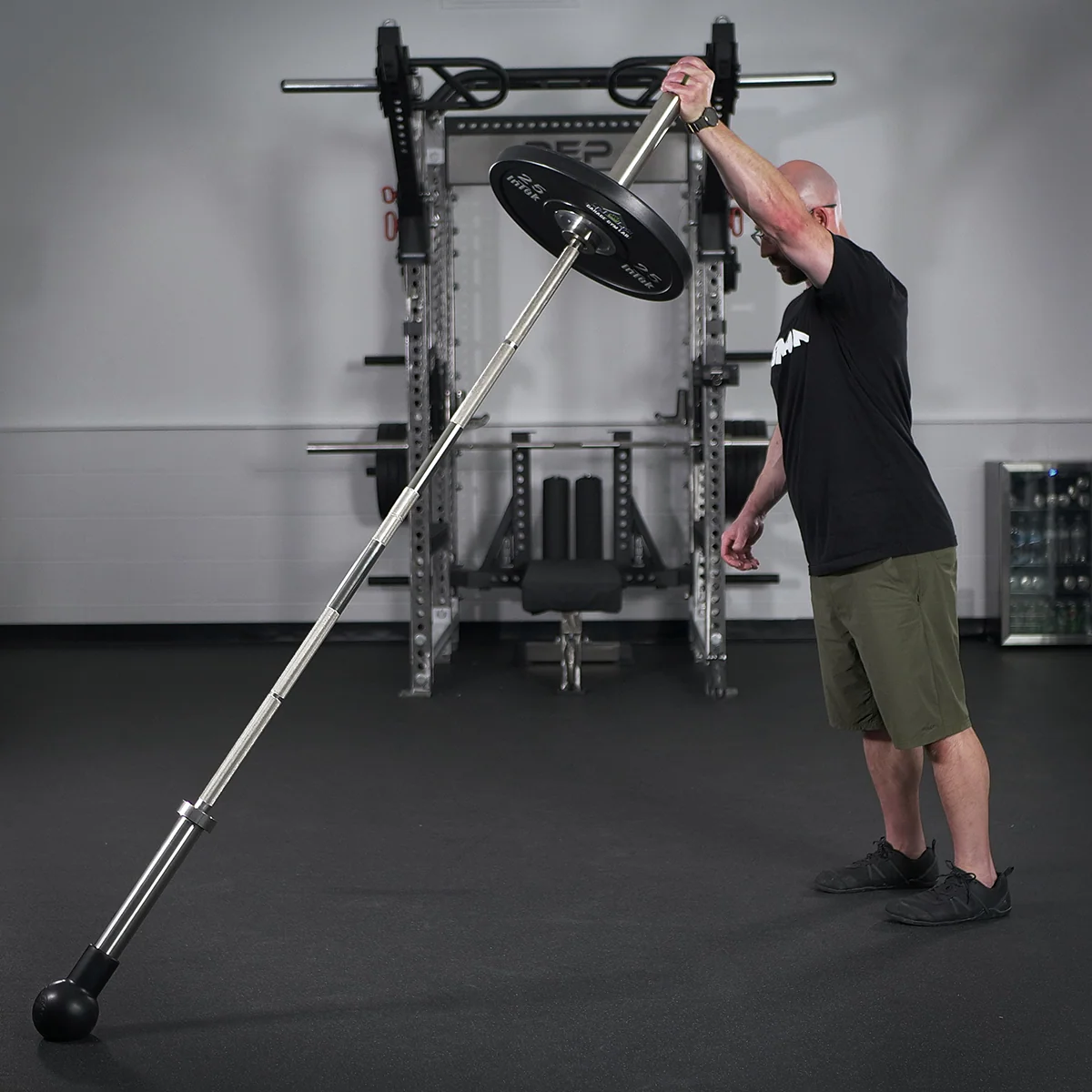
The strongest reason to consider the original Barbell Bomb is straightforward: you want a compact pivot that can be put away, and you have a compatible bar and suitable place to use it. That is different from wanting a permanently located station for demanding or frequently shared training.
Fixed rack-mounted landmines connect their pivot to a supporting structure. Freestanding steel systems use a different base arrangement, and some provide floor-fixing options. Those categories solve the anchoring problem differently. They also bring their own compatibility and space requirements, so fixed does not mean universally convenient any more than portable means universally suitable.
Consider the full routine of ownership. Where will the bar rest between sets? Can you load it without blocking another station? Where will the attachment dry or be stored after training? Will somebody else need to understand the setup? Small practical details often determine whether a versatile accessory becomes a regular part of training or something that stays in a drawer.
For a buying decision, check fit first, then the surface, working area and intended movement. Keep claims about durability, stability and loading tied to the actual model and guidance. The Barbell Bomb offers a simple route into angled barbell training when those conditions line up; the useful result is a repeatable station that suits your training, rather than the smallest possible anchor at any cost.

Funny Gym Shirts & Workout Gear
Funny gym shirts, tanks, hoodies and workout gear for lifters who like training hard.

Barbell Heartbeat Hooded Pullover for Powerlifting Lift Hoodie
Bring “Barbell Heartbeat” gym humor to lazy days and post-workout plans.

I’m Strong Barbell Heartbeat Muscle Shirt for Powerlift Tank Top
Show some personality between sets with “I’m Strong Barbell Heartbeat”.

Lifting Is My Therapy – Lifting Bodybuilding Powerlifti Sticker
Bring “Lifting Is My Therapy” attitude to your water bottle or laptop.

Live Love Lift Crewneck Pullover Sweater Workout Gymbro T-Shirt
For laid-back days and gym-girl humor: “Live Love Lift”.

Be Happy Lift Heavy Happy Weights Smiley Face Weight Pl T-Shirt
Show some gym-day personality with “Be Happy Lift”.

Barbell Country Club Shirt Meme Top & T-Shirt
Heavy lifts, good laughs, and a little “Barbell Country Club” energy.

Big Boy Barbell Club Shirt Meme & Essential Top T-Shirt
Make gym days more fun with “Big Boy Barbell Club” style.

Vitruvian Man With A Barbell Shirt – Leonardo Da T-Shirt
Show some powerlifting attitude with a playful “Vitruvian Man With A Barbell” tee.

Raise The Barbell Shirt – Motivational & T-Shirt
Show some powerlifting attitude with a playful “Raise The Barbell” tee.

Heavy Barbell – Meme Shirt & Top T-Shirt
Make gym days more fun with “Heavy Barbell Powerlifting Graphic” style.