Advertising disclosure: This page includes affiliate links that may earn us a commission at no additional cost to you.
Forearm training is often treated as a finishing touch: squeeze a gripper, perform a few wrist curls and hope the next heavy deadlift feels more secure. But there are several different qualities to develop, and the weight you use for one may not be appropriate for another. An eight-week comparison in young men provides an interesting starting point. It compared low-load exercise combined with blood flow restriction against conventional high-load exercise, with handgrip strength, wrist strength and forearm circumference as separate outcomes.
The most useful conclusion is not that heavy training has become obsolete. It is that a grip program can be built around more than one loading strategy, and that the measurement you choose matters. Here is how to interpret the comparison and turn the broader evidence into a sensible training plan.
What the eight-week comparison actually found
The trial randomized 45 male university students, of whom 42 completed the intervention. Both groups trained three times per week over eight weeks. One used lighter resistance alongside blood flow restriction (BFR), while the other used conventional high-load resistance training. The researchers compared performance before and after training rather than relying on how hard the sets felt.
Average grip strength rose from approximately 34.75 to 40.78 kilograms in one group and from 33.90 to 40.07 kilograms in the other. That is an improvement of roughly six kilograms in each group. The statistical interaction for grip strength was not significant (p = 0.893). The study did not demonstrate a clear between-group advantage, and the wrist flexion and extension results did not show significant improvements. Forearm circumference also increased.
Those findings need to be read separately. A bigger circumference is not the same thing as direct measurement of muscle tissue. Circumference includes skin, fat, muscle and fluid, and it can change temporarily after exercise. Equally, a stronger dynamometer squeeze does not establish that every movement involving the wrist has become stronger. The sample was small, the intervention short and the population limited to university-aged men. The absence of a statistically significant difference does not prove that the two methods are equivalent in every population or under every protocol.
Nevertheless, the study challenges the assumption that meaningful grip progress always requires extremely heavy repetitions. It also highlights a common programming mistake: using a single measurement to judge several distinct physical abilities.
Why lighter loads are not automatically interchangeable with heavy loads
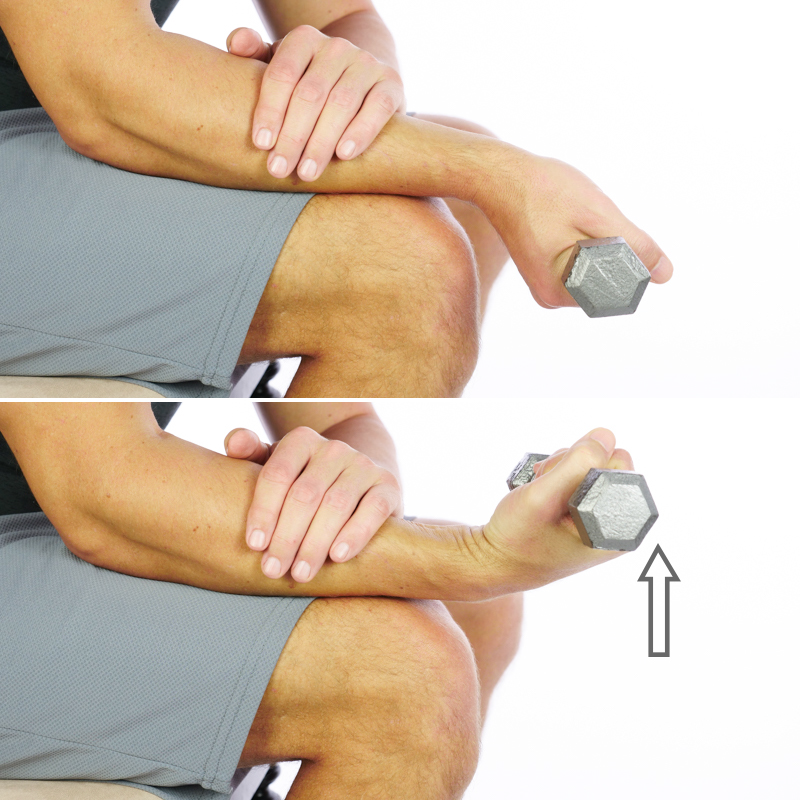
Blood flow restriction is a specialized training method that uses a purpose-designed cuff to partially restrict blood flow while muscles exercise. The resulting local fatigue can make lighter resistance challenging. That can be useful in supervised settings when substantial external loads are difficult to tolerate. However, the cuff is an additional intervention, not an ordinary wrist wrap or a lifting strap.
Broader research on hand strength and BFR includes trials with varying populations, training methods and outcome measures. Some findings support improvements in strength, but the evidence is heterogeneous and certainty varies across outcomes. It is not reasonable to take a single favorable comparison and assume that every light-weight set with a cuff will produce the same effect.
Conventional resistance training remains a straightforward option for healthy lifters who tolerate loading well. It lets you practice producing force against the same handles, bars and implements that you want to improve at. Light conventional sets can also be productive when performed with enough effort, although the trial did not compare ordinary low-load training without restriction against the other groups. That distinction is important.
Do not improvise BFR with elastic bands, straps or tight wraps. Cuff selection, pressure and suitability require individual assessment by a qualified professional. People with cardiovascular or vascular conditions, a history of blood clots, or other relevant health concerns should obtain medical clearance before considering it. If your reason for investigating BFR is wrist pain or an injury, seek an assessment rather than trying to train through the problem. You do not need BFR to follow the conventional training example below.
Train the wrist and the grip as separate skills
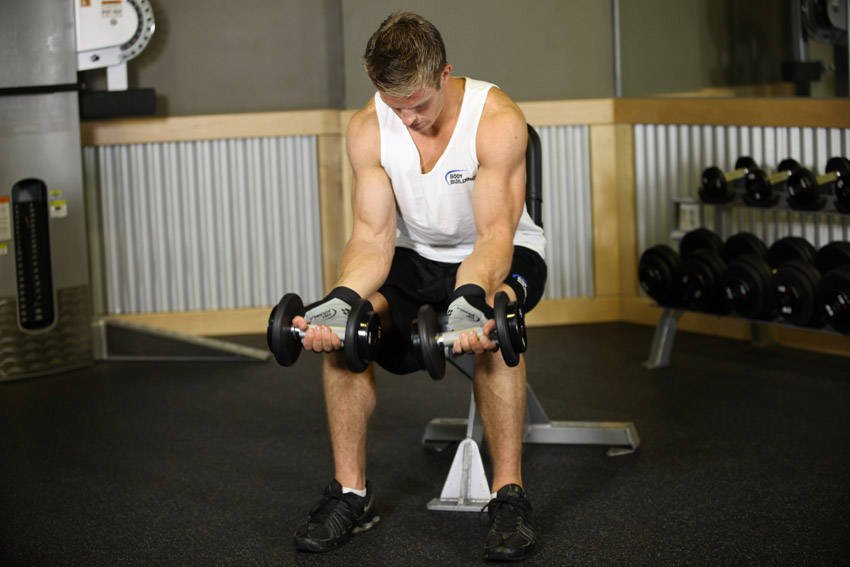
Handgrip strength and wrist flexion strength are related, but they are not identical. Closing the fingers hard against a handle relies heavily on finger flexors and the wrist muscles that stabilize the hand. Moving the wrist through flexion and extension asks those muscles to perform a different task. A strong wrist curl does not necessarily predict how long you can hold a heavy dumbbell, and the reverse is also true.
For that reason, a well-rounded program should include both static and dynamic work. A timed dumbbell hold trains you to maintain a closed grip. A supported wrist curl moves the joint against resistance. A palms-down wrist extension addresses the muscles on the other side of the forearm, which are often neglected in routines dominated by pulling and curling. Hammer curls and reverse curls involve elbow flexion and can complement direct work, but they are not replacements for it.
Small studies have also examined targeted wrist extensor training and grip performance. The practical takeaway is to consider the support provided by the wrist extensors rather than focusing exclusively on the muscles that close the hand. Do not assume every weak grip needs the same exercise: the limiting factor might be finger force, endurance, wrist positioning or even a handle that is too wide for your current ability.
Handle thickness changes the demand as well. A thicker handle can be an interesting grip challenge, but it generally requires a reduction in load. If you want to compare sessions, keep handle diameter constant. Rotate tools deliberately instead of changing everything each workout and losing the ability to tell what is improving.

Equipment Worth Exploring
Explore equipment, accessories and gear from our carefully selected range.


Rubber Hex Dumbbells
Rubber-coated hex dumbbell pairs with a stable shape for home and commercial strength training.



Cast Iron Kettlebells
Textured cast-iron kettlebells for swings, squats, carries, and full-body training.


A practical forearm routine without restriction cuffs
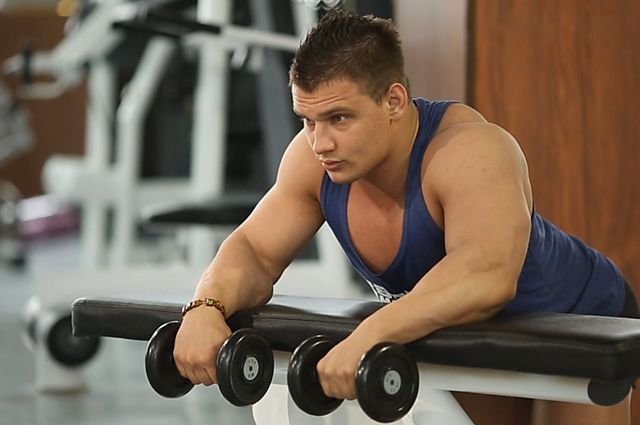
Start with two short sessions per week, preferably after the main pulling exercises rather than before them. The following example is for healthy adults already accustomed to resistance training; it is not the protocol used in the BFR trial. The goal is to develop several useful qualities with ordinary equipment and enough recovery between sessions.
Session A: force and wrist control
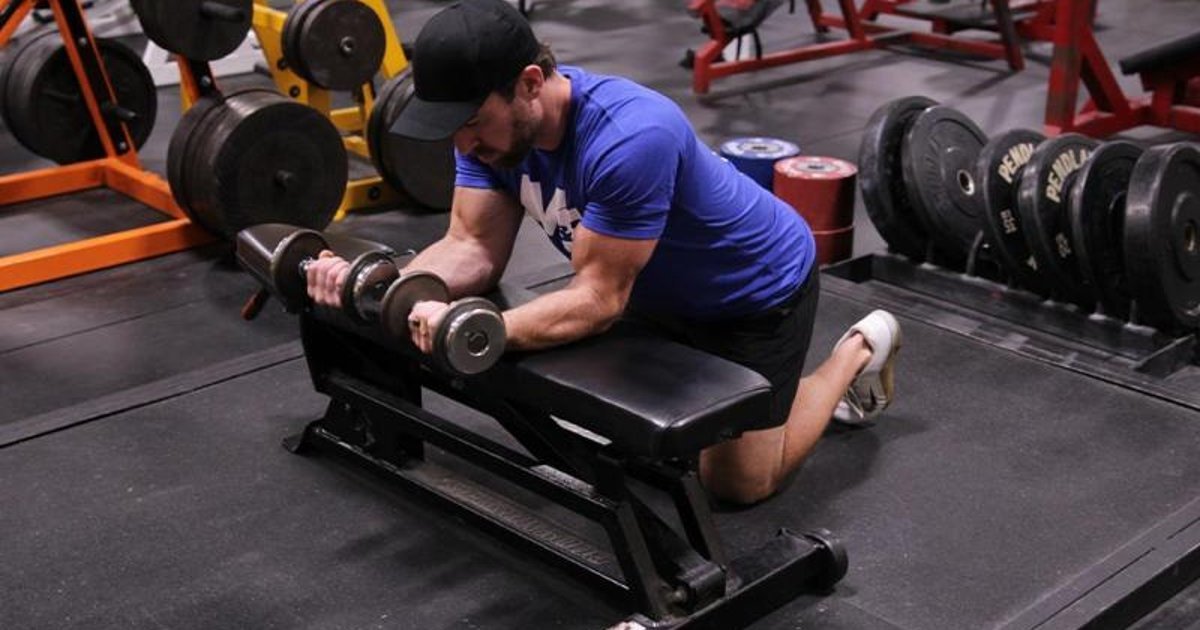
- Supported dumbbell wrist curls: 2 sets of 12 to 20 repetitions.
- Supported palms-down wrist extensions: 2 sets of 15 to 20 repetitions with a lighter weight.
- Heavy dumbbell holds: 2 sets of 15 to 30 seconds, using a weight you can lower safely before your grip fails.
Session B: endurance and elbow flexion
- Hammer curls or reverse curls: 2 sets of 8 to 15 controlled repetitions.
- Supported wrist extensions: 2 sets of 15 to 20 repetitions.
- Farmer’s carries or stationary holds: 2 sets of 20 to 40 seconds with moderate resistance.
Keep two or three good repetitions in reserve on the moving exercises at first. Rest sufficiently to repeat the target movement with control. Once both sets reach the upper end of the range with consistent technique, increase the resistance by the smallest available increment and return to the lower end of the range. For holds, increase duration before increasing the weight, then reset the duration when you add resistance.
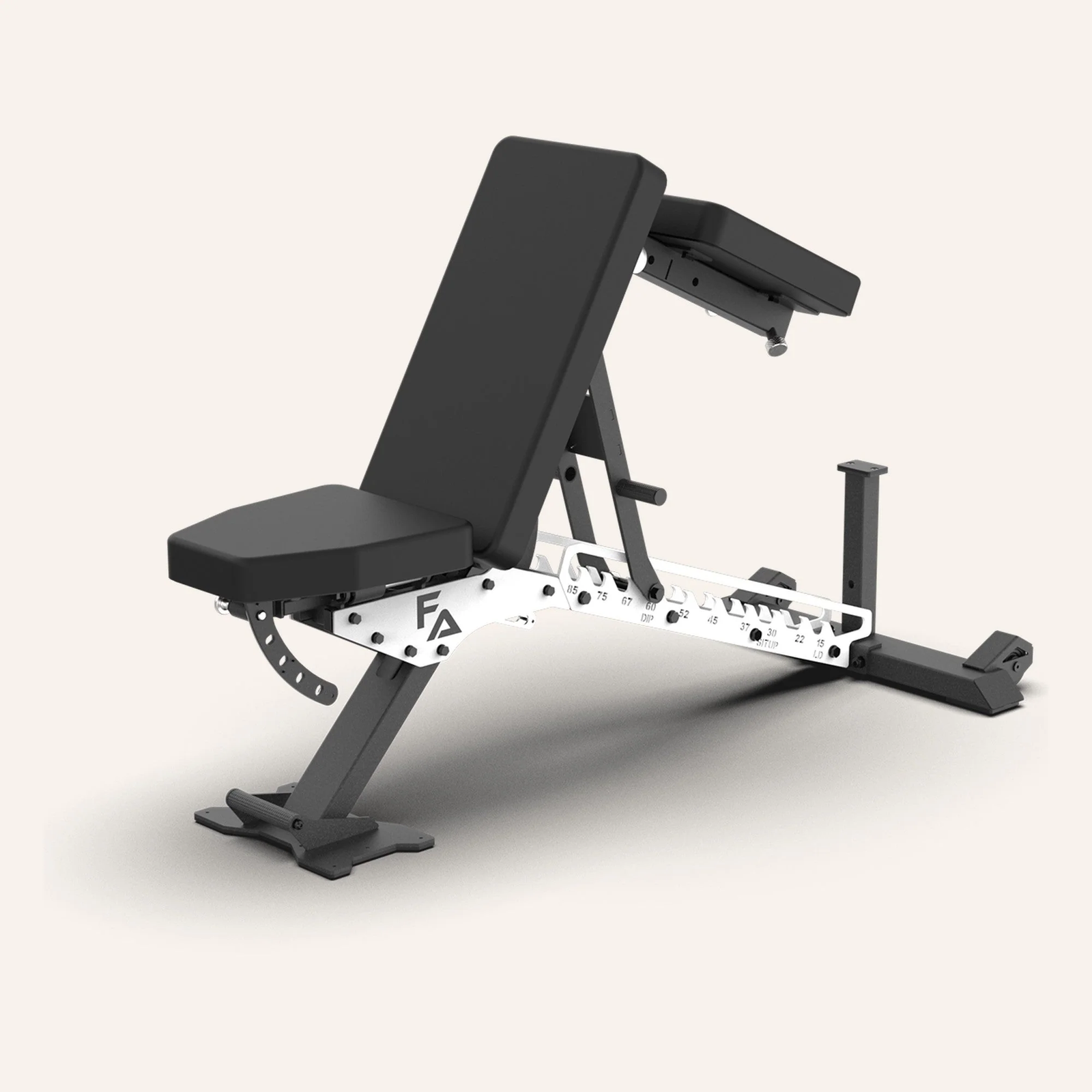
A bench provides useful support for wrist isolation; dumbbells make unilateral work easy, and kettlebells or dumbbells work for loaded holds. A cable handle can provide another resistance direction if your setup allows you to support the forearm comfortably. Use a neutral or comfortable wrist position during heavy holds and do not bend the joint excessively under a load you cannot control.
Existing pulling volume matters. If your weekly program already contains heavy deadlifts, rows, chin-ups and climbing, start with fewer direct sets. If gripping becomes a bottleneck on back training, straps may allow the larger back muscles to receive adequate work; keep separate unassisted grip work rather than expecting every exercise to serve both goals. Persistent wrist or elbow pain is a reason to stop and reassess, not to add more sets.

Bodybuilding Shirts & Workout Gear
Bodybuilding shirts, tanks and gym gear for lifters chasing muscle, size, symmetry and the pump.

Pumpeye Forearm Gains Grip Training Popeye Meme Vest Tank Top
Add some lifting attitude to training with “Pumpeye”.

Huh Huh Let'S Train Grip Beavis And Butt-Head T-Shirt
Make gym days more fun with “Huh Huh Let's Train Grip” style.

Big Biceps Theory & Weightlifting Bro Science Hoodie
Stay casual and show some lifting attitude with “Big Biceps Theory”.

The Real Rocky Mountains – Bicep Mountain Meme Decal fo Sticker
Stick a little “The Real Rocky Mountains” humor on your favorite gear.

Every Day Is Arm Day
Make gym days more fun with “Every Day is Arm Day Octopus Gym Meme” style.


Beavis And Butt-Head Big Biceps & Booty Meme T-Shirt
Show some bodybuilding attitude with a playful “Beavis and Butt-Head Big Biceps & Booty” tee.

I Love Gym Bicep Heart | Bodybuilding Meme Pullover For Hoodie
Bring “I Love Gym Bicep Heart” gym humor to lazy days and post-workout plans.

Mind Muscle Perfection Brain and Biceps Gym for Science Hoodie
Show off your lifting humor in a laid-back “Mind Muscle Perfection Brain and Biceps” hoodie.

Track progress without mistaking a pump for muscle growth
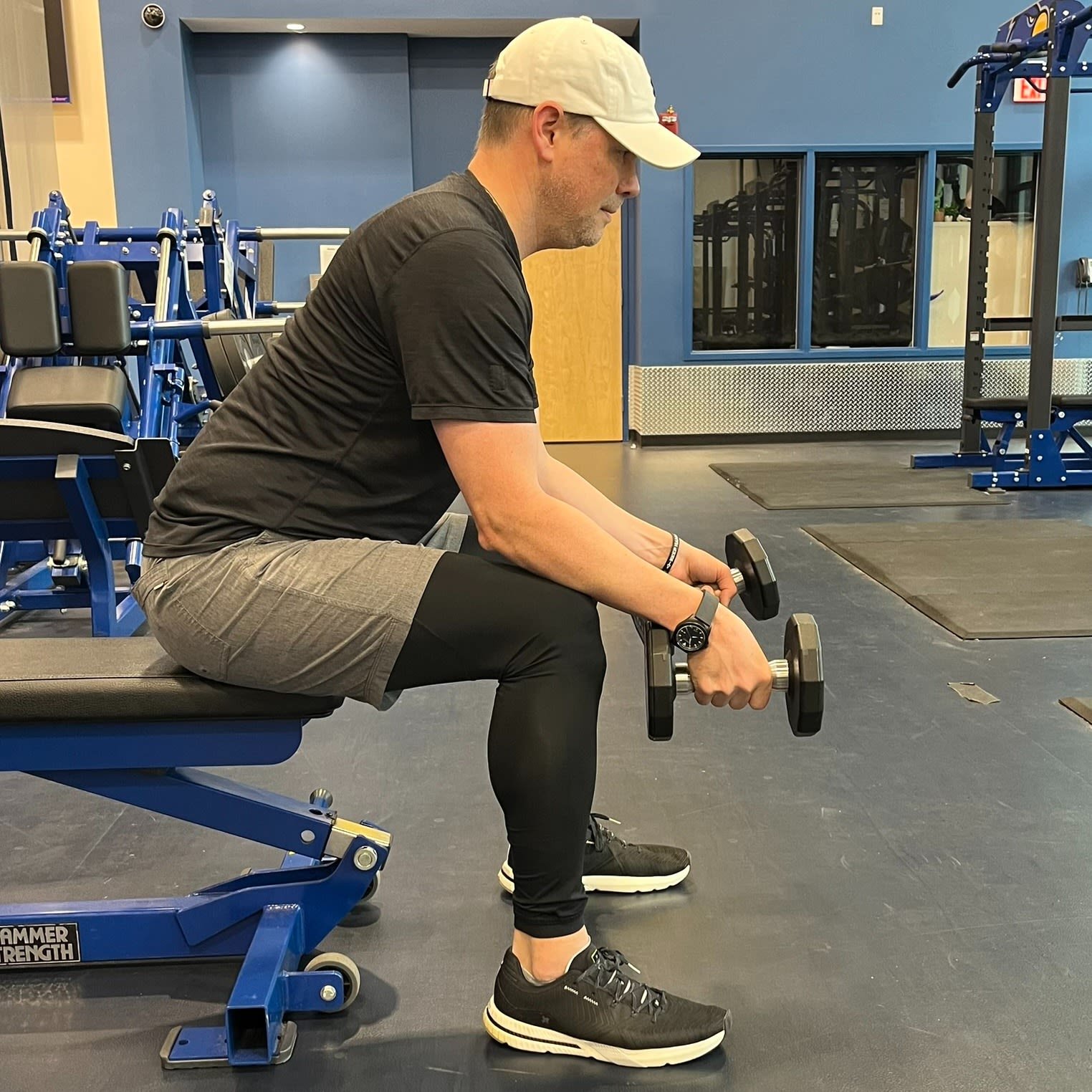
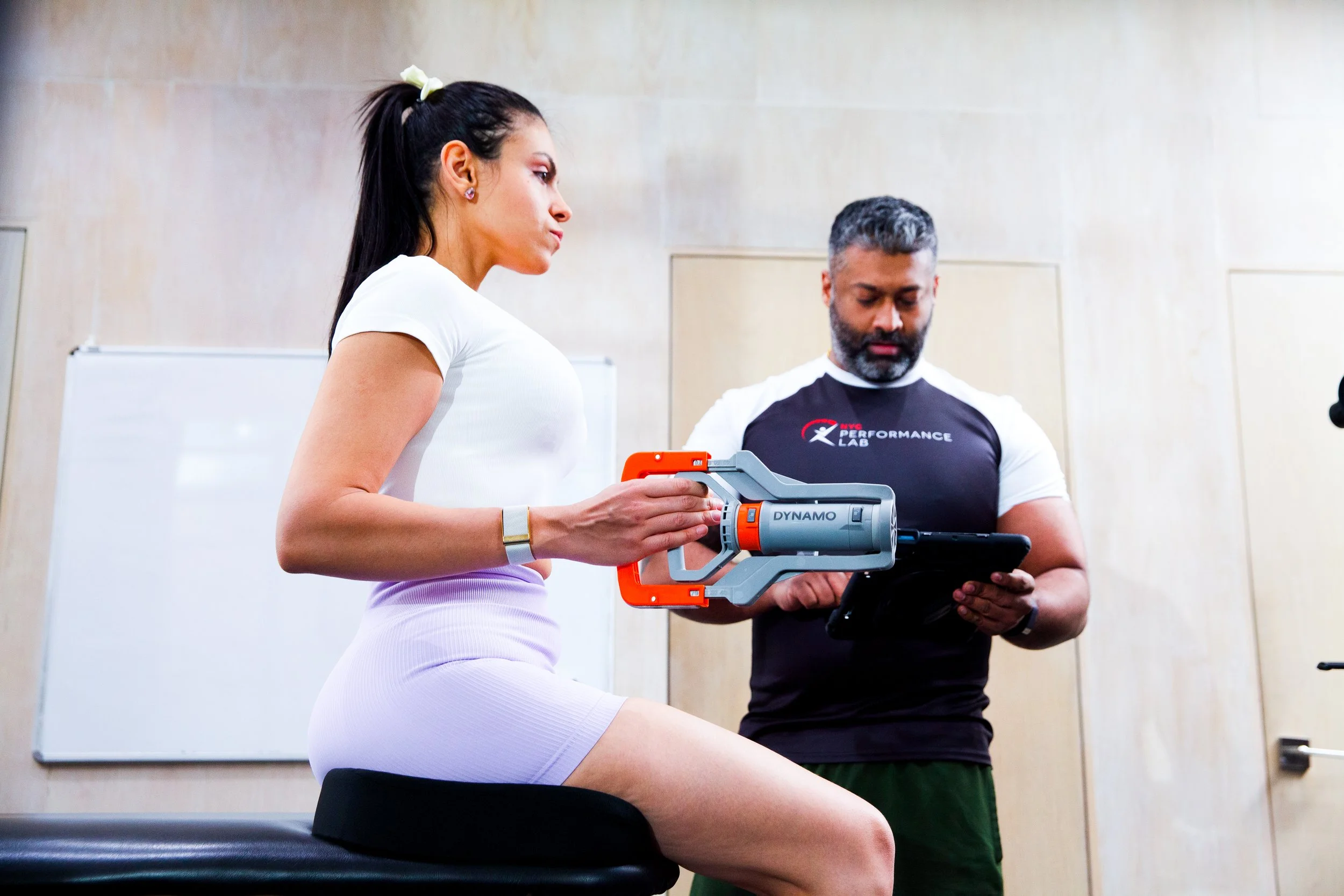
Choose a repeatable test before starting your program. If you have access to a grip dynamometer, use the same device, handle setting, posture and warm-up on each occasion. Record each hand separately. Otherwise, a fixed-weight timed hold is a practical way to track endurance with a specific implement. Keep your wrist position and grip style consistent, and do not compare a hold with thick handles against one with standard handles.
For wrist curls and extensions, log the resistance and the repetitions completed with a controlled range of motion. If you are interested in size, measure circumference at a marked location under similar conditions, preferably away from the immediate post-workout pump. A tape measurement is a rough indicator rather than a direct measure of muscle hypertrophy. Over eight weeks, compare the trend in several measurements instead of obsessing over small day-to-day differences.
Suppose your standard dumbbell hold increases from 20 seconds to 35 seconds at the same weight. That is meaningful progress on that task even if your wrist curl remains unchanged. If the wrist curl improves but your holding time stalls, you may need more task-specific grip practice rather than more wrist curls. These distinctions make the training log much more valuable than a photograph of a temporary forearm pump.
After four weeks, review both performance and recovery. If you are making progress without residual soreness that interferes with your main lifts, continue. If you are struggling to recover or your fingers feel weak throughout the week, reduce the direct work or spread it out. After eight weeks, repeat the original tests and decide which quality needs the next block of training.
The comparison in young men is an encouraging reminder that grip improvements can occur under different loading approaches. It does not establish that one method is universally best. For most lifters, a sustainable combination of controlled wrist movements, appropriately challenging holds and gradual progression is a sensible place to start.