Advertising disclosure: This page includes affiliate links that may earn us a commission at no additional cost to you.
You finish a demanding set, wait two minutes and discover that the next set feels nothing like the first. Is the answer to shorten the workout, lighten the load, or simply rest longer? The distinction matters because the number on the stopwatch changes the work you can actually perform, even when the exercise and planned repetitions remain unchanged.
A small 2024 experiment compared two and five minutes of recovery between repeated maximal contractions. The longer interval helped preserve force output during later sets. That does not mean every lifter needs five minutes between every set. It does provide a useful way to think about rest as a programming variable rather than a reward for finishing a difficult set.
What five minutes changed during repeated hard efforts
Eight healthy young participants completed two separate exercise bouts. Each bout involved four sets of eight maximal isometric contractions, with each effort lasting three seconds. An isometric contraction produces tension without the joint moving through a normal lifting range. The main difference between the bouts was the recovery interval: two minutes in one condition and five minutes in the other.
The short-rest condition produced lower peak torque in the third and fourth sets, while mean torque was lower from the second set onward. Torque is a measure of rotational force around a joint, not the number of kilograms lifted on a barbell. This matters when interpreting the results: the task was designed to examine repeated maximal effort, not to compare ordinary gym programs.
After exercise, peak torque had declined by an average of 17% in the two-minute condition and 4% in the five-minute condition. Electrical activity recorded from the muscle also fell more after short rest: approximately 29% versus 10%. These are group averages in a very small experiment, not predictions of how much strength any individual will lose. The longer-rest bout supported more accumulated work, whereas blood lactate was higher with shorter recovery.
Interestingly, the investigators did not find an overall difference in heart rate or perceived exertion between conditions. That is a useful reminder that how difficult a workout feels is not a complete measure of how much force you are still capable of producing. Two sets can feel equally demanding even when the second produces less output.
Why feeling ready and being ready are different things
During demanding muscular work, energy turnover rises rapidly. Recovery between sets allows some of the energy systems supporting high-force contractions to recover and gives the body time to reduce the effects of the previous effort. Recovery is gradual, not an on-off switch that flips after exactly two minutes.
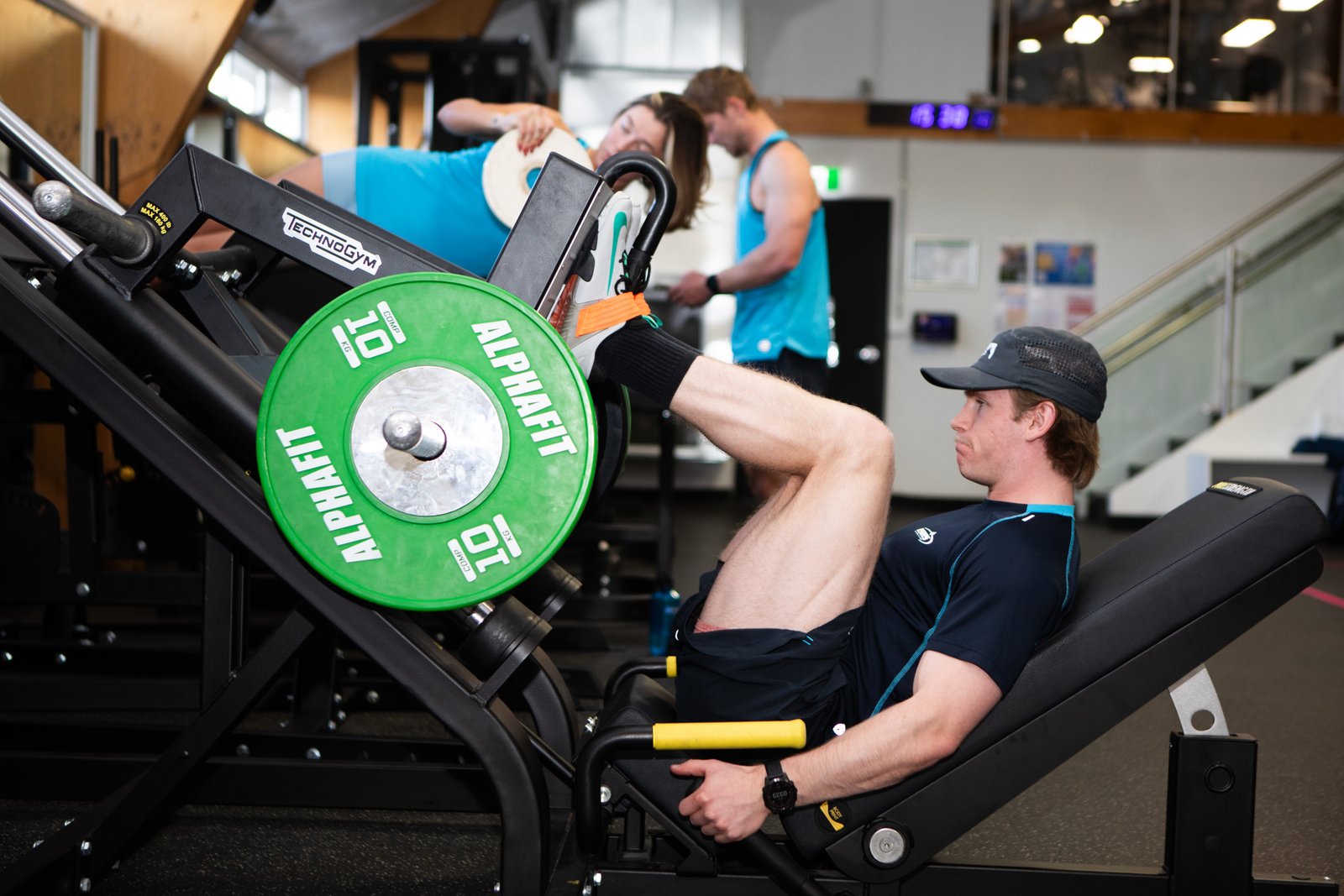
Imagine that your first set on a leg press consists of eight clean repetitions. If your second set drops to six and your third to four, you may still have worked hard, but you have changed the amount of work performed. Longer recovery might let you repeat more of the original workload. Alternatively, you might deliberately accept fewer repetitions as part of a shorter session. Both are legitimate choices when they match the objective.
There is a distinction between local muscular fatigue and other factors that make an exercise difficult. A heavy free-weight squat requires you to recover enough to brace, balance and control the bar. A supported machine exercise can reduce some of those demands. A set of light isolation work can be limited more by local discomfort than by the ability to coordinate an entire body under a heavy load.
Do not assume that waiting longer completely resets every physiological process. The experiment did not show that five minutes prevents all fatigue. The longer-rest condition still experienced a decline in peak torque after exercise. The useful idea is that more recovery can reduce performance loss when the next effort has to be particularly demanding.
Does longer rest build more muscle or strength?
One acute experiment cannot establish what happens after months of training. Muscle growth and strength development depend on the repeated training stimulus, recovery between workouts, nutrition and other factors. The 2024 experiment measured performance within and immediately after exercise; it did not measure changes in muscle size or long-term strength.
Longer-term research provides some context. In an eight-week experiment involving 21 resistance-trained men, a three-minute interval produced greater improvements in squat and bench press strength than a one-minute interval. The longer-rest group also showed a greater increase in anterior thigh muscle thickness. That is a meaningful result, but it compares one and three minutes, not two and five.
A 2024 synthesis of nine studies comparing rest durations and muscle growth suggested a possible small advantage to resting longer than very short intervals, with considerable uncertainty. The evidence does not establish a universal best rest duration. Broader research on resistance training also shows that both shorter and longer intervals can support strength development; exercise intensity, training experience and the intended outcome change the practical tradeoff.
For a hypertrophy session, the important question is whether fatigue is preventing enough challenging work for the intended muscle. A short rest that saves time without compromising useful repetitions can be perfectly reasonable. If it repeatedly forces substantial load reductions, abbreviated range of motion or rushed technique, it is worth reconsidering. Keep rep execution comparable too: rep tempo and controlled lowering can change the difficulty of a set independently of rest duration.

Equipment Worth Exploring
Explore equipment, accessories and gear from our carefully selected range.


Leg Press/Hack Squat BPR-790
Convertible 45-degree leg press and hack squat machine with a broad footplate and band pegs.

Compact Leg Press CLP-700
Compact reverse-style leg press with a moving seat carriage and an adjustable footplate.

Leg Extension/Curl BCO-780
Leg extension and lying leg curl combo with plate loading, band pegs and a cable-loading option.


Competition Plates
Competition-style bumper plates for Olympic lifts and loaded strength training.


Studio V-Squat
Plate-loaded V-squat machine for supported lower-body strength training.

Multi Bench MBX-650 2.0
Adjustable multi-bench with roller adjustment, 15 backrest positions and accessory mounts.
Match the rest interval to the exercise rather than the clock alone
A practical starting point for heavy compound lifts is two to four minutes, with an option to extend toward five minutes when the set was particularly demanding or when near-maximal performance is important. For moderate-load compound movements, two to three minutes may be enough. For curls, lateral raises and other lower-load isolation work, one to two minutes may be convenient if the intended repetitions and technique remain achievable. These are programming suggestions, not fixed thresholds established by the eight-person study.
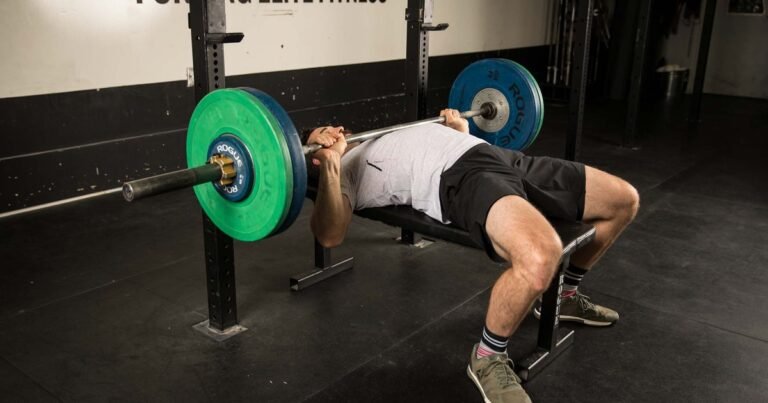
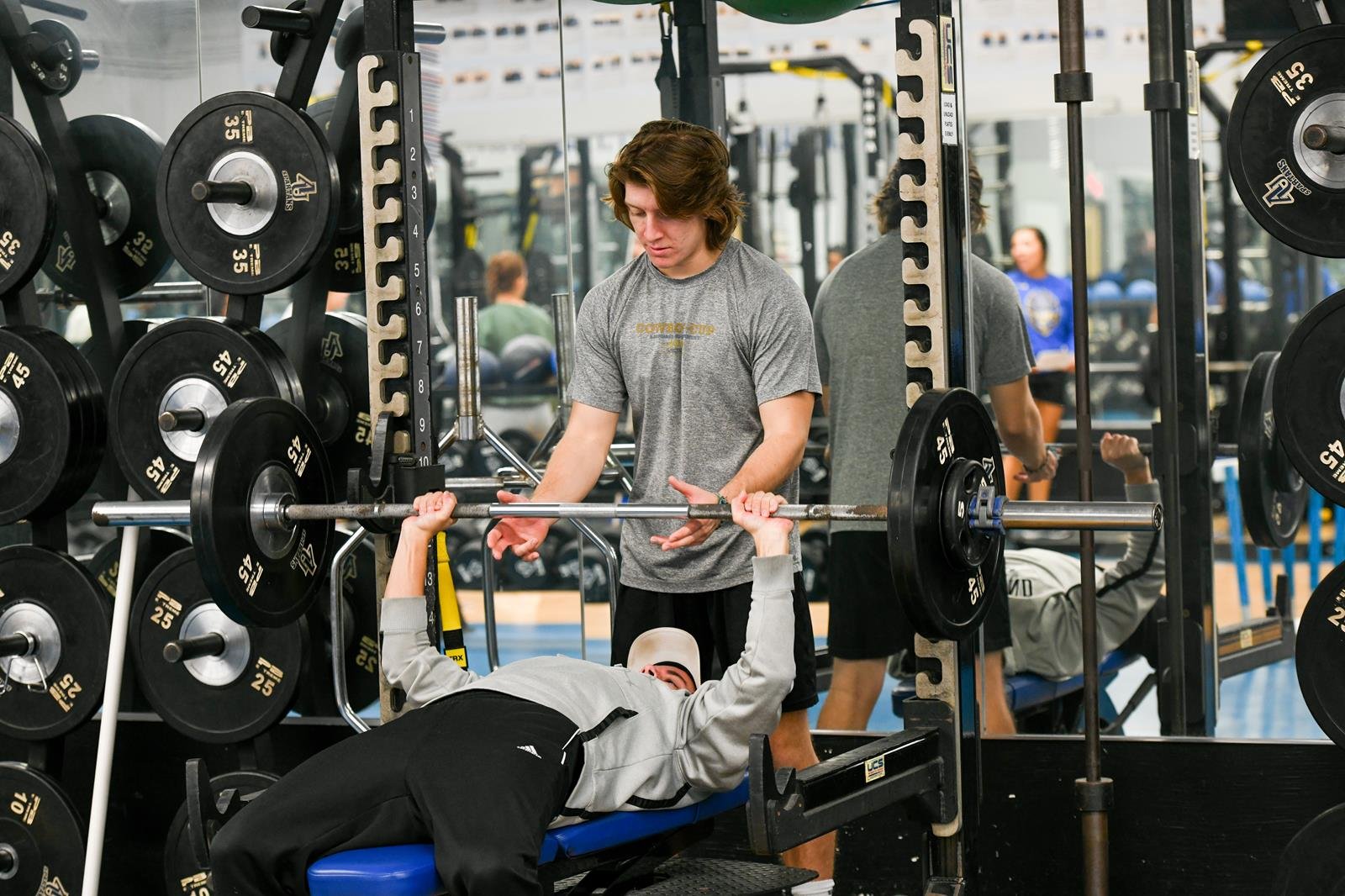
Consider the first few sets of a bench press workout. If you are aiming for three sets of six at the same load and finish the first set with two good repetitions still in reserve, start with three minutes. If the second set reaches only four despite comparable effort, try four minutes before the third set. If performance still falls substantially, the chosen load or proximity to failure may be the bigger problem.
The time required also needs to fit the session. Four working sets have three intervening rest periods. At two minutes each, that is six minutes of recovery; at five minutes each, it is fifteen. The difference is nine minutes for a single exercise, before counting warm-ups and equipment setup. If you only have forty-five minutes, using five minutes between every accessory set could leave too little time for other worthwhile exercises.
Prioritize longer intervals for the lifts that matter most. Use shorter intervals where they do not materially affect execution. Avoid rushing a heavy attempt to satisfy an arbitrary time limit. In a shared gym, keep the setup safe and be considerate of others who need the equipment.
Another option for a time-limited session is to separate the demanding movements from the smaller ones. Complete the most important squat or press sets with sufficient recovery, then move to lighter accessories. If pairing exercises, choose movements that do not substantially interfere with each other, and preserve safe technique. A faster session is useful only if you can still perform the planned training consistently.

Funny Gym Shirts & Workout Gear
Funny gym shirts, tanks, hoodies and workout gear for lifters who like training hard.


Rap God Recovery Gym | Funny Workout & Bodybuilding Par Sticker
Stick a little “Rap God Recovery” humor on your favorite gear.

Lift O'Clock Gym | Funny Workout Decal for Water Bottle Sticker
A fun “Lift O'Clock” touch for bottles, laptops, and lockers.

Heavy Metal Lift Heavy – Hardcore Powerlifting for Body Hoodie
Show off your metalhead humor in a laid-back “Heavy Metal Lift” hoodie.

Lifting Is My Therapy Meme – Top Gymbros & T-Shirt
Show some powerlifting attitude with a playful “Lifting Is My Therapy Meme” tee.

Off-Season Rest Day Decal Water Bottles & Gear Meme Sticker
Put “Off-Season Rest Day” gym humor on your laptop, bottle, or gym gear.

Lift Heavy Pet Dogs Meme – Top & Gymbros T-Shirt
Show some powerlifting attitude with a playful “Lift Heavy Pet Dogs Meme” tee.

Iron Is My Therapy – Lifting Bodybuilding Powerlifting T-Shirt
Rep “Iron Is My Therapy” humor in and out of the gym.

Weights Breakfast Pancake Plates Morning Tank Top
Train hard, laugh a little, and rep “Weights For Breakfast”.
PR or ER – Hardcore Deadlift Gym Shirt for Powerlifters T-Shirt
A t-shirt featuring the PR or ER – Hardcore Deadlift Gym Shirt for Powerlifters and Bodybuilders artwork, bringing lifting-inspired humor and distinctive gym graphics to your everyday gear.
Test two versus five minutes in your own training log
A simple two-session comparison can help you choose a rest interval without pretending to reproduce a laboratory experiment. Pick a familiar exercise, preferably one that is easy to standardize. Use the same load, number of planned sets, range of motion, warm-up and target effort on both days. Separate the sessions enough that you have reasonably recovered from the previous workout. In one session, rest two minutes between sets; in the other, rest five.
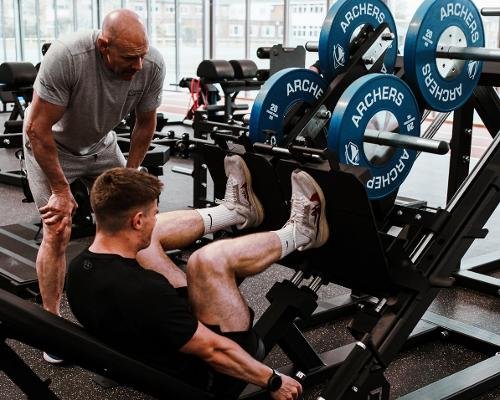
For example, perform four sets of leg presses with a weight that allows about eight challenging but controlled repetitions in the first set. Record the actual repetitions in each set, the estimated repetitions in reserve, and any changes in depth or execution. Do not push beyond safe technique just to make the numbers look better. A hypothetical two-minute log might read eight, seven, six and five; a hypothetical five-minute log might read eight, eight, seven and seven. That would be 26 versus 30 repetitions at the same load. These numbers are an illustration, not results from the published experiment.
Repeat the comparison in the opposite order on another pair of training days if you want a better personal signal. Sleep, food, stress and ordinary day-to-day variation can make one session better than another. A repeated difference is more informative than one unusually strong or weak workout.
If the longer interval consistently preserves repetitions or technique, use it for that exercise when performance is the priority. If the two-minute interval delivers almost the same quality of work and makes your routine easier to complete, keep it. You do not have to decide on one rest duration for your entire program. A heavy squat, a moderate leg press and a final set of curls can each deserve a different approach.
The practical lesson is to judge recovery by the work it enables. Five minutes can be useful for repeated high-force efforts, but it is not a magic muscle-building interval. Make the clock serve the training goal, not the other way around.