Advertising disclosure: This page includes affiliate product links that may earn us a commission, as well as products from our own store.
Incline dumbbell flyes can add a useful chest-focused movement to a workout, but the exercise rewards repeatable shoulder positioning more than ambitious dumbbell weights. A moderate incline, a gentle elbow bend and a controlled arc do more for the quality of the set than chasing a huge stretch. This guide breaks down the bench setup, execution, practical range of motion, upper-chest claims and a four-week progression you can actually follow in a compact home gym or commercial space.
Set the bench, support and dumbbell weight first
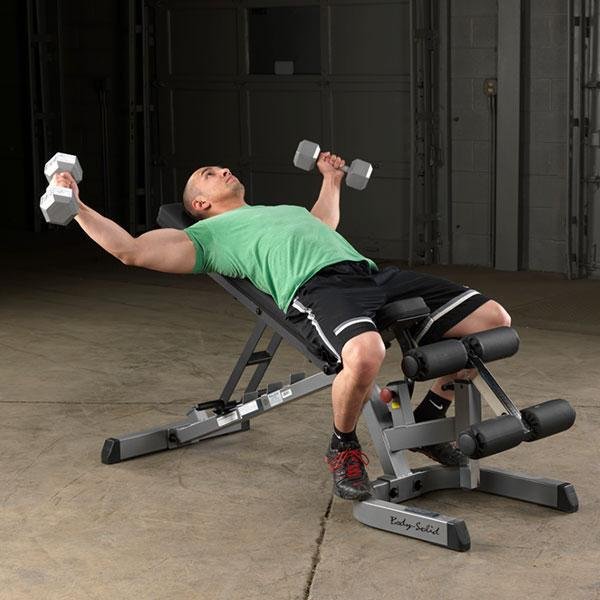
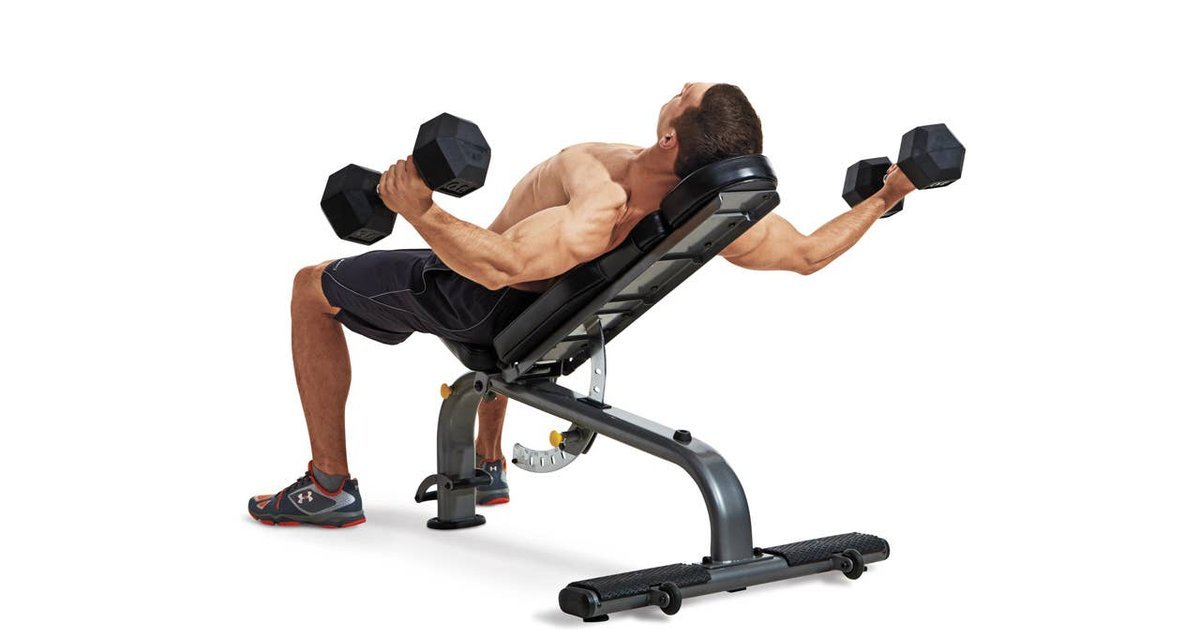
An incline dumbbell fly begins with a predictable bench, not the heaviest pair you can kick into position. Start around a modest 15–30-degree incline; some benches and coaching systems use an angle closer to 30–45 degrees, but the important test is whether your upper back stays supported and the movement feels like a chest fly rather than an awkward front-shoulder raise. An adjustable bench is useful because you can change that angle slightly between sessions instead of forcing your body to fit a single fixed position.
Set the bench where your feet can remain planted, with enough open space on either side for the dumbbells to travel without hitting a wall, rack upright or another person. When the bench is very steep, it may shift more effort toward the front delts and make it harder to follow the intended arm path. A lower angle often feels more repeatable. Keep your head and upper back in contact with the pad, feet comfortably wider than hip width if needed and ribs controlled rather than aggressively flared.
Pick a weight that looks almost disappointingly light compared with your incline dumbbell press. The fly places a longer lever between the shoulder and the load, particularly toward the bottom. A pressing weight is not an appropriate starting guess. Sit with the dumbbells on your thighs, lie back under control and move them above your upper chest before you open the arms. If getting the weights into position already requires twisting or wrestling, reduce the load.
One small home-gym detail matters: check the bench’s rear legs and surrounding floor before the set. The bench should not slide when you sit down, or wobble when you adjust. If your space is narrow, take one unloaded rehearsal to confirm that both elbows and dumbbells can clear the rack. The safest-looking exercise on paper can still be poorly set up in a crowded corner.

Equipment Worth Exploring
Explore equipment, accessories and gear from our carefully selected range.


FID Bench MAX
Adjustable bench offering flat, incline, and decline positions + adjustable headrest.

Multi Bench MBX-650 2.0
Adjustable multi-bench with roller adjustment, 15 backrest positions and accessory mounts.

Rubber Hex Dumbbells
Rubber-coated hex dumbbell pairs with a stable shape for home and commercial strength training.


Pec Fly/Rear Delt PEC-650
Combination machine with adjustable movement limits for chest fly and rear-delt exercises.

Standing Chest Press SCP-760
Standing chest-press machine with adjustable handle positions for chest and close-grip pressing.
Move through a fly arc without turning it into a press
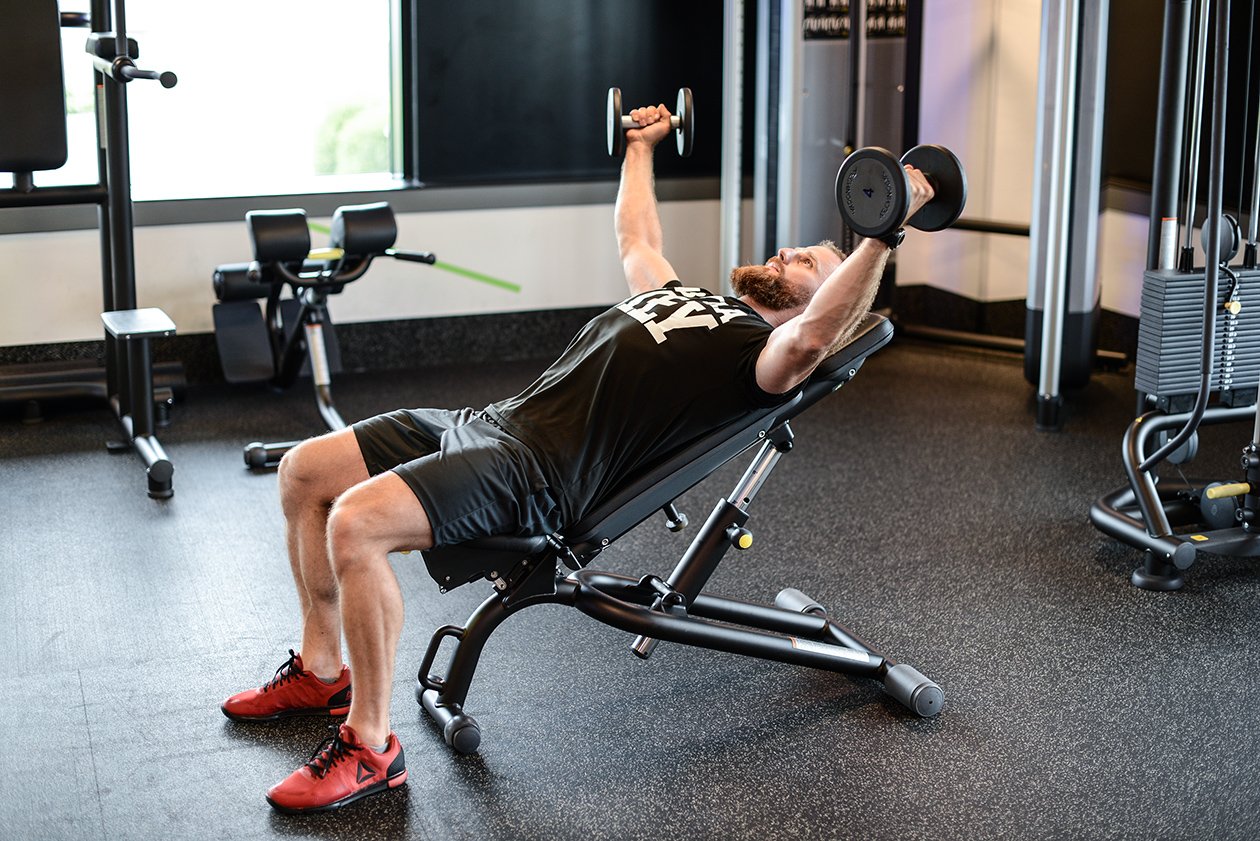
Start with the dumbbells held above the upper chest, palms roughly facing one another and elbows softly bent. Imagine embracing a wide barrel rather than lowering two dumbbells straight down. Slowly allow the upper arms to open outward in a broad arc; your elbows should keep approximately the same shape as the weights move. The hands and elbows travel together, rather than the elbows folding more deeply as you descend.
The defining difference from an incline press is the elbow action. A press bends and straightens the elbows substantially, allowing the triceps to contribute much more to moving the load. A fly largely preserves the elbow angle while the shoulders move the arms apart and together. Neither movement is inherently better: the press is usually the stronger compound choice, while the fly gives you another way to train the chest with a deliberately lighter load.
Lower over two or three controlled seconds. A smooth descent makes it easier to notice where you lose chest tension or begin to tip the wrists backward. Stop at a comfortable stretch rather than seeking a mandatory depth. For some lifters that means the upper arms reach approximately the line of the torso; for others it means stopping earlier. Avoid the idea that the dumbbells must travel below the bench to count as a complete repetition.
Return through the same arc, thinking about bringing the upper arms toward one another. You do not need to click the dumbbells together. Stop while you still control the handles, without swinging through the top to gain momentum for the next rep. Let the chest do the work, keep your shoulder blades settled against the bench and maintain a quiet lower body.
A useful first set uses a deliberately slow tempo: about three seconds down, a smooth change of direction and one to two seconds up. If the arm path becomes noticeably narrower by the eighth rep, that is feedback to lower the dumbbells rather than an invitation to turn the remaining reps into presses.
Protect the shoulders by owning the bottom position
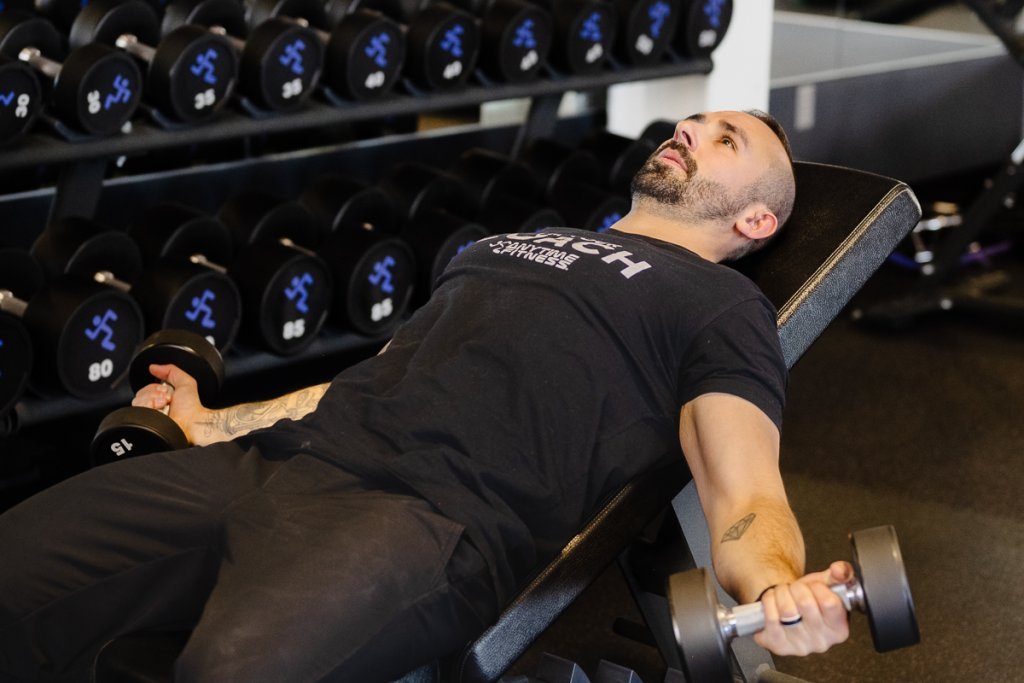
The bottom of the incline fly is the position most likely to expose a mismatch between load, range and shoulder comfort. With the dumbbells far from the midline of the body, even a moderate weight can feel demanding. Do not drop into a hard stretch or let the shoulder joint determine depth through a sudden tug. You should be able to stop the weights at any point, briefly hold them steady and reverse direction without a bounce.
Before lifting, draw the shoulder blades gently against the pad and keep the chest in a natural, supported position. This is not a command to jam your shoulder blades down with maximal force: you still need comfortable shoulder motion. As the dumbbells descend, keep the elbows soft but consistent and the wrists stacked rather than folded backward. If one side travels noticeably farther than the other, shorten the range until both sides can share the same controlled path.
A fly is not a shoulder mobility test. Some lifters feel a pleasant stretch in the upper chest; others experience an unpleasant pinch in the front of the shoulder or a pulling feeling near the biceps tendon. Pain, catching or a sharp pinch is a reason to stop that set and change the exercise, not to fight for a deeper rep. If symptoms persist or you have a history of shoulder injury, get individualized clinical advice before loading the position again.
Try a two-stage rehearsal on your first session. Perform five controlled, unloaded arm arcs while lying against the bench. Next, take the lightest practical dumbbells and do eight reps at a deliberately smaller range. Only extend the range on later sets if the movement remains comfortable and consistent. A camera placed slightly ahead and to the side can reveal whether the right and left elbows are tracking similarly, without needing an exaggerated stretch.
The upper chest is a muscle-training goal, not a license to ignore joint feedback. For this exercise the best repetition is one you could repeat with the same bench angle, arm path, elbow bend and pace next week.

Bodybuilding Shirts & Workout Gear
Bodybuilding shirts, tanks and gym gear for lifters chasing muscle, size, symmetry and the pump.

Dost Thou Even Fly Tee
Make gym days more fun with “Dost Thou Even Fly Medieval Knight Pec Fly” style.


I Love Bench Press Gym | Funny Heart Plate Muscle Shirt Tank Top
Add some lifting attitude to training with “I Love Bench Press”.

The Chestfather Arnold Meme Sweater Big Chest T-Shirt
For laid-back days and lifting humor: “The Chestfather”.

Gym Sir Swole of Benchalot Medieval Knight Bench Press Hoodie
Show off your medieval humor in a laid-back “Sir Swole of Benchalot Medieval Knight” hoodie.

Bench Press and Chill Funny Gym T
Make gym days more fun with “Bench Press and Chill” style.


Shirt: Good Argument But I Bench More Than You – T-Shirt
Make gym days more fun with “: Good Argument But I Bench More Than You” style.
Understand what the incline changes—and what it cannot prove
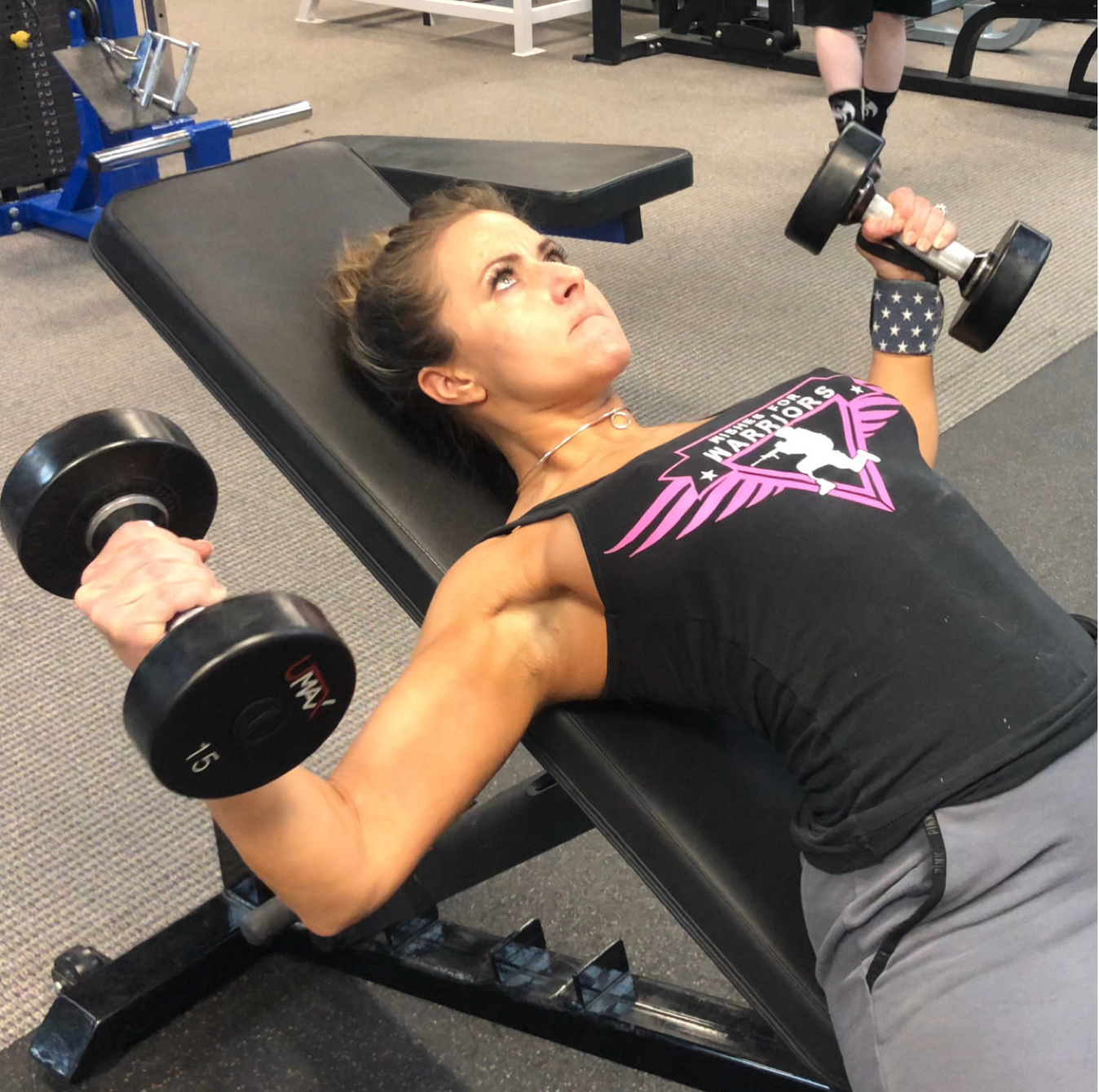
The pectoralis major contributes to drawing the upper arms across the body. Setting the bench on an incline changes your torso’s orientation to gravity and can alter how the movement feels around the clavicular, or upper, part of the chest. That makes incline flyes a reasonable option in a chest-training plan, but it does not mean a certain bench angle guarantees that only one strip of muscle works. Front deltoids and stabilizing muscles participate as well, and individual shoulder anatomy changes the comfortable path.
A low-to-moderate incline is a useful starting experiment, not a magic angle. Try one setting for several sessions before making a comparison. If an upright angle causes your shoulders to dominate or makes the dumbbells feel hard to control at the bottom, reduce the incline and compare the same light load. If a modest incline feels stable and you can maintain the fly arc, there is little reason to chase a steeper setting for appearance’s sake.
Be cautious with claims that a single EMG experiment proves an incline fly will build more upper-chest muscle than a press. Muscle-activation recordings observe electrical activity during specific efforts; they do not directly measure months of hypertrophy. A 2020 experiment comparing barbell bench presses with dumbbell flyes involved 17 resistance-trained men and used a particular bench setup, not every incline angle. It measured different activation patterns and was not a long-term study showing the superior growth of incline flyes.
For most lifters the practical distinction is training role. Presses let you use more total load and train several muscles together. Incline flyes can add chest-focused work with a controlled range that fits between pressing sets and recovery needs. You can use them after a pressing movement, or occasionally earlier with very light weights while learning form. Neither order removes the need to manage total weekly workload.
Instead of asking whether 30 degrees is universally better than 45, ask whether the set can be reproduced: steady bench, same hand path, comfortable shoulders and progressively better repetitions. Those are changes you can actually track.
Equipment Worth Exploring
Explore equipment, accessories and gear from our carefully selected range.

VForce Wall Trainer
Space-saving wall-mounted functional trainer with pivoting cable arms and variable resistance ratios.

VForce 2IN1
Half rack and pivot-arm functional trainer with switchable 1:1 and 2:1 pulley ratios.

VForce 3IN1
All-in-one rack combining an adjustable Smith machine, functional trainer, and free-weight station.
VOLTRA
Compact digital cable trainer with smooth, adjustable resistance.

Go-Tone Pro
Portable digital cable trainer with up to 66 lb (30 kg) of adjustable resistance.

GymPin Ergo Handles
Pair of ergonomic cable handles shaped for comfortable triceps and pulling exercises.



GymPin D Cuffs
Adjustable wrist cuffs with textured grips for supported cable-machine exercises.

Lever Arm Multi Press LMP-650
Multi-press with independent lever arms and an integrated adjustable bench for upper-body training.
Fix six common mistakes and choose an alternative
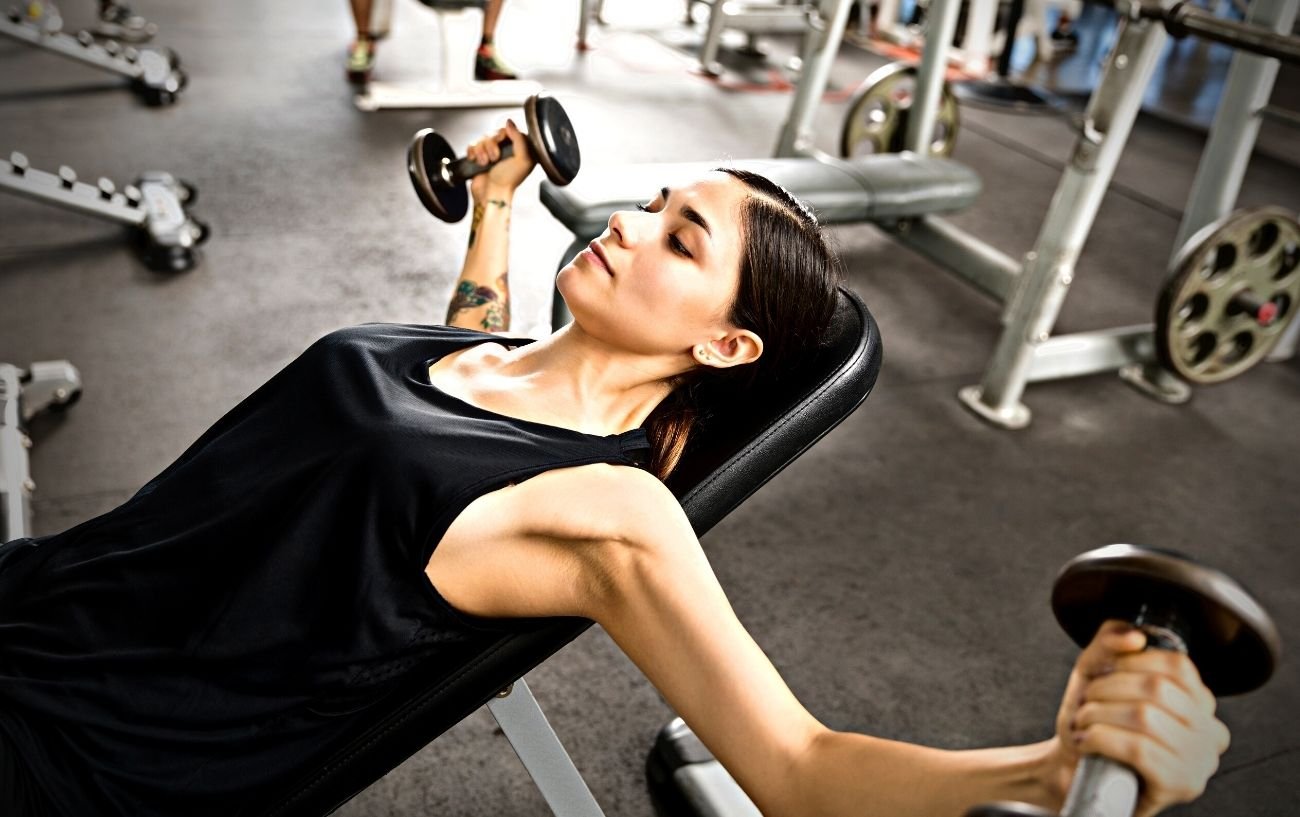
Mistake one: choosing your pressing dumbbells. A fly’s longer lever makes that shortcut especially unhelpful. Pick a separate fly weight; lower it if your elbows begin bending into a press as fatigue accumulates. Mistake two: turning the movement into a deep chest stretch challenge. Stop at a controlled position that fits your shoulders; more depth is not always more stimulus.
Mistake three: changing the elbow bend every rep. If the elbows close on the way up and open on the way down, the exercise becomes an improvised press-and-fly combination. Keep the bend modest and fairly consistent. Mistake four: swinging the dumbbells together at the top. Avoid using the collision of the weights as the sign of a completed rep. Pause under control just before they meet.
Mistake five: losing your back contact. An exaggerated arch or shifting hips changes the setup midway through the set. Recheck your feet and pad position. Mistake six: comparing someone else’s depth to yours. Arm length, bench geometry, shoulder mobility and training history make the bottom position individual. Film a controlled rep of your own rather than trying to copy the lowest hand position in a social video.
If dumbbells do not feel comfortable, a cable fly is worth testing. An adjustable bench between two low pulleys lets you use a similar chest-adduction motion with a different resistance direction. Cables generally change how hard the exercise feels near the top, so the same kilogram setting is not a direct comparison. Keep the bench centered, use equal pulley heights and confirm the handles will not catch the frame.
A standing cable fly or pec-deck can also be more practical when you cannot safely arrange two free weights around a bench. These are alternatives, not lesser versions of the same exercise. Choose the one that lets you train the chest without repeatedly aggravating the shoulders. If you prefer a heavier exercise, return to a controlled incline press and treat the fly as optional accessory volume rather than a compulsory lift.
Program four weeks of smooth, repeatable chest work
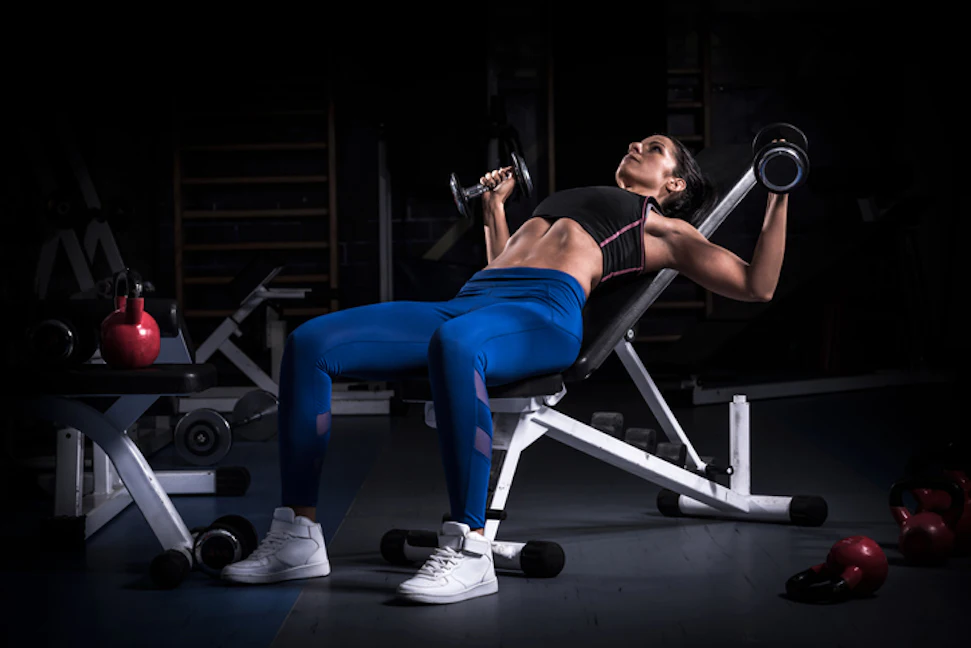
Use the incline dumbbell fly as an accessory after your main press or another substantial chest exercise. The point of the four-week progression below is consistent technique, not a promise of a fixed amount of muscle growth. Start with one or two sessions per week, leaving adequate recovery between demanding chest workouts. Your other pressing, dips and push-up volume already count toward the overall training stress.
Week one — find the position. After your warm-up and press, use two sets of ten to twelve very controlled flyes with a modest incline. Leave several clean reps in reserve. Record your bench angle, the dumbbell weight, whether both feet stayed planted and whether the bottom range felt comfortable. The last repetition should resemble the first.
Week two — earn more smooth reps. Keep the same incline and weight. Work toward two sets of twelve to fifteen, but only if the elbows remain steady and the descent stays under control. If you experience shoulder irritation or need to shorten the arc substantially, return to the earlier range. An additional sloppy repetition is not an improvement.
Week three — add only useful volume. When recovery permits and the movement feels settled, perform three sets of ten to twelve at the same load, with roughly sixty to ninety seconds of rest or longer if needed to preserve quality. Another option is to remain at two sets if your chest sessions already contain several hard pressing sets.
Week four — choose one small progression. You can try the next dumbbell increment, repeat the same load for more polished repetitions, or refine an uncomfortable bench angle. Change one variable at a time. With large dumbbell jumps, staying at the previous load may be better than forcing the upgrade. End the month by comparing the setup notes and a short side-view video, not just the number on the dumbbells.
For a simple chest session, pair a comfortable compound press with a few controlled incline fly sets and finish with a cable or push-up variation only if the remaining training volume is manageable. Keep at least a couple of repetitions in reserve while learning the movement, stop on pain, and remember that consistency over months matters more than one maximal-stretch fly set.
Funny Gym Shirts & Workout Gear
Funny gym shirts, tanks, hoodies and workout gear for lifters who like training hard.

Shirt for Chest Day | I Love Bench Press with Pink Weig T-Shirt
Show some gym-girl attitude with a playful “for Chest Day” tee.

Netflex Pump Chill Meme Motivation Hooded Hoodie
Bring “Netflex Pump Chill” gym humor to lazy days and post-workout plans.

Pump Hub Decal Water Bottles & Equipment Meme Sticker
A fun “Pump Hub” touch for bottles, laptops, and lockers.

The Incredible Pump Hulk Bodybuilding Muscle Humor Deca Sticker
Put “The Incredible Pump Hulk” gym humor on your laptop, bottle, or gym gear.

Optimus Pump | Transformers Muscle Shirt | Robot Workou Tank Top
Your gym-day look, with a playful “Optimus Pump” twist.


Four Plates Bench Club Tee
Show some powerlifting attitude with a playful “4 Plates Bench Club” tee.

Kanye Chest Shirt | Bodybuilding Rap Music Parody | Che T-Shirt
Bring “Kanye Chest” humor to your next gym day.

Dog Pump Patrol – Meme , & Gains – Gymbro Humor Top T-Shirt
Rep “Gym Dog Pump Patrol” humor in and out of the gym.

Chest Day Sweater Bench Press & Meme T-Shirt
Add a playful “Chest Day” touch to your casual rotation.
Bottom line: A controllable fly with a comfortable arc can complement your presses. Choose the incline and weight that let the chest work without forcing your shoulders into a position you cannot own.
Some product links may be affiliate links, which can support Mind Muscle Perfection at no additional cost to you.