Advertising disclosure: This page includes affiliate product links that may earn us a commission, as well as products from our own store.
A bar that never moves can still reveal something about pressing strength. In a 2026 experiment involving 20 recreationally trained adults, an isometric floor press at a 90-degree elbow angle tracked bench-press one-rep maximum more closely than three other static pushing tests. The results are interesting for coaches who measure force, but they come with an important distinction: a force-plate assessment is not the same thing as doing floor presses for muscle growth.
What the 20-person experiment actually tested
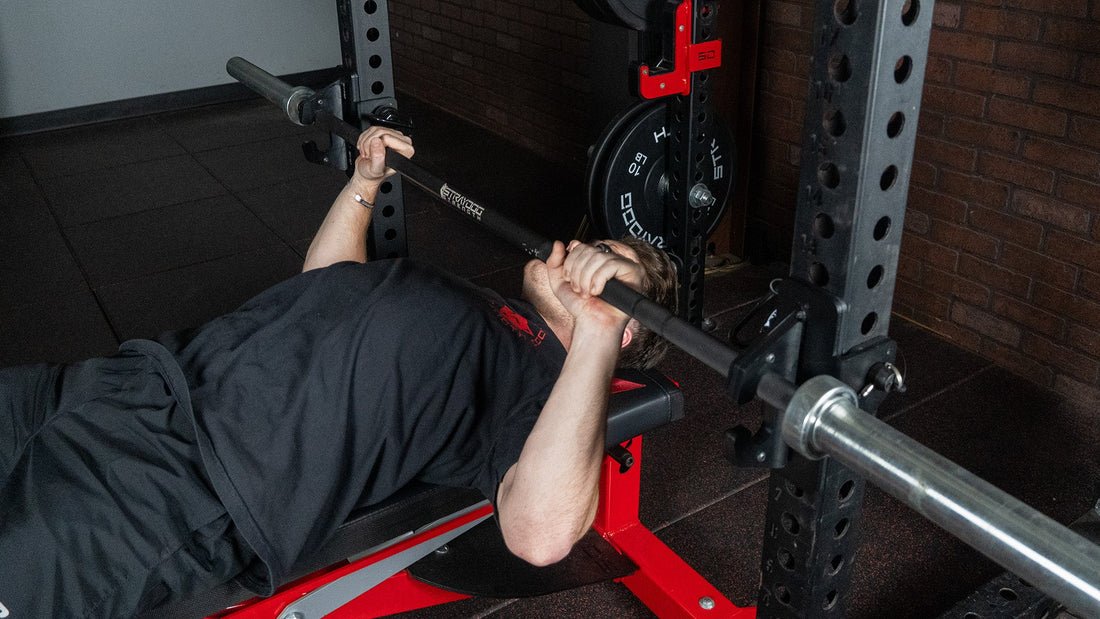
Can a hard press against an immovable bar tell you something useful about your bench press? The question matters because a maximum bench attempt requires heavy moving weight, enough space, an appropriate setup and reliable spotting. An isometric assessment can collect a force reading without making the bar travel through a full repetition. But a useful assessment has to be tested against a recognizable strength outcome, not merely feel difficult.
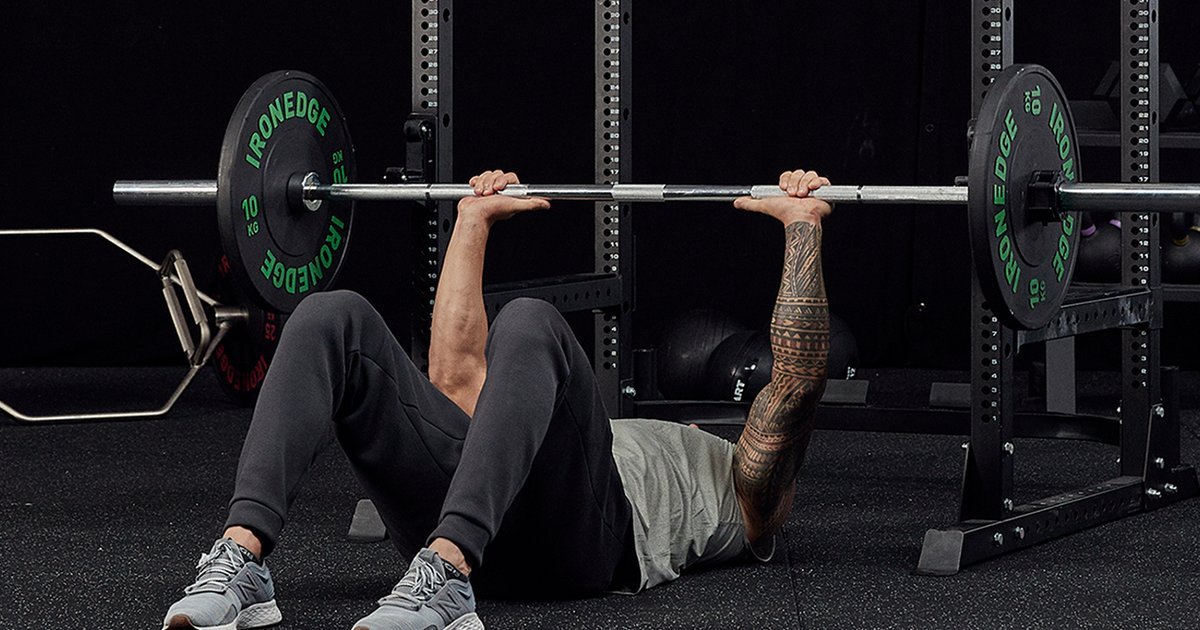
The experiment enrolled 20 recreationally trained adults, including 16 men and four women. Participants first completed a one-repetition-maximum barbell bench press and were familiarized with the other tests. They subsequently attended two isometric measurement sessions separated by seven days. The test battery included floor pressing against fixed resistance at elbow angles of 90 and 135 degrees, plus isometric push-ups performed from the knees and from the feet.
The researchers recorded force with force plates and a rigid isometric rack. They compared the different tests with the bench press one-rep maximum, then examined whether people produced reasonably consistent results within a session and across different days. Those are two separate questions: whether the result relates to bench strength and whether the result can be reproduced. A measurement may be repeatable but unrelated to what you want to track.
The study was a validation and reliability experiment, not a training intervention. Nobody was assigned eight weeks of floor presses to see who built a bigger chest. Its findings should change how a coach thinks about testing upper-body strength, not be sold as evidence that a floor press is superior for hypertrophy.
Why the 90-degree floor press gave the strongest signal
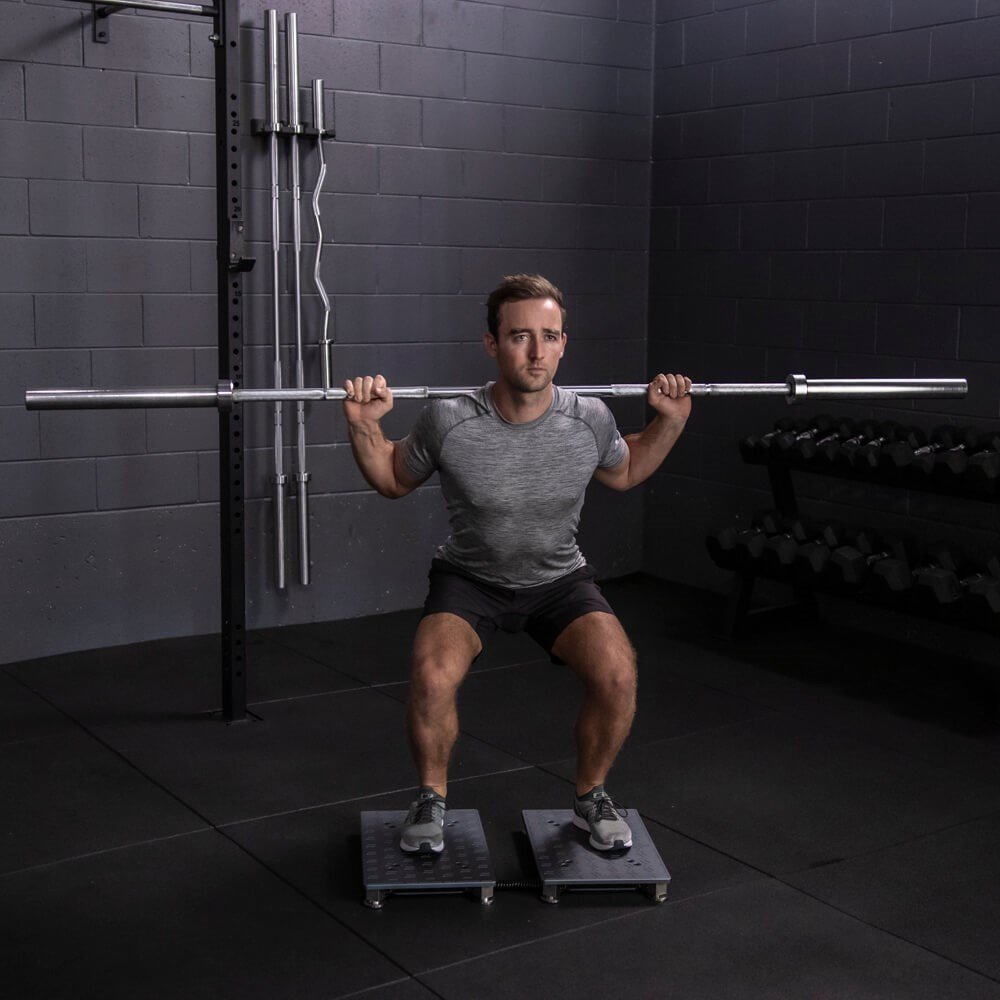
The closest relationship to bench press performance came from the 90-degree elbow-angle isometric floor press. Its correlation with bench one-rep maximum was r = 0.887, compared with r = 0.724 for the 135-degree version. Both values were positive: stronger participants generally registered higher force in those tests. Yet the difference shows that the joint configuration you choose matters when you compare people.
The 90-degree setup puts the lifter in a defined pressing position with a fixed upper-arm and forearm relationship. Because the bar cannot move, the lifter expresses force rather than completing a full eccentric and concentric repetition. A specific joint angle changes leverage, muscle length and which portion of the pressing movement receives emphasis. It is not a miniature bench-press rep, and it does not sample every point of the bar path.
A correlation of 0.887 is high in this small group, but it is not an individual prediction formula. Two people may produce similar isometric forces yet have different bench numbers because of technique, chest and triceps strength through other joint angles, bar path, body proportions and familiarity with heavy attempts. Nor does this correlation establish that an extra 10 newtons will add a particular number of kilograms to your bench.
Use the result as a promising way of comparing an athlete with their own earlier measurement under identical conditions. Do not compare a 90-degree test today with a 135-degree setup next month and call the difference progress. Fix elbow angle, rack height, hand spacing and instructions before interpreting the readout.

Equipment Worth Exploring
Explore equipment, accessories and gear from our carefully selected range.


Foldable Wall Rack
Wall-mounted folding squat rack designed to save floor space between workouts.




FID Bench MAX
Adjustable bench offering flat, incline, and decline positions + adjustable headrest.


Competition Plates
Competition-style bumper plates for Olympic lifts and loaded strength training.

Push-up tests worked too, but showed a different picture
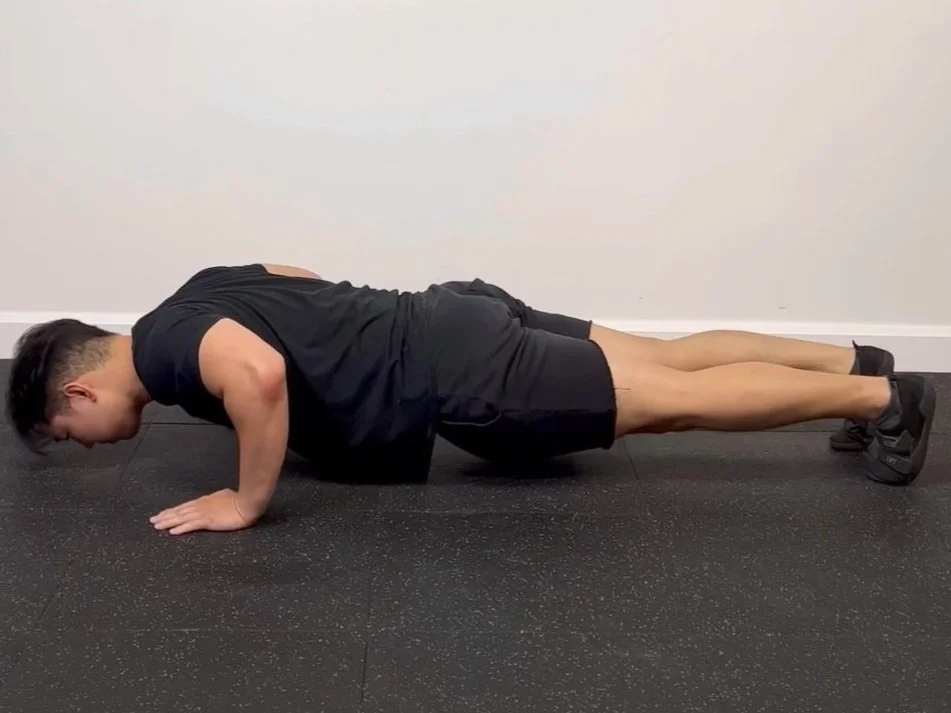
Two push-up variations were included to explore whether a position away from the floor-press setup could provide a practical upper-body force assessment. The knee-supported isometric push-up correlated with bench one-rep maximum at r = 0.711, while the feet-supported version correlated at r = 0.692. Both related meaningfully to bench performance, though less strongly than the 90-degree floor press in this sample.
The practical difference is not that one push-up type is automatically the best exercise. Knee support changes how much of the body must be stabilized, while the conventional push-up recruits the torso and lower-body brace more extensively. In an isometric test, shoulder, elbow, trunk and hand position influence the force that reaches the measuring device. A weak reading can reflect a poor setup as well as lower pressing capacity.
The floor-press conditions generally showed more stable repeated measurements than the prone push-up conditions. That is plausible given the support under the back and reduced variation in body position, but it is not proof that supine tests always win with other equipment or populations. The team tested the specific protocols used in this study, not every push-up or floor-press setup a gym could construct.
For most lifters, regular push-ups remain an excellent training and tracking tool: choose a consistent hand position, elevation and full-range standard, then record clean repetitions. That is inexpensive and actionable, but it is a different metric from measured peak isometric force. Keep the labels separate in your training log.

Powerlifting Shirts & Lifting Gear
Powerlifting shirts and gym gear for squat, bench and deadlift lifters who live for heavy numbers.

Don'T Spot Me If I Die I Die Meme Shirt T-Shirt
Show some powerlifting attitude with a playful “Don't Spot Me If I Die I Die” tee.

Jesus Is My Spotter Meme Black Jesus Top T-Shirt
Rep “Jesus Is My Spotter Meme” humor in and out of the gym.


Three Plates Bench Club – Chest Day & Gains T-Shirt
Make gym days more fun with “Three Plates Bench Club” style.


Chest Day Sweater Bench Press & Meme T-Shirt
Add a playful “Chest Day” touch to your casual rotation.

Official 2500lb Club – Meme Gains T-Shirt
Make gym days more fun with “Official 2500lb Club” style.

500lb Club Meme Top 500 Pound Club T-Shirt
Rep “500lb Club Gym Meme” humor in and out of the gym.

2000lb Club Shirt Meme Top T-Shirt
Show some powerlifting attitude with a playful “2000lb Club” tee.

Reliability numbers: what counts as real progress?
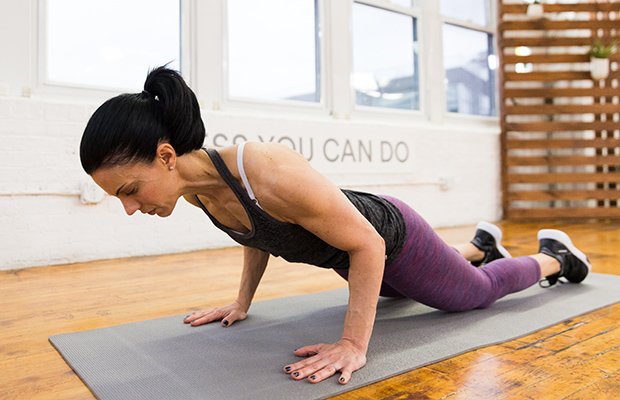
The investigators checked both within-day and between-day repeatability. Across the four assessments, within-day intraclass correlation coefficients ranged from 0.923 to 0.983 and coefficients of variation from 5.3 to 7.7 percent. Between-day ICC values ranged from 0.912 to 0.955, while coefficients of variation rose to 6.4 to 12.3 percent. Generally, higher ICCs indicate more consistent ranking; lower variation indicates less typical noise.
Imagine that your first test is followed a week later by a peak force reading only three percent higher. That looks encouraging on a screen, but several test variants in this experiment had typical measurement variation larger than three percent. You cannot confidently assume the increase represents a genuine muscular adaptation. Standardization and multiple sessions matter more than a flashy one-off number.
Coaches should record the warm-up, trial count, rest periods, verbal cues, elbow configuration, foot or body position and the same calibrated equipment. Test when the athlete is not unusually fatigued from yesterday’s hard pressing, and compare results under comparable circumstances. A repeat session can help establish a person’s normal variation before setting a meaningful-change threshold.
The study included bench one-rep maxima between 65 and 140 kilograms, an encouraging spread for recreational training. Still, 20 participants are not enough to give universal error bands for elite powerlifters, new lifters, older adults or those rehabbing an injury. Do not use the reported average variation as an individual medical clearance threshold or to justify painful maximum isometric efforts.
Isometric strength is not the same as a moving bench press
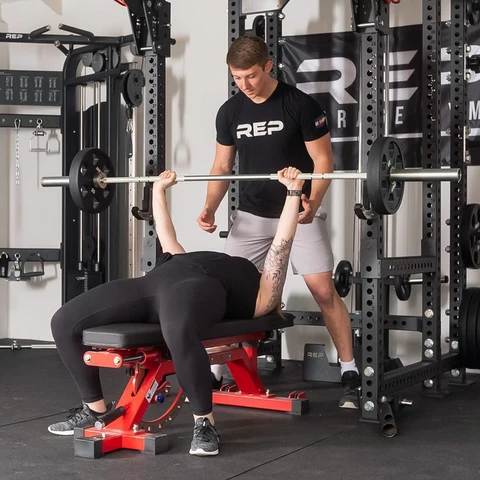
Moving a barbell brings coordination, range of motion, eccentric control, joint acceleration, sticking points and a stable bar path into play. An isometric force measurement captures how forcefully someone pushes against resistance that does not travel. Those skills overlap, which helps explain the positive correlations, but neither test exhausts the other’s demands.
That distinction matters for performance beyond the bench. Earlier experiments comparing static pressing force with a seated medicine-ball throw found substantially weaker associations for explosive throwing than the current comparison with bench maximal strength. Peak force and rapid force development are not identical qualities, and skill transfer depends on movement speed and mechanics. Do not tell a boxer or thrower that a higher static floor-press score guarantees a harder punch or longer throw.
The same caution applies to shoulder comfort. An isometric rack can avoid the need to lower a maximal load through a full movement, but fixed angles are not automatically pain-free or safe for every lifter. In a proper testing setting the restraints, support and force system are arranged to prevent sudden movement. Pressing recklessly into a poorly secured home rack is not a substitute for that controlled apparatus.
Think of testing as one part of a dashboard. Bench one-rep maximum gauges the full lift under a defined standard; repetition work tells you about workload capacity; force tests can help identify position-specific trends; training logs show performance week to week. Each has value when the question is stated clearly.
Equipment Worth Exploring
Explore equipment, accessories and gear from our carefully selected range.


Rubber Hex Dumbbells
Rubber-coated hex dumbbell pairs with a stable shape for home and commercial strength training.


VOLTRA
Compact digital cable trainer with smooth, adjustable resistance.

VForce Wall Trainer
Space-saving wall-mounted functional trainer with pivoting cable arms and variable resistance ratios.

VForce 2IN1
Half rack and pivot-arm functional trainer with switchable 1:1 and 2:1 pulley ratios.

Power Tower
Freestanding pull-up and dip station with adjustable handles for bodyweight training.

A practical two-day pressing plan that does not confuse testing with training
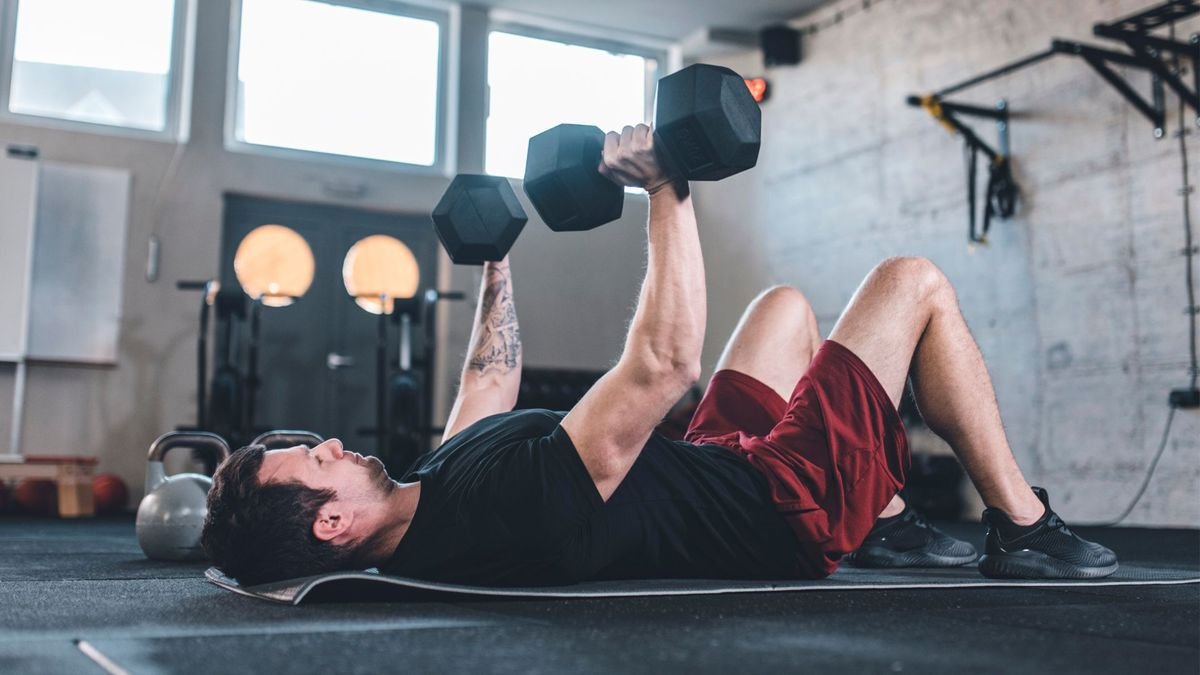
You do not need a force platform to apply the useful principle: make measurements repeatable and train through purposeful ranges of motion. Here is a simple example for healthy recreational lifters who can already press comfortably. It is a training template, not a protocol validated by the 20-person study and not a substitute for individual coaching when injury or symptoms are present.
Day one focuses on strength practice. Start with progressive warm-up sets, then complete three working sets of barbell or dumbbell bench press for four to six controlled repetitions, leaving roughly one to three technically clean reps in reserve. Follow with two or three sets of a supported horizontal row, then two sets of a moderate-load triceps movement. Keep your grip, touch point, tempo and pause standard consistent so progress is recognizable.
Day two emphasizes volume and positions. Perform three sets of dumbbell or barbell pressing for six to ten repetitions, add two sets of push-ups stopped before form breaks, and finish with a rear-delt or upper-back movement. A conventional loaded floor press can replace one pressing accessory if you want practice in a shortened range. It is a moving exercise that stops at the floor, not the immovable-bar test used in the experiment.
Progress only when technique and recovery support it. Add a small load or a rep, not both on every set by default. Recheck a consistent performance marker every four to six weeks, preferably after a normal rest day. If tracking maximal bench strength, use a rack with safeties or a competent spotter and maintain a repeatable standard rather than testing to failure every week.
Bodybuilding Shirts & Workout Gear
Bodybuilding shirts, tanks and gym gear for lifters chasing muscle, size, symmetry and the pump.

Kanye Chest | Bodybuilding Rap Music Parody Muscle Shir Tank Top
Train hard, laugh a little, and rep “Kanye Chest”.

I Love Bench Press Gym | Funny Bench Press Meme Crewnec T-Shirt
For laid-back days and gym-girl humor: “I Love Bench Press”.

Ultimate Bench Press Tee
Heavy lifts, good laughs, and a little “Ultimate Bench Press” energy.

My Bench Press Is Stuck Horror Scary Movie Meme Hoodie
Show off your Halloween humor in a laid-back “My Bench Press Is Stuck Horror” hoodie.

Bench Press and Chill Funny Gym T
Make gym days more fun with “Bench Press and Chill” style.


Ultimate Meme : The Essential Bench Press Shirt T-Shirt
Show some powerlifting attitude with a playful “Ultimate” tee.

I Love Bench Press Valentine'S Day Meme – Chest Day T-Shirt
Make gym days more fun with “I Love Bench Press Funny Valentine's Day” style.

Darkness Is A Hell Of A Coach Shirt – & T-Shirt
Rep “Darkness Is A Hell Of A Coach” humor in and out of the gym.

for Chest Day | I Love Bench Press Muscle Shirt with Pi Tank Top
Add some lifting attitude to training with “for Chest Day”.
Who should use the test, and what remains uncertain?
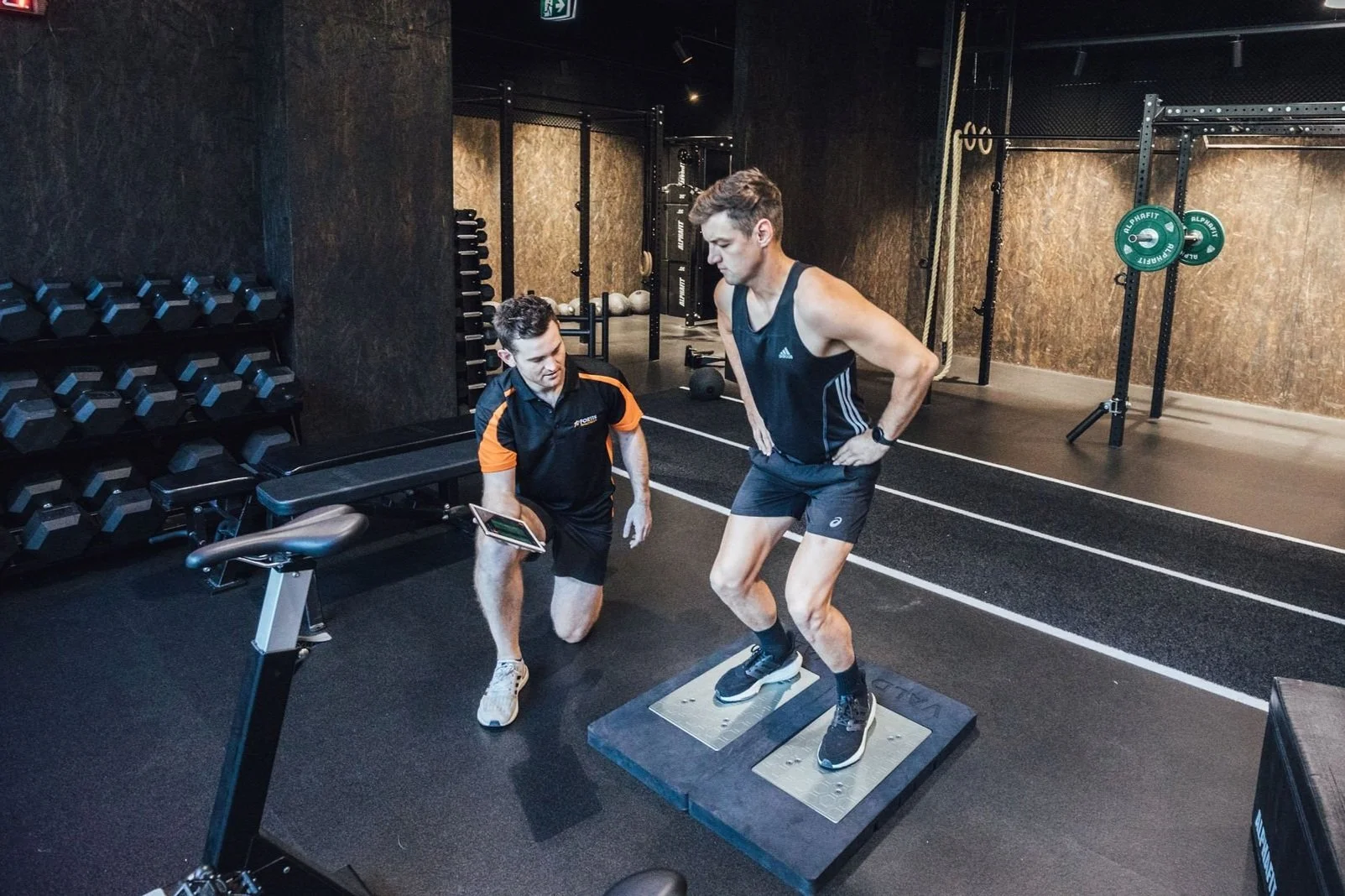
Force-based isometric testing may appeal to strength coaches, athletic performance centers and rehabilitation professionals who already have calibrated force plates and an appropriate rack. It is most compelling when an athlete needs frequent monitoring without repeated heavy one-rep-max attempts. Even there, the choice of test should match the sport and the athlete, not simply the strongest correlation reported in one paper.
The strongest current signal is the 90-degree floor press in this 20-person sample. The sample was small, predominantly male and recreationally trained. Although its bench strengths covered a meaningful range, there was no large external replication cohort, no established universal cut-off for meaningful change in an individual and no proof that the same ranking holds in a different population or with another measurement device.
Some people will also confuse this with a weighted floor press workout. A barbell floor press for sets and reps may be useful for pressing practice, triceps work or a range-of-motion constraint. But its training value must be evaluated with training evidence and outcomes over time. The 2026 experiment only evaluated a standardized isometric assessment against a traditional strength test.
Bottom line: the floor-press force test looks promising, particularly at 90 degrees, because it showed a strong association with bench one-rep maximum and generally solid repeatability. That is a reason to investigate and use it carefully where suitable apparatus exists. It is not permission to replace all heavy pressing with static holds, claim automatic muscle growth, or infer an exact bench max from an improvised push.