Advertising disclosure: This page includes affiliate product links that may earn us a commission, as well as products from our own store.
Plate Pinch Holds: Grip Setup, Plate Choice and a Four-Week Plan
Most lifters track the plates on a bar. Far fewer track whether they can hold the edge of a plate without letting the thumb and fingers separate. A plate pinch looks simple, yet changing plate thickness or surface can make the same nominal weight feel completely different. That makes technique and consistency more useful than guessing a heroic load.
Here is a practical way to set up the exercise, distinguish it from carries and hanging work, and build a repeatable four-week progression without pretending one grip drill can fix every limitation.
1. Why plate pinches feel different from holding a bar
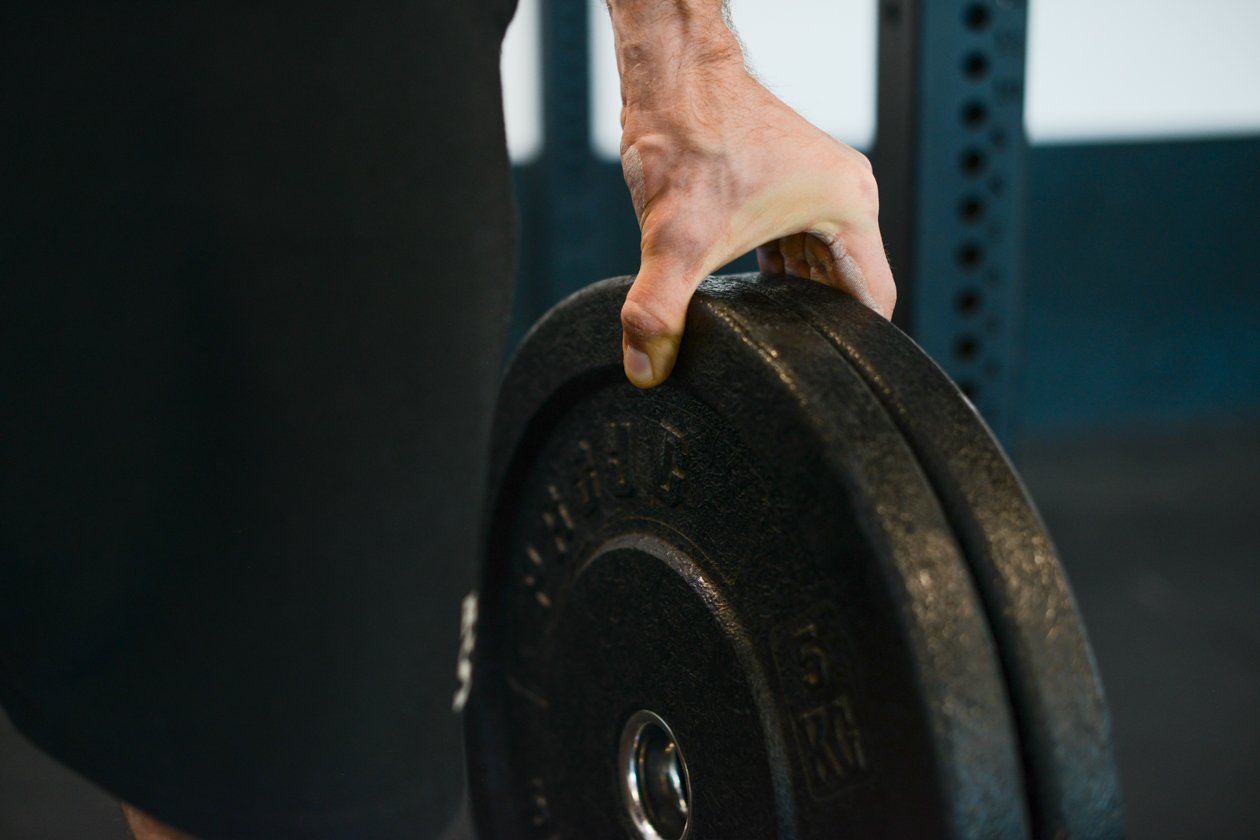
The feature that makes a plate pinch useful is the missing handle. A barbell lets the fingers wrap around a cylinder and meet the palm; with a plate pinch the thumb presses against the fingertips on a broad surface. That asks the hand to resist the plate sliding downward while the wrist and forearm stabilize the position. It is not simply a mini deadlift or a wrist curl performed with unusual equipment. The principal task is maintaining opposition between thumb and fingers rather than moving a joint through a large range.
Different grip tasks overlap but are not interchangeable. A long hang on a pull-up bar mostly tests how well you sustain a wrapped support grip. A hand gripper emphasizes closing the fingers against a moving handle. Pinching flat plates changes the contact area, thumb demand and leverage. A lifter can excel at one and be surprisingly ordinary at another. That difference is a reason to train multiple grips, not evidence that any single exercise transforms every kind of hand strength.
Treat plate pinches as specific accessory work rather than proof of a stronger deadlift or automatic injury resistance. If grip limits your pulling, identify whether the issue is wrapped support grip, a slippery bar or thumb opposition. Choose an exercise that addresses your actual limitation.
2. Set up the hold without gambling on a dropped plate
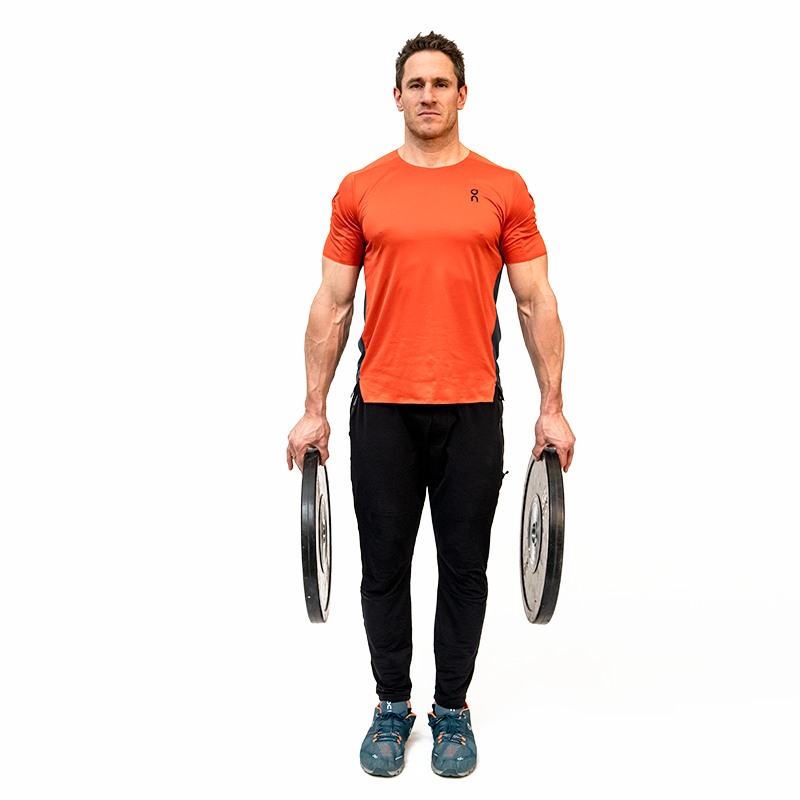
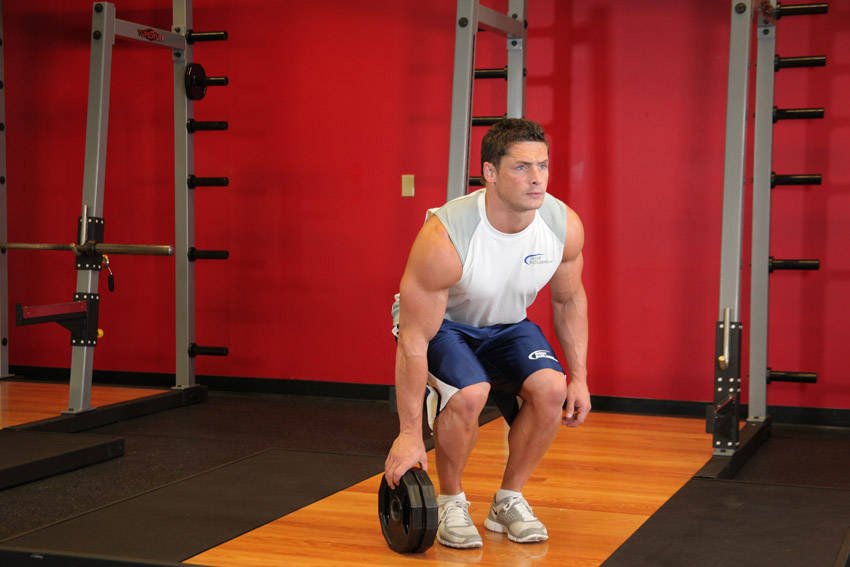
Begin on a level surface where you can safely return the plates without moving your feet underneath them. Choose light, solid plates that are small enough to control. A pair of smaller iron plates with broad flat sides is useful, but a single plate that allows the thumb and fingers to oppose one another is a reasonable starting point. Inspect the rim and surfaces for sharp damage, loose coatings or sweat. If a pair rocks against itself, use a different pair rather than assuming a tight squeeze can compensate.
Stand the plates upright near the outside of one foot, or start them on a stable low support if bending to pick them up makes positioning difficult. Position the thumb pad against one outer face and the fingers against the opposite outer face. You should feel yourself compressing the plates, not hooking fingertips around an indentation or slipping a finger through a handle cutout. Create finger pressure before raising the load; lift only high enough to clear the ground while maintaining a neutral wrist. Straighten into a comfortable, tall stance with shoulders level.
Keep the load beside the leg without allowing the plate to rest on the thigh. Take normal breaths rather than holding a maximal brace for a long timed set. As pressure starts to weaken, deliberately bend your knees and lower the plates to their original safe landing position while the grip is still closed. Do not wait for an uncontrolled drop to declare a personal record. Keep toes and bystanders clear of the landing path. Match the setup with the other hand and stop if you experience sharp finger, wrist or forearm pain rather than ordinary muscular effort.

Equipment Worth Exploring
Explore equipment, accessories and gear from our carefully selected range.


Competition Plates
Competition-style bumper plates for Olympic lifts and loaded strength training.

Grip Plates
Rubber-coated weight plates with handholds for loading barbells and machines.


Rubber Hex Dumbbells
Rubber-coated hex dumbbell pairs with a stable shape for home and commercial strength training.

3. Plate thickness and finish can matter more than the number
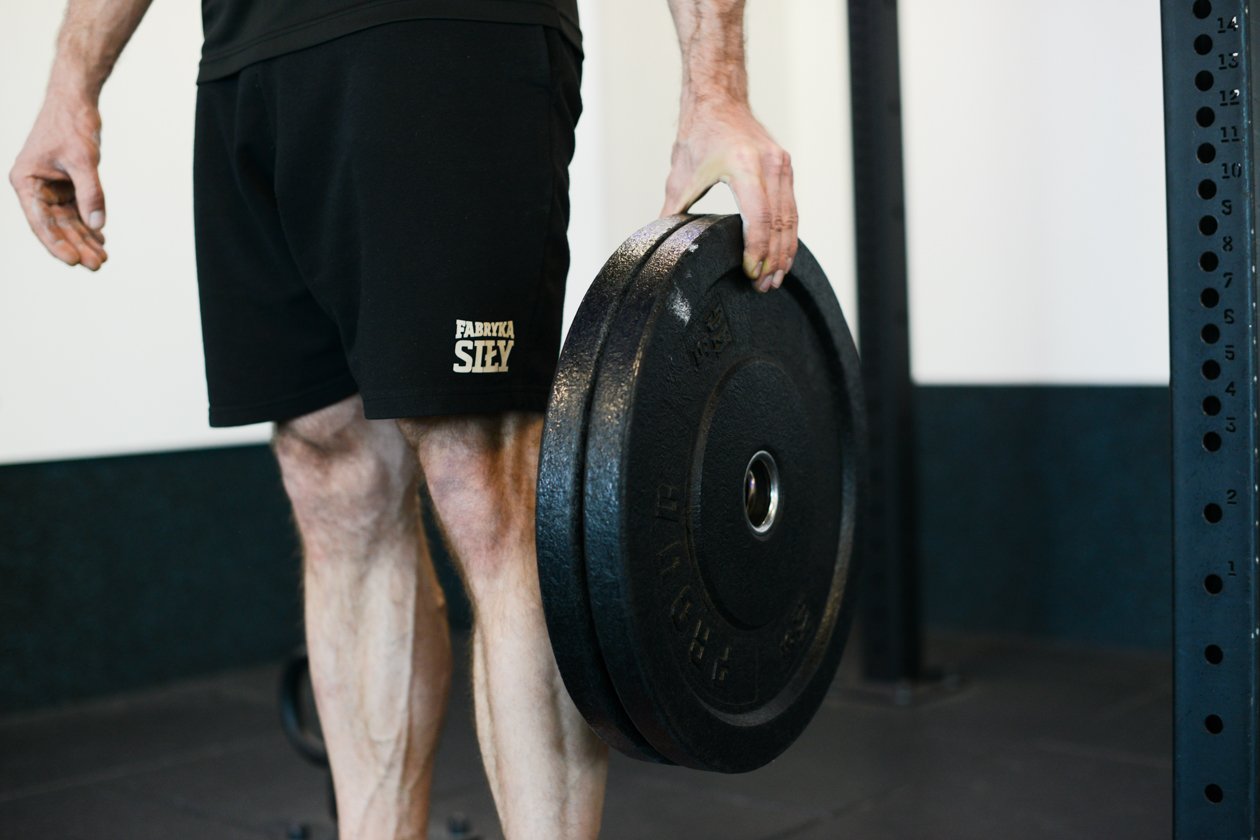
Two arrangements with the same printed mass can create very different pinch challenges. One broad bumper plate may offer a soft, tacky rim; a thinner iron plate may have a smooth, harder surface. Two smaller plates held together can require a wider thumb span than one narrow plate. Finger length, thumb position, chalk and surface moisture further change how securely you can hold the load. For that reason, comparing thirty seconds on one plate with twenty seconds on another is not a controlled measure of progress.
For a simple baseline, choose one exact pair, identify the face orientation and use the same hand position on every attempt. If the goal is a more demanding plate-on-plate pinch, arrange the pair with the flatter faces outward so the fingers and thumb cannot cheat by catching large edges. Not every manufacturer’s plate design permits the identical arrangement, so the practical rule is consistent, deliberately chosen contact rather than pretending all plates are equivalent. Clean dry hands and plates are important for both repeatable results and safe handling.
Record total load, number of plates, approximate combined thickness, surface type, right and left times, and whether the plates touched the leg. A log such as ‘two 2.5 kg iron plates, same outward faces, right 18 seconds, left 16 seconds’ is more useful than ‘5 kg for 18’. When you change plates, call it a new variation and establish a fresh baseline. If textured rubber-coated grip plates have handle openings, lifting by the handle is a different exercise, not a plate pinch.

Funny Gym Shirts & Workout Gear
Funny gym shirts, tanks, hoodies and workout gear for lifters who like training hard.

Pumpeye Forearm Gains & Grip Strength Popeye Meme Hoodie
Keep it laid-back with a little “Pumpeye” attitude.

Platehead Skull Powerlifters Meme Hoodie
Make your off-duty look more fun with “Platehead”.

Flaming 45LB Weight Plate Fire Barbell Lifting Workout T-Shirt
Show some powerlifting attitude with a playful “Flaming 45LB Weight Plate” tee.

Be Happy Lift Heavy Happy Weights Emoji Weight Plate Sm T-Shirt
Make gym days more fun with “Be Happy Lift” style.

Muscle Daddy Pink Barbell Plate Gym Vest for Men Who Li Tank Top
Add some lifting attitude to training with “Muscle Daddy”.

Skull Gym Graphic Heavy Weights Workout Uplift Iron Clu T-Shirt
Bring “T-Shirt Skull” humor to your next gym day.

Sisyphus Rolling Weight Plate Uphill Meme T-Shirt
Make gym days more fun with “Sisyphus Rolling Weight Plate Uphill” style.

Weight Plate Heartbeat Crewneck Pullover Sweater Workou T-Shirt
Show some gym-day personality with “Weight Plate Heartbeat”.

Gym Is My Happy Place Happy Weights Emoji Weight Plate Sticker
Give your everyday gear a playful “Gym Is My Happy Place” twist.

8 Plates Deadlift Club Motivational Meme & Top T-Shirt
Make gym days more fun with “8 Plates Deadlift Club” style.
4. Static pinches versus carries and other grip work
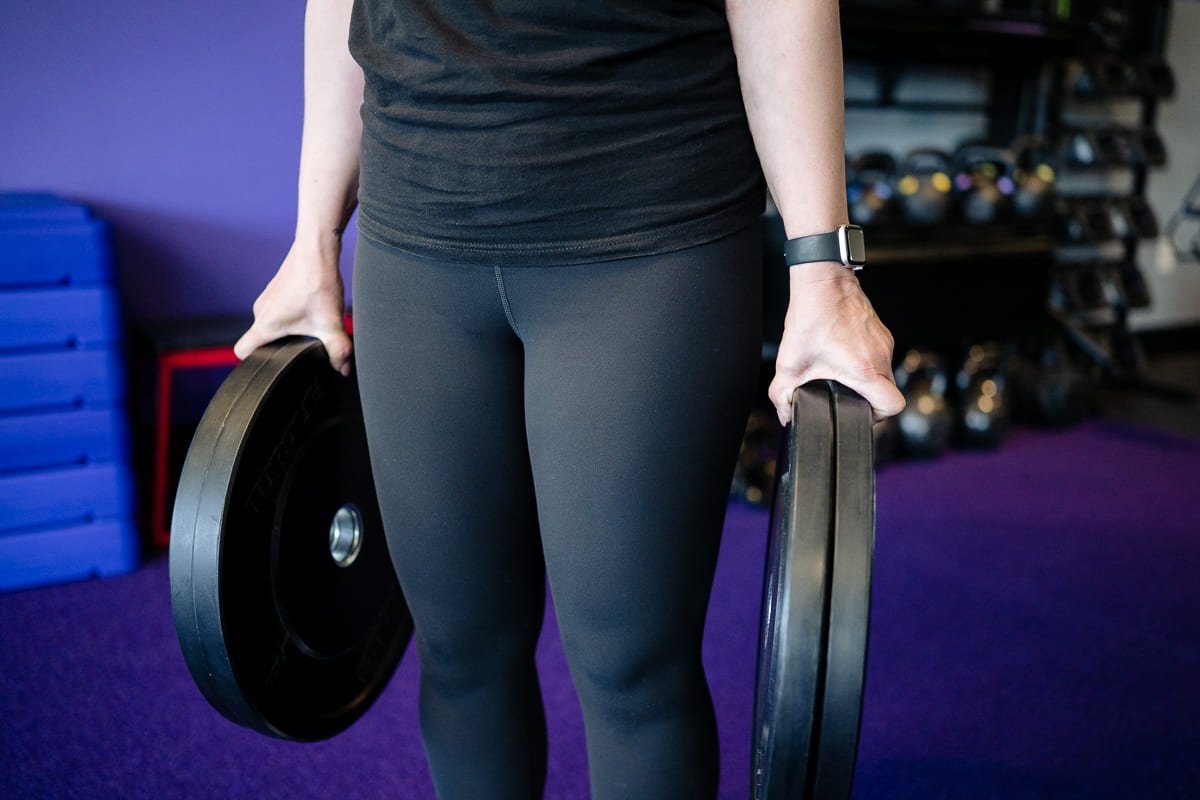
A static plate pinch is easy to quantify: establish the grip, hold without leaning or swinging, and stop while you can still lower the plates. A pinch carry uses the same basic thumb-to-fingertip pressure while walking. The feet, trunk and shoulder must now manage movement, and each step can introduce a small perturbation that changes the hand’s challenge. Carrying is a sensible progression once a still hold is repeatable, but moving faster or farther while the plate slips is not quality progress.
For an initial carry, start with a lighter configuration than you use for stationary holds. Walk slowly on a clear, level strip for a short distance, keeping the plate at your side and not against your leg. Stop and set it down when the wrist begins to fold or the fingertips migrate toward the edge. Do not add a tight turn, obstacles or wet flooring just to make a short circuit more entertaining. A distance target is only useful if you can finish safely on both sides.
Farmer carries with dumbbells, kettlebells or a trap bar remain valuable, but their handles emphasize support grip and permit much heavier loads. Dead hangs also load a wrapped grip while bodyweight and shoulder tolerance influence the result. Thick grips challenge the span around a handle; lifting straps may let a back-training set continue when finger fatigue would otherwise end it. None of these tools is secretly the same as pinching flat plates. Keep the different tasks separate in the log and choose them for the quality you want to develop.
Equipment Worth Exploring
Explore equipment, accessories and gear from our carefully selected range.

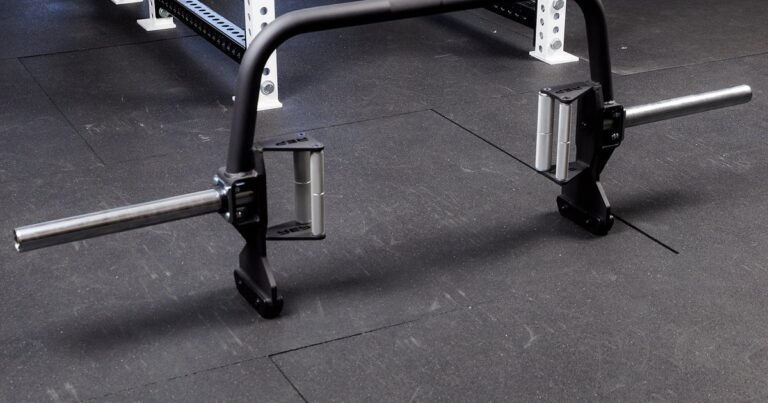
Open Hex Bar
Open-frame trap bar with multiple handles for deadlifts, carries, and lower-body training.


Cast Iron Kettlebells
Textured cast-iron kettlebells for swings, squats, carries, and full-body training.


Angles 90 Grips
Flexible grip attachments that allow natural wrist movement during pulling exercises.

Leather Wrist Grips
Padded leather lifting grips help support the hands and wrists on heavy pulling exercises.

Leather Lifting Straps
Padded leather straps support grip during heavy rows, deadlifts and pulling exercises.


Power Tower
Freestanding pull-up and dip station with adjustable handles for bodyweight training.
5. A four-week plate-pinch progression you can actually log
Start with two short grip sessions per week, preferably after the main pulling work instead of before a demanding deadlift or row. This is a practical example, not a validated optimal prescription. For week one, choose a plate configuration you can maintain for roughly fifteen to twenty seconds with control. Perform three holds per hand, resting around sixty to ninety seconds between efforts. Stop each set while you can still place the plates down cleanly. If your weaker hand needs a lighter pair, use it rather than twisting your posture to force symmetry.
In week two, keep the same load and arrangement and try to add just a few seconds to each successful hold. The goal is consistent quality across all three efforts, not a heroic first set followed by two uncontrolled attempts. In week three, either move toward twenty-five to thirty seconds per set or introduce one brief, light pinch carry. Do not increase plate thickness, weight, walking distance and total training volume at once; changing four variables makes it impossible to know which adjustment caused the new result.
In week four, review your log. If both hands can repeat three tidy thirty-second holds with the same pair, test a modestly harder configuration and return to shorter holds. If the plate rotates, finger pressure collapses or your hand aches between sessions, repeat the previous week or reduce the work. A quick log might read: ‘Monday, three sets, 20/18/16 seconds right; 19/17/15 left; same 5 kg iron pair, clean set-downs.’ That tells you considerably more than one best time from a random assortment of plates.
For broader forearm development, combine pinches with ordinary pulling work and, if useful, an exercise that actually moves the wrist or fingers through range. Do not promise that a static plate pinch alone maximizes forearm size. The final test of a good session is not whether you hung onto the last plate until it hit the floor, but whether you trained the exact grip you intended and can reproduce it next week.