Advertising disclosure: This page includes affiliate links that may earn us a commission at no additional cost to you.
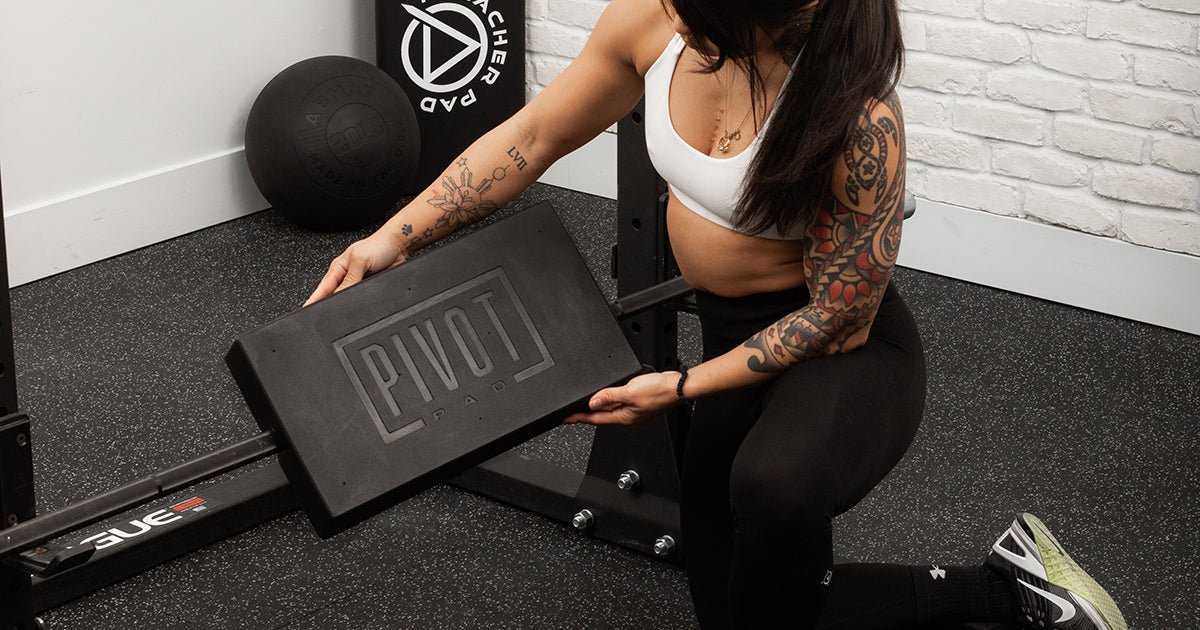
The AbMat Pivot Pad addresses a very specific part of a hip thrust: the surface behind your upper back. It clips onto a racked Olympic barbell and rotates as your torso moves. That is an appealing alternative when a bench edge feels awkward, but the small pad is only one component of the training station.
The useful buying question is whether it improves a setup you can actually use. Think through the support bar, the resistance across your hips, available rack space and the changeover between exercises. This is a product and setup guide, rather than an account of MMP testing the pad or a claim that it produces better muscle growth than a bench.
Start by separating support from resistance
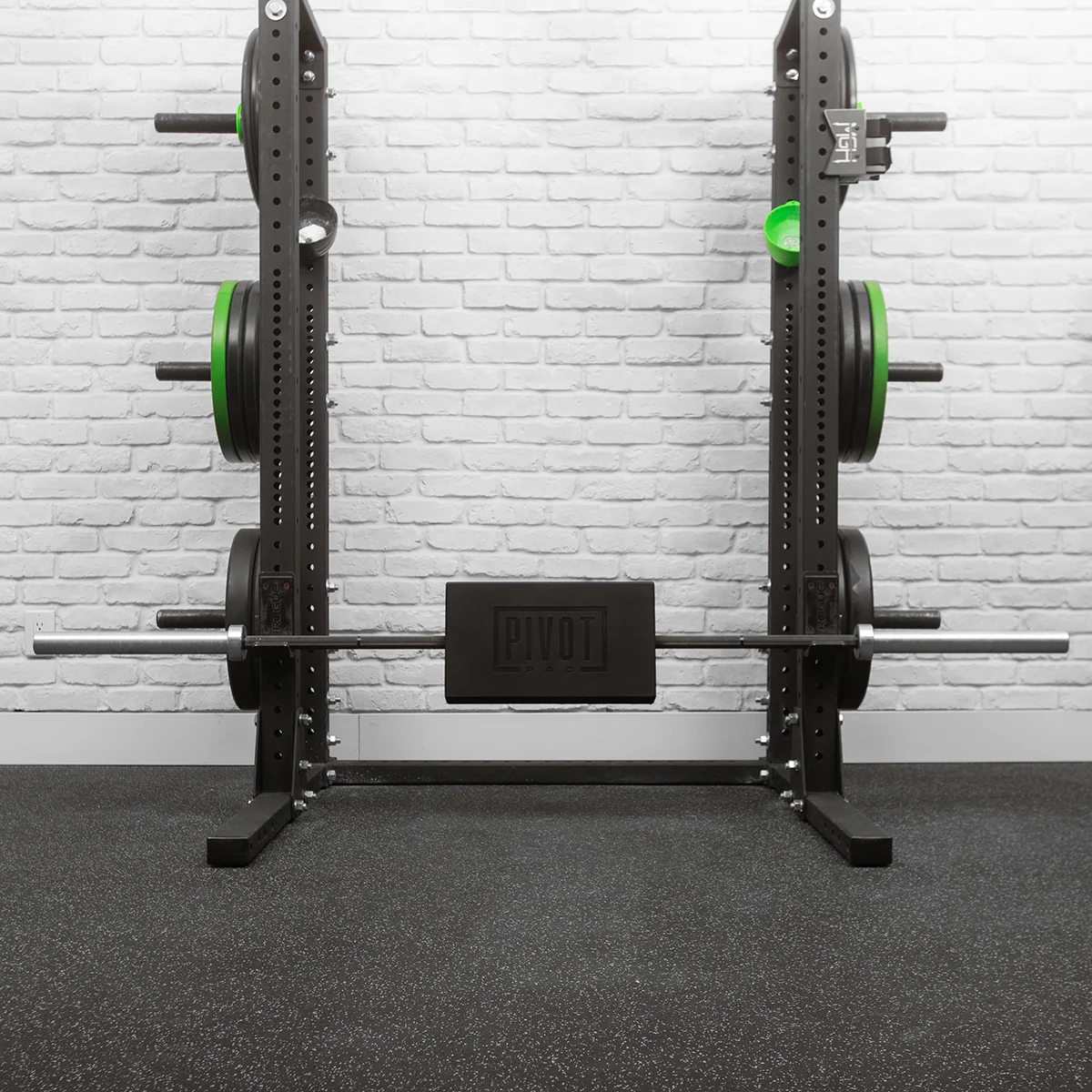
The Pivot Pad sits on the bar behind you. Its job is to provide upper-back contact while you raise and lower your hips. A barbell used as resistance across your lap is a separate piece of equipment. In a loaded barbell arrangement, therefore, plan for two bars: one supporting the pad and another carrying the training load.
That distinction can change the purchase decision. Someone who owns one bar and already leaves it racked for squats may need to rearrange the session, obtain another suitable bar or use a different form of resistance. The attachment does not supply a weight stack, loading arm or complete machine frame.
Map the station before ordering anything. Identify where the support bar will sit, where your feet will land and how the resistance will reach your hips. Then consider the space needed to get in and out. An arrangement that looks compact when empty may still block the rack when somebody is training.
A useful paper exercise is to write down a normal lower-body session in order. If hip thrusts sit between squats and another rack exercise, count every bar move and height adjustment. Those transitions are part of the equipment’s practical cost, even though they do not appear in a photograph of the pad itself.
The keyhole mount changes the contact surface
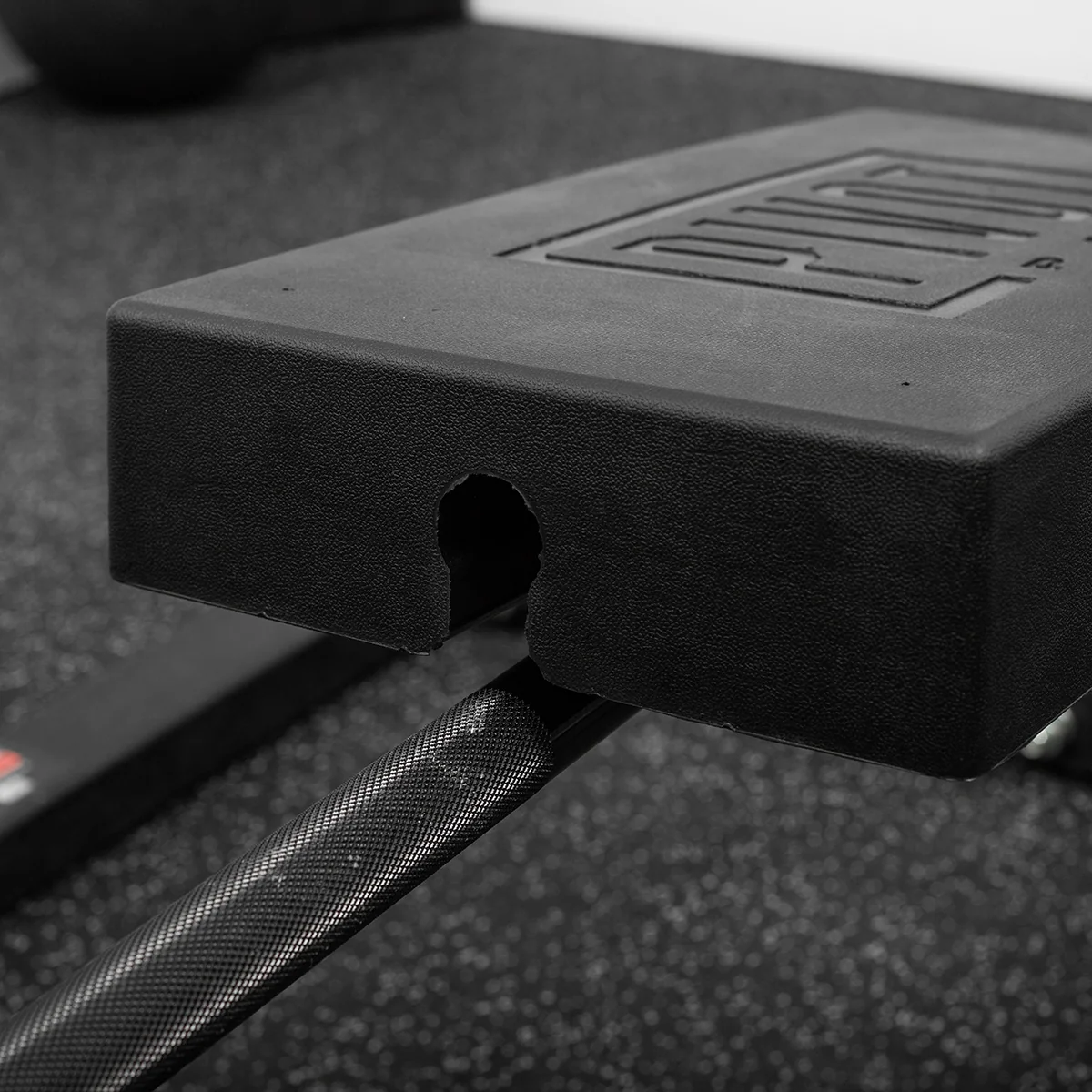
The listed design combines a foam exterior with a rigid core and a keyhole-style snap-on mount. AbMat specifies standard Olympic barbell compatibility and rotation around the bar. The published dimensions are 18 by 10 by 3 inches, with a listed weight of 5.5 pounds. These describe the accessory; they do not describe the footprint of the assembled station.
Check the actual bar you intend to use rather than assuming that every unusually thick, padded or specialty shaft will fit. Keep the manufacturer’s current setup guidance to hand. A product category label is a starting point for compatibility, while the physical interface still needs to match your equipment.
Rotation can let the contact surface follow your torso, but it does not automatically choose your starting height or foot position. Begin without external resistance, establish comfortable upper-back contact and move slowly through the intended range. Check that the support arrangement remains secure throughout the movement.
Judge the result by what happens over several repetitions. Can you maintain the same contact point without sliding, chasing the pad or losing your foot pressure? Does the position let you lower under control? A useful adjustment produces a repeatable movement, rather than simply making the top of one repetition look tidy.
Set the movement before adding the loaded bar
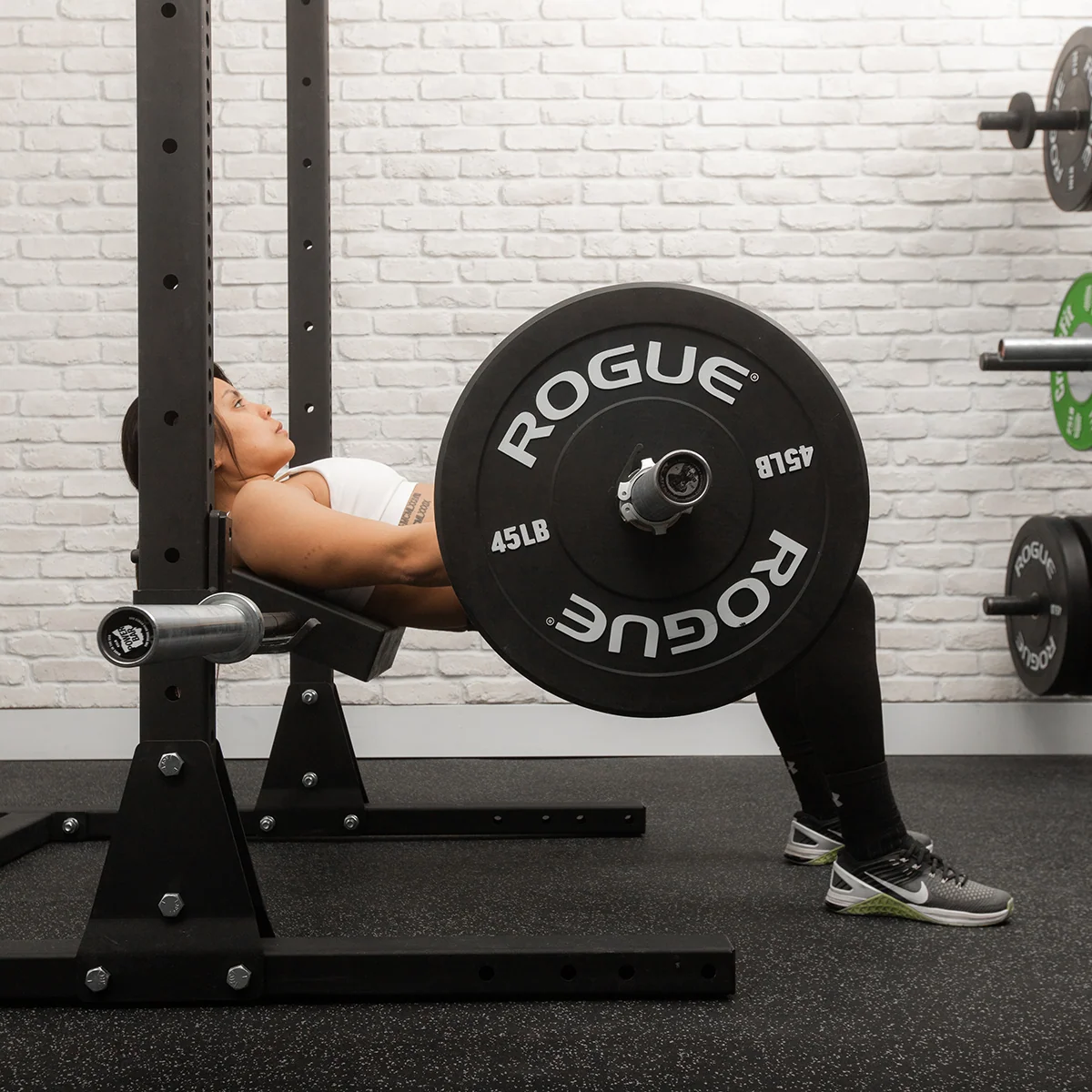
A hip thrust still asks you to extend the hips while keeping the rest of the setup controlled. Place both feet securely, brace your trunk and raise your hips without turning the finish into a large lower-back arch. Lower deliberately. The rotating support is a contact surface, not permission to throw the torso backward.
Make height changes with the resistance removed and the support bar safely repositioned. Test again before loading. Your preferred setting can differ from another person’s because bodies and equipment differ; copying a rack-hole number from a video does not establish that it suits your torso or starting position.
For the wider movement checklist, our guide to hip-thrust foot position and lockout explains how to distinguish hip extension from finishing through the spine. Apply those movement principles while following the attachment’s own mounting instructions.
When you introduce resistance, start with a manageable load and verify entry, repetitions and exit as one sequence. If a full-size bar cannot reach your hips comfortably in the available space, solve that access problem before chasing more plates. Do not treat a difficult escape from the setup as an acceptable final repetition.
Keep a simple record of the support height, foot placement, resistance and completed reps. If you change the height next time, note it. Otherwise a seemingly stronger set may reflect a changed range or position, and the training log will tell a less useful story than you expect.
Back support and hip padding solve different problems
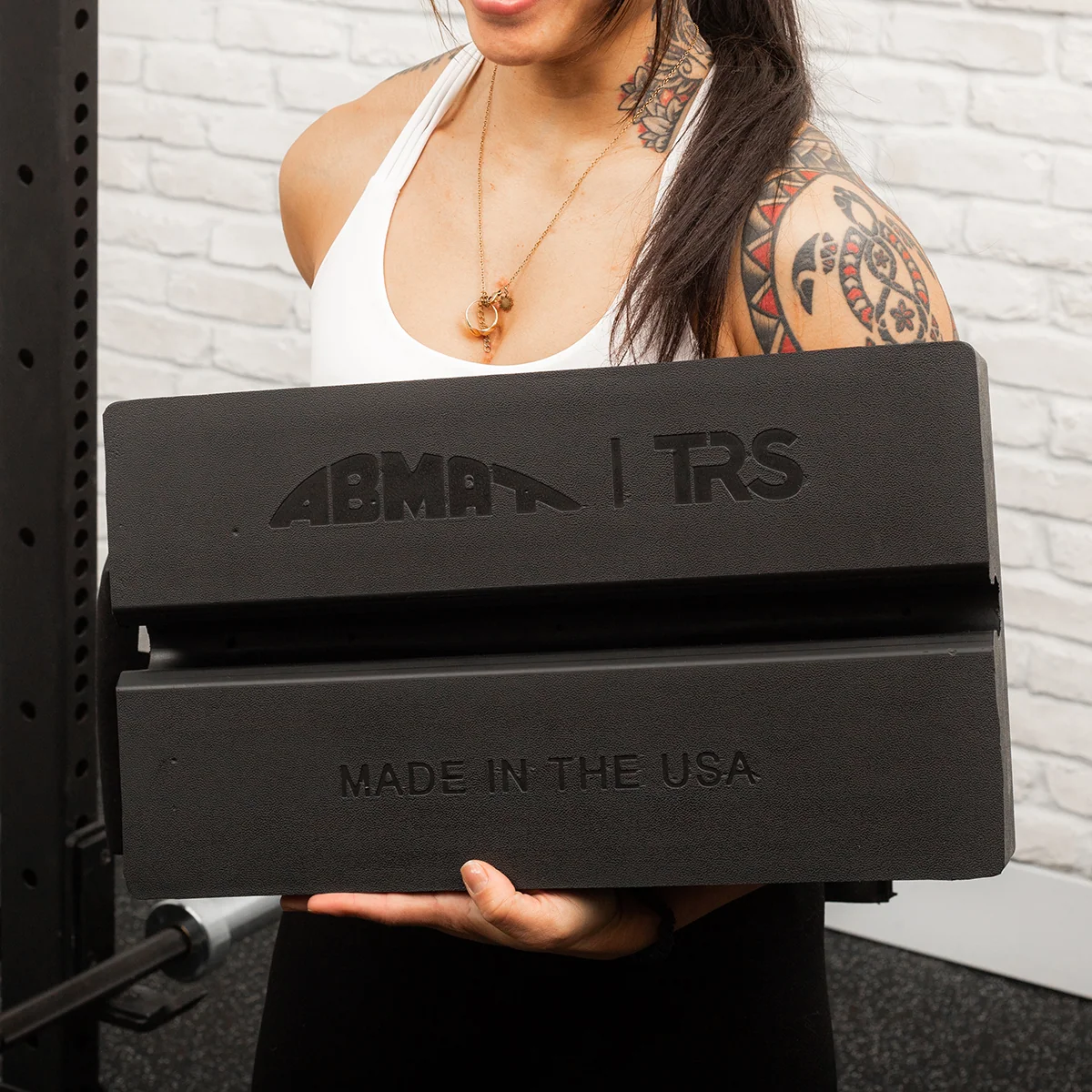
The rear view of the pad makes its mounting interface clear. That interface belongs behind the upper body. Padding between a loaded bar and your hips has a different job: managing the contact of the resistance against your lap. Buying one does not remove the need to assess the other.
Decide how the loaded bar will be cushioned and kept centred. Check that the cushioning suits the exercise, remains in place and still allows a comfortable movement. If pressure, shifting equipment or pain stops the set, reduce the load and reassess the arrangement instead of assuming that a new back support has solved every contact issue.
The wider equipment choice includes suitable bars, plates, collars, benches and dedicated hip-thrust stations. Compare the complete arrangement rather than treating every item below as a direct substitute for the Pivot Pad. A bench provides a different support surface; a dedicated machine provides a different loading and access system.
For example, someone with a secure bench and a comfortable movement may gain little from another accessory. Someone whose available bench height is awkward may value the adjustable rack position more. That is a fit-and-workflow decision, not evidence that one surface is universally safer, more comfortable or better for glute development.

Equipment Worth Exploring
Explore equipment, accessories and gear from our carefully selected range.


Studio Glute Drive
Plate-loaded hip-thrust machine with supported back pad and adjustable foot platform.

Competition Plates
Competition-style bumper plates for Olympic lifts and loaded strength training.

Grip Plates
Rubber-coated weight plates with handholds for loading barbells and machines.

Rubber Hex Dumbbells
Rubber-coated hex dumbbell pairs with a stable shape for home and commercial strength training.

Choose it for the station it helps you build
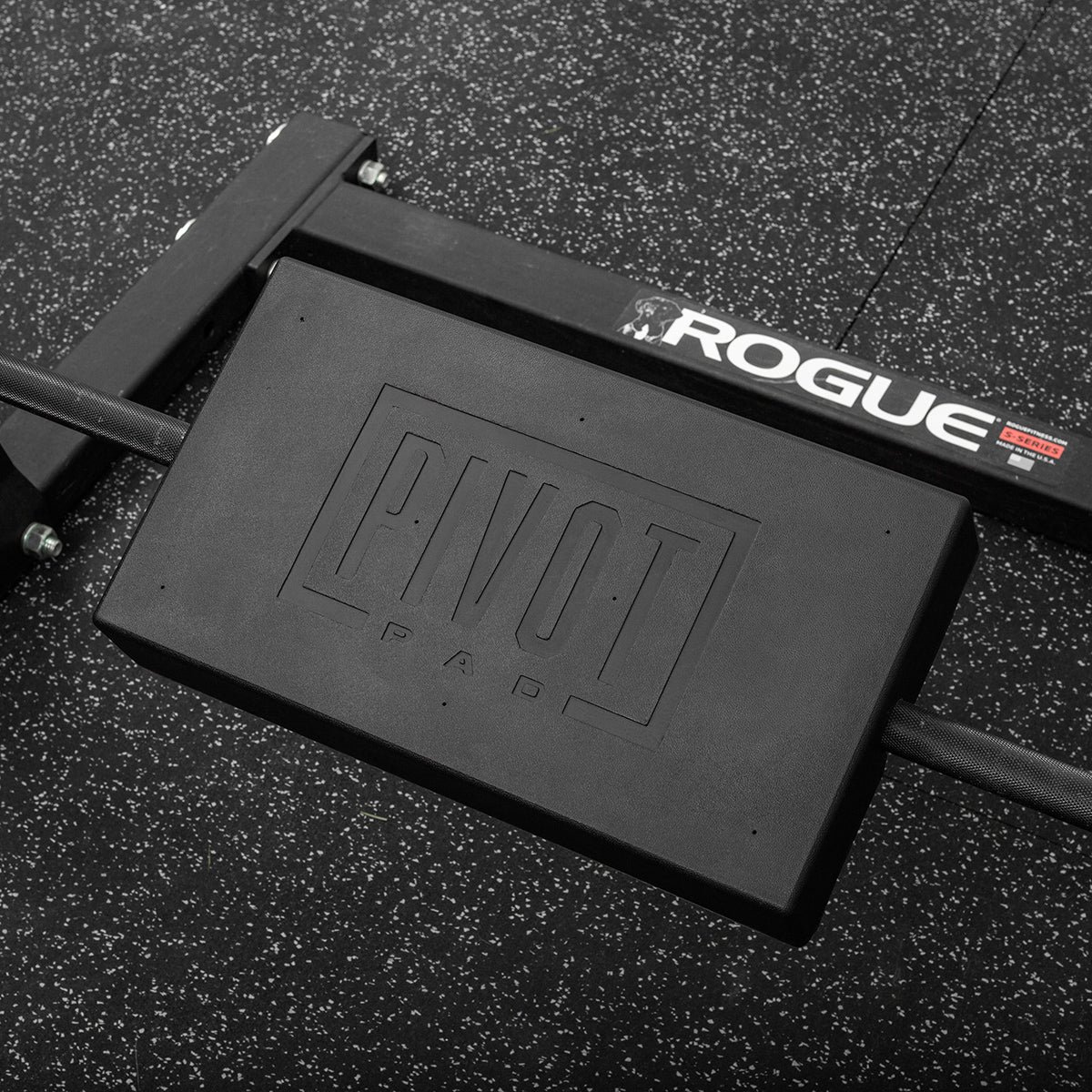
A removable accessory is easiest to justify when it has a clear place in your routine and somewhere to go afterward. The pad can be stored away from the rack, but the rack, support bar and any loaded bar still need to be managed. Measure and plan for the working arrangement as well as the stored object.
Compare three realistic options using your own equipment: keep a comfortable bench setup, build a pad-and-rack station, or consider a dedicated machine if your space and training priorities support one. Look at entry, height adjustment, loading, changeovers and storage. Avoid choosing on the pad’s dimensions alone.
You can also train hip extension without assembling this particular station. A floor bridge offers a different starting point and support position. Our glute-bridge march guide covers a bodyweight progression with its own pelvic-control demands; it is an alternative training task, not a promise of identical loading or results.
If you adopt the Pivot Pad, keep the first few sessions focused on establishing settings you can repeat. Add resistance gradually once the arrangement and movement are settled. Buying a more convenient contact surface can be worthwhile, but the useful outcome is a training station you return to consistently and can progress honestly.

Leg Day Shirts & Workout Gear
Leg-day gym shirts and workout gear for lifters who never skip squats, lunges and lower-body punishment.

Hippo Thrust Meme – Hip Thrusts & Leg Day , Gymbro, T-Shirt
Bring “Hippo Thrust Gym Meme” humor to your next gym day.

OnlyGains Only Gains Meme – Booty & Leg Day Squats, T-Shirt
Show some leg-day attitude with a playful “OnlyGains Only Gains” tee.

Butt Stuff Glute Hip Thrust Lovers Athletic Shirt Tank Top
Show some personality between sets with “Butt Stuff”.

Big Butt Energy – Meme , & Gains – Booty & Glutes T-Shirt
Make gym days more fun with “Big Butt Energy” style.

Brains Beauty Booty Sweater & Glute Building Meme T-Shirt
For laid-back days and gym-girl humor: “Brains Beauty Booty”.

Thicc Booty Energy Squat Lovers & Leg Day Meme Hoodie
Show off your leg-day humor in a laid-back “Thicc Booty Energy” hoodie.

GymTok – TikTok Parody Peach Booty Training for Gym Gir Hoodie
Show off your gym-girl humor in a laid-back “GymTok” hoodie.

Juicy Booty Booty Builder Sweater Big Booty Gains & T-Shirt
Keep things casual with a little “Juicy Booty” attitude.

Booty Out Of This World Gym | Funny Alien Abduction Mem Sticker
Stick a little “Booty Out Of This World” humor on your favorite gear.

Funny Thickers Gym | You're Not You With A Small Booty Tank Top
Add some lifting attitude to training with “Thickers”.