Advertising disclosure: This page includes affiliate links that may earn us a commission at no additional cost to you.
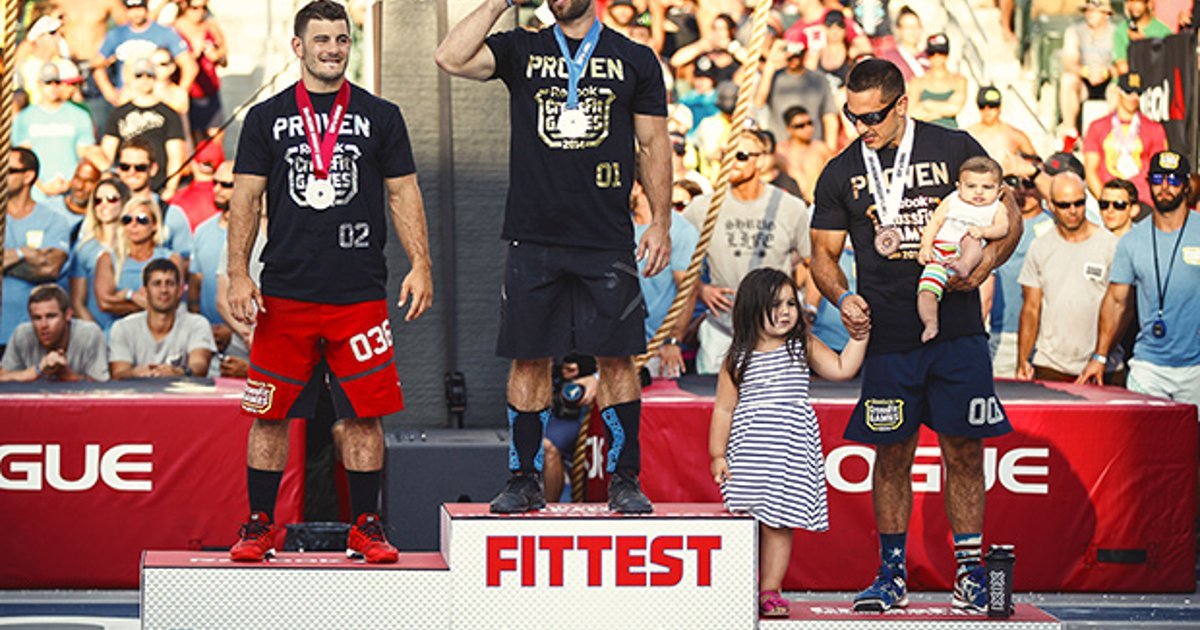
Rich Froning’s fourth consecutive CrossFit Games title ended with a clean sweep of Sunday. By the time the competition closed in Carson, California, on 27 July 2014, he had won all three final-day events and finished 50 points ahead of Mat Fraser. Jason Khalipa completed the men’s podium.
The result looks commanding when reduced to that final margin. The route through the competition was less comfortable. An endurance setback had exposed a weakness in an athlete already famous for his ability to handle almost anything the Games placed in front of him.
That tension makes 2014 worth revisiting. It was a title won across a changing collection of demands, with a decisive finish after an uneven stretch. The useful lesson is about reading the whole performance, then choosing sensible ideas for your own training.
A fourth title still had to be earned
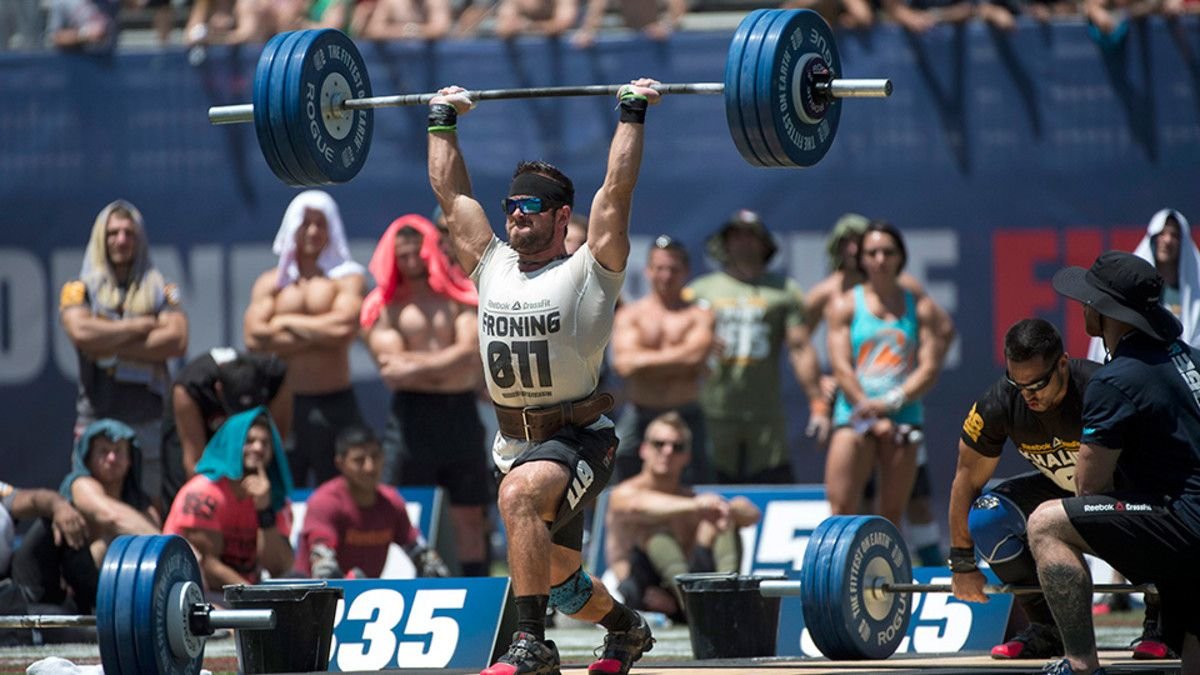
Froning arrived with individual titles from 2011, 2012 and 2013. He had also finished runner-up on his Games debut in 2010. The expectation surrounding him was therefore understandable, but the new competition still required a fresh set of performances.
CrossFit’s competitive appeal comes partly from that changing test. A successful weekend can involve heavy lifting, gymnastics, running and other conditioning work. Being exceptional in one category does not automatically settle the overall result. Different events give different athletes opportunities to gain ground.
In 2014, the programme included the ocean, the competition floor and the stadium field. It asked athletes to move between tasks that could look almost unrelated in isolation. A heavy lift and a long running component might both appear on the schedule, while the same athlete had to remain competitive across them.
That is why a reigning champion’s reputation cannot be read as points already secured. The title describes the completed competition. Before that, every result is another contribution to a total still taking shape.
It also helps explain why the final margin is an incomplete summary. Fifty points tells us how the standings ended. It does not show which moments made the result uncertain, how individual events differed, or how strongly Froning finished.
Triple 3 made the weakness visible
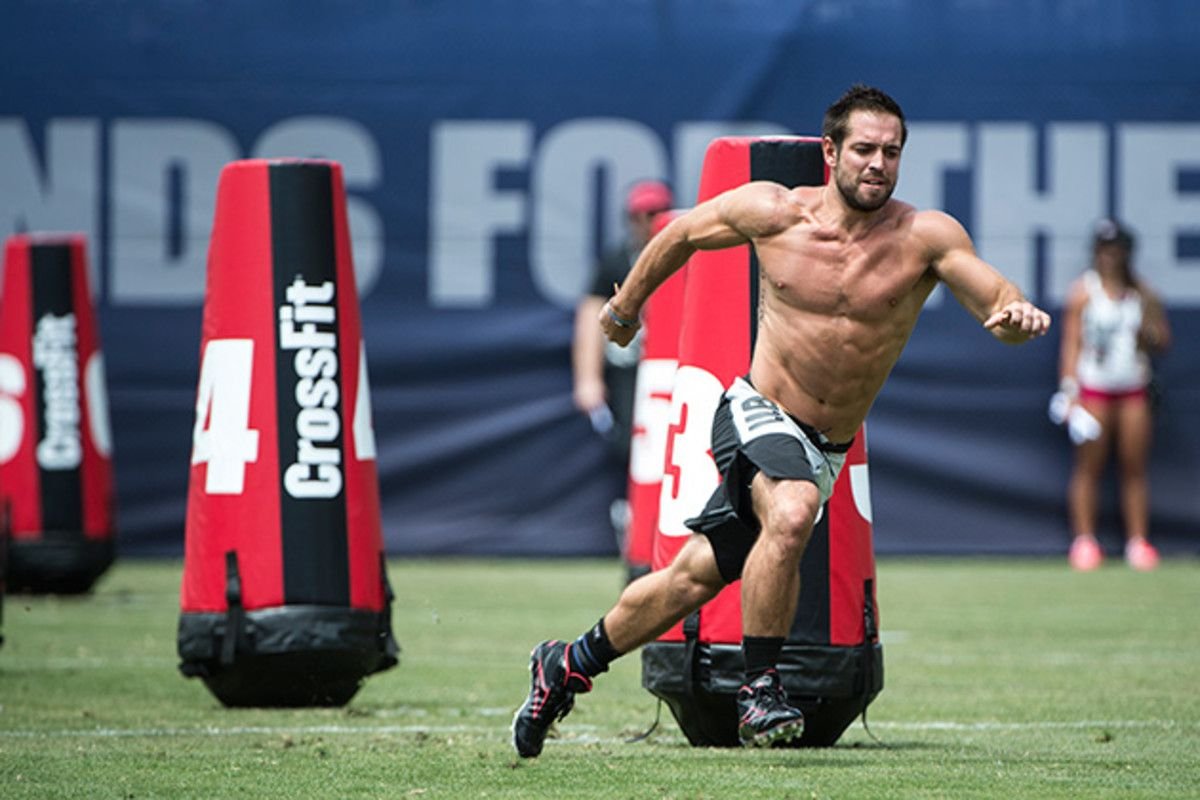
The endurance test called Triple 3 combined a 3,000-metre row, 300 double-unders and a three-mile run. Froning finished 37th in that event. That was an event placing, rather than his final overall position.
The distinction matters. A poor result in one part of a multi-event competition can be costly without determining everything that follows. Looking only at the difficult run would miss the eventual champion. Looking only at the podium would miss the challenge he had to move beyond.
In a later interview about those Games, Froning described having been unwell earlier in the week. That was his account of the context. The placing itself is clearer evidence than any retrospective attempt to calculate exactly how much illness, pacing or preparation contributed to it. There is no need to invent a precise cause to recognise the setback.
For recreational athletes, Triple 3 also shows why a familiar exercise name can conceal a very large task. Three hundred double-unders are a substantial amount of repeated skill work, even before considering the row and run around them. Knowing how to perform a movement and repeating it within a long event are different demands.
If rope timing is currently the limiting factor in your own training, our guide to jump-rope length and double-under timing is a more practical starting point than copying that competition volume. Choose a task you can perform consistently, then build from the ability you actually have.
Three Sunday wins changed the finish
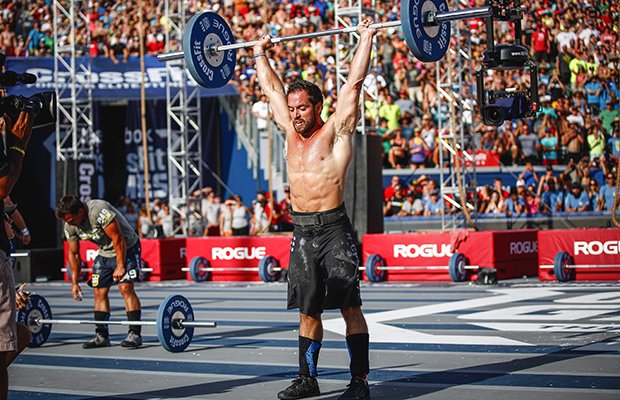
Sunday’s individual events were Midline March, Thick ‘N Quick and Double Grace. Froning won all three. The sequence made the end of his 2014 campaign especially emphatic, and the overall result secured the fourth individual title.
The final two events put the demands into sharp focus. Thick ‘N Quick combined four climbs on a thick rope with three heavy overhead squats performed without taking the bar from a rack. Double Grace then required 60 clean and jerks, with the men’s prescribed load set at 135 pounds.
That final event was repeated barbell work under competition conditions, rather than a single display of maximal strength. Athletes still needed to move the weight effectively after everything that came before. The spectacle was partly the combination: skill, physical capacity and execution late in a demanding competition.
There is a temptation to turn such a finish into a simple personality story. Determination is easy to see from the outside, but a result does not reveal every decision or feeling behind it. What can be said confidently is that Froning kept producing winning performances at the end of the schedule.
His last-day sweep also prevents the earlier setback from becoming the whole story. The competition contained both. Keeping them together gives a fuller picture of the achievement than treating either the difficult event or the final podium as a complete explanation.
Translate the variety into a manageable training week
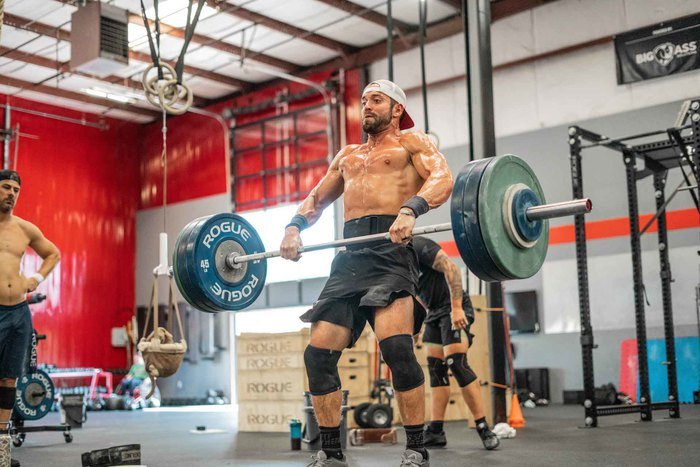
The most useful adaptation for an ordinary trainee is to organise different qualities deliberately. Strength practice, movement skill and conditioning can each have a place. Giving each a purpose is more useful than assembling a list of difficult exercises and assuming the combination recreates an elite programme.
Start by naming your main goal. If you want to improve a barbell skill, give yourself an opportunity to practise it with a load you can control. If double-under timing needs attention, choose short, repeatable practice. If your goal is conditioning, select a duration and pace you can complete with consistent movement.
You can then decide how those pieces fit around your available training days. One session might prioritise resistance work, another controlled conditioning, while a brief skill block accompanies a familiar workout. This is an editorial planning example, rather than Froning’s recorded weekly routine or a requirement to train several times a day.
Count the work before making it harder. A familiar benchmark can contain more repetitions than its short name suggests. Our breakdown of Fran’s 90 repetitions, scaling and pacing shows how to examine that volume before choosing a version suitable for your current level.
Use the equipment to serve the task. Barbells and bumper plates suit barbell practice; kettlebells and dumbbells offer other loading options; a rope or wall ball introduces a different movement to learn. Secure suitable plates with appropriate collars and allow the space the exercise needs. The equipment options below are for modern training choices, with no claim that Froning used or endorsed these specific products in 2014.

Equipment Worth Exploring
Explore equipment, accessories and gear from our carefully selected range.


Competition Plates
Competition-style bumper plates for Olympic lifts and loaded strength training.

Cast Iron Kettlebells
Textured cast-iron kettlebells for swings, squats, carries, and full-body training.


Competition Wall Ball
Competition-style weighted wall ball for HYROX, wall-ball shots, and functional conditioning.

A useful training record needs only a few details: the movement version, load or duration, repetitions completed and whether the intended technique stayed consistent. Those notes make the next decision concrete. A hard session alone does not tell you what should change next time.
Remember the result without inventing the secret
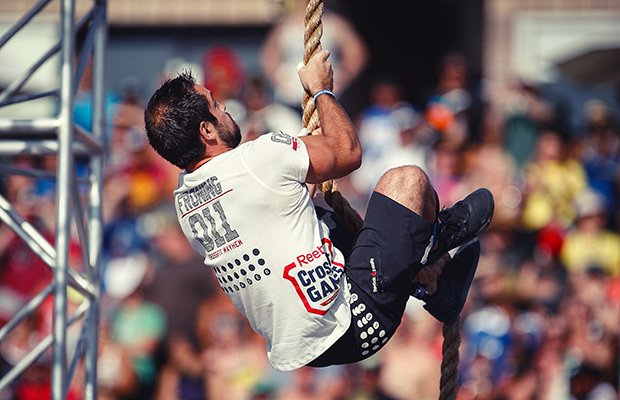
Froning had indicated that 2014 would be his final season in the individual division, and he went on to compete in teams. The fourth title therefore sits at a clear point in his career: the conclusion of that remarkable run of individual championships.
The history supports a specific achievement. He won four consecutive individual Games titles, and the last included a difficult endurance result followed by a sweep of the final day. It does not provide a complete explanation of his preparation, a universal recovery prescription or a shortcut to the same performance.
That leaves plenty to admire. The athlete at the top still encountered an event that went badly. He then performed well enough across the remaining competition to finish decisively ahead. The response matters because more events remained to be completed.
For your own training, keep that perspective modest and useful: identify what needs work, practise it at an appropriate level, and judge progress across a meaningful stretch of training. Strength, endurance and skill are categories to develop, rather than reasons to make every session a competition.
The functional-fitness designs below draw on mixed training, rowing, box-jump humour and kettlebell artwork. They are merchandise themes, with no performance promise or association with Froning’s title.

Functional Fitness Shirts & Workout Gear
Functional-fitness shirts, tanks and workout gear for athletes who train strength, conditioning and everything in between.

Hybrid Athlete – Strength & Endurance Crewneck for Func T-Shirt
For laid-back days and lifting humor: “Hybrid Athlete”.

Hybrid Athlete – Built Different Gym Pullover for HYROX Hoodie
Show off your lifting humor in a laid-back “Hybrid Athlete” hoodie.


Rowing – Dost Thou Even Row Medieval Knight Crewneck fo T-Shirt
Show some gym-day personality with “Rowing”.

Kettlebell Heartbeat Decal for Water Bottles Laptops Wo Sticker
Put “Kettlebell Heartbeat” gym humor on your laptop, bottle, or gym gear.


OnlyGains Kettlebell Meme Meme Athletic Shirt Tank Top
Train hard, laugh a little, and rep “OnlyGains”.

Donut Kettlebell – Bakery Gains Meme Hooded Pullover Hoodie
Make your off-duty look more fun with “Donut Kettlebell”.

Shirt – Watermelon Kettlebell , Gymbros & Meme Lovers T-Shirt
Rep “Watermelon Kettlebell” humor in and out of the gym.
The 2014 finale is memorable because the uneven weekend and the dominant finish belong to the same story. Keeping both in view makes the fourth title more interesting than a highlight reel alone.