Advertising disclosure: This page includes affiliate product links that may earn us a commission, as well as products from our own store.
Robert Herbst has spent decades collecting strength titles, but the most interesting part of his latest announcement is not a giant one-repetition maximum. On June 20, 2026, he won a 32nd consecutive national full-power championship in Missouri, competing in the 75-kilogram class. He then pursued a world-level single-event deadlift contest in Belgium. That combination makes a useful case study in long-term competition: individual results matter, yet repeatedly preparing, showing up and completing attempts is a challenge of its own.
A school alumni announcement published on November 16 brought those results together with his unusual loaded-carry records. There is an important date distinction: official record listings and Herbst’s own event timeline place the farmer’s walk and 20-metre yoke achievements in October 2025, not during the 2026 championship season. Keeping the dates straight does not diminish the performances. It helps reveal what the individual tests actually measure.
The 32nd title: what the 2026 result establishes
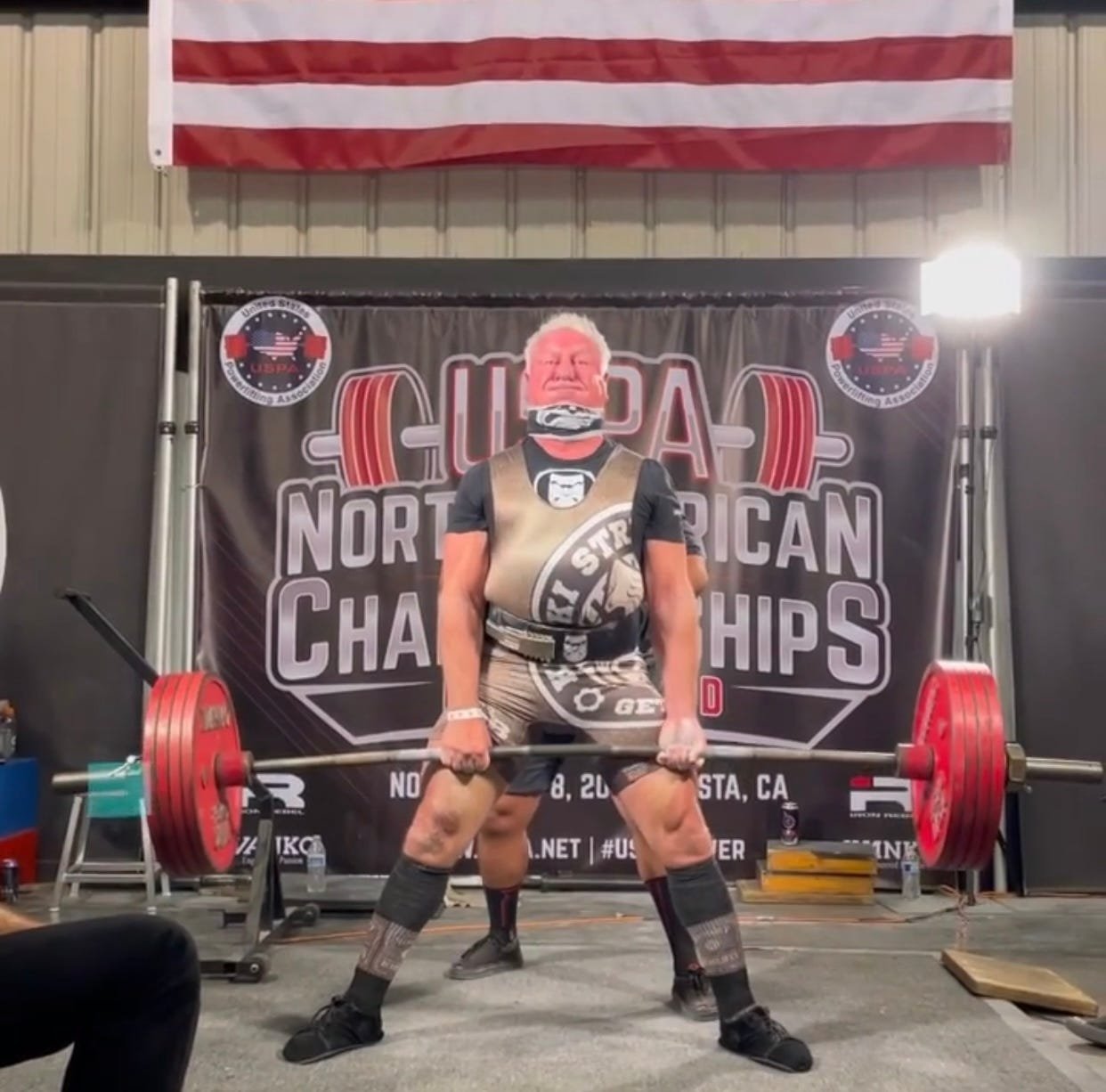
The June competition took place in O’Fallon, Missouri, and Herbst entered the middleweight division at 75 kilograms, approximately 165 pounds. His school reported that his 162.5-kilogram deadlift qualified him for a World Drug Free Powerlifting Federation single-event championship in Antwerp that September. It subsequently reported a silver medal there, and described the national win as the thirty-second successive title in his full-power streak. Those are competition outcomes, not a claim that his deadlift is the heaviest ever lifted at that bodyweight.
Full-power competition means producing a total across squat, bench press and deadlift under the event’s rules. Winning a division is distinct from topping an unrestricted open leaderboard or setting an all-time record. Age categories, equipment standards and federation rules can change the comparisons enormously. Herbst’s own competition history lists a first-place 2026 result in the 65–69 class as well as an open-division first place, but it does not provide the same details as an independently published attempt-by-attempt scoreboard.
The consistency matters partly because training for three judged lifts involves choices that a single deadlift demonstration does not. A lifter has to keep technique sufficiently repeatable to receive commands, recover from heavy sessions and arrive healthy enough to compete. Consecutive wins do not prove a specific workout formula. They do suggest sustained participation and a capacity to adjust training across changing circumstances, qualities often overlooked when fitness discussion concentrates on one extraordinary video.
How a national title differs from a world-record carry
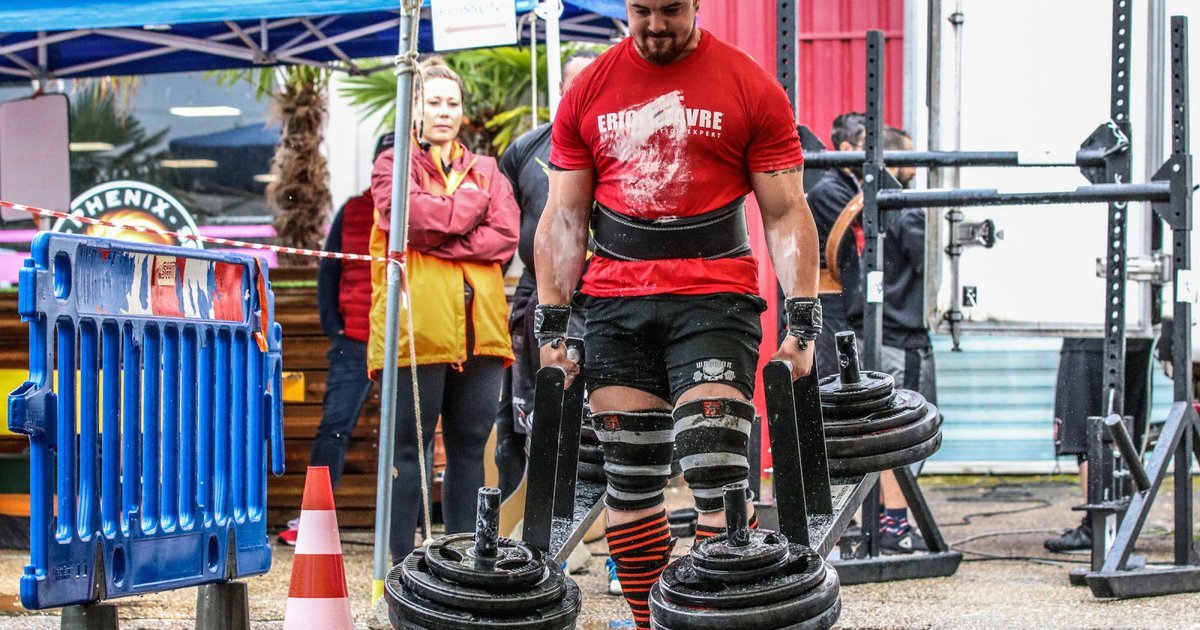
Herbst’s 2026 powerlifting result and his Guinness loaded-carry performances belong in separate categories. A farmer’s walk asks the athlete to move a pair of heavy implements over a specified distance; a yoke carry places a supported frame across the upper back and asks the athlete to travel with it. Neither is a squat, bench press or deadlift attempt. Both require force production, but a walking event adds coordination, movement under load and a strong demand for controlling the implement.
The verified farmer’s-walk record is dated October 18, 2025, in Larchmont, New York. The listing gives Herbst an age of 67 years and 239 days when he completed 20 metres. His account describes 168 pounds in each hand at approximately 160 pounds bodyweight. That means the combined external weight was more than twice his bodyweight, although the body never lifted both handles in the same way it would raise a barbell through a full deadlift range.
His own record timeline also places a 200-kilogram yoke over 20 metres on October 18, 2025, in 22.79 seconds. A different oldest-person yoke mark involved 601 pounds over ten metres in June 2023. These records are impressive for precisely defined tasks; they should not be mashed into a supposed 2026 world-record powerlifting total. The dates, distances, apparatus and eligibility rules are essential parts of any meaningful comparison.

Equipment Worth Exploring
Explore equipment, accessories and gear from our carefully selected range.


Competition Plates
Competition-style bumper plates for Olympic lifts and loaded strength training.

Open Hex Bar
Open-frame trap bar with multiple handles for deadlifts, carries, and lower-body training.


Leather Lifting Straps
Padded leather straps support grip during heavy rows, deadlifts and pulling exercises.

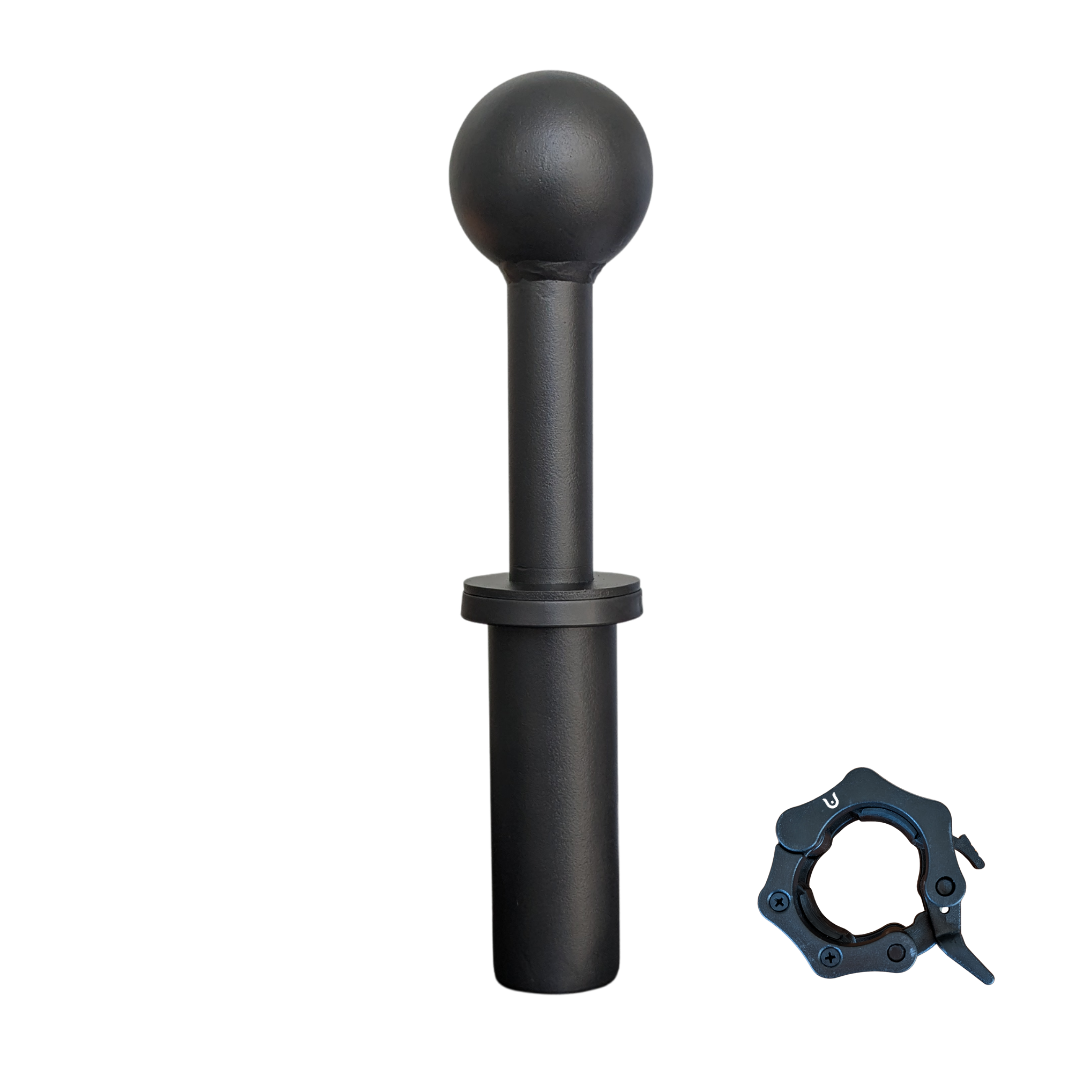

Speed Collar
Quick-release collars designed to secure weight plates on standard two-inch Olympic bars.


The mechanics of grip, bracing and moving heavy loads
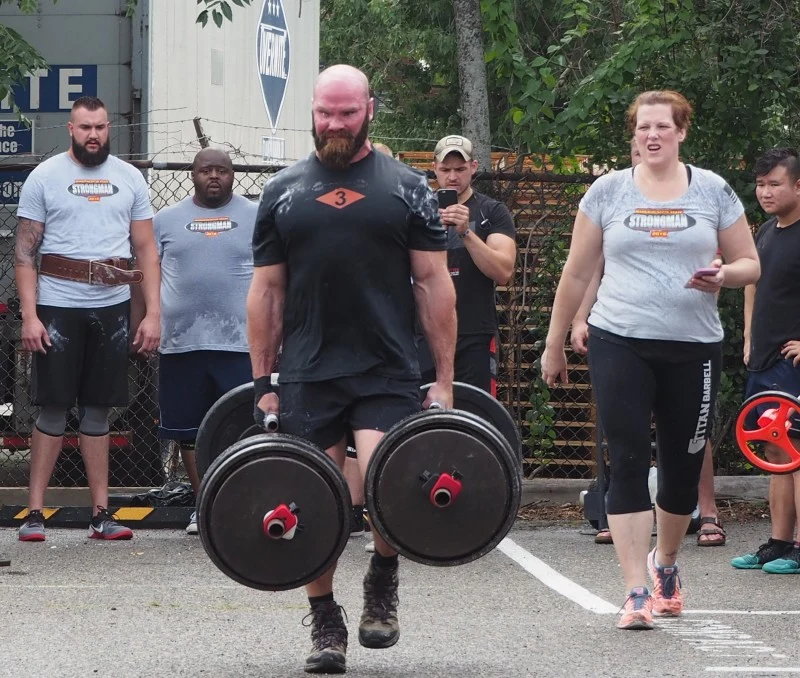
A farmer’s walk begins with a pickup that resembles part of a deadlift, then becomes a moving test of posture and grip. Heavy handles pull the shoulders downward while each step challenges the trunk to resist unwanted side bending and rotation. Shorter steps can make a demanding load more manageable, but rushing turns a useful training exercise into a contest with momentum. The best setup is the one that lets the lifter hold a stable path without twisting or catching an implement on a leg.
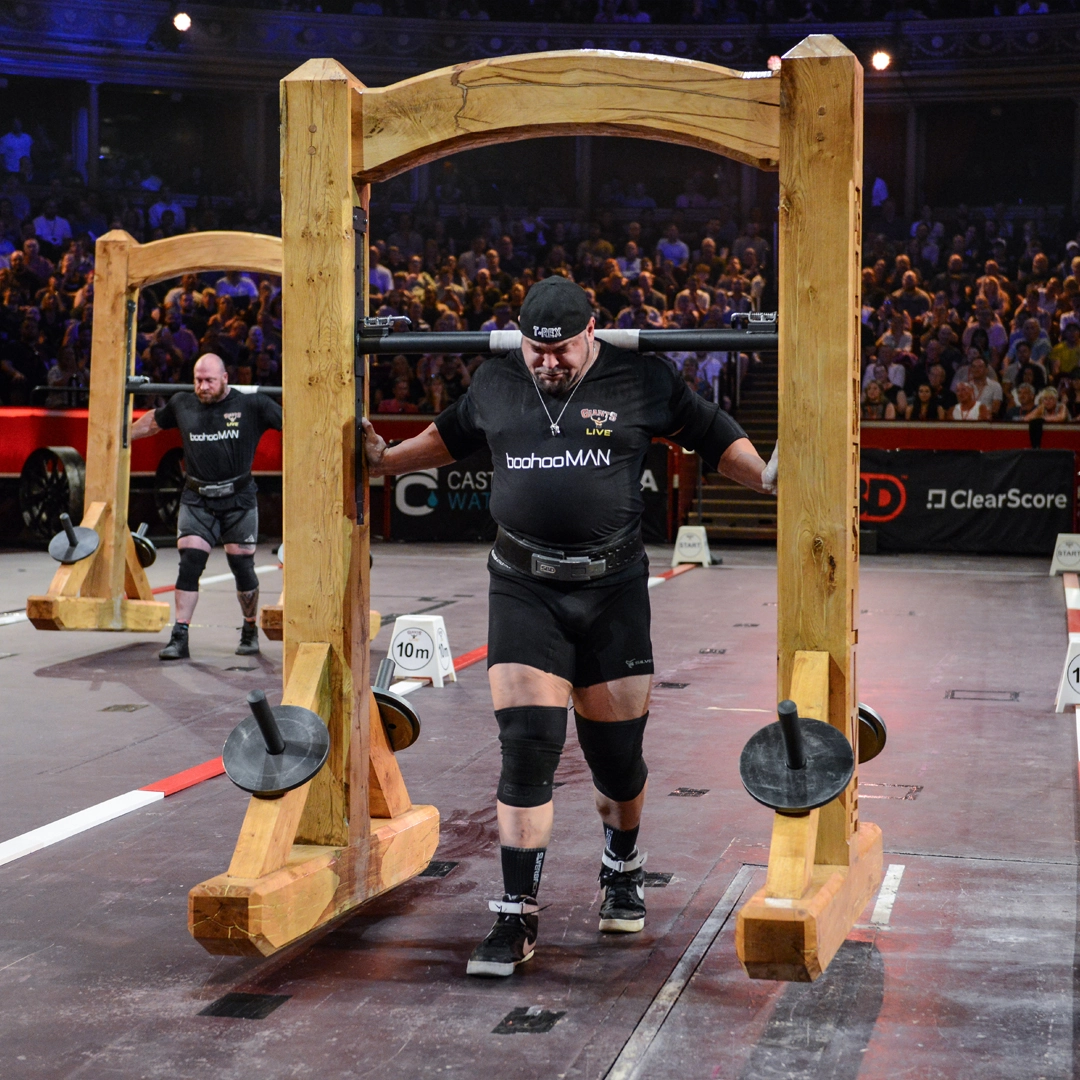
A yoke shifts more of the weight onto the upper back and changes the limiting factors. Grip is less directly involved, while trunk stiffness, foot placement and tolerance of axial loading become prominent. Experienced strongman competitors may move enormous loads with short, economical steps; copying their weights or speed would be a poor starting point for a normal home-gym trainee. A walk that looks slow may be very near the athlete’s technical limit.
Loaded carries can be valuable accessories because they integrate holding, standing and walking, but the evidence should be discussed carefully. They are not a proven replacement for all trunk exercises, nor do they make a lifter automatically better at competition squats or deadlifts. A technique that improves a twenty-metre walk may have no direct effect on a paused bench press. Choose an accessory by the weakness it plausibly addresses, then measure whether performance outside that accessory actually changes.
What a long powerlifting career can and cannot teach
Herbst describes starting with weights as a teenager and eventually using powerlifting as a lifelong competitive focus. His early history includes scoliosis and back pain, but the particulars of another person’s medical history are not a template for treatment. It would be irresponsible to infer that lifting heavy will resolve the same problem for every person, or that one veteran’s experience cancels the need for individualized clinical advice when symptoms are present.
More broadly, longevity requires a system that can survive ordinary disruptions: travel, work, tiredness and changing priorities. A productive week might include challenging squats and deadlifts; another might protect recovery by reducing accessory volume or practicing lighter technique. The point is not to make every session comfortable. It is to accumulate enough useful training that one hard day does not erase the next two weeks. That is an editorial training principle, not a reconstruction of Herbst’s unpublished program.
Competition results also need the right denominator. A thirty-two-year streak says something different from the amount lifted in a single meet, and an age-group award says something different from an overall world ranking. Comparing each result within its actual context respects both the athlete and the reader. It also discourages the familiar mistake of treating a famous lifter’s accessories, equipment or supplements as verified explanations for decades of success.
Equipment Worth Exploring
Explore equipment, accessories and gear from our carefully selected range.

Rubber Hex Dumbbells
Rubber-coated hex dumbbell pairs with a stable shape for home and commercial strength training.


Cast Iron Kettlebells
Textured cast-iron kettlebells for swings, squats, carries, and full-body training.


Pro Sled System
Heavy-duty push-pull training sled for loaded conditioning, speed, and strength work.

A four-week carry experiment for ordinary lifters

To borrow a practical idea without pretending to follow Herbst’s own training, start with one carry session per week after your main strength work. In week one, choose a pair of dumbbells or kettlebells you can hold securely, walk three twenty-metre trips at an even pace and rest ninety seconds to two minutes between them. Stop a set when your posture, grip or direction control deteriorates. Write down the actual load, distance, turns and recovery rather than remembering only that it felt heavy.
In week two, aim for four trips at the same weight before increasing the challenge. In week three, return to three trips with a modest load increase only if all previous repetitions were controlled and the next strength session was unaffected. Week four can repeat that weight with a fourth trip or use the original load for slightly longer distances. This is a beginner experiment, not a special record preparation protocol; lifters with limited space can use short straight paths and controlled turns.
For a barbell-focused lifter, keep the carry secondary to planned squat, bench and deadlift progression. If forearms are still exhausted when you need to deadlift, separate the sessions or reduce the carry volume. If heavy walking aggravates a joint, substitute a lighter suitcase carry or omit it. Lifters without a safe uninterrupted path should not carry maximal loads among other people, children or fragile objects. Safety and repeatability beat dramatic clips.
Review the notes after four weeks. Did you walk farther with the same load, hold the handles more securely or recover faster while your main lifts stayed on track? Those are useful findings. If only the effort felt impressive but the next workout repeatedly suffered, the dose was too expensive. Herbst’s 2026 title and earlier carry records illustrate different kinds of persistence; a successful training experiment is to learn which kind of work serves your own goal, rather than reproducing a champion’s numbers.

Powerlifting Shirts & Lifting Gear
Powerlifting shirts and gym gear for squat, bench and deadlift lifters who live for heavy numbers.

Bending Bars Meme Breaking Bad Sweater Barbell T-Shirt
For laid-back days and powerlifting humor: “Bending Bars Gym Meme”.

Deadlift You Must Star Wars Yoda Meme Sweater T-Shirt
For laid-back days and leg-day humor: “Deadlift You Must”.


Bane Barbell Club Hooded Pullover Gymbros Barbell Fans Hoodie
Stay casual and show some superhero attitude with “Bane Barbell Club”.

Deadlift or Die Tryin Sweatshirt
Bring “Deadlift or Die Tryin” humor to your everyday gym style.

45LB Metal Weight Plate Funny Gym T
Show some metalhead attitude with a playful “45LB Metal Weight Plate” tee.

Patriotic Eagle Deadlift Stars Stripes and Deadlifts Gy T-Shirt
Make gym days more fun with “Patriotic Eagle Deadlift” style.

Deadlift Skull Gym Gold Heavy Metal Decal for Powerlift Sticker
Give your everyday gear a playful “Deadlift Skull” twist.

Gym Skull Muscle Shirt for Powerlifting Bodybuilding Tr Tank Top
Train hard, laugh a little, and rep “Skull”.