Advertising disclosure: This page includes affiliate product links that may earn us a commission, as well as products from our own store.
Towel Pull-Ups vs the Bar: What 15 Lifters’ Muscle Data Shows
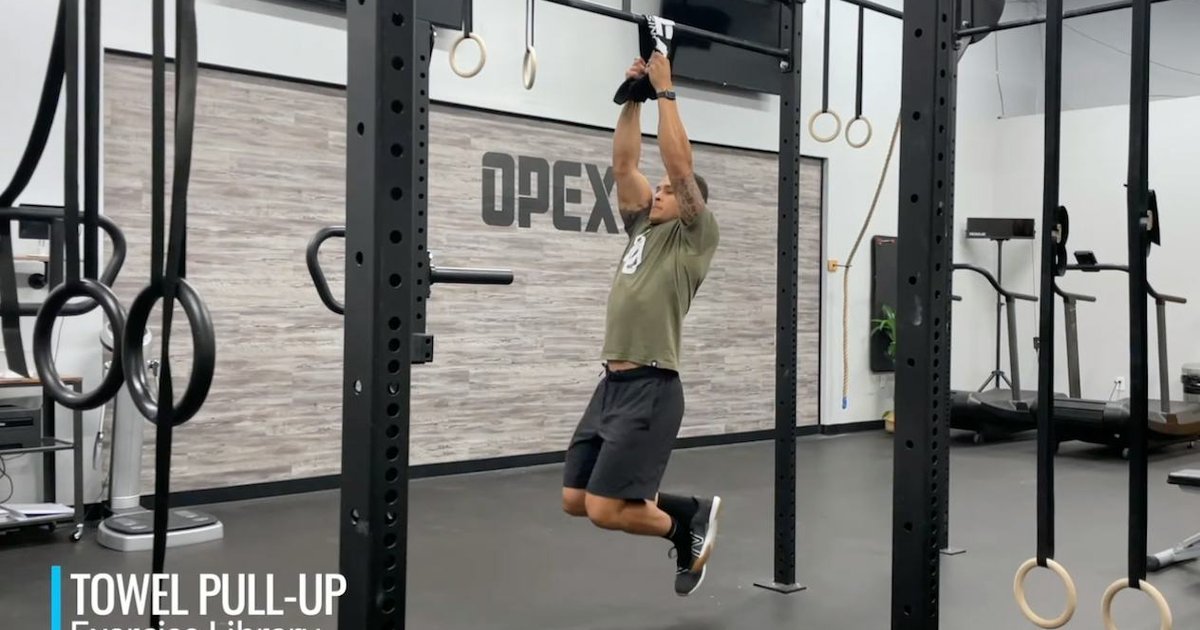
Replacing a solid pull-up bar with two hanging towels changes the task immediately: you must hold the fabric while moving your body. That makes towel pull-ups an interesting option when your hands need attention. It does not automatically make them a better back-building exercise.
A useful decision starts with two separate questions. Do you want a demanding grip exercise that includes pulling, or do you want to accumulate productive pulling repetitions without your hands ending the set early? Those goals can share a programme, but they need different measures of progress.
What the 15-person comparison actually measured
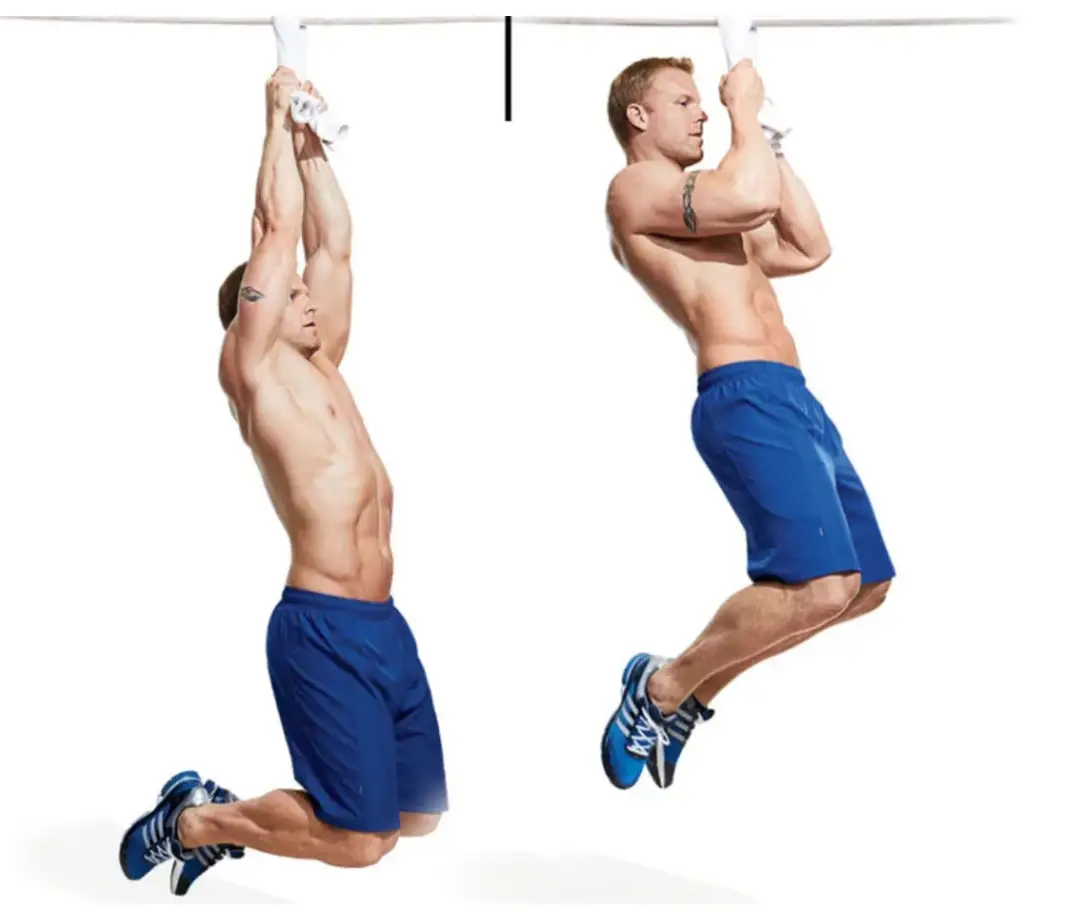
A 2017 experiment compared traditional bar pull-ups, suspension-device pull-ups and towel pull-ups in 15 resistance-trained adults: 13 men and two women. Participants completed three repetitions of each variation in randomised order. Surface electrodes recorded activity in the lats, biceps, rear deltoids and middle trapezius.
There were no statistically significant differences between variations for the lats, biceps or rear deltoids. Middle-trapezius activity was lower with towels than with the traditional bar. Suspension pull-ups did not differ significantly from either alternative for that muscle.
That is an acute muscle-activity comparison, not a training programme. It did not measure forearm activity, changes in grip strength or muscle growth over time. The absence of a significant difference also does not establish that the exercises are interchangeable for every lifter.
The practical reading is narrow: this small comparison offers no reason to label towels a universal upgrade for the measured back and arm muscles. Choose them for a specific training purpose rather than assuming a harder-feeling grip guarantees a better pulling stimulus.
A forearm burn is useful feedback, not a growth forecast
Surface EMG records electrical activity near the electrodes. It is not a direct reading of muscle force, and one session’s signal cannot tell you which exercise will produce the most growth over several months. Comparing exercises requires more than putting their electrical traces into a league table.
For your training log, the more useful distinction is what ended the repetition. Did your fingers begin opening while your back still felt capable of pulling? Did you lose your starting position? Or could you maintain the grip but no longer raise yourself through your chosen range? These are different outcomes even when the final rep count is identical.
Consider an illustrative example: you can complete eight controlled bar pull-ups, but your hands start slipping after three towel repetitions. Recording both as simply “pull-ups” hides the difference. The towel set challenged a new holding task; it did not show that your back became weaker overnight. Equally, the sensation in your forearms does not quantify the training effect.
Keep the exercise labels separate. Note the grip, repetitions, assistance and reason for stopping. This gives the next session a clear reference without pretending that discomfort is a laboratory measurement. When the grip remains secure and your pulling becomes the limit, the same variation may serve a different role than it did initially.
Make the towel setup repeatable before making it harder
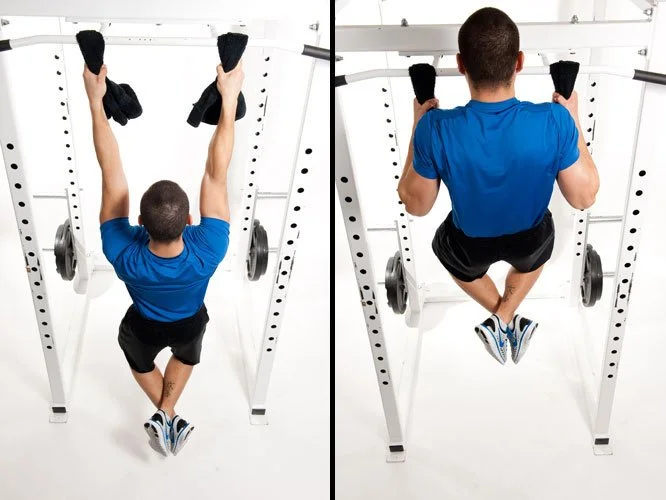
The fabric and anchor deserve attention before you leave the ground. Use a properly installed, suitably rated pull-up station and follow its instructions. Inspect the towels for wear and avoid rough edges that can damage them. An initial grounded check can reveal an obvious problem; it cannot certify an improvised setup as safe.
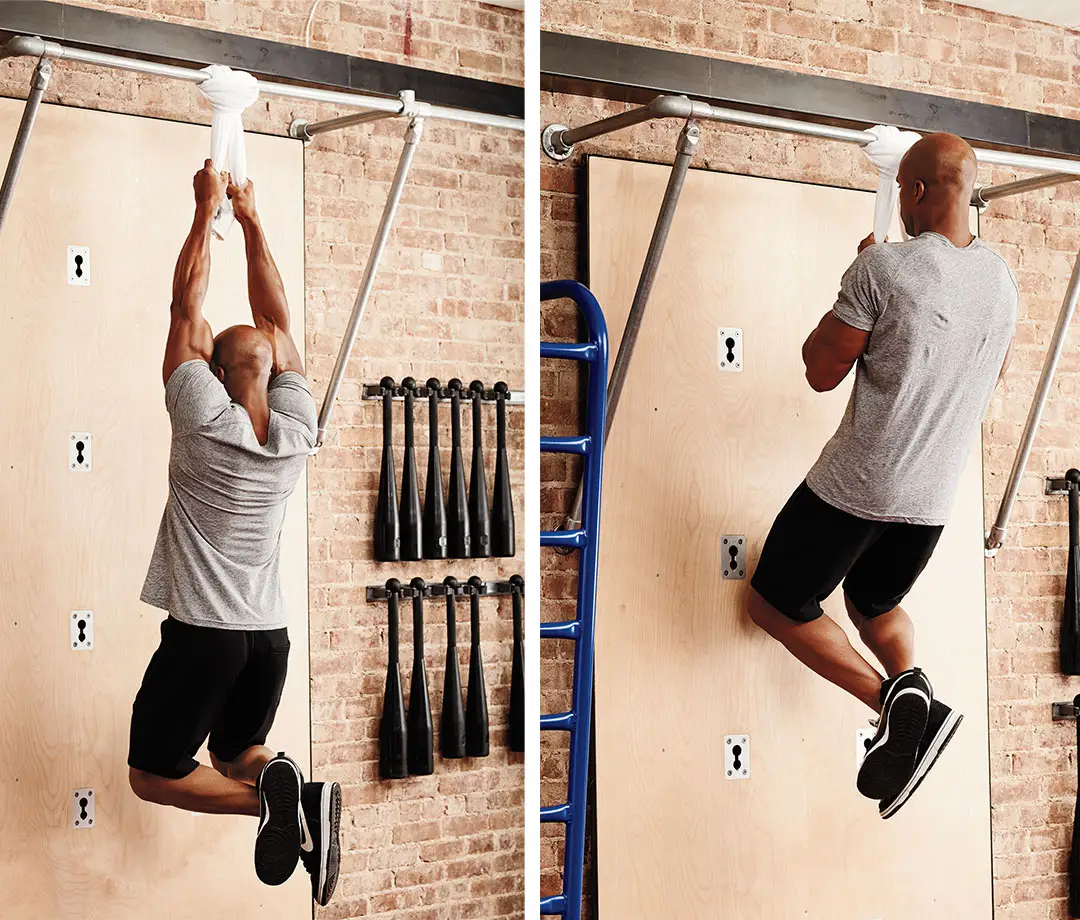
Use matching towels with even hanging lengths. Take a secure grip with the thumbs wrapped around the fabric, establish control and pull without swinging. Lower deliberately, stopping while you can still hold the towels and return safely. If your hands are already sliding, another attempted repetition is a poor progression.
You can explore the grip with your feet supported and unload it before committing to full bodyweight. Keep a stable, appropriate way to step down within reach. Treat this as practice in controlling the setup, not permission to hang until the fabric escapes your hands.
Standardise the details you can: towel choice, hand position, hanging length and the range you use. A different thickness or a newly bunched grip creates a different task. Do not count a shorter repetition with a more favourable grip as proof that the original version improved. A brief side-view recording can help you compare the start and finish positions you actually used.
Choose whether the session is about pulling or holding
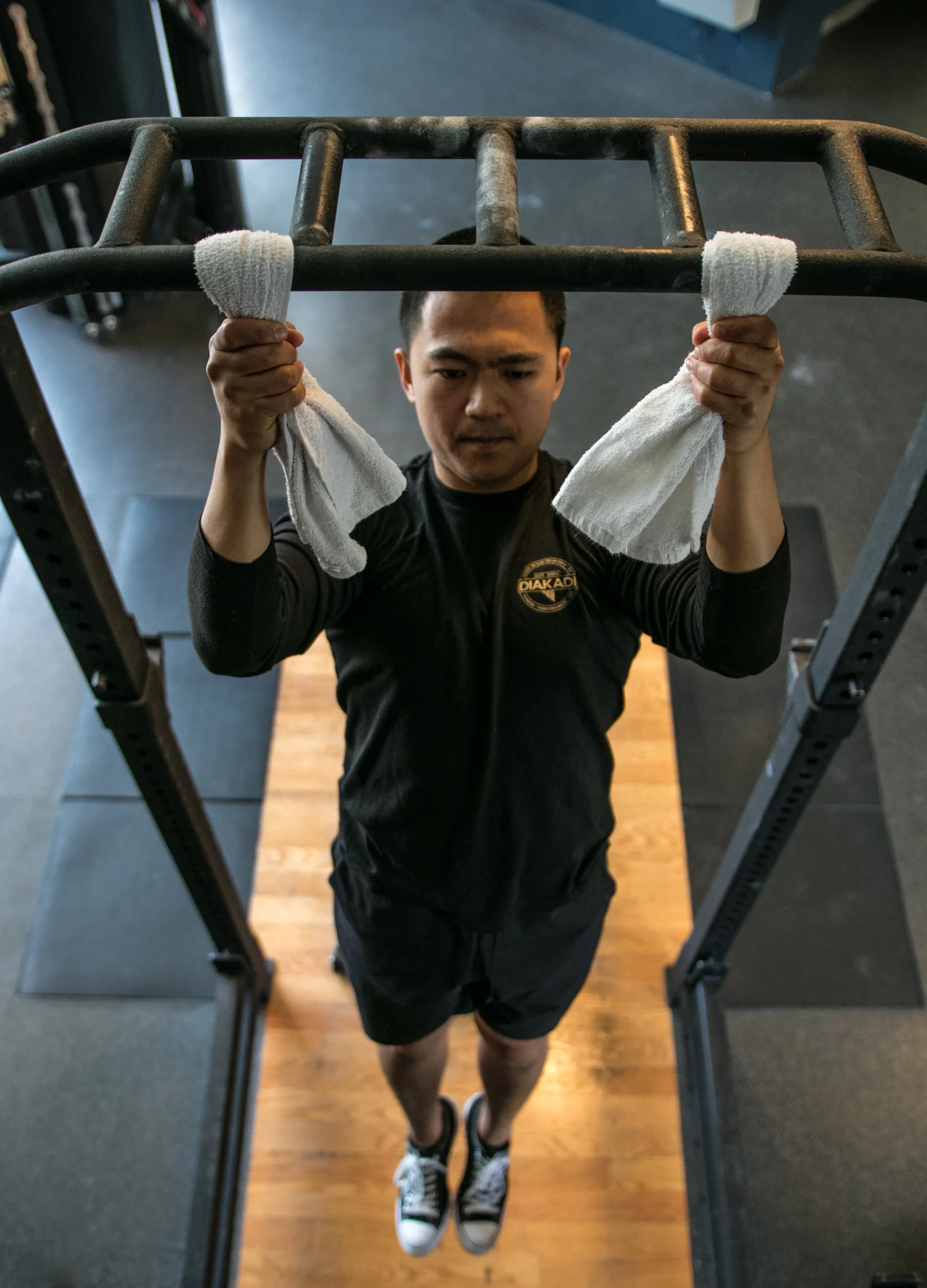
If ordinary pull-up performance is the priority, do that work while your hands are fresh. Placing demanding grip work first can make later pulling harder for a reason unrelated to the muscles you intended to prioritise. A towel variation can come afterwards as a separate exercise rather than replacing every set on the bar.
If gripping is the priority, give the towel task its own entry in the session. Judge it by controlled repetitions or a consistently performed hold, not by whether it matches your bar numbers. Sport-related gripping also has its own context: squeezing fabric is not identical to pinching plates, carrying dumbbells or holding a particular implement.
The equipment options below cover several of those different jobs. Thick grips and a dedicated forearm trainer change hand demands. Rings and angled handles offer other pulling grips. Racks and pull-up stations provide possible training stations, subject to their installation and load instructions. Cable towers provide another way to organise pulling work. None should be assumed suitable for hanging towels without checking the actual equipment guidance.
These are alternatives to compare, not a shopping list required by this exercise. In particular, lifting straps used for other pulling work reduce the demand on your grip; they are not a substitute for learning to hold a towel. The right choice is the one that lets you train the task you intended, with a setup you can control.

Equipment Worth Exploring
Explore equipment, accessories and gear from our carefully selected range.


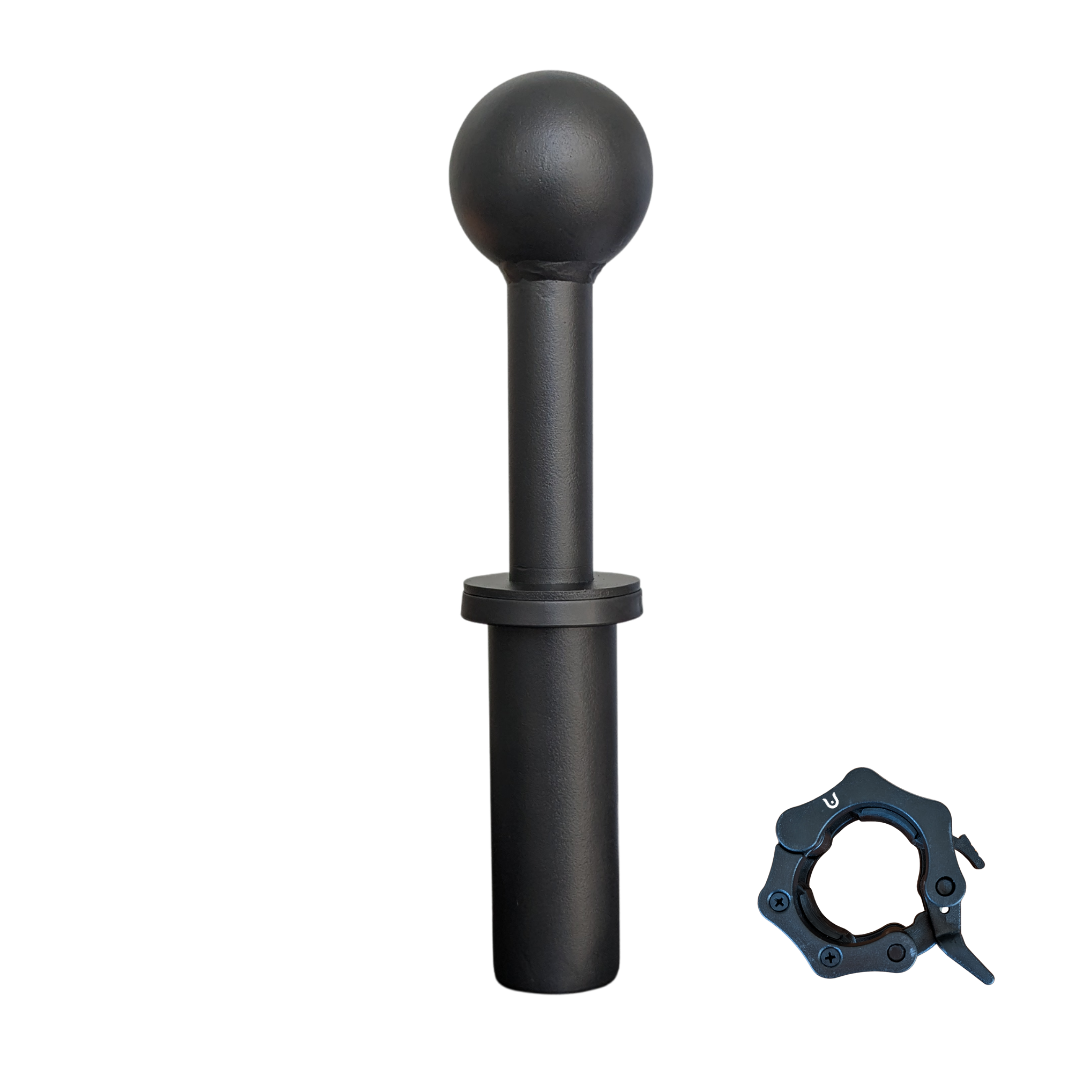


Angles 90 Grips
Flexible grip attachments that allow natural wrist movement during pulling exercises.

Power Tower
Freestanding pull-up and dip station with adjustable handles for bodyweight training.


Foldable Wall Rack
Wall-mounted folding squat rack designed to save floor space between workouts.

VForce Lat Tower
Wall-mounted cable tower with pivot arms and adjustable 1:1 or 2:1 pulley ratios.
Use a small trial and a clear progression rule
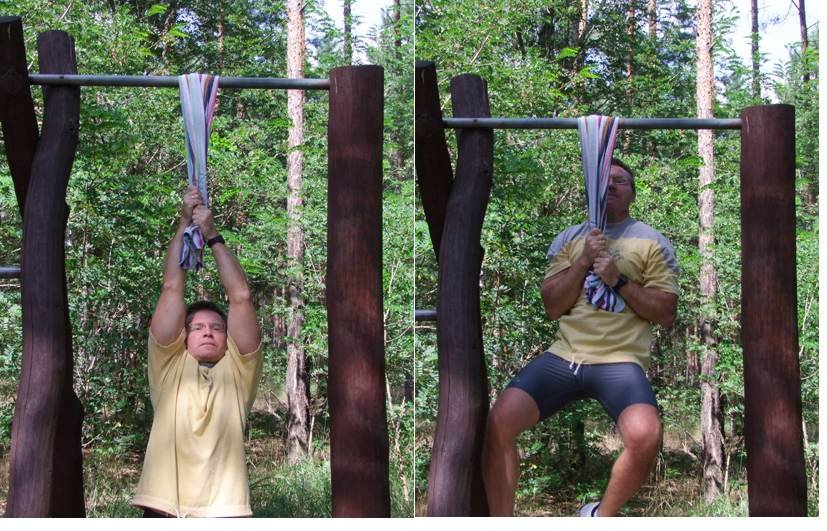
Start with an amount of towel work you can control comfortably rather than testing your absolute limit. The first aim is a repeatable reference session. Record the towels used, the support or assistance, the controlled repetitions or hold duration, and why you ended each attempt. Keep ordinary bar work recorded separately.
Here is an illustrative log entry, not a tested prescription: “Two matching towels, feet-assisted hold, two short attempts, stopped before slipping.” A later entry might keep the same assistance and add a little controlled time. Another lifter might be ready for a few full repetitions. Those starting points do not need to look alike.
Change one meaningful variable at a time. Adding repetitions while also removing assistance and switching to thicker towels makes the next result difficult to interpret. Keep the setup stable until you can repeat the chosen task with the same control, then make a modest change. If the next session becomes a scramble to maintain your grip, return to a version you can manage.
Also check the cost to the rest of your training. If towel work consistently leaves your hands too tired for the pulling you care about, reduce it or move it later. If it causes pain rather than ordinary exertion, stop that variation. A useful accessory should earn its place through manageable practice, not through how dramatic the final attempt looks.
A simple comparison needs three columns: task completed, control retained and effect on the next exercise. For example, an extra repetition accompanied by obvious slipping is a mixed result. The same repetitions with a cleaner return is a useful improvement even when the number stays unchanged. Neither observation needs a claim about how much muscle you gained.
Before repeating the session, write one sentence describing what would count as progress. It could be the same hold with slightly less foot assistance, or the same full repetitions without the final swing. Avoid changing the definition after seeing the result. Over several comparable sessions, that small record is more informative than switching variations whenever one feels unusually difficult.
For the broader pulling-day theme, the clothing and artwork below are optional gym merchandise. They have no bearing on the exercise results. Keep the training takeaway simple: choose the bar when it best serves your pulling goal, use towels when their grip challenge is intentional, and measure each task on its own terms.

Funny Gym Shirts & Workout Gear
Funny gym shirts, tanks, hoodies and workout gear for lifters who like training hard.

Pull Up or Shut Up Crewneck Pullover Sweater for Calist T-Shirt
For laid-back days and bodybuilding humor: “Pull Up or Shut Up”.

Always Pull Yourself Up Hoodie
Make your off-duty look more fun with “Always Pull Yourself Up”.

Calisthenics Heartbeat Tank
Add some lifting attitude to training with “Calisthenics Heartbeat”.


Pull Up Not Out Hoodie
Show off your bodybuilding humor in a laid-back “Pull Up Not Out” hoodie.

Slip Not Grip Training – Heavy Metal Workout Jumper Pul T-Shirt
Bring “Slip Not Grip Training” humor to your everyday gym style.

Get A Grip Grip Strength Vest Tank Top
Bring “Get a Grip” humor to your next lifting session.

Spider Hero Pullups Decal for Water Bottles Laptops Gym Sticker
Bring “Gym Spider Hero Pullups” attitude to your water bottle or laptop.

Lat Man Big Back – Jumper With Huge Lats – Back Day T-Shirt
Add a playful “Lat Man Big Back” touch to your casual rotation.

Gym Dost Thou Even Pull Medieval Knight Back Day Crewne T-Shirt
Show some gym-day personality with “Dost Thou Even Pull Medieval Knight Back”.