Advertising disclosure: This page includes affiliate product links that may earn us a commission, as well as products from our own store.
The Zercher good morning asks a familiar question in an unfamiliar position: can you move through your hips while keeping a load close to your torso? Instead of resting a bar across your upper back, you cradle it in your elbow creases. That changes the handling, balance and limiting factors of the exercise. It does not turn a demanding hinge into an automatic fix for back problems. For experienced lifters, its value is a repeatable accessory movement that challenges the posterior chain and trunk without needing the usual back-rack position. The useful progression starts with setup and control, rather than a heavy bar.
Understand what the front-held bar changes
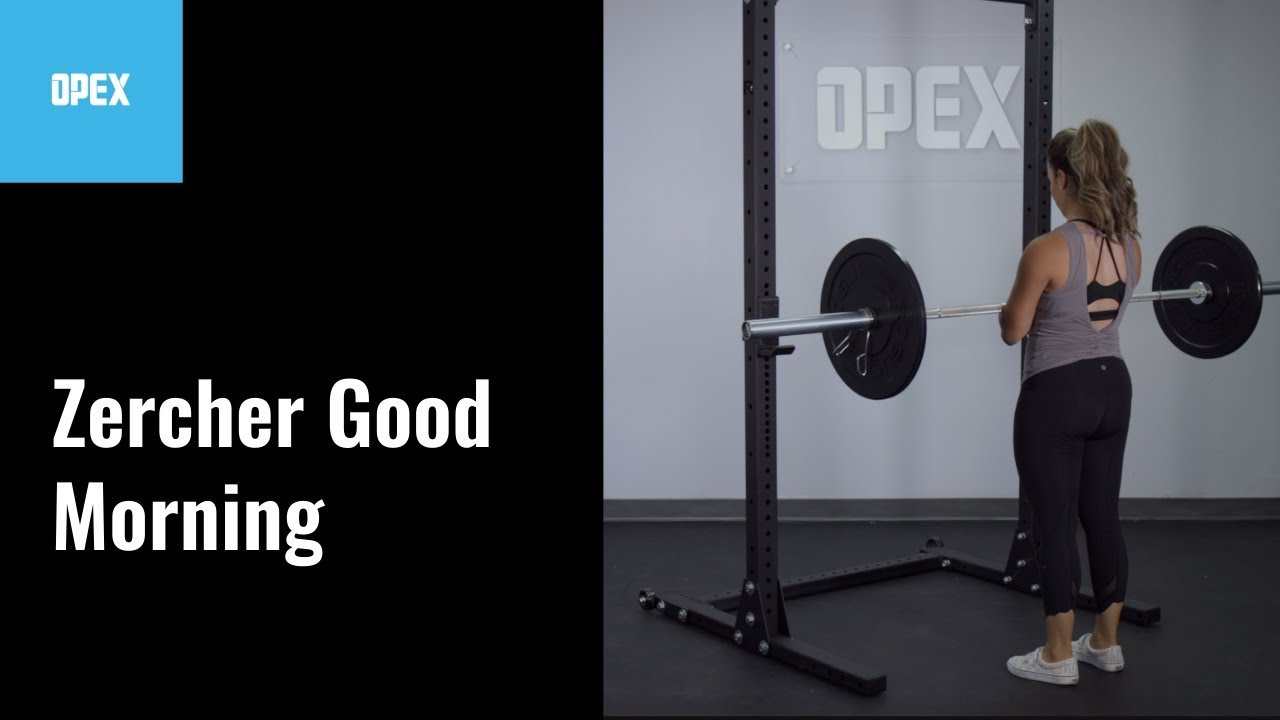
A Zercher hold describes where the bar sits; a good morning describes the movement. Put them together and the intended action remains a hip hinge. Your hips travel backward as your torso inclines, then hip extension brings you upright. A Zercher squat uses the same elbow cradle but much more knee bend and a different path. One is not a failed version of the other, but they should not be mixed accidentally within a set.
The hamstrings and glutes contribute to controlling and reversing the hinge. The muscles around the spine and trunk help maintain the chosen torso position, while the upper back and arms keep the bar from drifting. Those jobs explain why a set can finish because your hold deteriorates before your legs feel exhausted. More discomfort in the elbows does not establish a better muscle-building stimulus.
Compared with a conventional good morning, the front cradle removes the need to reach behind the body to secure the bar. That can make the position more practical for some lifters. It still requires a comfortable elbow hold, adequate trunk control and an appropriate load. A history of shoulder or back symptoms is not evidence that this variation will suit you.
Treat the exercise as a choice with specific constraints. If the cradle prevents you from training the hinge well, an ordinary Romanian deadlift or another established accessory may be the more productive option. You do not need an unusual variation simply because it looks demanding.
Build a setup you can also finish
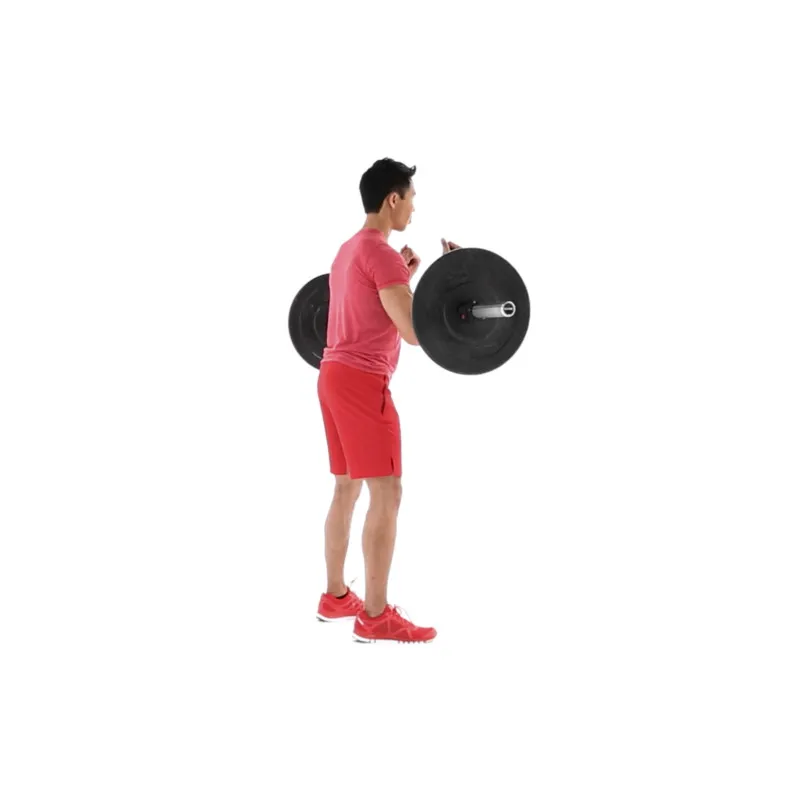
Use a stable rack with hooks adjusted so you can place both elbow creases under the bar without curling it up from the floor or rising onto your toes. The appropriate height depends on your proportions. Test it with a very light bar first. An ordinary empty Olympic bar can already be too much for someone unfamiliar with the hold, so a lighter training bar is a reasonable starting tool.
Stand close, bend the elbows and bring your forearms toward your chest. Set the bar evenly across both sides and keep it close. Your hands can meet or clasp if that helps you maintain the cradle, but the hands are not meant to perform a moving curl. If one side sits noticeably lower, put the bar back and adjust before beginning the set.
Lift clear of the hooks and take only the steps needed to establish your stance. Make sure the sleeves and plates have room throughout the hinge. A rack that fits an upright hold can still obstruct the bar when you lean forward. Check that clearance before loading, and use compatible safeties where the setup allows them to catch the bar without interfering with normal repetitions.
Plan the return as carefully as the unrack. Finish upright, regain a settled position, walk in and confirm both sides are supported before opening your arms. Do not make a rushed forward dive toward the hooks after the final rep. If a load is too difficult to return under control, it is already too demanding for this practice session.
Pressure from the bar is expected, but sharp pain, numbness or a slipping hold is a reason to stop and change the setup. Padding can alter how the bar sits; it should not be used to conceal symptoms or justify adding weight.
Let your controllable hinge determine the range
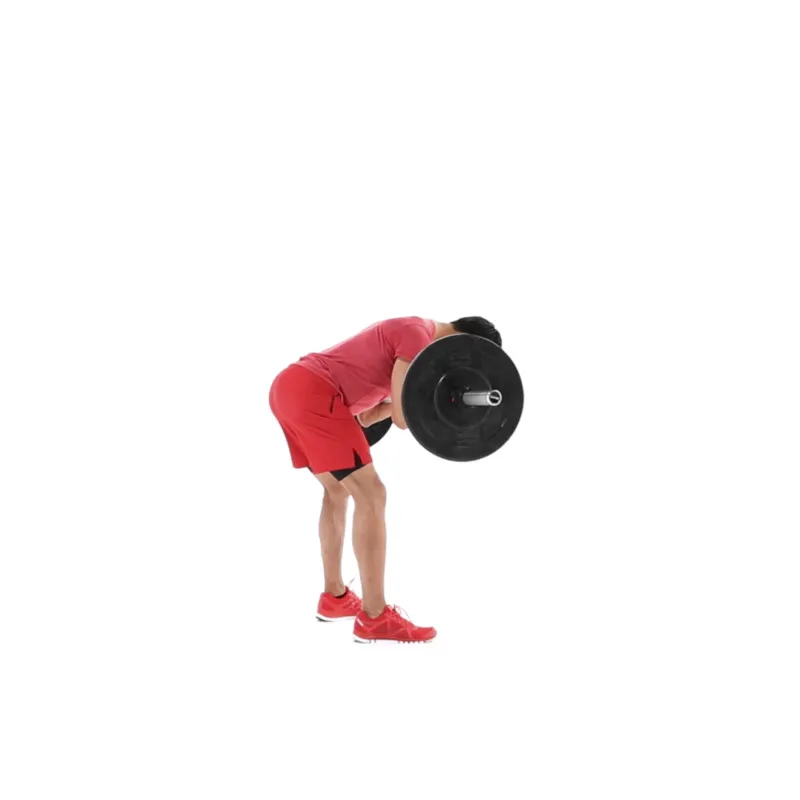
Begin with feet around hip-to-shoulder width and a small, comfortable knee bend. Establish your brace before moving. Keep pressure through the whole foot rather than trying to balance on your heels. The cue to send the hips back describes the direction of movement; it is not an instruction to lift the toes or lose contact with the front of the foot.
Lower by moving the pelvis backward while allowing the torso to incline as a unit. Keep the bar near the body and the elbow hold steady. Your knees can soften, but a large increase in knee bend changes the exercise toward a squat. Start with a short range so you can recognize that distinction before trying to go deeper.
Choose the bottom position from what you can repeat without the bar rolling, the torso collapsing or the back position changing abruptly. A horizontal torso is not a compulsory target. Leg length, torso length, stance and current movement capacity all affect what a controlled repetition looks like. Matching somebody else's photograph is less useful than keeping your own movement consistent.
Reverse smoothly by driving the hips forward and standing tall. Finish with the body stacked rather than leaning backward to exaggerate the lockout. Allow enough time between repetitions to reset the brace and hold. Fast consecutive reps make it harder to notice whether the last descent changed shape.
A side-view recording is useful for checking the movement, provided the camera is safely outside the lifting area. Compare the first and last repetitions: depth, knee bend and bar-to-torso distance should look similar. Use the recording as feedback, not as an invitation to chase a more dramatic angle.
Fix the first sign of drift instead of rescuing the rep
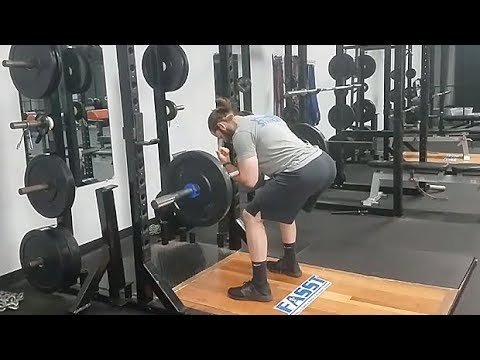
The first common drift is opening the elbow cradle as the torso lowers. The bar moves away, and the arms suddenly have more work to do. Reset the hold, reduce the range or lower the load. Trying to curl the bar back into place while bent forward adds another task precisely when the movement is becoming less controlled.
Another pattern is turning later repetitions into squat-mornings: the knees bend farther, the hips drop and a previously controlled hinge becomes a different movement. Review whether fatigue or excess loading is driving the change. A deliberate squat-to-hinge combination is a separate exercise; it should not emerge by accident because the intended good morning has become too hard.
Watch for excessive arching as well as rounding. Lifting the chest aggressively can create a large lower-back arch without improving control. Keep a torso position you can maintain, and shorten the range if that position changes at the bottom. The objective is purposeful movement under a manageable load, not forcing the spine into a visually exaggerated shape.
When the set loses its pattern, finish it and return the bar. There is little value in rescuing a repetition simply to meet a number written in a notebook. Record the completed good repetitions and the reason you stopped. That information helps distinguish an arm-hold limitation from a hinge limitation next time.
Equipment should support that repeatability. A suitable straight bar, secure collars, compatible plates and a stable rack address handling. None can make an unsuitable working weight appropriate. Keep the training goal ahead of the equipment choice.

Equipment Worth Exploring
Explore equipment, accessories and gear from our carefully selected range.


Foldable Wall Rack
Wall-mounted folding squat rack designed to save floor space between workouts.

Competition Plates
Competition-style bumper plates for Olympic lifts and loaded strength training.



Speed Collar
Quick-release collars designed to secure weight plates on standard two-inch Olympic bars.
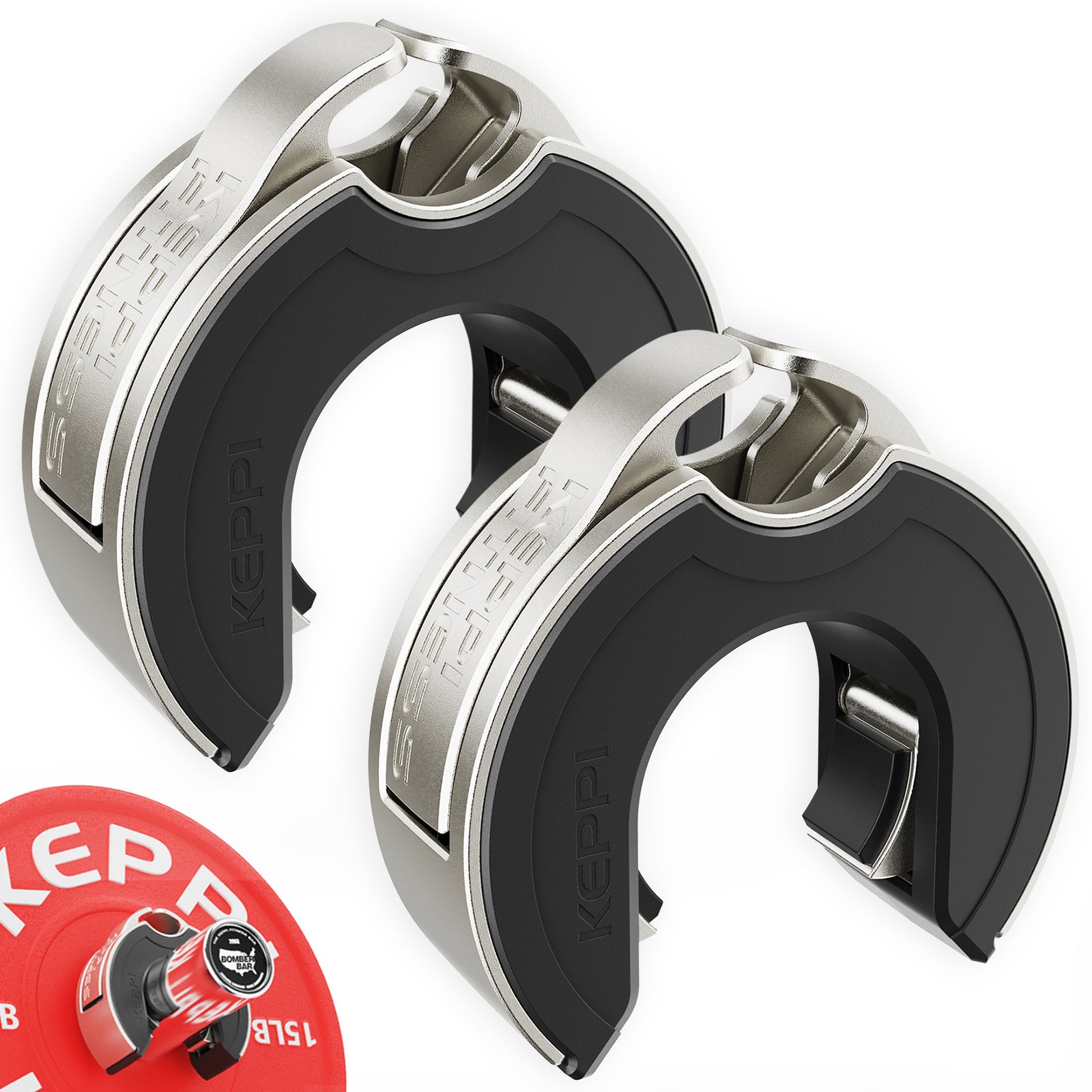
Keppi Open Collars
C-shaped magnetic Olympic barbell collars with a quick-lock mechanism and grippy lining.
Give the exercise a clear job in your program
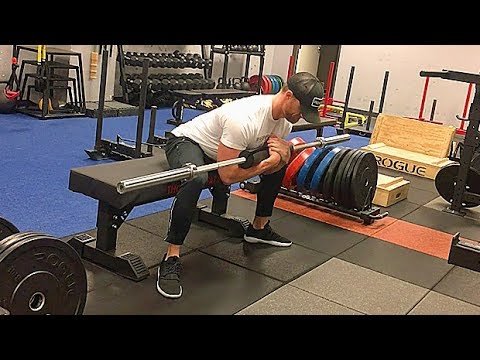
For an experienced lifter learning this variation, begin with a small amount of accessory work rather than adding another heavy main lift. One illustrative trial is two sets of five controlled repetitions after the main lower-body movement, using a load that leaves several comfortable repetitions available. This is a conservative example, not a tested optimum or a requirement for every lifter.
Hold the setup and range steady across a few exposures. Log the bar and plate load, hook height, repetitions and why the set ended. If you complete the same movement comfortably, add a small amount of resistance at a later session. Avoid increasing weight, depth and total sets at the same time: changing everything makes it difficult to identify what improved or caused difficulty.
Account for the rest of the week. Romanian deadlifts, conventional deadlifts, back extensions and other good mornings already create work for overlapping tissues. Replacing some existing accessory work makes the effect of the new variation easier to judge than simply stacking it on top. A useful accessory should help you train consistently without repeatedly disrupting subsequent sessions.
Seated Zercher good mornings and band-held variations also exist, but each changes the task. Sitting alters the available hip motion; bands change resistance as they stretch. They require their own setup and load decisions rather than a direct transfer of the standing barbell numbers. If your goal is straightforward posterior-chain work, a Romanian deadlift or an appropriately set up back extension can remain a simpler choice.
After several sessions, judge the exercise on controllable repetitions, tolerable handling and its place alongside your main lifts. Keep it if those pieces fit. Replace it if the cradle stays the limiting problem or you cannot reproduce the movement. The successful outcome is a training choice that serves your goal, not proving you can endure the most awkward bar position.

Funny Gym Shirts & Workout Gear
Funny gym shirts, tanks, hoodies and workout gear for lifters who like training hard.

Deadlift Skull Graphic , Hardcore Gym Pullover, Powerli Hoodie
Keep it laid-back with a little “Deadlift” attitude.

Deadlift Skull Pink Heavy Metal Gym Shirt for Powerlift T-Shirt
Make gym days more fun with “Deadlift Skull” style.

The Ultimate Deadlifter Jesus Christ – Deadlifts Liftin Tank Top
Show some personality between sets with “The Ultimate Deadlifter Jesus Christ”.

Deadlift Uncle Sam Patriotic – 4th Of July & Gymbros T-Shirt
Heavy lifts, good laughs, and a little “Deadlift Uncle Sam Patriotic” energy.

Metalliftica Sweatshirt
Bring “Metalliftica Metallica Heavy Metal” humor to your everyday gym style.

Deadlift You Must Star Wars Yoda Decal Water Bottles Sticker
Put “Deadlift You Must” gym humor on your laptop, bottle, or gym gear.

Booty Builder Harley Quinn Decal Water Bottles & Sticker
Stick a little “Booty Builder” humor on your favorite gear.

Brozilla | Godzilla Gym Meme Muscle Shirt | Monster Gai Tank Top
Add some lifting attitude to training with “Brozilla”.

Do You Even Leviosa? Hermione Granger Gym | Funny Worko T-Shirt
Show some gym-day personality with “Do You Even Leviosa? Hermione Granger”.

Dead Pull Deadpool Deadlift – Hero Meme Leg Day & – T-Shirt
Make gym days more fun with “Dead Pull Deadpool Deadlift” style.