Bar speed can tell you when a demanding set is becoming a slow set. But should a very strong lifter stop sooner than a beginner? A 2026 research analysis tested whether starting strength predicts the response to velocity-loss training. It found no statistically detectable relationship. That does not prove everyone needs the same cutoff; it means the case for choosing a threshold solely from a one-rep max is weak.
For anyone training with weights, this is a practical question. Barbell sets, adjustable dumbbells and electronic cable systems all let you progress, but more reps are not always more productive. This guide separates what the research actually measured from what coaches can reasonably apply, then gives you a four-week experiment for controlling fatigue without turning every workout into a laboratory test.
Some equipment links may be affiliate links, supporting our independent work at no additional cost to you.
Velocity loss measures slowing within a set
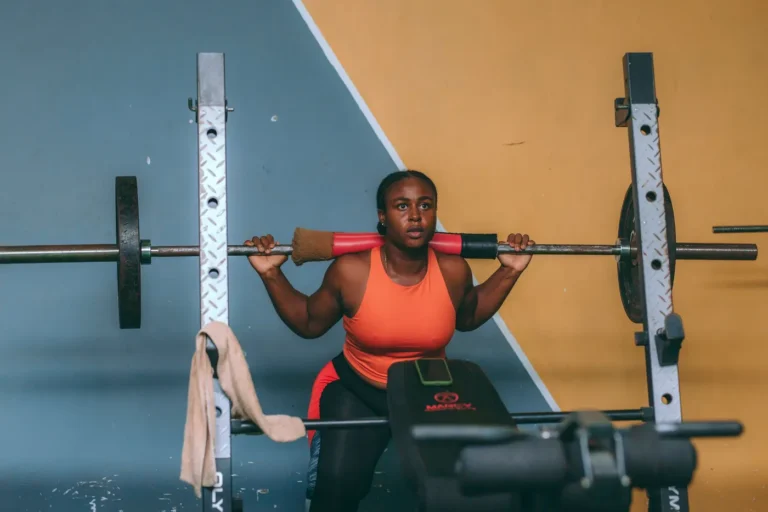
Velocity loss is the percentage reduction in concentric repetition speed from an initial reference rep. Suppose your first squat travels at 0.50 meters per second and a later squat moves at 0.40. That is a 20% reduction. If you prescribed a 20% loss threshold, the set would end around that point even if you could grind out more repetitions. It is a way of limiting accumulated fatigue, not a direct measure of muscle growth or damage.
Consistency is essential. A hesitant first rep, changing squat depth or deliberately slowing the lifting phase can distort the reading. Different devices may measure mean or peak speed, and some track straight barbell movement more reliably than a dumbbell arc. A number recorded on a cable trainer with a different resistance profile is not automatically comparable with a barbell squat.
A low-loss set tends to preserve fast, crisp repetitions. A high-loss set generally permits more slowing and additional repetitions. Neither is inherently better. The goal of the session, the exercise, the available recovery and the quality of the measurement determine whether the extra fatigue is worth it. You can understand this distinction before buying any velocity sensor.
What the 2026 research actually found
The analysis combined 16 randomized training trials, representing 89 effect sizes. Participants ranged from less-trained adults to experienced athletes. The studies lasted roughly 7.4 weeks on average, with prescribed velocity-loss limits ranging from about zero to 50%. Squats and bench presses were common exercises, and the outcomes included maximal strength, jumping and other power measures.
Within velocity-loss training groups, the pooled improvement was moderate, around 0.59 in standardized effect-size units. This is a pre-to-post change, not evidence that velocity-loss training beats conventional training. The main question was whether the size of the improvement varied with initial one-rep-max strength, training experience or velocity-loss prescription.
The researchers did not detect a statistically significant effect of baseline strength. Training status and the interaction between strength and experience were also nonsignificant moderators, as was the threshold in that particular model. The overall test of moderators was nonsignificant. This means the available data did not support a simple rule such as stronger lifters must use a lower cutoff.
There are important limitations. Sixteen studies cannot reliably rule out small differences. Most samples were male-dominated, and most interventions were short. The main pooled effects compared participants with themselves, rather than directly comparing different training methods. Some studies raised methodological concerns, and possible small-study effects complicated interpretation. A lack of statistical significance is not proof of identical responses. The appropriate conclusion is narrower: baseline strength alone is not a validated way to choose a velocity-loss threshold.

Equipment Worth Exploring
Explore equipment, accessories and gear from our carefully selected range.


FID Bench MAX
Adjustable bench offering flat, incline, and decline positions + adjustable headrest.

Why stronger does not automatically mean a different cutoff
It sounds logical to give advanced lifters shorter sets because their absolute weights are higher, or to push beginners further because they can adapt quickly. But training age and one-rep-max strength do not capture the whole situation. A heavy squat has different stability demands from a chest-supported row, and a power-focused session has a different objective from a muscle-building session.
Technique, leverages, exercise familiarity, recent fatigue, sleep and available recovery all influence how repetitions slow. Two lifters with similar one-rep maxes may reach the same velocity-loss percentage after very different numbers of reps. Two exercises performed by the same person may behave differently even at similar perceived effort. A fixed number should not replace the decision to stop when movement quality deteriorates.
The 2026 analysis standardized strength values across different exercises to compare studies. That is useful statistically, but a 120-kilogram squat and a 120-kilogram bench press are not physiologically interchangeable. The findings cannot produce a universal threshold for every lift, much less every cable machine or resistance mode.
Use starting strength to choose reasonable loads and track progression. Use your goal and exercise demands to choose how much slowing you will accept. If you are new to velocity tracking, begin with consistent range of motion and controlled setup. A repeatable six-rep set with honest records is more informative than a precise-looking percentage derived from inconsistent reps.

Powerlifting Shirts & Lifting Gear
Powerlifting shirts and gym gear for squat, bench and deadlift lifters who live for heavy numbers.

| I Love Bench Press Pink Heart Pullover T-Shirt
For laid-back days and gym-girl humor: “I Love Bench Press Pink Heart”.

1 Plate Bench Club Meme – Top T-Shirt
Heavy lifts, good laughs, and a little “1 Plate Bench Club” energy.

I Love Deadlifts | Valentine's Heart Plate Hooded For G Hoodie
Keep it laid-back with a little “I Love Deadlifts” attitude.

Barbell Buddies for Gym Buddies, Workout Partners, and Hoodie
Keep it laid-back with a little “Barbell Buddies” attitude.

Meme – Shhh I'm Doing Math Plate Math Weightlifting T-Shirt
Heavy lifts, good laughs, and a little “Shhh I'm Doing Math Plate Math” energy.

Deadlift Skull Cyberpunk Gym Shirt for Powerlifting Leg T-Shirt
Make gym days more fun with “Deadlift Skull” style.

Barbell Crossed Weights 45LB Plate Decal Sticker
Put “Classic Barbell Crossed Weights 45LB Plate” gym humor on your laptop, bottle, or gym gear.

Liftionaire Money Barbell Meme Workout Bodybuilding Fit Tank Top
Add some lifting attitude to training with “Liftionaire”.

Weight Plate Heartbeat Hooded Pullover Hoodie
Show off your powerlifting humor in a laid-back “Weight Plate Heartbeat” hoodie.

Flaming 45LB Weight Plate Fire Barbell Lifting Workout Tank Top
Add some powerlifting attitude to training with “Flaming 45LB Weight Plate”.
Power, strength and hypertrophy require different trade-offs
When the goal is to move explosively, allowing every repetition to grind may be counterproductive. Lower velocity-loss limits can preserve movement speed and reduce the number of fatigued repetitions. Research comparing roughly 20% and 40% loss in squat training has reported similar strength improvements with fewer reps at the lower threshold, alongside better jump outcomes. The higher-loss condition sometimes produced greater local muscle growth.
Broader reviews suggest that higher velocity loss can be useful for hypertrophy in some circumstances, whereas lower loss may favor sprinting, jumping and fast force production. That is not a universal prescription. Exercises, loading, weekly volume and participants differ, and training to exhaustion is not a prerequisite for progress. There is no magical 20% threshold that automatically maximizes every outcome.
For a practical strength session, keep the first heavy compound lift crisp, with a few technically clean repetitions left. Accessory exercises can tolerate more slowing when the target muscle is working and technique remains stable. A supported cable row or curl usually presents a different technical risk from a heavily loaded squat. On any lift, stop when position or range becomes unsafe, regardless of what the sensor says.
If hypertrophy is your priority, focus on adequate challenging sets and repeatable progression. If power matters most, protect speed and rest sufficiently between sets. For general strength, balance heavy practice, volume and recovery. Velocity loss is a tool for managing that balance, not a substitute for thoughtful programming.
Why more fatigue does not always mean more progress
A workout can feel more productive simply because it burns. That sensation is not a direct measure of the adaptation you will achieve. A larger drop in repetition speed usually means more repetitions performed while fatigued. Those reps may contribute to useful volume, but they can also reduce performance on later sets, extend recovery and make the next session harder to execute well.
Imagine four squat sets with stable depth and clean technique. You finish knowing you could have completed another rep or two, and next week you can add a small amount of load. Compare that with grinding every set until speed collapses, then reducing your next exercise and struggling to recover for several days. The second session may feel harder without producing a better training trend.
Some exercises allow more proximity to failure without the same balance demands. A supported row, machine press or curl can be easier to control when fatigued than a free-weight squat. Even then, muscular failure is optional, not mandatory. The productive question is whether harder sets help you accumulate sustainable work over weeks.
Record load, repetitions, final-rep technique and recovery between sessions. If more fatigue repeatedly lowers subsequent performance without a useful long-term improvement, reduce the hardest sets. If you are progressing with moderate effort, do not add exhaustion just to make the session seem serious. A well-designed workout should be challenging enough to drive adaptation and repeatable enough to survive the next training week.
Equipment Worth Exploring
Explore equipment, accessories and gear from our carefully selected range.
VOLTRA
Compact digital cable trainer with smooth, adjustable resistance.

Go-Tone Pro
Portable digital cable trainer with up to 66 lb (30 kg) of adjustable resistance.


GymPin Mag Pin V2
Magnetic selector pin designed to secure weight selection on compatible pin-loaded machines.

Original GymPin
Adds Olympic plates to compatible cable-machine weight stacks for extra resistance.

Safety Squat Handles
Barbell squat handles that reduce shoulder positioning demands during high-bar squats.

Leather Lifting Straps
Padded leather straps support grip during heavy rows, deadlifts and pulling exercises.


Tracking bar speed without laboratory equipment
Dedicated bar-speed sensors and camera systems can provide objective measurements, but accuracy depends on the device and exercise. A 2026 review of smartphone velocity-training applications found that some were useful for recreational and field settings. Reliability and validity varied, however, and consumer apps did not consistently meet research-grade precision standards. That matters when a small measurement error could change the supposed stopping point of a set.
You can start with a fixed camera and repeatable technique. Film a side view of the same squat or press at the same load, with consistent depth and setup. Compare whether later repetitions visibly slow or technique drifts. You cannot derive a reliable exact percentage by guessing from the video, but you can learn to recognize a change in quality. If you use an app, test it on the specific exercise and avoid changing devices during a short experiment.
Without a sensor, repetitions in reserve offer a practical alternative. Stop a heavy compound set when you estimate that two or three technically sound reps remain. Accessories may be taken closer to the limit while form remains controlled. This estimate is subjective and takes practice, so compare it with actual repetition trends rather than treating it as a laboratory measurement.
Be particularly careful with electronic cable machines, where control algorithms and resistance modes can influence movement speed. A cable’s speed profile is not necessarily interchangeable with a free barbell’s. Use consistent equipment and settings, then choose the simplest tracking method that actually improves your training decisions.
Bodybuilding Shirts & Workout Gear
Bodybuilding shirts, tanks and gym gear for lifters chasing muscle, size, symmetry and the pump.


Bulking Over Being Lean Tee
Show some carb-loving attitude with a playful “for Bulking Over Being Lean” tee.


I Love Gym Bicep Heart Muscle Shirt | Swole Heart Funny Tank Top
Train hard, laugh a little, and rep “I Love Gym Bicep Heart”.

Lift O'Clock Gym | Funny Workout Decal for Water Bottle Sticker
A fun “Lift O'Clock” touch for bottles, laptops, and lockers.

Body By Bacon – Bacon Gains Meme Vest Muscle Shirt Tank Top
Your gym-day look, with a playful “Body By Bacon” twist.

Muscle Mommy Shirt – Moms Who Lift Meme Top T-Shirt
Make gym days more fun with “Muscle Mommy” style.

Big Biceps Theory Meme Sweater Bro Science T-Shirt
Add a playful “Big Biceps Theory” touch to your casual rotation.

Gymhead Lifting On My Mind Meme Hooded Bro Jumper Hoodie
Show off your powerlifting humor in a laid-back “Gymhead” hoodie.

The Gym Is My Valentine – Valentine's Day Gym Lover Wor Sticker
Stick a little “The Gym Is My Valentine” humor on your favorite gear.
A four-week experiment for smarter sets
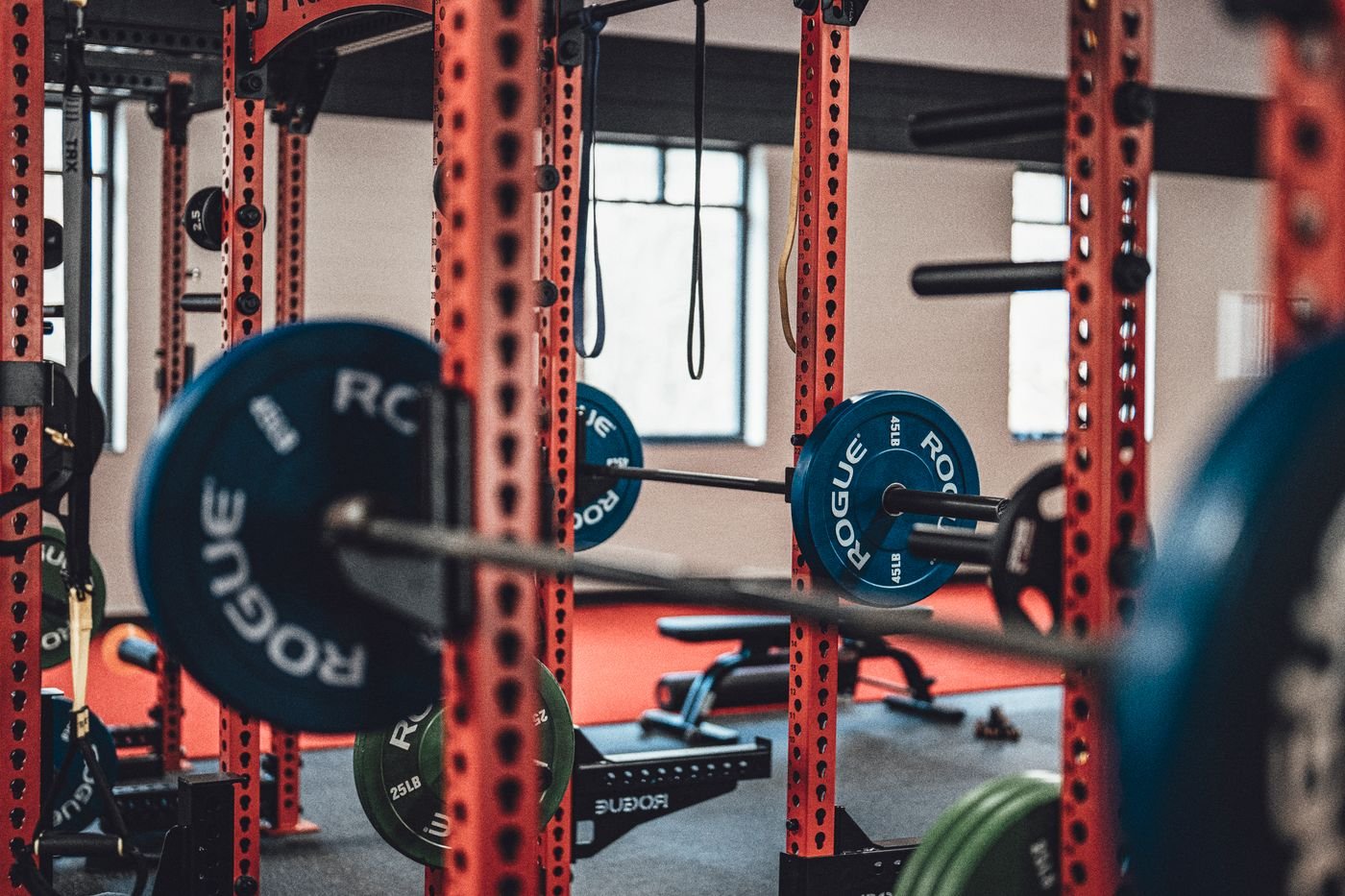
You can test fatigue management without buying new equipment. Choose two familiar compound movements, such as a squat variation and a horizontal press, plus two accessories such as a row and a curl. Train twice weekly with at least one easier day between sessions. Keep the exercises, movement standards and approximate weekly set count stable so that your observations have meaning.
Week 1 — establish a baseline. Complete three working sets on each compound lift with a load that allows about six to eight clean reps. Stop with roughly two repetitions in reserve. Use two or three accessory sets of eight to twelve. Record load, reps, rest time, technique and perceived fatigue. Do not attempt a true one-rep-max test just to obtain a starting number.
Week 2 — protect quality. Keep compound repetitions crisp. If you own a validated velocity device, a modest loss threshold can serve as an optional stopping rule. Otherwise stop when movement speed and form noticeably deteriorate. Aim to reproduce or slightly improve the previous week’s best technically consistent sets. Resist the urge to add load after one unusually easy repetition.
Week 3 — compare accessory effort. Maintain the compound prescription but allow the final accessory set to approach one or two clean repetitions in reserve. Keep total exercises unchanged. Notice whether the added effort helps repetition performance over subsequent sessions or merely creates soreness that interferes with recovery.
Week 4 — evaluate and progress. Compare your best repeatable working sets, not your hardest grinders. Did load or reps improve while technique stayed consistent? Were rest and recovery manageable? If yes, add a small amount of weight or one repetition in the next block. If performance fell, reduce the hardest accessory work first.
This is a practical self-monitoring experiment, not a clinical protocol or a direct replication of the research. It cannot establish an ideal velocity-loss percentage for you. Its purpose is to distinguish useful hard work from fatigue that simply compromises the next session. Bottom line: the best stopping rule depends on your exercise and goal, not just how much weight you can lift.