A single kettlebell can make a surprisingly complete lower-body session, but only when the movements have different jobs. A swing trains a fast hip hinge. A goblet squat loads knee and hip extension. A kickstand deadlift shifts the challenge toward one leg. A reverse lunge asks you to control a step and balance. A glute bridge finishes with controlled hip extension. Putting those movements together gives you more than five ways to get tired.
The important distinction is between a collection of exercises and a progressive training plan. To build strength or muscle, the work needs sufficient effort, repeatable technique and a reason to become harder over time. A kettlebell that is challenging for squats may be too heavy for a first swing or too light for a strong lifter’s hinge. This guide shows how to choose loads, arrange the five moves and progress for four weeks without confusing breathlessness with muscular overload.
Some equipment links may be affiliate links, supporting our independent work at no additional cost to you.
Five movements, five jobs: build a session with purpose
The five-exercise combination works because it covers several patterns rather than repeating one. Squats and lunges require meaningful knee flexion, while swings and kickstand deadlifts emphasize the hinge. A bridge offers hip-extension practice with less balance demand. These distinctions help spread fatigue and make technique easier to assess.
Think of the session in three phases. First, rehearse the hinge with a few controlled unloaded reps, then perform short, crisp swings if you already know the movement. Second, complete the demanding strength work: goblet squats, kickstand deadlifts and reverse lunges. Third, finish with glute bridges and optional low-intensity conditioning. A novice can skip ballistic swings and use a conventional kettlebell deadlift until the hinge is comfortable.
A useful load allows the final two repetitions of a strength set to slow while posture and range remain stable. That is different from choosing a bell so heavy that every repetition becomes a balance rescue. Start with two lower-body sessions weekly, separated by at least one easier day. More training is not automatically better if the additional work reduces recovery or makes subsequent sessions less productive.
- Power: short, technically sharp swings, not endless sloppy sets.
- Strength and size: progressively harder squats, hinges and lunges.
- Control: a bridge performed through a comfortable range, not a maximal lower-back arch.
Kettlebell swing: make the hips drive the bell
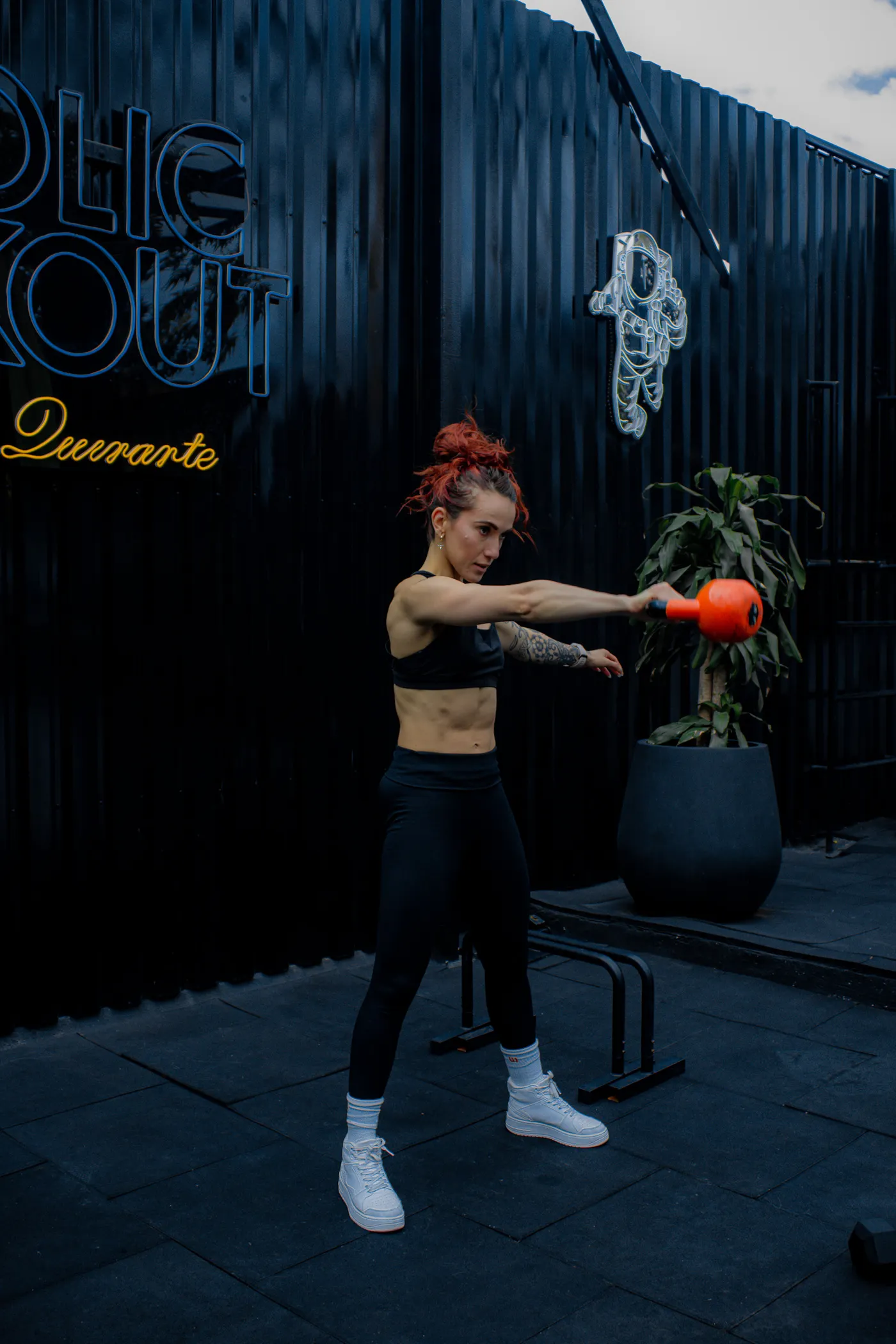
The two-hand swing is an explosive hinge, not a shoulder raise or a squat with a weight hanging from the hands. Begin with the bell a short distance in front of you. Hinge back, grip the handle, brace and hike it between the thighs. Extend the hips quickly so the bell floats forward; allow gravity to return it while the hips move back. The arms connect you to the bell, but they should not perform a front raise.
At the top, stand tall with the ribs stacked over the pelvis. Do not lean backward or try to squeeze an extra few centimeters of motion out of the lumbar spine. On the descent, keep the bell close enough that it does not pull you into an exaggerated forward reach. If you feel mostly lower-back fatigue, reduce the load and rehearse a deadlift or hip hinge with a dowel before trying another set.
For someone with reliable technique, two to four sets of six to twelve crisp swings can serve as a power-oriented primer. Rest long enough to make the next set just as fast and clean. The exercise can elevate heart rate, but that does not prove it is superior to slower resistance training for hypertrophy. Research measuring swings has also documented meaningful trunk and spinal loading, so the movement deserves the same progression discipline as any loaded hinge.
Make it easier by practicing deadlifts and short hikes. Make it harder by using a slightly heavier bell while preserving speed, rather than simply racing through more repetitions. A swing is not mandatory for a complete leg workout; it is one useful option for people who can execute it consistently.

Equipment Worth Exploring
Explore equipment, accessories and gear from our carefully selected range.


GymPin Squat Wedges
Non-slip 15-degree squat wedges help elevate the heels for deeper quad-focused squats.

FID Bench MAX
Adjustable bench offering flat, incline, and decline positions + adjustable headrest.


VOLTRA
Compact digital cable trainer with smooth, adjustable resistance.
Goblet squat: own the depth before adding load
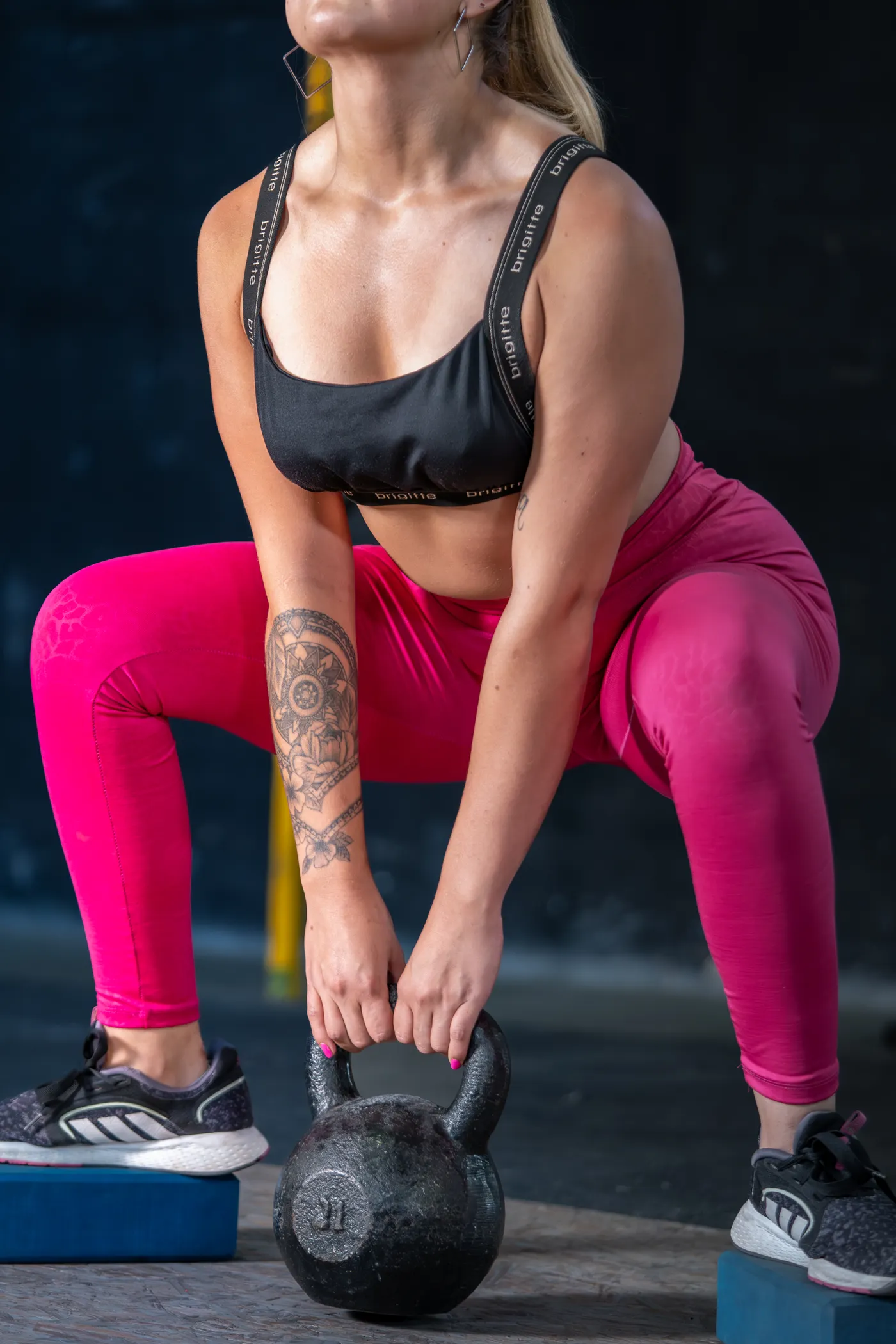
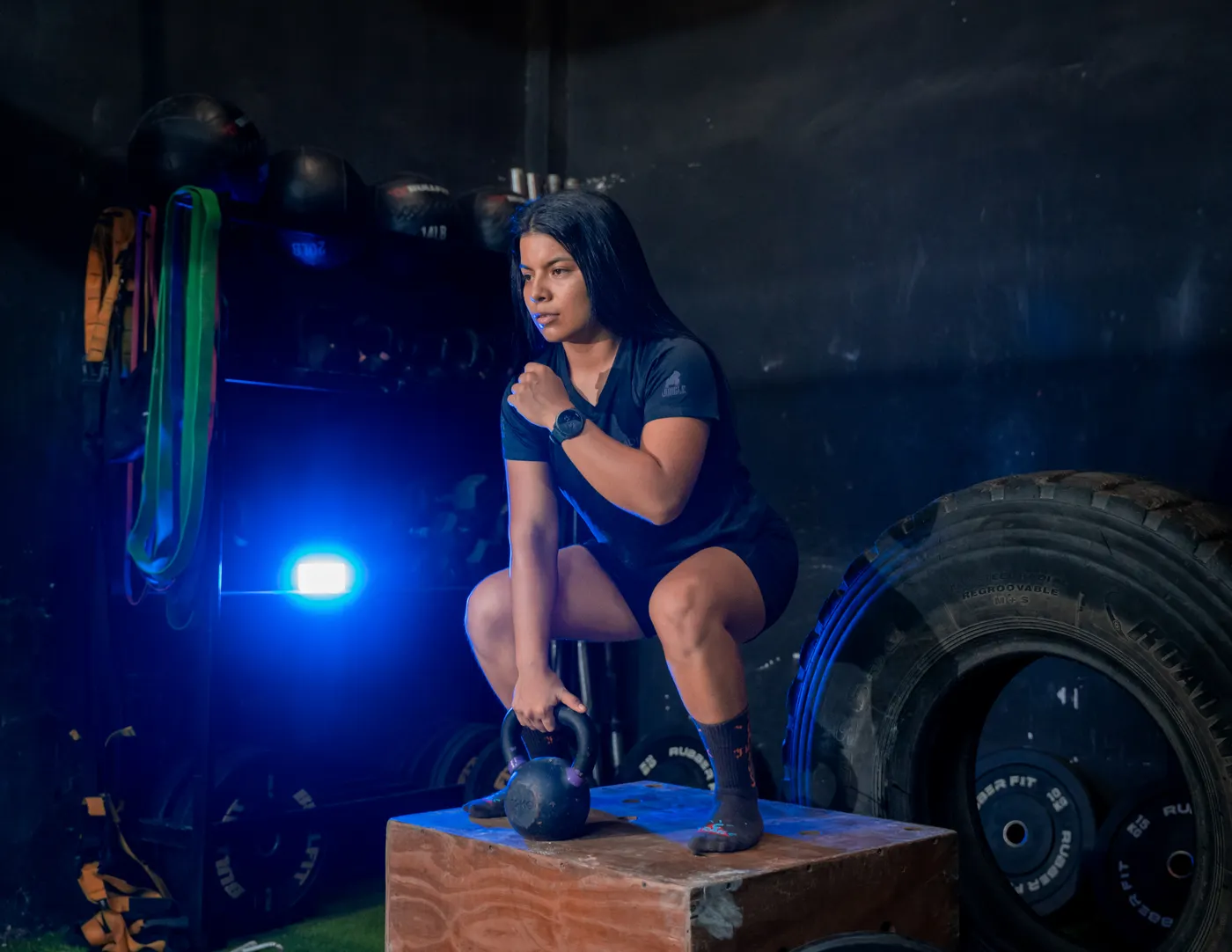
Holding a kettlebell near the chest creates a practical counterbalance and can make an upright torso easier to maintain. Set the feet at a comfortable width, breathe into the trunk and descend between the hips. Allow the knees to travel naturally in the direction of the toes. They do not need to remain behind the toes, and forcing the knees outward as far as possible is not the objective. The aim is a stable foot and a controlled path.
Lower as far as you can while keeping the heel and forefoot in contact with the floor and avoiding a forced position. A shallow range may be appropriate during a temporary mobility limitation, but gradually improving a comfortable range is generally more useful than treating one fixed depth as universally correct. Pause briefly at the bottom if you tend to bounce or lose balance. Stand by pushing through the whole foot, not by shifting all the pressure to the toes.
Use three sets of eight to twelve repetitions, resting roughly ninety seconds to two minutes. Once all three sets reach twelve clean repetitions, choose a heavier kettlebell or add a controlled pause. The goblet hold eventually becomes a limiting factor: a strong lifter may run out of manageable kettlebell load before the legs receive enough challenge. That is a reason to progress to heavier dumbbells, a split squat or a barbell variation, not to perform endless easy goblet reps.
Watch for the bell drifting away from the chest, the heels rising, and the torso collapsing at the bottom. Each is a cue to adjust stance, load or range. Do not turn a straightforward leg exercise into a complicated posture ritual: stable feet, controlled depth and repeatable hard sets are the priorities.

Leg Day Shirts & Workout Gear
Leg-day gym shirts and workout gear for lifters who never skip squats, lunges and lower-body punishment.

Booty Building Mode Girl – Bootybuilder Squats, Leg T-Shirt
Show some gym-girl attitude with a playful “Booty Building Mode Gym Girl” tee.

Adventure Girl Booty Builder Leg Day Meme Sweater T-Shirt
Add a playful “Adventure Girl” touch to your casual rotation.


Let It Grow Booty Builder Sweater Leg Day & Hip T-Shirt
Show some gym-day personality with “Let It Grow”.

Invisible Booty To Visible Booty Leg Day Motivation Tank Top
Show some personality between sets with “Invisible Booty To Visible Booty”.

Girl Booty Builder Leg Day Decal Water Bottles & Gear Sticker
Stick a little “Gym Girl Booty Builder” humor on your favorite gear.

1 Plate Deadlift Club Meme – Motivational Top T-Shirt
Bring “1 Plate Deadlift Club” humor to your next gym day.

The Walking Deadlift | Zombie Workout Sweater For Leg D T-Shirt
Bring “The Walking Deadlift” humor to your everyday gym style.

Heavy Metal Skeleton Squat for Powerlifters, Bodybuilde Sticker
Give your everyday gear a playful “Heavy Metal Skeleton Squat” twist.

Deadlift Skull Cyberpunk Powerlifting Pullover for Leg Hoodie
Show off your leg-day humor in a laid-back “Deadlift Skull” hoodie.
Kickstand deadlift: load one hip without a balance contest
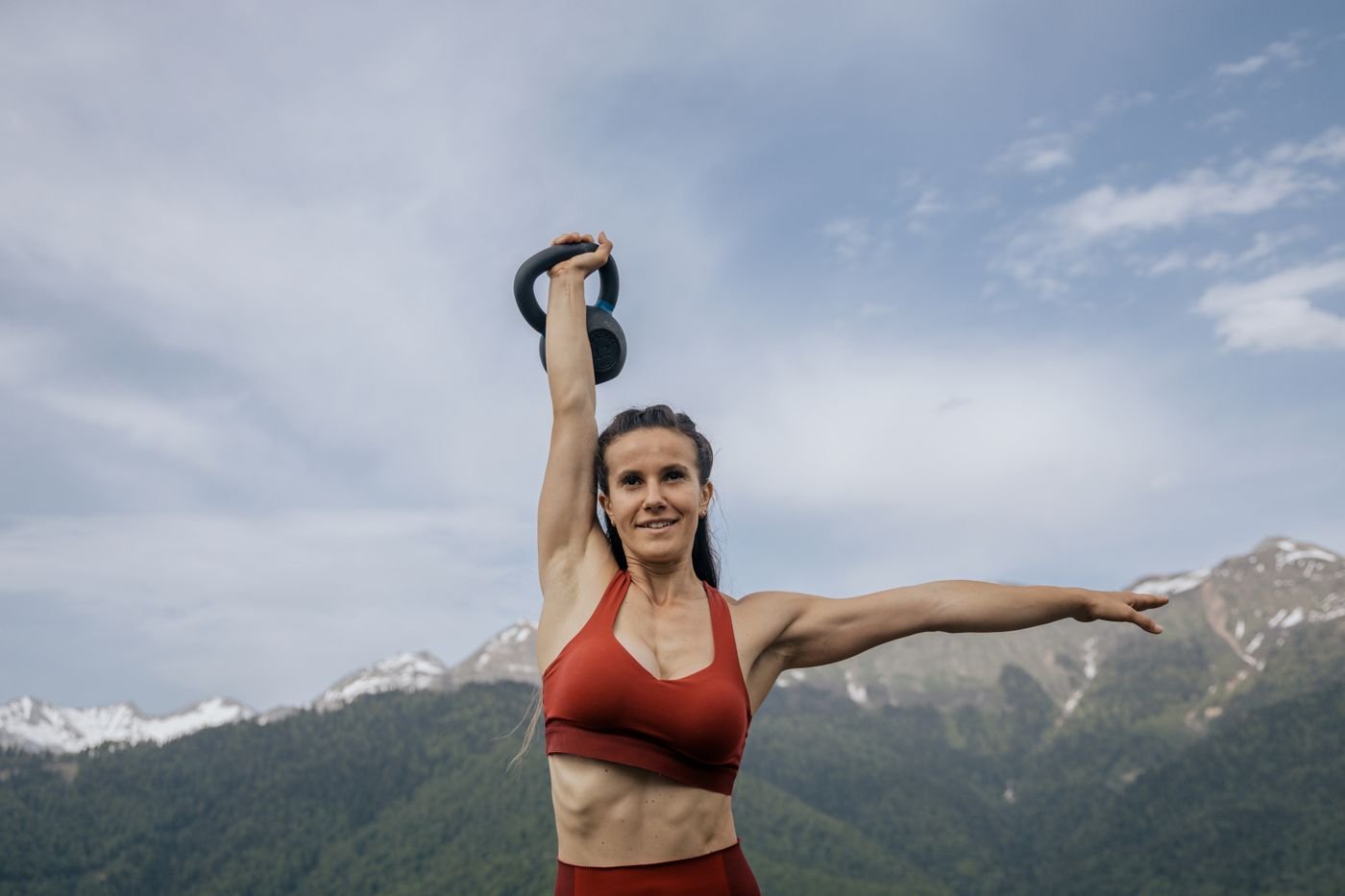
A kickstand deadlift keeps most of the load on the front leg while the back foot provides light support. Stand with the working foot forward and the other foot a short step behind, heel lifted. Shift most of your weight onto the front foot. With the kettlebell in one or both hands, push the hips backward while keeping a small bend in the working knee. Stop when the hamstrings feel loaded and the back can remain comfortably braced.
The back leg is a kickstand, not a second engine. If both legs push equally, the movement becomes a staggered conventional deadlift. If the rear foot barely touches the floor and you wobble on every repetition, move it a little wider. A stable setup lets you challenge the hip extensors without wasting the set on balance corrections. Keep the bell close to the front shin, and avoid twisting the shoulders toward the working leg.
Perform two or three sets of eight to ten repetitions per side. Start with the weaker or less coordinated side and match its repetitions on the other side. A contralateral hold can add a trunk-stability challenge, but it is not necessary to create a good hamstring-and-glute stimulus. Progress by increasing the kettlebell load, controlling the eccentric for two to three seconds or moving to a more demanding single-leg variation only after balance is reliable.
Training one leg at a time is useful, yet it does not automatically produce more muscle growth than bilateral training. Comparisons of unilateral and bilateral programs generally find strength improvements specific to the tested task. The practical reason to include the kickstand hinge is to add unilateral exposure and a different loading pattern, not to promise that it will fix every asymmetry.
Reverse lunge: control the step and keep your balance
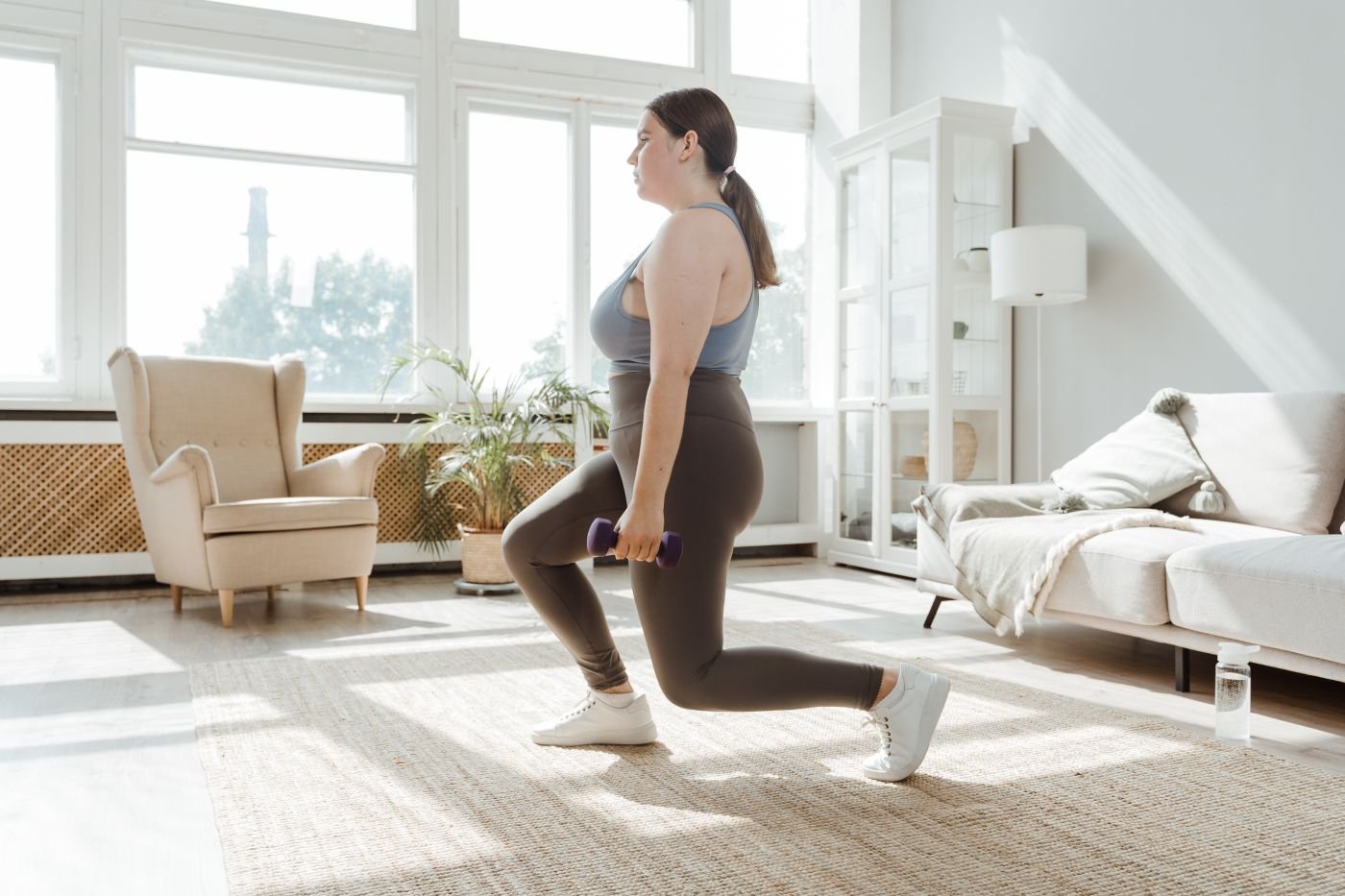
Start standing tall with the kettlebell at your chest or by one side. Step backward far enough that both knees can bend without forcing the front heel to rise. Lower under control, then drive through the front foot to return to standing. Keep some side-to-side distance between the feet, as if standing on two rails rather than one tightrope. That simple change can make the exercise feel dramatically more stable.
Reverse lunges often feel more comfortable than forward lunges for people who dislike the braking demands of stepping forward, but knee comfort is individual. They are not guaranteed to be painless or categorically safer. Use a shorter range, a handhold or a static split squat if balance or discomfort interferes. If the knee is painful, swollen or unstable, do not force repetitions through the problem.
For the strength portion, aim for two or three sets of eight to ten controlled repetitions per leg. The front leg does most of the work, while the rear leg helps balance. A slight forward torso inclination can increase the hip contribution, provided the back stays controlled. Keeping the torso more upright often feels more quad-focused. Neither position needs to be exaggerated. The right version is the one you can repeat and progressively load.
When the movement is easy, add load or pause for one second near the bottom. Holding the kettlebell in the opposite hand challenges lateral stability, but should be introduced after the basic lunge is dependable. If the grip or balance fails before the legs, switch to a goblet hold or use a supported split squat rather than calling a compromised set productive training.
Equipment Worth Exploring
Explore equipment, accessories and gear from our carefully selected range.

Squat Harness
Wearable harness for hands-free cable squats, sled work, and lower-body training.

Go-Tone Pro
Portable digital cable trainer with up to 66 lb (30 kg) of adjustable resistance.


Belt Squat Collar
Heavy-duty collar adapter for compatible belt-squat and landmine bar setups.

HUSLA Leg Extension Pad
Pad attachment designed to increase usable range of motion on compatible leg-extension machines.
Glute bridge: finish with controlled hip extension
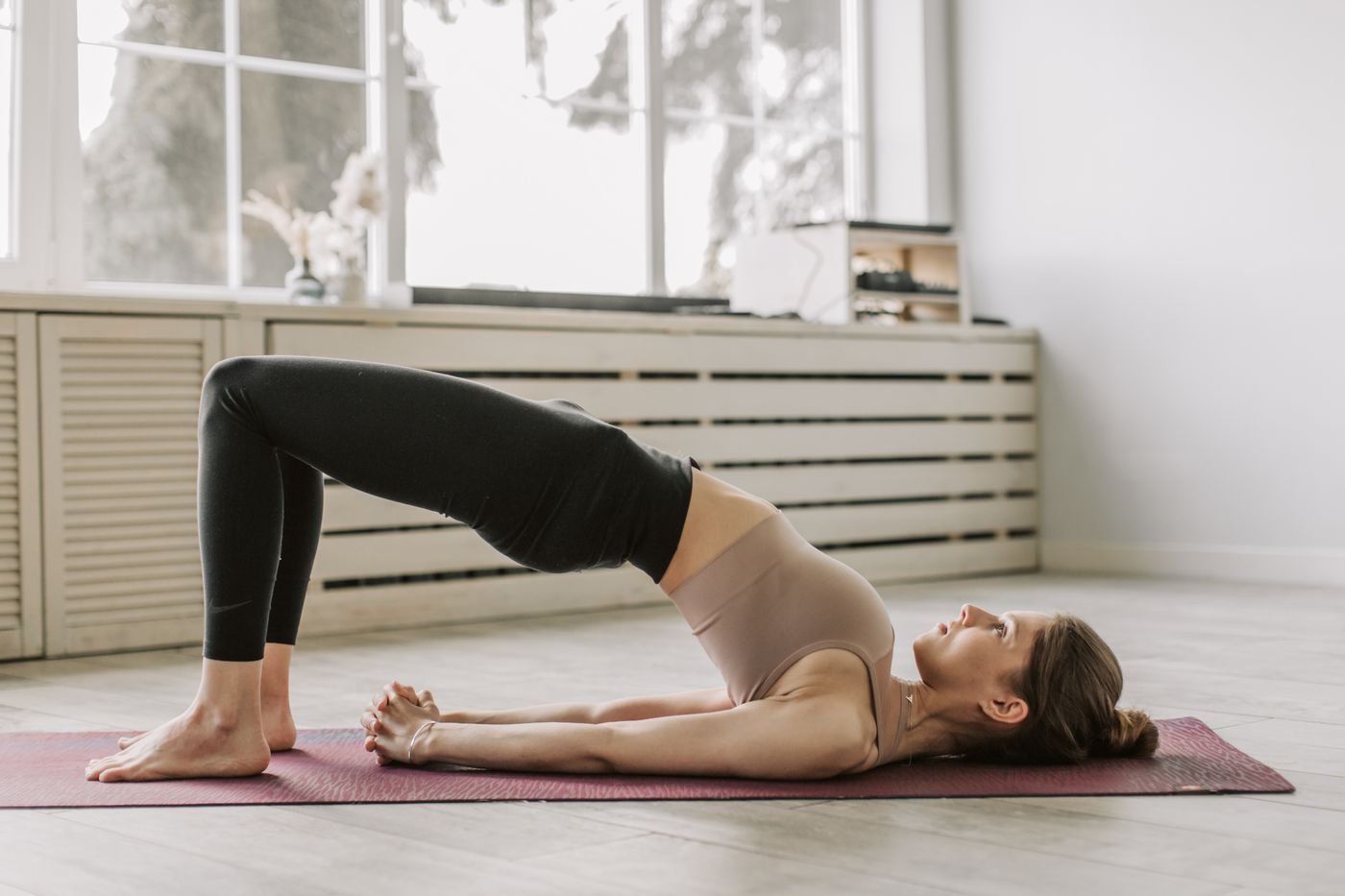
Lie on your back with knees bent and feet planted at a comfortable distance from the hips. Exhale gently, brace the abdomen and push through the feet to lift the pelvis. Stop when the torso and thighs approach a straight line. The movement should come mainly from the hips; it does not require arching the lower back or pushing the rib cage upward. Lower slowly and repeat without bouncing.
A bodyweight bridge is a useful entry point, especially when a person cannot yet control a loaded hip hinge. To make it a meaningful strength exercise, place a kettlebell carefully across the hip crease with padding if needed, keep both hands on it, and add load only when the position remains secure. If the kettlebell shape makes it uncomfortable or unstable, use a dumbbell or a dedicated padded bar instead. Avoid balancing a heavy bell precariously on the pelvis.
Try two or three sets of ten to fifteen repetitions, with a one-second squeeze at the top and a controlled descent. A single-leg bridge is an option, but it can turn into a hamstring-cramp or pelvic-rotation exercise if the base version is not mastered. The goal is repeatable hip extension under progressively useful tension. Bridge variations and hip thrusts can be effective, but one movement cannot isolate the glutes completely or cancel the health effects of a sedentary day.
Think of the bridge as the low-complexity end of this workout. If the legs are already exhausted from squats and lunges, two high-quality sets may be sufficient. More repetitions are worthwhile only while the target muscles are working and the position remains controlled.
Functional Fitness Shirts & Workout Gear
Functional-fitness shirts, tanks and workout gear for athletes who train strength, conditioning and everything in between.

Muscle Mommy Pink Kettlebell Gym Decal for Women, Lifte Sticker
Put “Muscle Mommy” gym humor on your laptop, bottle, or gym gear.

Donut Kettlebell – Bakery Gains Meme Hooded Pullover Hoodie
Make your off-duty look more fun with “Donut Kettlebell”.

Dia De Los Muertos Kettlebell – Day of the Dead Workout Hoodie
Stay casual and show some lifting attitude with “Dia De Los Muertos Kettlebell”.

Watermelon Kettlebell – Fruit Themed Workout Hooded Pul Hoodie
Bring “Watermelon Kettlebell” gym humor to lazy days and post-workout plans.

Pancake Kettlebell – Breakfast Gains Meme Hooded Pullov Hoodie
Show off your lifting humor in a laid-back “Pancake Kettlebell” hoodie.

Blue Macaroon Kettlebell – Whimsical Fitness Meme Pullo T-Shirt
For laid-back days and bulking humor: “Blue Macaroon Kettlebell”.

Pink Macaroon Kettlebell – Girly Strength Meme Decal fo Sticker
Stick a little “Pink Macaroon Kettlebell” humor on your favorite gear.

Heavy Metal Skull Kettlebell | Rock Music Lifting Graph T-Shirt
Show some metalhead attitude with a playful “Heavy Metal Skull Kettlebell” tee.

Rap God Kettlebell Gym | Funny Bodybuilding Vest Tank Top
Train hard, laugh a little, and rep “Rap God Kettlebell”.

Heart Shaped Kettlebell Valentine’s Day for Kettlebell Sticker
Give your everyday gear a playful “Heart Shaped Kettlebell Valentine’s Day” twist.
The four-week two-day plan: progress without rushing
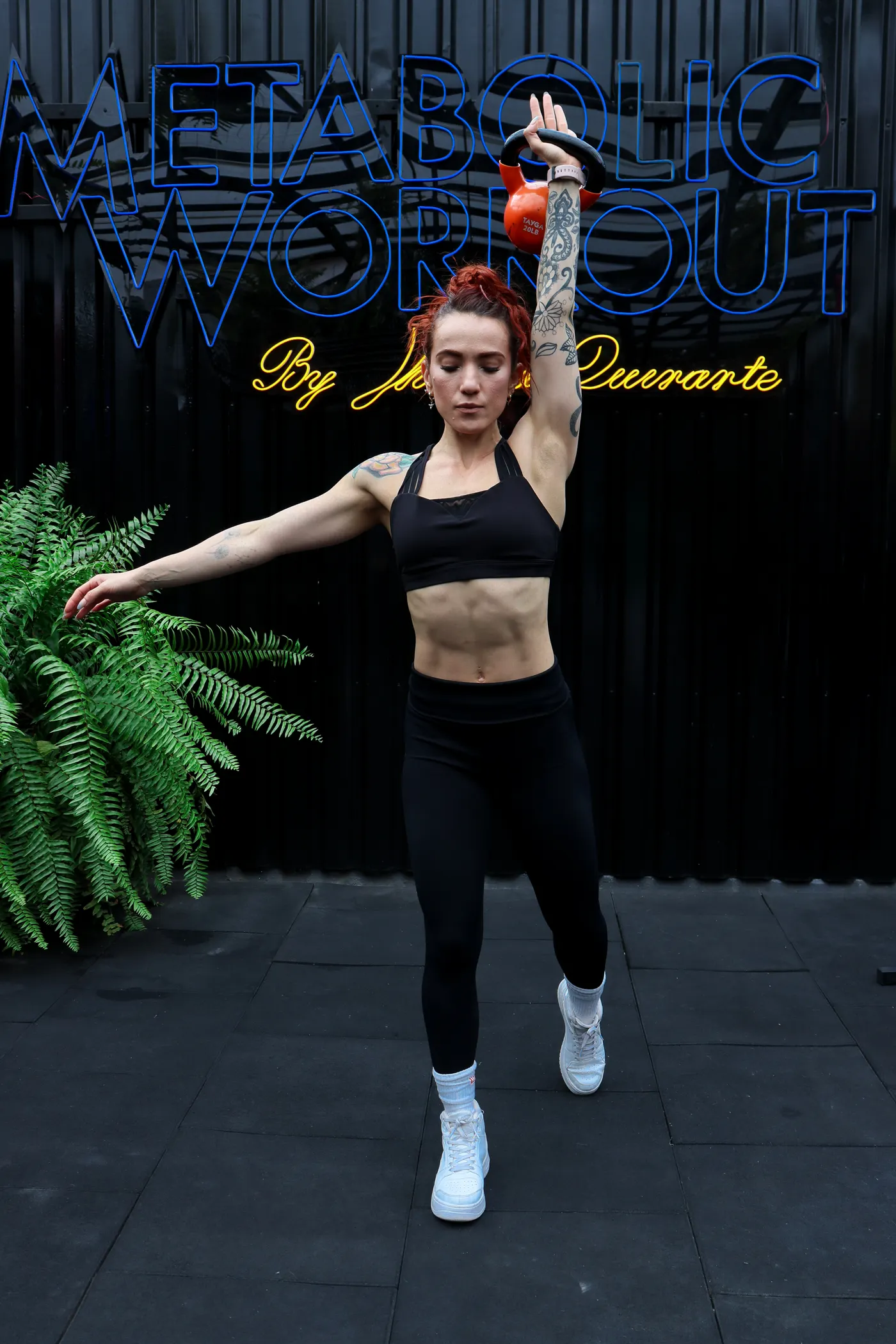
Run this routine twice weekly, ideally with at least forty-eight hours between demanding leg sessions. Begin each workout with five minutes of easy movement, then rehearse unloaded hinges and squats. On Day A emphasize squat quality; on Day B emphasize the hinge and lunge. Both days use the same five movement families, but the set counts shift so that the hardest exercise is performed while you are fresh.
| Movement | Day A | Day B |
|---|---|---|
| Swings or controlled deadlifts | 2 x 8 | 3 x 8 |
| Goblet squat | 3 x 8-12 | 2 x 8-12 |
| Kickstand deadlift | 2 x 8 each | 3 x 8 each |
| Reverse lunge | 3 x 8 each | 2 x 8 each |
| Glute bridge | 2 x 12-15 | 2 x 12-15 |
Rest about sixty to ninety seconds between easier bridge sets and ninety to one hundred eighty seconds for hard squats, hinges and lunges. Swings should have enough recovery to preserve power; do not use short rest as a badge of effort. For a new trainee, start with two sets of each strength exercise in week one and add the extra sets only when recovery is good.
Week 1: Choose conservative loads and record the repetitions, technique and estimated repetitions left in reserve. Week 2: Add one clean repetition per set where possible, staying within the prescribed range. Week 3: If the top of the range is reached with good control, increase the load by the smallest practical amount and return to the lower end of the range. Week 4: Repeat or modestly improve the best week-three performance without turning every set into a maximal test.
If you have only one kettlebell, you can still progress by improving range, tempo and unilateral control, but these are temporary tools rather than endless substitutes for heavier loading. When twelve easy goblet squats no longer challenge the legs, a second bell or a different loading setup becomes useful. Keep a simple log: bell weight, repetitions, sets, perceived difficulty and any pain. That record tells you more about progress than how sweaty a session felt.
The main takeaway is that the kettlebell is a tool, not a magic exercise category. Stronger legs and glutes come from well-chosen movement patterns, enough challenging work, recovery and gradual progression. The five moves provide a practical starting structure; adjust them to your mobility, skill and equipment rather than forcing every body into an identical routine.