Advertising disclosure: This page includes affiliate product links that may earn us a commission, as well as products from our own store.
Farmer’s Carry vs Zercher Carry: What 38 Adults Reveal About Blood Pressure
Loaded carries appear simple: lift a weight and walk. Yet moving the resistance from beside your legs to the front of your torso can change how the whole exercise feels. A farmer’s walk challenges your grip and walking posture with two side-hung weights, while a Zercher carry shifts the implement into your arms in front of the body.
A controlled comparison in 38 healthy young adults observed different immediate blood-pressure and arterial-wave responses after the two tasks. The interesting result is not that one exercise is harmless and the other is dangerous. It is that the details of the loading protocol, the physiological outcome being measured and the person’s health context matter before anyone makes that claim.
1. Understand what the 38-person experiment compared
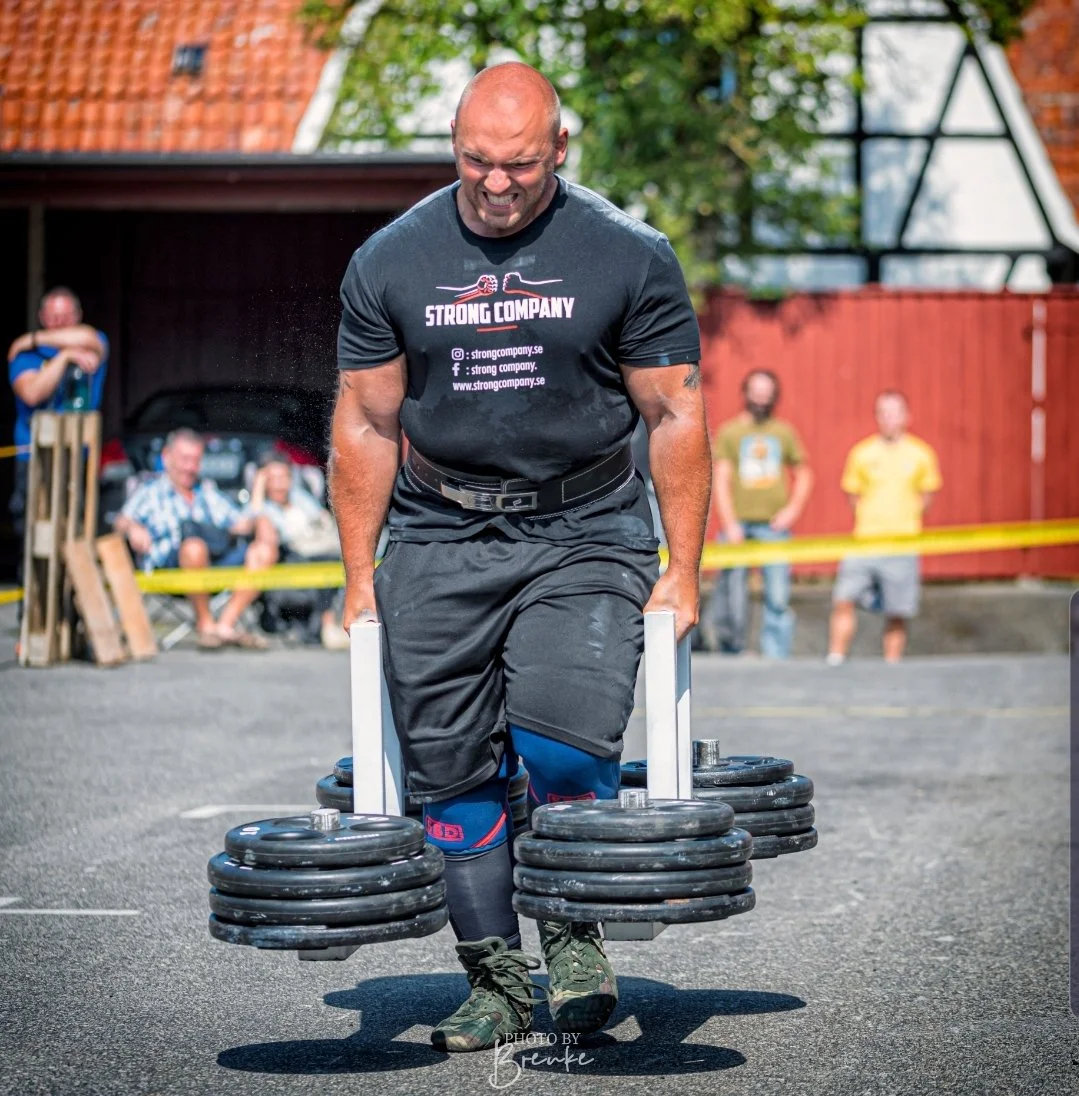
Researchers enrolled 39 young adults; one withdrew, leaving 38 participants: 22 women and 16 men. Each completed a bilateral farmer’s-handle walk during one experimental visit and a front-held Zercher carry during another. Both tasks involved walking for 30 seconds on a flat indoor surface, followed by measurements of peripheral blood pressure, estimated central blood pressure and a pulse-wave index. This was a short, immediate-response test, not a multiweek fitness intervention.
The loads were different by design. For participants who lifted zero to three times per week, the total farmer’s-handle load was 50% of body weight, divided between the two handles; Zercher loading was 30%. For people lifting more than three times weekly, the assignments were 75% and 40% of body weight, respectively. The Zercher implement consisted of plates supported in front of the torso. This makes comparisons applicable to those particular prescriptions, not to any two versions loaded with identical kilograms.
Because both the weight and its position changed, the design cannot isolate placement as the single cause of every observed difference. Farmer’s handles were tested at the first visit and Zercher carries at the second rather than in a randomised order. Post-carry vascular measurements were not repeated across multiple recovery time points. All participants were relatively young and healthy, so the findings cannot be assumed to establish safety for older people or patients with cardiovascular disease.
The study still offers useful information: two common strength-training carries, performed for the same duration with practical relative loads, produced measurably different short-term responses. Treat that as a reason to record your setup carefully, not as a universal prescription for how heavy every lifter should carry.
2. Moving the load changes the task, not just its name
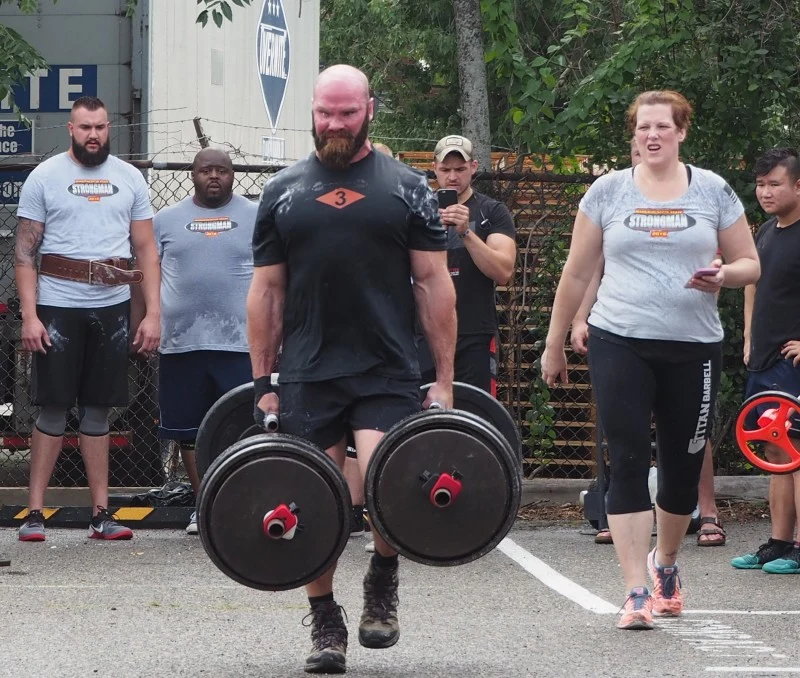
The farmer’s carry positions a load along each side of the body, usually in a pair of handles, dumbbells or kettlebells. While you walk, the hands and forearms maintain contact with the implements, the shoulders resist being pulled down and the trunk counters the tendency to swing or lean. With sufficiently heavy handles, grip endurance can become the factor that ends a set even while the legs feel capable of further steps.
In the Zercher carry, the weight sits closer to chest height and farther in front, supported by the crooks of the elbows. It changes the balance problem. Keeping the torso organised around an anterior load involves the upper back and abdominal region differently, and the implement may press into the arms. The limiting factor can therefore be breathing comfort, rack position, front-load fatigue or posture rather than hand strength.
Equipment changes those mechanics again. A sandbag hugged to the chest is not identical to metal plates balanced in a Zercher cradle, and a trap bar is not identical to two independent farmer’s handles. Each version can be useful, but no single study of one implement validates every variation. Consider the shape, handle spacing, pickup height, and how reliably the load can be set down without endangering yourself or anyone else.
Before changing exercises, write down what you are actually trying to improve. For a grip-intensive carry, keep the implement and handle thickness consistent; for trunk stability under an anterior load, hold the Zercher position steady and progress walking quality. You can improve performance in either version without implying that one creates the same adaptation as the other.
3. Blood pressure and arterial-wave findings pointed in different directions
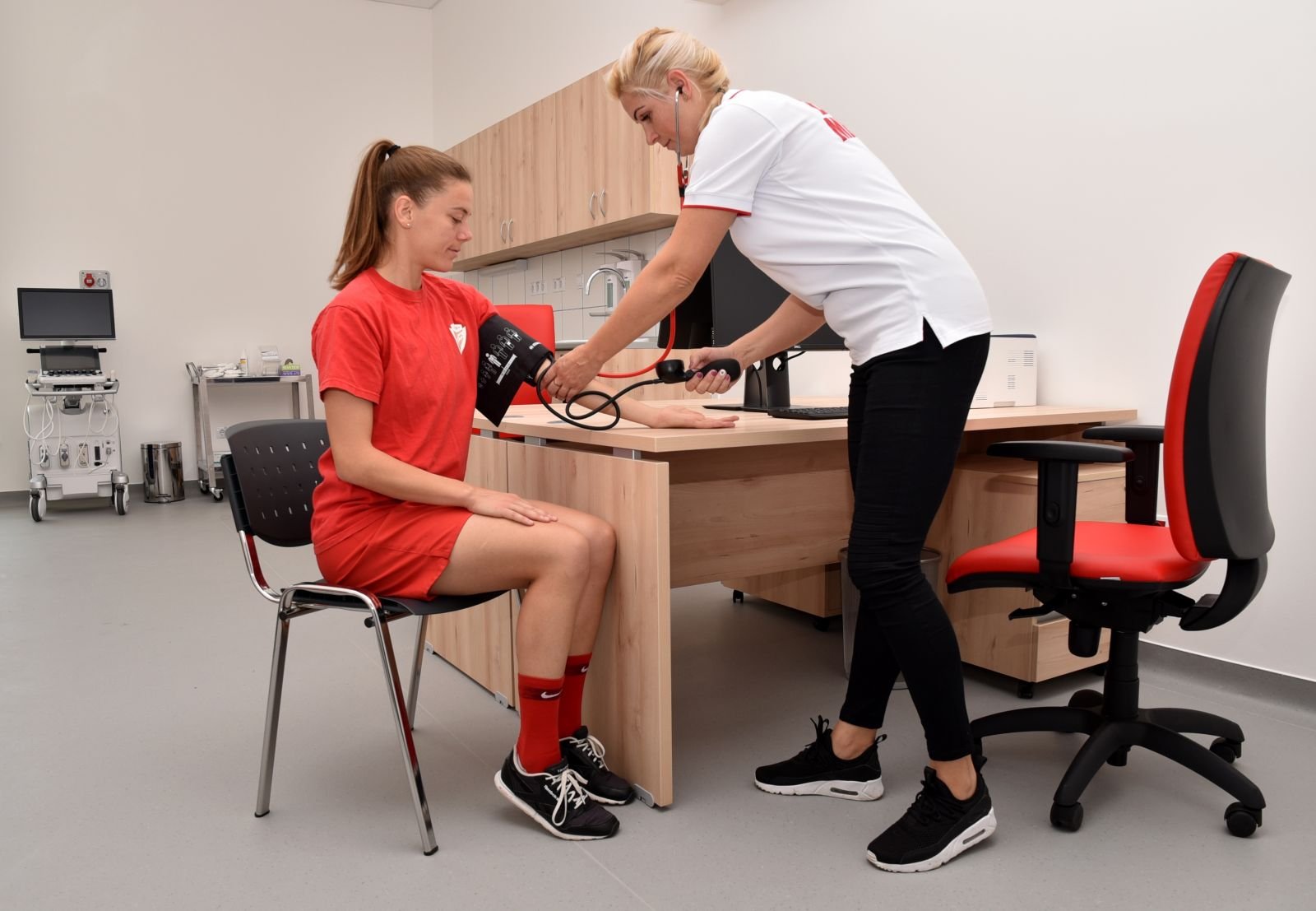
Both protocols increased central systolic pressure and an augmentation index adjusted to a standard heart rate of 75 beats per minute, often written AIx@75, in men and women after the exercise. That index reflects aspects of arterial pressure-wave behaviour; it is not simply a blood-pressure number from a cuff. The Zercher condition produced a larger rise in AIx@75 than the farmer’s-handle condition in the between-carry comparison.
Peripheral systolic blood pressure, measured at the arm, told a different story. The farmer’s-handle protocol produced the larger change in the reported male between-carry comparison. In the Zercher condition, peripheral systolic pressure rose significantly for women but did not reach significance for men in the within-condition comparison. Central pressure rose in both sexes. Those distinctions matter more than a misleading headline claiming that farmer’s carries always raise everybody’s blood pressure more.
A higher post-exercise value is a temporary physiological response recorded around an effort. It is not necessarily a sign of a chronic problem or an indication that the artery has become permanently less elastic. The test did not track how these readings changed after repeated weeks of training, whether the participants experienced symptoms or whether one condition changed cardiovascular disease risk.
Most importantly, the two groups of exercise sets used different relative loads. The researchers observed physiological patterns under those prescriptions; they did not prove that body position alone explains the entire difference. Comparing the results to your own loaded-carry session requires remembering that a 30-second walk with two appropriately loaded handles is a different exposure from a maximal event run lasting considerably longer.
4. Why a change in AIx is not a diagnosis of damaged arteries
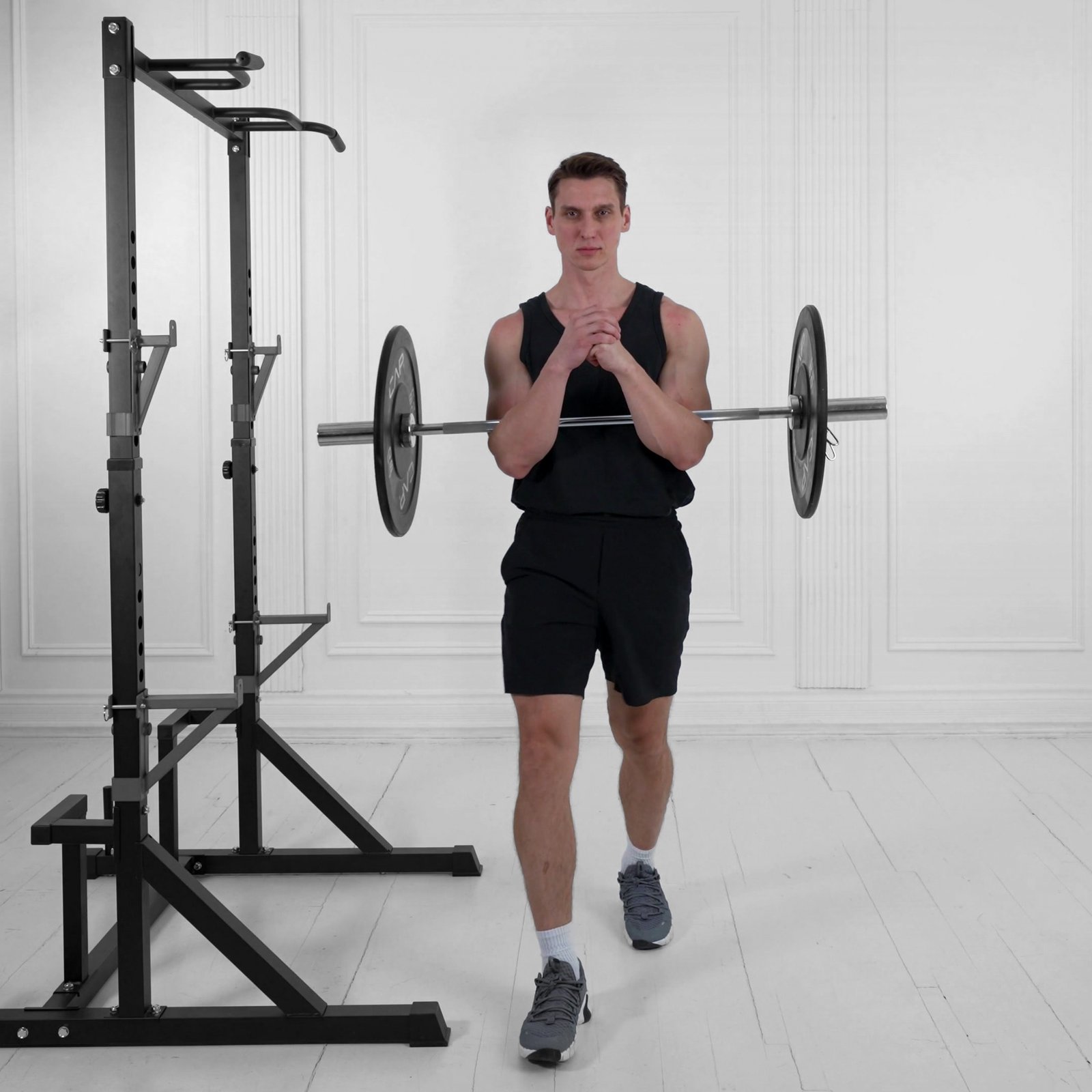
AIx@75 estimates how reflected pressure waves contribute to the central arterial waveform after adjustment to a specified heart rate. It can change in the short term because of vascular tone, cardiac conditions and the immediate demands of exercise. It is not equivalent to a clinical diagnosis of hardened arteries, and the rise seen after a Zercher carry should not be translated into a claim that the exercise permanently damages the circulatory system.
Likewise, the larger peripheral systolic pressure change observed with the farmer’s handles in the male comparison should not be treated as evidence that this exercise is inherently unsafe. Blood pressure often rises during muscular effort, especially when a substantial mass must be supported. Exercise sessions and chronic training adaptations must be studied separately: an acute pressure response does not reveal the long-term cardiovascular effect of a programme.
There are practical limitations that should keep interpretation grounded. The participants were young and without diagnosed cardiovascular disorders. Their carry visits were not randomised, and the post-carry vascular measurements were collected at a single time point rather than repeatedly across recovery. The study did not control menstrual-cycle phase, and the loads did not match between movements. These factors leave meaningful uncertainty about how well the result transfers.
Further controlled testing with matched weights, multiple recovery readings and a wider range of participants would help separate load-position effects from loading magnitude. Until then, neither the farmer’s carry nor the Zercher carry should be marketed as a treatment for blood pressure or condemned as uniquely dangerous because of one temporary measurement.
5. Choose your carry equipment and set an honest goal
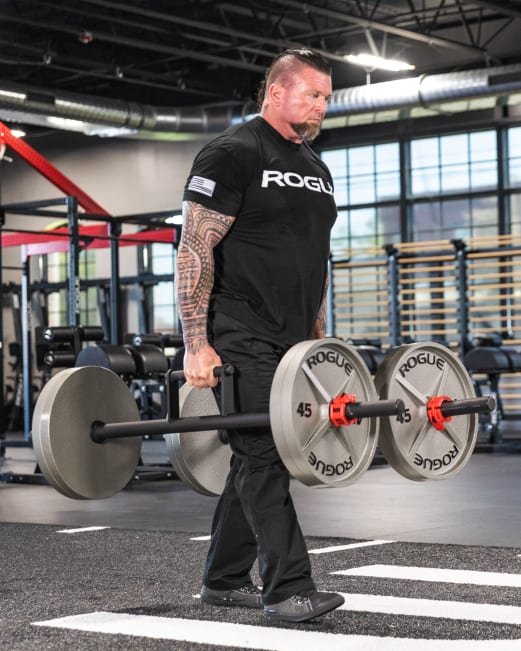
Two moderately loaded dumbbells or kettlebells are a practical starting point for the farmer’s walk in a home gym. They can be picked up from a stable floor, carried along a short clear lane and put down deliberately. Dedicated farmer’s handles support greater event-specific loads and a more familiar strongman grip, but you must have room for the handles to swing and turn. A trap bar can be another side-loaded option, although it introduces a connected frame and a different clearance requirement.
To train the front-loaded pattern, choose an implement that you can secure at the beginning of the effort. A sandbag is often easier to hug than a long barbell; a barbell Zercher carry usually needs a correctly set rack height and enough clear floor for the plates. Secure collars, a controlled pickup and a clear exit are essential. Contact discomfort at the elbows is a cue to adjust the setup or load rather than to ignore slipping equipment.
Grip aids and straps can alter what makes a carry difficult. Someone practising a farmer’s walk specifically for grip endurance may avoid them, while someone emphasising trunk work may use them to stop the hands from becoming the sole limit. No accessory changes the vascular findings of the 38-person comparison into product-specific evidence. The equipment below represents practical carry setups and compatible strength-training gear, not products tested by that study.
Pick a carry you can complete with recognisable steps, a stable torso and controlled breathing. Record the implement, total load, distance, time and why the set ended. When the main goal is specific, progression becomes clearer and you are less tempted to chase heavier numbers on two movements that are not mechanically equivalent.

Equipment Worth Exploring
Explore equipment, accessories and gear from our carefully selected range.


Rubber Hex Dumbbells
Rubber-coated hex dumbbell pairs with a stable shape for home and commercial strength training.


Cast Iron Kettlebells
Textured cast-iron kettlebells for swings, squats, carries, and full-body training.


Open Hex Bar
Open-frame trap bar with multiple handles for deadlifts, carries, and lower-body training.

Leather Lifting Straps
Padded leather straps support grip during heavy rows, deadlifts and pulling exercises.

6. Build a four-week carry progression without racing the clock
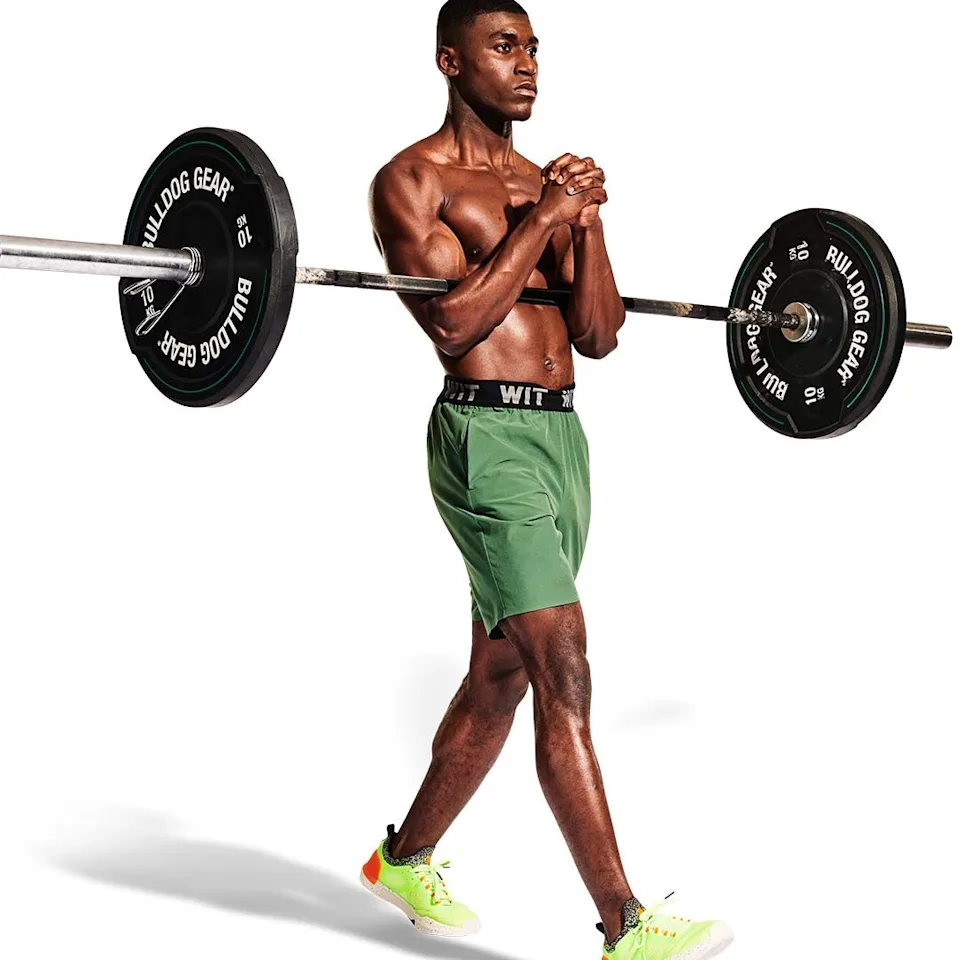
Establish a level lane with a safe set-down area at each end. Remove loose weights, cables and traffic before lifting. Practise a smooth pickup, take a breath, settle your balance and start walking under control. For a front-loaded Zercher variation, rehearse the hold while stationary first. If the implement rolls, the elbows cannot support it comfortably or your route is too tight, the setup needs changing before a timed set.
An illustrative first session might use three walks lasting 15 to 25 seconds with ample rest. That is simply a conservative logging example, not a protocol proven by the experiment. End each effort while you can still lower the load deliberately. A clean set with manageable weight is more useful than an extra five seconds spent dragging or stumbling with the load.
During the walk, keep your steps repeatable and allow regular breathing instead of maintaining a prolonged breath-hold. A brief brace for the pickup is different from straining throughout an entire walk. Breathing strategy deserves extra attention for anyone with relevant blood-pressure concerns; such people should discuss suitable loading with a clinician rather than adopting a generic strongman programme.
For weeks one and two, keep the load and lane the same while improving step quality and consistent durations. In week three, if posture and breathing remain controlled, increase the resistance modestly and return to your original route length. In week four, repeat the new setup before progressing again. Change one metric at a time: load, distance, duration or terrain. Adding all four simultaneously makes it difficult to tell what improved.
A training note could read ‘two 18 kg kettlebells; three 20-second carries; 12 m flat lane; no set-downs; steady breathing’. Next time, the note lets you compare like with like. The functional-training merchandise below fits a hybrid-strength audience but does not change the exercise’s physiological effect.

Strongman Shirts & Strength Gear
Strongman gym shirts and strength gear for lifters who train stones, carries, presses and brutally heavy objects.

Mount Liftmore Strongman – Brian Shaw Hafthor T-Shirt
Make gym days more fun with “Mount Liftmore Strongman” style.

Strongman Metallica Heavy Metal – Meme Shirt & Gains T-Shirt
Rep “Strongman Metallica Heavy Metal Graphic” humor in and out of the gym.

Enter Strongman Enter Sandman Parody Strongman Atlas St Hoodie
Stay casual and show some metalhead attitude with “Enter Strongman”.


Strongman Superman Decal for Water Bottles Laptops Gym Sticker
Stick a little “Strongman Superman” humor on your favorite gear.

Big Man Batman Gym Hero Sweatshirt
Keep things casual with a little “Big Man Batman Gym Hero” attitude.

The Original Atlas Stone Shirt – Greek Mythology T-Shirt
Heavy lifts, good laughs, and a little “The Original Atlas Stone” energy.

Sisyphus Gains Tee
Show some lifting attitude with a playful “Sisyphus Gains Eternal Struggle Greek” tee.

Atlas Lifting The Earth Meme Strongman Shirt T-Shirt
Bring “Atlas Lifting The Earth” humor to your next gym day.

7. Know when heavy carries need a more individual decision
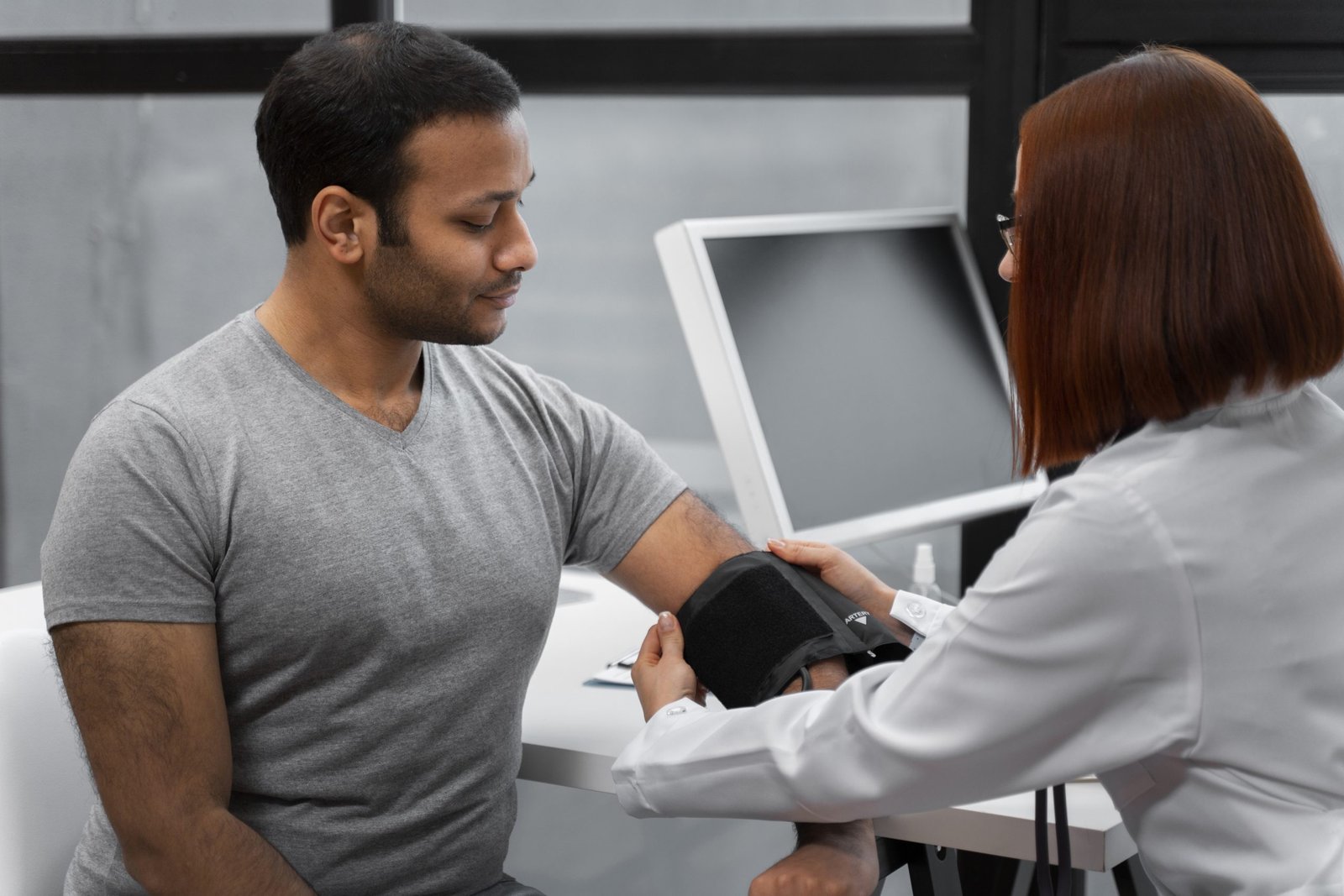
The results from healthy young adults cannot answer how heavy loaded carries should be for a person living with heart disease, diagnosed hypertension or another condition that affects exercise tolerance. If you have those conditions—or have been advised to limit strenuous lifting—seek advice from a qualified healthcare professional before using maximal carries or sustained heavy front loading. Their recommendation should take precedence over a general training example.
Stop and seek urgent medical help for chest pain, fainting, severe or unexpected breathlessness or other alarming symptoms during exertion. Stop an ordinary training set if your vision changes, you cannot control the implement or balance breaks down. For less serious issues such as painful elbow pressure, a tearing grip or shortened steps, put the load down and reduce weight, duration or technical complexity before trying again.
Exercise can support cardiovascular health over time, while individual heavy efforts may temporarily raise pressure. Those statements are not contradictory. The comparison of the two carry types measured immediate responses after unequal loading, not treatment of hypertension, future heart-attack risk or the outcome of a long-term strength programme. One reading should not be used to rank every possible farmer’s or Zercher carry for every person.
For most experienced, otherwise healthy lifters, selection can stay goal-driven: use farmer’s handles for side-loaded walking, hand strength and strongman practice; choose the Zercher position for front-loaded bracing and a distinct carrying challenge. Move gradually, breathe, and track the details rather than assuming more weight always produces a better workout. The useful lesson is precision about the load and the person carrying it—not fear of either exercise.
Equipment Worth Exploring
Explore equipment, accessories and gear from our carefully selected range.


Competition Plates
Competition-style bumper plates for Olympic lifts and loaded strength training.

Grip Plates
Rubber-coated weight plates with handholds for loading barbells and machines.


Speed Collar
Quick-release collars designed to secure weight plates on standard two-inch Olympic bars.


Foldable Wall Rack
Wall-mounted folding squat rack designed to save floor space between workouts.

Leather Wrist Grips
Padded leather lifting grips help support the hands and wrists on heavy pulling exercises.
Functional Fitness Shirts & Workout Gear
Functional-fitness shirts, tanks and workout gear for athletes who train strength, conditioning and everything in between.

Hybrid Athlete Strength Tee
Show some lifting attitude with a playful “Hybrid Athlete” tee.


HYROX High Rocks Functional & CrossFit Hooded Hoodie
Stay casual and show some lifting attitude with “HYROX High Rocks”.

Kettlebell Skull Tee
Heavy lifts, good laughs, and a little “Kettlebell Skull Gym Meme” energy.


Kettlebell Heart X-Ray Meme Top T-Shirt
Show some lifting attitude with a playful “Kettlebell Heart X-Ray” tee.


Fit And Fitter : Dumb And Dumber Gymbro Cardio & T-Shirt
Show some cardio attitude with a playful “Fit and Fitter” tee.

Atlas Kettlebell Earth Meme Greek God Top T-Shirt
Make gym days more fun with “Atlas Kettlebell Earth Lifter” style.

Hell's Bells Kettlebell Tee
Show some rock-and-lifting attitude with a playful “Hell's Bells Kettlebell” tee.