Advertising disclosure: This page includes affiliate product links that may earn us a commission, as well as products from our own store.
Should you front squat flat-footed, put your heels on wedges, or even raise your toes? A comparison involving 12 trained lifters measured how these choices changed muscle signals, joint motion and force under the feet. The answer is more useful than a universal ‘best stance’: foot position changes the task, but none replaces stable technique and progressive training.
What the 12-lifter squat comparison actually tested
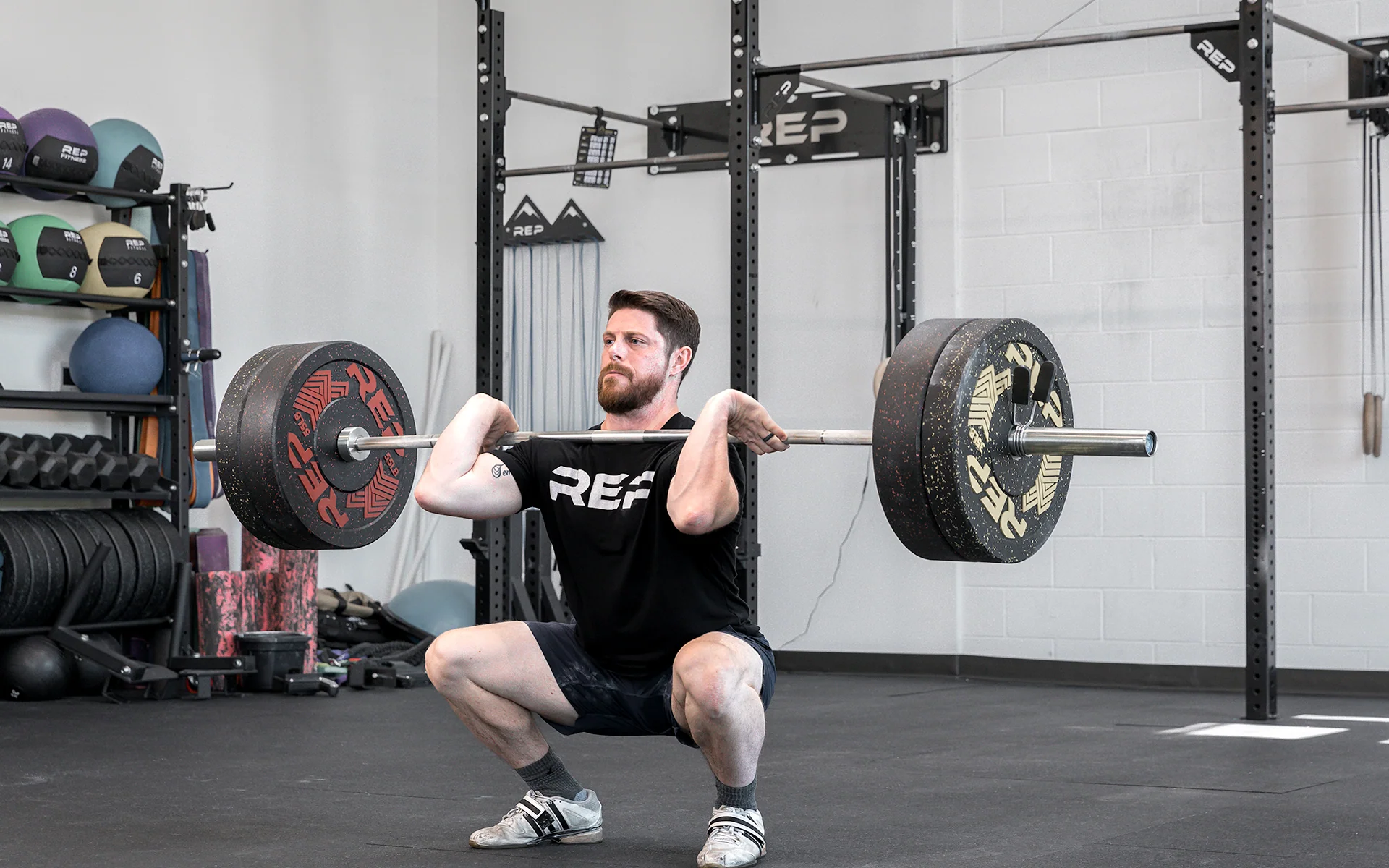
Squat advice gets complicated when a minor change under your feet is treated as a completely different exercise. A controlled comparison involved 12 resistance-trained men who could competently perform both front and back squats. Each lifter performed the two bar positions using three foot setups: a level foot, a heel lift, and a raised forefoot. The testing used roughly 70 percent of a one-repetition maximum, with movement, floor-force and surface muscle-electrical signals recorded.
That design makes the comparison useful for examining what changes during an individual repetition. The same lifters tried the different configurations, which reduces some between-person noise. Their training experience averaged around eight years, so this was not a group learning the front rack for the first time. Measurements included activity in the quadriceps, glutes and spinal erectors, joint angles, vertical ground-reaction force and the location of pressure under the foot.
But this was not a six- or twelve-week muscle-building contest. It did not randomize beginners into three training programs or measure actual thigh growth after months of lifting. A stronger electrical signal in a muscle does not by itself prove more hypertrophy; effort, loading, range of motion and progression matter. Nor does a lower floor-reaction force automatically mean a safer squat. The findings are practical information about movement mechanics, not a winner-takes-all ruling on which wedge every lifter should buy.
The important takeaway is that the contact point with the floor influences a chain of choices upstream: how far the knees travel, where the torso settles, how the weight balances over the foot, and what portion of the repetition feels demanding. Those are reasons to test foot position deliberately instead of copying someone else’s stance.
Flat-foot squats are the baseline, not the inferior option
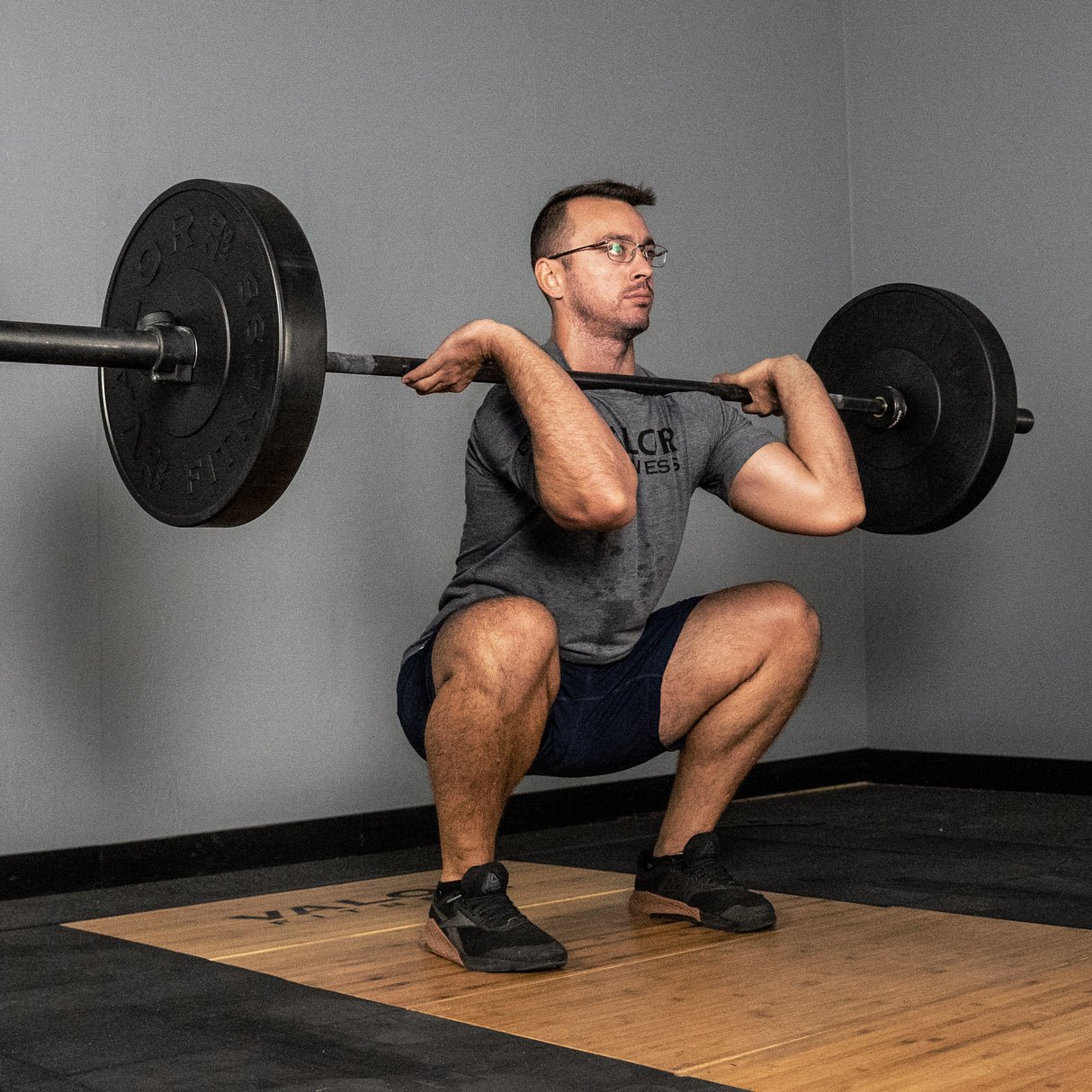
For most lifters, a stable whole-foot contact is the simplest reference point. Set the feet at a width that lets both hips move comfortably, turn the toes slightly outward if needed, and keep the heel, base of the big toe and base of the little toe in firm contact with the floor. The goal is not to freeze pressure on a single tiny spot; it is to avoid drifting so far forward or backward that balance determines the rep.
In the 12-person comparison, the flat-foot condition often produced quadriceps electrical activity comparable to heel elevation, and in the back-squat upward phase both tended to exceed the raised-forefoot condition for key quadriceps regions. That is a meaningful answer to the claim that heels must be elevated to train the quads. The standard setup already provides a substantial knee-extension demand when depth, effort and loading are appropriate.
A flat foot also provides a consistent baseline for tracking your technique. Record three side-view and front-quarter-view reps at a comfortable load. Watch whether the bar remains approximately over the middle of the foot, whether both heels remain planted, and whether the knees travel along a path your hips and ankles can tolerate. If the final third of the descent makes your heels rise or torso collapse, the first fix is to determine whether ankle mobility, foot position, brace or selected depth is limiting you.
Do not turn an individual movement preference into a rigid rule. Some lifters naturally squat deeply with a flat shoe, others need a heel lift for an upright front rack, and some tolerate a different stance width better. Flat-foot reps give you something measurable to compare against rather than being a mandatory final destination.

Equipment Worth Exploring
Explore equipment, accessories and gear from our carefully selected range.

GymPin Squat Wedges
Non-slip 15-degree squat wedges help elevate the heels for deeper quad-focused squats.


Competition Plates
Competition-style bumper plates for Olympic lifts and loaded strength training.


Safety Squat Handles
Barbell squat handles that reduce shoulder positioning demands during high-bar squats.

Foldable Wall Rack
Wall-mounted folding squat rack designed to save floor space between workouts.

What a heel wedge changes—and what it does not
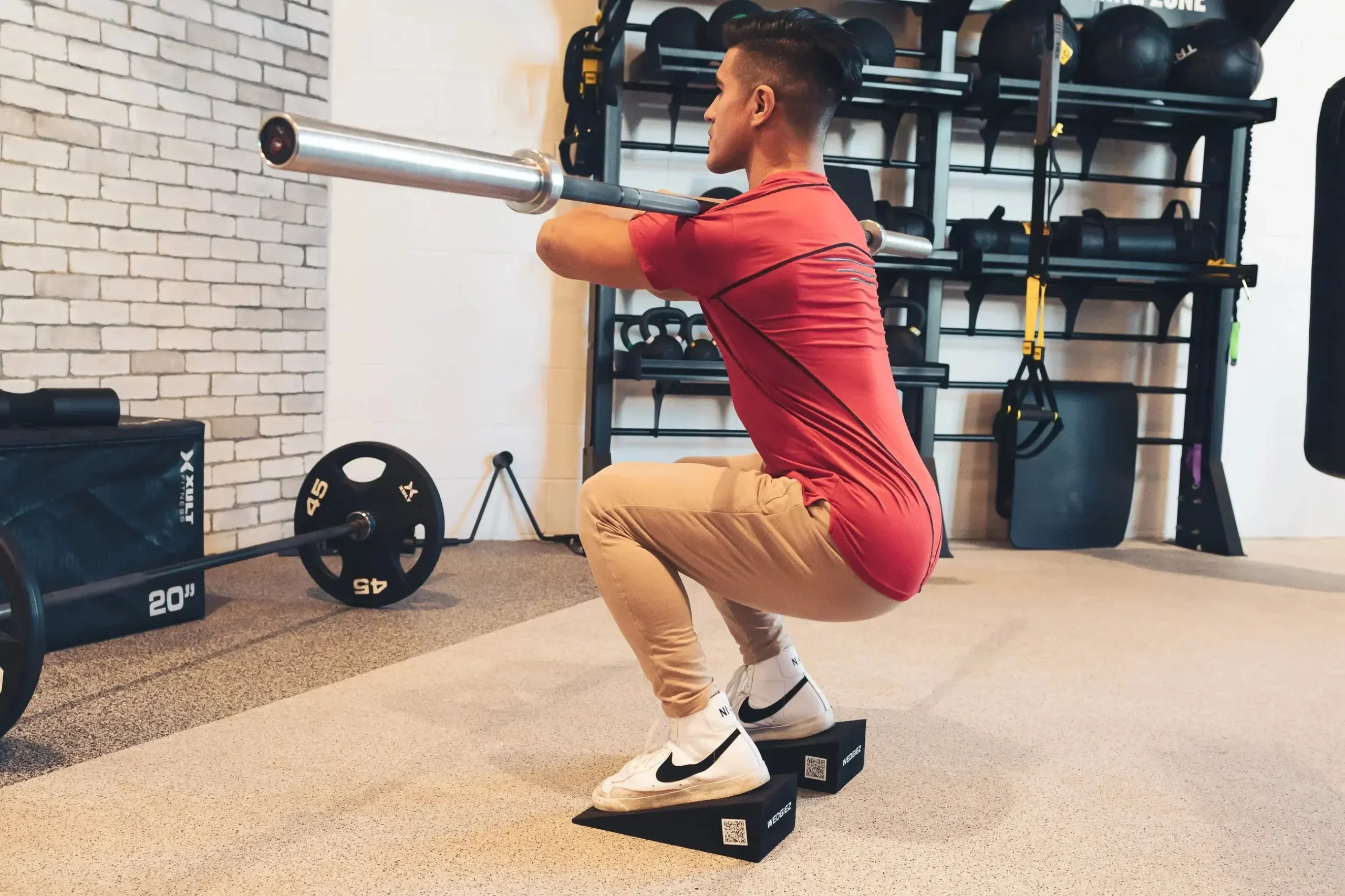
Elevating the heel changes the angle between the shoe and the floor. In practice that can make it easier for a lifter with limited ankle movement to let the knees travel forward while keeping the torso more upright. In a front squat, where the bar already sits in front of the shoulders, a small heel wedge may help preserve the front rack and create enough room to reach a controlled bottom position.
The comparison found that heel elevation affected ankle and knee mechanics and could support greater squat depth. Several quadriceps measurements were at least competitive with flat-foot squatting, rather than consistently superior to it. Separate biomechanical work has also shown that heel lifts redistribute joint work and muscle activity. The exact measured ankle angle depends on the reference axis and the lift configuration, so slogans such as ‘heel wedges always increase dorsiflexion’ or ‘they completely remove ankle demand’ are too simple.
A wedge is a tool, not an automatic quadriceps multiplier. Use an intentionally modest, stable elevation to start. Place both feet symmetrically, verify that the blocks cannot slide, and confirm that the shoe contacts the wedge fully. A solid pair of squat wedges or purpose-built weightlifting shoes offers a more repeatable platform than loose plates or small soft objects. Do not let the wedges roll under the heel while carrying a heavy bar.
Judge the difference by what you can control: comparable depth, consistent balance, front-rack position, knee comfort and clean concentric speed. If heel elevation lets you achieve repeatable range without pain or heel lift, it may be worth keeping. If it pushes your knees into discomfort or changes nothing, there is no reason to insist on it. Knee travel itself is not a defect; sudden pain, loss of control and an unstable support surface are more important warning signs.
Forefoot elevation is a different experiment—not a shortcut to gains
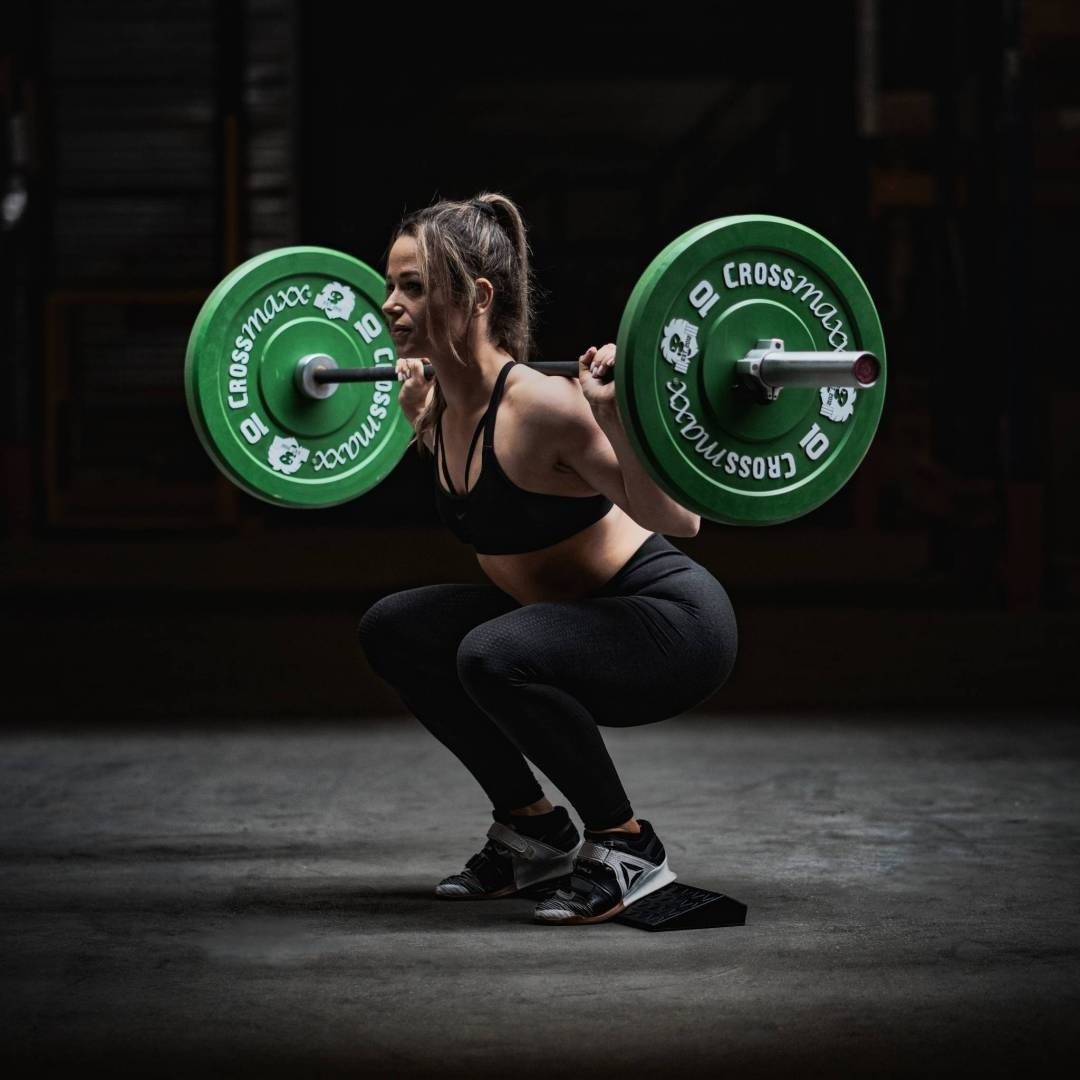
Raising the front of the foot is not the same intervention as raising the heel. It creates the opposite incline under the shoe, changes the ankle’s starting relationship to the floor and often encourages a different combination of knee and hip movement. The 12-lifter comparison included this condition to test how the mechanical demands of a squat respond when the support surface is changed in the other direction.
Against this raised-forefoot setup, flat-foot and heel-elevated conditions produced higher activity in several quadriceps measurements, particularly during the upward portion of the back squat. The raised-forefoot condition also showed lower vertical ground reaction forces in the tested movements and different joint-angle behavior. That describes a changed task at a given test load, not a direct measurement of greater hamstring gains or a prescription for knee rehabilitation.
Why might this matter? A lifter experimenting with a toe rise can feel as though the squat demands more from the hips, while a heel wedge can create an easier route to knee travel. Those sensations are real feedback, but they should not override more useful measurements such as whether the bar remains controlled, the stance is comfortable, and the exercise still loads the target muscles adequately. You can shift emphasis without making the whole movement better.
Use extra caution with improvised forefoot platforms: a small or compressible object under the toes creates a poor footing for a barbell lift. If you want a hip-dominant lower-body accessory, a Romanian deadlift, good morning or supported split squat is often simpler than deliberately destabilizing the main squat. For lifters whose aim is bigger quadriceps, the available single-session evidence does not justify replacing ordinary front squats with toe-elevated heavy squats.

Leg Day Shirts & Workout Gear
Leg-day gym shirts and workout gear for lifters who never skip squats, lunges and lower-body punishment.

1 Plate Squat Club Meme – Motivational Top T-Shirt
Bring “1 Plate Squat Club” humor to your next gym day.

I Love Squats | Leg Day Pink Heart Plate Graphic T-Shirt
Show some leg-day attitude with a playful “I Love Squats” tee.


My Leg Hurts Leg Day Squat Lovers & Meme Fans Hoodie
Bring “My Leg Hurts” gym humor to lazy days and post-workout plans.

Heavy Metal Skeleton Squat for Powerlifting, Bodybuildi T-Shirt
Show some gym-day personality with “Heavy Metal Skeleton Squat”.

Squat Inspector Gym | Edgy Leg Day Meme Workout Decal | Sticker
A fun “Squat Inspector” touch for bottles, laptops, and lockers.

Squats Leg Day Heavy Weights Meme – Essential Top T-Shirt
Bring “Squats Leg Day Heavy Weights” humor to your next gym day.

Funny Squat Queen Gym | Burger King Parody Muscle Shirt Tank Top
Your gym-day look, with a playful “Squat Queen” twist.

Shirt – I Want You To Squat Uncle Sam Patriotic – T-Shirt
Bring “I Want You To Squat Uncle Sam Patriotic” humor to your next gym day.

Let It Grow Leg Day Squats & Booty Building Meme Hoodie
Keep it laid-back with a little “Let It Grow” attitude.
Front squat versus back squat: keep the bar position in the picture
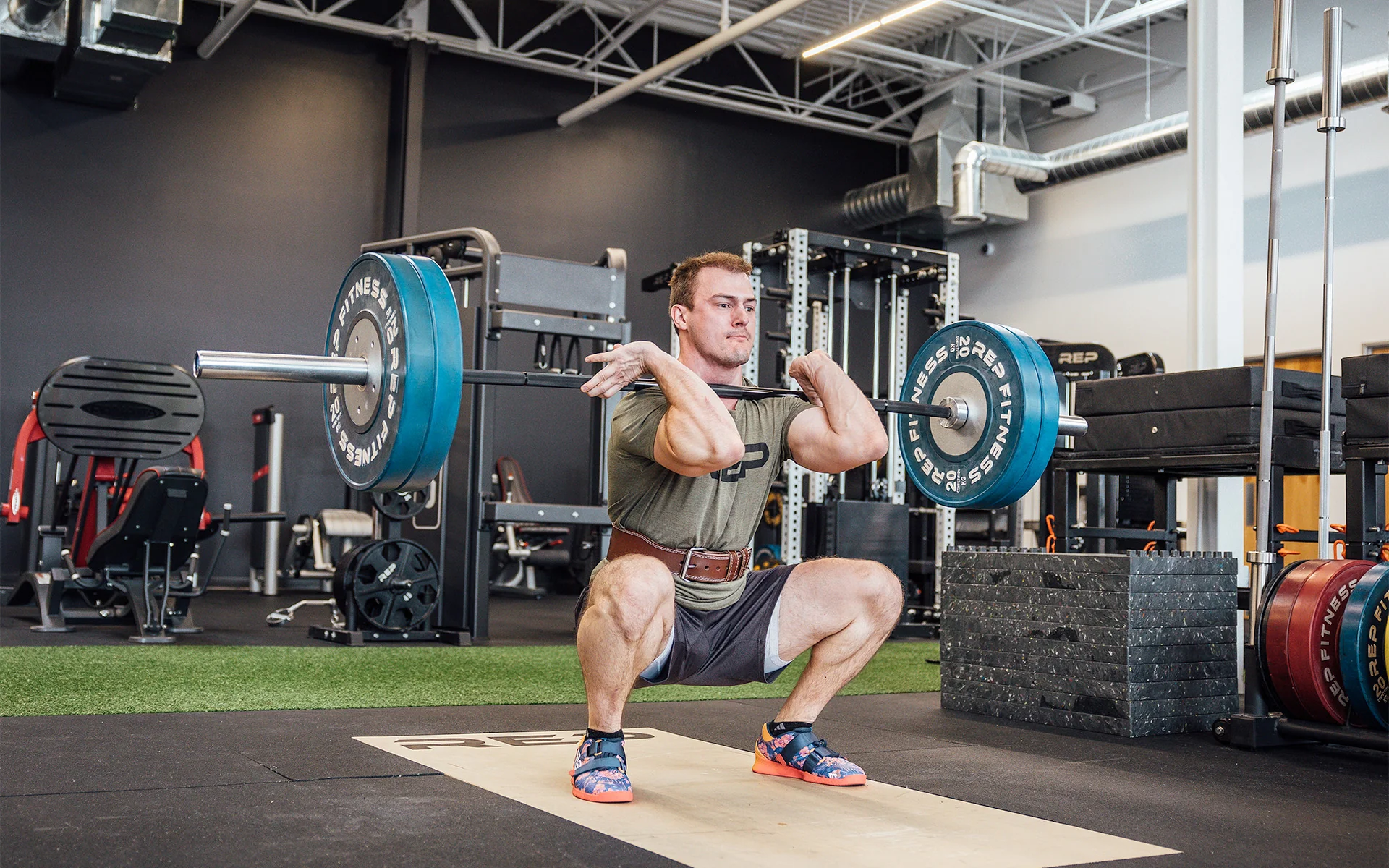
Changing the foot platform is only part of the equation. Moving the loaded bar from the front of the shoulders to the upper back changes how the athlete must organize balance and torso angle. A front squat normally demands an active front rack, upper-back extension and an upright torso; a back squat offers a different loading position and can allow greater absolute weight for many lifters. These differences influence how a foot wedge will feel.
The 12-lifter experiment measured both bar positions, and not every muscle or phase changed in the same way. For example, certain quadriceps activation differences were clearest in the back-squat ascent, while a rectus femoris difference appeared during the front-squat lowering phase. Erector-spinae activation also differed for one front-squat comparison. Reducing the whole dataset to ‘heel wedges activate the quads more in every squat’ misses that phase-specific detail.
Other controlled comparisons of the two bar positions have reported different knee-force and trunk-lean patterns even when overall muscle recruitment was broadly similar. Some work finds greater vastus medialis activity during front squatting under specific maximal-load protocols; other work finds similar knee-extensor demands. These are not contradictions requiring a miracle technique. They reflect differences in who was tested, which loads were used, how deep people squatted, and which result was measured.
If your goal is a powerful clean recovery or a stronger front squat, prioritize a stable front-rack position and repeatable depth. If the priority is general leg size and strength, front and back squats can coexist with other knee-extension work. Exercise selection should take account of joint tolerance, balance, available skill and progressive overload, not isolated EMG rankings.
Equipment Worth Exploring
Explore equipment, accessories and gear from our carefully selected range.

Belt Squat Collar
Heavy-duty collar adapter for compatible belt-squat and landmine bar setups.


Grip Plates
Rubber-coated weight plates with handholds for loading barbells and machines.

Studio V-Squat
Plate-loaded V-squat machine for supported lower-body strength training.

Squat Harness
Wearable harness for hands-free cable squats, sled work, and lower-body training.

Speed Collar
Quick-release collars designed to secure weight plates on standard two-inch Olympic bars.
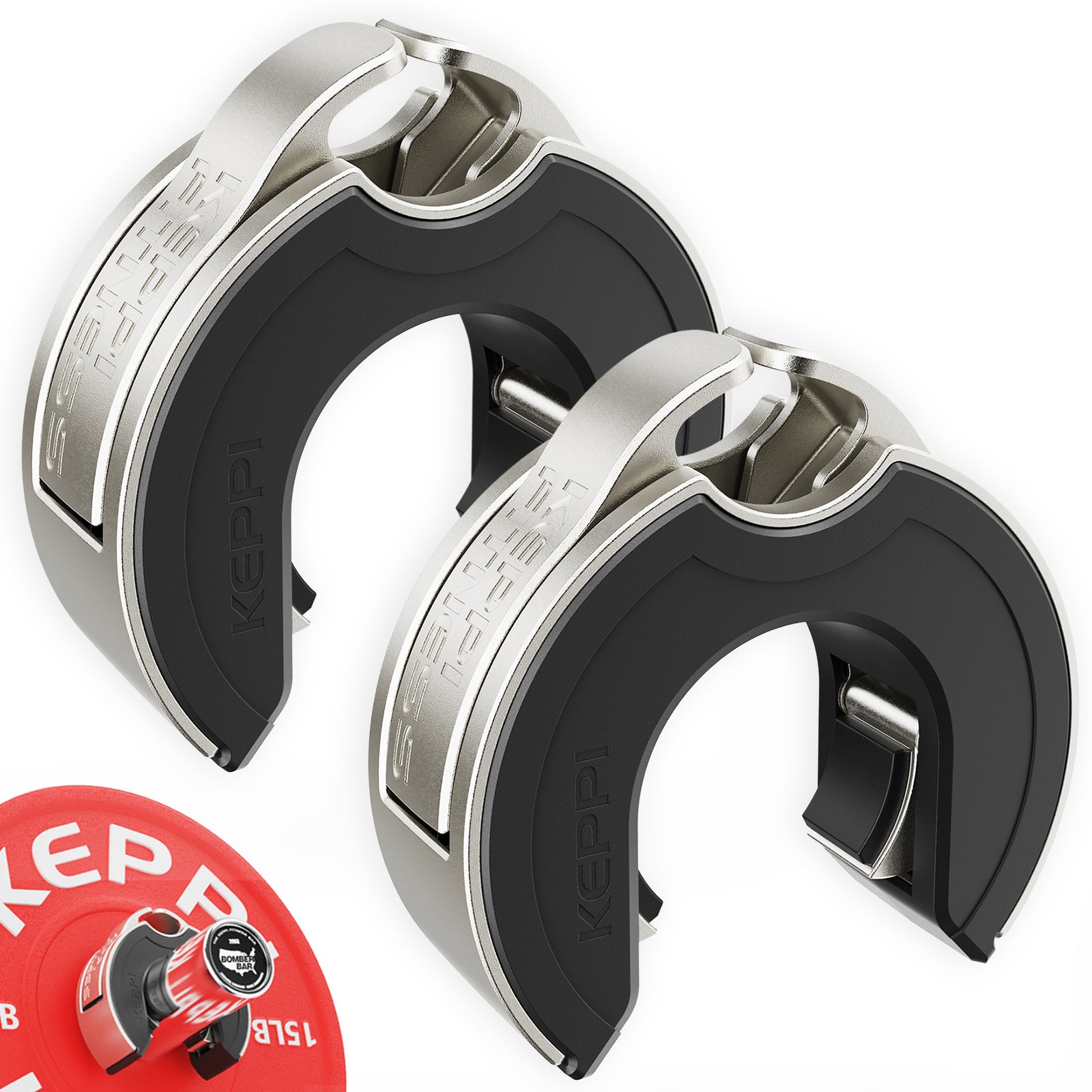
Keppi Open Collars
C-shaped magnetic Olympic barbell collars with a quick-lock mechanism and grippy lining.


FID Bench MAX
Adjustable bench offering flat, incline, and decline positions + adjustable headrest.

VForce 3IN1
All-in-one rack combining an adjustable Smith machine, functional trainer, and free-weight station.
Set up a useful three-position test in your own gym
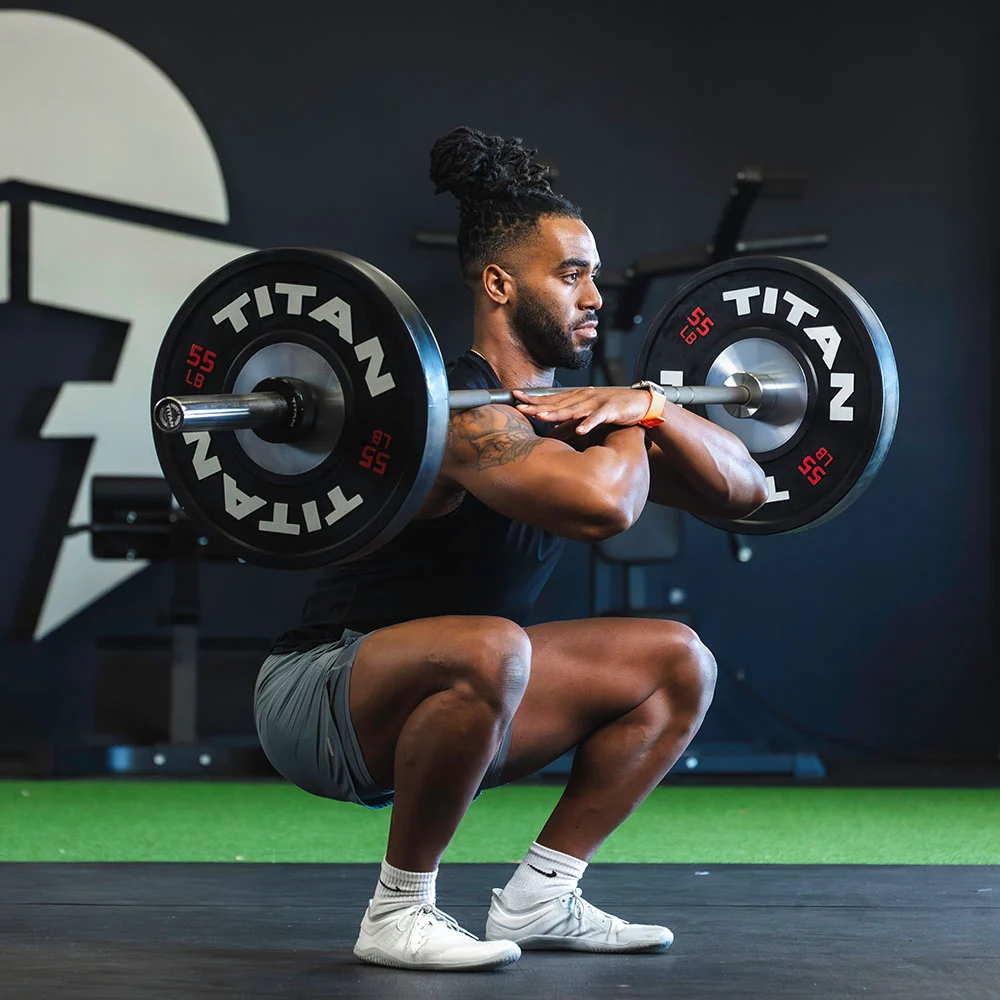
Start with a barbell weight you can front squat for six technically clean repetitions while keeping about three repetitions in reserve. Warm up the ankles, hips, upper back and front rack with a few empty-bar repetitions. Use safety arms set below your intended bottom position and do not attempt this comparison with a near-maximal load. If the front rack is limited by wrist or shoulder mobility, address that separately before adding a wedge.
- Flat shoes: perform three controlled reps at the same moderate load, filming from the side. Note whether you can keep your heel planted and the elbows up.
- Modest heel lift: with a firm full-width wedge or suitable lifting shoes, repeat the same tempo. Observe the lowest controlled depth, foot pressure and any change in knee or lower-back comfort.
- Optional unloaded toe-lift comparison: if you are merely curious about forefoot elevation, explore it with a bodyweight squat on a stable surface, not as an immediate heavy-bar experiment.
- Choose by repeatability: retain the setup that gives controlled depth, a stable midfoot and reproducible rep speed, without pain.
Keep your stance width, toe angle, footwear, time between sets and bar weight constant when you compare the first two conditions. If you change everything at once, the result tells you very little. Do not count a deeper heel-elevated rep as identical mechanical work to a shallower flat-foot rep; range of motion itself changes the exercise.
For the front rack, the bar should sit securely on the front deltoids, supported by raised elbows and an upper back that resists rounding. Your hands help retain the position rather than suspending the entire bar from bent wrists. Breathe into the torso, brace before descent and drive smoothly through the floor. If you cannot hold position, choose a lighter load or a safer variation. For any persistent joint pain or recent injury, seek individual guidance rather than testing unstable surfaces with weight.
Powerlifting Shirts & Lifting Gear
Powerlifting shirts and gym gear for squat, bench and deadlift lifters who live for heavy numbers.

Platehead Weightplate Skull Meme – Ultimate Top T-Shirt
Rep “Platehead Weightplate Skull” humor in and out of the gym.


Therapy Barbell – Bodybuilding Powerlifting Meme Sweate T-Shirt
Add a playful “Therapy Barbell” touch to your casual rotation.

Liftionaire Money Barbell Meme Workout Bodybuilding Pow Sticker
Put “Liftionaire” gym humor on your laptop, bottle, or gym gear.

Gymhead Skull Plate Jumper T-Shirt
For laid-back days and powerlifting humor: “Gymhead Skull Plate Funny Powerlifting”.

Barbell Breaker Heavy Metal Workout Bar Breaker Lifting T-Shirt
Show some metalhead attitude with a playful “Barbell Breaker” tee.

Nice Rack – Squat Rack Meme & Gymbros Ultimate Top T-Shirt
Heavy lifts, good laughs, and a little “Nice Rack” energy.

Gym Cult Occult Barbell Meme – Powerlifting Bodybuildin Hoodie
Show off your powerlifting humor in a laid-back “Gym Cult” hoodie.

If The Bar Ain't Bending You're Just Pretending – Power Hoodie
Keep it laid-back with a little “If The Bar Ain't Bending You're Just” attitude.

2500 Pound Club Shirt Stack Of Weight Plates & Top T-Shirt
Make gym days more fun with “2500 Pound Club” style.
A six-week progression that does not depend on magic wedges
Once you have picked a stable setup, let training consistency—not a new footwear trick—drive progress. Use two lower-body sessions per week, keeping at least one easier day between them. One session emphasizes the front squat; the other provides supplementary leg work and enough variation to practice knee extension without repeating identical heavy loading. This template is an example for healthy lifters who already squat confidently, not a clinical rehabilitation plan.
Weeks 1–2: on day one, perform front squats for three sets of five with two to three reps in reserve. Follow with split squats for two sets of eight per side and calf raises for two sets of twelve. On day two, use a back squat or leg press for three sets of six to eight, then a knee-extension exercise for two sets of ten to fifteen. Write down the load, range, perceived effort and chosen heel setup.
Weeks 3–4: move the front squat to four sets of five if recovery and technique remain good. Add a small amount of weight only when every repetition stays controlled and the last set still has roughly two reps in reserve. Keep the second session moderate, and avoid turning both days into grinding max attempts. If the knee or front rack becomes irritated, hold or reduce the load before changing the foot platform again.
Week 5: use four sets of four for the main front squat, working slightly heavier while still avoiding failure. Reduce assistance volume if fatigue accumulates. Week 6: perform two to three technically crisp sets of six at a manageable load, compare video from week one, and decide whether the same stance and heel support still make sense. This is a practice-and-progression framework, not a research-tested protocol from the 12-person experiment.
The simplest result to pursue is a better front squat that you can repeat: consistent bar path, comfortable depth, productive leg loading and gradual improvement without pain. Heel wedges can help some lifters get there. Flat feet remain a strong option. Raising the toes under a heavy squat does not offer an obvious advantage for quadriceps development based on these short-term measurements.
Choose a foot position that gives you controlled, reproducible squats. Track depth, comfort, loading and technique over weeks instead of treating a single-session muscle signal as proof of long-term results.