Advertising disclosure: This page includes affiliate product links that may earn us a commission, as well as products from our own store.
What if your leg workout could be split into three short visits to the squat rack instead of one continuous session? An eight-week randomized experiment with 45 recreationally trained young men tested exactly that idea. Both approaches improved squat strength and muscular endurance compared with a control condition. The fragmented schedule also scored higher for enjoyment. That sounds like a win for exercise “snacking,” but the details matter: participants performed the same total number of repetitions, used relatively light progressive loads, and trained under supervision.
The practical question is not whether three one-minute bouts can replace every strength program. It is whether dividing a manageable amount of resistance work across the day can preserve useful progress when a long uninterrupted workout is inconvenient. Here is what the experiment measured, where its conclusions stop, and how to apply the principle without pretending that a few casual bodyweight squats are identical to the tested protocol.
What the 45-person squat experiment actually tested
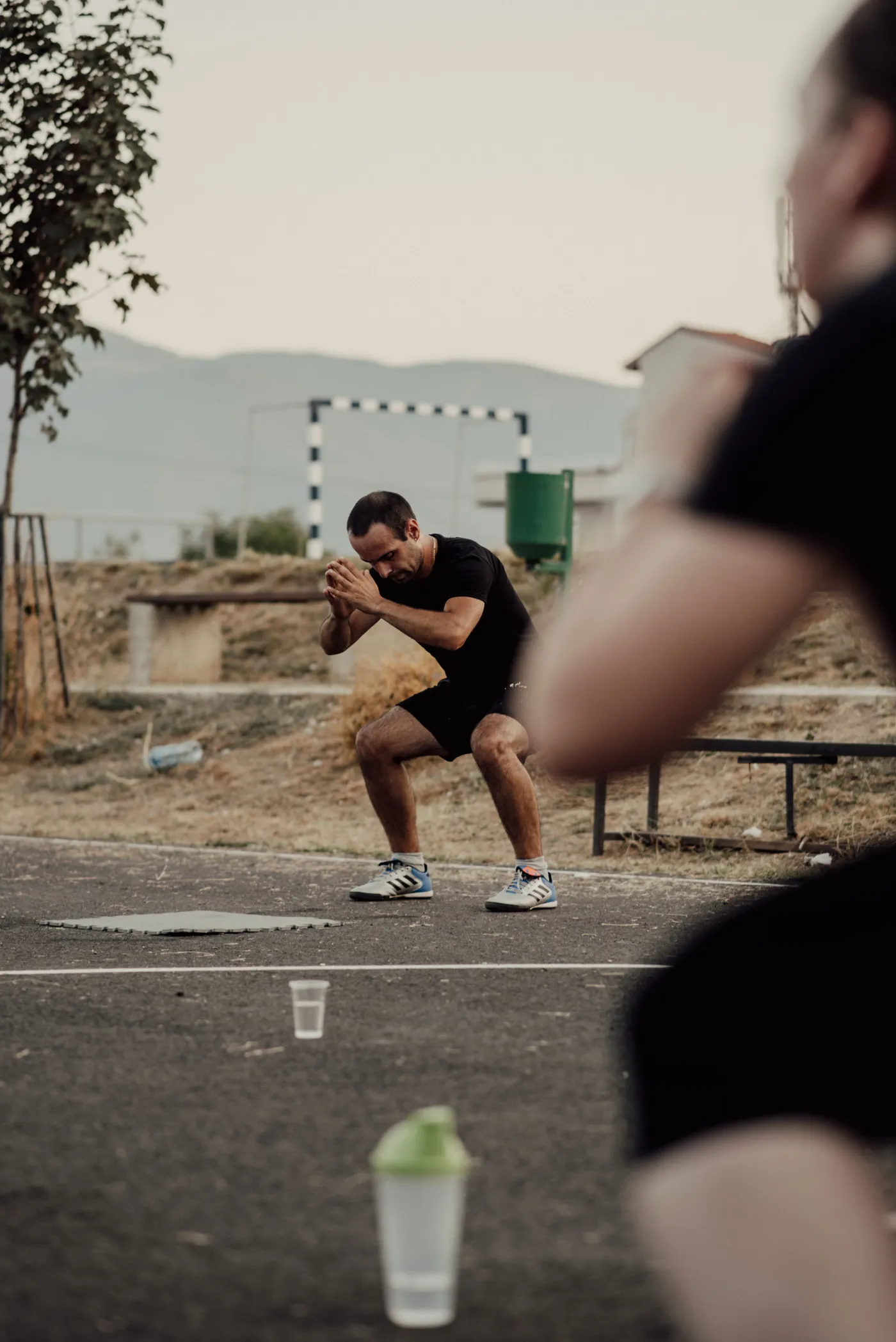
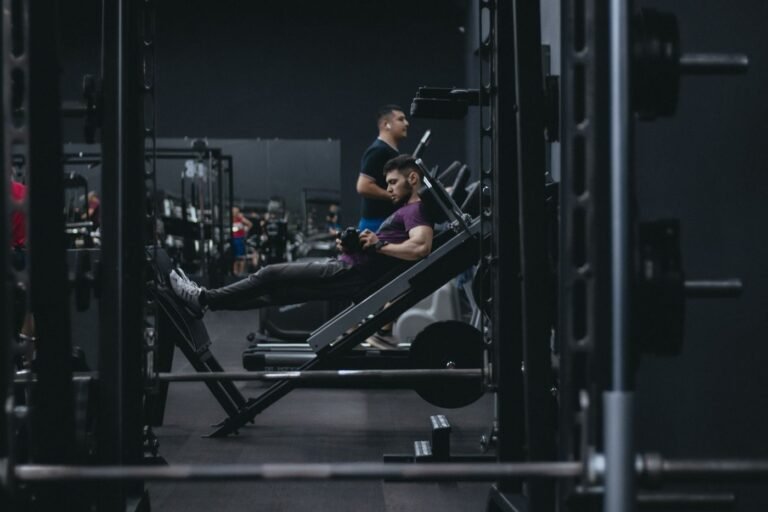
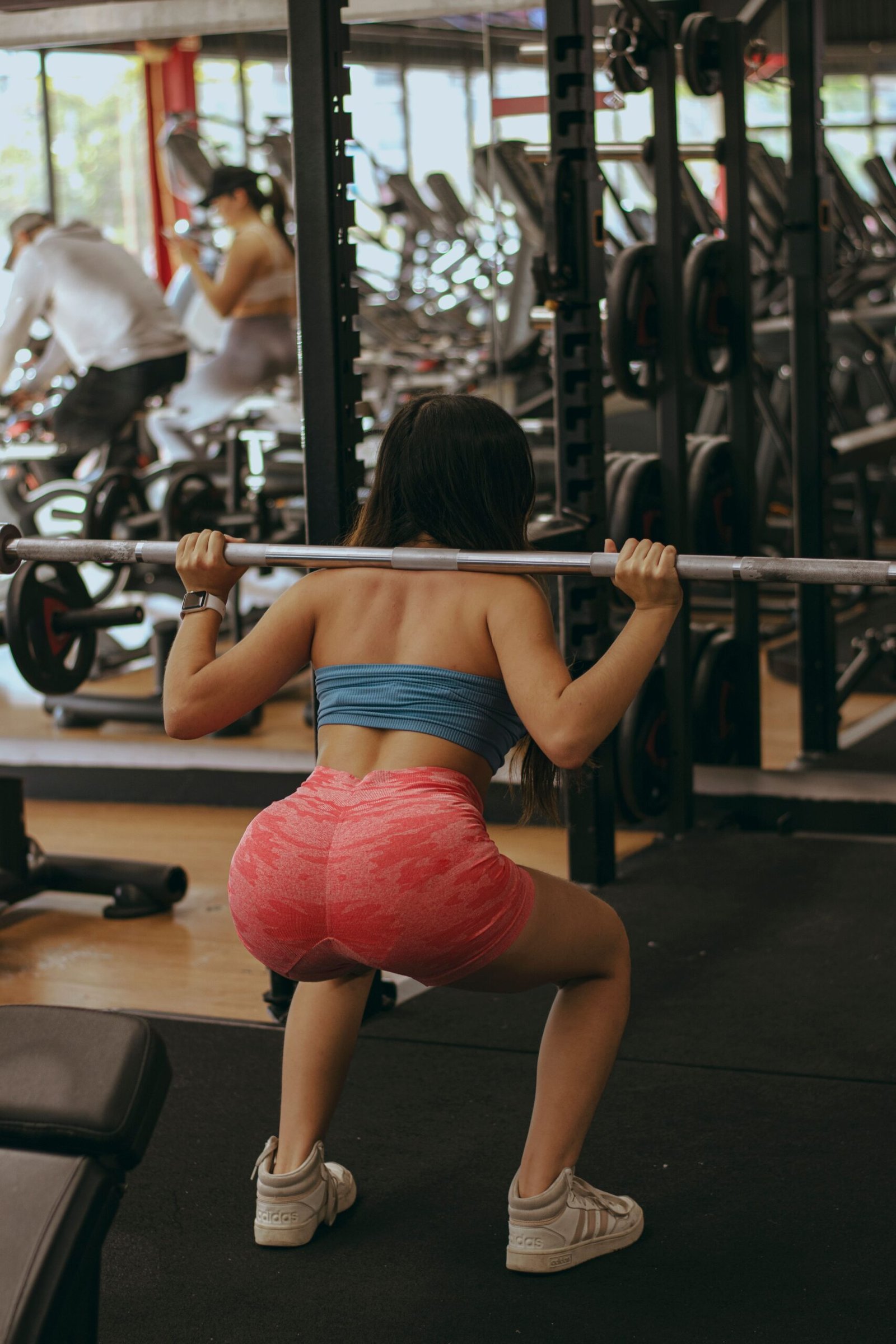
Participants were men aged 18–25 with at least six months of regular resistance-training experience. They were randomized to fragmented resistance training, a traditional continuous squat session, or a time-matched control condition. For eight weeks, the two training groups performed supervised Smith-machine squats three days per week. The fragmented group completed one set of 20 repetitions in each of three separate daily windows. The continuous group performed three sets of 20 in one visit, with three-minute rests between sets.
The researchers matched total repetitions and progressed the resistance from approximately 40% of one-repetition maximum toward 55% across the program. The comparison was therefore about distributing the same prescribed work, not about replacing sixty loaded squats with three effortless movements. A 20-repetition set also takes more than a few seconds; “one-minute bout” is a convenient description of a compact training window, not a promise that every lifter can safely complete the same tempo in precisely sixty seconds.
Only the squat was trained and tested. The study did not compare full-body routines, maximal-powerlifting programs, muscle growth measured by imaging, or long-term training habits. Nor did it test whether interrupting a workday for three gym visits is realistic. Keeping those boundaries clear makes the result more useful rather than less interesting.
Strength improved in both groups, but this was not proof of equivalence
Against the control condition, the fragmented group showed an adjusted squat one-rep-max advantage of 20.59 kg, while the continuous group showed an advantage of 28.93 kg. Isometric squat force and repetitions performed at a relative test load also improved in both training groups. The between-training-group comparisons did not reach statistical significance for one-rep-max strength, isometric force or muscular endurance.
That distinction matters. A nonsignificant difference is not the same as demonstrating that two programs are equivalent within a predefined margin. The continuous group’s point estimate for maximal strength was numerically larger, but the experiment was too small to settle whether that difference was real. There were only 45 participants in total, and the confidence intervals were broad. A careful conclusion is that both schedules produced meaningful improvements under these conditions, without a clear detected winner.
The results also concern a specific load range and exercise. Higher-intensity barbell training may require more preparation, longer recovery and greater attention to technique than these moderate-load Smith-machine sets. Someone pursuing a heavy single or a complex Olympic lift should not extrapolate this protocol directly to their hardest work. It is a promising scheduling option, not a universal replacement for conventional strength sessions.

Equipment Worth Exploring
Explore equipment, accessories and gear from our carefully selected range.

GymPin Squat Wedges
Non-slip 15-degree squat wedges help elevate the heels for deeper quad-focused squats.

Safety Squat Handles
Barbell squat handles that reduce shoulder positioning demands during high-bar squats.

Squat Harness
Wearable harness for hands-free cable squats, sled work, and lower-body training.


Belt Squat Collar
Heavy-duty collar adapter for compatible belt-squat and landmine bar setups.

Why higher enjoyment is interesting—and not yet adherence
The fragmented group rated the experience as more enjoyable than the continuous group. Enjoyment matters because a plan that feels manageable is easier to consider repeating. But the study measured a reported experience within an eight-week supervised intervention. It did not demonstrate that participants kept exercising for another six months, missed fewer workouts in ordinary life, or achieved better health outcomes after supervision ended.
Think of exercise snacks as a way to reduce scheduling friction. A student with irregular classes might fit a short set between commitments. A remote worker could put a light resistance exercise near planned movement breaks. A parent may find a few minutes easier to protect than an uninterrupted hour. None of those examples guarantees that three separate warm-ups, equipment setups and clothing changes are actually faster. The logistical benefit depends on having appropriate equipment close at hand.
There is also a difference between enjoyment and effort. The fragmented participants still completed 60 loaded squat repetitions on each training day, three days a week, while the resistance increased over time. Splitting the work did not erase the training dose. A program that feels pleasant because it is too easy may be useful for establishing movement habits, but it should not be sold as the same strength stimulus.

Leg Day Shirts & Workout Gear
Leg-day gym shirts and workout gear for lifters who never skip squats, lunges and lower-body punishment.

Swolebob Squatpants Gym | Funny SpongeBob Meme Workout Hoodie
Stay casual and show some leg-day attitude with “Swolebob Squatpants”.

Heavy Squatter Harry Potter Squat Meme Decal Water Sticker
Give your everyday gear a playful “Heavy Squatter” twist.

I'M Still Gonna Squat You Monster Gingerbread Meme – Sticker
Give your everyday gear a playful “I'm Still Gonna Squat You Monster” twist.

Stars Stripes & Squats Patriotic Eagle – 4th of July Wo Tank Top
Add some leg-day attitude to training with “Stars Stripes & Squats Patriotic Eagle”.

Uncle Sam Squats Funny Patriotic Gym – USA Meme Hooded Hoodie
Make your off-duty look more fun with “Uncle Sam Squats Funny Patriotic”.

I Want You To Squat Uncle Sam Patriotic – Funny 4th of Tank Top
Show some personality between sets with “I Want You To Squat Uncle Sam Patriotic”.

I Love Squats | Valentine's Leg Day with Black Heart We T-Shirt
Show some leg-day attitude with a playful “I Love Squats” tee.

Squat You Must Star Wars Leg Day Meme Hooded Hoodie
Show off your leg-day humor in a laid-back “Squat You Must” hoodie.

Barbie Leg Day Squats Booty Builder Strong & Gains Hoodie
Show off your leg-day humor in a laid-back “Barbie Leg Day” hoodie.

Superman Squats Decal for Water Bottles Laptops Gym Gea Sticker
Bring “Superman Squats” attitude to your water bottle or laptop.
How splitting sets can change fatigue and performance
In a continuous session, the second and third sets begin after minutes of recovery. In a fragmented day, hours may separate those sets. Longer separation can reduce accumulated breathlessness, local muscle fatigue and the feeling of being rushed. It can also change how a lifter approaches each set: one set may receive more attention than the final set of a tiring circuit. These are plausible mechanisms, not physiological measurements established by this particular trial.
The tradeoff is preparation. If each bout requires a commute, waiting for a rack, loading plates and rebuilding a warm-up, the fragmented schedule may cost more total time. For demanding lifts, never assume that being warm from an earlier session means you can skip a new ramp-up hours later. Body temperature, joint comfort and readiness change during the day. A few easy movement repetitions and lighter preparatory sets remain sensible whenever the load or movement complexity warrants them.
Fragmented sessions also need consistent logging. Record exercise, load, repetitions, perceived effort and whether technique changed. A good day of three crisp sets is not equivalent to one easy set followed by two rushed, shallow sets. The useful principle is to distribute quality work while preserving the intended training stimulus, not simply to accumulate movement fragments.
Who might benefit, and who should keep a conventional workout
The clearest candidate is someone who already understands basic squat mechanics, has safe equipment nearby and struggles more with uninterrupted time than with motivation to train. Moderate-load squats, step-ups, split squats and some machine exercises can be scheduled in brief blocks if they can be performed with control. A person returning to exercise may start with simpler sit-to-stands or supported squats, but those are sensible modifications—not exercises proven interchangeable with the study’s loaded Smith-machine protocol.
A traditional session may still be preferable when you need multiple exercises, coordinated spotting, heavier technical lifts, longer warm-ups, or a training partner. It is also easier to track a full-body workout in one place. People with significant joint pain, cardiovascular symptoms, dizziness or relevant medical restrictions should seek individualized advice before copying a high-repetition resistance schedule. Do not hold your breath through prolonged efforts, and stop if sharp pain, faintness or unusual chest symptoms appear.
Broader activity guidance still favors strengthening all major muscle groups at least twice weekly. Three short squat bouts train a narrow set of muscles; they do not replace upper-body pulling, pushing, hip hinging, trunk work and aerobic activity. The experiment supports flexibility in how some work is scheduled, not permission to neglect balanced programming.
Equipment Worth Exploring
Explore equipment, accessories and gear from our carefully selected range.


FID Bench MAX
Adjustable bench offering flat, incline, and decline positions + adjustable headrest.

VOLTRA
Compact digital cable trainer with smooth, adjustable resistance.

Go-Tone Pro
Portable digital cable trainer with up to 66 lb (30 kg) of adjustable resistance.
A practical three-bout plan versus a single-session plan
Here is a cautious four-week illustration, not a replication of the research protocol. Choose a squat variation you can perform with consistent depth and stable foot pressure. For the fragmented option, complete one controlled set in the morning, one later in the day and one in the evening on two or three nonconsecutive training days per week. For the continuous option, perform the same three sets in one session with adequate rest. Start with 8–12 controlled repetitions per set rather than automatically copying the study’s sets of 20.
- Week 1: establish a repeatable load or bodyweight variation, leaving roughly three comfortable repetitions in reserve; log all three sets.
- Week 2: add one or two repetitions per set only if depth, breathing and control remain stable.
- Week 3: increase resistance modestly after reaching the top of your chosen repetition range; return to its lower end.
- Week 4: hold the exercise and schedule steady, compare quality and perceived effort, and adjust only one variable at a time.
For the rest of the body, include at least one push, one pull and one hip hinge on separate days or in short complementary sessions. Examples are push-ups or presses, rows, and Romanian deadlifts or hip bridges. If the short schedule creates more setup time than it saves, consolidate the sets. The plan succeeds when it is sustainable and progressive, not when every minute is artificially optimized.
Use an appropriate warm-up before each bout. With bodyweight squats, a few gentle repetitions may suffice. With a loaded bar, rehearse the pattern and add lighter sets as necessary. Avoid leaving a loaded bar unattended in shared spaces, and do not rush repetitions to meet a stopwatch.
Powerlifting Shirts & Lifting Gear
Powerlifting shirts and gym gear for squat, bench and deadlift lifters who live for heavy numbers.

Stars Stripes & Dealifts Patriotic Eagle – 4th Of T-Shirt
Make gym days more fun with “Stars Stripes & Dealifts Patriotic Eagle” style.

Bane Barbell Club Crewneck Pullover Sweater Gymbros Bar T-Shirt
Add a playful “Bane Barbell Club” touch to your casual rotation.

Smash PRs Like Hulk Tee
Heavy lifts, good laughs, and a little “Smash PRs Like Hulk Gym Hero” energy.

Deadlift Uncle Sam Patriotic – 4th Of July & Gymbros T-Shirt
Heavy lifts, good laughs, and a little “Deadlift Uncle Sam Patriotic” energy.

I Want You To Stop Lying About Your Max Uncle Sam T-Shirt
Show some lifting attitude with a playful “I Want You To Stop Lying About Your Max” tee.

Somebody To Spot Me Queen Rock Music Meme , Gymbro T-Shirt
Make gym days more fun with “Somebody To Spot Me Queen Rock Music Meme” style.

No Malarkey Just PRs – Patriotic Joe Biden 4th Of T-Shirt
Make gym days more fun with “No Malarkey Just PRs” style.

Shirt – PR Queen Wonder Woman – Superhero Gymbro T-Shirt
Make gym days more fun with “PR Queen Wonder Woman” style.

We Will Lift You Queen Rock Music Meme – Gymbro Top T-Shirt
Bring “We Will Lift You Queen Rock Music Meme” humor to your next gym day.

Yesterday I Skipped Leg Day – Beatles Rock Music T-Shirt
Make gym days more fun with “Yesterday I Skipped Leg Day” style.
What to measure after four weeks—and what the trial cannot tell us
Pick two or three outcomes that matter: the load and repetitions achieved at consistent technique, how much calendar time the schedule consumes, and how often you actually complete it. You can also rate each bout’s enjoyment and perceived exertion on a simple one-to-ten scale. Keep the test conditions stable. If your squat depth gets shallower while the load rises, the numbers are not directly comparable.
At the end of four weeks, compare the fragmented and continuous options on convenience rather than declaring one superior from a single workout. Did the short bouts fit naturally into your day? Were you able to warm up properly each time? Did you miss sets because equipment was unavailable? Did the evening session interfere with sleep or family time? Those practical costs are not captured by the trial’s strength outcomes.
The eight-week study is encouraging because it directly compared volume-matched schedules in trained young men and found useful gains in both. It does not establish equal muscle hypertrophy, prove benefits for older adults or women, or show that an unsupervised office squat break matches a Smith-machine training set. The most defensible takeaway is flexible scheduling: keep the work meaningful, progress gradually, and choose the format you can perform well and repeat consistently.