Advertising disclosure: This page includes affiliate product links that may earn us a commission, as well as products from our own store.
Who makes faster strength gains from the same workout program: men or women? The question sounds simple until you decide whether “more” means extra kilograms on a bar, a larger percentage improvement, or measurable muscle growth. A September 30, 2026 study of 41 experienced lifters shows that the apparent winner can change when researchers switch between kilograms and percentages.
Women in the experiment showed larger relative bench-press gains, while men added more absolute weight to their hex-bar deadlift. Neither result proves one sex is inherently better at building strength. Measured muscle-thickness changes did not differ significantly between groups. The practical lesson is to track progress in context rather than turn one statistic into a stereotype.
What the 41-person experiment actually tested
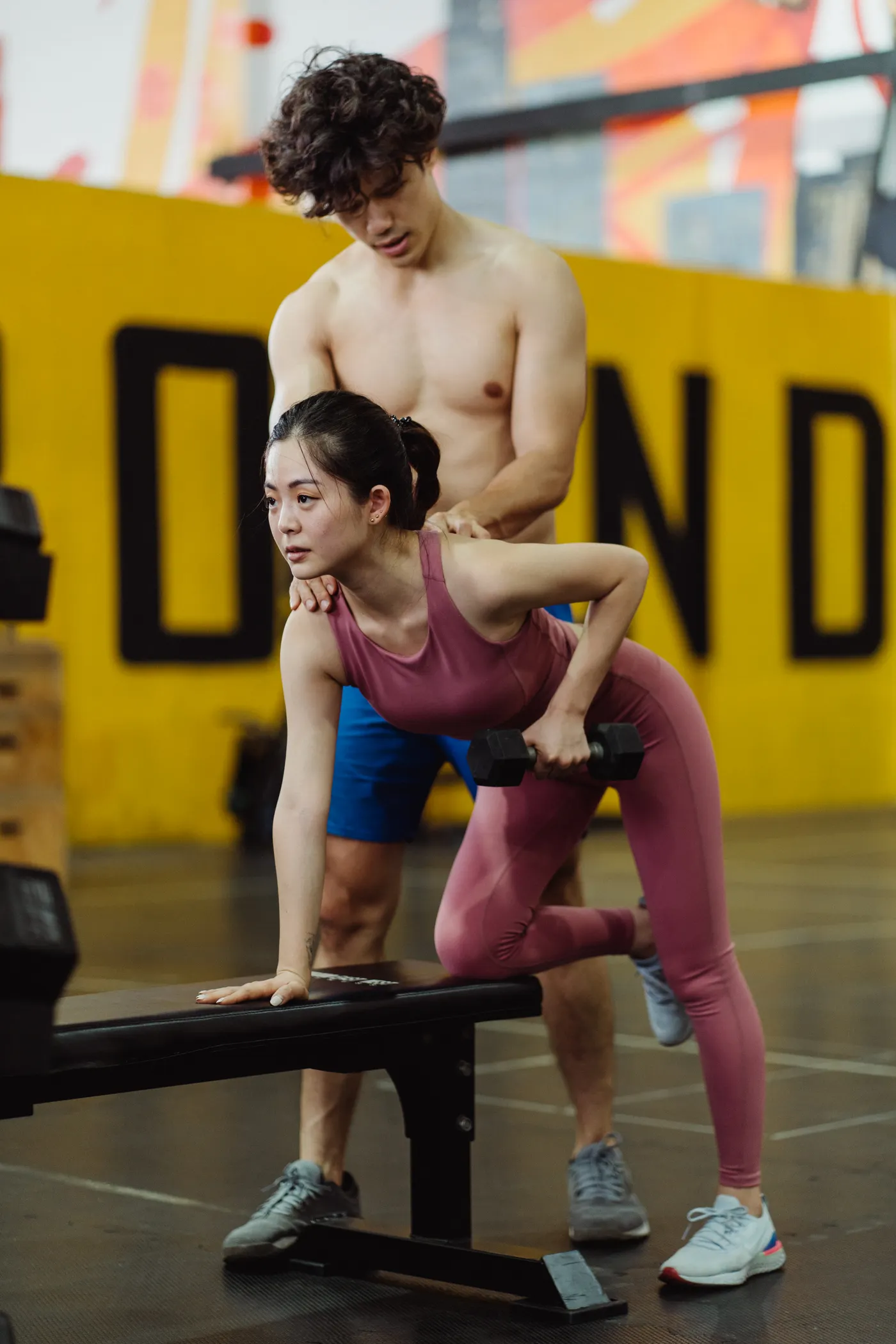
The study involved 22 men and 19 women who had already trained with resistance exercise for more than a year. Their average ages were approximately 29 and 31 years. All participants completed 12 weeks of supervised, periodized and progressive training twice per week. That makes the findings more relevant to people with some lifting experience than to total beginners, although the sample was still modest.
Researchers measured one-repetition-maximum strength on selected lifts, including the bench press and hex-bar deadlift. They also used two-dimensional ultrasound to assess thickness of the biceps brachii and vastus lateralis, a major quadriceps muscle. The outcomes were compared as absolute changes, percentage changes and statistical comparisons adjusted for baseline differences.
These methods answer different questions. An absolute change measures the kilograms added. A relative change measures improvement as a share of the starting result. A baseline-adjusted comparison tries to account for different starting levels rather than pretending everyone began equally strong.
Several limits matter. People were not randomly assigned to be male or female, so the study cannot isolate biological sex from every associated factor. Twelve weeks is short relative to years of training, and ultrasound thickness at two sites does not measure total-body muscle growth. It is a useful experiment, not a universal prediction for every lifter.
Bench press: percentages tell a different story
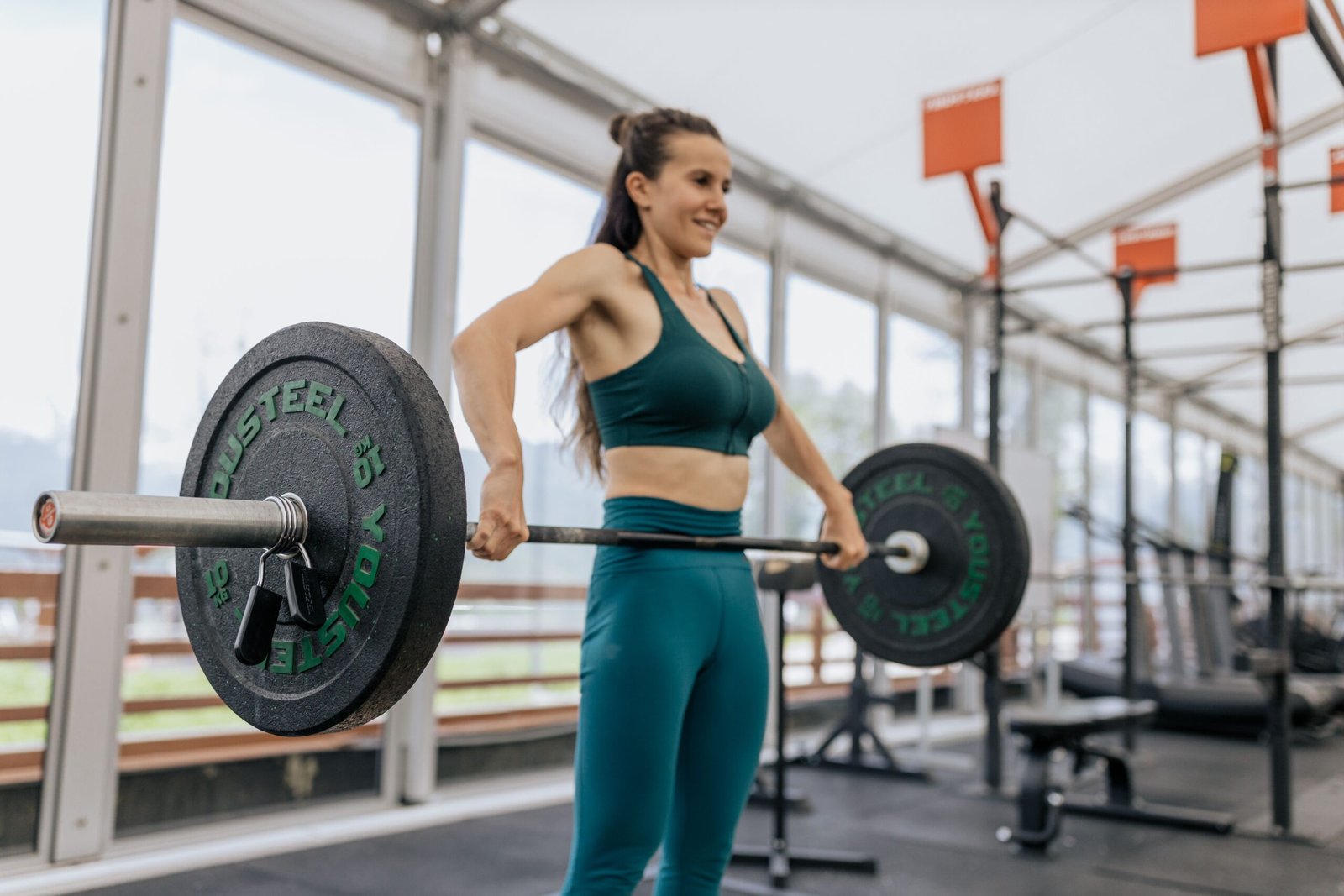
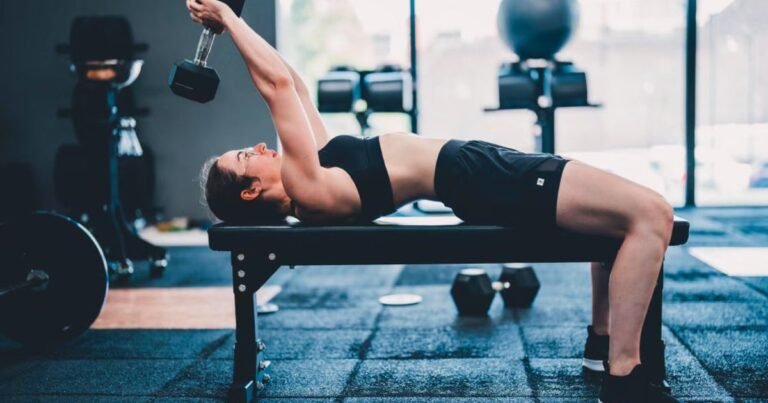
The women’s bench-press strength increased by an average of 32.8%, compared with 19.9% in the men. That relative difference was statistically significant. But when the same gains were reported as absolute kilograms, the between-group difference was not statistically significant. A headline saying women had larger percentage bench improvements would be accurate; claiming they necessarily added more kilograms would not.
The hex-bar deadlift showed the reverse pattern. Men added an average of 29.4 kg, compared with 14.4 kg among women, a statistically significant absolute difference. Yet when deadlift gains were expressed as percentages of starting strength, the between-group difference was not significant. The two results are not contradictory. They are different ways of describing progress from different baselines.
Consider a hypothetical lifter improving a bench press from 40 to 52 kg. That is 12 kg gained, or 30%. Another improves from 90 to 108 kg: 18 kg gained, or 20%. The second person adds more total load, while the first posts a larger percentage. Both can be progressing exceptionally well.
Baseline-adjusted statistical methods provide additional context, but no model can eliminate every difference in prior training, body size or test familiarity. When you compare lifts, report the starting point, the unit and the time frame. Record repetitions and technique too: a heavier number achieved by shortening the range of motion or changing equipment is not a perfectly comparable test.
For your own home-gym log, track kilograms, repetitions and an effort estimate. If a cable machine uses a different pulley ratio, or you switch from a straight bar to a specialty bar, mark that change. A consistent test is more informative than a flashy personal record on an unfamiliar setup.

Equipment Worth Exploring
Explore equipment, accessories and gear from our carefully selected range.



VOLTRA
Compact digital cable trainer with smooth, adjustable resistance.

Go-Tone Pro
Portable digital cable trainer with up to 66 lb (30 kg) of adjustable resistance.
Muscle thickness improved without a clear group difference
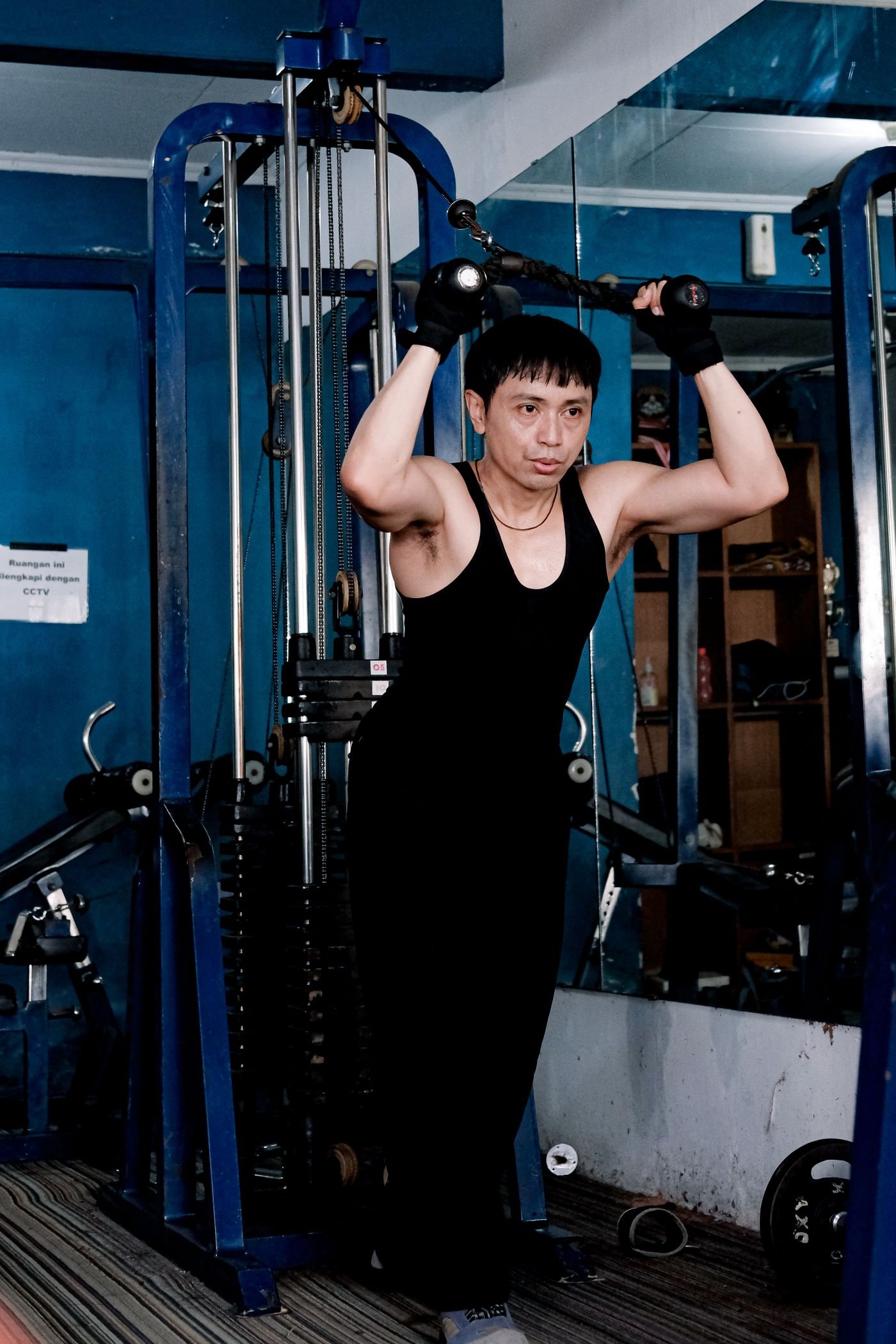
The investigators reported roughly 14% greater biceps muscle thickness and 10% greater vastus lateralis thickness across the training intervention. They did not find statistically significant differences between the male and female groups for those thickness changes. That does not prove their responses were exactly identical. It means this particular experiment did not provide convincing evidence of a difference at those measured sites.
Ultrasound is useful for repeated measurements of a specific muscle location, but thickness is not identical to whole-body lean mass or maximal strength. A single muscle may change without every muscle responding equally. Technique and measurement conditions also matter, especially over short periods.
A 2025 meta-analysis of 29 studies compared men and women completing similar resistance-training interventions. Men showed slightly larger absolute increases in muscle size, while relative hypertrophy was similar. The estimated relative difference was about 0.69 percentage points, with uncertainty spanning no difference. That broader evidence helps put a small 2026 trial in perspective.
A separate 2020 synthesis found broadly similar hypertrophy and lower-body strength responses, with a possible advantage for women in relative upper-body strength gains, although study-to-study variability was substantial. Research involving adults over 50 has also shown that conclusions change when results are expressed as absolute versus relative improvements.
The practical message is not that every person grows at the same rate. Individual responses vary, and a group average cannot predict your own outcome. The message is that both men and women can gain meaningful muscle through progressive resistance training. Consistent effort, appropriate volume, nutrition, recovery and the ability to repeat a program matter much more to daily decisions than a simplistic assumption about sex.

Bodybuilding Shirts & Workout Gear
Bodybuilding shirts, tanks and gym gear for lifters chasing muscle, size, symmetry and the pump.

Break The Stereotype Gym | Feminist Workout Muscle Shir Tank Top
Train hard, laugh a little, and rep “Break The Stereotype”.

Girl Meme – Let'S Go Girls Top Strong & Gains T-Shirt
Bring “Gym Girl Powerlifting Meme” humor to your next gym day.

Muscle Mommy Pink Gym Girl Pullover for Women, Lifters, Hoodie
Keep it laid-back with a little “Muscle Mommy” attitude.

Beauty And The Biceps Meme Top Tank Top
Your gym-day look, with a playful “Beauty And The Biceps” twist.

Progressive Overload Milo Tee
Bring “Progressive Overload Milo Bull” humor to your next gym day.

Lift Together Grow Stronger Buddies Friendship Workout T-Shirt
Make gym days more fun with “Lift Together Grow Stronger” style.

Lift Heavy Be Happy Meme Bros & Gains Top T-Shirt
Show some powerlifting attitude with a playful “Lift Heavy Be Happy” tee.

Muscle Mommy Muscle Club for Gym Girls, Lifters & Fitne Sticker
A fun “Muscle Mommy Muscle Club” touch for bottles, laptops, and lockers.

Let It Grow Booty Builder Hip Thrust Meme Athletic Tank Top
Your gym-day look, with a playful “Let It Grow” twist.

Break The Stereotype | Feminist Workout Sweater For Str T-Shirt
Keep things casual with a little “Break The Stereotype” attitude.
Strength is not a direct measurement of muscle size
A one-repetition maximum reflects several systems working together. Muscle size contributes, but movement skill, coordination, confidence under heavy load, leverages and familiarity with a particular exercise can also change the result. Two lifters can experience similar muscle growth and still improve differently on the bench press or hex-bar deadlift.
The lifts themselves demand different skills. Someone who has practiced benching for years may have less immediate technical room to improve than a person with similar general training age but less bench experience. The published abstract does not provide enough information to quantify the role of these factors in the observed group differences. Assigning a precise cause would be speculation.
Training history often matters more than a broad label. A lifter who has squatted consistently for five years, someone returning after a long break and someone who mainly used machines may all respond differently to a new barbell program. Starting strength, exercise familiarity and recovery capacity shape the progression that is realistic.
Use the same basic programming questions for every athlete: Can the movement be repeated through a consistent range? Is the load challenging but controllable? Is the weekly work recoverable? Can repetitions, load or execution improve gradually? Those questions remain useful whether the goal is a stronger bench, larger arms, better everyday function or a more capable home gym.
Most importantly, a mean from 19 women is not a ceiling or guarantee for any individual woman. The same is true of the mean from 22 men. A statistical group difference cannot tell you how a particular person will progress over the next several years.
A two-day full-body plan for a compact home gym
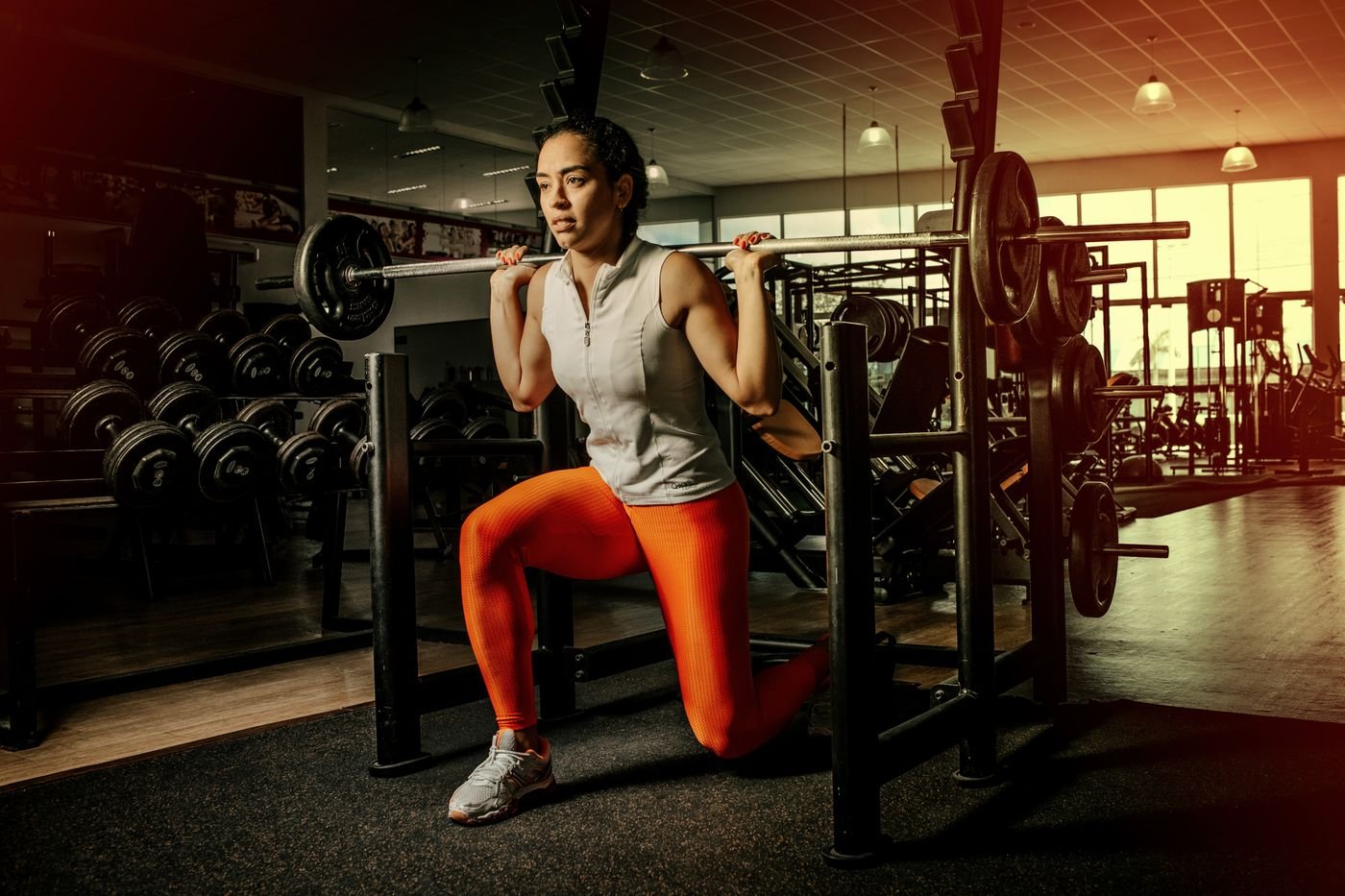
There is no need to start with two completely different programs based on sex. Build a repeatable full-body routine, select exercises that suit your equipment and adjust according to individual performance. A rack, bench, adjustable dumbbells or compact cable trainer can cover most of the movements below. The routine is an example, not individualized medical or rehabilitation advice.
Day A — squat and horizontal push: Perform three sets of six to ten squats or goblet squats; three sets of six to ten bench presses or dumbbell floor presses; three sets of eight to twelve supported rows; two sets of eight to ten Romanian deadlifts; and two sets of ten to fifteen curls or triceps extensions. Rest roughly two to three minutes between demanding compound sets, and enough between smaller exercises to keep technique controlled.
Day B — hinge and vertical pull: Perform three sets of five to eight hex-bar deadlifts or another suitable hinge; three sets of six to ten overhead presses; three sets of eight to twelve pulldowns or assisted pull-ups; two sets of eight to ten split squats per leg; and two sets of ten to fifteen lateral raises or cable curls. Keep variations stable long enough to judge whether they are improving.
For most working sets, stop with approximately one to three repetitions in reserve while learning the routine. A beginner may need fewer sets, while an experienced lifter may need more total work. This experiment does not identify the ideal volume for every person, and it does not justify testing maximal singles every week.
When you reach the upper end of a repetition range on all prescribed sets with consistent form, add the smallest manageable load increment. If the next dumbbell jump is too large, add repetitions or improve control first. Leave at least a day between sessions when practical, and scale back during unusual fatigue, illness or pain. A sustainable routine that can be repeated for months is more useful than an elaborate plan that collapses after two workouts.
Equipment Worth Exploring
Explore equipment, accessories and gear from our carefully selected range.


GymPin Squat Wedges
Non-slip 15-degree squat wedges help elevate the heels for deeper quad-focused squats.

Safety Squat Handles
Barbell squat handles that reduce shoulder positioning demands during high-bar squats.




Leather Lifting Straps
Padded leather straps support grip during heavy rows, deadlifts and pulling exercises.

GymPin D Handle Bar
Multi-use steel D-handle bar for cable rows, pulldowns and other cable exercises.
Track progress fairly across four weeks
Use a simple log with exercise, load, repetitions and an effort estimate such as repetitions in reserve. Add notes for grip, tempo, range of motion or equipment changes. These details help separate genuine strength gains from changes in how the lift was performed.
When reviewing a major lift, record both absolute and relative changes. A bench press moving from 50 to 60 kg is +10 kg and +20%. A different lifter moving from 100 to 115 kg is +15 kg and +15%. One gains more kilograms; the other gains a bigger percentage. Neither result is inferior without a clearly defined comparison.
Week 1: Establish repeatable working weights and a baseline of completed sets. Do not test a maximal single without adequate experience and safety equipment. Week 2: Try to add one repetition to selected exercises while preserving technique. Week 3: Add a modest load increment where you have reached the top of the rep range; keep other movements steady. Week 4: Review performance, consistency, sleep and soreness before deciding whether to add work or continue progressing at the current level.
For hypertrophy, photos taken under consistent lighting, body measurements and performance trends can be useful secondary indicators, but each contains noise. Hydration, food intake, camera angle, muscle pump and fluid fluctuations can all change appearance over a few days. Research ultrasound measurements do not mean you should expect visibly measurable muscle growth every week.
Do not use a percentage gain to belittle a stronger person or an absolute kilogram gain to dismiss someone starting from a lower baseline. The most informative comparison for many home-gym lifters is against their own performance four or twelve weeks earlier, using the same movement conditions.
Powerlifting Shirts & Lifting Gear
Powerlifting shirts and gym gear for squat, bench and deadlift lifters who live for heavy numbers.


Ultimate Bench Press Tee
Heavy lifts, good laughs, and a little “Ultimate Bench Press” energy.

I Love Bench Press Shirt | Red Heart Weight Plate Graph T-Shirt
Show some gym-girl attitude with a playful “I Love Bench Press” tee.

Deadlift Skull Graphic , Hardcore Gym Pullover, Powerli Hoodie
Keep it laid-back with a little “Deadlift” attitude.

Deadlift Pink Skull Crewneck for Powerlifting Leg Day a T-Shirt
Show some gym-day personality with “Deadlift”.

Bending Bars Meme – Barbell Squat Bench Deadlift, & T-Shirt
Heavy lifts, good laughs, and a little “Bending Bars Gym Meme” energy.

Chest Day Sweater Bench Press & Meme T-Shirt
Add a playful “Chest Day” touch to your casual rotation.

Barbell Crossed Weights 45LB Plate Hardcore Hoodie
Keep it laid-back with a little “Classic Barbell Crossed Weights 45LB Plate” attitude.

Motivation – Squats & Booty Builder Leg Day – Strong T-Shirt
Bring “Gym Motivation” humor to your next gym day.

Bootybuilder Gym Girl Funny Workout T
Show some gym-girl attitude with a playful “Bootybuilder Gym Girl” tee.
The bottom line: measure outcomes, not stereotypes
The 2026 study found larger percentage bench-press improvements among women, larger absolute hex-bar deadlift gains among men, and no statistically significant group differences in the measured biceps and quadriceps muscle-thickness changes. Those observations can all be true because they answer different questions.
There are important limits. The sample was modest, the groups were not randomized by sex, the intervention lasted only 12 weeks and the outcomes covered selected lifts and two muscle sites. The results cannot predict how much any one person will gain, prove long-term equality or superiority, or identify a perfect training program for everyone.
Across the wider research, both men and women show substantial capacity for muscle and strength development. Absolute and relative comparisons can differ when starting size and strength differ. That is a reason to communicate results precisely rather than build exaggerated headlines around them.
Choose equipment that makes regular training convenient. Practice the same movements, keep a consistent log, increase the challenge when you have earned it and recover well enough to repeat the work. If you compare progress with a partner, look at kilograms and percentages together, and acknowledge differences in starting point and experience.
Muscle growth is not reserved for one sex, and neither is meaningful strength progress. The most useful takeaway may be that the way we measure improvement shapes the story we tell about it.
Some product links may be affiliate links, which can support Mind Muscle Perfection at no additional cost to you.